
How AI Helps Traders Manage Drawdowns
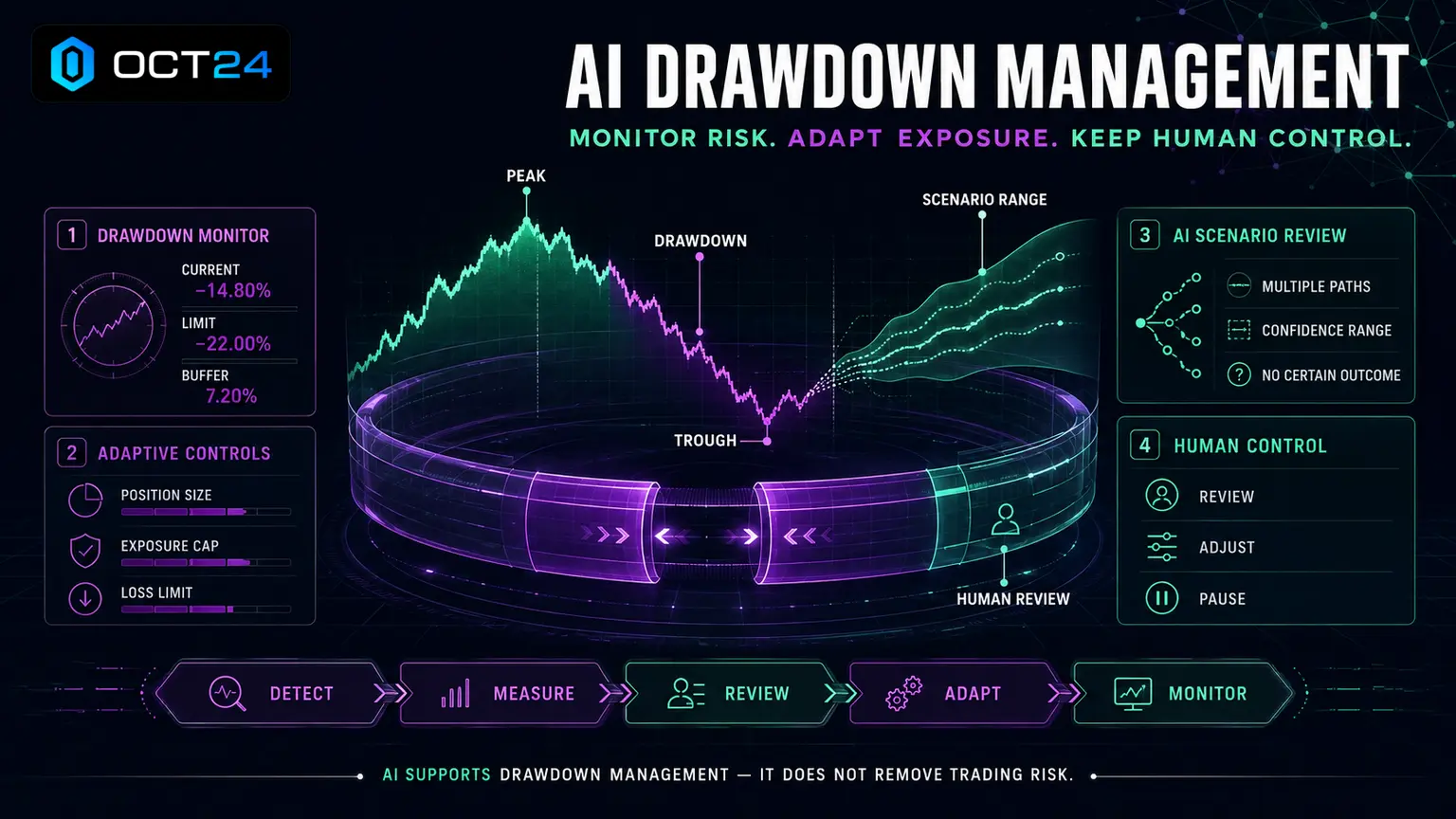
AI helps traders manage drawdowns by supporting market monitoring, signal review, risk checks, and more consistent decision-making during losing periods. It does not prevent every loss, but it can help traders respond with structure instead of emotion.
A drawdown becomes dangerous when a trader reacts badly to it. The account declines, confidence drops, and the trader starts making rushed decisions. AI can help by making the review process clearer, repeatable, and less dependent on mood.
This article focuses on managing drawdowns, not simply defining them. If you already understand drawdown in trading, the next step is learning how to respond when drawdown starts to appear.
OCT24 supports this process by scanning market conditions, identifying potential opportunities, and presenting AI-supported trading signals. OCT24 does not remove trading risk or guarantee results. Traders still need to manage exposure, capital allocation, risk settings, and execution decisions.
Why drawdown management matters more than prediction
Many traders focus on prediction. They want to know which trade will win, which asset will move next, or which signal will be correct. That is understandable, but it is not enough.
Drawdown management matters because even strong strategies can go through weaker periods. The trader’s job is not to avoid every decline. The job is to keep the decline controlled enough that the account and the decision process can recover.
This is where can AI predict the market becomes an important reminder. AI can identify patterns and probabilities, but it cannot make market outcomes certain.
A trader who manages drawdown well can survive normal losing streaks. A trader who reacts emotionally may turn a manageable decline into a much larger problem.
AI is useful because it can help traders review conditions, signals, and behavior more consistently when pressure rises.
What AI can and cannot do during drawdowns
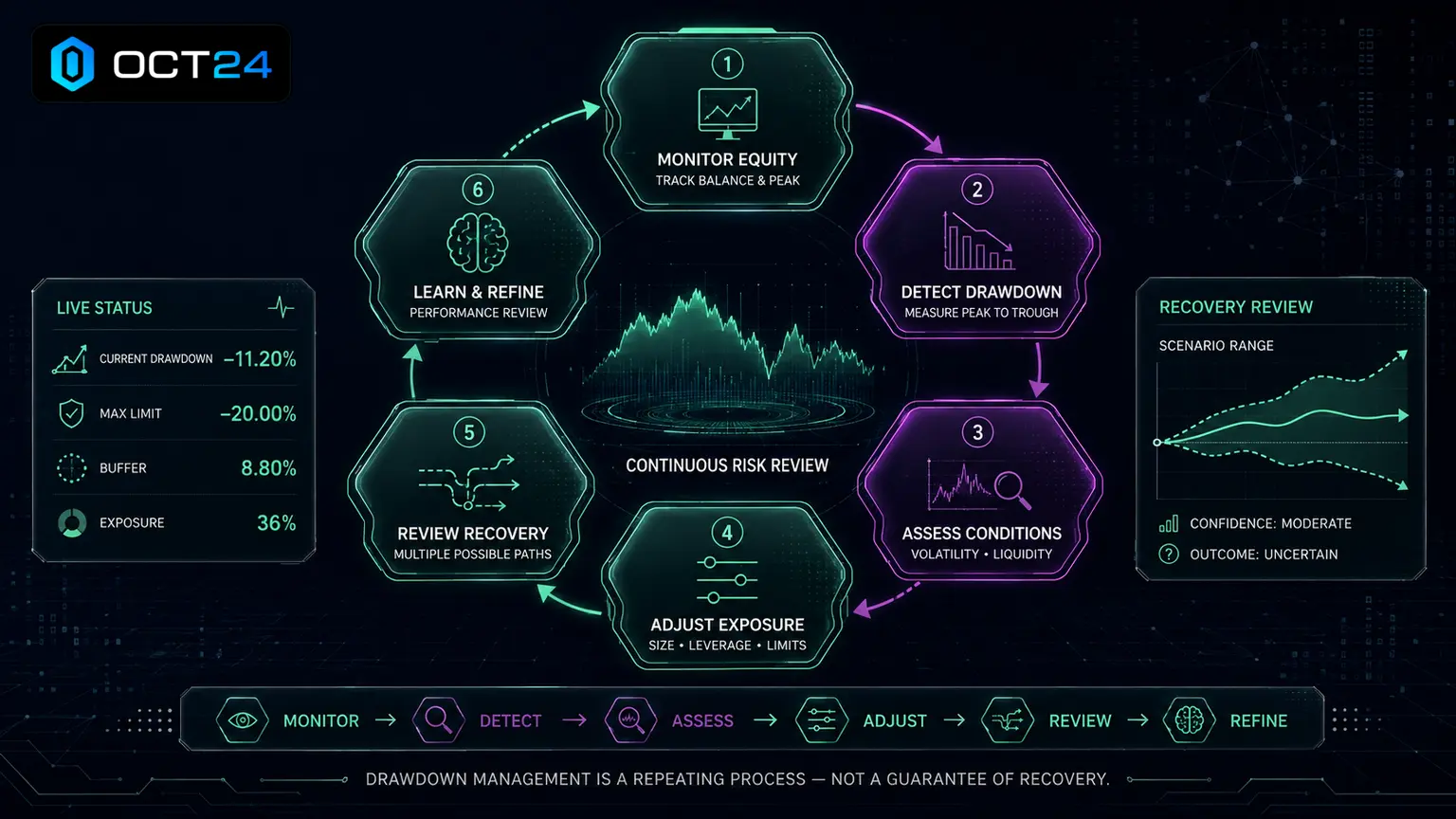
AI can help organize information during drawdowns. It can scan markets, compare conditions, and present structured signals faster than a human trader can manually review multiple charts.
AI can also help reduce random market searching. Instead of jumping from chart to chart looking for recovery trades, the trader can review whether current opportunities meet a defined process.
However, AI cannot guarantee a recovery. It cannot force a trader to reduce size. It cannot make an oversized position safe. It cannot remove the emotional pressure of seeing an account below a recent high.
This is why AI trading myths matter. AI should be treated as support, not certainty.
The strongest use of AI during drawdowns is not blind automation. It is structured review.
How AI helps traders spot drawdown pressure early
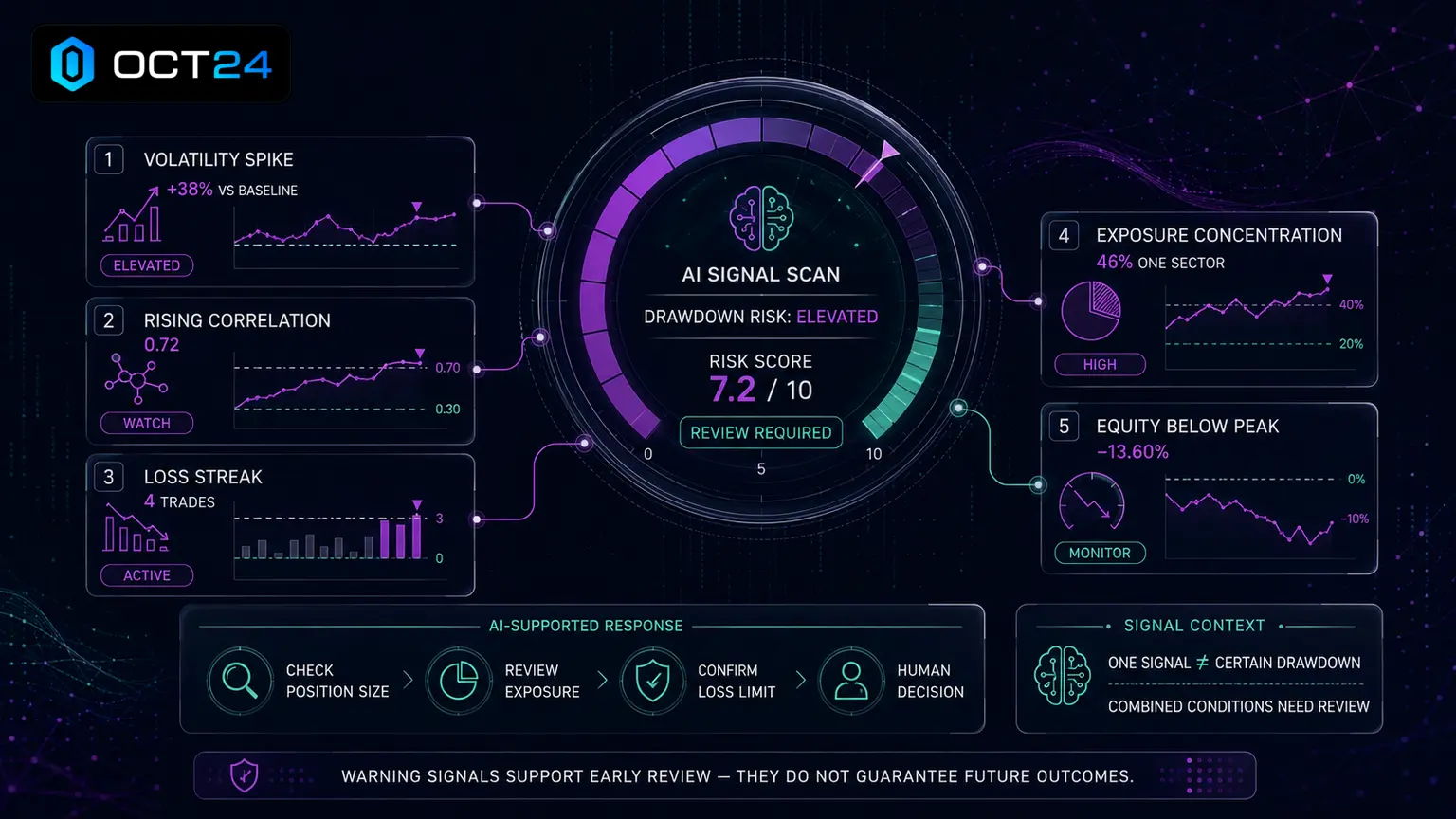
Drawdown often becomes easier to manage when it is noticed early. A trader who waits until the account is deeply below its peak may already be stressed, impatient, and tempted to recover quickly.
AI can help by supporting continuous market review and highlighting changing conditions before the trader becomes overwhelmed. This can be especially useful in fast crypto markets where volatility can shift quickly.
Early drawdown pressure may show up through several clues.
- More losing trades close together
- Lower-quality signals appearing more often
- Higher volatility than usual
- A strategy performing worse in current conditions
- The trader increasing trade frequency after losses
- The trader feeling pressure to recover quickly
This connects with how AI handles market volatility and 24/7 market monitoring. Monitoring does not remove risk, but it can help traders avoid being surprised by changing conditions.
How AI can reduce emotional drawdown decisions
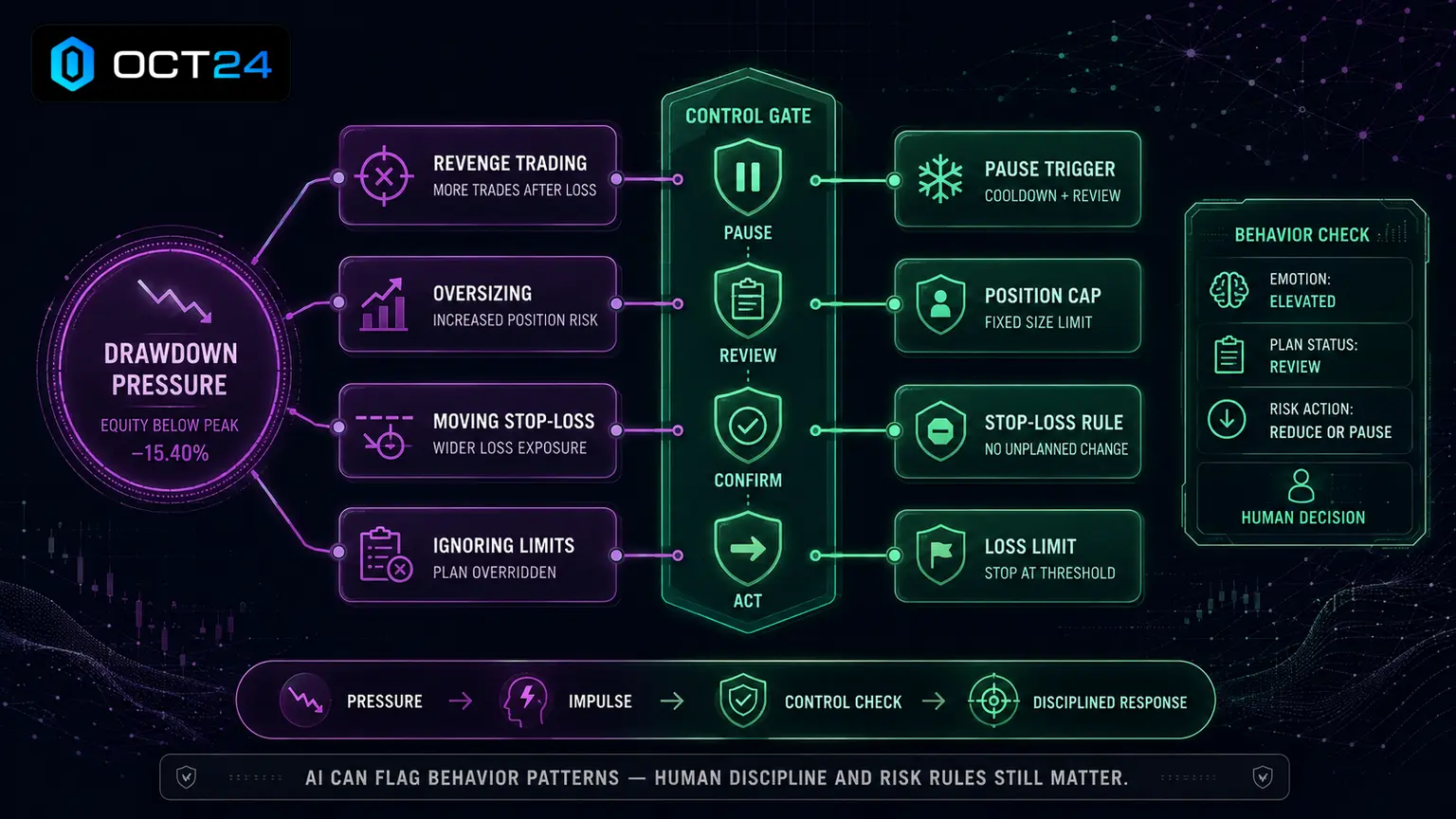
Drawdowns create emotion. Traders may feel fear, frustration, embarrassment, or urgency. These feelings can lead to decisions that make the drawdown worse.
AI can help by creating distance between the emotion and the action. Instead of reacting immediately, the trader can review the signal, the risk, and the current market condition.
This is closely connected to trading psychology. AI does not remove emotion from the trader, but it can make the trading process less dependent on emotion.
During a drawdown, the trader should ask whether the next decision follows the plan or simply tries to recover from pain.
A structured review can slow down the urge to click, chase, or increase size.
The point is not that AI removes emotion completely. The point is that AI can help create a more consistent decision environment when emotions are strongest.
AI-supported review can slow that reaction down. It gives the trader a clearer process to check before acting, which may reduce the chance of turning a normal losing period into emotional recovery trading.
This is especially useful because drawdown pressure often changes how traders think. A trader who would normally wait for a better setup may suddenly feel that any trade is worth taking if it could recover the account.
The trader should decide these stages before pressure rises. If the rules are clear before the decline happens, the trader is less likely to invent risky recovery decisions in the moment.
AI can support each stage by helping traders review whether the market still fits the strategy. If conditions have changed, forcing the same level of activity can make the drawdown harder to manage.
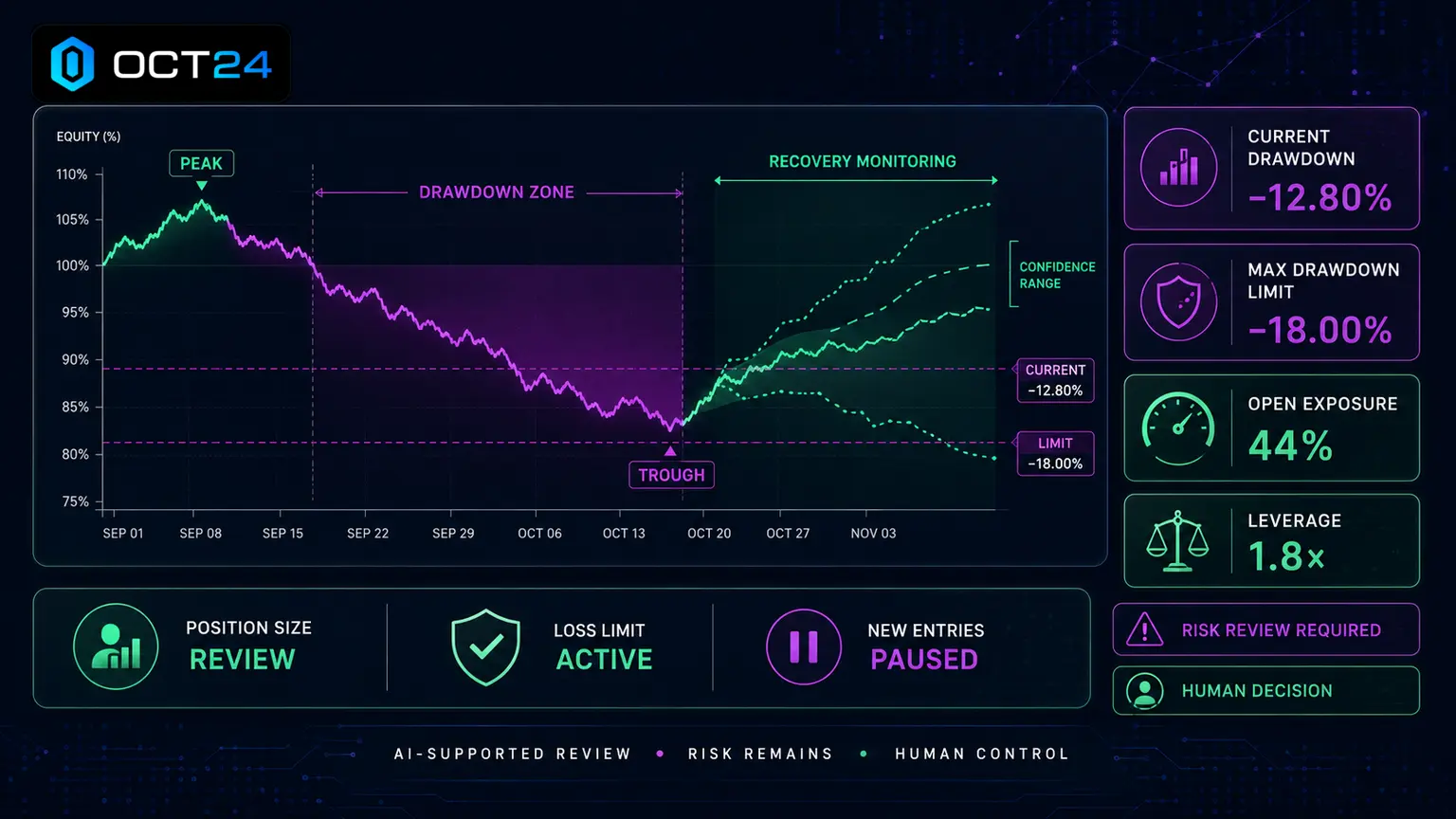
It can help to think of drawdown in stages. A small drawdown is usually a review point. A medium drawdown may require smaller size or fewer trades. A larger drawdown may require a full pause before any new action is taken.
How AI supports better risk checks during drawdowns
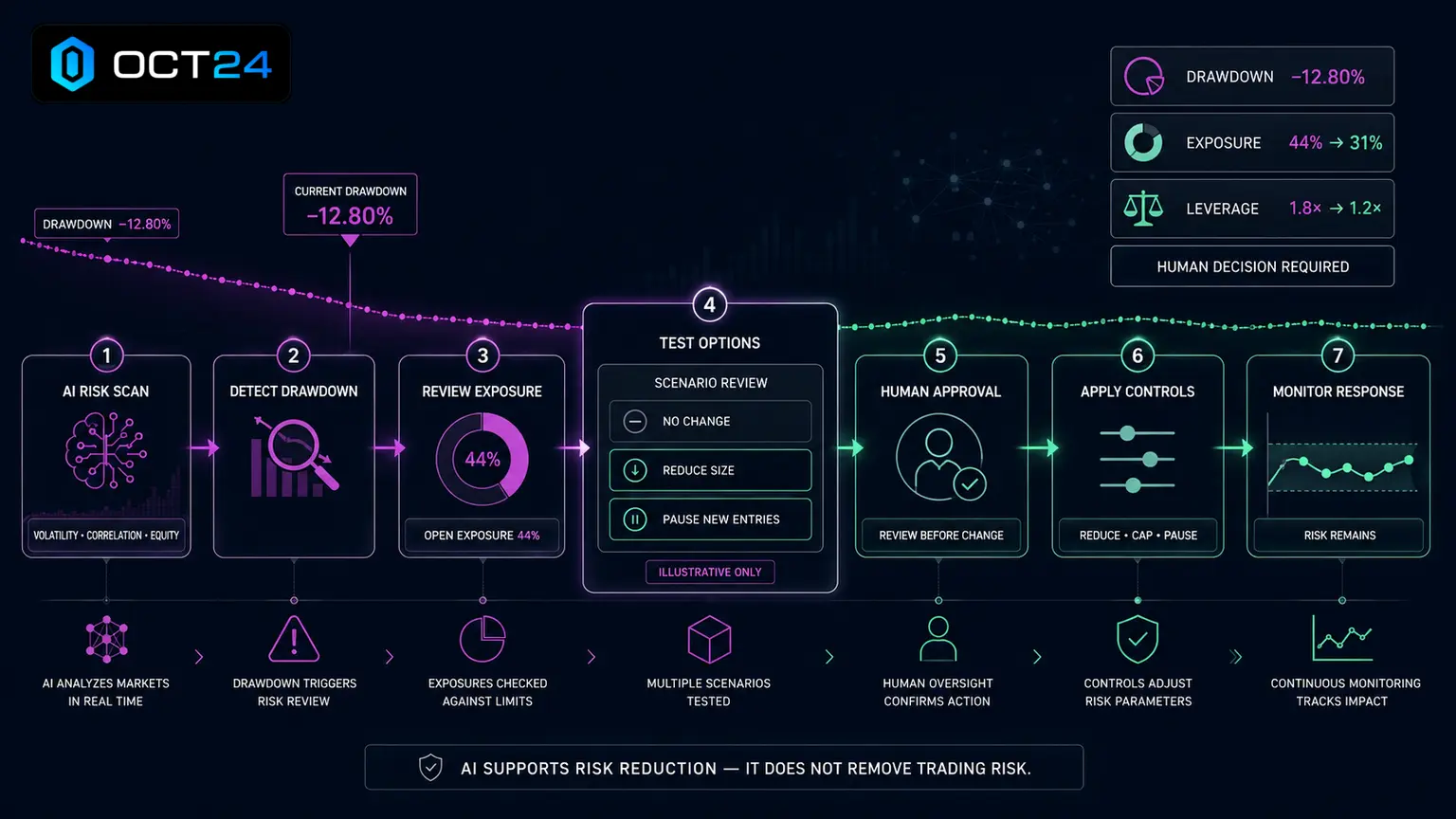
Drawdown management is risk management. When an account is below its recent high, the trader should become more selective, not more aggressive.
AI-supported tools can help traders review whether an opportunity still fits the current environment. They can also support a more consistent process around trade quality, volatility, and signal timing.
Useful risk checks include the following.
- Is the market currently volatile or stable
- Does the signal fit the strategy
- Is the position size smaller during drawdown
- Is the trader already near a daily or weekly loss limit
- Has trade frequency increased after losses
- Would waiting be safer than acting now
These ideas connect directly to trading bot risk management, position sizing controls, and AI trading risk vs reward.
AI can support that process by helping traders review current conditions instead of relying only on the desire to recover quickly.
This may mean using smaller capital allocations, skipping average-quality opportunities, or waiting until market conditions become clearer. A trader does not need to stop learning during drawdown, but they may need to slow execution.
Risk checks should also become more conservative as drawdown increases. When the account is already below a recent high, the trader has less room for careless decisions.
This is where AI-supported structure can be helpful. The trader has a consistent process to compare against instead of relying only on memory, emotion, or the feeling that the next trade must recover the account.
Drawdown rules should also be measured over time. A single loss may not require a major change, but several losses close together should trigger a more careful review.
Where OCT24 fits into drawdown management
OCT24 is designed to simplify AI-supported trading by presenting trade and bot opportunities in a structured way. The platform performs much of the market scanning and opportunity identification behind the scenes, then presents AI-supported signals for user review.
For accuracy, it is important to understand the current user experience. OCT24 does not currently provide a full on-platform market analysis dashboard for each opportunity, and users do not see detailed asset information or exact entry and exit points for every trade. Users review visible metrics such as target profit, loss coverage, and win rate.
These metrics can help traders think about potential reward, downside, and probability, but they do not remove drawdown risk. A trader can still create a difficult drawdown by using too much capital, clicking too often, or ignoring risk limits.
The G6 Trading Bot may support a faster AI-powered workflow, but speed should not replace discipline. During drawdowns, fast execution should be paired with slower review.
OCT24 works best when traders use it as part of a clear plan: review the opportunity, compare the metrics with account limits, decide whether the risk is acceptable, and stop when drawdown rules say to stop.
This keeps OCT24 inside a responsible workflow. The platform can present AI-supported opportunities, while the trader decides whether current exposure allows another action.
The trader can still review target profit, loss coverage, and win rate, but the account condition should matter. A trade that looks acceptable during normal conditions may be too aggressive during drawdown.
A practical OCT24 drawdown rule can be simple. If a trader reaches a defined daily or weekly drawdown level, the next step is review, not automatic execution.
How to use visible OCT24 metrics during drawdowns
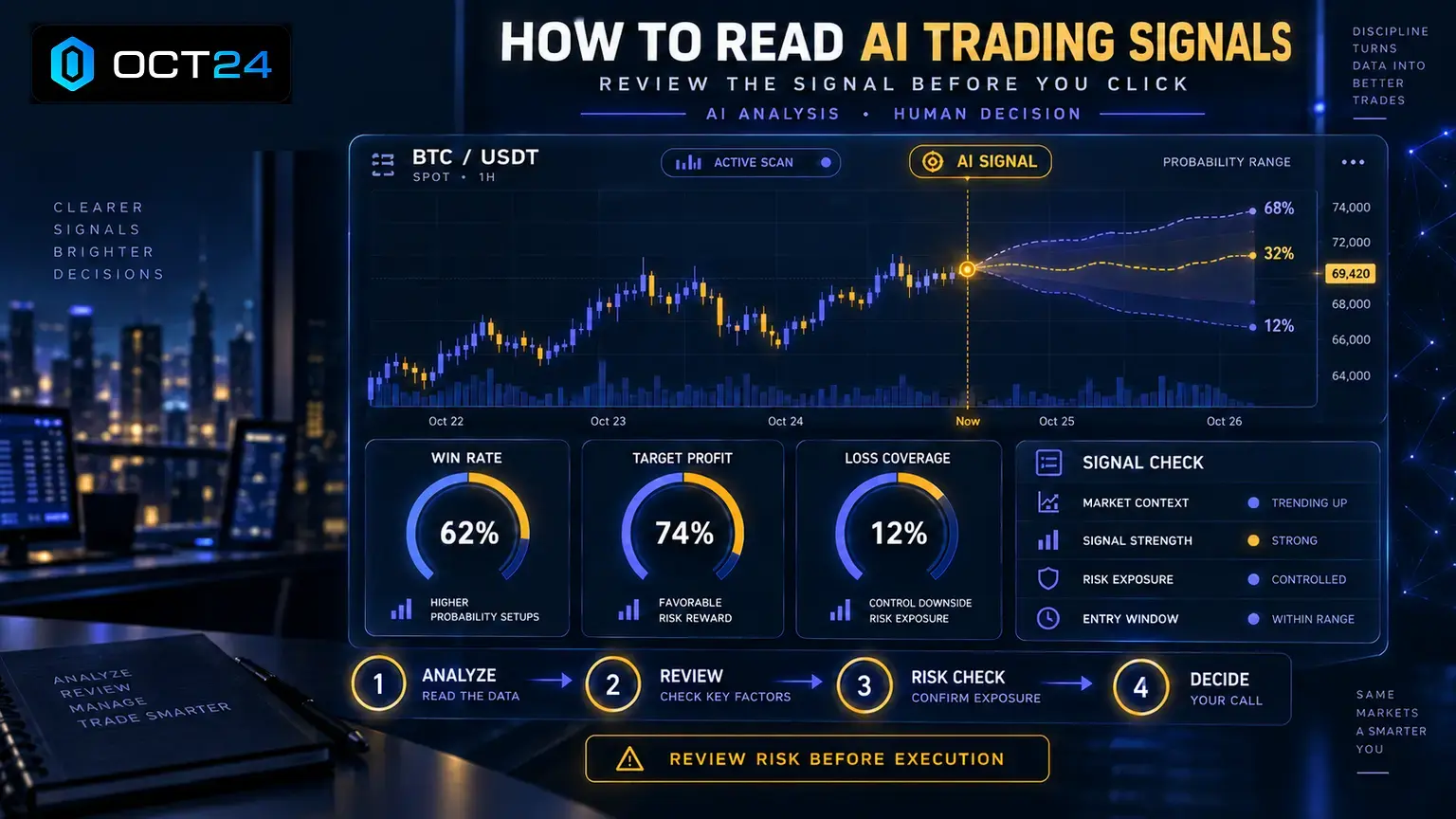
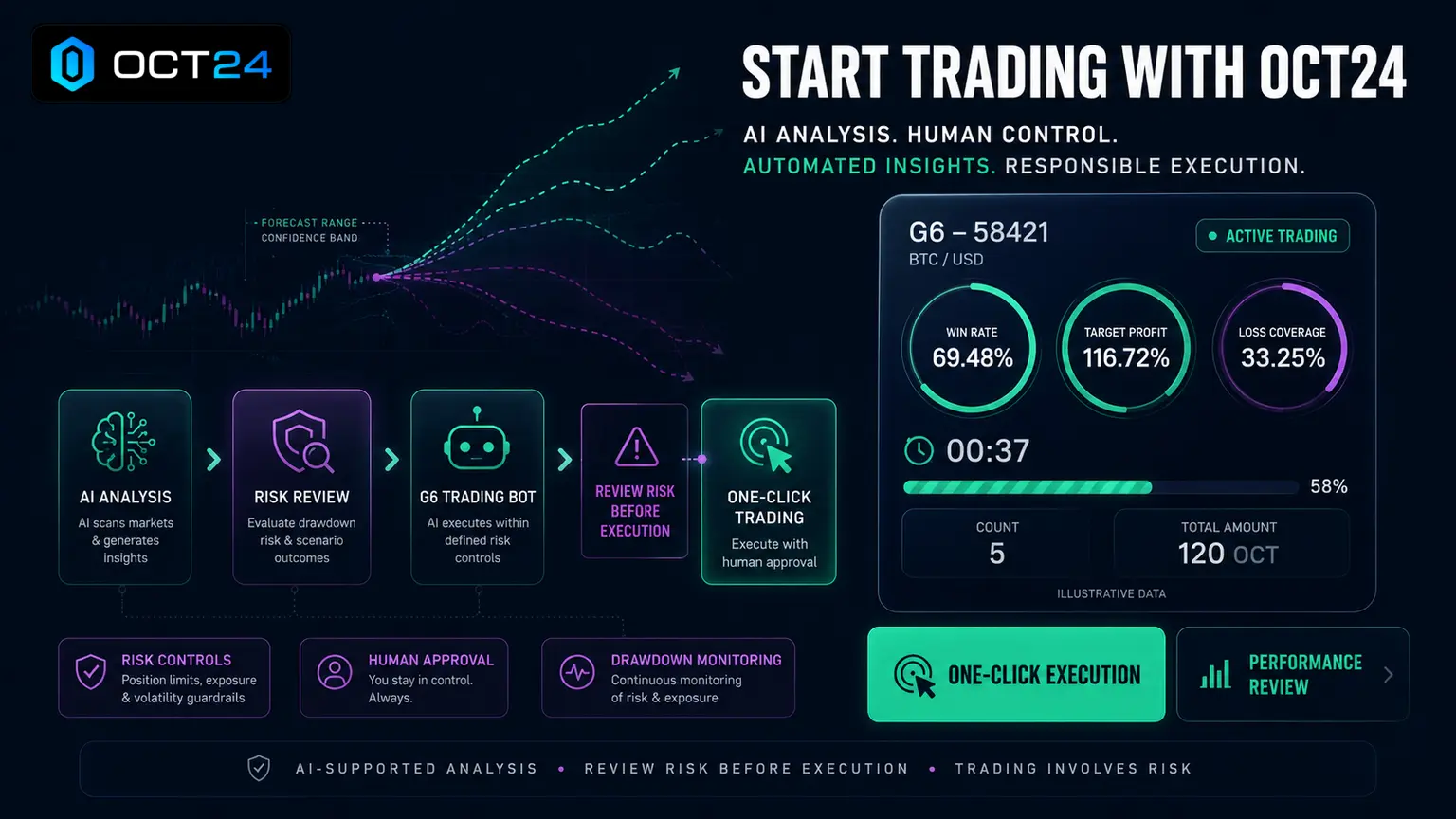
OCT24 users can keep drawdown review practical by focusing on the metrics available to them. Target profit, loss coverage, and win rate should be reviewed together, not separately.
Target profit helps frame possible upside. Loss coverage helps frame downside. Win rate gives useful context, but it should never be treated as a guarantee.
During a drawdown, a trader should become stricter with these metrics. A trade that might have been acceptable during a calm period may feel too aggressive when the account is already below a recent high.
A simple review might include these questions.
- Does the target profit justify the risk
- Is the loss coverage acceptable for my current account condition
- Am I acting because the win rate looks attractive or because the full setup fits
- Would this trade make the drawdown emotionally harder if it loses
- Should I reduce size or wait for a clearer opportunity
This is also where AI trading performance becomes useful. Performance review helps traders see whether drawdowns are normal, avoidable, or caused by behavior.
AI can help traders avoid recovery trading
Recovery trading happens when a trader tries to win back losses quickly. It is one of the most common ways a manageable drawdown becomes a larger one.
AI can help reduce recovery trading by giving traders a more structured place to start. Instead of searching randomly for the next trade, the trader can review whether an AI-supported opportunity actually fits the plan.
This connects with avoid overtrading. Drawdowns often become worse when trade frequency rises after losses.
A good rule is simple: do not increase risk because the account is down. A drawdown should usually lead to smaller decisions, not bigger ones.
AI can support this discipline, but the trader must still follow the rule.
Managing drawdowns across different market conditions
Drawdown management changes with market conditions. A strategy may behave differently in volatile markets, sideways markets, and strong trends.
AI can help traders review whether the market still fits the strategy. If conditions are noisy, signals may be less reliable. If the market is highly volatile, position size may need to be smaller. If the market is sideways, patience may matter more than activity.
This connects with AI trading during sideways markets and crypto market rotation. The reason for drawdown may not always be the strategy itself. Sometimes the market environment has changed.
A trader should ask whether current conditions support continuing, reducing activity, or pausing for review.
The goal is not to fight the market. The goal is to adapt before the drawdown becomes harder to manage.
How traders can build a drawdown response plan
A drawdown response plan should be written before the drawdown happens. If the trader waits until emotions are high, the plan may become too aggressive or too vague.
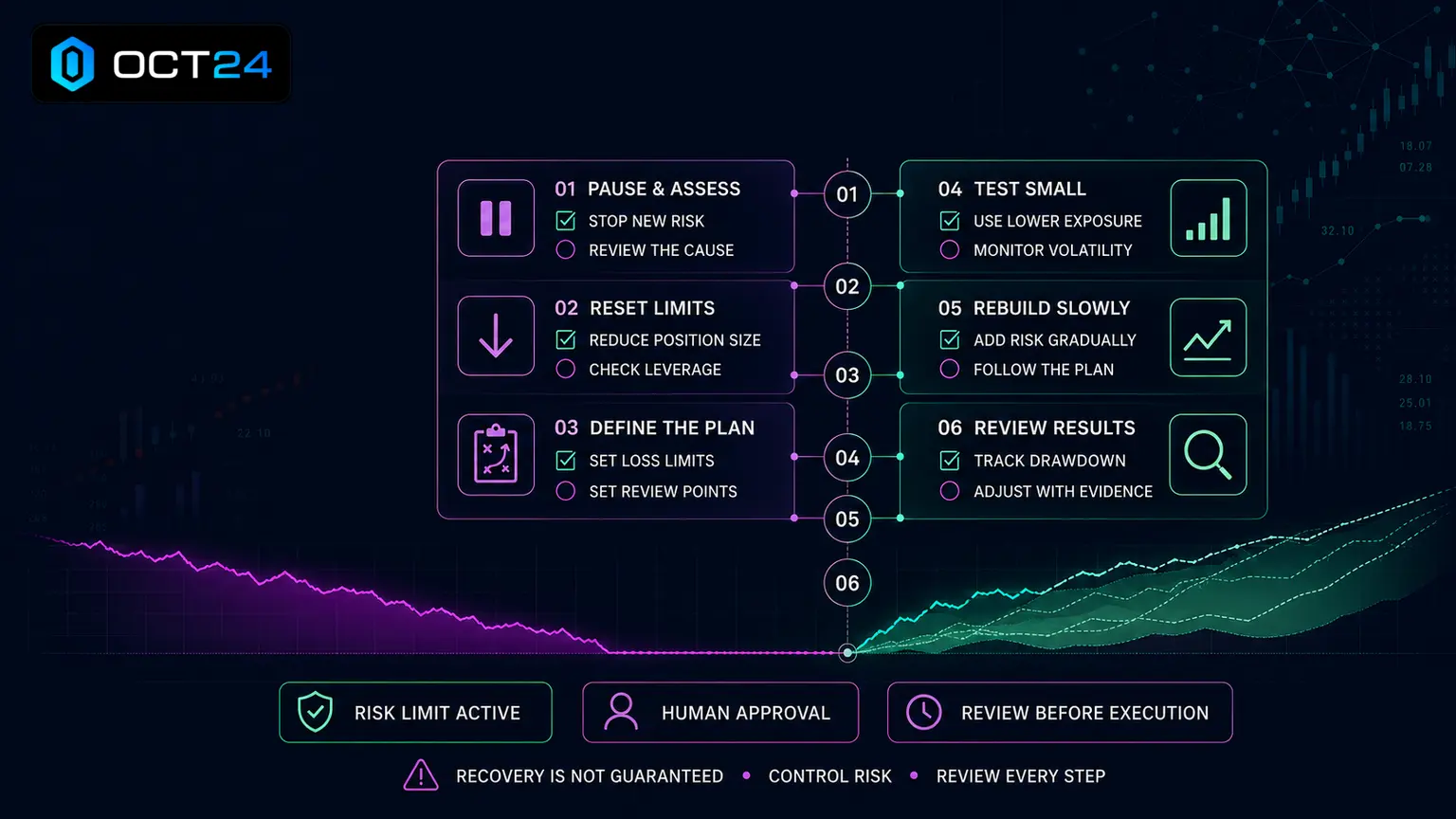
A simple response plan can include the following.
- Reduce position size after a defined account decline
- Pause after a set number of losses
- Stop trading when a daily loss limit is reached
- Review market conditions before taking another trade
- Avoid increasing capital allocation to recover quickly
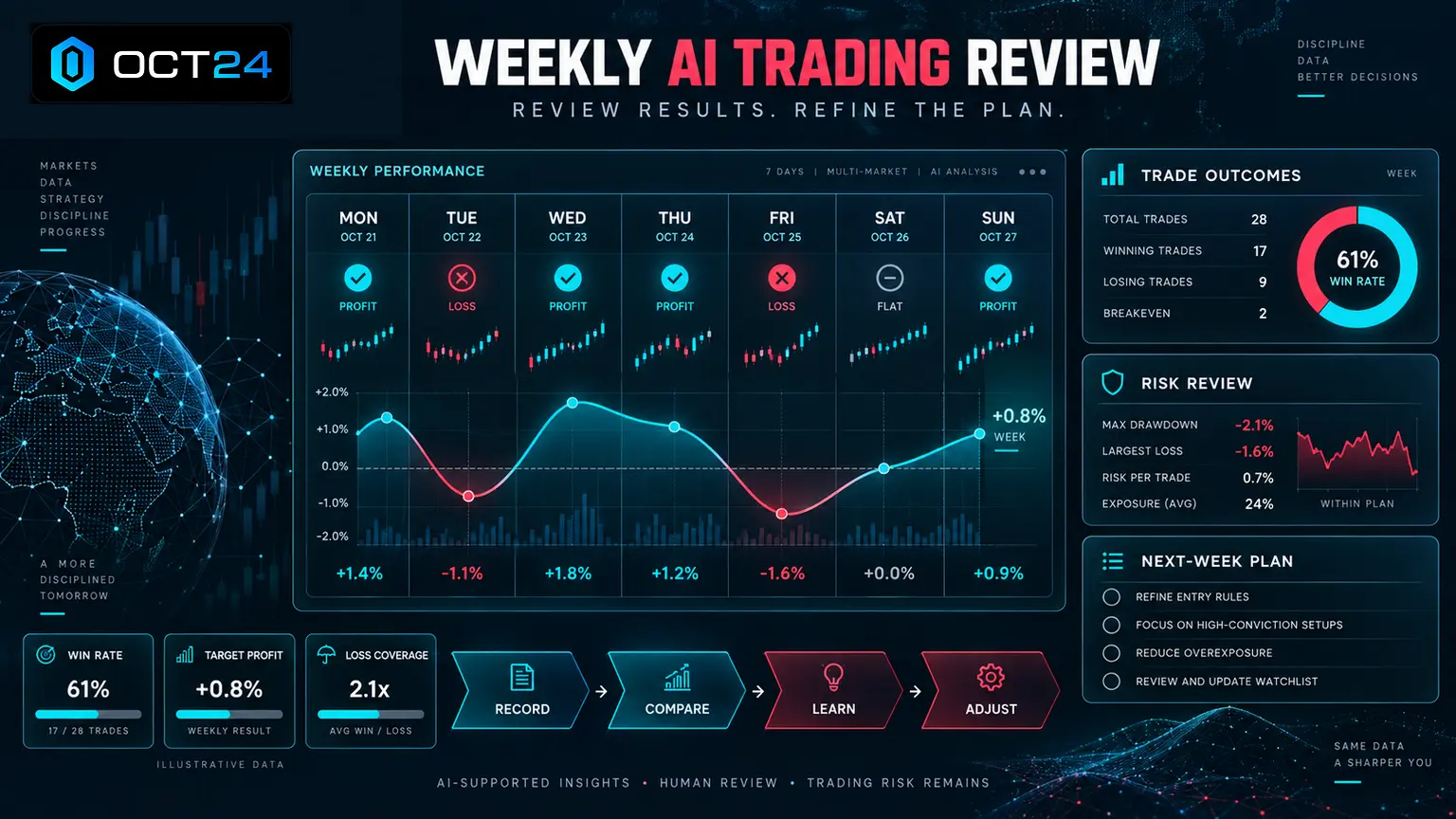
- Review performance at the end of the week
- Return to normal size only after the plan allows it
This fits naturally with a consistent trading routine. A routine turns drawdown management into a repeatable process instead of a stressful reaction.
The plan should be simple. If a trader cannot follow it during pressure, it is too complicated.
These rules sound simple, but they matter most when the trader feels pressure. Simple rules are easier to remember when the account is below its recent high.
A drawdown plan should also include what not to do. Do not increase size only because the account is down. Do not take trades that do not fit the plan. Do not treat a high win rate as permission to ignore exposure.
Common mistakes when using AI during drawdowns
AI can support better drawdown management, but traders can still use it poorly. The tool does not automatically fix behavior.
Common mistakes include the following.
- Taking every AI-supported signal during a drawdown
- Increasing trade size after losses
- Treating win rate as certainty
- Ignoring loss coverage because the trader wants recovery
- Using one-click trading too quickly
- Changing strategy after one bad session
- Stopping review because results feel uncomfortable
- Blaming the AI tool instead of reviewing capital allocation
These mistakes overlap with common AI trading mistakes. The problem is rarely one bad trade. The bigger issue is often the trader’s response after the trade.
AI can organize information. The trader still has to manage behavior.
How one-click trading should work during drawdowns
One-click trading can make execution faster after a trader has reviewed the opportunity. During drawdowns, this speed should be handled carefully.
A drawdown is not the time to click faster. It is the time to review slower. The execution step may still be simple, but the decision should be more deliberate.
Before using one-click execution during a drawdown, traders should ask whether the action fits their drawdown response plan.
If the answer is unclear, waiting may be the better decision. No trade is sometimes the most responsible trade.
OCT24 can make the final action efficient, but the trader remains responsible for deciding whether that action should happen at all.
How beginners should think about AI and drawdown recovery
Beginners should avoid thinking of AI as a recovery machine. AI can help organize analysis and opportunities, but it cannot force the market to give back losses.
A healthier mindset is to use AI as a decision filter. The trader reviews signals, metrics, and market conditions, then decides whether the opportunity supports gradual recovery or adds too much risk.
This is useful for anyone learning AI trading strategies for beginners, AI trading signals, or AI trading alerts.
Recovery should usually be slow, controlled, and based on the same rules that protected the account before the drawdown.
If the trader changes all rules during a drawdown, the AI-supported process becomes less useful.
Using OCT24 with a drawdown checklist
OCT24 users can build a simple drawdown checklist before reviewing any trade or bot opportunity. This keeps the platform inside a responsible trading process.
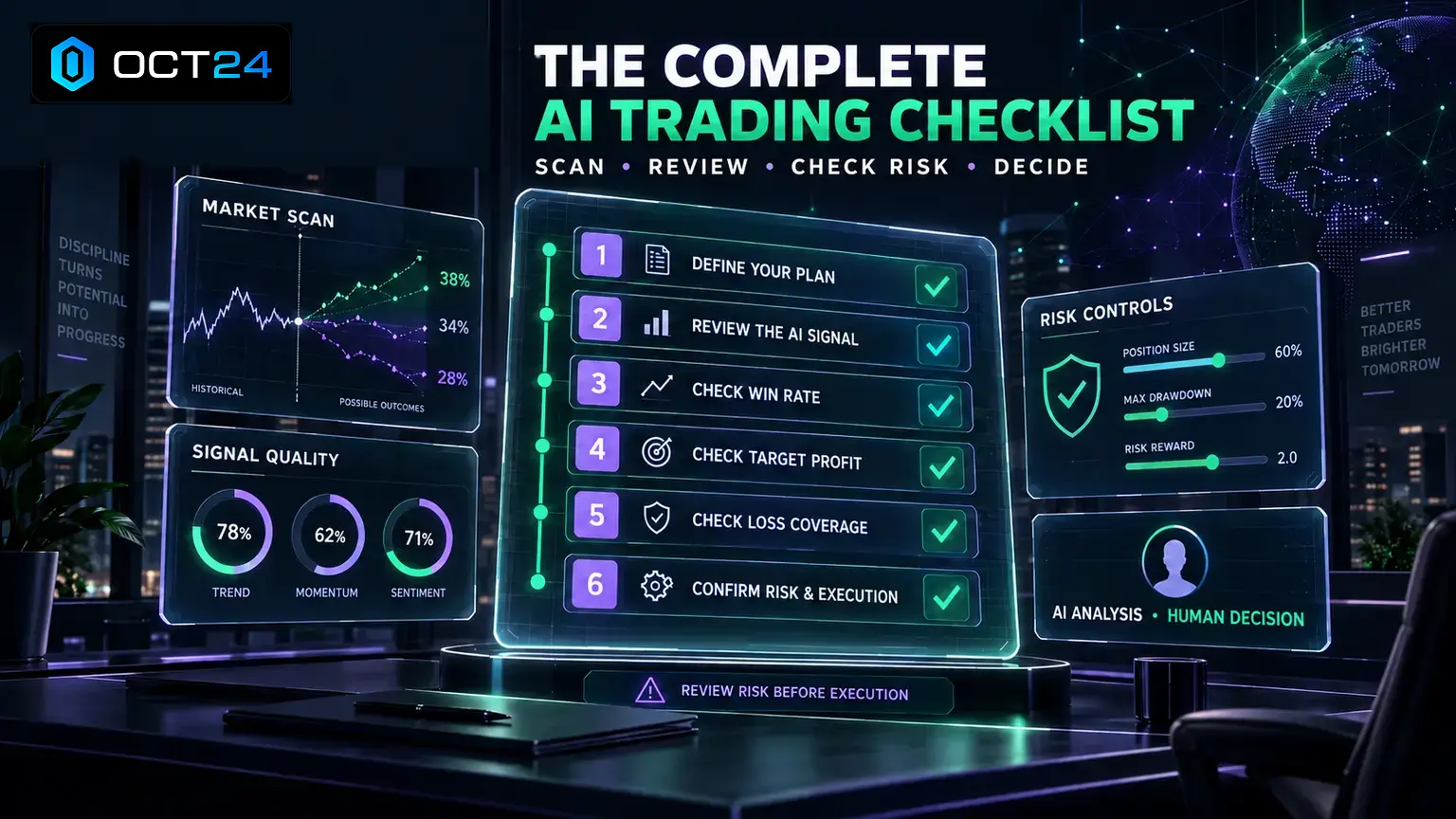
A useful checklist includes the following.
- Am I currently in a drawdown
- Have I reached my daily or weekly limit
- Does this opportunity fit my reduced-risk rules
- Do target profit, loss coverage, and win rate make sense together
- Am I using the G6 Trading Bot with clear capital limits
- Am I trying to recover quickly or follow a plan
- Would waiting protect my account better than acting
This checklist keeps the trader focused on process. It also helps make OCT24’s simplified workflow more disciplined.
Readers who want to understand the company’s approach can visit About OCT24. Traders ready to explore the platform can Start Trading with OCT24.
AI can support that rebuilding process, but it cannot do the discipline for the trader.
A better approach is to rebuild the process first. If the trader can follow the plan again, reduce emotional actions, and review opportunities calmly, the account has a stronger foundation for future decisions.
Drawdown recovery should also be gradual. Trying to recover everything in one trade often creates larger risk than the original drawdown.
FAQs
Can AI prevent drawdowns completely?
No. AI cannot prevent every drawdown. It can support monitoring, signal review, and risk checks, but trading still involves uncertainty.
How does AI help traders manage drawdowns?
AI can help by scanning market conditions, organizing signals, supporting risk review, and reducing emotional decision-making during losing periods.
Should traders increase size to recover from drawdown?
Usually no. Increasing size during drawdown can make losses worse. Many traders reduce size or pause until conditions improve.
Does OCT24 remove drawdown risk?
No. OCT24 does not remove trading risk or guarantee results. Traders remain responsible for risk settings, exposure, capital allocation, and execution decisions.
What OCT24 metrics matter during drawdowns?
Target profit, loss coverage, and win rate can help users review opportunities, but they should be compared with account limits and current drawdown rules.
Can the G6 Trading Bot help during drawdowns?
The G6 Trading Bot can support a faster AI-powered workflow, but traders still need clear limits and responsible capital allocation.
What is recovery trading?
Recovery trading means taking trades mainly to win back losses quickly. It often increases risk and can make drawdowns worse.
How often should traders review drawdown?
Traders should review drawdown during regular performance checks, after losing streaks, and whenever account decline reaches a predefined limit.
Can AI help with trading psychology during drawdowns?
AI can support a more structured process, which may reduce impulsive decisions. It cannot remove emotion completely.
What is the best drawdown rule for beginners?
A simple rule is to reduce activity or pause when a defined daily or weekly loss limit is reached.
Final thoughts
AI can help traders manage drawdowns by making the review process more structured, consistent, and risk-aware. It can support market scanning, signal review, and calmer decision-making during losing periods.
The main benefit is discipline. AI can help traders avoid random recovery trades, review changing market conditions, and compare opportunities against risk limits.
OCT24 supports this process by presenting AI-supported trade and bot opportunities with visible metrics such as target profit, loss coverage, and win rate. Those metrics can help users review opportunities more clearly, but they do not guarantee recovery or remove risk.
The trader remains responsible for risk settings, exposure, capital allocation, and execution decisions.
Used responsibly, AI can help traders manage drawdowns with more structure and less emotion. The goal is not to avoid every loss. The goal is to protect capital and stay disciplined when losses happen.
Start Trading with OCT24 to explore a simpler AI-supported trading experience while keeping drawdown management and risk control at the center of every decision.