
Understanding AI Trading Signals
AI trading signals are one of the most useful parts of an AI-supported trading workflow, but they are also one of the easiest things to misunderstand. A signal can point to a possible opportunity, but it is not a promise, a command, or a guaranteed result.
For beginner and intermediate traders, the goal is simple: understand what the signal is saying, check whether it still makes sense, review the risk, and then decide whether to act.
OCT24 performs most of the market analysis by scanning market conditions, identifying potential opportunities, and presenting AI-supported trading signals. That can save time and reduce manual chart review, but traders still need to manage risk settings, exposure, capital allocation, and execution decisions.
A good signal helps you focus. A responsible trader still decides whether the trade fits the plan.
What Are AI Trading Signals?
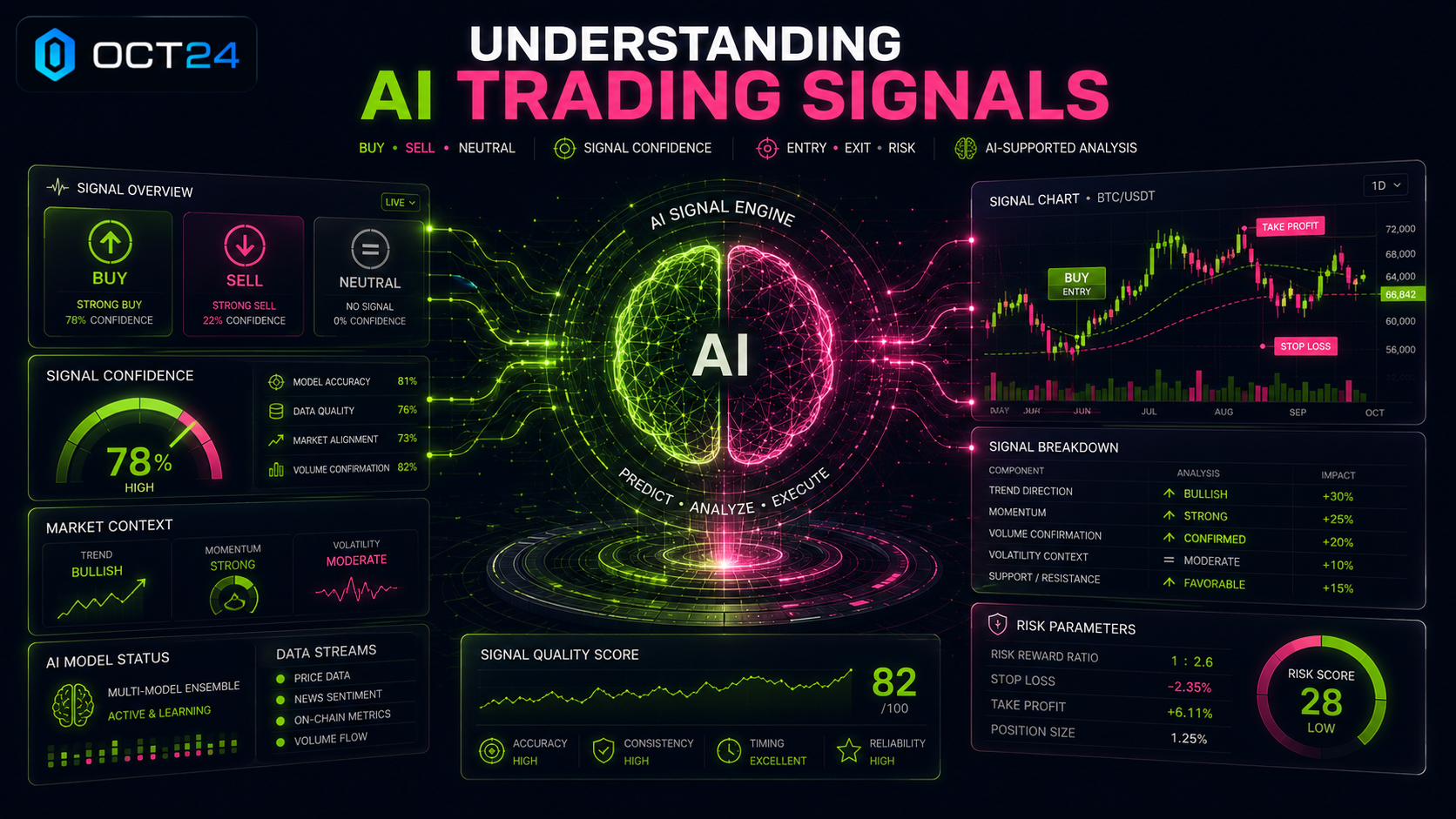
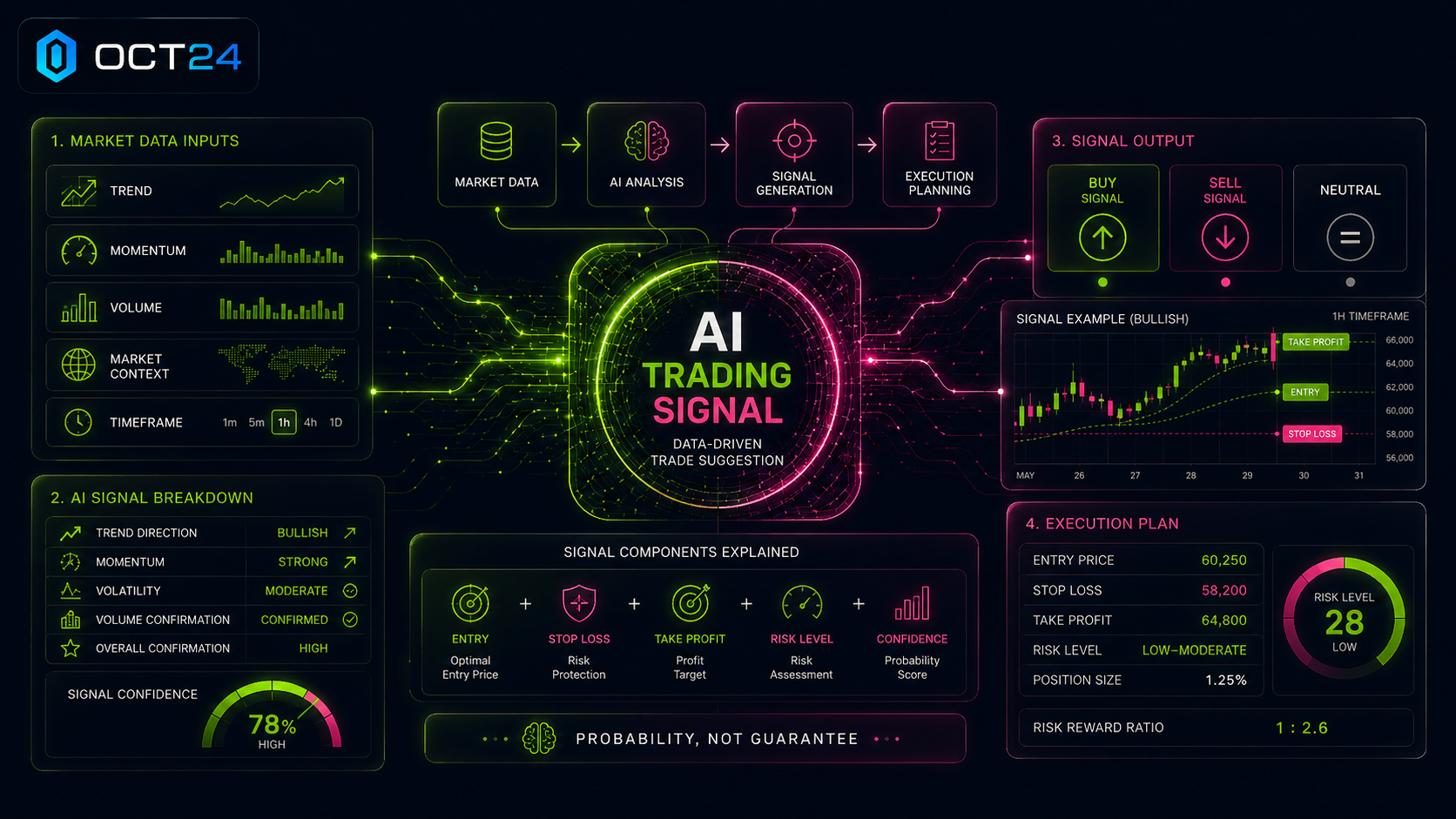
AI trading signals are alerts or recommendations created after a system analyzes market data. They may suggest that a market is showing conditions for a possible buy, sell, hold, exit, or review decision.
In simple terms, a signal says: something in the market may be worth looking at now.
That does not mean the trader should enter automatically. A signal is decision support. It gives the trader a structured starting point for review.
This matters because AI trading can process price action, volume, momentum, volatility, and other market conditions much faster than a person checking charts one by one. If you already understand the basics of AI trading, signals are where that analysis becomes practical.
A signal may include:
- The asset or market being reviewed
- The possible direction of the opportunity
- The market condition that triggered the signal
- A suggested entry area or review area
- Risk details such as stop-loss planning or exposure reminders
- A confidence level or signal strength, when available
OCT24 uses AI-supported analysis to organize this kind of information so the trader can review it more efficiently. The signal helps reduce searching time, but it does not remove the need for judgment.
Why Trading Signals Matter
Trading signals matter because markets move quickly and traders can miss opportunities while reviewing too many charts manually. Signals help narrow attention to markets that may deserve review.
For example, a trader may want to find markets with rising momentum, increasing volume, and a clean breakout pattern. Checking that manually across several assets takes time. AI-supported systems can scan those conditions faster and present potential matches.
This is one reason traders compare AI trading vs manual trading. Manual review can be thoughtful, but it is slower. AI-supported signal scanning can help traders focus on the most relevant market conditions sooner.
Signals are also useful for traders with limited time. Someone who cannot watch charts all day may use AI-supported signals to reduce the amount of manual searching required. That can be especially helpful for AI trading for busy professionals.
The important point is that signal delivery should improve decision quality, not create pressure to trade more often.
Useful signals help traders ask better questions:
- Is the setup still current?
- Does the signal match my strategy?
- Has price already moved too far?
- Is volatility unusually high?
- What is the downside if the trade fails?
- How much exposure do I already have?
Buy, Sell, Hold, and Exit Signals
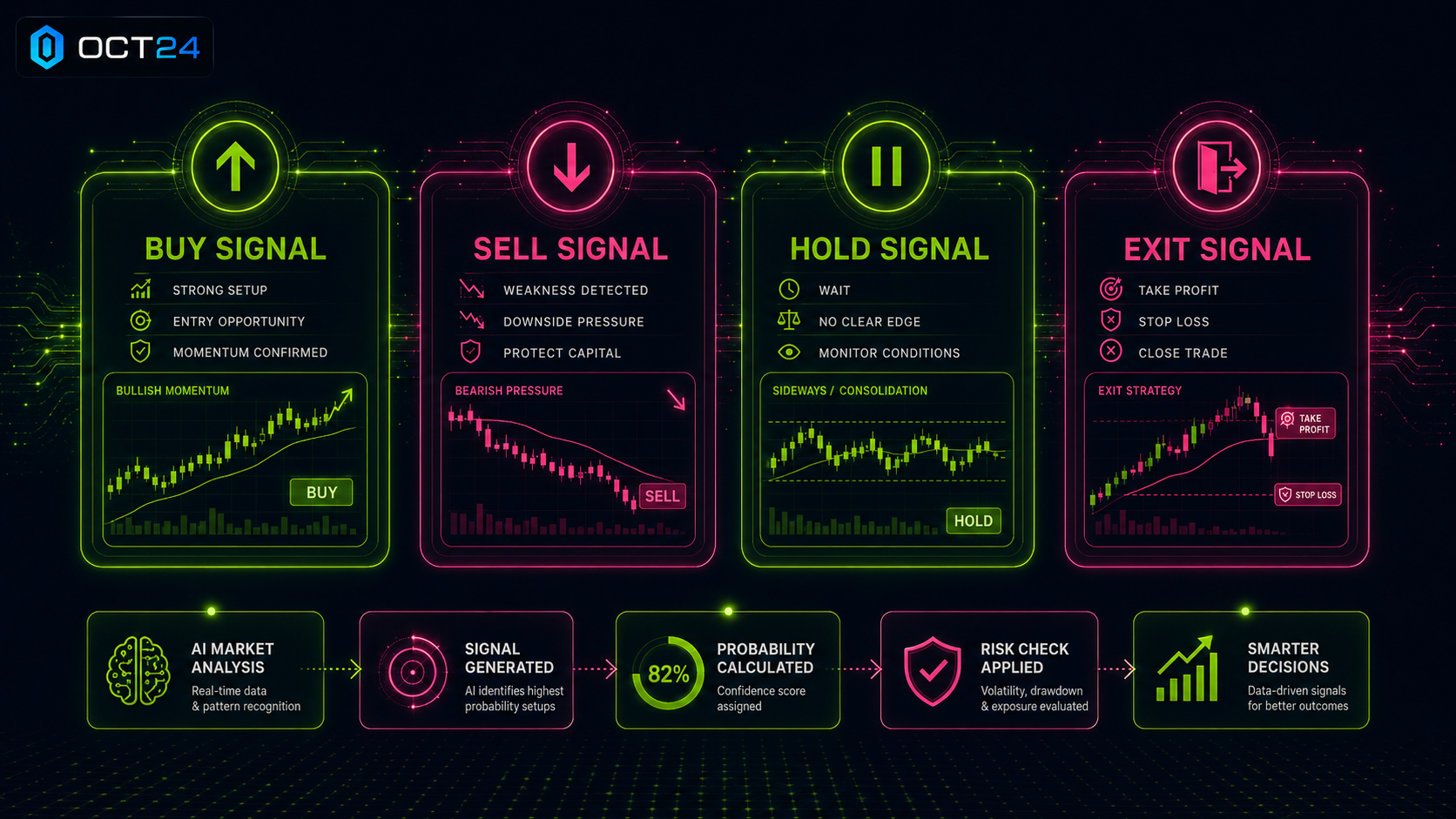
Not every signal means the same thing. Some signals suggest a possible entry. Others suggest caution, continuation, exit, or no action.
A buy signal may appear when the market shows conditions that support a possible upward move. A sell signal may appear when conditions point to possible weakness or downside pressure. A hold or review signal may suggest that the market is not giving enough confirmation yet.
An exit signal can be just as important as an entry signal. Many traders focus too much on when to enter and not enough on when to reduce risk, take profit, or step aside.
The best way to think about signals is not as instructions, but as structured information.
A signal may say that conditions are developing. The trader decides whether the conditions are suitable.
How AI Trading Signals Are Created
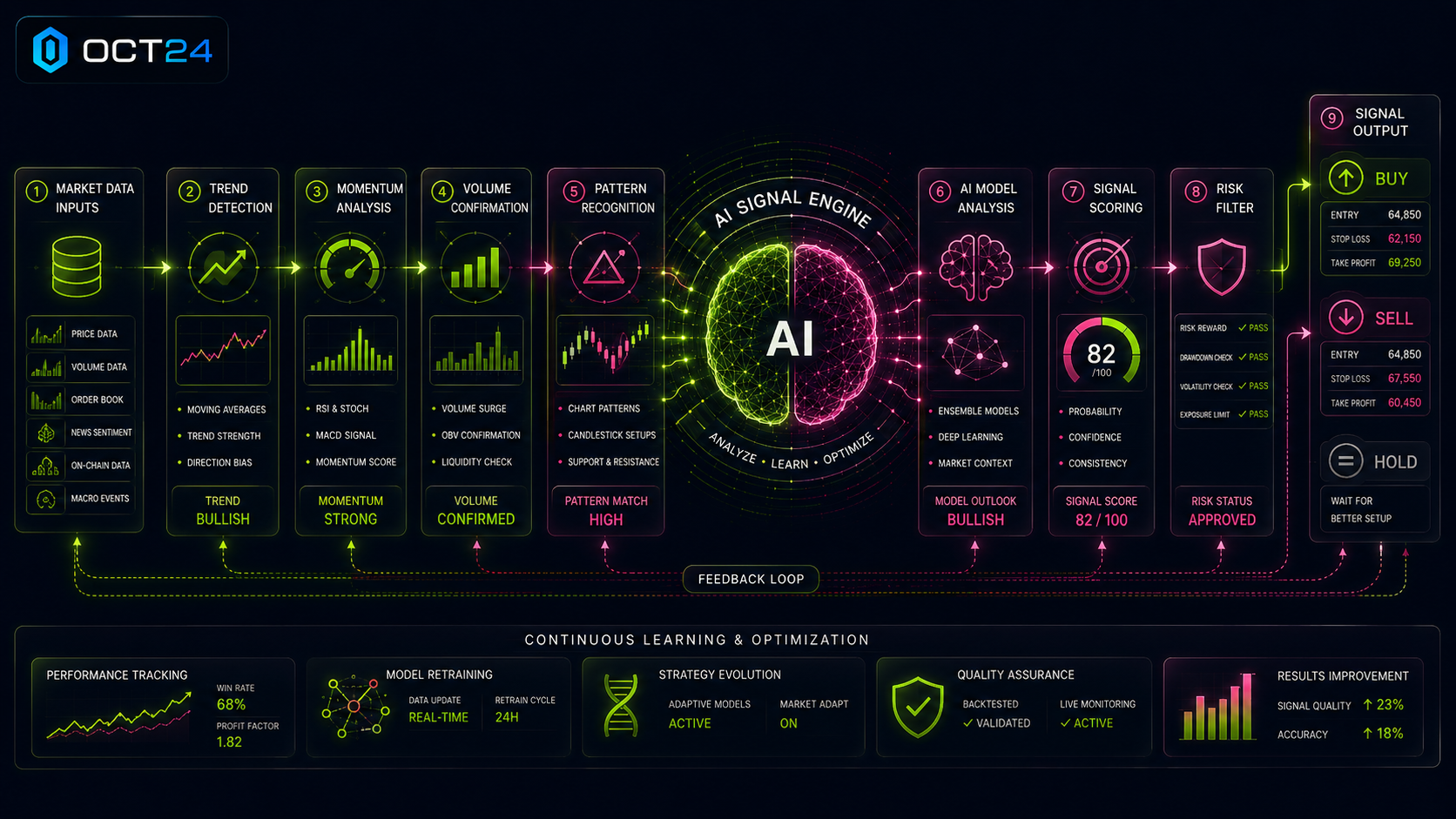
AI trading signals are usually created through several steps. The system collects market data, compares conditions, applies strategy rules, checks for patterns, and then decides whether the market meets enough criteria to create a signal.
This is a practical extension of how AI trading bots work. The system is not just looking at one chart. It may compare many conditions at once, depending on how the platform is designed.
AI may review factors such as:
- Price movement
- Trend direction
- Trading volume
- Momentum strength
- Support and resistance areas
- Volatility changes
- Market timing
- Recent activity across related assets
This connects naturally to how AI uses technical analysis. Technical indicators can help identify trends, momentum shifts, breakouts, pullbacks, and potential reversal areas.
However, technical analysis is not perfect. AI may process technical data faster and more consistently, but markets can still change unexpectedly.
That is why OCT24 presents signals as AI-supported information. The platform performs most of the analysis, while the trader still reviews the signal and manages the risk.
What Makes a Signal Stronger?
A stronger signal usually has more confirmation behind it. That means several market conditions are pointing in the same direction.
For example, a signal may be more useful if price is moving with the trend, volume is increasing, momentum is improving, and volatility is still manageable.
A weaker signal may appear when the market is noisy, price is moving sideways, volume is low, or the setup conflicts with the wider trend.
Signal strength can depend on:
- How clear the trend is
- Whether volume supports the move
- Whether momentum is increasing or fading
- Whether the entry area still makes sense
- Whether volatility is normal or unusually high
- Whether the trade fits the trader's risk plan
Even a strong signal can fail. A strong signal simply means the setup may deserve more attention. It does not mean the outcome is certain.
This is where trading psychology matters. A trader may see a strong-looking signal and feel pressure to act quickly. The better response is to slow down enough to check the evidence.
Signal Confidence Does Not Mean Certainty
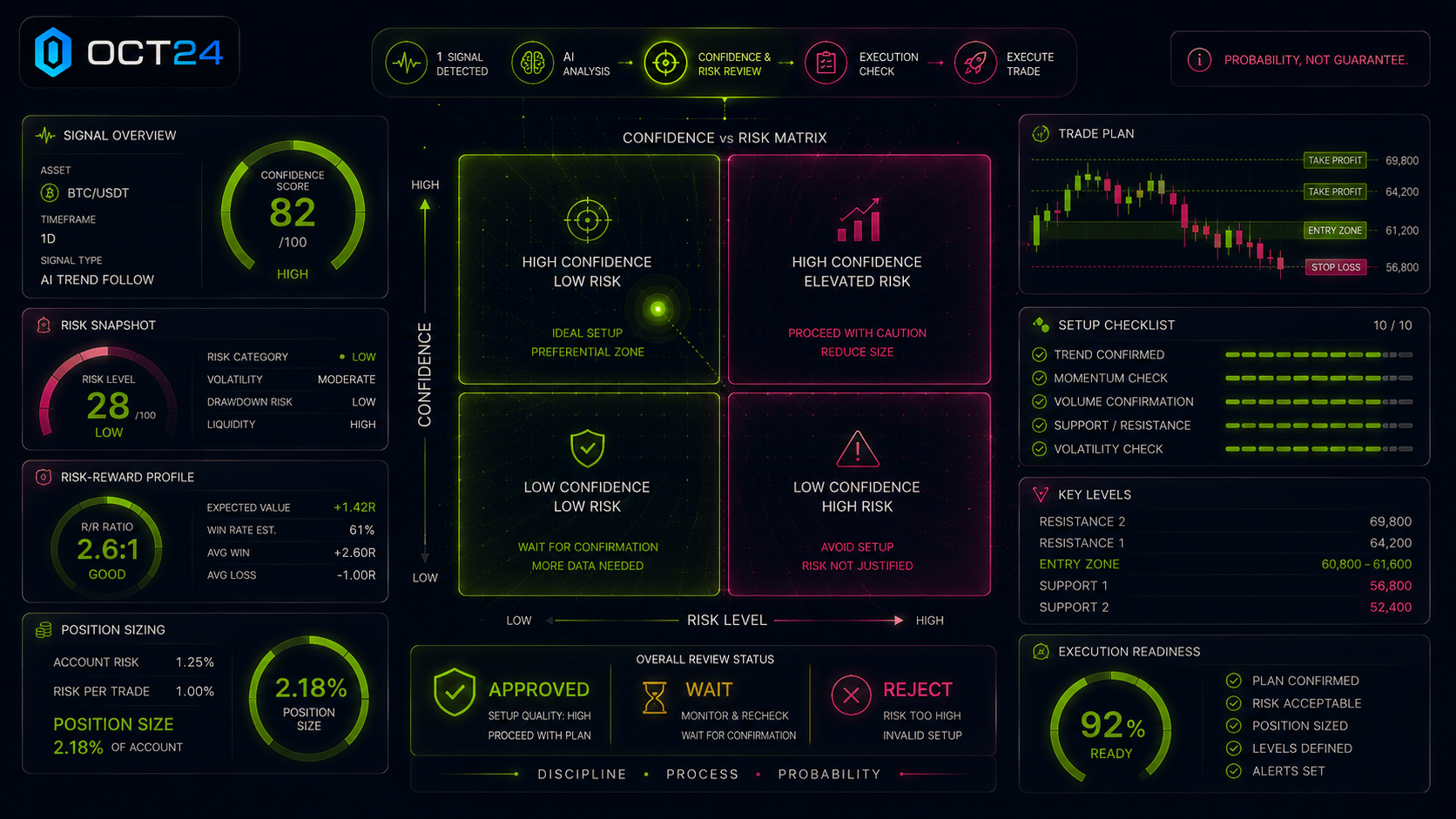
Some platforms may show a confidence score, signal strength, or probability rating. These can be helpful, but they must be interpreted carefully.
A confidence score does not mean the market will definitely move in the expected direction. It usually means the system has found a stronger match between the current market and its signal criteria.
This is an important difference. AI can compare patterns, update analysis, and highlight changing market conditions. But AI cannot predict the market with certainty.
Unexpected news, liquidity changes, sudden volatility, and large orders can all change the result after a signal appears.
A responsible trader treats confidence as one input. It should support the review process, not replace it.
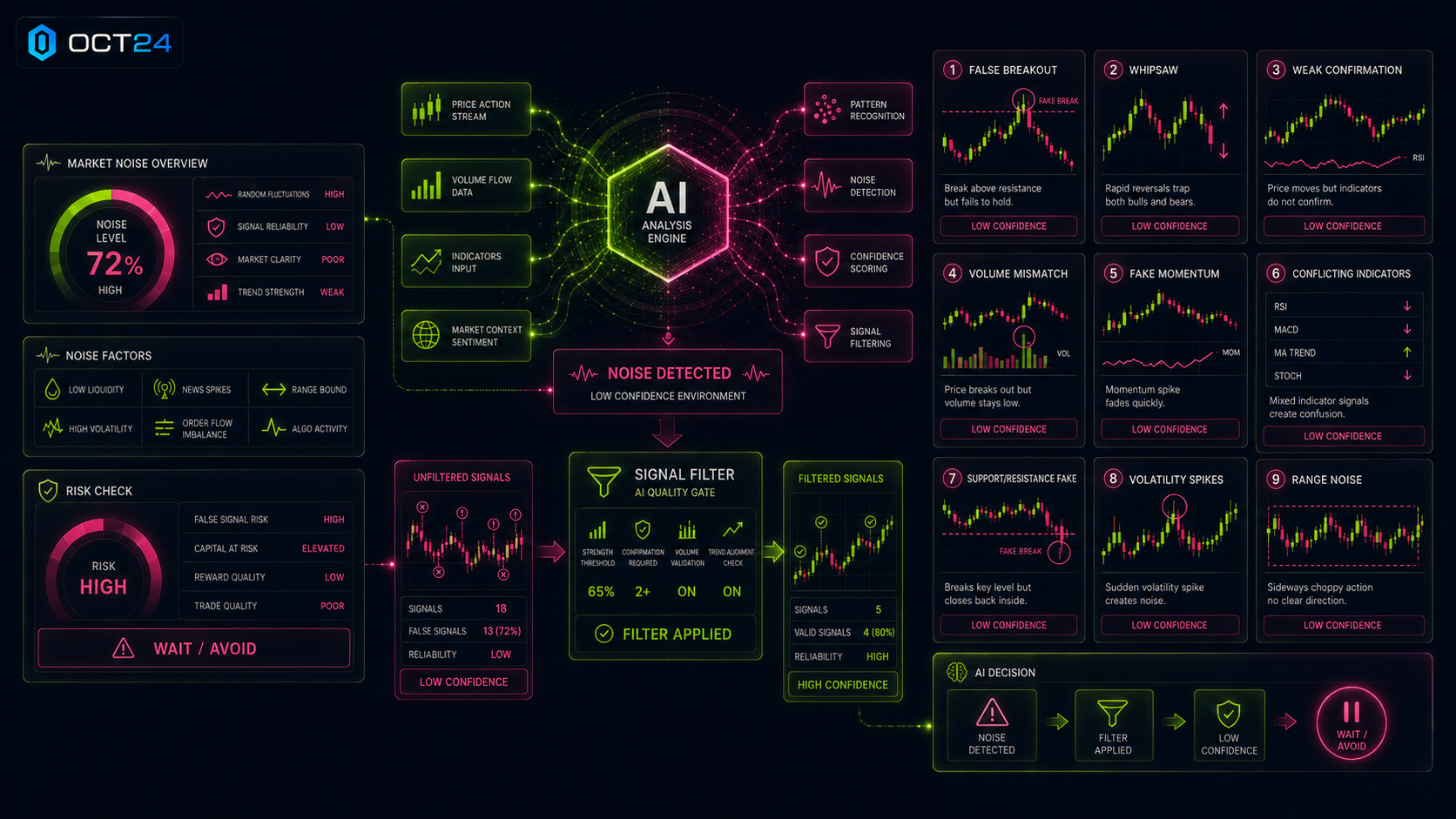
Why False Signals Happen
A false signal happens when a setup looks promising but does not follow through. This is normal in trading.
False signals can happen because markets are noisy. Price may briefly break a level, trigger a signal, and then reverse. Momentum may appear strong for a short time and then fade.
False signals are more common when:
- Volume is weak
- The market is moving sideways
- Volatility is unusually high
- News changes market sentiment
- Liquidity is thin
- Traders chase price after the move has already happened
This is one reason common AI trading mistakes include blind trust in every signal. A signal can be useful and still be wrong.
OCT24 can help by scanning market conditions and presenting AI-supported trading signals, but the trader still needs to check whether the signal remains suitable before acting.
How Volatility Affects Trading Signals
Volatility can make signals more active and harder to judge. During fast market moves, price can change quickly between signal generation and trader review.
This is why understanding how AI handles market volatility matters. AI can monitor changing conditions faster than manual chart review, but volatility can still increase slippage, widen stop-loss needs, and make a setup less attractive.
For example, a signal may appear during a sharp breakout. By the time the trader reviews it, price may have already moved far from the original area.
The signal may still point to a real market move. But the risk-to-reward may no longer be suitable.
In that situation, the better decision may be to wait, reduce size, or skip the trade.
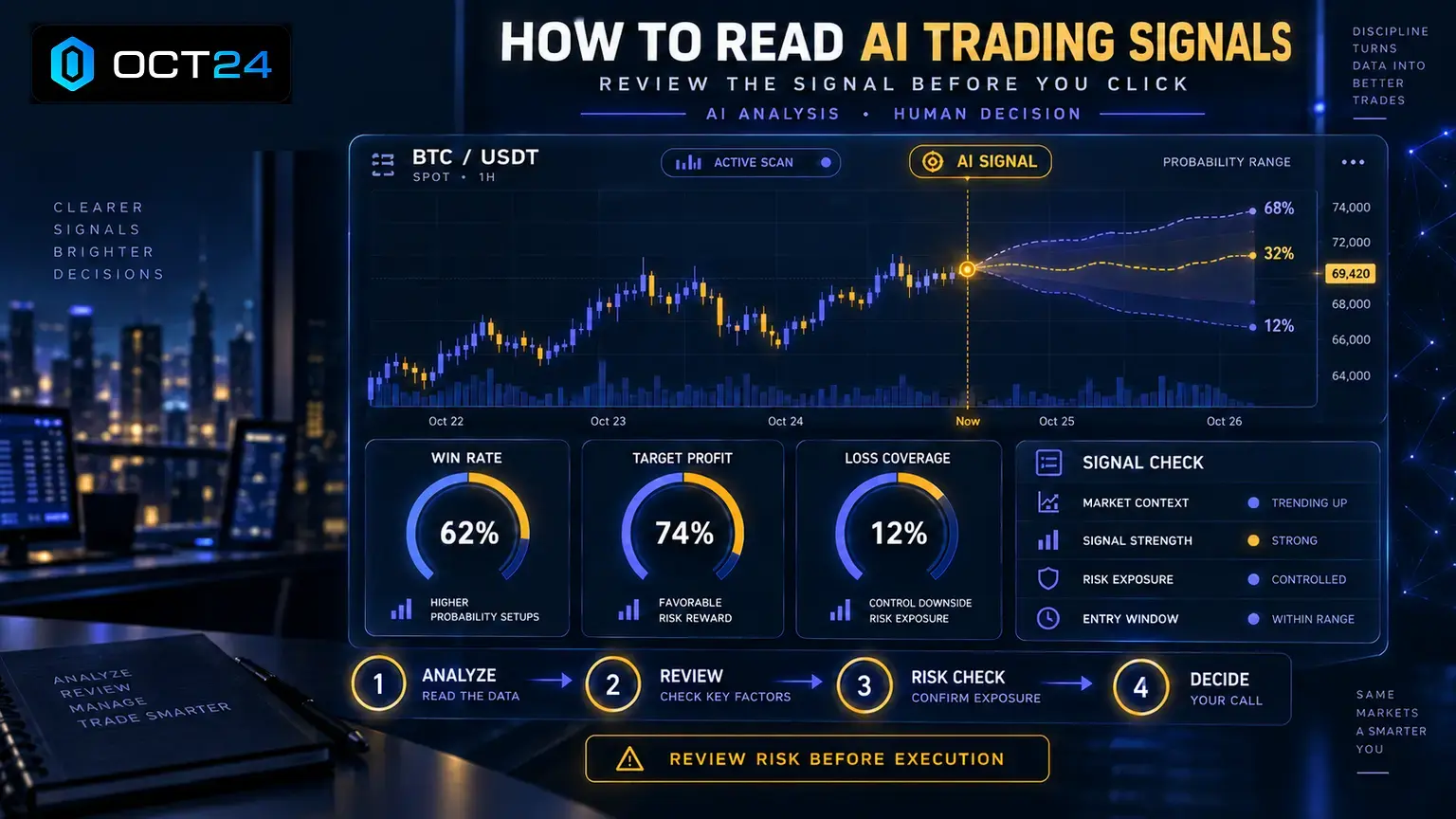
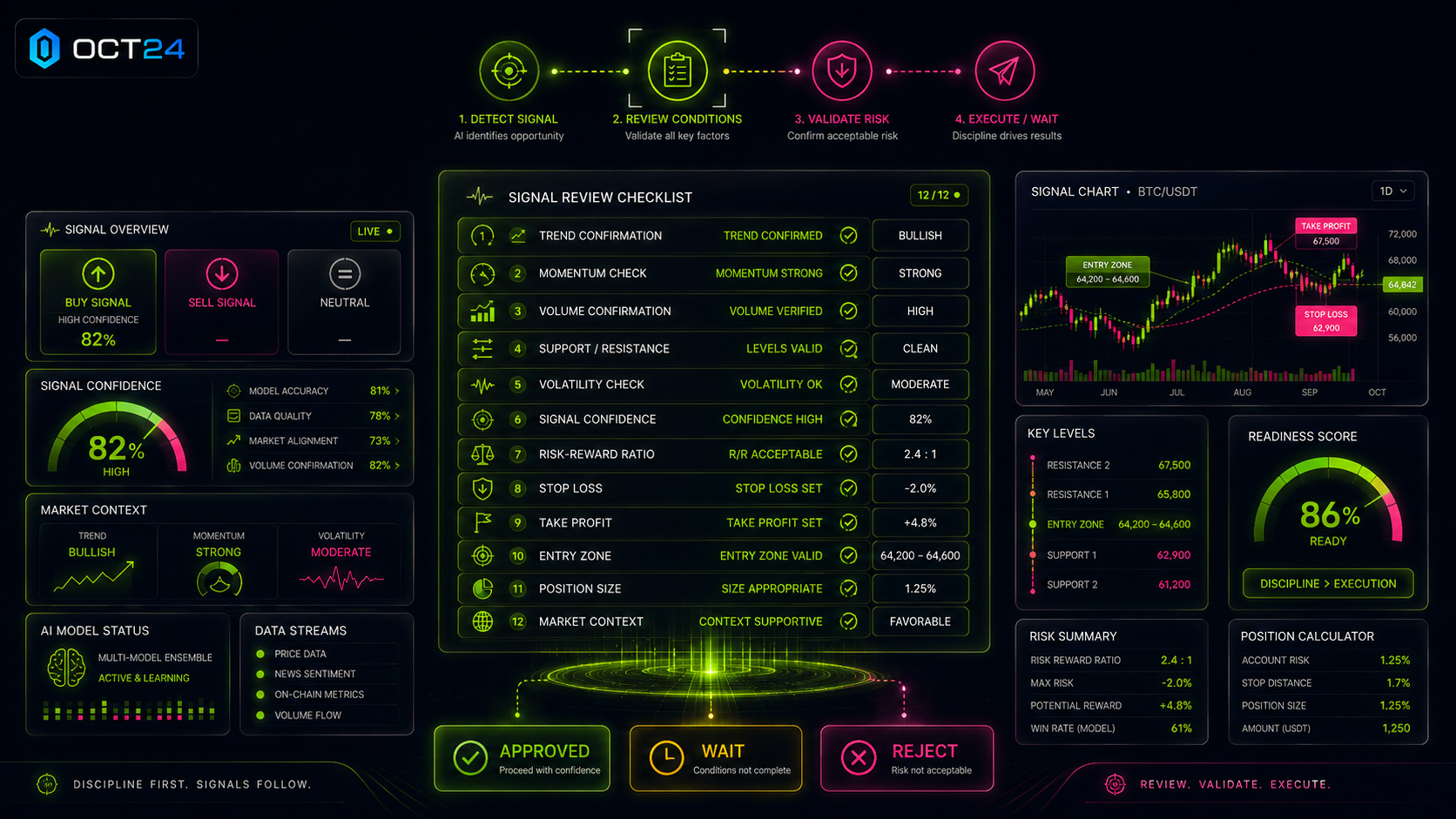
How to Review an AI Trading Signal
A simple review process can help traders use signals responsibly.
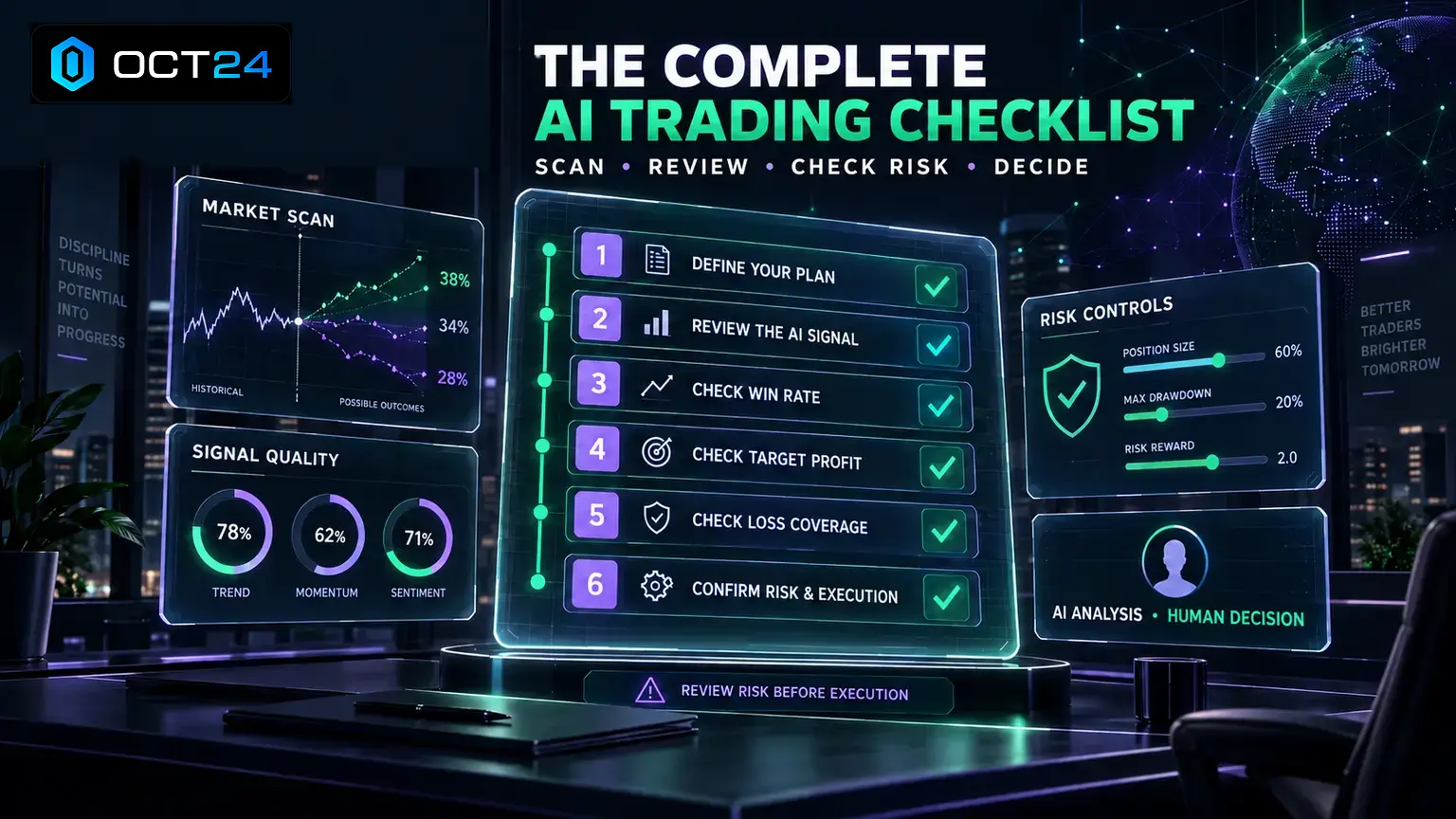
Before acting on a signal, review these steps:
- Check whether the signal is still current
- Confirm the market direction and trend
- Look at volume and momentum
- Review volatility and liquidity
- Check whether the setup fits your strategy
- Review position size and stop-loss planning
- Check total exposure across open trades
- Decide whether the trade is still worth taking
This process connects directly to trading bot risk management. Signals are only useful when risk rules are clear.
A trader using OCT24 should still choose suitable risk settings, understand their exposure, and manage capital responsibly. The platform helps with analysis and signal delivery, but the trader remains responsible for execution choices.
Where OCT24 Fits Into the Signal Workflow
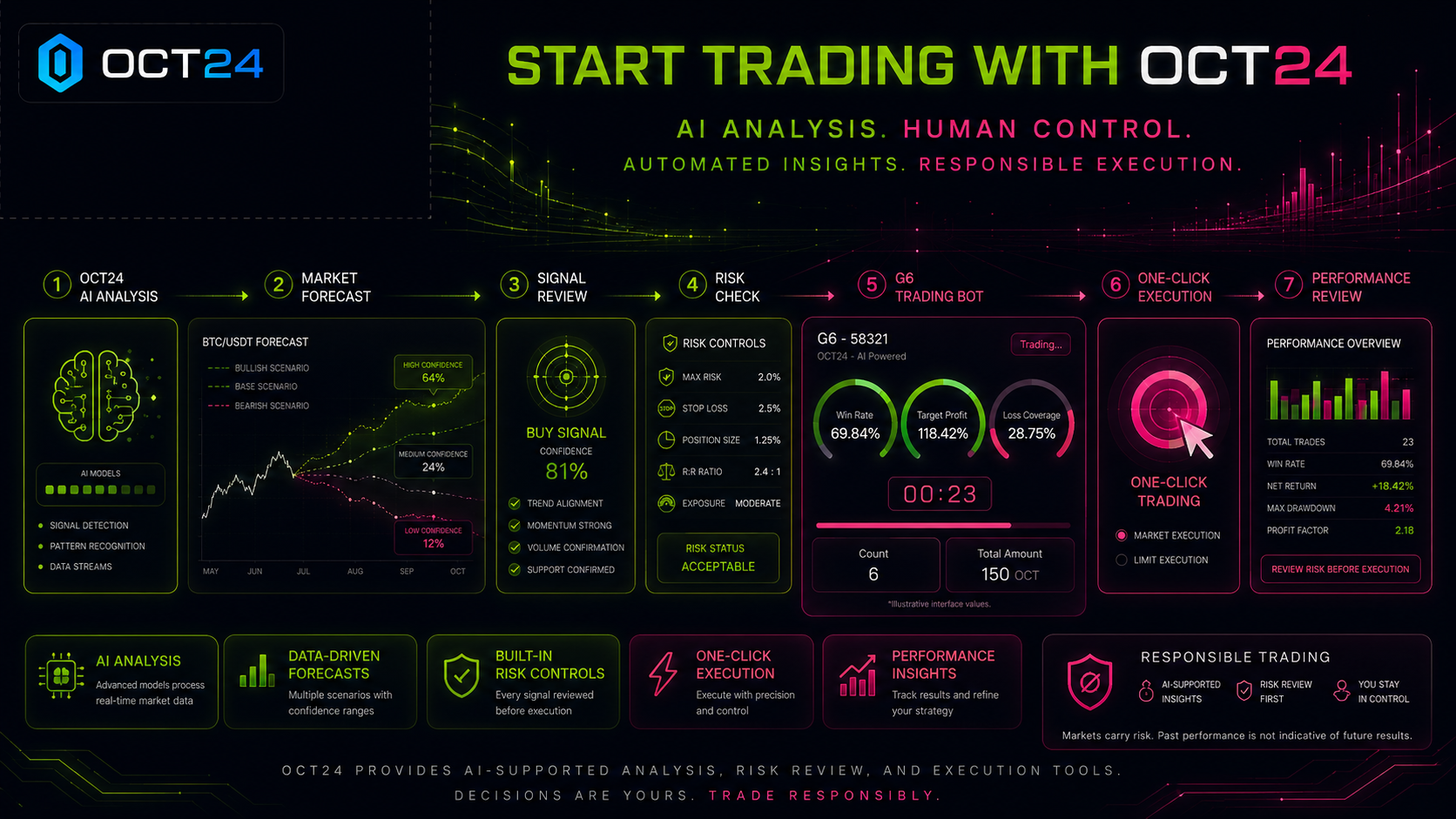
OCT24 is designed to make the signal workflow more structured. Instead of asking the trader to manually scan every chart, OCT24 performs most of the market analysis by reviewing market conditions, identifying potential opportunities, and presenting AI-supported trading signals.
This can help traders spend less time searching and more time reviewing.
OCT24 may support a trading routine by helping traders:
- Scan markets more efficiently
- Review AI-supported signal opportunities
- Understand changing market conditions
- Compare momentum and volatility
- Use one-click trading only after review
- Track activity and performance over time
The G6 Trading Bot is relevant where traders want a faster, more streamlined signal workflow. It can support timely signal review and a simpler trading process, but it does not guarantee profits, prevent slippage, or remove the need for risk controls.
For readers who want more platform context, About OCT24 explains the broader OCT24 approach.
Beginner Mistakes to Avoid With Trading Signals
Trading signals can make trading feel simpler, but they can also create bad habits if the trader stops thinking.
The most common mistakes include:
- Acting on every signal without a plan
- Using position sizes that are too large
- Ignoring volatility
- Entering after price has already moved too far
- Treating confidence scores as guarantees
- Changing strategy after every losing trade
- Using leverage without understanding the risk
These mistakes often come from urgency. A signal appears, the trader feels they may miss the move, and the trade is entered without enough review.
A better approach is to use signals as a filter. Let the signal bring the opportunity to your attention, then decide calmly whether it fits your plan.
A Simple OCT24 Signal Review Routine
A practical routine makes signals easier to use.
Here is a simple structure:
- Let OCT24 scan the market and present AI-supported signals
- Open the signal and review the market context
- Check whether the signal is still current
- Compare the signal with your strategy
- Review position size, stop-loss planning, leverage, and exposure
- Use one-click execution only if the trade still fits
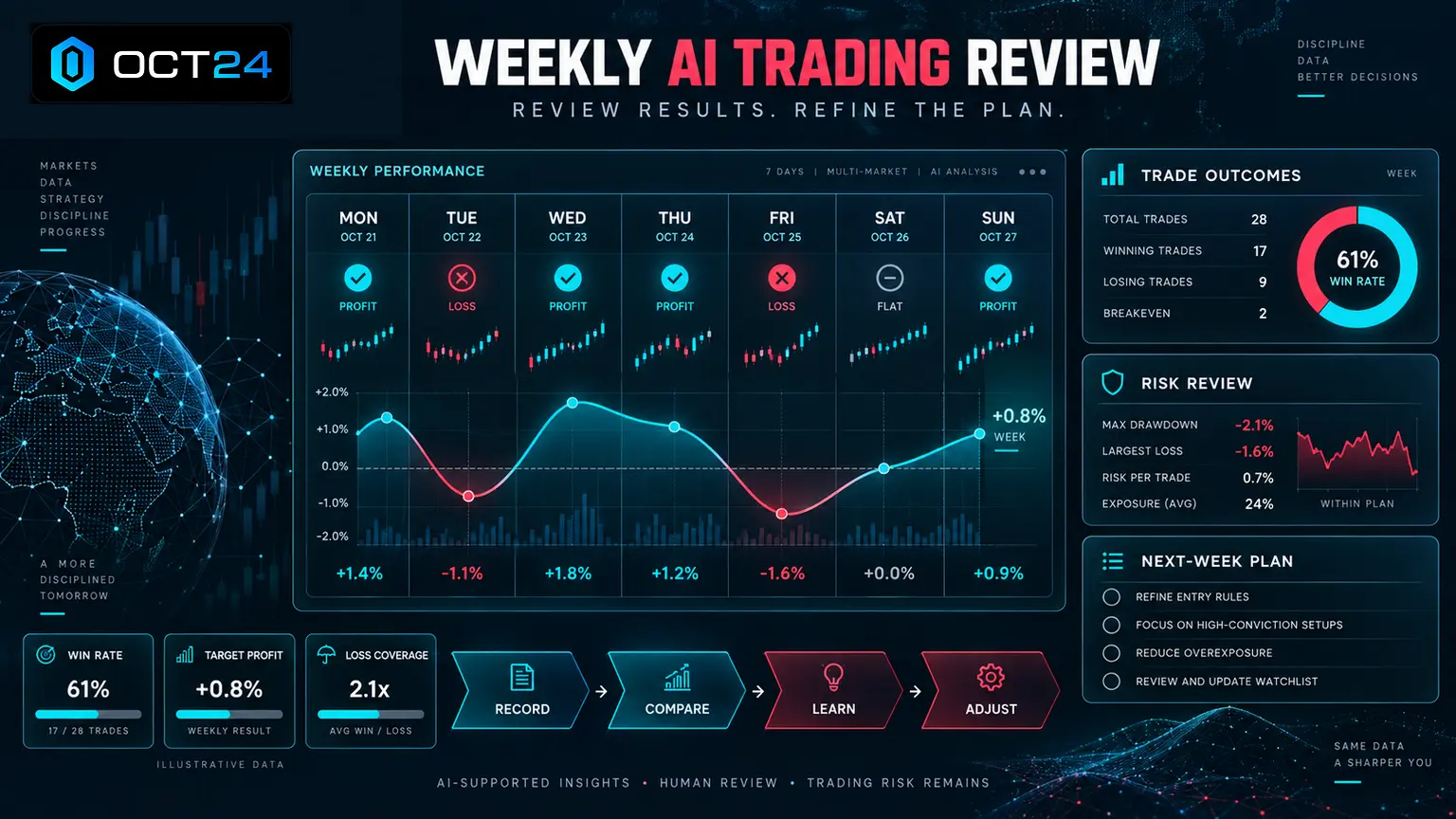
- Review the result later and track signal quality
This approach keeps the trader involved in the parts that matter most: risk, capital, and execution decisions.
Signals can support better timing and better focus. They should not replace responsibility.
Frequently Asked Questions
What are AI trading signals?
AI trading signals are alerts or recommendations created after AI analyzes market data. They may point to a possible buy, sell, hold, exit, or review opportunity. A signal supports decision-making, but it does not guarantee a result.
Are AI trading signals always accurate?
No. AI trading signals can be useful, but they are not always accurate. Markets can change quickly because of news, liquidity, volatility, and new orders. Every signal still needs risk review.
Can beginners use AI trading signals?
Yes, beginners can use AI trading signals if they understand that signals are decision support. Beginners should focus on simple strategy rules, small position sizes, and clear risk limits.
Do AI trading signals guarantee profit?
No. AI trading signals do not guarantee profit. They can help identify potential opportunities, but trading always involves risk.
What should I check before acting on a signal?
Check whether the signal is current, whether price has moved too far, whether volatility is manageable, and whether the trade fits your strategy and risk limits.
How does OCT24 help with trading signals?
OCT24 scans market conditions, identifies potential opportunities, and presents AI-supported trading signals. This can reduce manual chart review, but the trader still controls risk settings, exposure, capital allocation, and execution decisions.
What is the difference between a signal and a trade?
A signal is information. A trade is an action. The trader should review the signal before deciding whether to enter, skip, reduce risk, or wait.
Should I use every signal I receive?
No. Traders should not use every signal automatically. Some signals will not fit the strategy, risk limit, timing, or market condition.
Understanding AI Trading Signals: Key Takeaways
AI trading signals can help traders review potential opportunities more efficiently. They can reduce manual chart searching, organize market information, and make trading routines more structured.
But signals are not guarantees. They do not remove market risk, execution risk, slippage, volatility, or trader responsibility.
OCT24 performs most of the market analysis by scanning market conditions, identifying potential opportunities, and presenting AI-supported trading signals. The trader still needs to review the signal, manage risk settings, control exposure, and make informed execution decisions.
Used responsibly, signals can help traders focus on better decisions. Used carelessly, they can encourage overtrading.
To review AI-supported trading signals inside a faster OCT24 workflow, you can Start Trading with OCT24 and use each signal as part of a clear trading plan.