
Building a Consistent Trading Routine with AI
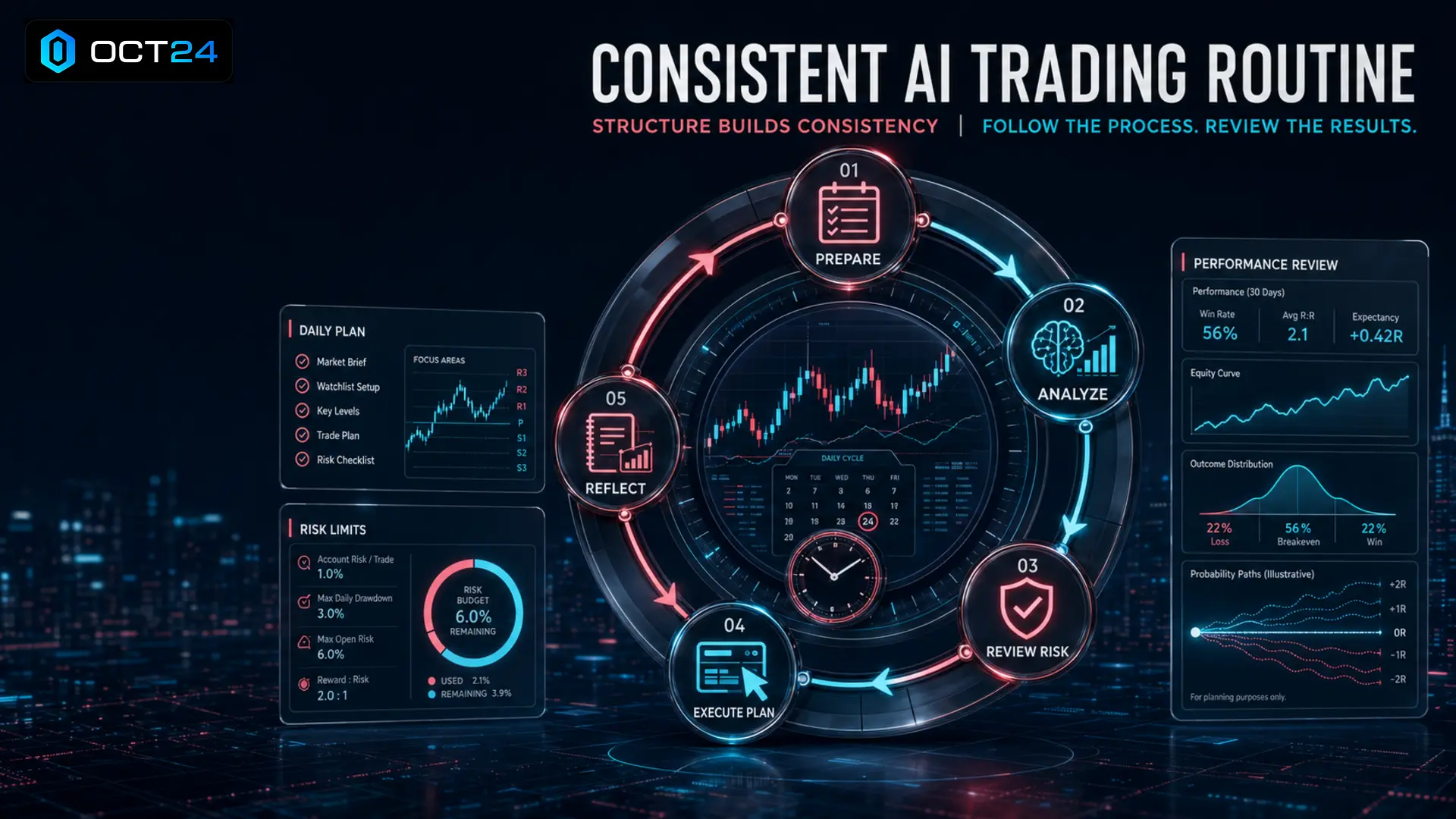
A consistent trading routine is a repeatable process that helps traders review the market, check signals, manage risk, and make decisions without relying on emotion. When AI is added to that routine, the goal is not to trade more randomly. The goal is to make the process clearer, faster, and easier to repeat.
Many beginner traders focus on finding the next big trade. More experienced traders usually focus on building a process they can follow every day. That process matters because trading results are not shaped by one trade alone. They are shaped by habits, risk control, review, and discipline over time.
OCT24 supports this kind of routine by performing much of the market analysis for the trader. It scans market conditions, identifies potential opportunities, and presents AI-supported trading signals. But OCT24 does not remove trading risk or guarantee results. Traders still need to use suitable risk settings, understand exposure, manage capital responsibly, and make informed execution decisions.
This article explains how to build a simple AI-supported trading routine that is practical, realistic, and easy to follow.
Why a Consistent Trading Routine Matters
A consistent trading routine helps traders avoid making decisions based only on mood, headlines, or fear of missing out. It gives the trader a clear structure before the market becomes noisy.
Without a routine, trading can become reactive. A trader sees a fast move, opens a chart, checks a few indicators, enters quickly, and only thinks about risk after the trade is already open.
That approach can work once in a while, but it is hard to repeat. It also makes it difficult to learn from mistakes because every trade is handled differently.
A routine helps traders answer the same practical questions each day:
- What market conditions am I trading in?
- Which assets are worth watching today?
- Are there any AI trading signals that deserve review?
- What is my maximum risk for the day?
- Do I already have too much exposure?
- What would make me skip trading today?
This does not make trading easy. It makes trading more organized.
If you are new to AI trading, the routine is what keeps AI-supported tools from becoming a distraction. Instead of jumping at every signal, the trader uses a repeatable process to decide what deserves attention.
What an AI Trading Routine Should Actually Do
An AI trading routine should help the trader prepare, review, decide, execute, and improve. It should not encourage random clicking or constant chart watching.
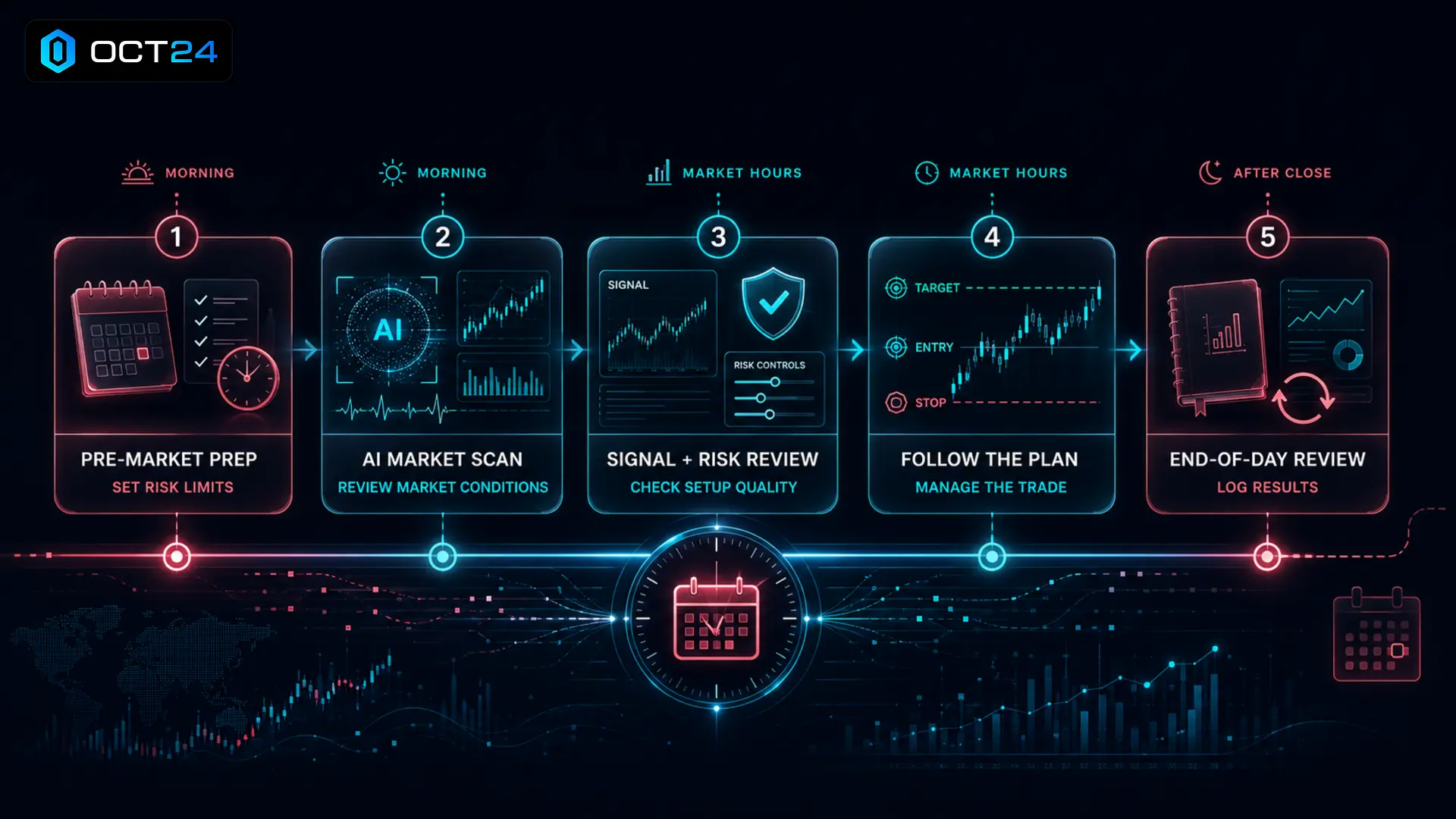
A good routine usually has five parts:
- Market preparation
- Signal review
- Risk check
- Execution decision
- Post-trade review
The routine should be simple enough to follow on busy days. If the process is too complicated, most traders will abandon it when the market gets stressful.
OCT24 can support this structure because it does much of the analysis work in the background. It scans conditions and presents AI-supported trading signals, while the trader focuses on reviewing risk, choosing whether to act, and managing the trade responsibly.
This balance matters. AI can help with speed and structure, but the trader still controls the risk plan.
Step 1: Start With Market Conditions
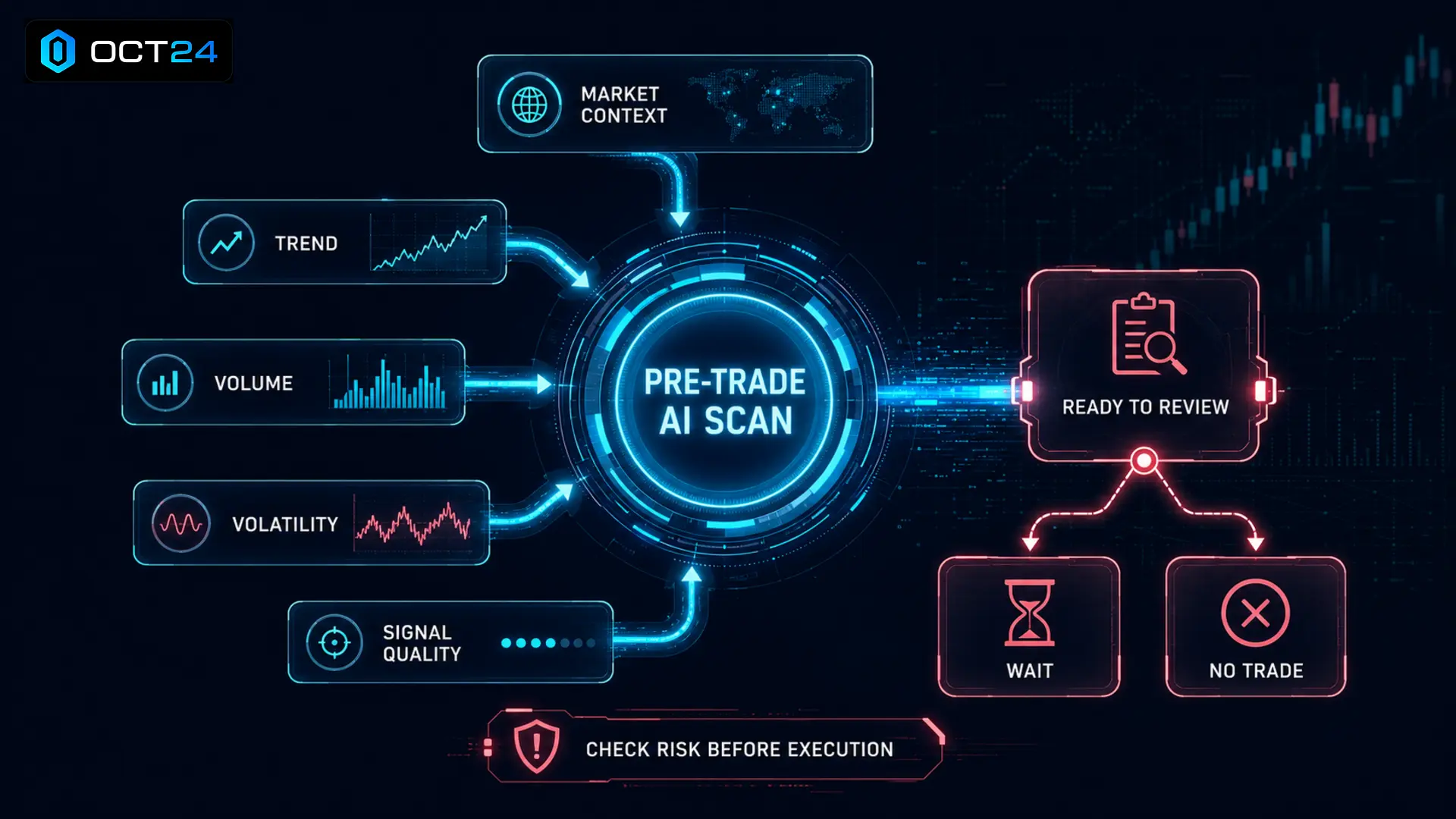
Before reviewing any signal, traders should understand the basic market environment. This prevents them from treating every setup the same way.
A calm trending market is different from a volatile market. A range-bound market is different from a breakout market. A crypto market reacting to news is different from a quiet session with low volume.
This is where 24/7 market monitoring can be useful. Markets do not always wait for a convenient time. Crypto can move overnight, technology stocks can shift sentiment during earnings season, and risk assets can change direction quickly.
OCT24 helps by scanning market conditions so traders do not have to begin from a blank screen every time they check the market.
A simple market-condition check can include:
- Is the market trending, ranging, or choppy?
- Is volatility high or low?
- Are major assets moving together?
- Is momentum strengthening or fading?
- Are there major support or resistance areas nearby?
- Is today a good day to trade, or a better day to wait?
This first step keeps the trader grounded. It also helps filter signals. A setup that makes sense in a trending market may not make sense in a choppy one.
Step 2: Review AI-Supported Signals Carefully
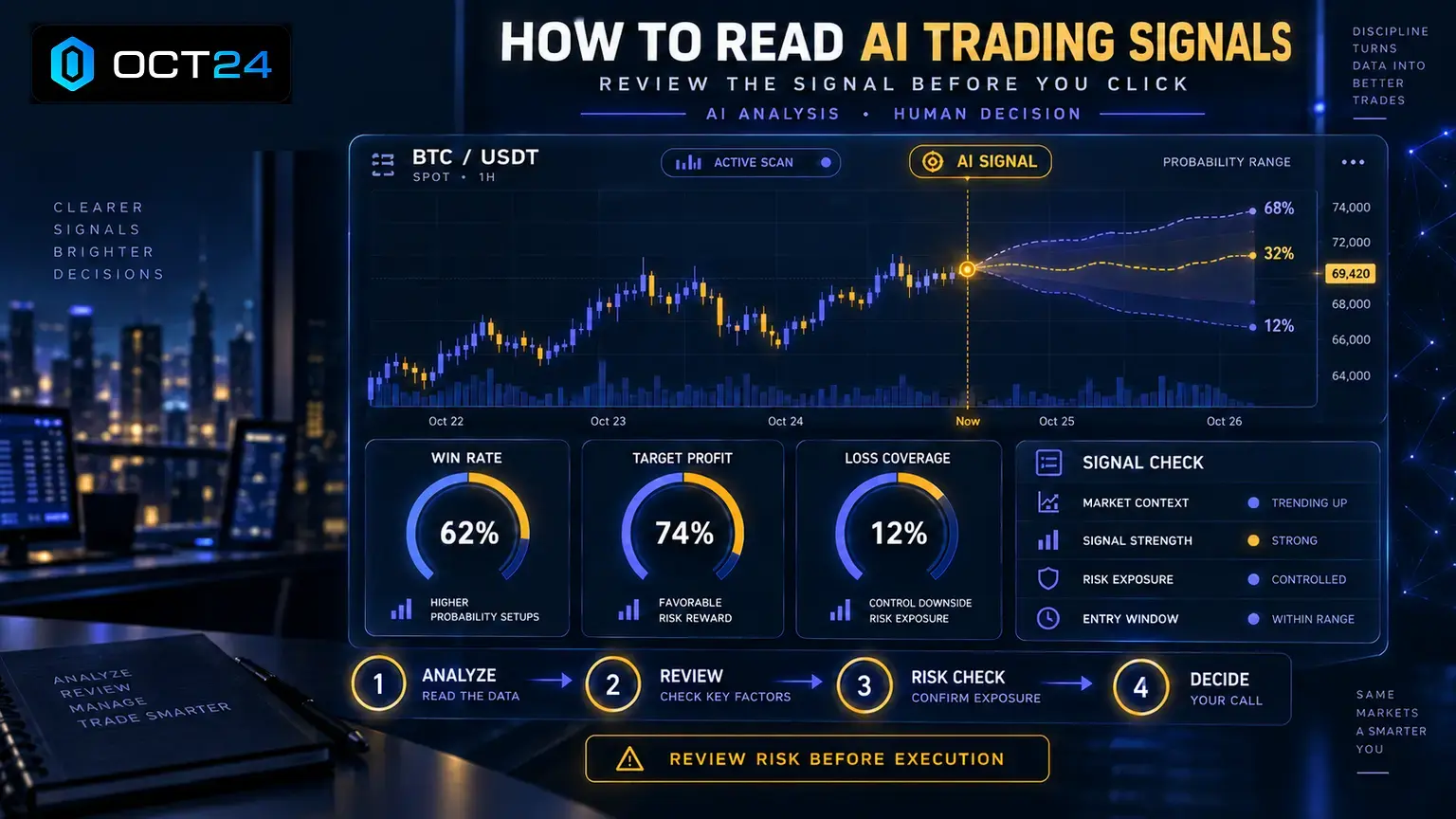
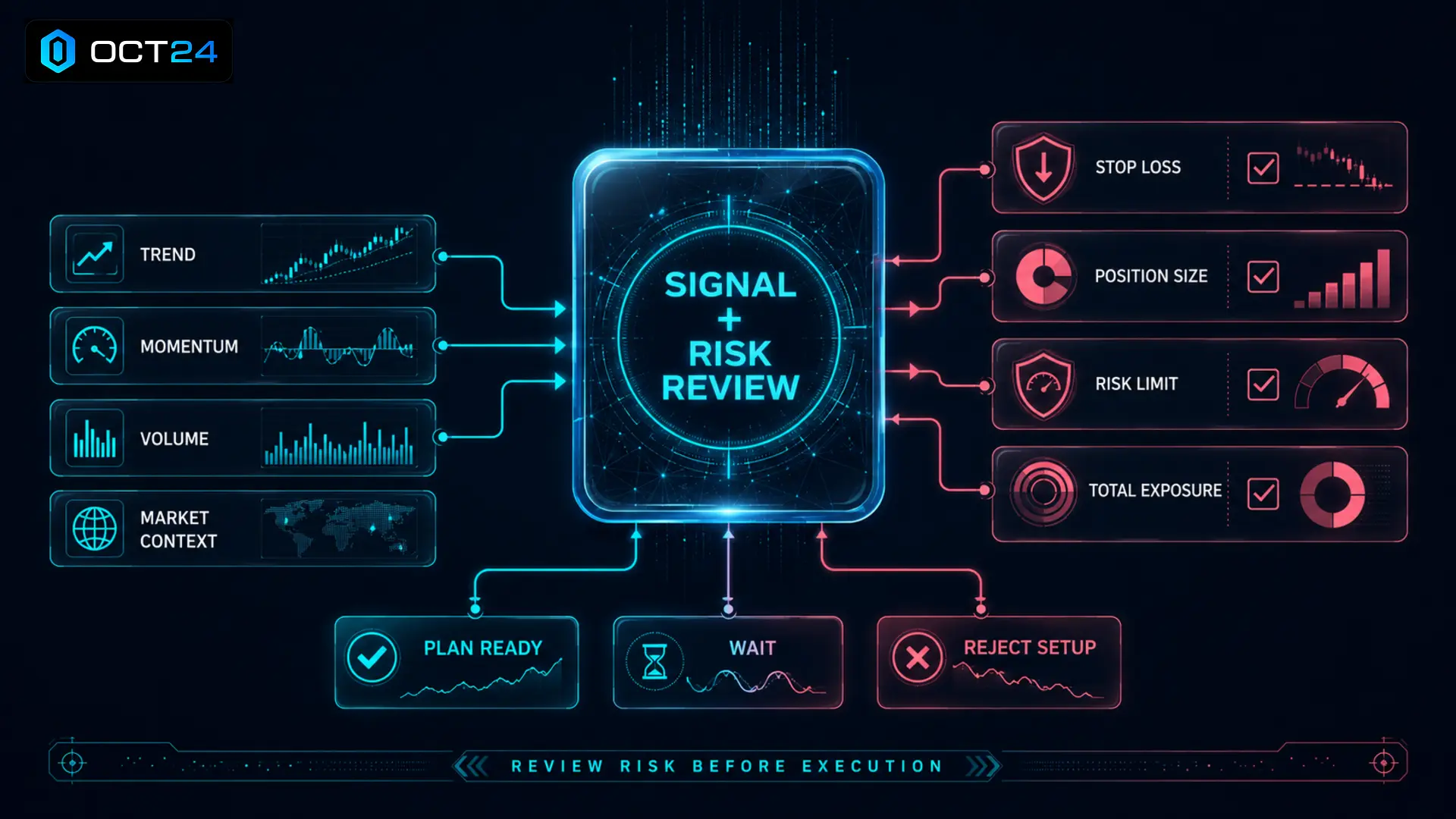
AI trading signals can help traders identify possible opportunities more efficiently. But a signal should be reviewed, not followed blindly.
A useful signal review asks whether the idea fits the current market, the trader’s strategy, and the trader’s risk limits.
This is where many common AI trading mistakes happen. Traders may assume that a signal is automatically a trade. They may enter too quickly, ignore risk, or open several similar trades at once.
A better signal review includes:
- What market is the signal related to?
- What is the direction of the idea?
- Is the signal supported by current price action?
- Where would the trade idea be wrong?
- Is the potential reward worth the risk?
- Does this trade fit my routine today?
OCT24 presents AI-supported trading signals as part of a broader market-analysis workflow. The signal helps the trader focus attention, but the trader still decides whether to execute.
Step 3: Add a Risk Check Before Every Trade
A routine without a risk check is incomplete. The risk check is what keeps trading from becoming impulsive.
Before entering a trade, the trader should know how much they are willing to lose, where the trade idea fails, and how the trade affects total exposure.
This connects directly with AI trading risk vs reward. A setup may look attractive, but it still needs a clear balance between possible loss and possible gain.
A simple risk check can include:
- What is my planned entry?
- Where is my stop or invalidation area?
- What is my realistic target?
- How much capital am I risking?
- Does this trade overlap with other open positions?
- What happens if the market moves quickly against me?
Risk checks are especially important when using faster tools such as one-click trading. Fast execution can be useful, but only when the trader has already reviewed the setup and risk settings.
OCT24 can help traders move from analysis to execution more efficiently, but it does not make a trade risk-free. The trader remains responsible for risk settings and execution choices.
Step 4: Use a Simple Watchlist
A watchlist keeps the routine focused. Without one, traders can spend too much time jumping between assets and reacting to every price move.
A good watchlist does not need to be huge. In many cases, a smaller list is easier to manage and review.
For example, a trader may watch:
- Two or three major crypto assets
- One or two high-volume altcoins
- A major stock index or risk benchmark
- A small group of assets that often react to similar market conditions
The goal is not to watch everything. The goal is to watch enough to understand the market and find quality setups.
AI can help traders scan more markets than they could manually, but the routine should still create focus. If every signal becomes equally important, the trader can become overwhelmed.
OCT24 helps by scanning conditions and identifying potential opportunities, but the trader can still choose which markets deserve attention based on their strategy, experience, and risk comfort.
Step 5: Connect the Routine to a Strategy
A trading routine should be connected to a strategy. Otherwise, the trader may use the same checklist but make different decisions every day.
If the trader is using AI trading strategies for beginners, the routine should match the strategy. A breakout trader may focus on price levels and volume. A trend-following trader may focus on momentum and pullbacks. A range trader may focus on support, resistance, and failed breakouts.
A routine becomes stronger when each step supports the strategy.
For example:
- A trend trader checks whether the market is trending before reviewing signals.
- A breakout trader checks whether price is near a key level.
- A volatility trader checks whether conditions are too unstable for normal position size.
- A risk-focused trader checks exposure before adding any new trade.
This is why choosing the right AI trading platform matters. The platform should support the trader’s process, not distract from it.
How OCT24 Fits Into a Daily Trading Routine
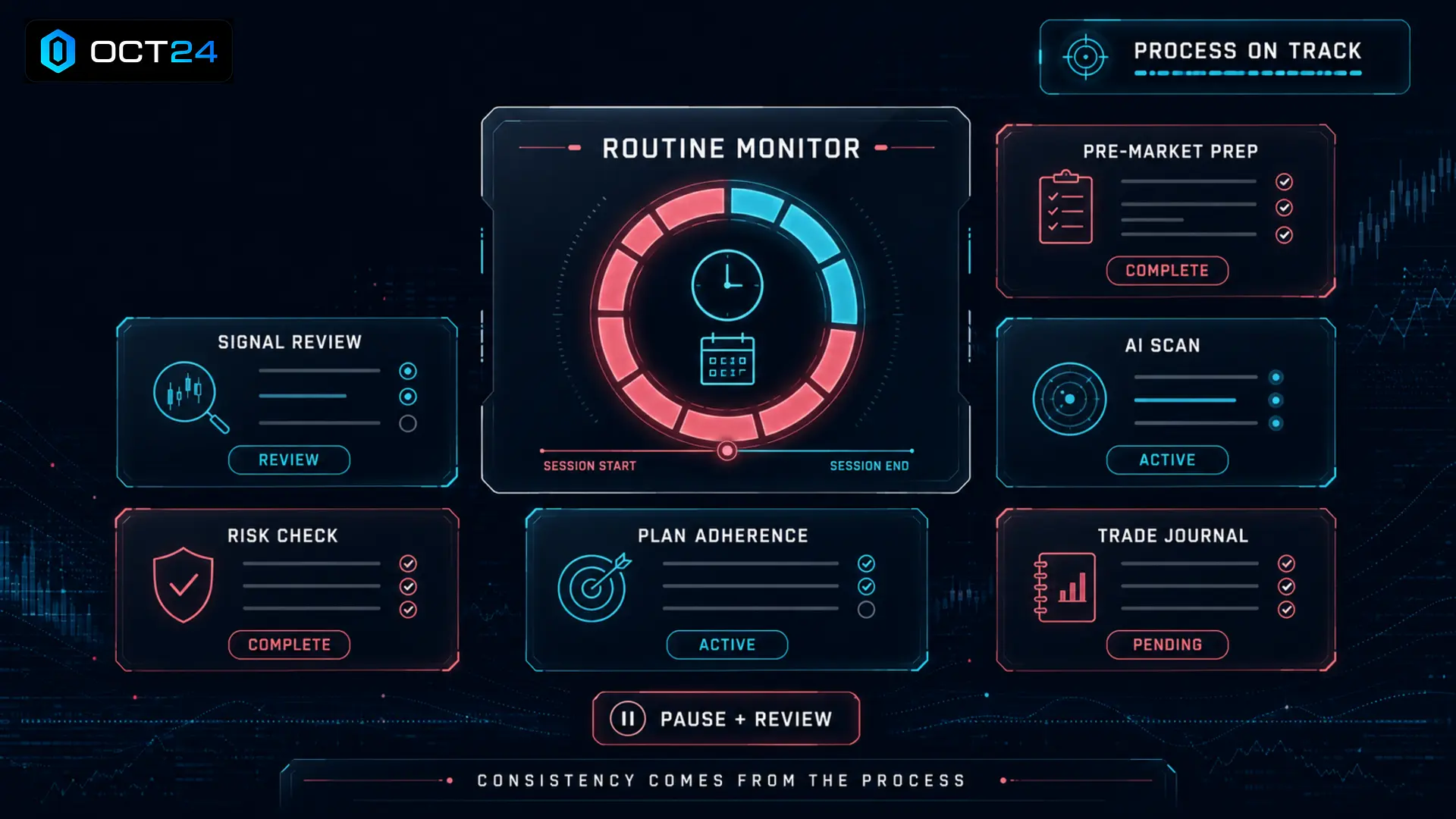
OCT24 fits into a daily routine by helping traders begin with structured analysis instead of starting from confusion.
The platform scans market conditions, identifies potential opportunities, and presents AI-supported trading signals. This means traders can spend less time trying to manually search every chart and more time reviewing whether a setup fits their plan.
A simple OCT24-supported routine may look like this:
- Open OCT24 and review current market conditions.
- Check whether the market is trending, ranging, or volatile.
- Review any AI-supported trading signals that match your watched markets.
- Compare each signal with your strategy and risk rules.
- Set position size, exposure limits, and exit rules before execution.
- Decide whether to trade, wait, or skip the setup.
- Review the result after the trade closes.
This routine keeps OCT24 in the role it should have: doing much of the analysis work while keeping the trader responsible for risk and execution decisions.
Traders who want to learn more about the platform can visit About OCT24. Traders who are ready to explore the workflow can Start Trading with OCT24.
Morning Routine: Preparing Before the Market Moves
A morning or pre-session routine helps traders avoid starting the day in a rushed state.
Even if a trader only has 15 minutes, that time can be used well. The goal is to understand the market, review active positions, and decide what kind of behavior to watch for.
A simple morning routine can include:
- Review open trades and current exposure.
- Check major market conditions.
- Look for important support and resistance zones.
- Review relevant AI-supported signals.
- Decide the maximum risk for the day.
- Choose the markets worth watching.
- Write down one reason to avoid overtrading.
This is especially useful for AI trading for busy professionals. A routine gives busy traders a way to stay organized without sitting in front of charts all day.
OCT24 can support this by doing much of the scanning and signal work. The trader can then focus on decisions that require judgment.
Midday Routine: Avoiding Random Trades
The middle of the day is where many traders lose discipline. They may feel bored, frustrated, or tempted to recover from a losing trade.
A midday routine should be short. It should help the trader decide whether conditions still support trading.
Useful questions include:
- Has the market changed since my first review?
- Are signals still aligned with my strategy?
- Am I trading because there is a setup, or because I want action?
- Have I already reached my risk limit?
- Would I take this trade if I were calm and starting fresh?
This is where trading psychology becomes important. A routine helps protect the trader from impulse decisions, especially after a win or loss.
OCT24 can present signals and market analysis, but the trader must still decide whether their own mindset and risk plan support another trade.
End-of-Day Routine: Reviewing What Happened
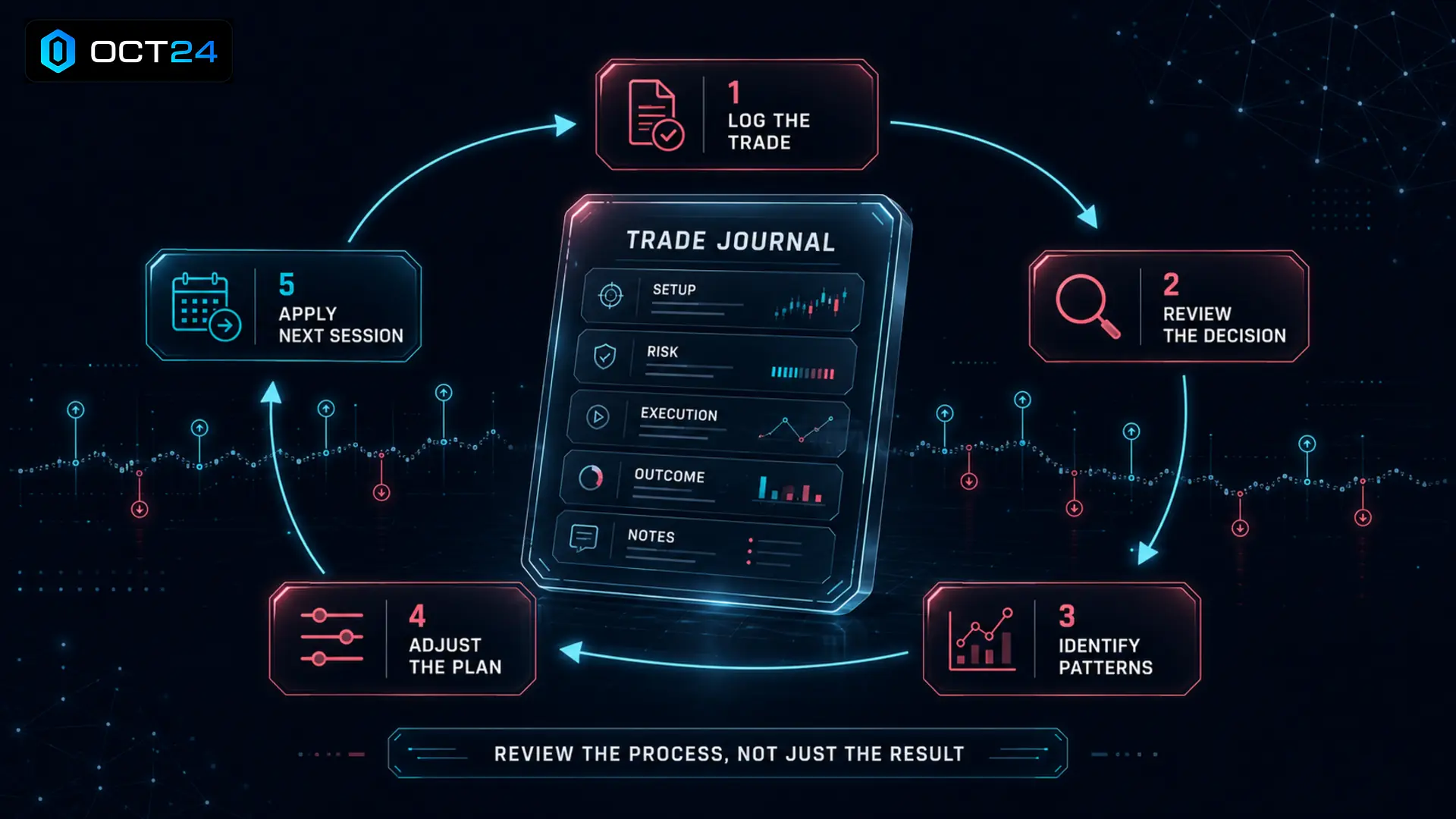
A routine is not complete without review. The review is where traders turn experience into improvement.
The goal is not to judge yourself harshly. The goal is to learn what happened, what followed the plan, and what should change next time.
A simple end-of-day review can include:
- Which trades did I take?
- Did I follow my strategy?
- Did I follow my risk rules?
- Which signals did I skip, and why?
- Did I trade emotionally at any point?
- What should I repeat tomorrow?
- What should I avoid tomorrow?
This step matters because even good tools need feedback. If a trader never reviews their decisions, they may repeat the same mistakes without noticing.
OCT24 can help traders organize the analysis side of the process, but traders still need to review performance and understand their own behavior.
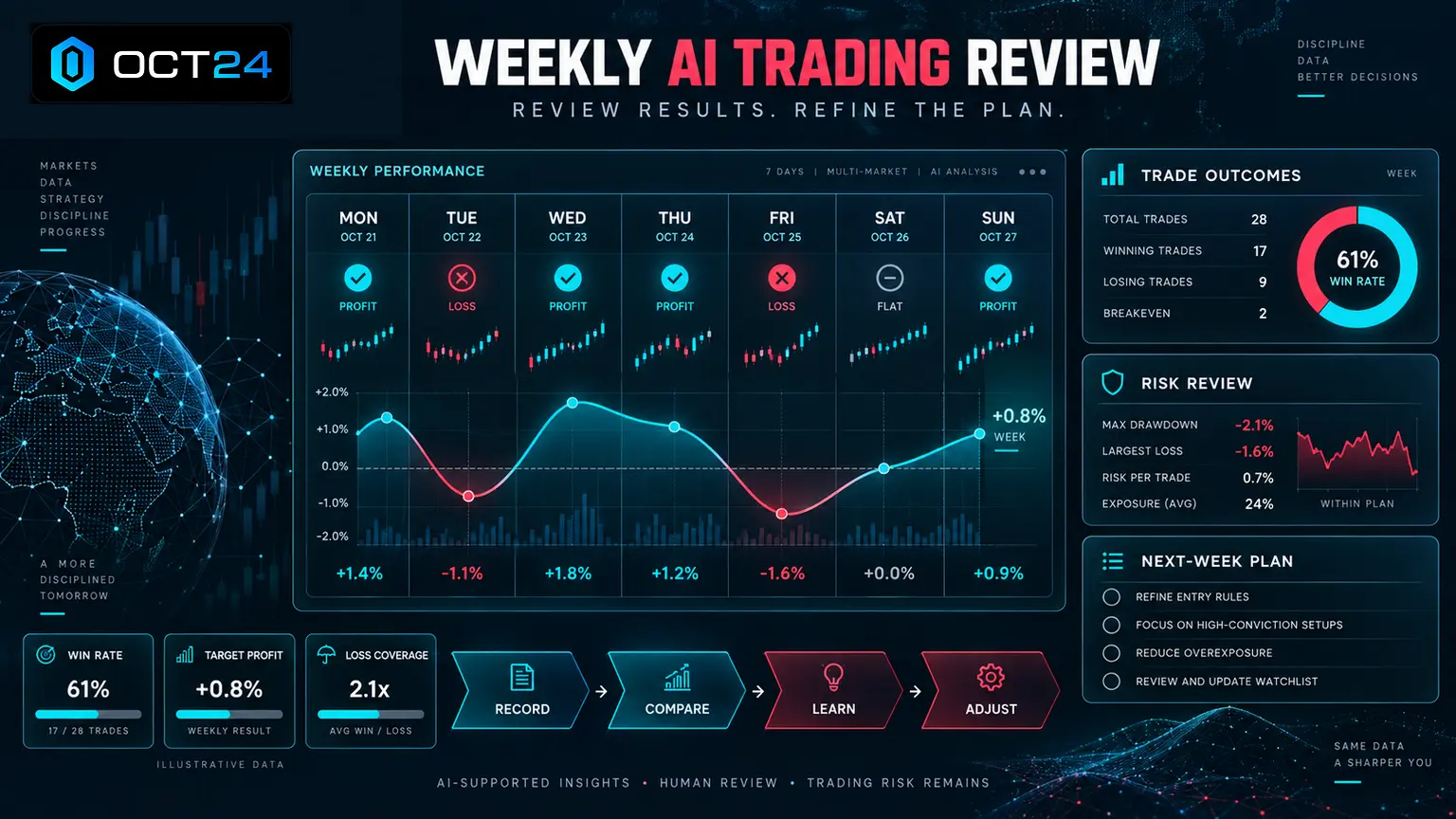
Weekly Routine: Finding Patterns in Your Behavior
Daily reviews are useful, but weekly reviews help traders see patterns. One trade may not mean much. A full week of decisions can reveal habits.
A weekly routine can help traders notice whether they are improving or repeating the same problems.
Weekly review questions include:
- Which setups worked best?
- Which setups caused the most mistakes?
- Did I overtrade on certain days?
- Did I ignore my risk plan?
- Did I trade better in trending or volatile conditions?
- Did AI-supported signals help me focus, or did I chase too many ideas?
- What should I simplify next week?
This kind of review is also useful when comparing trading bots vs human traders. Bots can follow programmed rules consistently, but humans need routines to stay consistent with decisions, risk, and behavior.
A trader using the G6 Trading Bot should still review performance, settings, exposure, and whether the tool is being used inside a responsible plan.
How to Keep the Routine Simple Enough to Follow
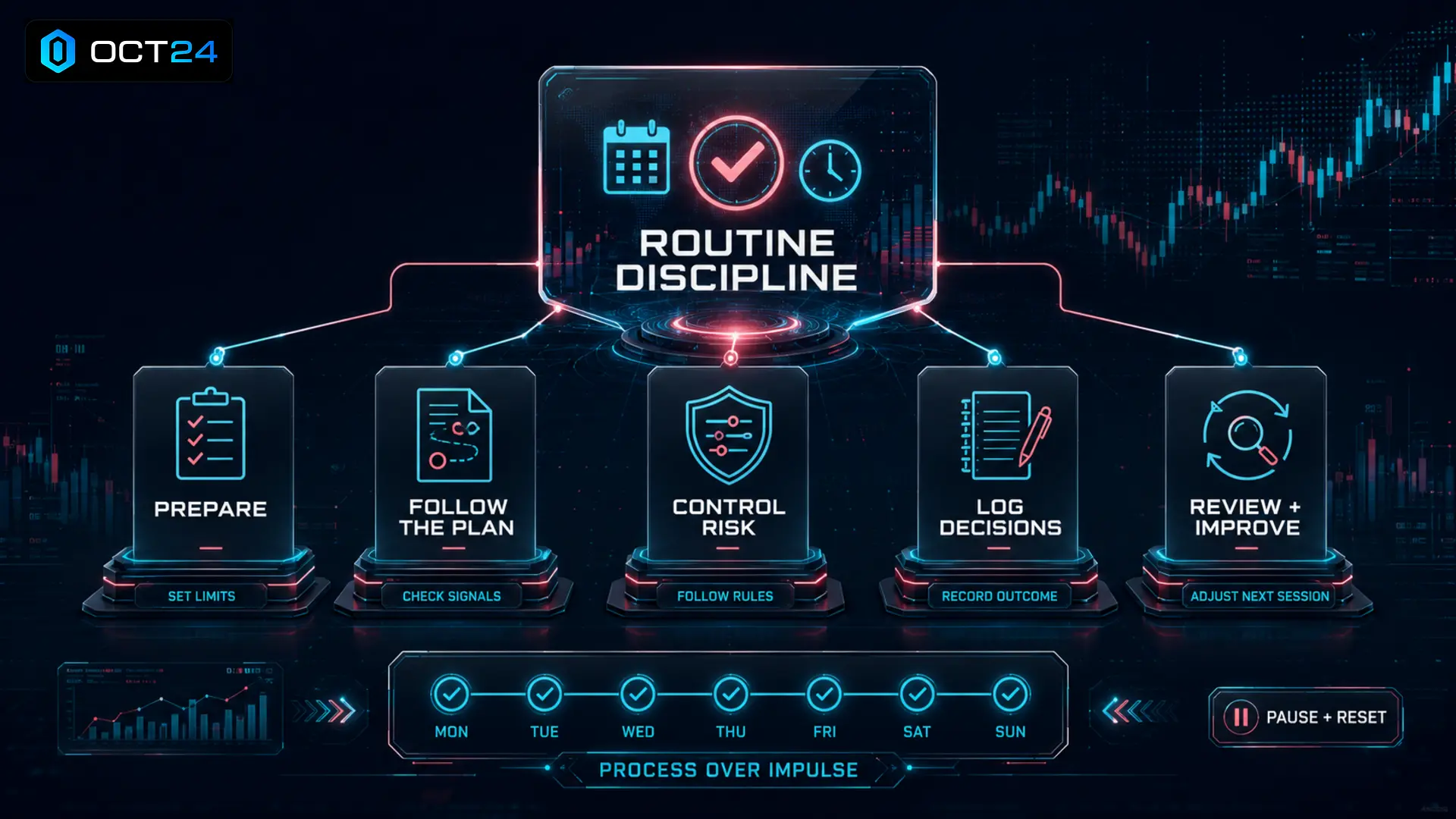
The best routine is the one you can actually repeat. Many traders build routines that are too complicated, then abandon them after a few days.
A simple routine should be clear, short, and practical.
You can simplify by:
- Using the same checklist each day
- Watching fewer markets
- Reviewing fewer but better signals
- Setting risk rules before trading starts
- Writing down decisions in plain language
- Reviewing trades at the same time each day
The routine should reduce confusion, not create more work.
This is one reason AI can be useful. It can reduce the manual scanning burden, which gives traders more room to focus on the decisions that matter: risk, exposure, execution, and review.
Common Routine Mistakes to Avoid
A trading routine can fail when it becomes too vague or too easy to ignore.
Common mistakes include:
- Checking signals before checking market conditions
- Taking trades without reviewing risk
- Changing strategy every few days
- Using too many indicators or tools
- Ignoring losing trades instead of reviewing them
- Trading after reaching a daily risk limit
- Confusing activity with progress
- Treating AI as certainty instead of support
These mistakes are not unusual. Most traders struggle with discipline at some point. The solution is not to become perfect. The solution is to build a process that makes mistakes easier to notice and correct.
OCT24 can help by presenting structured analysis, but the trader must still use the routine consistently.
How AI Helps Without Replacing the Trader
AI can make a trading routine more efficient, but it should not replace trader responsibility.
The value of AI is that it can scan markets quickly, process changing conditions, and highlight potential opportunities. This can help traders avoid starting from scratch every time they sit down.
However, AI does not remove market risk. It does not know every future event. It does not guarantee that a signal will work.
This is why AI trading myths can be dangerous. The right expectation is not that AI makes trading effortless. The right expectation is that AI can support a clearer, more organized process.
OCT24 is designed around that balance. It performs much of the market analysis, while the trader remains responsible for risk settings, exposure, capital allocation, and execution choices.

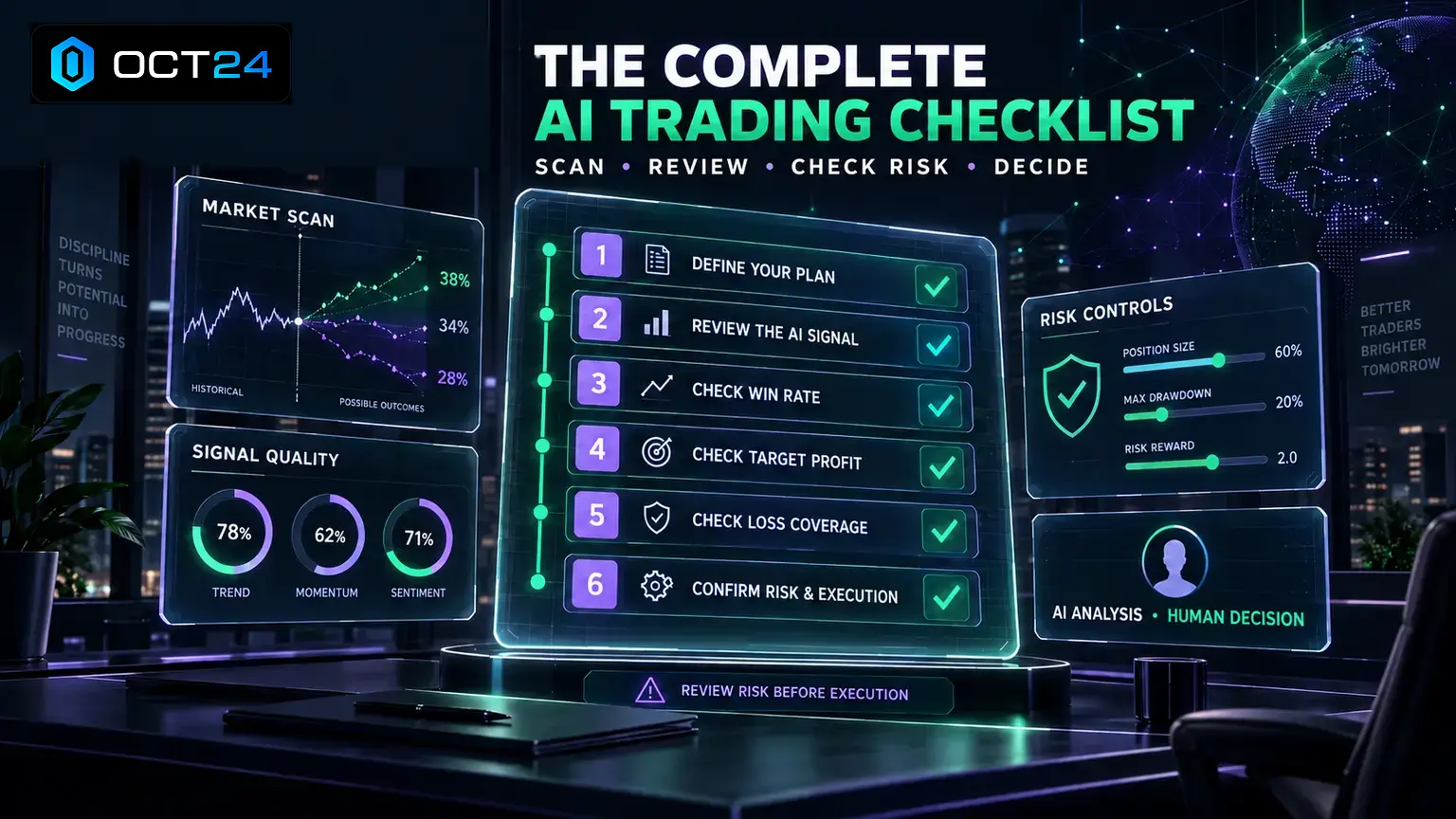
A Simple AI Trading Routine You Can Use
Here is a simple routine that beginner and intermediate traders can adapt.
Before Trading
- Check market conditions.
- Review your watchlist.
- Review AI-supported signals.
- Choose the setups that match your strategy.
- Set your risk limit for the day.
Before Entering a Trade
- Define the entry area.
- Define where the trade idea is wrong.
- Check the risk-reward profile.
- Set position size.
- Check total exposure.
- Decide whether to execute or wait.
After Trading
- Record what happened.
- Review whether you followed the plan.
- Note emotional decisions.
- Review performance and signal quality.
- Choose one improvement for next time.
This routine is simple on purpose. A trader can make it more detailed later, but the first goal is consistency.
FAQs
What is a consistent trading routine?
A consistent trading routine is a repeatable process for preparing, reviewing signals, checking risk, making trade decisions, and reviewing results. It helps traders avoid random or emotional decisions.
How can AI help with a trading routine?
AI can scan market conditions, identify potential opportunities, and present AI-supported trading signals. This can make the routine faster and more organized, but it does not guarantee results.
Does OCT24 trade for me automatically?
OCT24 supports AI-assisted trading workflows, but traders remain responsible for risk settings, exposure, capital allocation, and execution decisions.
Should I follow every AI trading signal?
No. AI trading signals should be reviewed against market conditions, strategy, risk-reward, and total exposure before execution.
How long should a trading routine take?
A simple routine can take 10 to 20 minutes before trading, with a shorter review after trading. The exact time depends on the trader’s strategy and market activity.
What should beginners include in a routine?
Beginners should include a market check, watchlist review, signal review, risk check, trade plan, and end-of-day review.
Why do traders break their routines?
Traders often break routines because of boredom, fear, overconfidence, losses, or too many signals. A simple checklist can make the routine easier to follow.
Can a routine reduce trading risk?
A routine can support better risk management, but it cannot remove market risk. Traders still need responsible position sizing, exposure control, and execution discipline.
Final Thoughts
Building a consistent trading routine with AI is about creating structure. It is not about trading more often or trusting every signal automatically.
A good routine helps traders prepare, review signals, check risk, decide carefully, and learn from results. AI can support that process by doing much of the market scanning and analysis work.
OCT24 helps traders by scanning market conditions, identifying potential opportunities, and presenting AI-supported trading signals. But OCT24 does not remove trading risk or guarantee results. The trader still controls risk settings, exposure, capital allocation, and execution decisions.
The best routine is simple, repeatable, and honest. Use AI to support your process, then use discipline to decide what belongs in your account. To learn more about the platform, visit About OCT24. To explore the workflow, Start Trading with OCT24.