
AI Trading During Sideways Markets
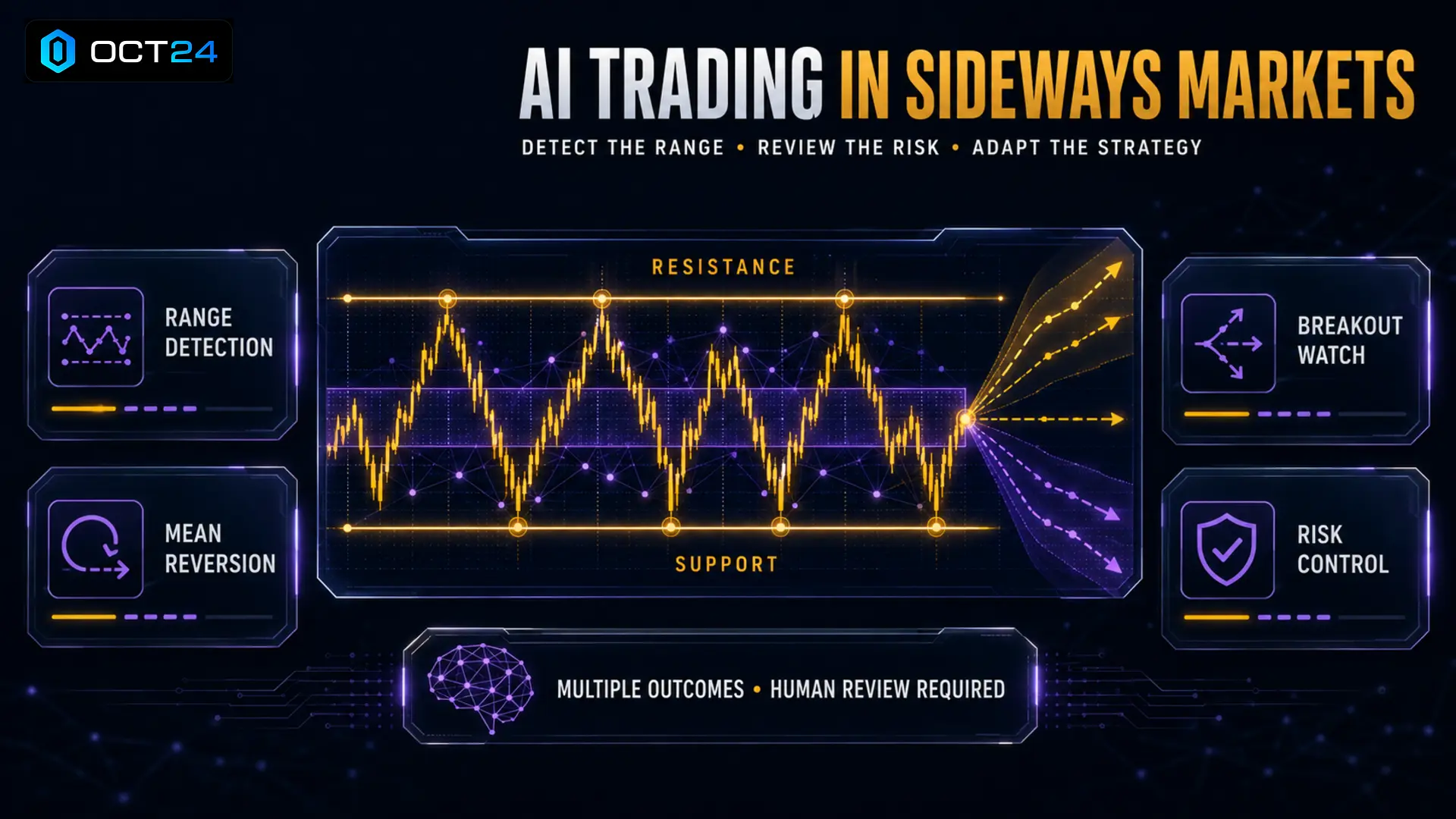
AI trading during sideways markets is different from trading in a strong trend. A sideways market moves within a range, often bouncing between support and resistance without a clear direction. AI can help traders read these conditions, but it cannot remove uncertainty or turn every range into a good trade.
For beginners, sideways markets can be frustrating because the market looks active but does not travel far. Prices may move up, reverse, move down, reverse again, and create several false signals in a short period.
AI trading can support this environment by comparing range behavior, volatility, momentum, volume, and signal quality. The goal is not to force trades. The goal is to understand whether the market is clean enough to trade at all.
OCT24 can fit into this workflow by offering simplified AI-powered trade or bot review and one-click trading. OCT24 does not remove trading risk or guarantee results. Traders still need to review available metrics such as target profit, loss coverage, and win rate before deciding whether a trade fits their exposure and capital plan.
What Is a Sideways Market?
A sideways market is a market that moves mostly sideways instead of making a clear trend higher or lower.
Prices usually trade between a support area and a resistance area.
Support is the lower area where buyers may appear.
Resistance is the upper area where sellers may appear.
In simple terms, the market is moving in a box.
It may look busy inside that box, but the overall direction is unclear.
This can happen after a strong move, before major news, during low-volume periods, or when traders are waiting for stronger confirmation.
Sideways markets are common in crypto because market attention can change quickly.
Bitcoin may pause while altcoins rotate.
Ethereum may consolidate while traders wait for a catalyst.
Smaller tokens may move sharply without changing the bigger market direction.
Why Sideways Markets Are Difficult
Sideways markets are difficult because they can punish both impatience and overconfidence.
A beginner may see price bounce from support and assume a new uptrend has started.
Then price reaches resistance and reverses.
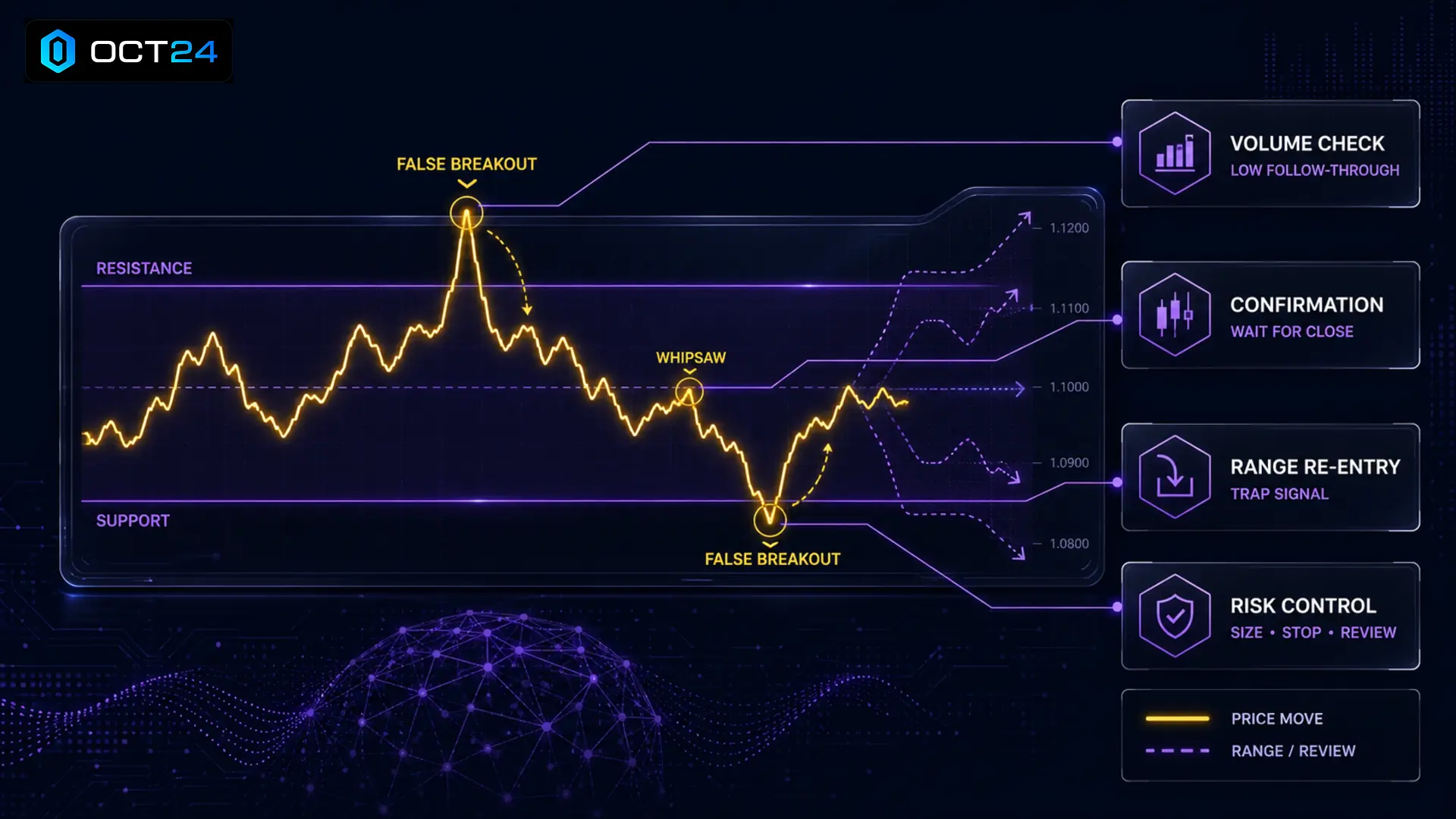
Another trader may short resistance, only to get caught by a temporary breakout before price returns to the range.
This back-and-forth movement is called chop.
It can create whipsaws, false breakouts, and emotional decisions.
The market gives enough movement to tempt traders, but not enough direction to reward every trade.
This is why sideways markets often lead to overtrading.
Traders may keep entering because the price is moving, even though the market is not showing a clean trend.
How AI Can Help Read Sideways Conditions
AI can help read sideways conditions by looking at multiple signals at once.
Instead of focusing only on price, AI can compare volatility, volume, momentum, range width, and repeated rejection areas.
This can help traders understand whether the market is truly range-bound or beginning to transition into a new trend.
AI may also help identify when a market is too choppy for certain strategies.
This is important because not every market condition deserves action.
Sometimes the best decision is to wait.
A system that can scan market behavior may help traders notice when movement is low quality, when breakouts are failing, or when volatility is too unstable for a clean setup.
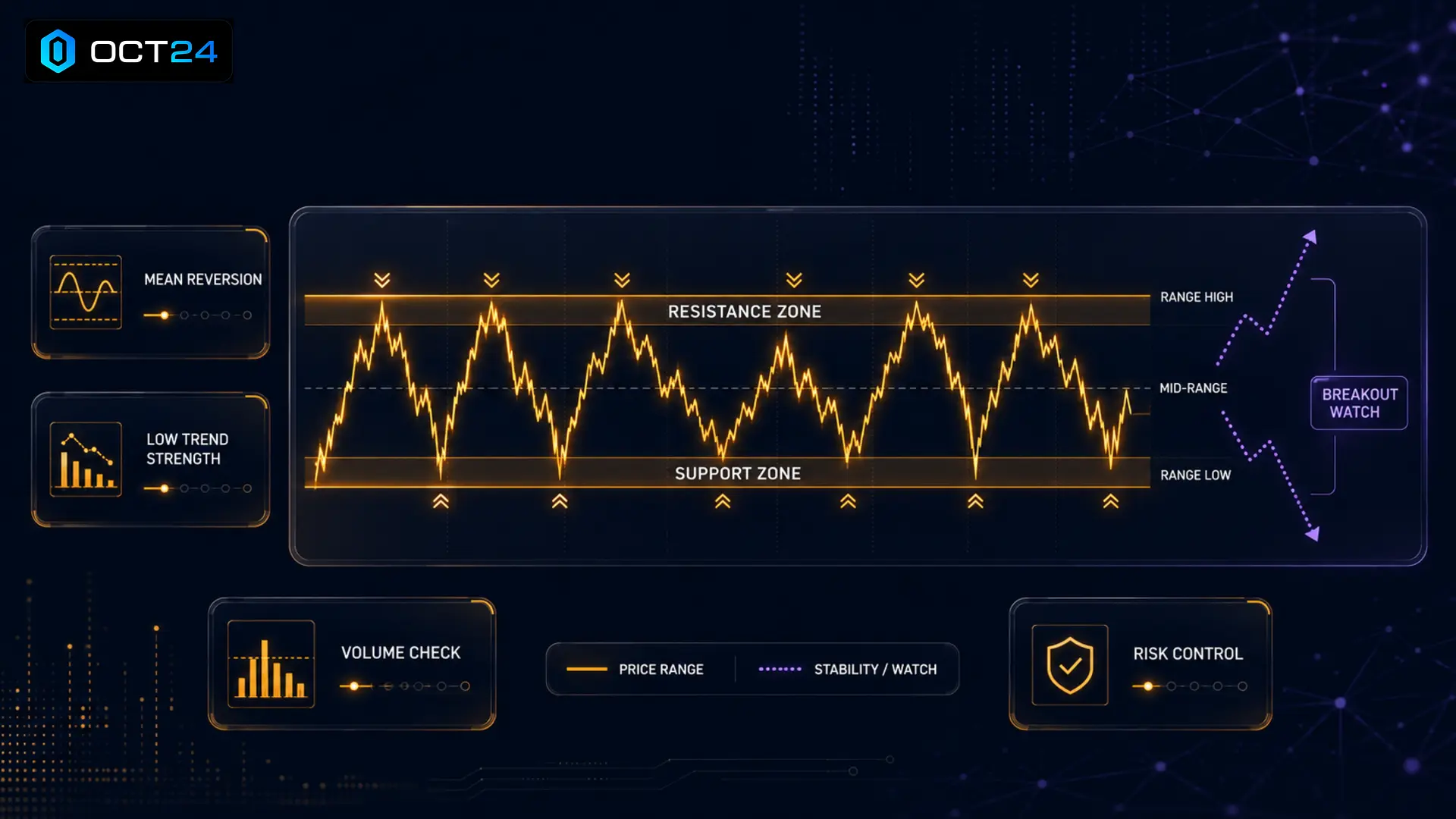
Sideways Markets vs Trending Markets
A trending market has direction.
A sideways market has hesitation.
In a trend, traders may look for continuation signals, pullbacks, breakouts, or momentum.
In a sideways market, those same signals can be less reliable because price may keep returning to the middle of the range.
This does not mean sideways markets are useless.
It means traders need different expectations.
A sideways market may create shorter opportunities near range edges, but it may also create more false signals near the middle.
For beginners, the middle of the range is usually the most confusing area.
Price can move in either direction without giving a clear reason.
Common AI Trading Mistakes in Sideways Markets
common AI trading mistakes become easier to make when the market is moving sideways. Traders may trust weak signals, trade too often, or assume every small breakout is meaningful. AI can help organize information, but it cannot make a poor market condition clean.
- Trading every small move
- Ignoring range boundaries
- Buying breakouts without confirmation
- Using trend logic in a range
- Increasing size after several small losses
- Forgetting that waiting is a valid decision
How AI Uses Technical Analysis in Ranges
how AI uses technical analysis is especially relevant during sideways markets because range behavior depends on support, resistance, volatility, and repeated rejection areas. AI can review these patterns quickly, but traders still need to understand the basic logic.
- Support and resistance zones
- Range width
- Volume near breakouts
- Momentum fading near range edges
- Volatility expansion
- Repeated failed moves
Risk Management in Sideways Markets
trading bot risk management matters because sideways markets can produce many small losses if a trader keeps forcing entries. Position size should usually be controlled carefully because the market may reverse often.
- Use smaller position sizes when conditions are unclear
- Avoid revenge trading after false breakouts
- Set risk before execution
- Respect loss limits
- Avoid stacking similar trades
- Review whether the range is worth trading
Where OCT24 Fits During Sideways Markets
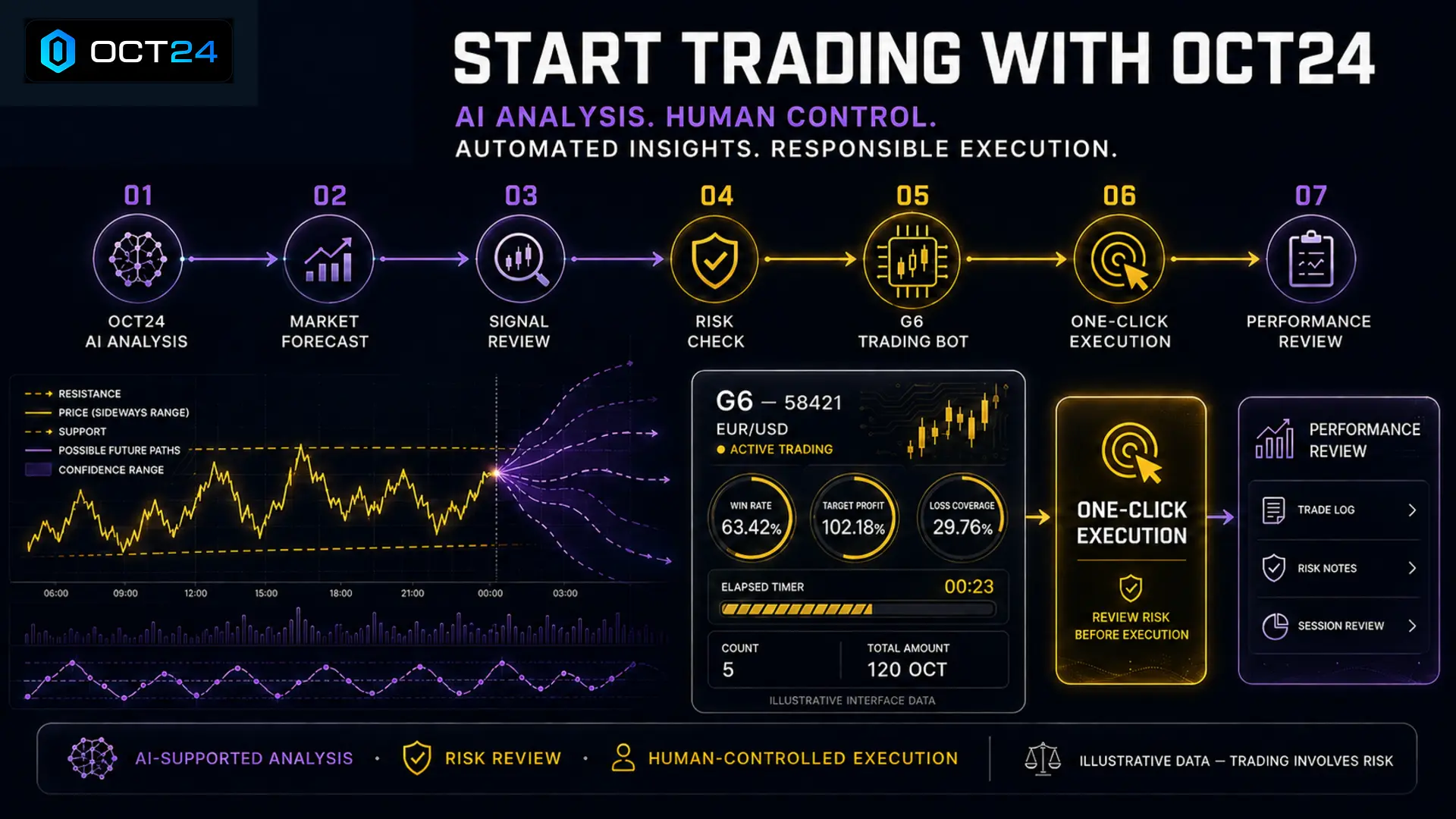
OCT24 can support a simplified trading workflow when users want to review AI-powered trade or bot options without building a complex setup from scratch. When a trade or bot is presented, users mainly review target profit, loss coverage, and win rate.
- Use outside market context to understand whether conditions are sideways
- Review available OCT24 trade or bot metrics
- Consider whether target profit fits a range-bound market
- Check whether loss coverage fits the possible downside
- Decide whether one-click execution is appropriate
- Track results instead of assuming the next setup will behave the same
When Sideways Markets Can Be Useful
Sideways markets are not always bad.
They can give traders time to observe market structure.
They can show where buyers and sellers are active.
They can also help traders prepare for a future breakout.
A beginner can use a range to mark important areas, set alerts, and decide what conditions would make a trade more reasonable.
This connects naturally with an AI trading watchlist because traders can monitor a smaller group of assets instead of reacting to every chart.
Sideways conditions may also help traders compare Bitcoin, Ethereum, and altcoins because some assets hold their range better than others.
When Sideways Markets Should Be Avoided
Some sideways markets are too messy to trade.
If price is moving randomly, volume is low, and signals keep failing, the market may not offer enough clarity.
Beginners should be willing to skip these conditions.
Avoiding a bad trade is not the same as missing an opportunity.
It is part of risk management.
This is especially important for busy traders.
AI trading for busy professionals can help reduce constant screen watching, but traders still need rules for when not to trade.
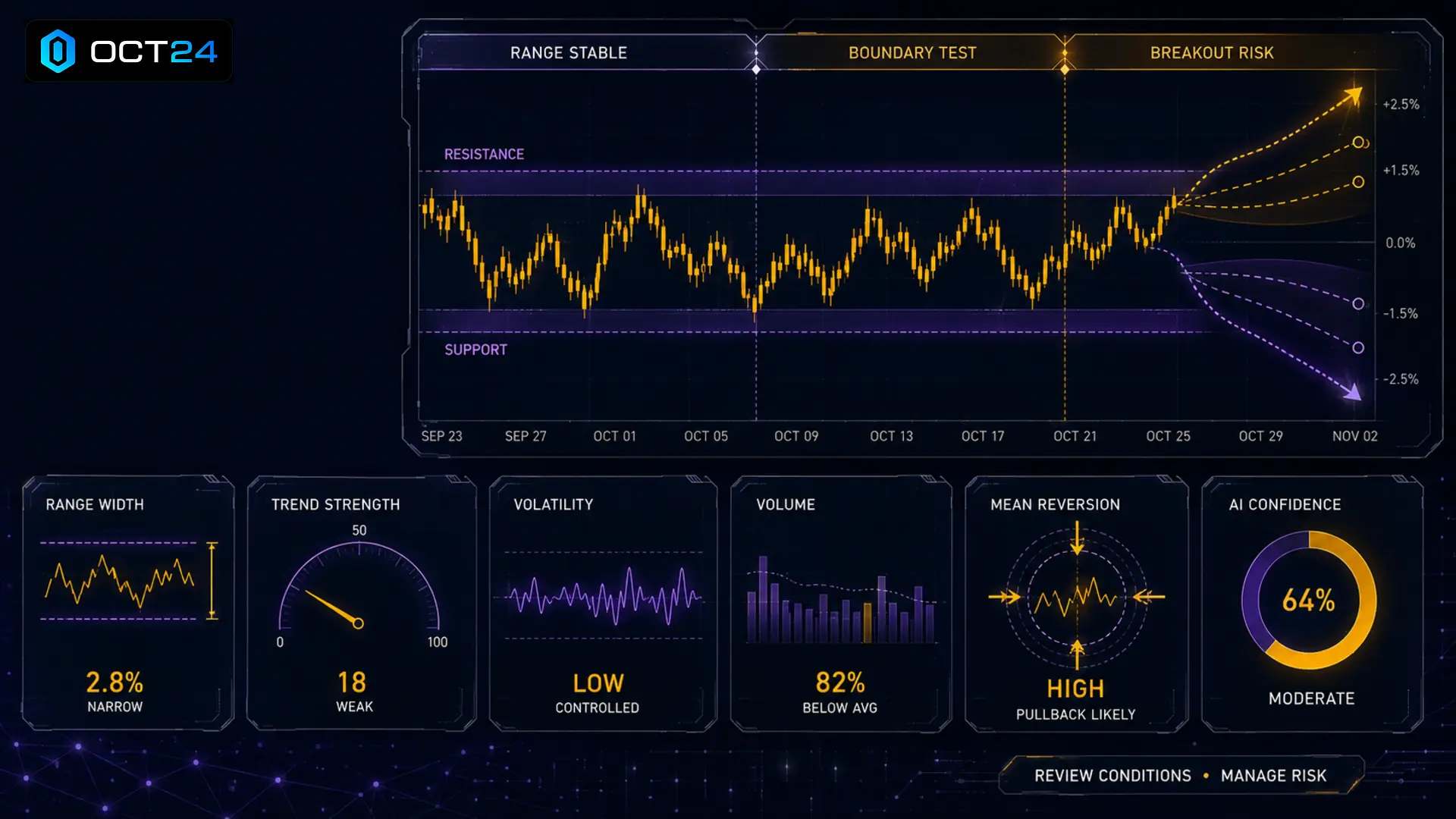
AI Trading Signals During Sideways Markets
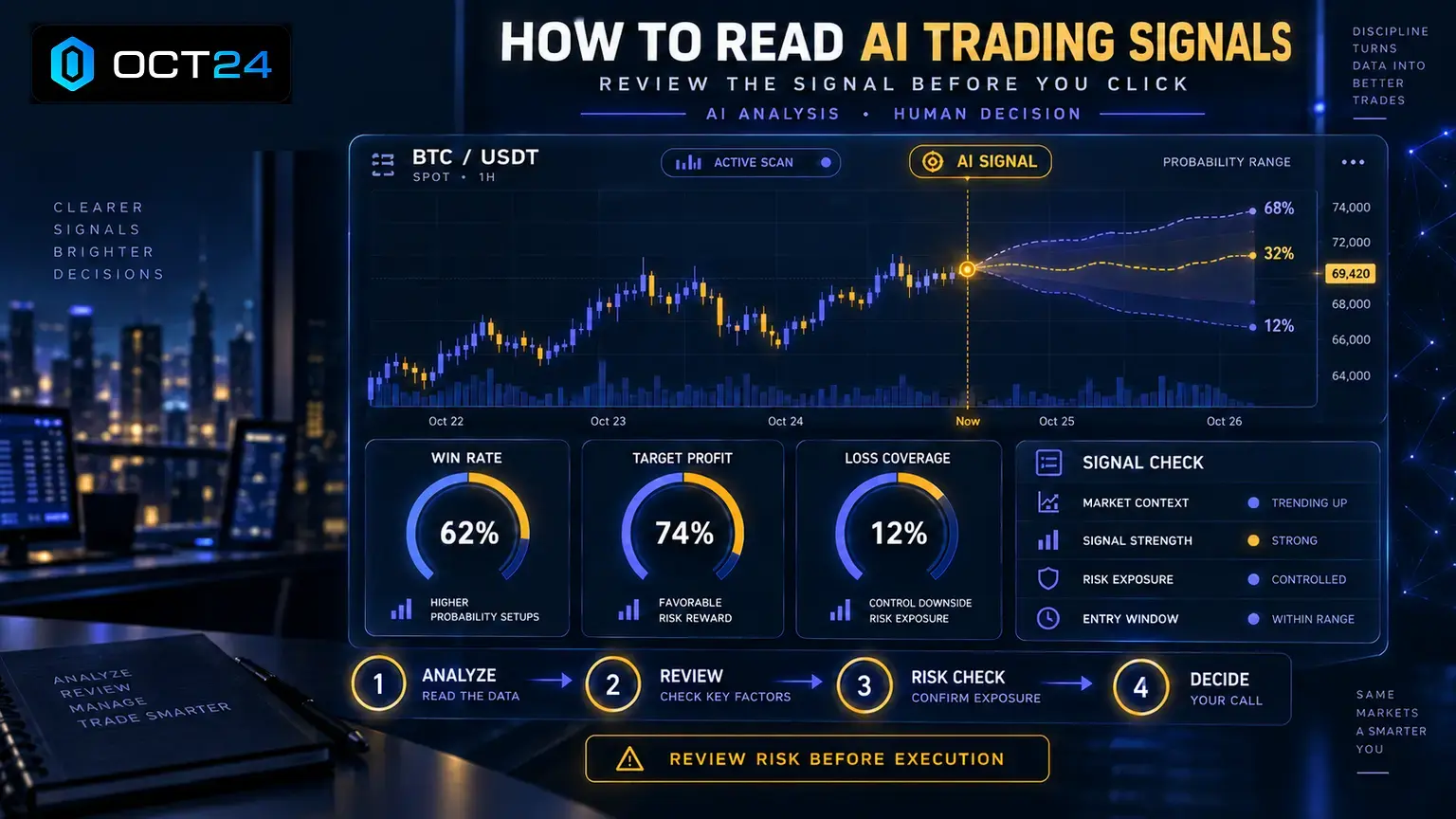
AI trading signals can be useful in a sideways market when they are treated as review prompts.
A signal near support or resistance may be more meaningful than a signal in the middle of the range.
A signal with improving volume may matter more than a signal with weak participation.
Still, signals can fail.
A trader should ask whether the signal fits the market condition.
If the market is choppy, the signal may need stronger confirmation before execution.
How Sideways Markets Affect Trading Psychology
Sideways markets can test patience.
Traders may feel bored, then take low-quality trades just to stay active.
They may also become frustrated after several small reversals.
Trading psychology matters because sideways markets often create the feeling that something is about to happen.
Sometimes something does happen.
Sometimes the market keeps drifting.
A calm routine can help traders avoid forcing action.
A Beginner Checklist for Sideways Markets
Before trading a sideways market, beginners should slow down and review the setup.
The goal is not to predict every bounce.
The goal is to decide whether the condition is clear enough to risk capital.
A simple checklist can help traders avoid random entries and emotional decisions.
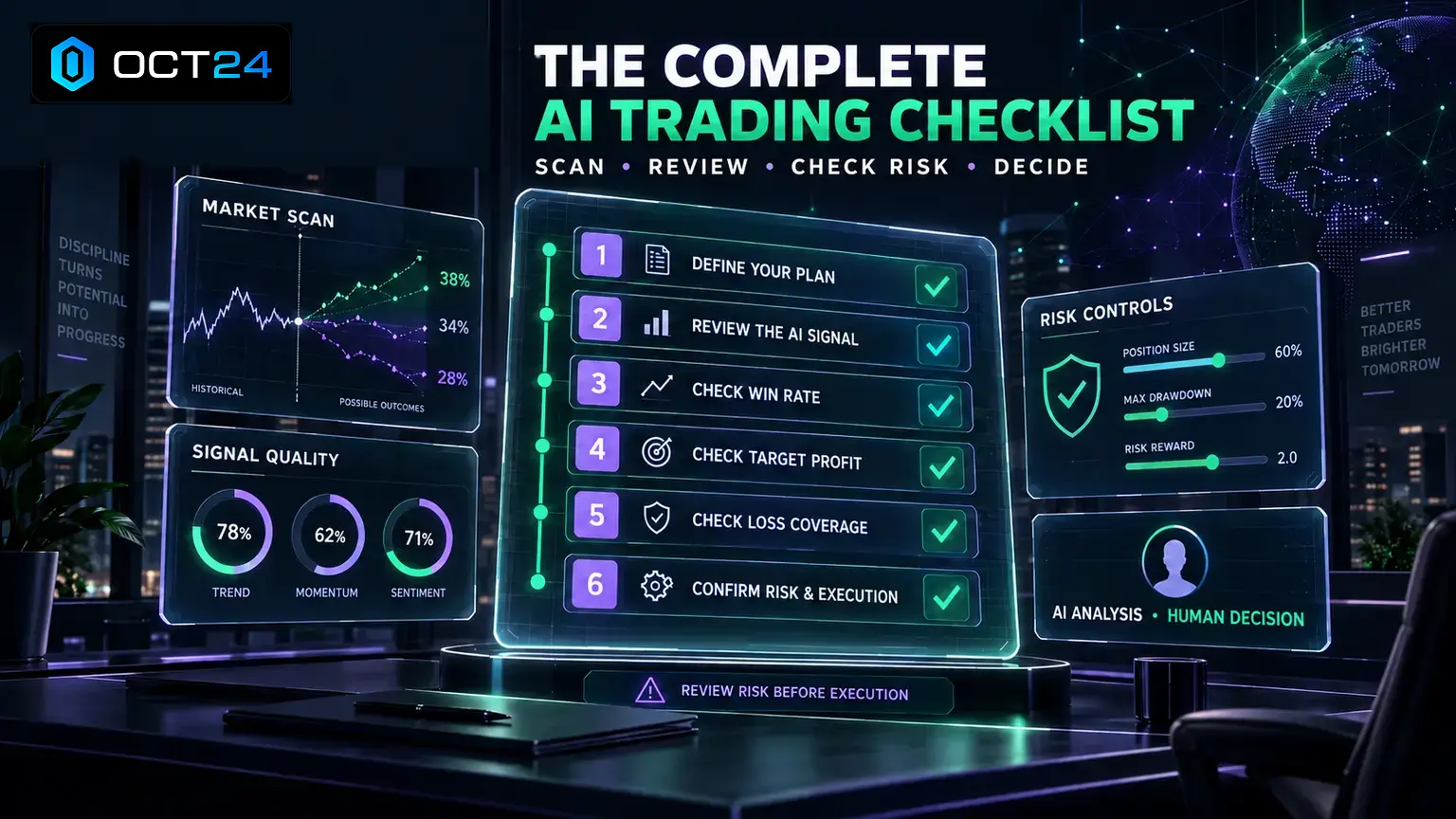
- Identify the range first
- Avoid trading the middle of the range
- Check whether volume supports the move
- Watch for false breakouts
- Review target profit, loss coverage, and win rate
- Use position size that fits uncertainty
- Skip the trade if conditions are unclear
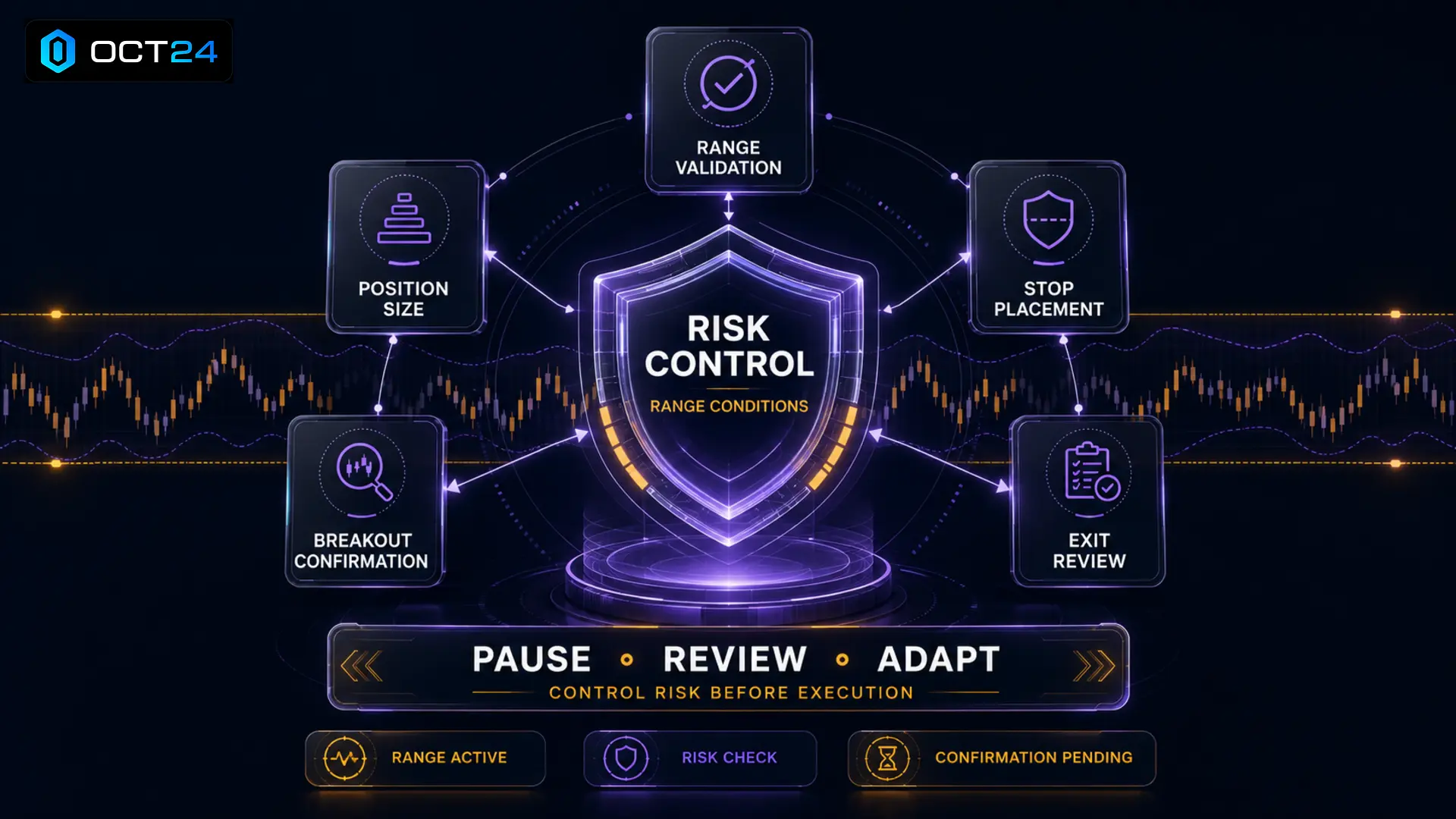
Sideways Market Checklist Items
Use the checklist below before reviewing any AI-supported trade option.
How One-Click Trading Should Be Used in a Range
One-click trading can make execution faster, but faster execution needs more discipline in sideways markets.
A range can reverse quickly.
A trader should review risk before clicking, not after.
OCT24 users should treat one-click execution as the final step after reviewing the available metrics and deciding whether the setup fits the market condition.
The G6 Trading Bot may be relevant for users exploring OCT24 bot options, but no bot removes the need for risk control.
Building a Routine for Sideways Conditions
A consistent trading routine can make sideways markets easier to handle.
Start by identifying the range.
Mark support and resistance.
Check whether volume is improving or fading.
Watch for false breakouts.
Decide where no trade should be taken.
Review position size before execution.
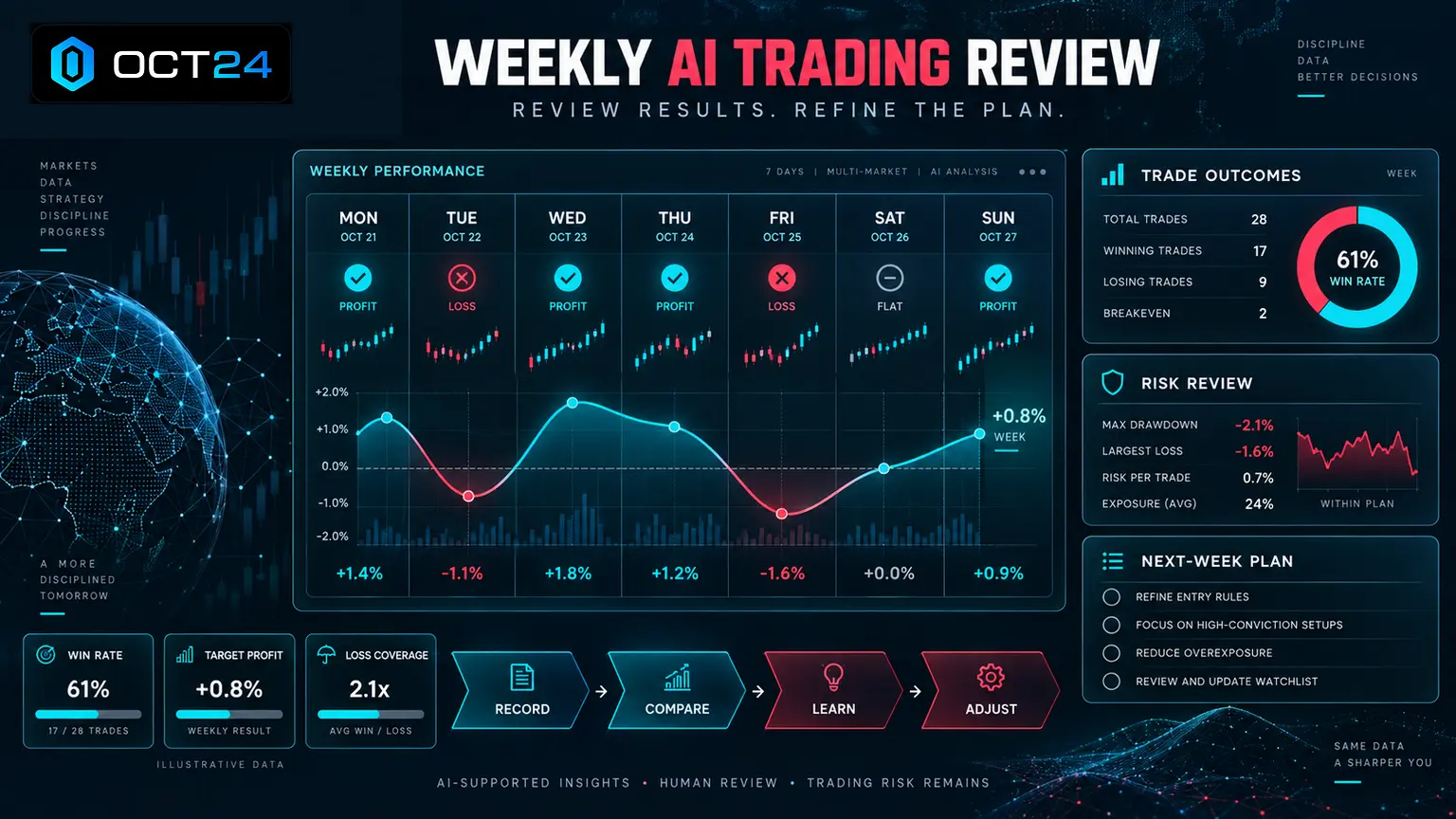
Record the result afterward.
This routine helps traders avoid turning every small movement into a trade.
How Sideways Markets Connect to Market Rotation
Sideways markets often appear before or during crypto market rotation.
Bitcoin may pause while Ethereum or selected altcoins move.
A sector may rotate while the broader market stays flat.
AI can help compare these movements, but traders should avoid assuming that every rotation inside a sideways market will continue.
Rotation needs confirmation, volume, and risk review.
Choosing the Right Platform for Sideways Markets
Choosing the right AI trading platform matters because sideways markets require clarity.
A platform should help traders review information without encouraging careless trading.
OCT24 is designed around simplified AI-powered trade or bot review and a cleaner execution flow.
Traders should still use responsible risk settings, understand exposure, and avoid treating any platform as a guarantee.
AI trading strategies for beginners can help traders understand why strategy should change with market conditions. A range is not the same as a trend.
Can AI predict the market explains why AI should not be treated as certainty. Sideways markets are a useful reminder that markets can stay unclear for longer than traders expect.
AI trading myths is important because some traders believe AI can make every condition tradable. In reality, AI can support review, but it cannot remove bad market structure.
AI trading risk vs reward should be reviewed before trading ranges because short opportunities may not justify the downside.
Portfolio Diversification Tools can help traders avoid concentrating too much exposure in assets that are all trapped in the same sideways market.
Best AI trading tools can help beginners build a simple toolkit for alerts, watchlists, risk checks, and journals.
About OCT24 gives more background on the platform. When you are ready to explore directly, you can Start Trading with OCT24.
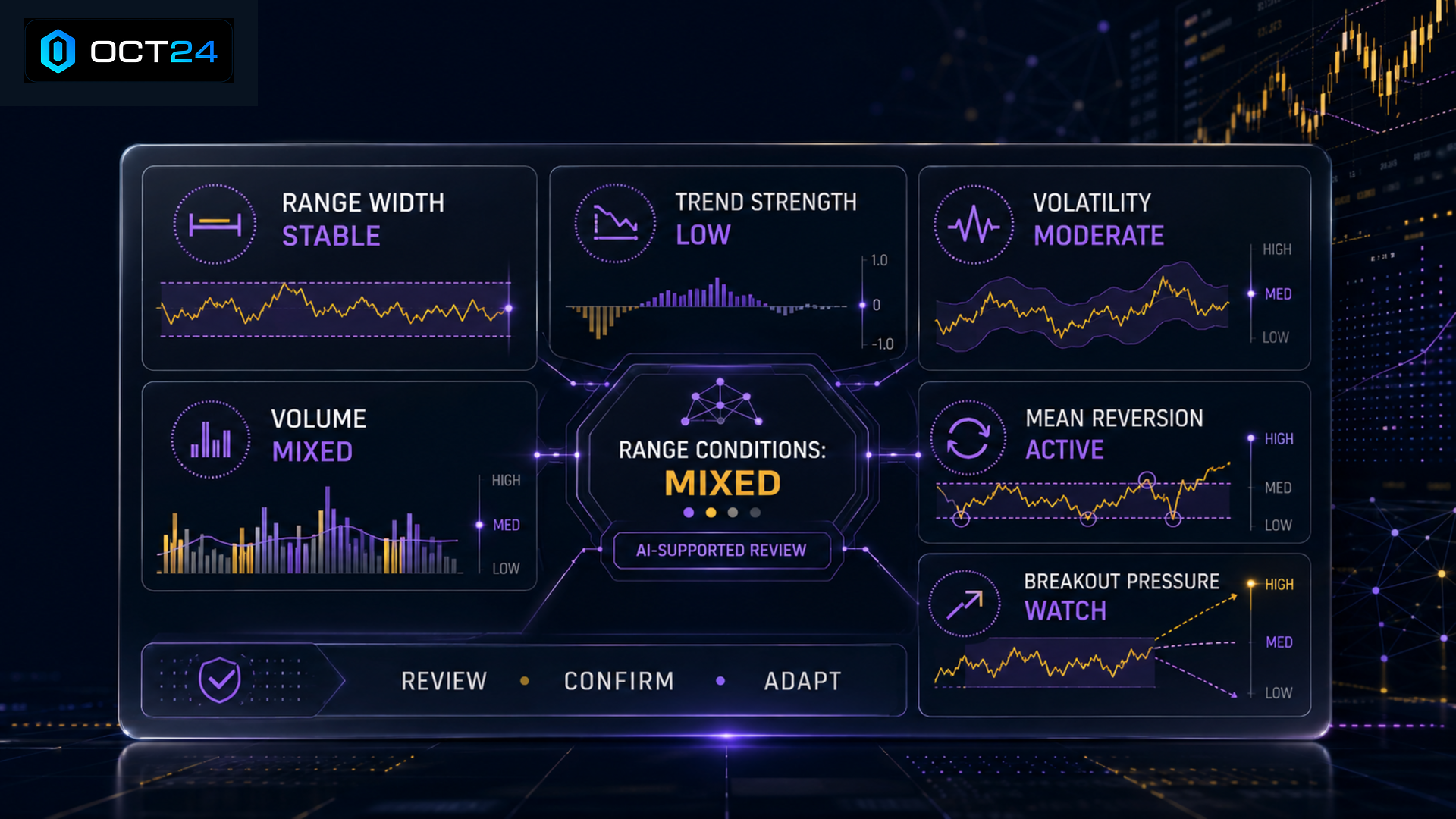
Example: Bitcoin Is Stuck in a Range.
Imagine Bitcoin has been moving between the same support and resistance areas for several days. Each push higher fades near resistance, and each move lower finds buyers near support. The market is active, but it is not trending.
In this situation, AI may help identify that momentum is fading near the range edges. It may also show that volume is not strong enough to confirm a breakout. That information can help a trader avoid treating every move as the start of a new trend.
A beginner should be careful in the middle of this range. The middle offers less context because price has room to move in either direction. The edges of the range may offer clearer review points, but only if risk is controlled.
Example: Ethereum Breaks Out, Then Falls Back Into the Range.
A false breakout happens when price briefly moves beyond resistance or support, then returns back inside the range. This is common in sideways markets because traders often react quickly to the first sign of movement.
AI can help by comparing breakout strength with volume, volatility, and follow-through. If price breaks resistance but volume is weak, the move may need more confirmation. If volatility spikes but price cannot hold the breakout area, the setup may be risky.
This does not mean every breakout will fail. It means traders should avoid assuming that the first breakout candle is enough. Confirmation matters more when the market has been sideways for a while.
Why Patience Matters More in Sideways Markets.
Sideways markets often reward patience more than speed. A trader who waits for cleaner conditions may miss a few small moves, but they may also avoid a long series of low-quality trades.
This is difficult because sideways markets can feel like they are always about to move. A candle pushes higher. A signal appears. A token starts trending on social media. The temptation is to act before the market confirms anything.
AI can help reduce noise by showing whether the move is supported by broader conditions. Still, the trader needs the discipline to wait. If the setup is unclear, waiting is a valid decision.
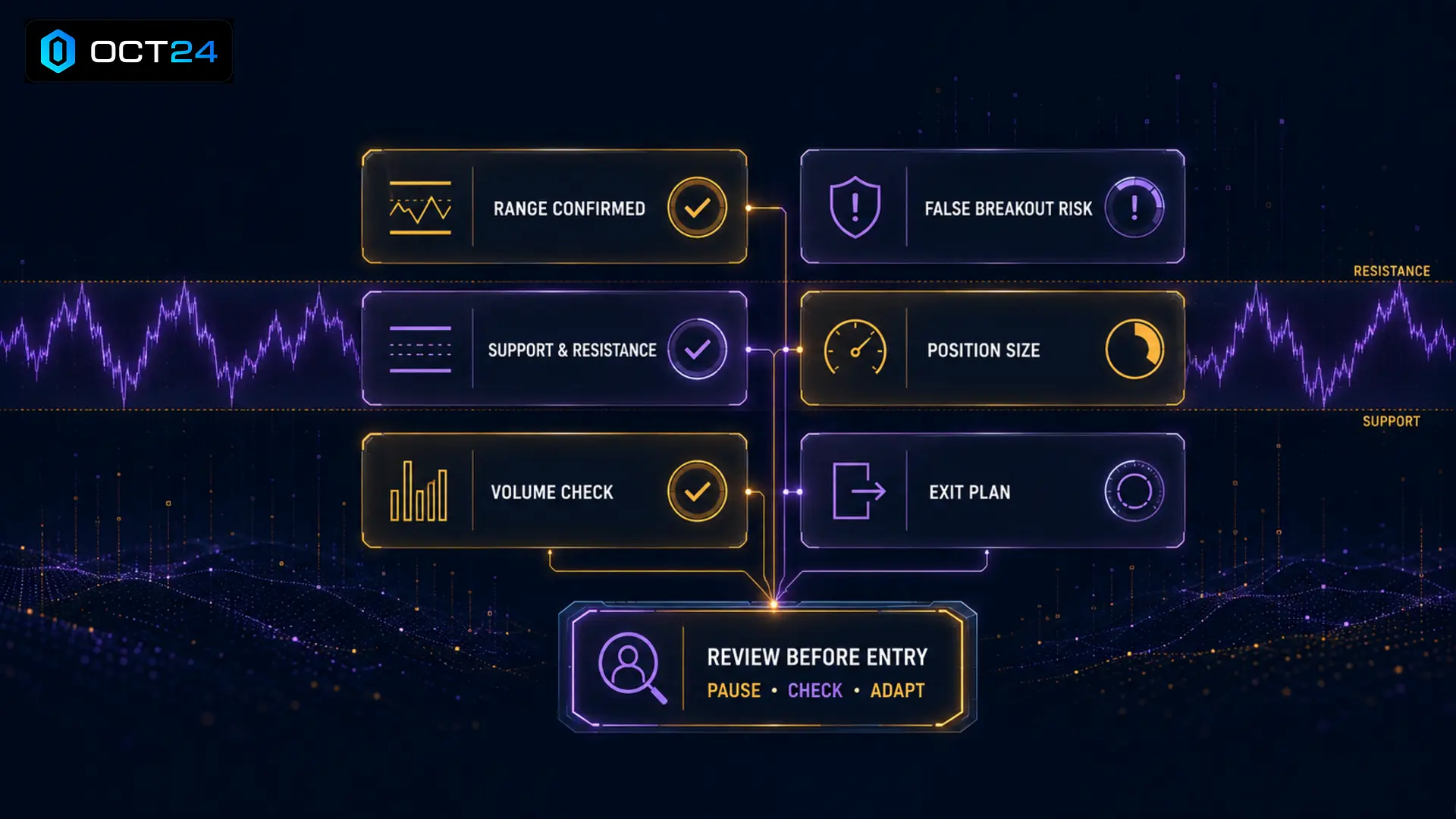
How to Review OCT24 Metrics in a Sideways Market.
When using OCT24 during sideways conditions, traders should review the available metrics with extra care. Target profit, loss coverage, and win rate can help frame the decision, but they do not explain the entire market context.
A sideways market can limit follow-through. That means a target profit may look attractive, but the market may not travel cleanly. Loss coverage should also be considered carefully because choppy markets can reverse quickly.
The key question is whether the available trade or bot metrics make sense for the current condition. If the market is unclear, the trader can choose to wait rather than execute. OCT24 can simplify the review process, but the risk decision still belongs to the trader.
Sideways Markets and Crypto Market Rotation.
Sideways markets can also appear during crypto market rotation. Bitcoin may pause while Ethereum or selected altcoin sectors move. This can make the market feel mixed because some assets are active while others remain trapped in a range.
AI can help compare these differences. It may show whether a sideways market is broad across crypto or limited to one asset. It may also help traders see whether capital is rotating into another area of the market.
This matters because a sideways Bitcoin market does not always mean no opportunities exist. It may mean traders need to compare assets more carefully. At the same time, rotation can fade quickly, so risk control still matters.
Sideways Markets and Trading Bots.
Trading bots can struggle when market conditions do not match their logic. A bot designed for trend continuation may perform poorly in a sideways range. A bot designed for range behavior may struggle if the market suddenly breaks out.
This is why traders should understand the basic environment before relying on any automated system. The article on how AI trading bots work is useful because it explains that bots follow logic. They are not magic, and they do not adapt perfectly to every condition.
OCT24 users reviewing bot options should think about whether the visible metrics fit the current market. If the market is choppy, uncertain, or low quality, a trader should avoid assuming that automation removes the problem.
Simple Rules for Sideways Market Discipline.
A few simple rules can make sideways markets easier to manage. First, define the range before considering a trade. Second, avoid the middle unless there is a strong reason. Third, wait for confirmation near the edge. Fourth, use smaller size when conditions are unclear.
Fifth, do not keep trading just because the first trade did not work. Sideways markets can create a loop of small losses when traders keep trying to force direction. Sixth, record results so you can see whether sideways conditions are helping or hurting your strategy.
These rules are simple, but they are not always easy. They require patience. They also require the trader to accept that some markets are better watched than traded.
FAQs
What is AI trading during sideways markets?
AI trading during sideways markets means using AI-supported tools to review range conditions, volatility, signal quality, and risk before deciding whether a trade is worth taking.
Are sideways markets bad for trading?
Not always. Sideways markets can create range opportunities, but they can also create false breakouts, whipsaws, and overtrading.
Can AI identify sideways markets?
AI can help identify sideways conditions by comparing trend strength, volatility, volume, and repeated support or resistance behavior. It cannot guarantee what happens next.
Should beginners trade the middle of a range?
Beginners should be careful with the middle of a range because price can move in either direction without clear confirmation.
How does OCT24 fit into sideways markets?
OCT24 can help users review simplified AI-powered trade or bot options. Users mainly review target profit, loss coverage, and win rate before deciding whether to execute.
Does OCT24 remove risk in sideways markets?
No. OCT24 does not remove market risk or guarantee results. Traders remain responsible for risk settings, exposure, capital allocation, and execution decisions.
What is the biggest mistake in sideways markets?
The biggest mistake is forcing trades when conditions are unclear. Sideways markets often reward patience more than constant activity.
Are trading bots useful in sideways markets?
Trading bots can be useful if the strategy fits range conditions and risk is controlled. A bot can still lose money if the market behaves differently than expected.
How should traders manage risk in sideways markets?
Traders should use controlled position size, avoid overtrading, review range boundaries, and skip setups that do not offer enough reward for the risk.
Can one-click trading work in sideways markets?
One-click trading can make execution faster, but it should only be used after reviewing the setup, the available metrics, and the risk.
Final Thoughts
AI trading during sideways markets is about clarity, patience, and risk control. A sideways market can look active, but activity is not the same as direction.
AI can help traders review range behavior, signal quality, volatility, and market structure. It can also help traders notice when conditions are too unclear to trade.
OCT24 can fit into this workflow by offering simplified AI-powered trade or bot review and one-click execution. Traders should still review target profit, loss coverage, win rate, exposure, and capital allocation before making a decision.
To explore the platform, visit OCT24 or Start Trading with OCT24.