
How AI Helps Traders Avoid Overtrading
Overtrading is one of the easiest habits for traders to fall into, especially in fast-moving crypto markets. This guide explains how AI helps traders avoid overtrading by bringing more structure, patience, and risk awareness into the trading process.
The short answer is simple: AI can help traders avoid overtrading by filtering market noise, reducing emotional decision-making, and encouraging users to focus on higher-quality setups instead of reacting to every price move. It does not remove risk, and it does not guarantee better results, but it can make the decision process more disciplined.
For many beginners, the problem is not a lack of effort. It is too much action at the wrong time. A trader sees a sudden candle, opens a position, exits too early, enters again, and then spends the rest of the day trying to recover from decisions that were never part of a plan.
That pattern is exhausting. It can also become expensive. Tools like OCT24 are designed to simplify the trading experience by presenting AI-supported trade opportunities and key trade or bot metrics, while still leaving risk settings, capital allocation, and execution choices in the hands of the trader.
What overtrading means
Overtrading means taking too many trades, trading without a clear reason, or increasing activity because of emotion rather than strategy. It is not only about the number of trades. It is about whether each trade has a valid purpose.
A trader can overtrade with ten small trades in one hour. Another trader can overtrade with only two trades if both were rushed, oversized, or taken after ignoring their own rules.
Overtrading often appears when a trader feels pressure to do something. The market is open. Prices are moving. Social media is loud. Someone else seems to be making money. The trader starts to feel that sitting still is the same as missing out.
That feeling is dangerous because markets are not designed to reward constant activity. Some conditions are clean. Some are messy. Some periods are better for waiting than trading.
This is where trading psychology becomes important. Many poor decisions begin before the trade is opened. They begin with boredom, fear, frustration, or the need to recover a recent loss quickly.
AI cannot make a trader perfectly calm. It cannot remove emotions from the person using the platform. But it can help create a more structured environment where every trade feels less random and less impulsive.
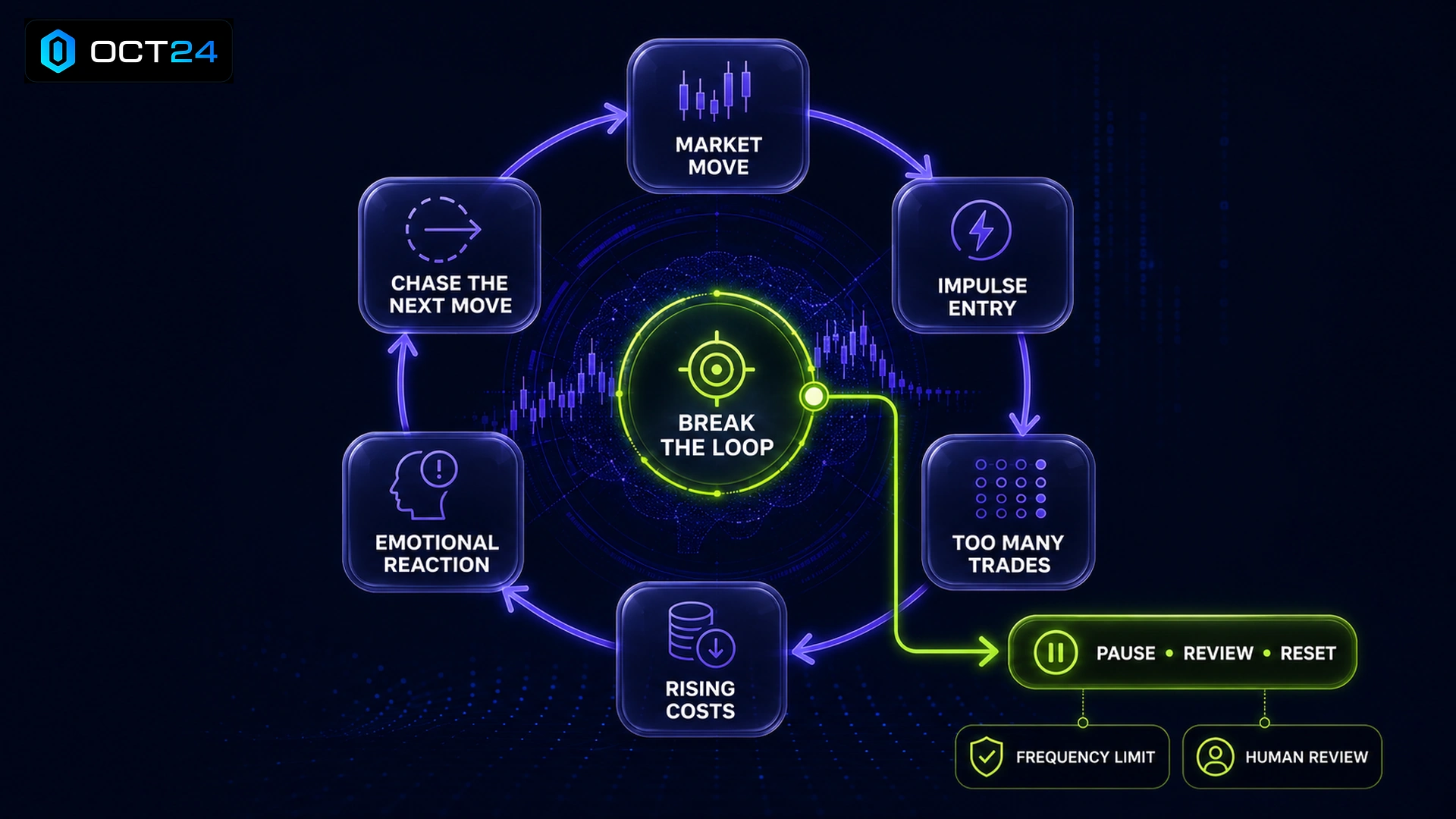
Why traders overtrade
Most traders do not plan to overtrade. It usually happens gradually. One extra trade becomes three. A small position becomes larger. A missed setup becomes a chase.
The most common causes include the following.
- Fear of missing out when prices move quickly
- Trying to recover after a losing trade
- Boredom during slow market conditions
- Confusing movement with opportunity
- Using too many indicators without a clear decision rule
- Ignoring position size after a few emotional trades
- Switching strategies too often
- Treating every alert as an instruction to trade
These habits are especially common in crypto because markets run all day and price movement can be dramatic. A trader may check the chart in the morning, at lunch, in the evening, and late at night. Every check creates another chance to act emotionally.
This is why overtrading is closely connected to common AI trading mistakes. Beginners often assume more activity means more opportunity. In reality, more activity often means more fees, more stress, and more exposure to low-quality decisions.
Overtrading also becomes easier when traders misunderstand automation. They may assume that because a system is AI-supported, every signal or bot option deserves immediate action. That is not the right mindset. AI can support analysis and structure, but the trader still needs rules for when to participate and when to wait.
How AI helps traders avoid overtrading
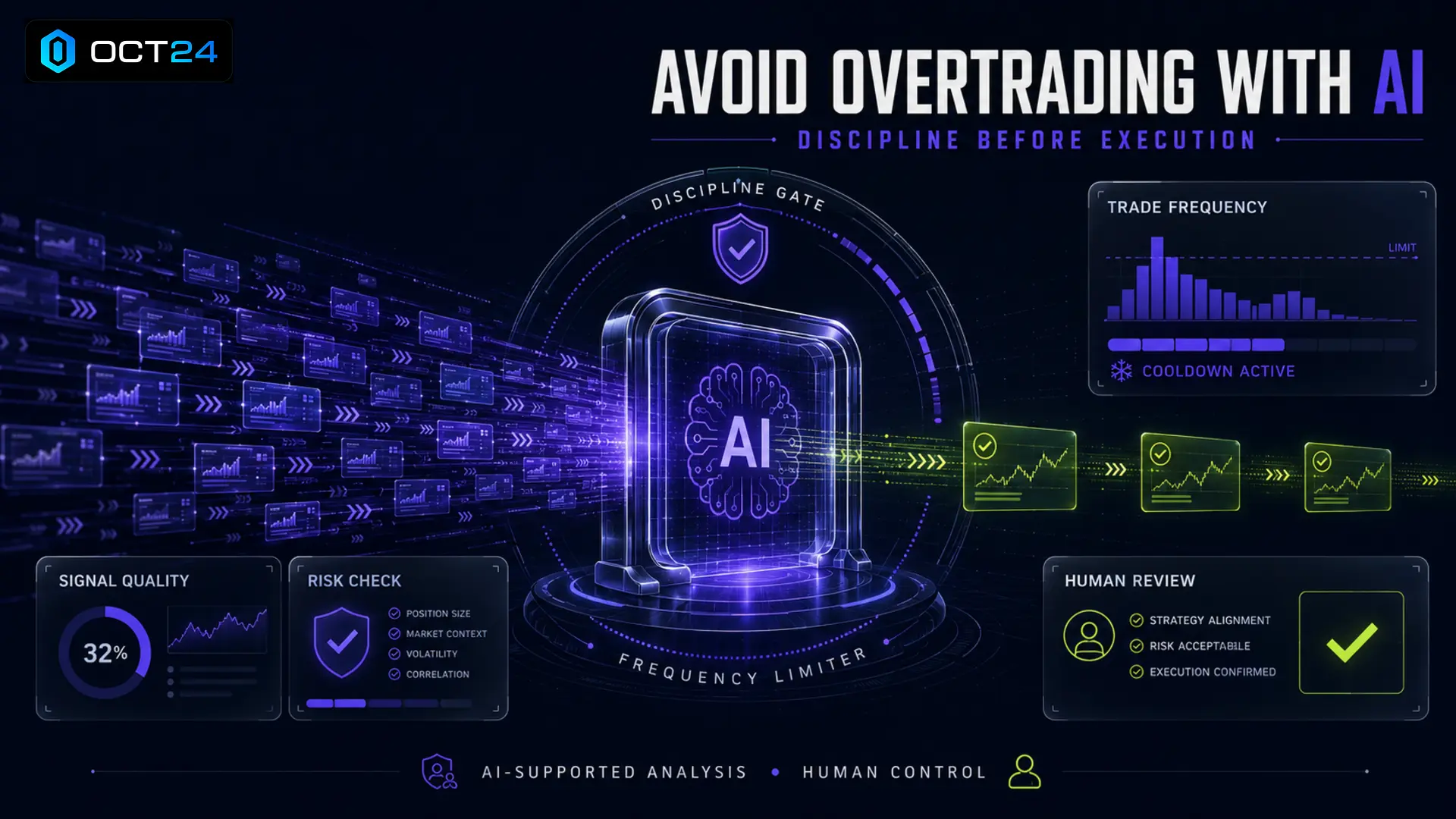
The main way AI helps traders avoid overtrading is by adding structure between market movement and trader action. Instead of reacting instantly to every price change, the trader can use AI-supported tools to review whether an opportunity is worth attention.
This does not mean AI is always right. It means the process becomes less emotional. The trader is no longer relying only on impulse, screen time, or the feeling that they should enter because the market is moving.
In practical terms, AI can help in several ways.
- Scanning large amounts of market information faster than a human could manually review
- Highlighting potential opportunities that match certain conditions
- Reducing the need to constantly stare at charts
- Helping traders focus on fewer decisions with clearer context
- Supporting repeatable routines instead of random action
- Encouraging traders to compare risk, reward, and recent behavior before clicking
If you already understand how AI trading bots work, think of this as a behavioral benefit rather than only a technical one. AI is not useful simply because it can process data. It is useful because it can help the trader slow down, review, and avoid turning every market move into a trade.
That difference matters. The goal is not to trade more. The goal is to trade with more discipline.
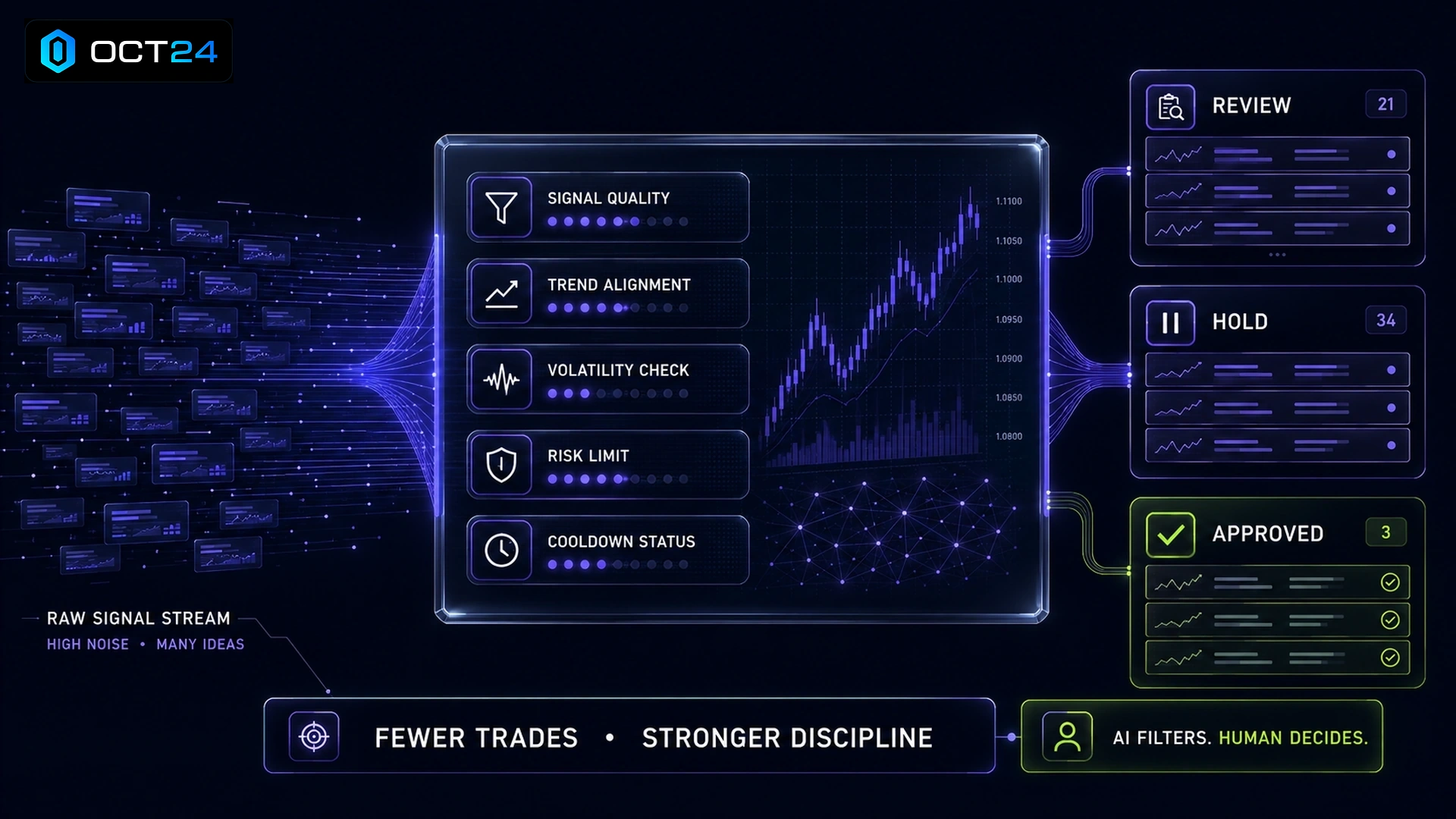
AI helps filter low-quality setups
One of the biggest reasons traders overtrade is that they treat all movement as useful information. A coin pumps 2 percent. Bitcoin pulls back. Ethereum moves before the rest of the market. A smaller altcoin spikes on volume. Each move feels important in the moment.
But not every move is worth trading. Some moves are noise. Some happen inside weak market conditions. Some are already too extended by the time a beginner notices them.
AI can help by narrowing the field of attention. Instead of manually jumping between dozens of charts, a trader can use AI-supported workflows to focus on selected opportunities, signals, or bot options that have already passed some form of system-level review.
This is one reason articles about AI trading signals matter. A signal should not be treated as a command. It should be treated as structured information that helps the trader decide whether action is reasonable.
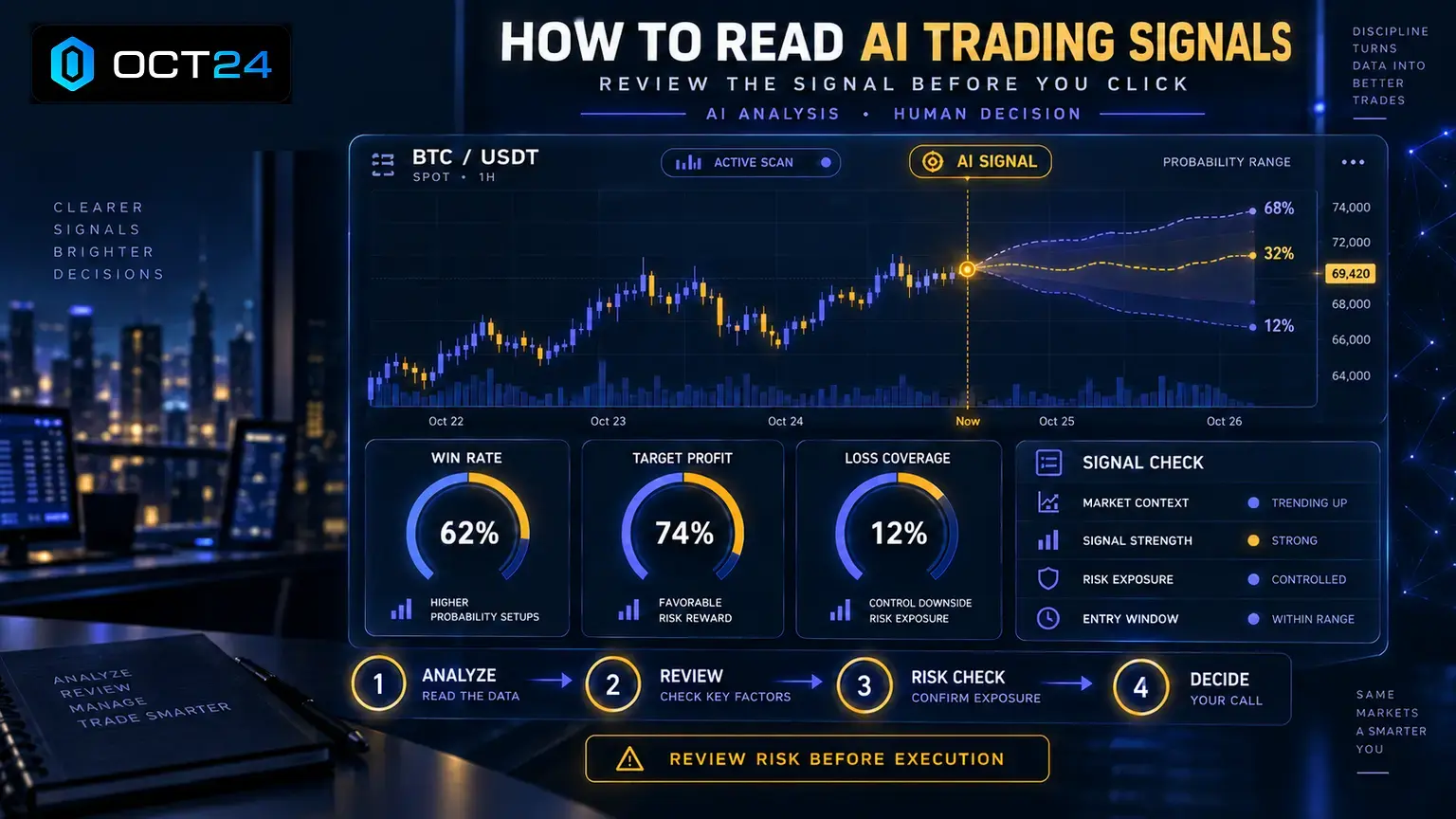
On OCT24, the experience is intentionally simplified. The platform does not currently show a full research terminal with detailed asset analysis, entry levels, or exit levels for each trade. Instead, users review key trade or bot information such as target profit, loss coverage, and win rate before deciding whether to proceed.
That simplicity can help reduce over-analysis, but it also increases the importance of responsible decision-making. If a trader only looks at win rate and ignores exposure, they can still overtrade. If they keep clicking because the interface feels simple, they can still take on too much risk.
The benefit comes from using the information as a filter, not as a reason to abandon judgment.
AI signals can reduce random decisions
Random trading is one of the clearest signs of overtrading. It happens when the trader cannot explain why they entered beyond phrases like “it looked good,” “it was moving,” or “I thought it might bounce.”
AI-supported signals can reduce random decisions because they give the trader a more structured starting point. Instead of beginning with emotion, the trader begins with a signal, a bot option, or a set of visible metrics.
That can be useful, especially for beginners who are still learning AI trading strategies for beginners. The trader can ask better questions before acting.
- Does this opportunity fit my risk limit today?
- Have I already taken enough trades?
- Am I clicking because the setup makes sense or because I feel impatient?
- Is the possible target worth the possible loss coverage?
- Would I still take this trade if I had just experienced a loss?
Those questions sound simple, but they protect traders from many avoidable mistakes. A clean decision process is often more valuable than a complex one.
It also helps traders understand the difference between AI trading vs manual trading. Manual trading often requires the trader to create the full process alone. AI-supported trading can reduce some of that workload, but the trader still controls how much risk to take and how often to act.
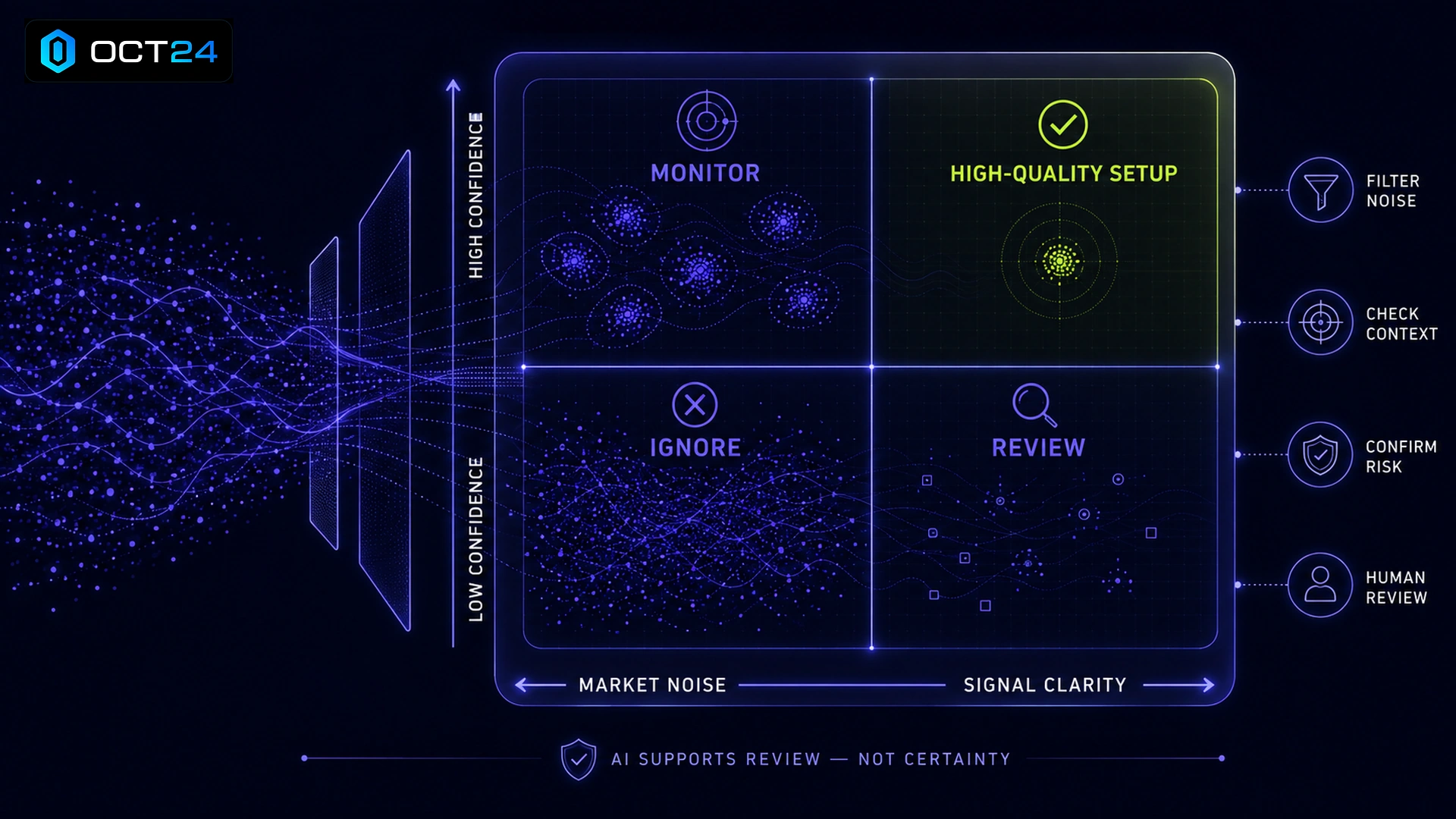
Overtrading during volatile markets
Volatility can make overtrading worse because every move feels urgent. Prices move faster. Candles become larger. Traders feel that opportunities are appearing and disappearing every few minutes.
During these periods, beginners often do the opposite of what discipline requires. They increase position size, shorten their patience, and take more trades because the market feels exciting.
This is why understanding how AI handles market volatility matters. AI can help monitor changing conditions, but volatility still creates risk. Fast markets can move against a position quickly, and simple execution does not make the market safer.
A helpful rule is to treat volatility as a reason to become more selective, not more aggressive. If price movement is wild, the trader should ask whether the opportunity is clearer or simply louder.
OCT24 can support a more structured approach because users are not forced to manually analyze every chart before each decision. However, that does not mean every available trade or bot should be used. The trader still needs personal limits for daily exposure, number of actions, and capital allocation.
Overtrading during sideways markets
Sideways markets create a different kind of problem. Instead of excitement, traders feel boredom. The market moves up, then down, then back into the same range. Nothing feels decisive, but the trader keeps trying to force a result.
This is one of the most common environments for overtrading. A trader may enter after a small breakout, exit after a quick reversal, then enter again when price returns to the middle of the range.
If you have read about AI trading during sideways markets, the key idea is patience. Sideways conditions often require fewer trades, clearer filters, and more respect for false signals.
AI can help by encouraging a trader to wait for better conditions instead of repeatedly reacting to small moves. The trader still needs the discipline to accept that no trade is sometimes the best trade.
Risk controls that reduce overtrading
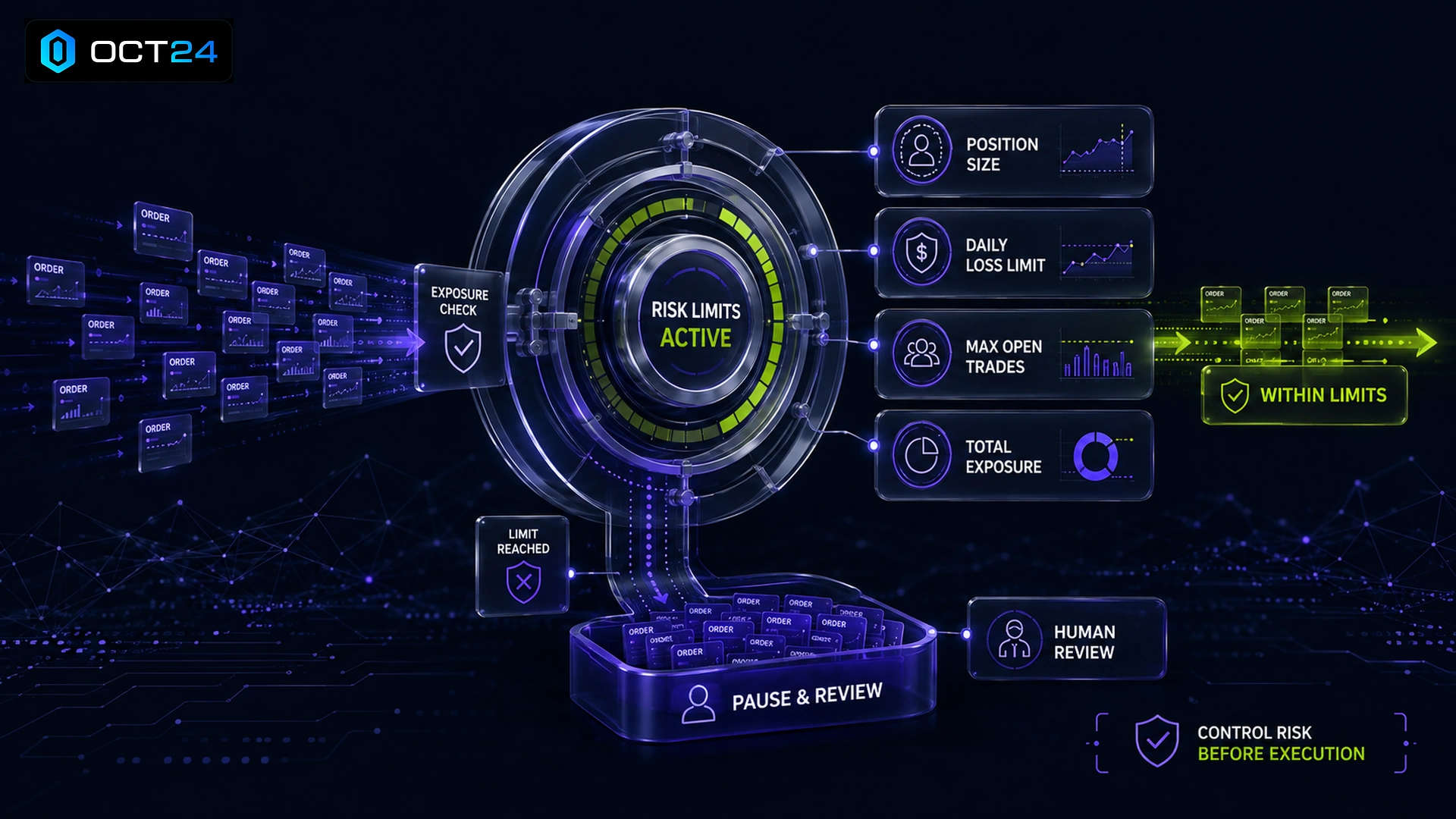
Overtrading is not only a behavior problem. It is also a risk management problem. The more often a trader acts, the more often they expose capital to uncertainty.
Good risk controls can limit the damage when a trader feels tempted to do too much. These controls do not need to be complicated. They need to be clear before the trader starts clicking.
Useful controls include the following.
- A maximum number of trades or bot activations per day
- A maximum daily loss limit
- A maximum amount of capital used at one time
- A rule to stop after two emotional decisions
- A waiting period after a loss before taking another trade
- A review checklist before every execution decision
- A rule to avoid increasing size after a losing outcome
These ideas connect directly to trading bot risk management and position sizing controls. A trader who uses AI tools without risk rules can still overtrade. A trader who uses AI tools with clear limits is more likely to stay consistent.
Position size is especially important. Overtrading becomes more dangerous when the trader increases size because they want faster recovery or bigger results. That is how a small mistake can become a major account problem.
When using OCT24, users should review visible trade or bot metrics such as target profit, loss coverage, and win rate in the context of their own capital. A higher win rate does not remove the possibility of loss. A target profit does not guarantee that the trade will reach it. Loss coverage does not mean the trader can ignore exposure.
How AI can support a consistent routine
A consistent routine is one of the best defenses against overtrading. Without a routine, every market session starts from emotion. With a routine, the trader already knows what to check, when to act, and when to stop.
AI can support this by reducing the amount of manual work required before a decision. Instead of building a watchlist from scratch every day, checking every chart, and refreshing market updates constantly, the trader can rely more on structured tools and defined review points.
This connects to building a consistent trading routine. The goal is not to make trading feel rigid. The goal is to protect the trader from making decisions every time their mood changes.
A simple AI-supported routine might look like this.
- Check the market only at planned times
- Review available AI-supported opportunities or bot metrics
- Compare target profit, loss coverage, and win rate against personal limits
- Decide whether the trade fits the daily plan
- Avoid taking another trade immediately after a loss
- Record the reason for each action
- Stop trading when the daily rule is reached
The power of this routine is that it makes fewer decisions feel normal. Many traders overtrade because they think discipline means forcing themselves to resist temptation all day. A better approach is to reduce the number of situations where temptation appears.
Where OCT24 fits into overtrading prevention
OCT24 is built around a simplified AI trading experience. Instead of asking users to manually analyze every chart, the platform presents AI-supported trade and bot opportunities so traders can review key metrics and make execution decisions more efficiently.
This can help traders avoid overtrading when they use the platform with a clear plan. The trader can spend less time searching for something to do and more time deciding whether a presented opportunity fits their risk rules.
At the same time, it is important to be accurate about what OCT24 shows today. The platform does not currently provide a full asset research dashboard for each presented trade. Users do not see detailed asset information or specific entry and exit point analysis for every opportunity. They review visible metrics such as target profit, loss coverage, and win rate.
That means OCT24 should be used as a simplified AI-supported trading platform, not as a replacement for personal responsibility. The platform can make the process faster and easier to navigate, but users still control risk settings, exposure, capital allocation, and execution choices.
The G6 Trading Bot is relevant here because speed can make trading feel more immediate. Fast interaction is useful when a trader has a plan. It can become risky when a trader starts clicking repeatedly without rules.
A responsible trader should treat speed as a convenience, not a reason to trade more often. If the process is simple, the discipline has to be even clearer.
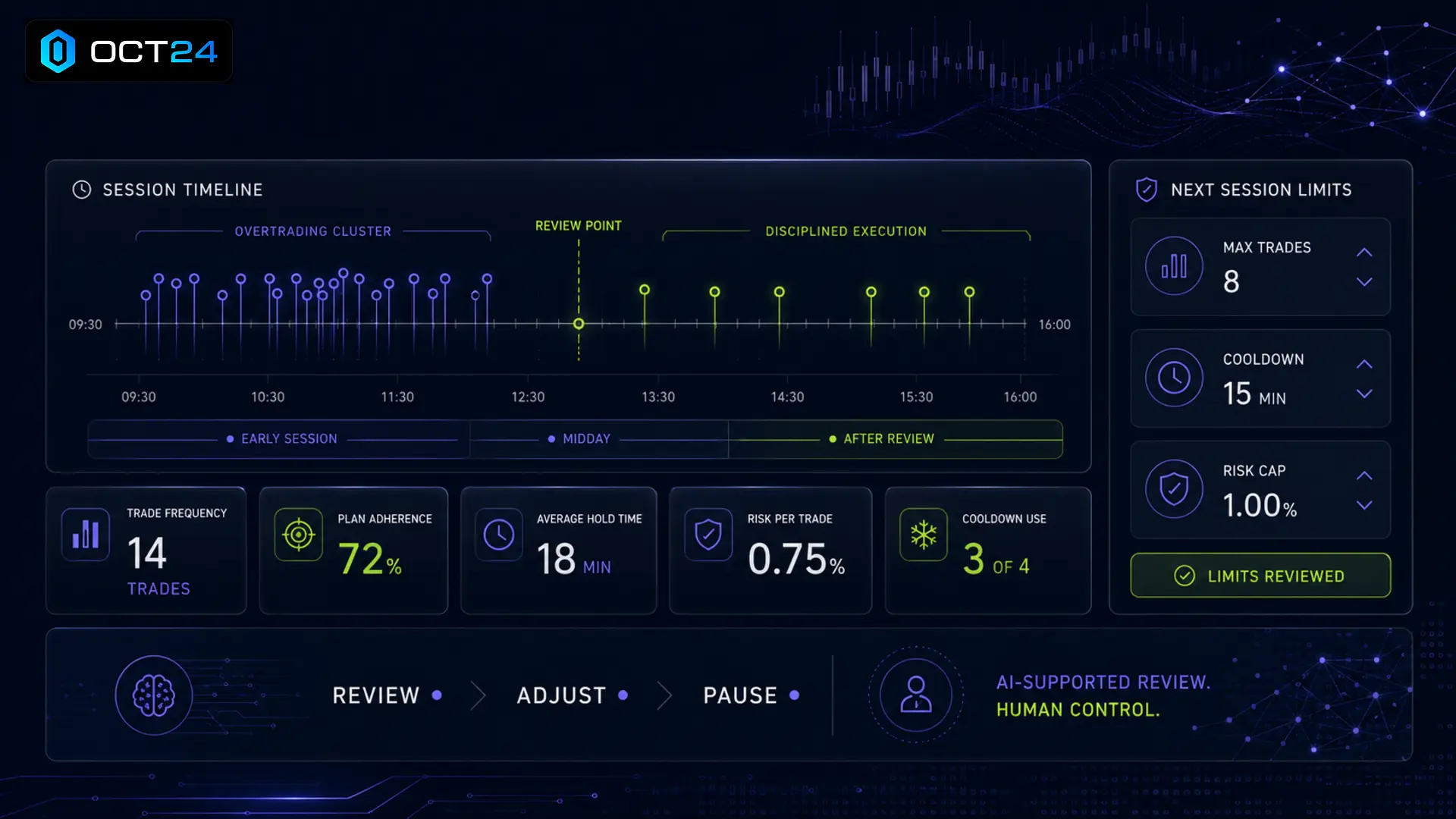
How to review OCT24 metrics without overclicking
Simple metrics can make decisions easier, but they can also create shortcuts that lead to overtrading. A trader may see a high win rate and assume the decision is obvious. That is not enough.
Before using any trade or bot opportunity, review the visible metrics in context.
- Target profit shows the intended upside for that trading cycle, not a guaranteed outcome
- Loss coverage helps frame downside exposure, but it does not remove market risk
- Win rate can provide useful context, but past or stated win rate does not guarantee the next result
- Capital allocation determines how much a single decision can affect the account
- Daily limits help prevent one emotional session from becoming too large
This is also where AI trading risk vs reward becomes practical. The question is not only whether a trade looks attractive. The question is whether the possible outcome makes sense compared with the risk taken and the trader’s current behavior.
A useful rule is to pause before every click and ask: “Would I still take this trade if I were limited to only one trade today?” If the answer is no, the trade may be more about activity than quality.
How one-click trading can help and hurt
One-click trading is designed to make the trading process faster and simpler. That can be helpful for users who want a more modern experience without complicated workflows.
But one-click access requires one-click discipline. If a trader uses speed to follow a plan, the experience can feel cleaner. If a trader uses speed to chase every impulse, the same simplicity can lead to overtrading.
A good way to think about it is this: the click should be easy, but the decision should still be thoughtful.
Before clicking, traders should already know the following.
- How much capital they are willing to use
- How many trades they are allowed to take that day
- What they will do after a loss
- What metric would make them skip the trade
- When they will stop for the session
This is why choosing the right AI-supported environment matters. A beginner exploring choosing the right AI trading platform should look beyond speed alone. They should also consider simplicity, risk visibility, platform transparency, and whether the workflow encourages better decisions.
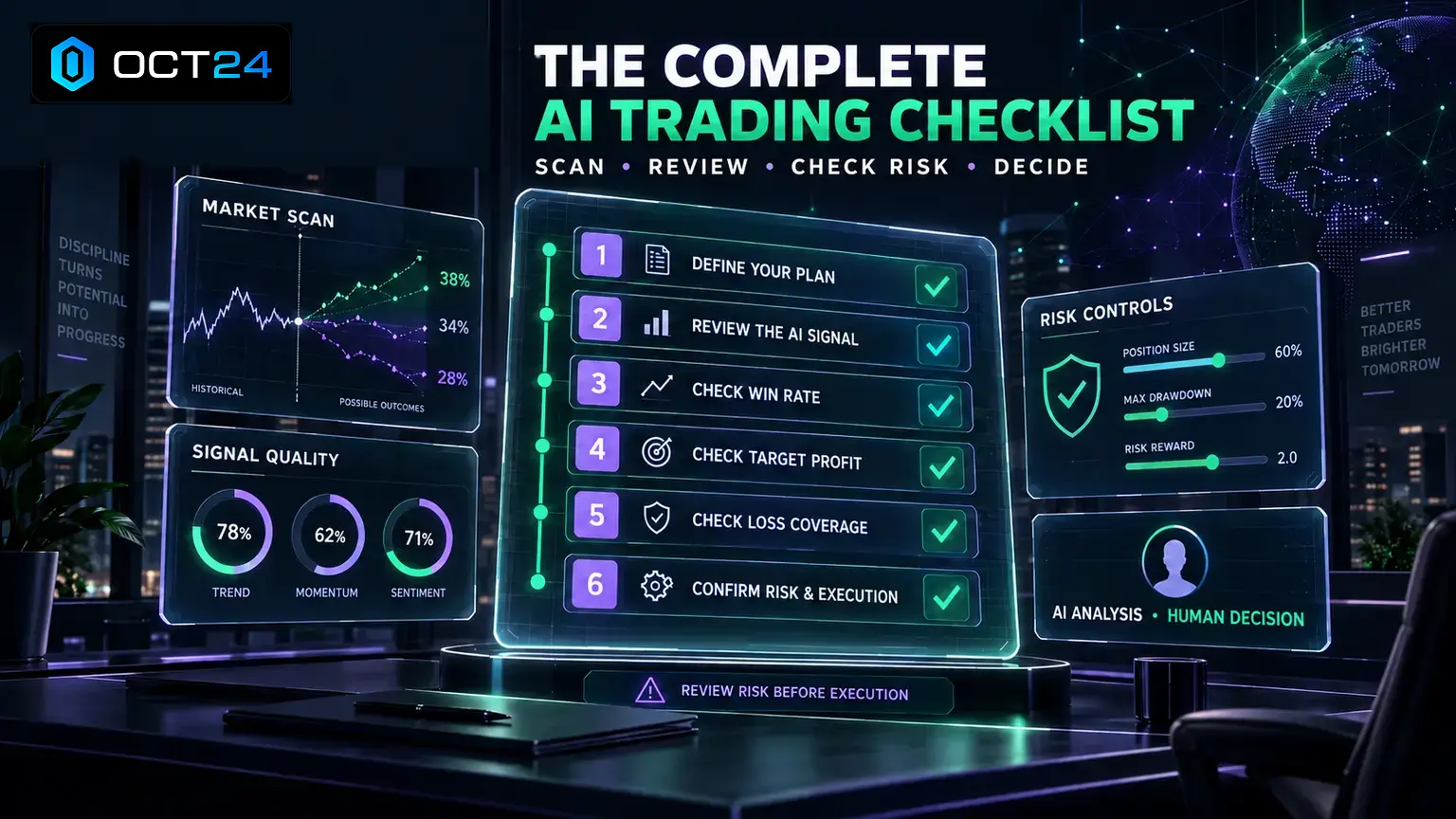
A beginner checklist to avoid overtrading
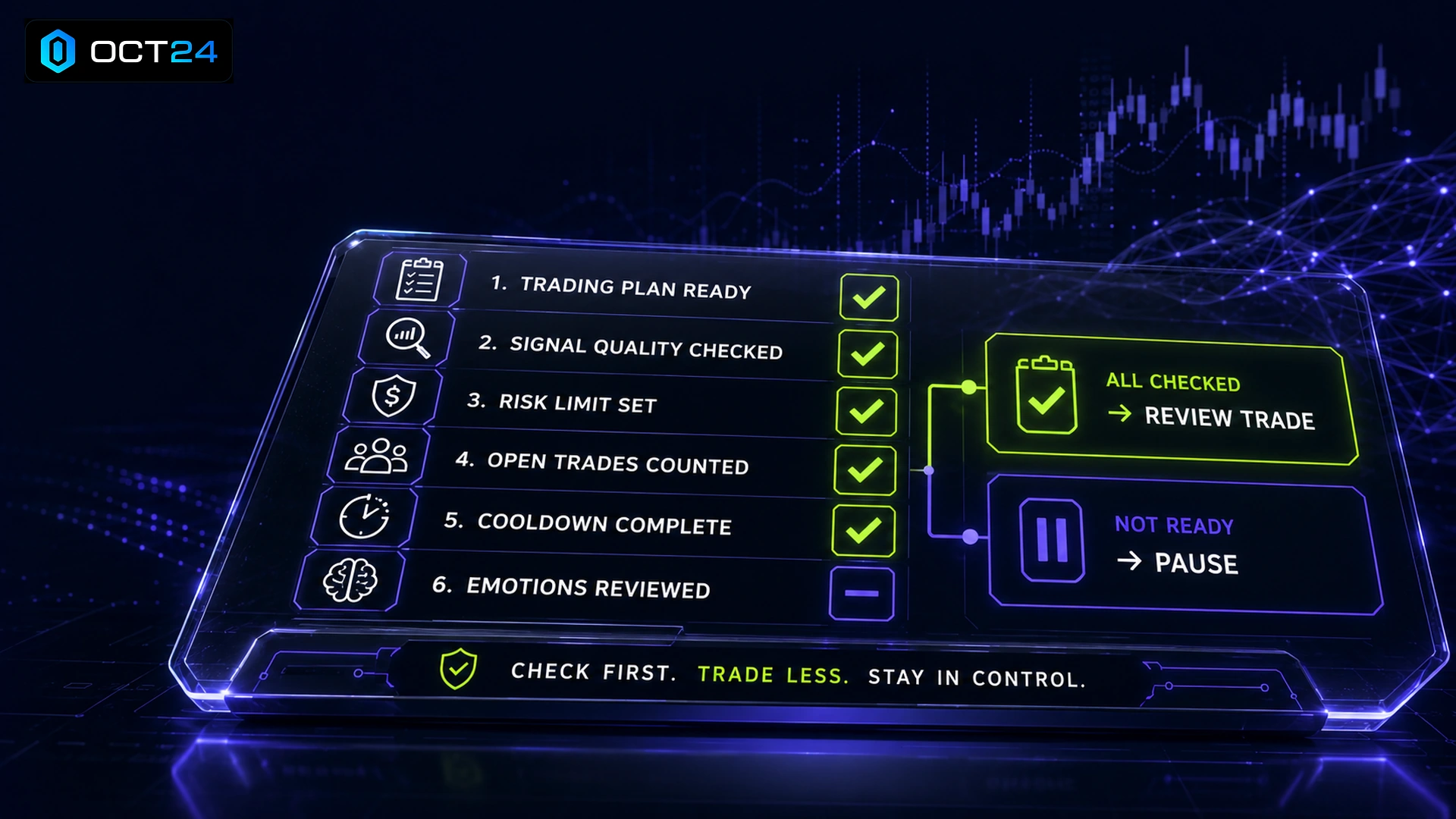
A checklist helps because it slows the decision down just enough. It turns trading from a reaction into a review.
Before taking a trade, ask these questions.
- Have I already reached my trade limit today?
- Am I trading because the opportunity fits my plan?
- Am I trying to recover from a previous loss?
- Do I understand the target profit, loss coverage, and win rate shown?
- Does the trade fit my capital allocation rule?
- Would I be comfortable if this trade loses?
- Am I using AI support as a filter or as an excuse to click?
- Can I explain why I am acting in one sentence?
If the answer to several of these questions is unclear, waiting may be the better decision. Patience is not inactivity. It is part of risk control.
This checklist also works well for traders who are comparing markets. Whether someone is using AI to compare Bitcoin Ethereum and altcoins, watching crypto market rotation, or reviewing a focused AI trading watchlist, the same principle applies. More information should lead to better selectivity, not more impulsive trading.
Overtrading and the myth of constant opportunity
One of the biggest AI trading myths is that better technology means there is always something worth trading. In reality, better tools should help traders become more selective.
Markets can be open all day, but your risk tolerance is not unlimited. Your attention is not unlimited. Your capital is not unlimited. A good trading process respects those limits.
This is especially important for people who trade around work, family, or other responsibilities. Many readers who care about AI trading for busy professionals want efficiency. They do not want to spend every hour watching price movement.
AI can help by reducing manual workload, but the trader still needs boundaries. A busy trader who opens the platform too often can still overtrade. A trader with a simple routine can often make fewer, clearer decisions.
The goal is not to be present for every market move. The goal is to be prepared for the decisions that actually fit your plan.
Overtrading versus healthy activity
Not all trading activity is overtrading. Some strategies require more frequent decision-making than others. Short-term systems, high-volatility markets, and fast trading products can naturally involve more activity than long-term investing.
The difference is whether the activity is planned. Healthy trading activity has rules. Overtrading is usually reactive.
A healthy trading decision usually has the following qualities.
- A clear reason for action
- A defined amount of capital at risk
- A known stopping point for the session
- A repeatable review process
- A willingness to skip low-quality opportunities
Overtrading usually has the opposite pattern. The trader acts first, explains later, and keeps changing rules as the session unfolds.
AI can support healthy activity by giving the trader a more structured way to review opportunities. But it cannot force patience. That responsibility still belongs to the person making the execution decision.
How to build an anti-overtrading rulebook
A rulebook does not need to be long. In fact, shorter rules are often easier to follow. The best rules are clear enough to use when emotions are high.
Start with five simple rules.
- I will set a maximum number of trades before the session begins
- I will not increase capital allocation after a loss
- I will review target profit, loss coverage, and win rate before acting
- I will pause after any emotional decision
- I will stop when my daily risk limit is reached
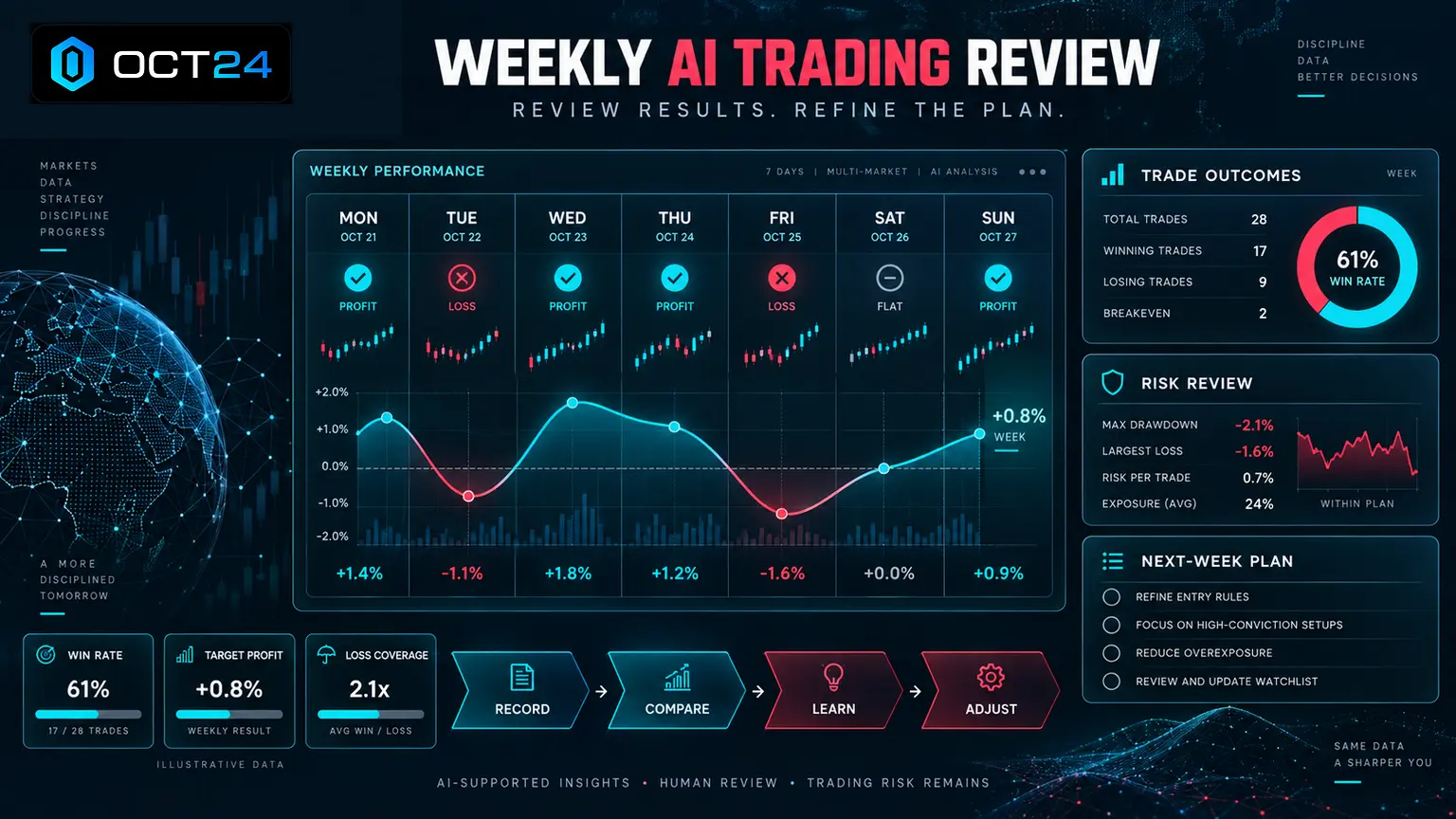
These rules help turn AI-supported trading into a more disciplined process. They also make performance review easier because the trader can ask whether losses came from the market, from the tool, or from breaking personal rules.
This is where Portfolio Diversification Tools can also support broader thinking. A trader who spreads attention and capital across different opportunities carefully may be less tempted to place everything on one emotional decision. Diversification does not remove risk, but it can help reduce the pressure to make one trade solve everything.
How OCT24 can fit into a calmer trading routine
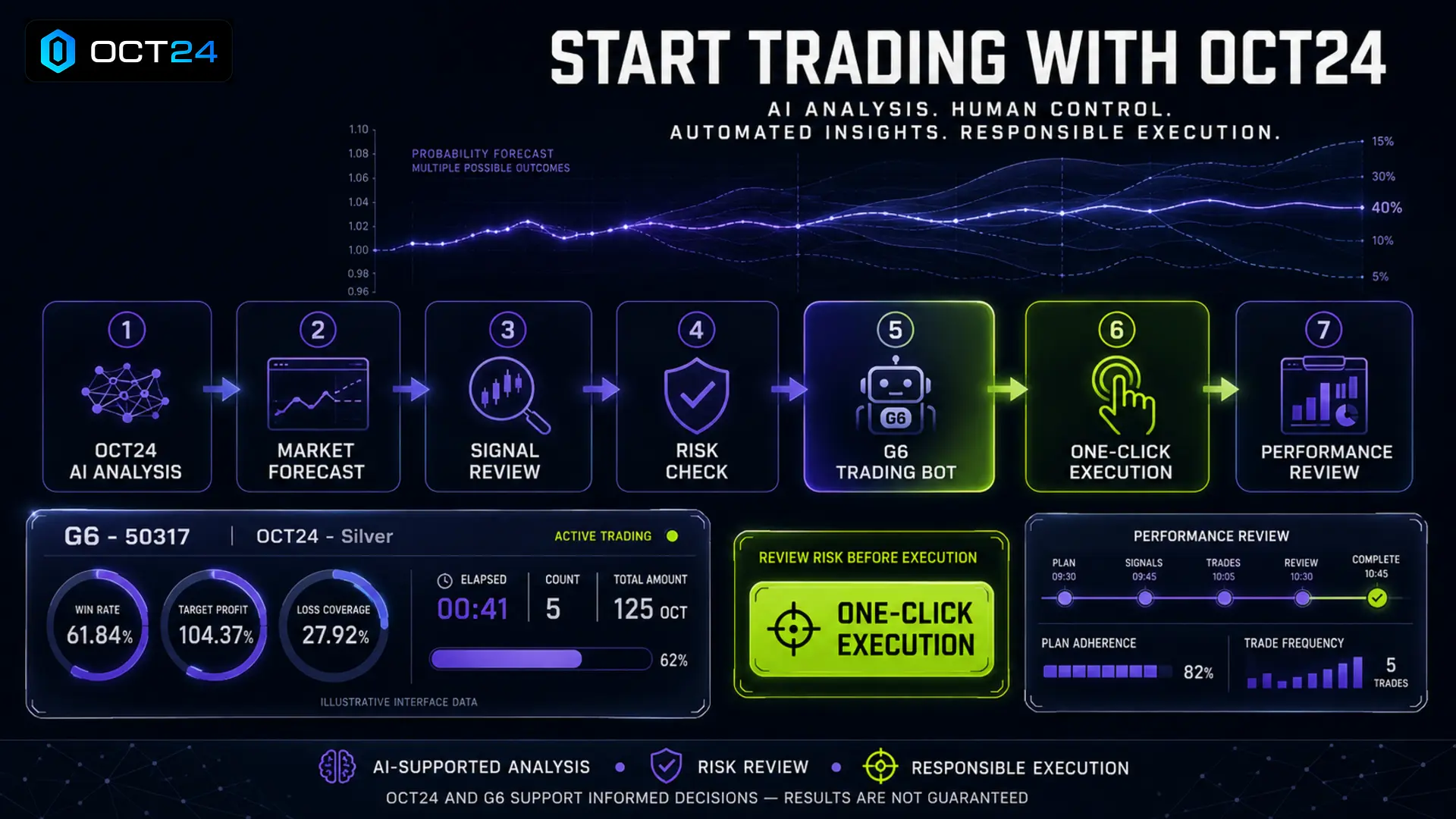
OCT24 is most useful when traders approach it with a plan. The platform is designed to make AI-supported trading easier to access, with a focus on simplified interaction and one-click execution.
A calmer OCT24 routine might look like this.
- Open the platform at planned review times
- Review the available trade or bot options without rushing
- Compare target profit, loss coverage, and win rate against personal limits
- Decide whether the opportunity fits the day’s plan
- Use one-click execution only when the decision already makes sense
- Stop after reaching the daily trade or risk limit
This routine keeps the platform from becoming a place for impulse decisions. It turns OCT24 into part of a structured process rather than a reason to trade constantly.
Readers who want to learn more about the company can visit About OCT24. Those ready to explore the platform can Start Trading with OCT24, while remembering that every trading decision still involves risk.
FAQs
What is overtrading?
Overtrading means taking too many trades or making trades without a clear reason. It often happens when traders act from emotion, boredom, fear of missing out, or the urge to recover losses quickly.
How AI helps traders avoid overtrading?
AI helps traders avoid overtrading by adding structure to the decision process. It can support market scanning, signal review, and trade filtering, but the trader still decides whether the risk is acceptable.
Can AI stop a trader from overtrading completely?
No. AI can support better decision-making, but it cannot force discipline. Traders still need daily limits, risk rules, and the willingness to skip trades.
Does OCT24 show entry and exit points for every trade?
OCT24 currently focuses on a simplified trading experience. Users review key trade or bot metrics such as target profit, loss coverage, and win rate, rather than full asset-level research, entry analysis, or exit analysis for every opportunity.
Is a high win rate enough reason to take a trade?
No. Win rate is useful context, but it does not guarantee the next result. Traders should also consider capital allocation, loss coverage, market conditions, and their own daily risk limits.
Can one-click trading increase overtrading?
It can if the trader uses speed without rules. One-click trading is useful when it supports a planned decision, but it can become risky when used for repeated emotional clicks.
How many trades per day is too many?
There is no universal number. Too many trades means the trader is acting outside their plan, increasing risk carelessly, or making decisions they cannot clearly explain.
What is the best way to reduce overtrading?
The best way is to create simple rules before trading begins. Set a trade limit, capital limit, loss limit, and pause rule after emotional decisions.
Can beginners use AI trading tools responsibly?
Yes, if they treat AI as support rather than certainty. Beginners should start with clear risk limits, learn how metrics work, and avoid assuming that simple execution means low risk.
Does OCT24 guarantee trading results?
No. OCT24 does not guarantee results or remove trading risk. Users remain responsible for risk settings, exposure, capital allocation, and execution decisions.
Final thoughts
Overtrading is one of the most common reasons traders lose discipline. It usually starts with emotion, not strategy. A trader wants to recover a loss, chase a move, or stay active because doing nothing feels uncomfortable.
AI can help by creating a more structured process. It can support market review, trade filtering, signal awareness, and faster decision-making. But it cannot remove risk, and it cannot replace the trader’s responsibility to manage exposure.
OCT24 is designed to make AI-supported trading simpler and more accessible. The platform can help users review trade or bot opportunities more efficiently, including visible metrics such as target profit, loss coverage, and win rate.
The trader still controls risk settings, exposure, capital allocation, and execution decisions.
That is the key lesson. AI can help reduce overtrading when it is used with limits. It can make trading feel more modern and organized, but the best results come from patience, selectivity, and responsible risk management.
To explore a simpler AI-supported trading experience, Start Trading with OCT24.