
What Is Crypto Market Rotation?
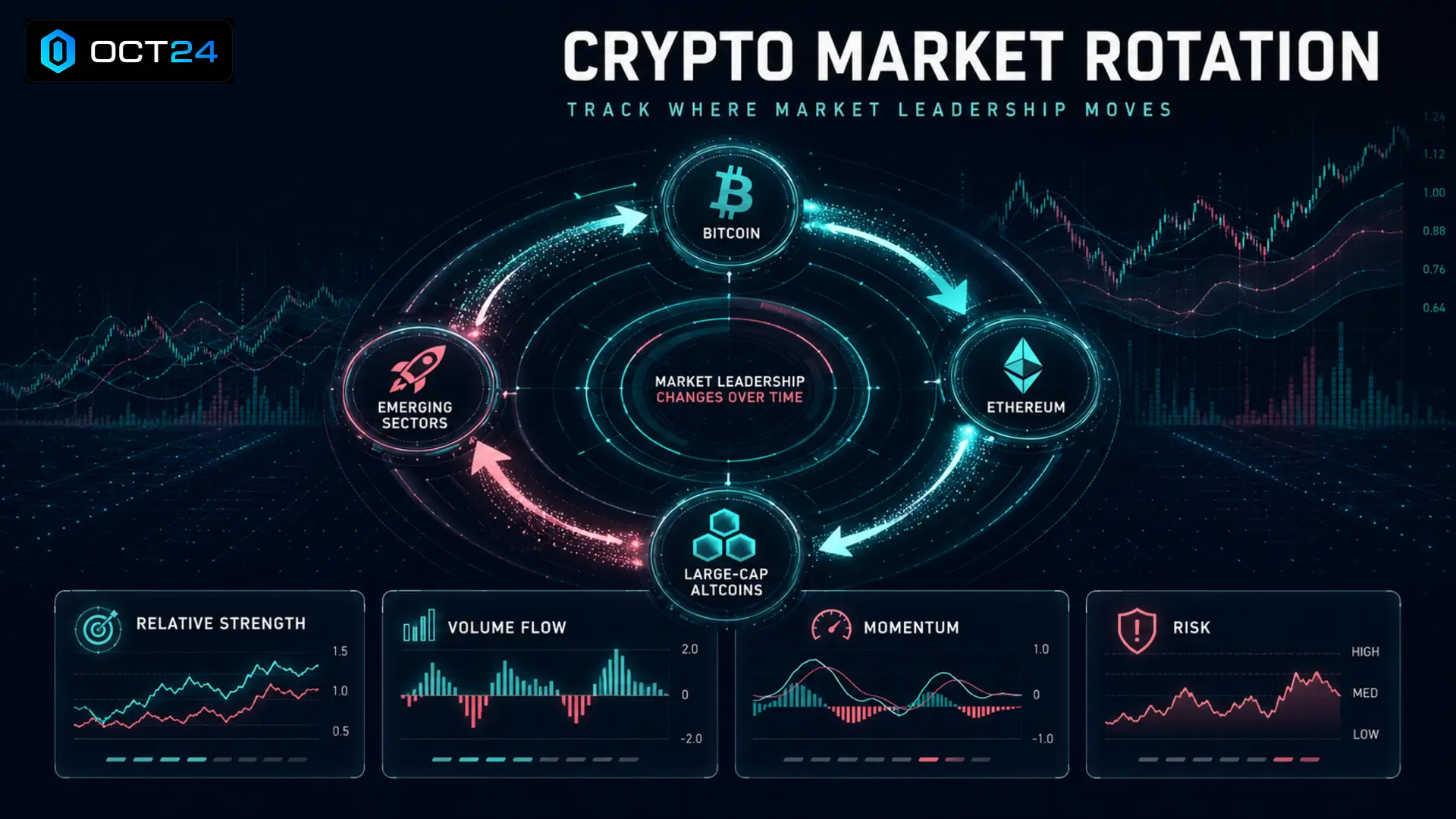
crypto market rotation means money, attention, and trading activity moving from one part of the crypto market to another. Instead of every crypto asset rising or falling at the same time, traders may see strength shift from Bitcoin to Ethereum, from Ethereum to large-cap altcoins, or from one altcoin sector to another.
For beginners, market rotation is useful because it helps explain why one coin can slow down while another starts moving. It also helps traders avoid chasing a single price move without understanding the wider market backdrop.
AI trading can support rotation awareness by comparing price action, relative strength, volatility, volume, and risk conditions across many assets. But AI does not remove uncertainty. It can help organize information, while traders remain responsible for exposure, capital allocation, and execution decisions.
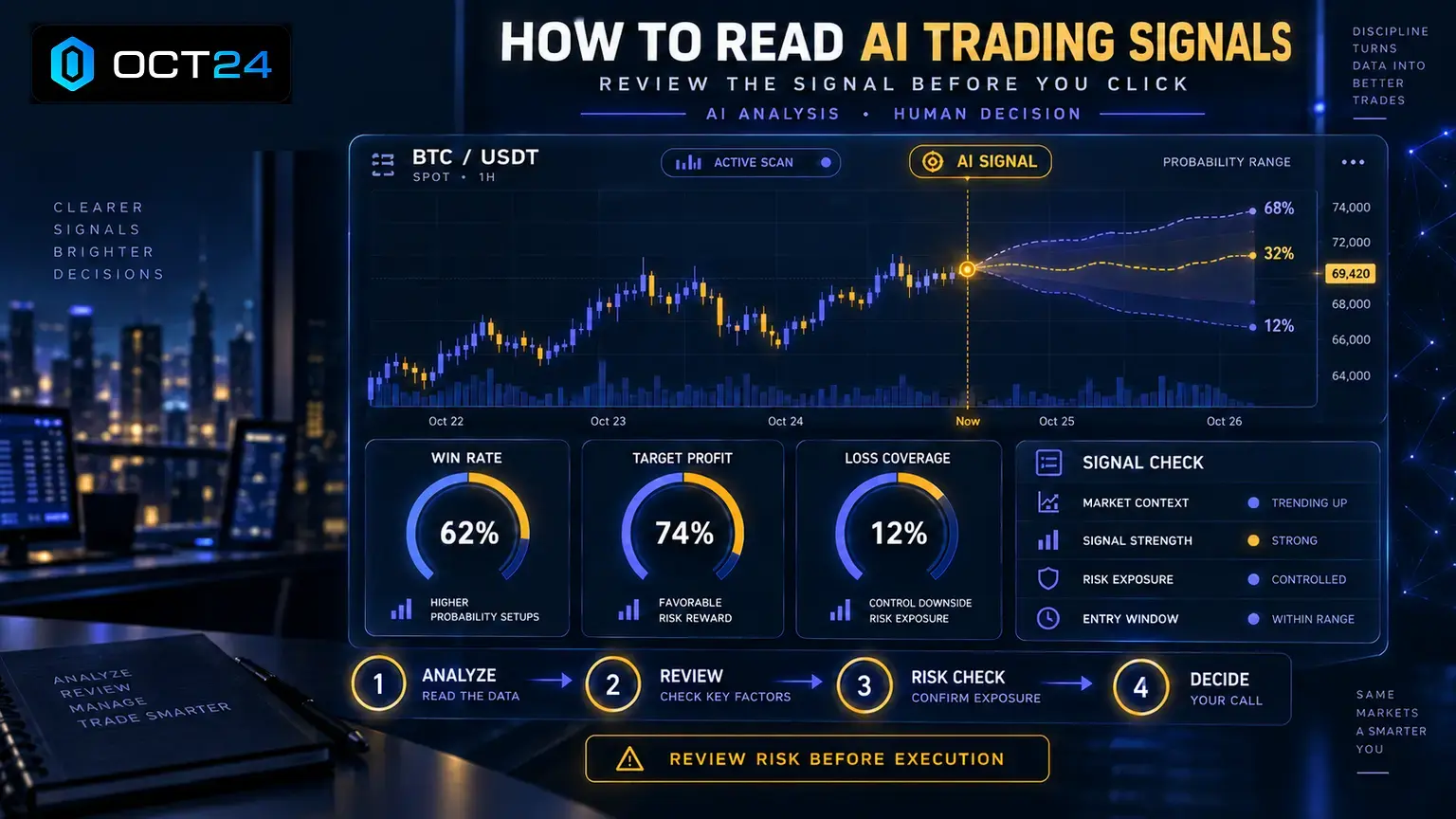
OCT24 can fit into this kind of workflow as a simplified AI-powered trading platform. OCT24 focuses on efficient trade or bot review and one-click trading, but it does not remove risk or guarantee results. Traders still need to review the available target profit, loss coverage, and win rate metrics before deciding whether a trade fits their risk tolerance.
What Crypto Market Rotation Means
Crypto market rotation happens when capital and attention shift between different parts of the market.
A trader may see Bitcoin lead first, then Ethereum gain strength, then selected altcoins begin to move after the larger assets have already attracted attention.
This does not happen in a perfect order every time, but the pattern is common enough that traders watch it closely.
Rotation is not the same as a guaranteed cycle.
It is a way to describe changing leadership.
One week, Bitcoin may be the strongest asset because traders want the most liquid crypto exposure.
Another week, Ethereum may lead because traders are focused on smart contracts or decentralized applications.
Later, altcoins may gain attention as traders become more willing to take risk.
Beginners should think of rotation as a map of where market interest is moving.
The map can be helpful, but it is not a crystal ball.
How Crypto Market Rotation Works
Rotation often starts with a market leader.
In many crypto cycles, that leader is Bitcoin.
When Bitcoin moves strongly, it can attract fresh attention to crypto as a whole.
If confidence improves, traders may then look for other assets that could move more aggressively.
Ethereum is often the next major area traders watch.
If Ethereum begins outperforming Bitcoin, it can suggest that traders are becoming more comfortable with broader crypto exposure.
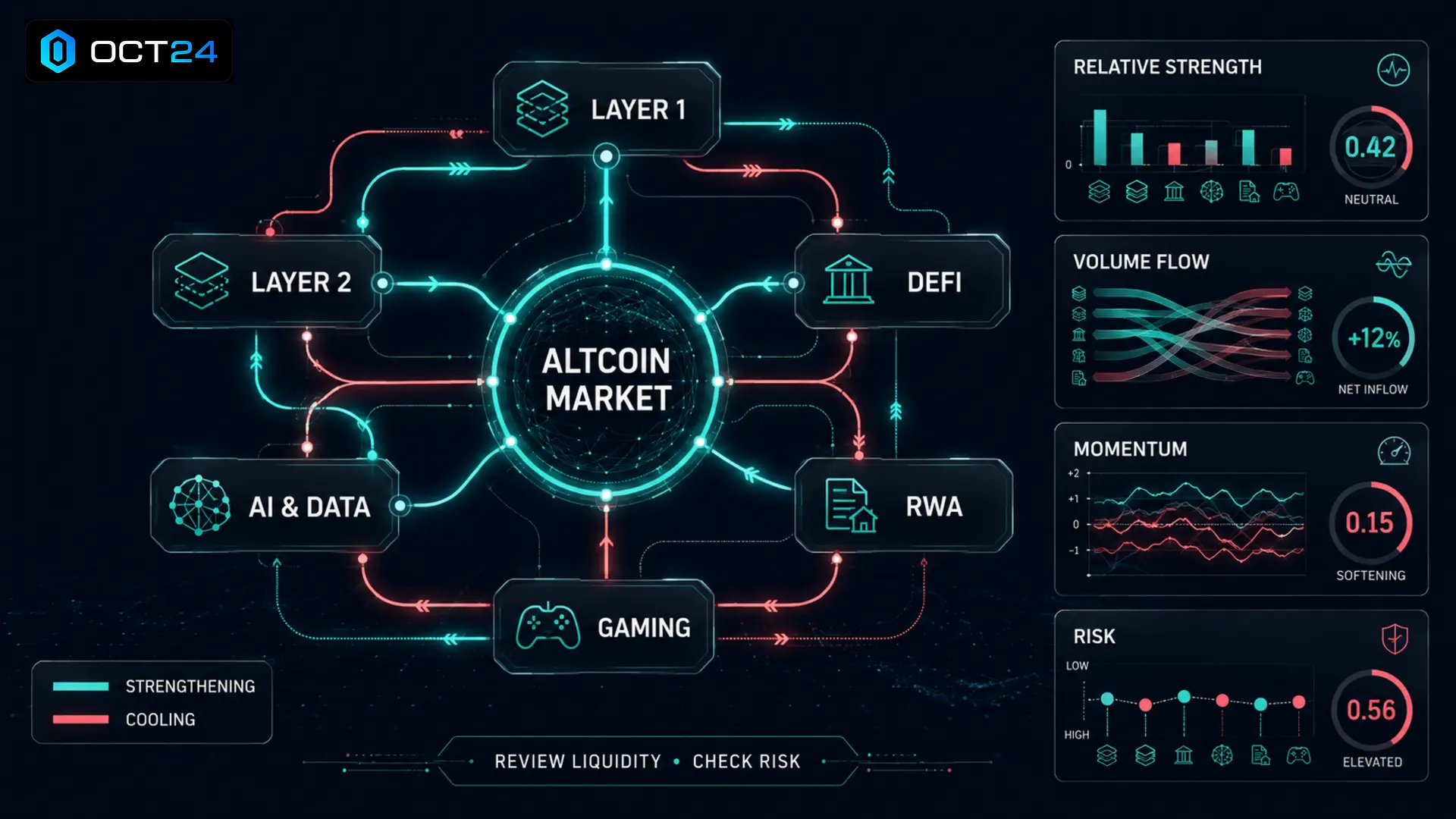
From there, attention may shift into altcoin sectors such as layer-1 networks, AI tokens, gaming tokens, DeFi projects, or meme-driven assets.
This path is not automatic.
Sometimes Bitcoin remains dominant for a long time.
Sometimes Ethereum leads without a full altcoin rally.
Sometimes one small sector moves while the rest of the market stays weak.
That is why rotation should be studied with risk in mind.

Why Altcoin Sectors Rotate
Altcoin sectors rotate because traders often follow themes.
When one narrative becomes popular, money may flow into assets connected to that idea.
For example, if the market becomes interested in artificial intelligence, AI-related tokens may receive more attention.
If traders focus on scaling networks, layer-2 tokens may move.
If risk appetite becomes very high, smaller speculative tokens may move faster.
AI can help traders monitor these sector changes by comparing groups of assets instead of watching one coin at a time.
This can be useful because sector rotation is often hard to notice manually.
A beginner may see one token moving and assume it is isolated.
A wider view may show that several related tokens are moving together.
That broader pattern can be more useful than one chart alone.
Still, sector rotation can reverse quickly.
The more speculative the sector, the more careful traders should be with position size.
The Role of Bitcoin Dominance
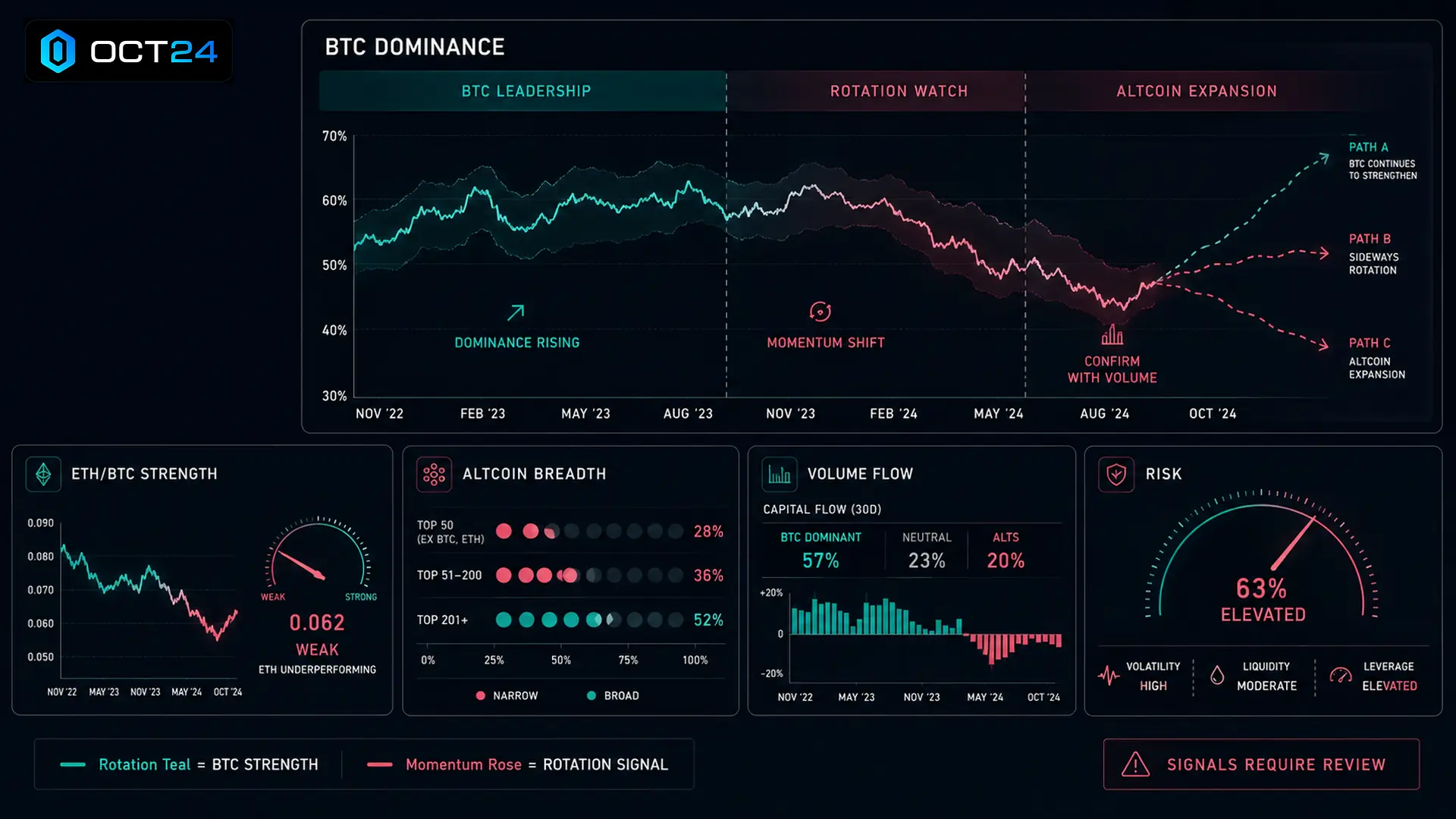
Bitcoin dominance measures Bitcoin’s share of the total crypto market value.
Traders watch it because it can give clues about where attention is concentrated.
When Bitcoin dominance rises, Bitcoin may be outperforming many altcoins.
This can happen when traders want safer or more liquid crypto exposure.
When Bitcoin dominance falls, altcoins may be gaining relative strength.
That can happen when traders are more willing to take risk.
Bitcoin dominance is not a trading signal by itself.
It's context.
A falling dominance chart does not mean every altcoin is a good trade.
A rising dominance chart does not mean all altcoin opportunities disappear.
It simply helps traders understand whether the market is concentrated in Bitcoin or spreading into other areas.
Ethereum as a Rotation Bridge
Ethereum often acts like a bridge between Bitcoin and the wider altcoin market.
It is large enough to be considered a major crypto asset, but it is also closely connected to many areas of blockchain activity.
When Ethereum starts gaining strength against Bitcoin, traders may see it as a sign that the market is becoming more open to broader risk.
This can lead some traders to look at large-cap altcoins or Ethereum-related sectors.
However, Ethereum strength does not always create a full altcoin rally.
Sometimes Ethereum moves because of its own catalyst.
Sometimes the rest of the market does not follow.
A beginner should use Ethereum as one part of the rotation picture, not the entire decision.
How AI Can Help Identify Rotation
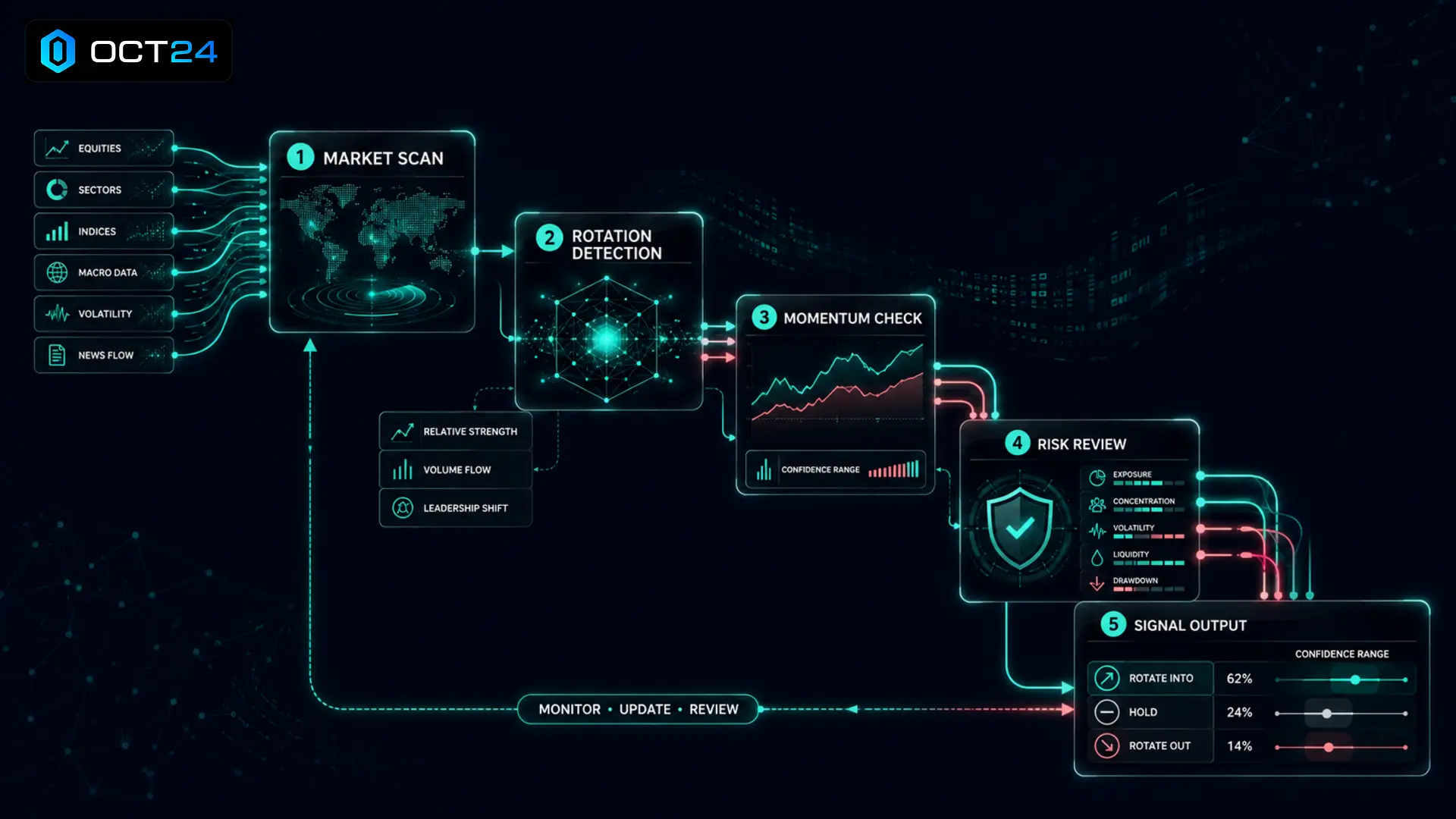
how AI uses technical analysis explains how AI can review trend, momentum, volume, volatility, and support or resistance data faster than most manual traders. In rotation analysis, this matters because leadership can change quickly. AI can compare Bitcoin, Ethereum, and altcoin sectors at the same time, then help traders see which areas are gaining or losing strength.
- Relative strength between Bitcoin and Ethereum
- Volume changes across altcoin sectors
- Volatility expansion or contraction
- Sector-level momentum
- Assets breaking out while others lag
- Market conditions that may require caution
Using Rotation With Trading Signals
AI trading signals can help traders notice when strength is shifting from one market area to another. A signal may highlight improving momentum, a stronger trend, or unusual activity. But a signal should be treated as a prompt to review, not an instruction to act.
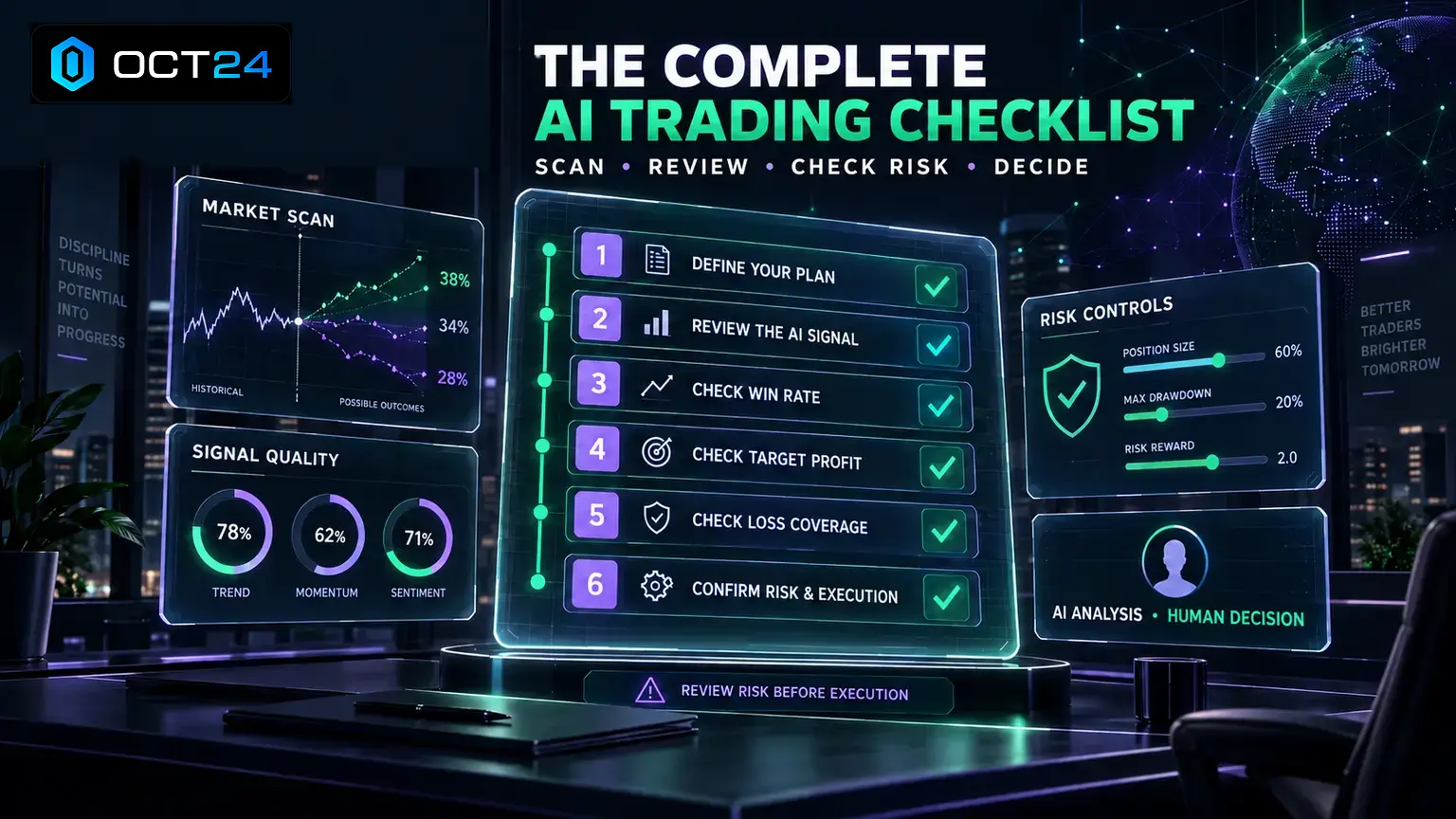
- Does the signal match the wider rotation picture?
- Is Bitcoin stable enough for altcoin risk?
- Is Ethereum confirming broader strength?
- Is the asset liquid enough?
- Does the possible reward justify the risk?
- Is this trade part of a plan or a reaction?
Where OCT24 Fits Into Rotation Awareness
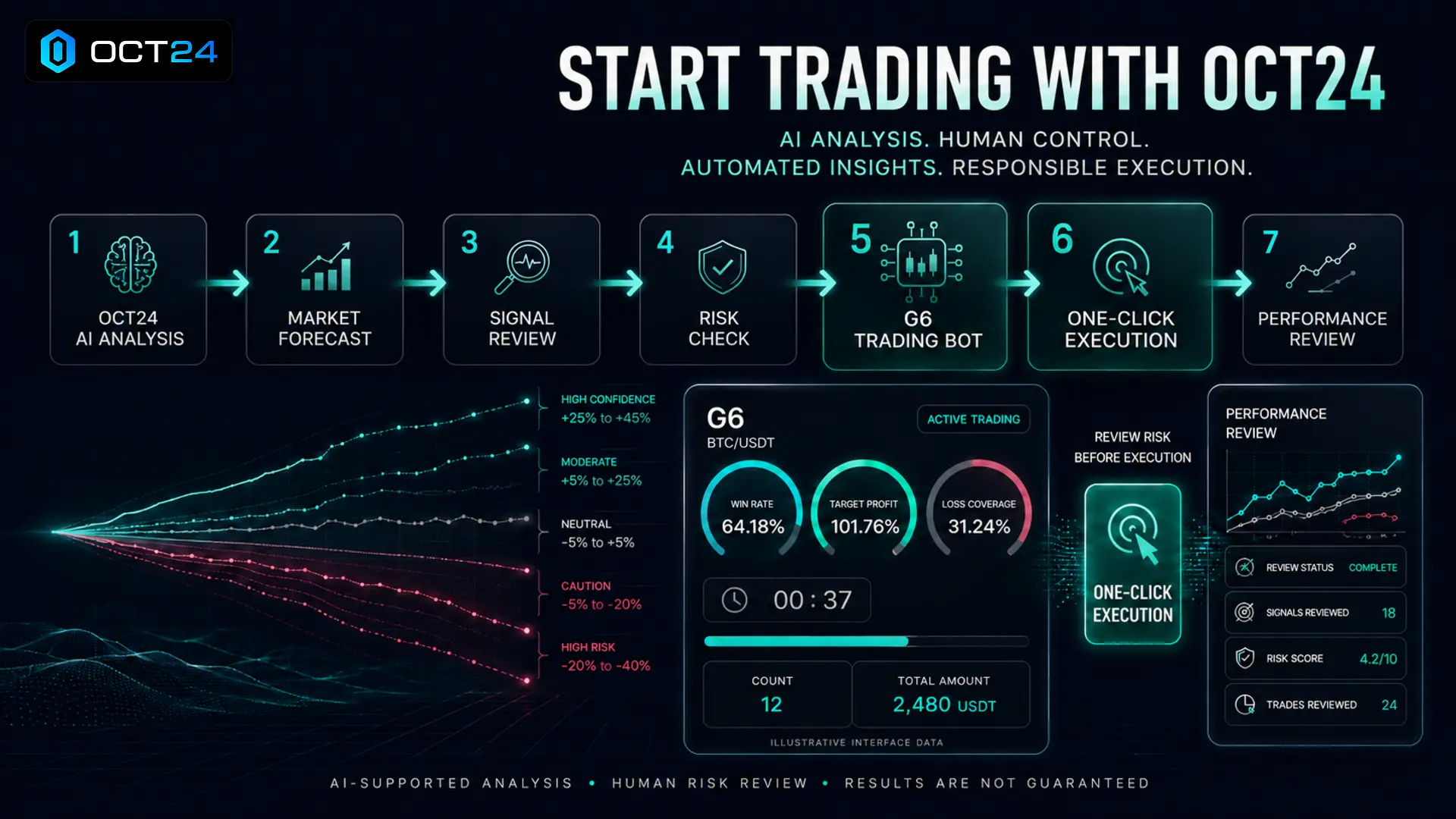
OCT24 can support a modern trading workflow by making trade or bot review simpler. When a trade or bot is presented, users mainly review available metrics such as target profit, loss coverage, and win rate. This can help traders make faster decisions, but it does not replace rotation research or responsible risk management.
- Use external watchlists or market tools to understand rotation
- Compare Bitcoin, Ethereum, and altcoin strength before taking risk
- Review the available OCT24 trade or bot metrics
- Consider target profit, loss coverage, and win rate
- Decide whether the trade fits your risk tolerance
- Track outcomes and avoid overtrading
Common Rotation Patterns Beginners Should Know
One common pattern is Bitcoin first, Ethereum second, and altcoins later.
This is the classic rotation idea many traders watch.
Another pattern is defensive rotation, where traders move away from altcoins and back toward Bitcoin or stable assets when risk appetite falls.
A third pattern is sector rotation, where one altcoin theme gains attention while other sectors stay quiet.
A fourth pattern is false rotation, where a small group of assets moves sharply but the broader market does not confirm the move.
False rotation is dangerous because beginners may assume a full altcoin season has started when only a narrow theme is moving.
How Rotation Can Affect Risk
Rotation can make markets feel exciting because new assets start moving after larger coins slow down.
That excitement can lead to mistakes.
Traders may increase position size, enter late, or jump from one coin to another without a plan.
The risk is highest when traders believe they must catch every move.
In reality, missing a move is normal.
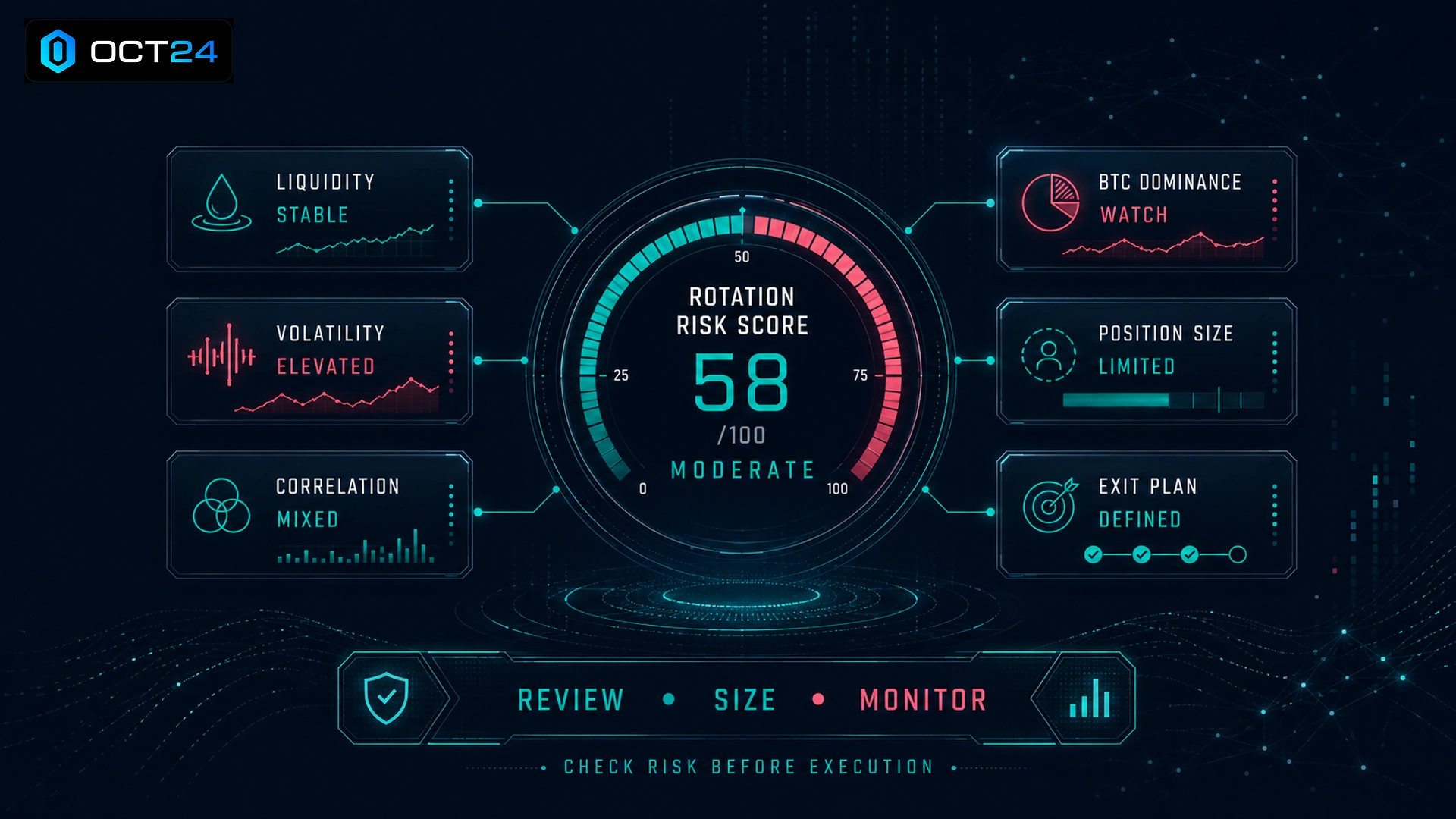
Protecting capital matters more than chasing every rotation.
Articles on trading bot risk management, position sizing controls, and AI trading risk vs reward are useful because rotation trading often involves faster markets and higher volatility.
A Beginner Checklist for Trading Rotation
Before trading a rotation setup, beginners should slow down and review the situation.
The goal is to confirm that the move has context, not just excitement.
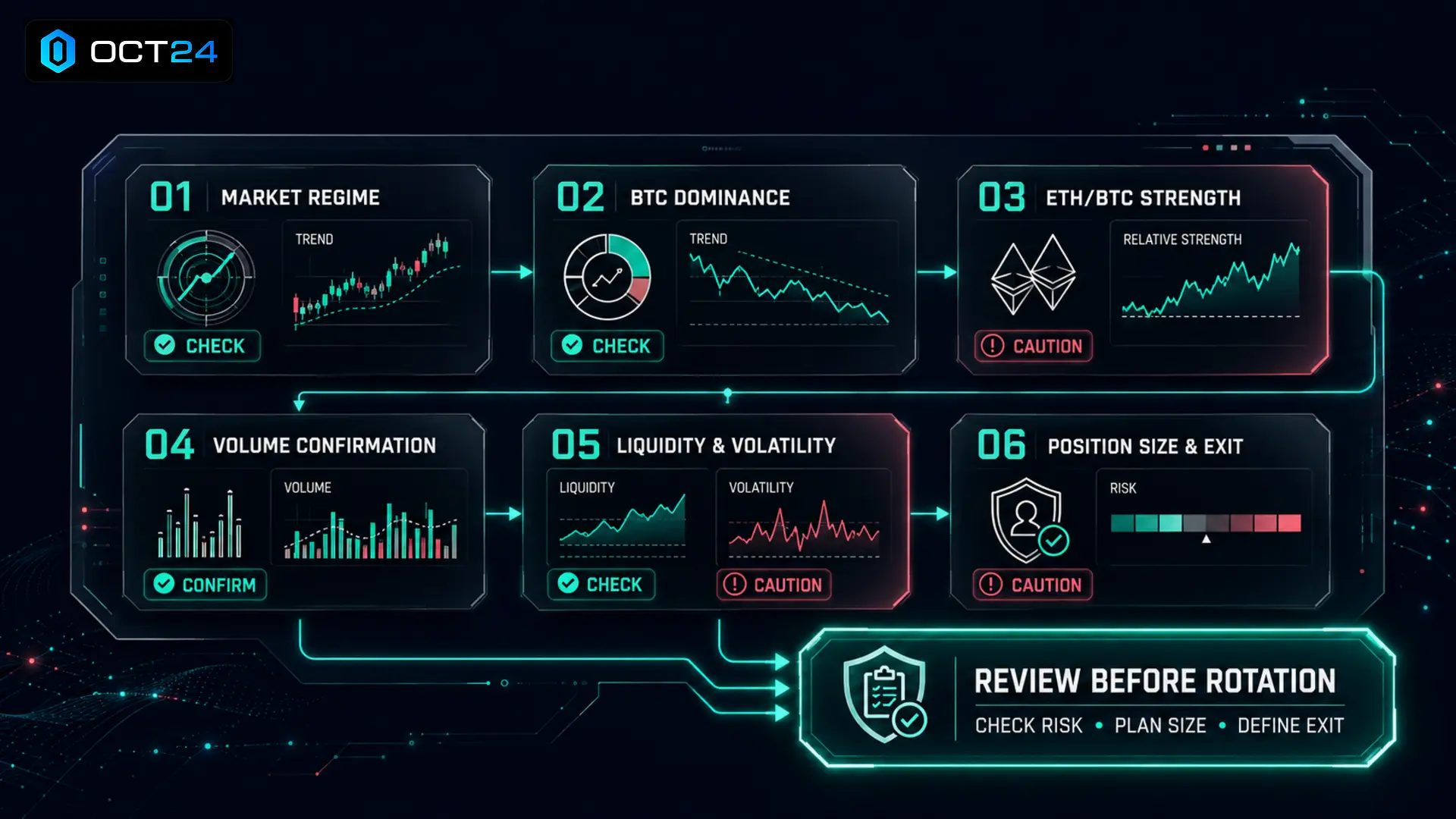
Ask whether Bitcoin is stable, whether Ethereum is confirming the move, whether the sector is broadly strong, whether volume supports the move, and whether volatility is manageable.
Also ask whether the trade fits your account size.
If a setup only looks attractive because it moved quickly, it may already be late.
A good checklist helps traders stay disciplined when the market feels loud.
Building a Rotation Watchlist
A rotation watchlist should include more than random trending coins.
It should include Bitcoin, Ethereum, several large-cap altcoins, and a few sector groups.
This lets the trader see where strength is moving.
A simple watchlist could include Bitcoin as the benchmark, Ethereum as the ecosystem leader, large-cap altcoins for broad risk appetite, and selected sector tokens for specific themes.
The guide on AI trading watchlist building can help beginners structure this more clearly.
Alerts can also help because rotation can happen quickly, especially during active market hours.
how AI handles market volatility is especially relevant during rotation because assets can move at different speeds. A strong altcoin move may look attractive, but volatility can turn quickly if Bitcoin weakens.
Portfolio Diversification Tools can also help traders understand when too much exposure is concentrated in one sector. Rotation may tempt traders to load up on one theme, but concentration can increase account risk.
Compare Bitcoin Ethereum and altcoins is a useful companion topic because rotation becomes easier to understand when traders know how to compare market roles, relative strength, liquidity, and volatility.
Mistakes to Avoid During Crypto Rotation
The first mistake is assuming every rotation will continue.
Markets can change quickly.
The second mistake is buying the weakest asset just because it has not moved yet.
Sometimes an asset is lagging for a reason.
The third mistake is ignoring liquidity.
Smaller altcoins may move fast, but they can also become difficult to exit.
The fourth mistake is trading without a risk plan.
Rotation can create opportunity, but it can also create overconfidence.
The fifth mistake is believing AI removes uncertainty.
AI can support market review, but it cannot guarantee the next move.
How OCT24 Users Can Think About Rotation
OCT24 users can think about rotation as market context.
Before reviewing an available trade or bot, a trader may consider whether the broader crypto market is moving toward Bitcoin, Ethereum, or altcoin sectors.
OCT24 itself should not be treated as a full market research dashboard.
The platform focuses on simplified AI-powered trading access and key trade or bot metrics.
A user still needs to understand their exposure, review the available metrics, and decide whether the trade fits their account and risk tolerance.
The G6 Trading Bot may be relevant for users exploring OCT24 bot options, but no bot removes risk.
Creating a Simple Rotation Routine
A simple routine can keep rotation trading from becoming chaotic.
- Start by checking Bitcoin.
- Then check Ethereum.
- Next, review large-cap altcoins and sector themes.
- Look for broad confirmation rather than one isolated move.
- Review volatility and position size before acting.
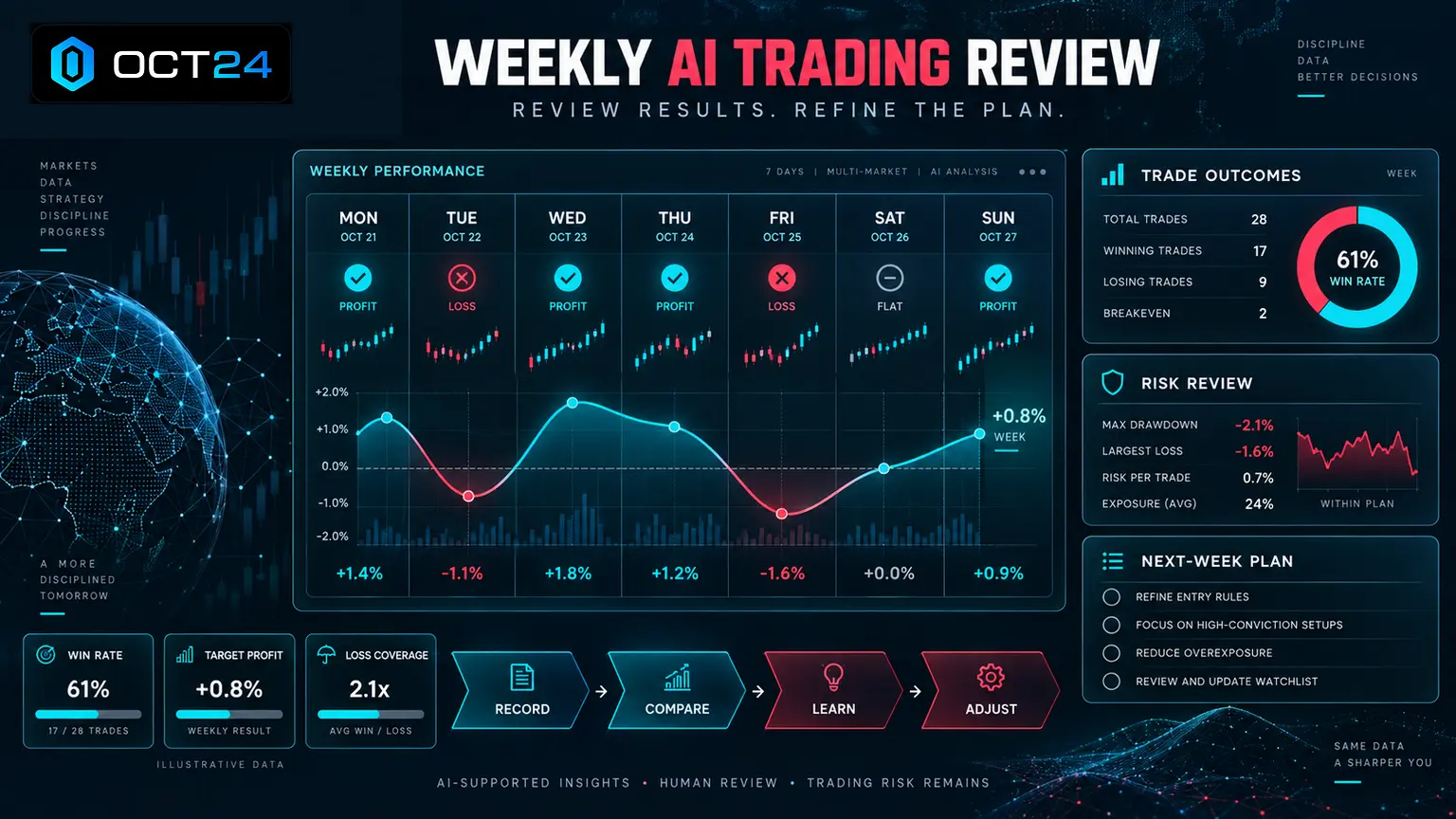
- Record the decision afterward.
This kind of routine connects with consistent trading routine because the trader is building repeatable behavior instead of reacting to every headline.
Why Rotation Is Useful for Busy Traders
Busy traders cannot watch every coin all day
Rotation analysis helps narrow attention
Instead of scanning hundreds of assets, the trader can ask which part of the market is leading
AI trading for busy professionals is relevant here because AI tools can help organize information faster
The trader still needs to make the final decision, but a cleaner view can reduce noise.
AI trading strategies for beginners can help newer traders connect rotation analysis with simple strategy rules. Rotation is most useful when it supports a clear plan, not when it encourages random entries.
Common AI trading mistakes is also important because traders can become too confident when a tool highlights movement. AI can help monitor the market, but risk choices remain human responsibilities.
AI trading myths explains why beginners should avoid treating AI as certainty. Rotation analysis is useful, but it still works with probabilities and changing market conditions.
Best AI trading tools can help beginners build a practical toolkit for alerts, watchlists, risk review, and journaling. Rotation becomes easier to follow when the tool stack is simple.
Choosing the right AI trading platform can help traders compare platforms based on usability, risk awareness, and workflow fit. A platform should support better decisions, not encourage careless trading.
About OCT24 gives more context on the platform. When you are ready to explore the platform directly, you can Start Trading with OCT24.
FAQs
What is crypto market rotation?
Crypto market rotation is the movement of money, attention, and trading activity from one part of the crypto market to another, such as from Bitcoin to Ethereum or from Ethereum to altcoin sectors.
Why does crypto market rotation happen?
Rotation happens because traders change their risk appetite, follow new market themes, respond to news, or look for assets that may be gaining relative strength.
Does Bitcoin always lead crypto rotation?
Bitcoin often leads because it is the main benchmark asset, but it does not lead every move. Sometimes Ethereum or a specific altcoin sector attracts attention first.
What is the role of Ethereum in rotation?
Ethereum often acts as a bridge between Bitcoin and the broader altcoin market because it is a major asset connected to many blockchain sectors.
Can AI identify crypto market rotation?
AI can help identify possible rotation by comparing relative strength, volatility, volume, trend behavior, and sector activity. It cannot guarantee that a rotation will continue.
How should beginners trade rotation?
Beginners should use rotation as context, not as a signal by itself. They should review risk, liquidity, position size, and market confirmation before entering a trade.
Does OCT24 show full rotation analysis?
OCT24 should not be treated as a full market research dashboard. Users mainly review simplified trade or bot metrics such as target profit, loss coverage, and win rate.
How does OCT24 fit into rotation trading?
OCT24 can fit as a simplified AI-powered trading option within a wider workflow. Traders can use market context from other tools, then review OCT24 metrics before deciding whether to execute.
Is altcoin rotation risky?
Yes. Altcoin rotation can involve higher volatility, lower liquidity, and faster reversals. Traders should manage position size carefully.
Can one-click trading replace risk management?
No. One-click trading can simplify execution, but traders still need to manage exposure, capital allocation, and risk decisions.
Final Thoughts
Crypto market rotation helps traders understand where attention is moving. It can show whether the market is focused on Bitcoin, Ethereum, large-cap altcoins, or specific sectors.
For beginners, the biggest benefit is context. Rotation can help explain why some assets move while others pause. It can also help traders avoid chasing isolated moves without understanding the wider market.
AI can support this process by comparing many market signals quickly. OCT24 can fit into a modern trading workflow by offering simplified trade or bot review and one-click interaction. But OCT24 does not remove trading risk or guarantee results. The trader still controls risk settings, exposure, capital allocation, and execution decisions.
To explore the platform, visit OCT24 or Start Trading with OCT24.