
AI Trading Myths Debunked
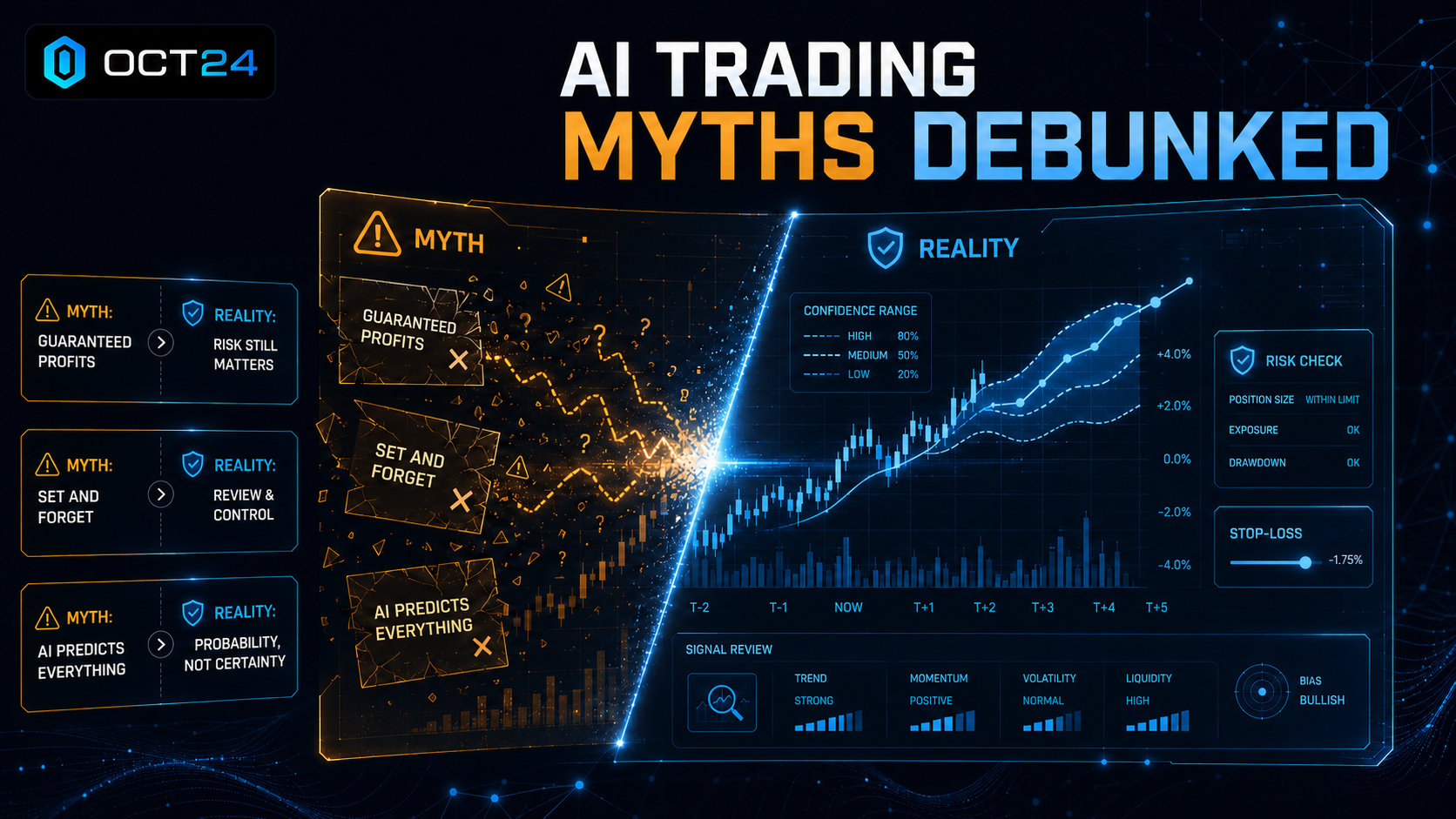
AI Trading Myths can make artificial intelligence sound like a guaranteed way to make money or a technology that traders should fear.
Neither view is accurate.
AI trading can be powerful. It can scan markets quickly, review large amounts of data, identify potential opportunities, and organize information into clearer trading signals.
But AI does not know the future.
It does not guarantee profits.
It does not remove trading risk.
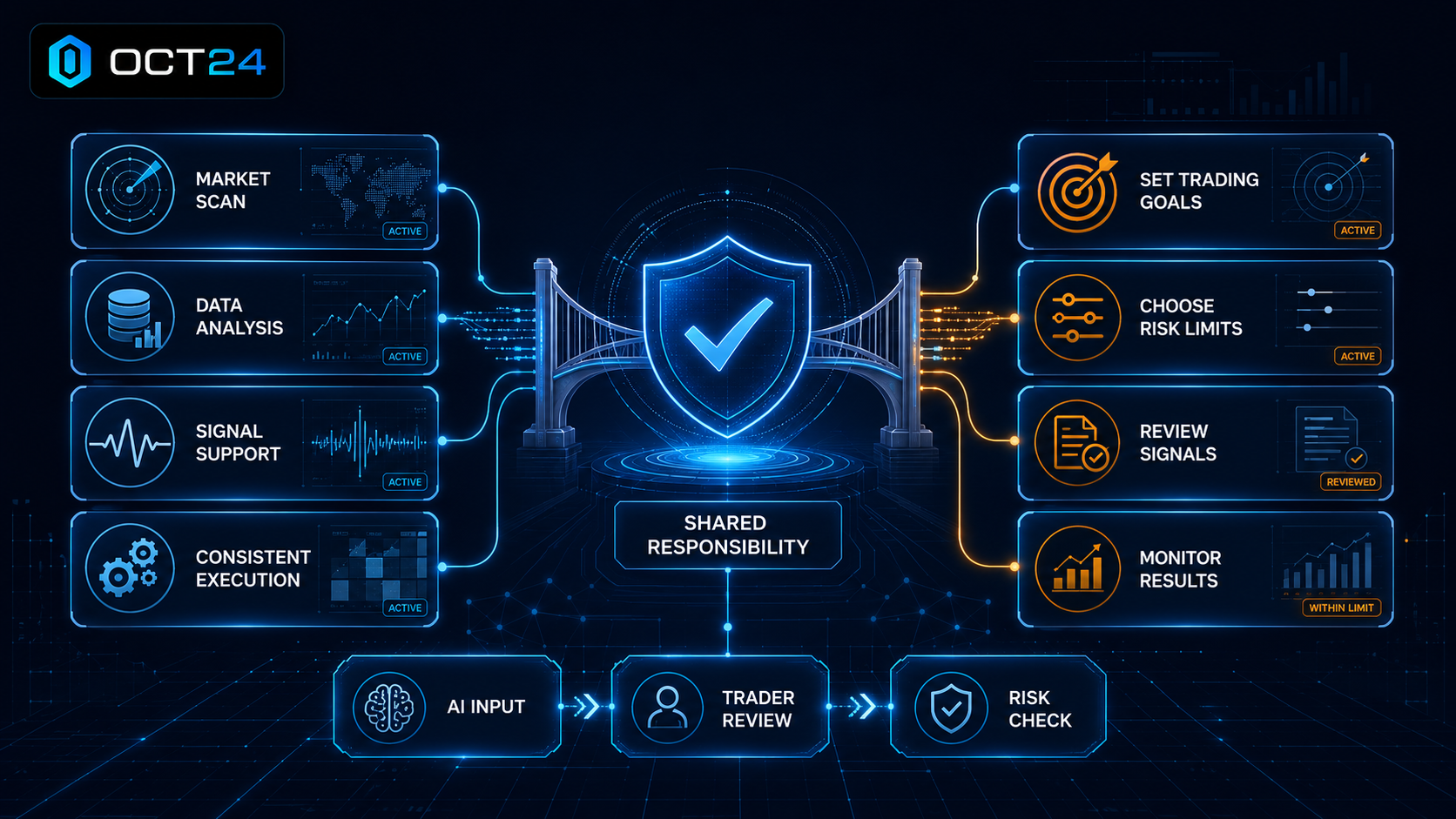
OCT24 performs most of the market analysis for traders. It scans market conditions, identifies potential opportunities, and presents AI-supported trading signals in a structured workflow.
This can reduce manual chart review and help traders respond faster.
However, traders still need to choose appropriate risk settings, understand their exposure, manage capital responsibly, and decide whether an opportunity fits their plan.
That is the realistic way to understand AI Trading.
AI can improve the process. The trader still remains responsible for the decision.
Why AI Trading Myths Are So Common
AI sounds advanced and futuristic.
When a system can scan many markets in seconds, it is easy to assume that it must know what will happen next.
Trading is also complicated. Prices can change quickly, signals can conflict, and unexpected news can move the market without warning.
Many traders want a simple answer in an uncertain market.
This creates the perfect environment for myths.
Some online promotions make AI trading sound effortless. They may focus on winning trades while saying very little about losses, drawdowns, poor settings, or changing market conditions.
Social media can make this worse.
A short video may show a successful result without showing how much risk was used, how many trades failed, or whether the result can be repeated.
Automation is also easy to misunderstand.
Because AI Trading Bots can follow rules automatically, beginners may assume the full trading process is automatic too.
But the trader still needs to choose settings, control risk, monitor performance, and know when to pause.
Market prediction creates another common misunderstanding.
AI can analyze patterns and estimate possible outcomes. That does not mean it can predict every move with certainty.
The question Can AI Predict the Market? is really a question about probability.
AI can show what may happen. It cannot promise what will happen.
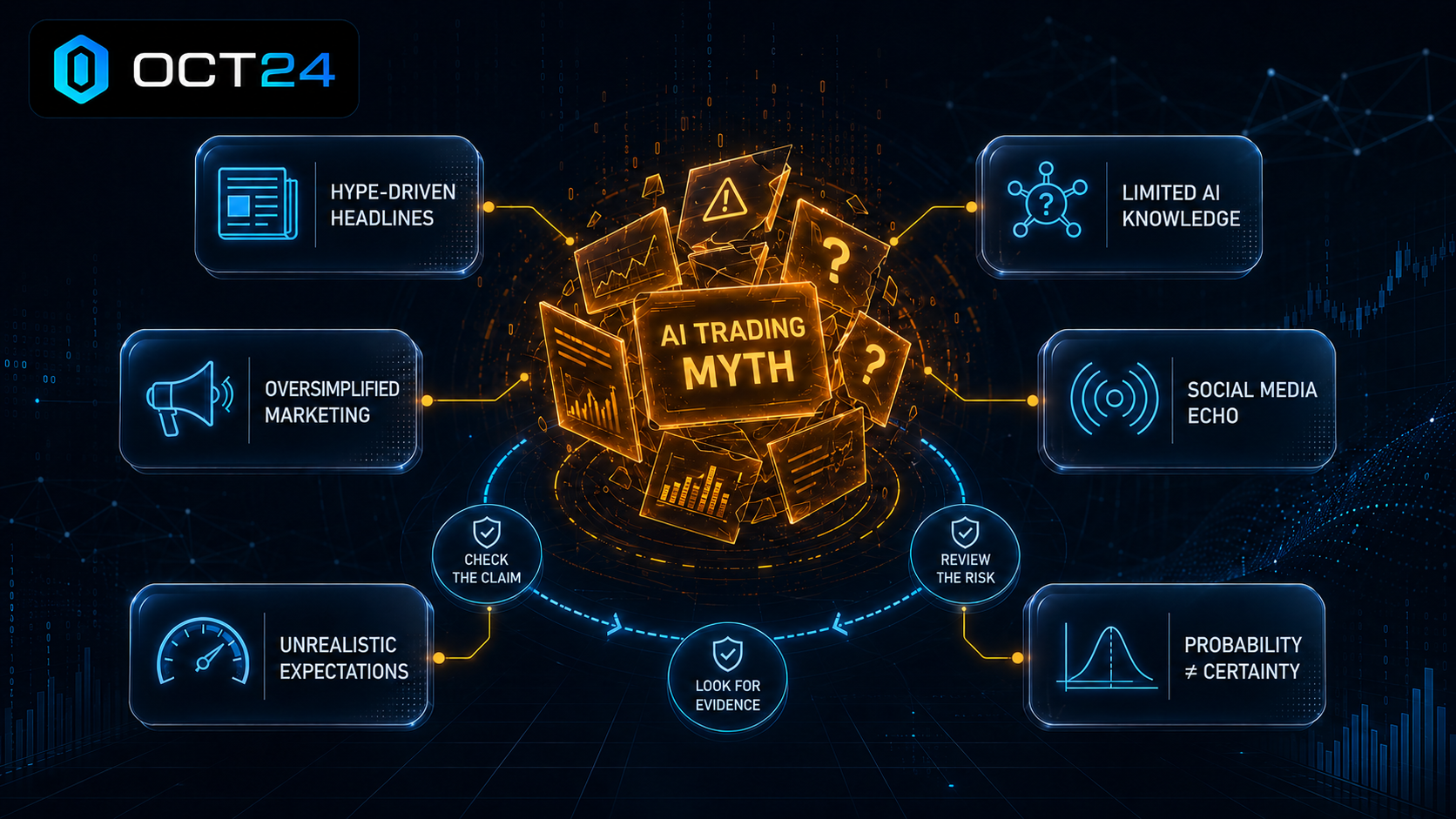
Myth 1: AI Trading Guarantees Profits
No AI trading system can guarantee profitable trades.
Markets are uncertain. Prices can rise or fall for reasons that no system can control.
A strong signal can still fail.
Unexpected news may change market direction. Volatility may increase. Liquidity may fall. A breakout may quickly reverse.
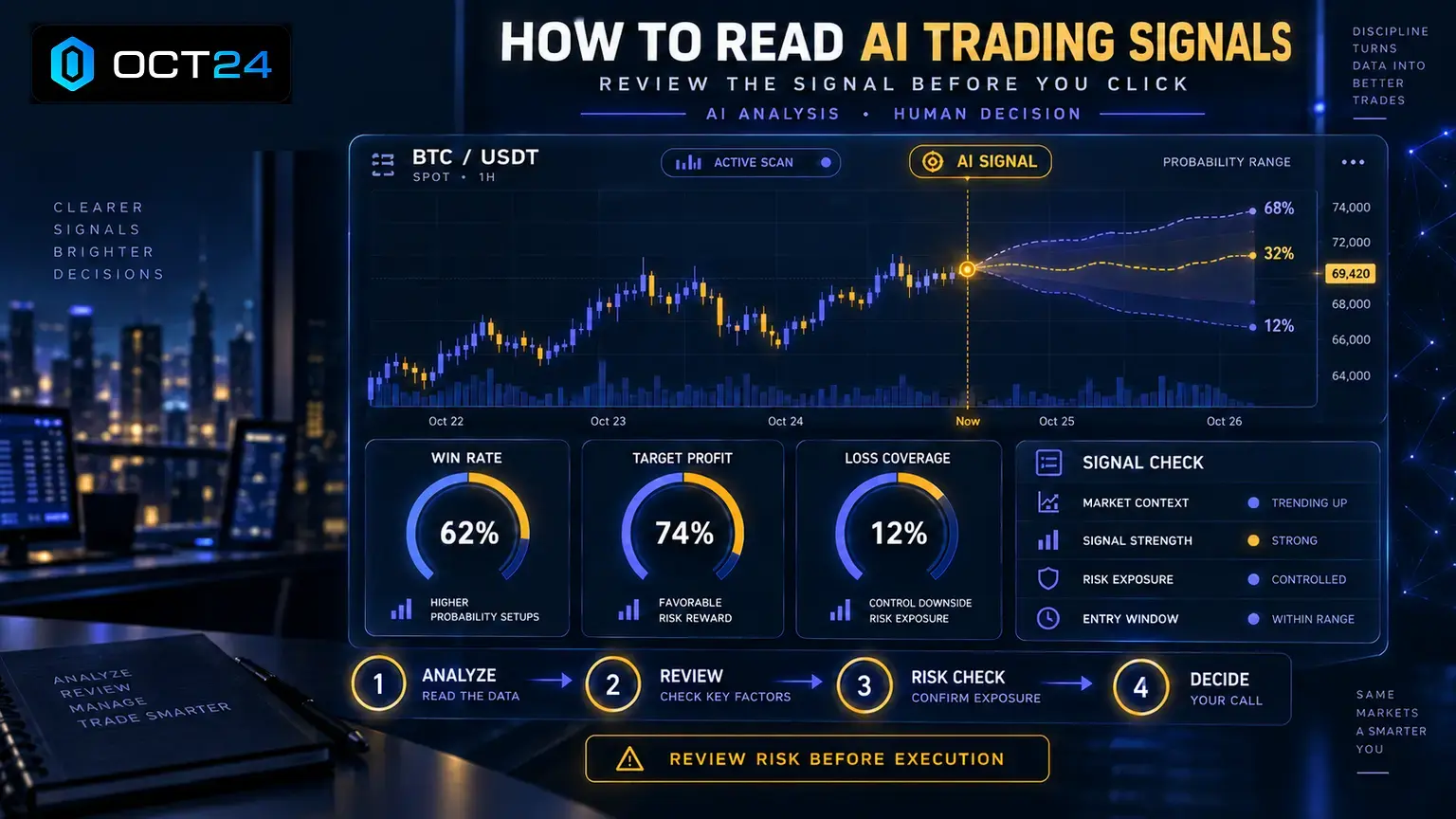
For example, AI may detect rising momentum, stronger volume, and a break above resistance.
The setup may look positive when the signal appears.
Minutes later, new information may enter the market and push price in the opposite direction.
This does not always mean the analysis was useless. It means the market changed.
Profitable trading depends on more than finding signals.
Traders also need to think about position size, stop-loss placement, total exposure, and the amount they can afford to lose.
This is where AI Trading Risk vs Reward matters.
Every trade has possible upside and possible downside. Both should be reviewed before execution.
OCT24 can perform the market analysis and present a potential opportunity. It does not promise that the opportunity will produce a profit.
Use AI to improve analysis, not to create unrealistic expectations.
Myth 2: AI Can Predict Every Market Move
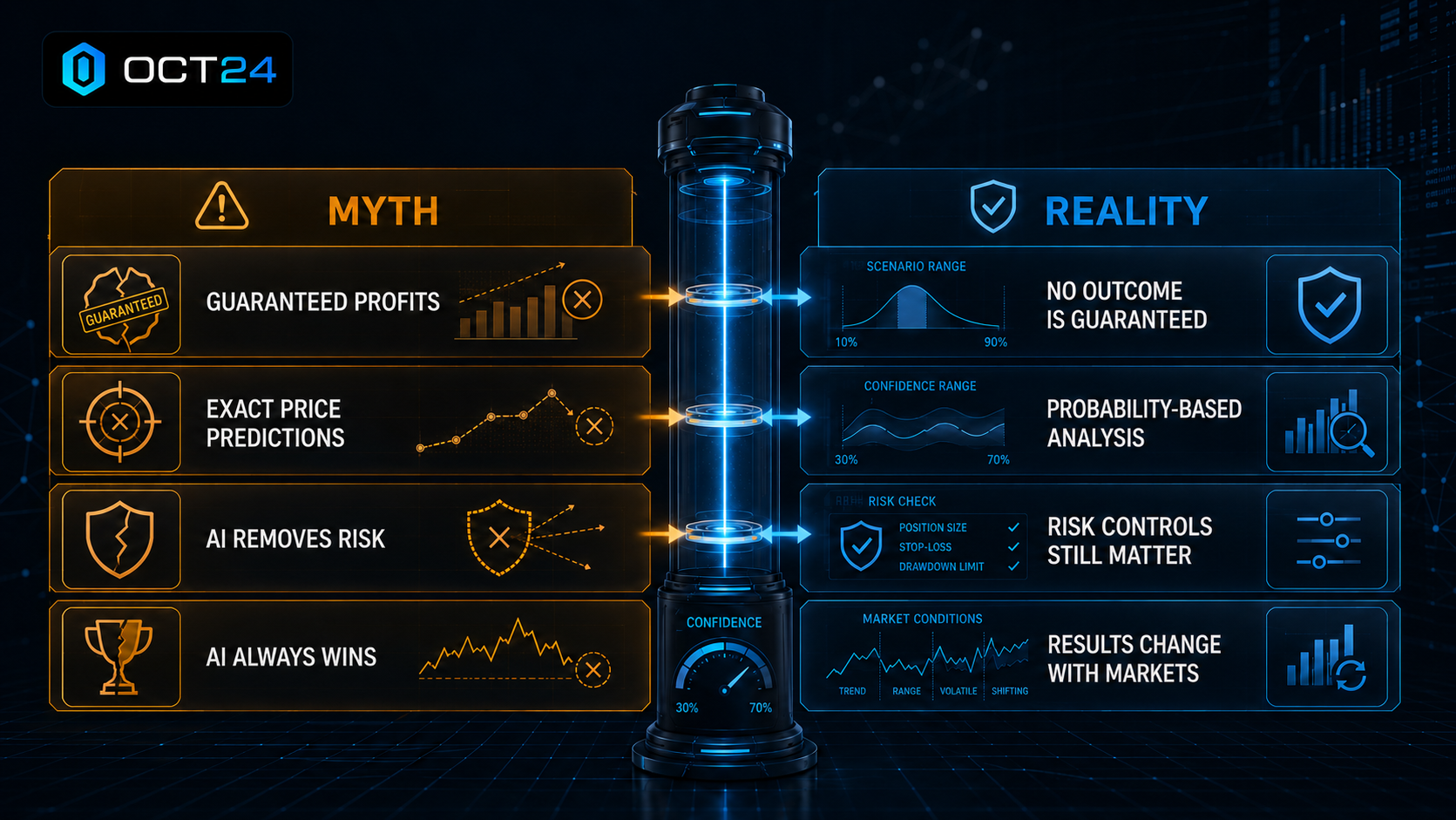
AI does not know the future.
It works with market data, patterns, and probability.
AI may review price movement, volume, momentum, volatility, trend direction, and technical signals.
It can compare current conditions with patterns that appeared before.
This can help AI estimate possible scenarios.
But a possible scenario is not a guaranteed outcome.
Imagine that AI detects a strong upward trend. The data suggests that the move may continue.
A sudden news event then changes market sentiment. Traders begin selling, and the trend reverses.
AI could not know that unexpected event in advance.
Market Volatility can make prediction even more difficult. Fast markets can change before a trader has time to review the original setup.
This is why AI Trading Signals should be treated as structured market information.
A signal can show a possible opportunity. It is not a guaranteed prediction or an automatic instruction.
OCT24 scans changing conditions and presents AI-supported signals to help traders review the market more clearly.
The trader still needs to check the risk and decide whether the setup remains suitable.
Think in probabilities, not promises.
Myth 3: Trading Bots Are Fully Set and Forget
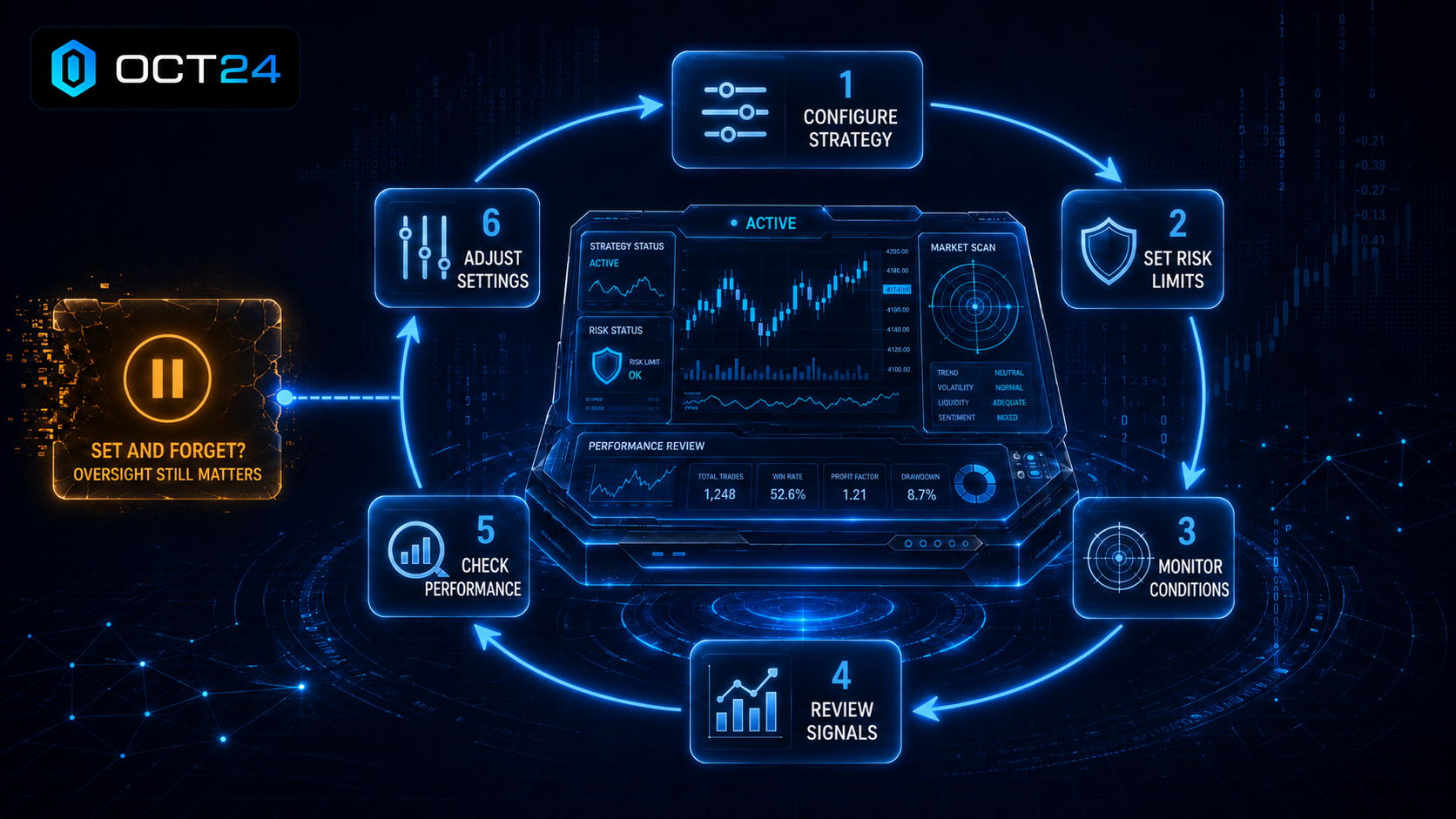
Trading bots follow rules and settings.
They do not automatically know whether those settings are sensible.
A bot may be told which markets to scan, when to enter, how much to trade, where to exit, and how often it can act.
If those settings are too aggressive, the bot may increase risk quickly.
For example, a bot may detect several signals during a fast market.
Without trade limits, it may open too many positions. Without position limits, each trade may risk too much capital.
Market conditions can also change.
A strategy that works in a clear trend may struggle when price becomes choppy and unpredictable.
This is why Trading Bot Risk Management matters.
Traders should review:
- Position sizing
- Stop-loss settings
- Drawdown limits
- Leverage
- Trade frequency
- Total exposure
- Performance over time
The question Are Trading Bots Worth It? depends on how they are used.
Bots can support speed and consistency. They can also repeat poor settings very quickly.
OCT24 and the G6 Trading Bot can support automation inside a more structured workflow.
OCT24 performs most of the market analysis, while the trader remains responsible for settings, exposure, capital, and execution choices.
A bot should be monitored and reviewed. It should never be treated as effortless income.
Myth 4: AI Trading Removes Emotion Completely
AI does not feel fear, greed, impatience, or FOMO.
This can help it apply rules more consistently than a trader who is reacting emotionally.
But AI does not remove emotion from the person using it.
A trader may still increase position size after several winning trades.
They may ignore a stop-loss because they hope price will recover. They may chase every signal because they are afraid of missing an opportunity.
They may also change bot settings after one losing trade without reviewing the larger performance history.
These are common Common AI Trading Mistakes.
AI can reduce some emotional decisions during analysis. The trader can still make emotional decisions before or after execution.
A Consistent Trading Routine can help.
Before trading, decide:
- How much capital can be used
- How much can be risked on one trade
- When trading should stop for the day
- When settings will be reviewed
- Which conditions do not fit the strategy
OCT24 can organize market analysis and signals into a clearer process.
The trader still needs to follow the risk plan instead of changing it emotionally.
Use AI to create more structure. Do not use it as an excuse to ignore discipline.
Myth 5: More Signals Mean Better Results
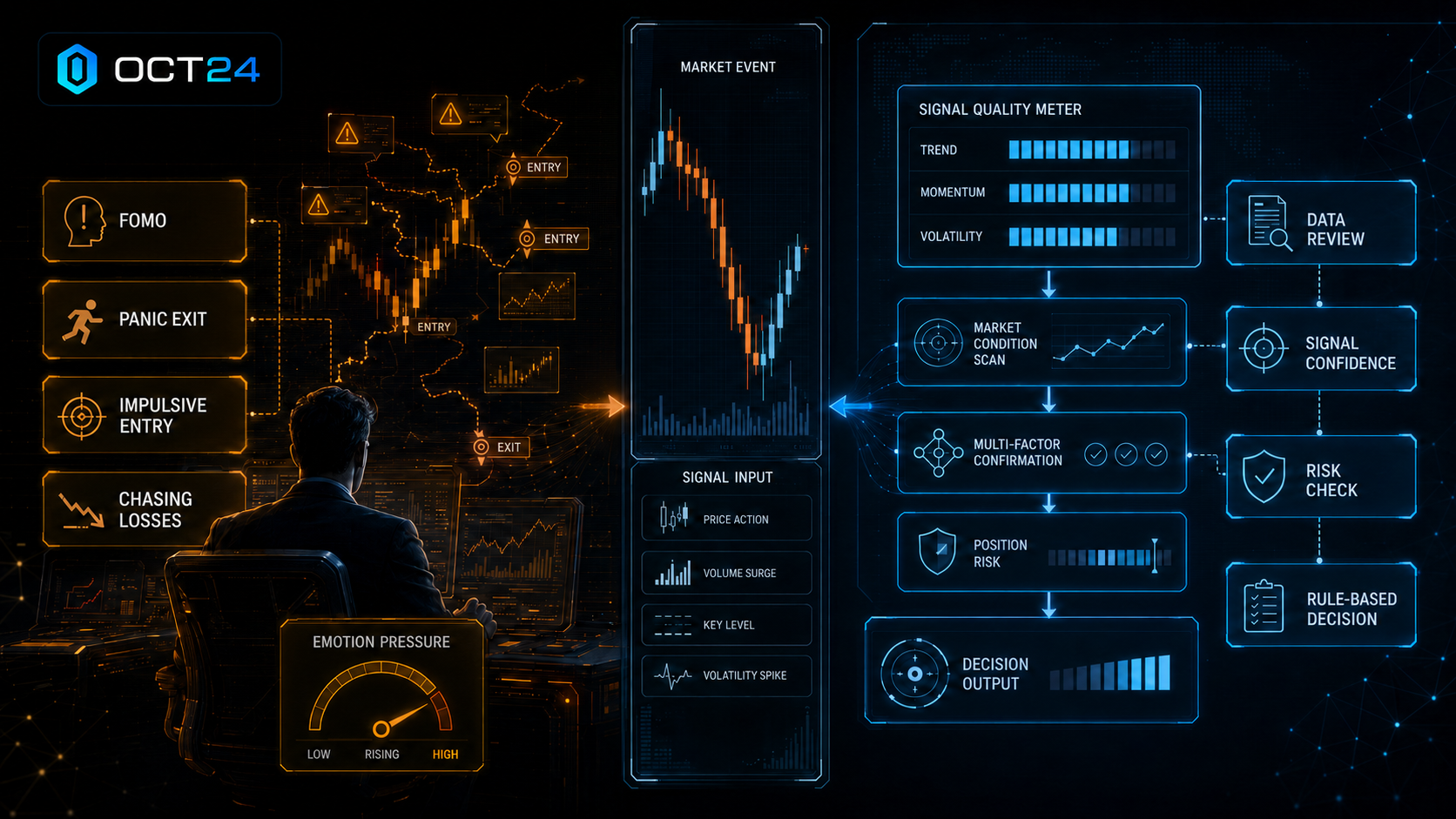
More signals do not automatically create better trading results.
A high number of signals may simply mean the market is moving quickly or the settings are very sensitive.
Some signals may be weak. Others may not fit the trader’s strategy.
Too many signals can also create pressure to trade.
A trader may feel that every alert is an opportunity they should take. This can lead to overtrading, higher fees, more exposure, and rushed decisions.
Signal quality matters more than signal quantity.
Before acting, traders should ask:
- Does the signal fit the strategy?
- Is the trend clear?
- Is volume supporting the move?
- Is volatility too high?
- Is total exposure already too large?
- Is the possible reward worth the risk?
How AI Identifies Trading Opportunities explains why AI can scan many markets and detect possible setups.
That scanning ability is useful. It does not mean every setup should become a trade.
Signals should also connect to clear AI Trading Strategies.
A trend-following trader and a breakout trader may review the same signal differently.
OCT24 organizes AI-supported signals into a structured review process. This helps traders focus on relevant opportunities instead of manually searching through every chart.
The goal is not to trade more. The goal is to make better-informed decisions.
Myth 6: AI Trading Replaces the Trader
AI can reduce a large amount of manual work.
It can scan markets faster, compare more data, and organize signals more consistently than a person switching between charts.
But AI does not remove trader responsibility.
The trader still chooses risk settings. They still decide how much capital to allocate and whether the setup fits the plan.
They also need to review results and know when trading should pause.
This is why Trading Bots vs Human Traders should not be viewed as a simple competition.
AI is stronger at speed, scanning, and repeated data review.
Humans remain responsible for judgment, risk tolerance, unusual situations, and final accountability.
The same idea applies to AI Trading vs Manual Trading.
The strongest workflow can combine AI analysis with informed human control.
OCT24 performs most of the market analysis for the trader.
It scans market conditions, identifies possible opportunities, and presents AI-supported signals.
The trader does not need to perform every part of the analysis manually.
However, the trader still controls risk settings, capital allocation, exposure, and execution choices.
AI can replace repetitive work. It should not replace responsibility.
Myth 7: AI Trading Is Only for Experts
AI trading is not only for professional traders, programmers, or large financial companies.
Modern tools can make market analysis easier to access for beginner and intermediate traders.
Beginners still need to understand the basics.
They should know what a signal means, how position sizing works, why stop-losses matter, and how leverage can increase losses.
But they do not need to analyze every chart manually or build an AI system from the beginning.
Good AI Trading Software should present information clearly.
It should help the user understand the market, the signal, and the risk before execution.
This is why Choosing the Right AI Trading Platform matters.
A beginner-friendly platform should reduce confusion without hiding risk.
The Benefits of AI Trading may include faster scanning, reduced manual chart review, more consistent analysis, and a more organized workflow.
Beginners should still start simply.
Use clear risk settings. Focus on one strategy. Avoid unnecessary leverage. Review results regularly.
OCT24 performs most of the analysis and presents potential opportunities in a structured way.
This can help newer traders focus on understanding signals and managing risk instead of trying to monitor every market at once.
Start with structure, not complexity.
Myth 8: Technical Indicators Become Useless With AI
AI does not make technical indicators useless.
Indicators can still help measure trend, momentum, volume, and volatility.
The difference is that AI can review several indicators faster and compare them with wider market conditions.
For example, a moving average may show the direction of a trend.
RSI may show whether momentum is becoming stretched. Volume may show whether a move has stronger market activity behind it.
One indicator should not be used alone.
A strong RSI reading does not guarantee that price will continue rising. A moving-average crossover can still produce a false signal.
How AI Uses Technical Analysis explains how AI can compare several technical inputs together.
The Best Indicators for AI Trading are useful when they support the strategy and are reviewed with market context.
Traders should also understand How to Read Crypto Charts so they can recognize basic price movement, volume, support, resistance, and volatility.
OCT24 can do most of this technical review automatically.
It can scan conditions, review technical signals, and present a potential opportunity in a clearer workflow.
The trader does not need to calculate everything manually.
But understanding the meaning of the signal helps the trader make a more informed risk decision.
AI makes indicator analysis faster. It does not make context unnecessary.
Myth 9: One-Click Trading Means One-Click Thinking
One-Click Trading can make execution faster.
It should not remove the review that comes before execution.
A trader should still check the signal, position size, stop-loss, leverage, total exposure, and possible downside.
Speed is useful only after the decision makes sense.
Imagine that OCT24 identifies a possible breakout and presents an AI-supported signal.
The market is moving quickly, so the opportunity may not remain available for long.
The trader reviews the trend, volume, volatility, risk settings, and open exposure.
If the setup fits the plan, one-click execution can reduce the delay between review and action.
If the setup does not fit the plan, the trader can wait.
One click should be the final step, not the entire thinking process.
OCT24 can support faster execution after the platform has performed most of the market analysis and the trader has reviewed the risk.
Fast execution can improve efficiency. It cannot make a poor decision safe.
Practical Example: From AI Signal to Trading Decision
Imagine that a crypto asset begins moving quickly after breaking above resistance.
Volume increases. Momentum becomes stronger. Several traders begin talking about the move online.
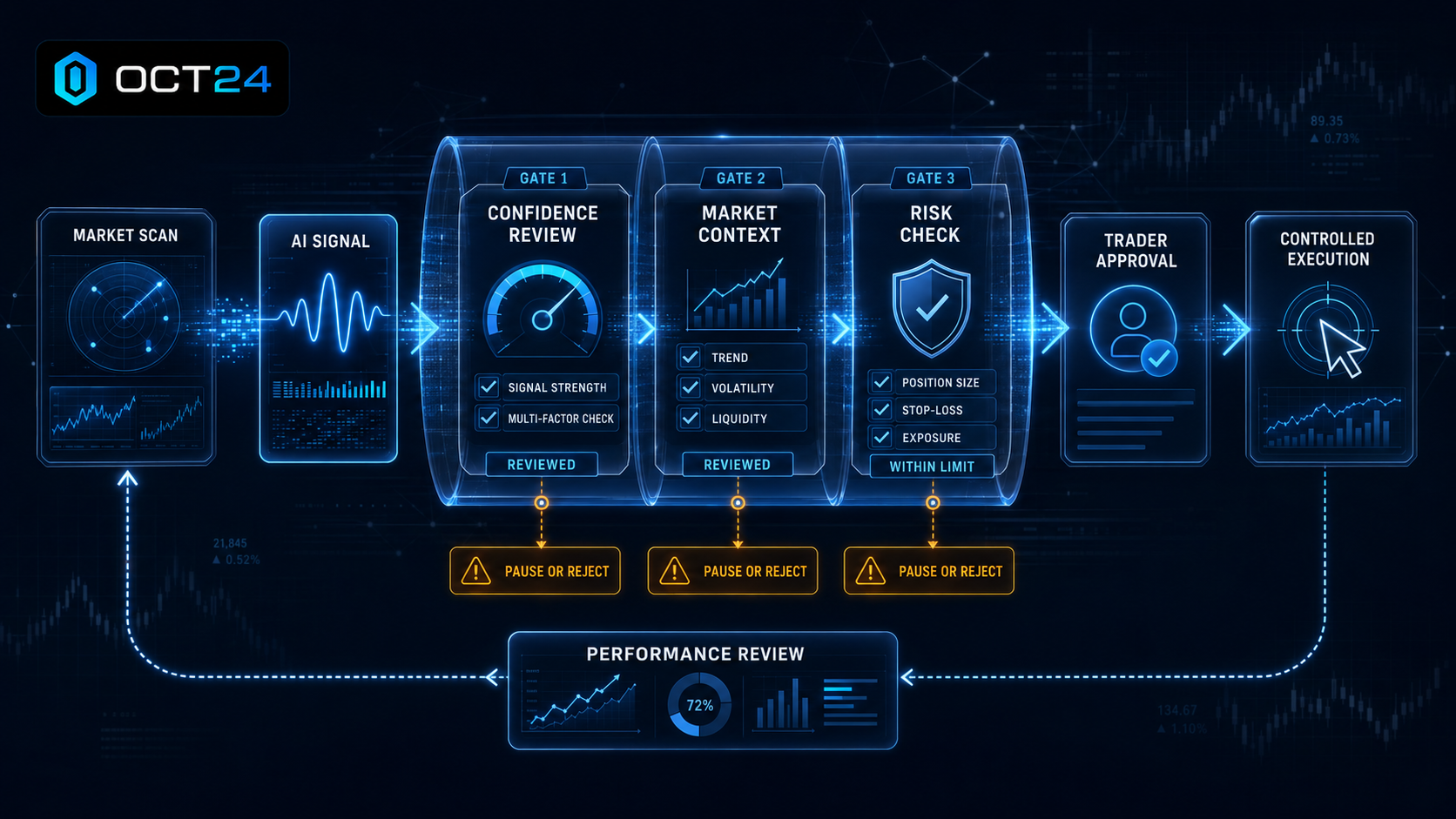
OCT24 scans the changing market conditions and identifies a potential opportunity.
The platform presents an AI-supported trading signal with relevant market information.
The signal does not mean the trade is guaranteed to work.
Before acting, the trader checks the trend, volume, volatility, position size, stop-loss, leverage, and current exposure.
The trader also asks whether the setup fits the strategy or whether FOMO is creating pressure to enter.
If the signal fits the plan and the risk is acceptable, the trader may decide to execute.
If the price has already moved too far or the possible loss is too large, the trader can wait.
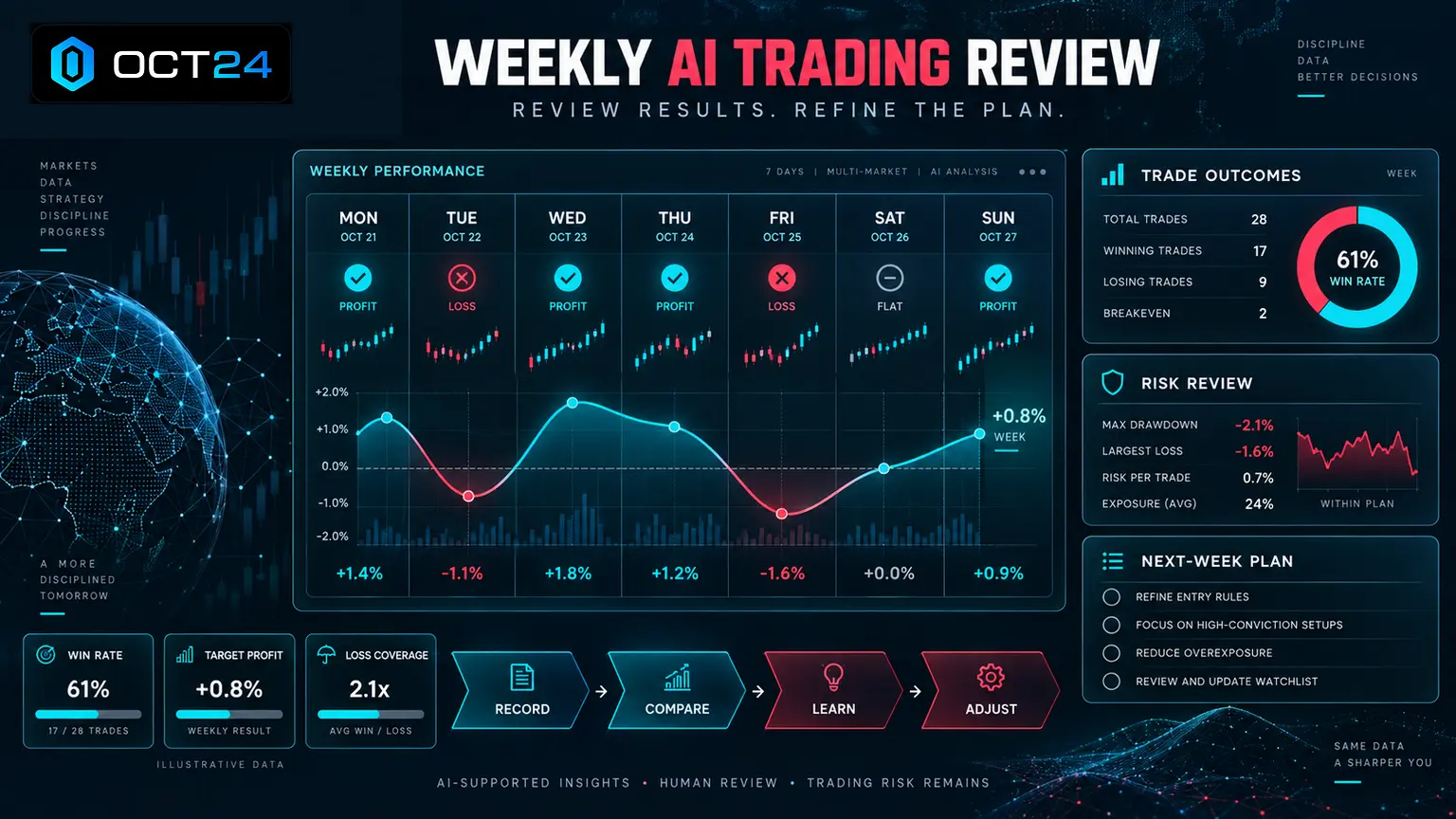
Afterward, the trader reviews the result and checks whether the original rules were followed.
This example shows the correct balance.
OCT24 performs most of the analysis and organizes the opportunity.
The trader remains responsible for risk settings, capital allocation, and the final execution choice.
Responsible AI trading is not about following every signal.
It is about using faster analysis inside a clear and controlled decision process.
How OCT24 Helps Traders Avoid AI Trading Myths
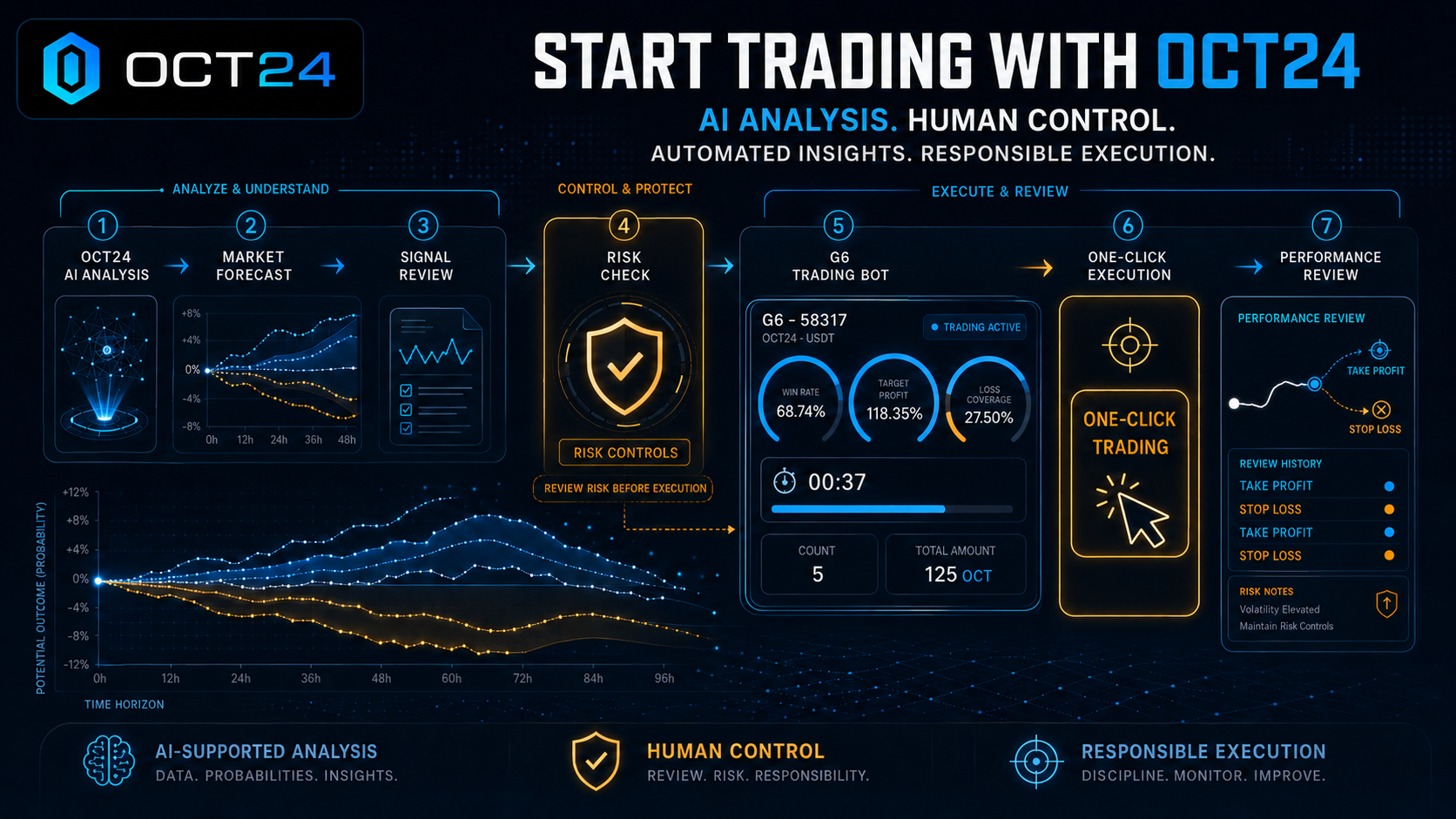
OCT24 is designed to make AI-supported trading more structured and easier to understand.
It performs most of the market analysis instead of leaving the trader to review every chart manually.
OCT24 can support the workflow by:
- Scanning active market conditions
- Identifying potential trading opportunities
- Reviewing market momentum
- Analyzing volatility changes
- Reviewing technical signals
- Presenting AI-supported trading signals
- Supporting faster execution
- Helping traders review performance over time
The G6 Trading Bot can support automation inside this workflow.
OCT24 can help traders review markets more clearly, reduce manual chart review, understand signals, and use automation more thoughtfully.
It can also help traders check risk settings before execution and support one-click trading after review.
This structure may reduce emotional decisions because the trader is not forced to search through every market manually.
However, OCT24 does not guarantee results.
The trader still needs to choose suitable settings, understand exposure, manage capital responsibly, and decide whether an opportunity fits the plan.
This is responsible AI trading.
The platform performs most of the analysis. The trader remains responsible for the risk and execution decision.
Readers who want more information about the platform can visit About OCT24.
AI Trading Myths Checklist
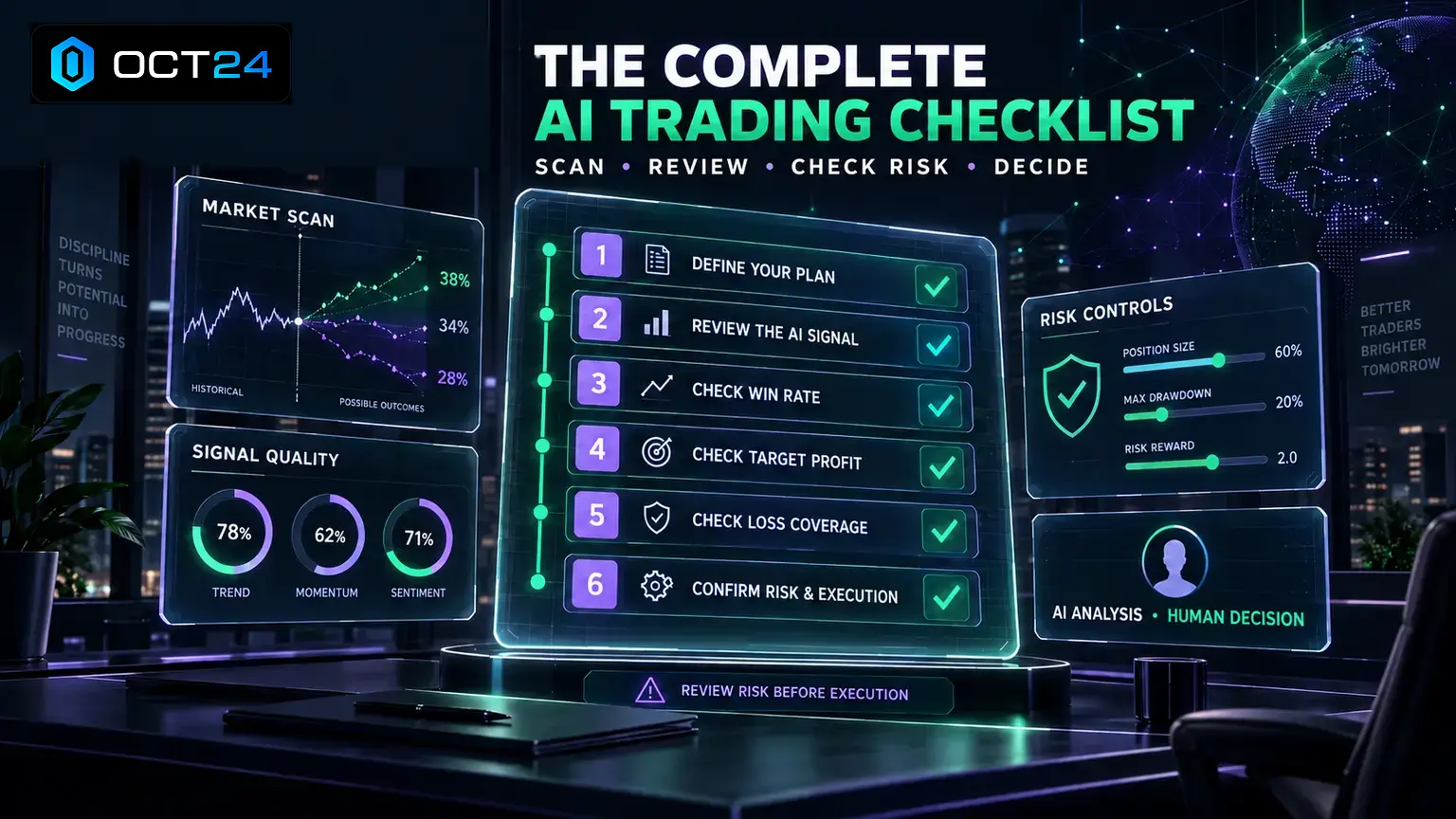
Before trusting an AI trading claim, ask:
- Does it promise guaranteed profits?
- Does it suggest AI can predict every market move?
- Does it ignore trading risk?
- Does it make trading bots sound effortless?
- Does it explain risk settings?
- Does it discuss position sizing and stop-losses?
- Does it explain the limits of trading signals?
- Does it encourage responsible decisions?
- Do I understand the strategy?
- Does the trade fit my plan?
If a claim removes uncertainty, risk, or trader responsibility, it is probably unrealistic.
Frequently Asked Questions
What are the most common AI Trading Myths?
Common myths include claims that AI guarantees profits, predicts every market move, removes risk, replaces traders, or allows bots to run forever without monitoring.
Can AI trading guarantee profits?
No. AI can support market analysis and identify potential opportunities, but every trade can lose. Markets remain uncertain.
Can AI predict every market move?
No. AI analyzes data, patterns, and probabilities. Unexpected news, volatility, and changing market conditions can still affect price.
Are AI trading bots set and forget?
No. Bots need suitable settings, risk limits, monitoring, and regular performance review. Poor settings can increase risk.
Do AI trading signals always work?
No. A signal is structured decision support. It may identify a potential opportunity, but it cannot guarantee the next price move.
Does AI trading remove risk?
No. Market risk, volatility, slippage, poor settings, leverage, and technical problems can still affect results.
Is AI trading only for experts?
No. Beginner and intermediate traders can use AI tools when information is explained clearly and risk controls remain part of the process.
Can beginners use AI trading tools?
Yes, but beginners should understand signals, position sizing, stop-losses, exposure, and leverage. They should begin with simple settings and realistic expectations.
How does OCT24 help traders use AI responsibly?
OCT24 performs most of the market analysis, identifies potential opportunities, and presents AI-supported signals. Traders still control settings, capital, exposure, and execution choices.
What is the G6 Trading Bot?
The G6 Trading Bot is part of OCT24’s AI-assisted workflow. It can support automation and structured execution, while traders remain responsible for risk settings and capital decisions.
AI Trading Myths Debunked: Key Takeaways
AI trading can help traders analyze data faster, identify potential opportunities, reduce manual chart review, and organize signals into a clearer workflow.
But AI trading does not:
- Guarantee profits
- Predict every market move
- Remove trading risk
- Replace risk management
- Make poor settings safe
- Replace trader responsibility
Traders should focus on:
- Probability
- Signal quality
- Risk-to-reward
- Position sizing
- Stop-losses
- Exposure
- Strategy fit
- Performance review
- Responsible execution
OCT24 brings these elements together by performing most of the market analysis while supporting trader control, risk management, and structured execution.
The platform can scan market conditions, identify potential opportunities, and present AI-supported signals more efficiently.
The trader still decides how much to risk and whether to execute.
AI works best when it is used with realistic expectations.
It can support better decisions. It cannot guarantee the result.
To explore a more structured AI-assisted trading workflow, Start Trading with OCT24.