
AI Trading Alerts: What Traders Should Look For
AI trading alerts can help traders notice important market activity faster, but an alert is only useful if the trader knows what to look for. A good alert should support better decisions. It should not create pressure, confusion, or blind action.
For beginner and intermediate traders, alerts can feel exciting because they make the market seem easier to follow. But alerts can also become noisy. If every price move, indicator change, or headline feels urgent, the trader may end up reacting instead of thinking.
The goal is not to collect more alerts. The goal is to understand which alerts deserve attention, which ones should be ignored, and what risk checks should happen before any trade is placed.
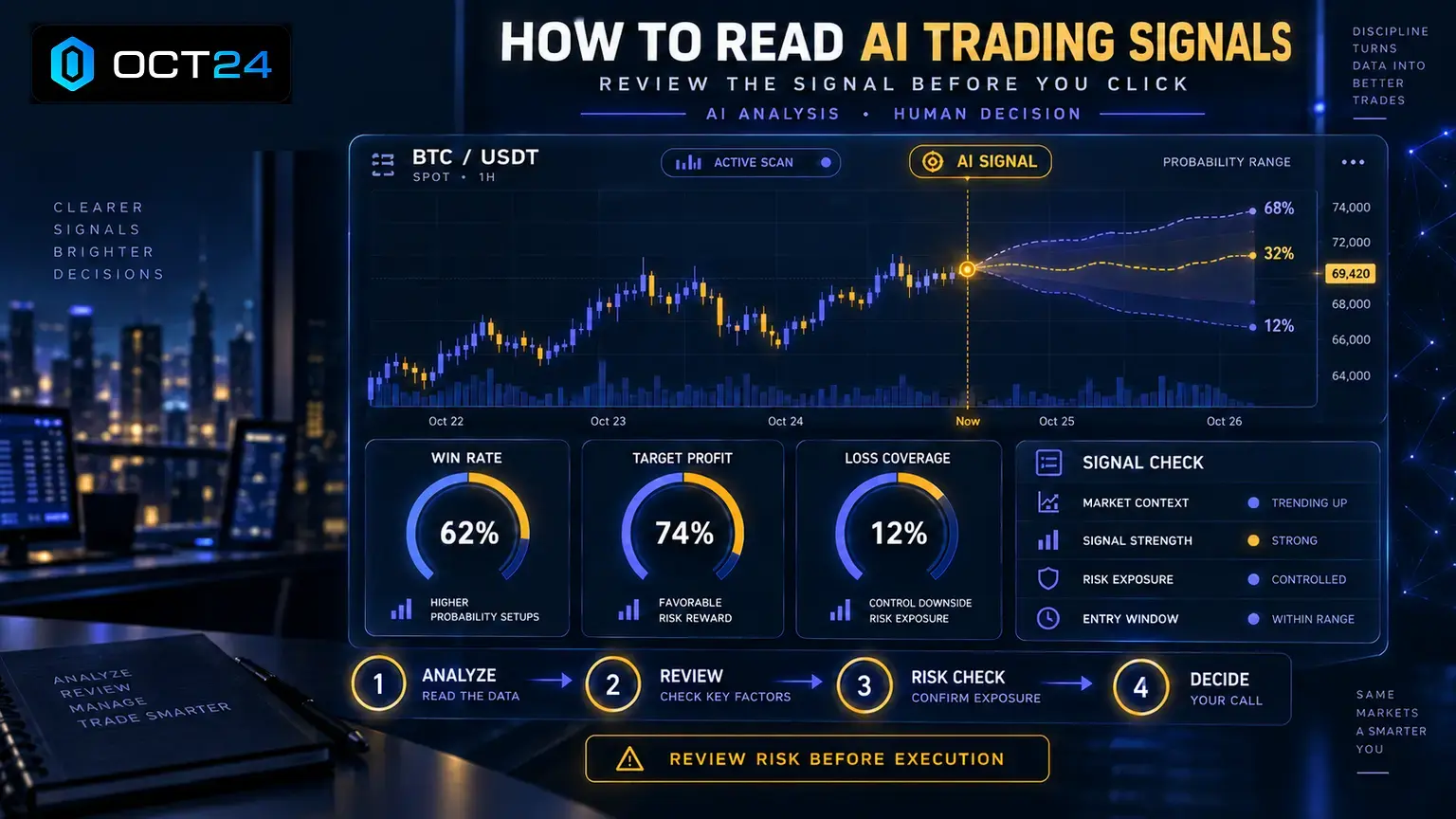
OCT24 can fit into this process as a faster AI-powered one-click trading experience. However, OCT24 does not currently provide a full on-platform market-analysis dashboard, custom asset alert system, or detailed entry and exit breakdown for each presented trade. When a trade or bot is presented, users mainly review trade/bot metrics such as target profit, loss coverage, and win rate.
That makes alert discipline important. Traders should still prepare, manage exposure, review available metrics, and make their own execution decisions.
What are AI trading alerts?
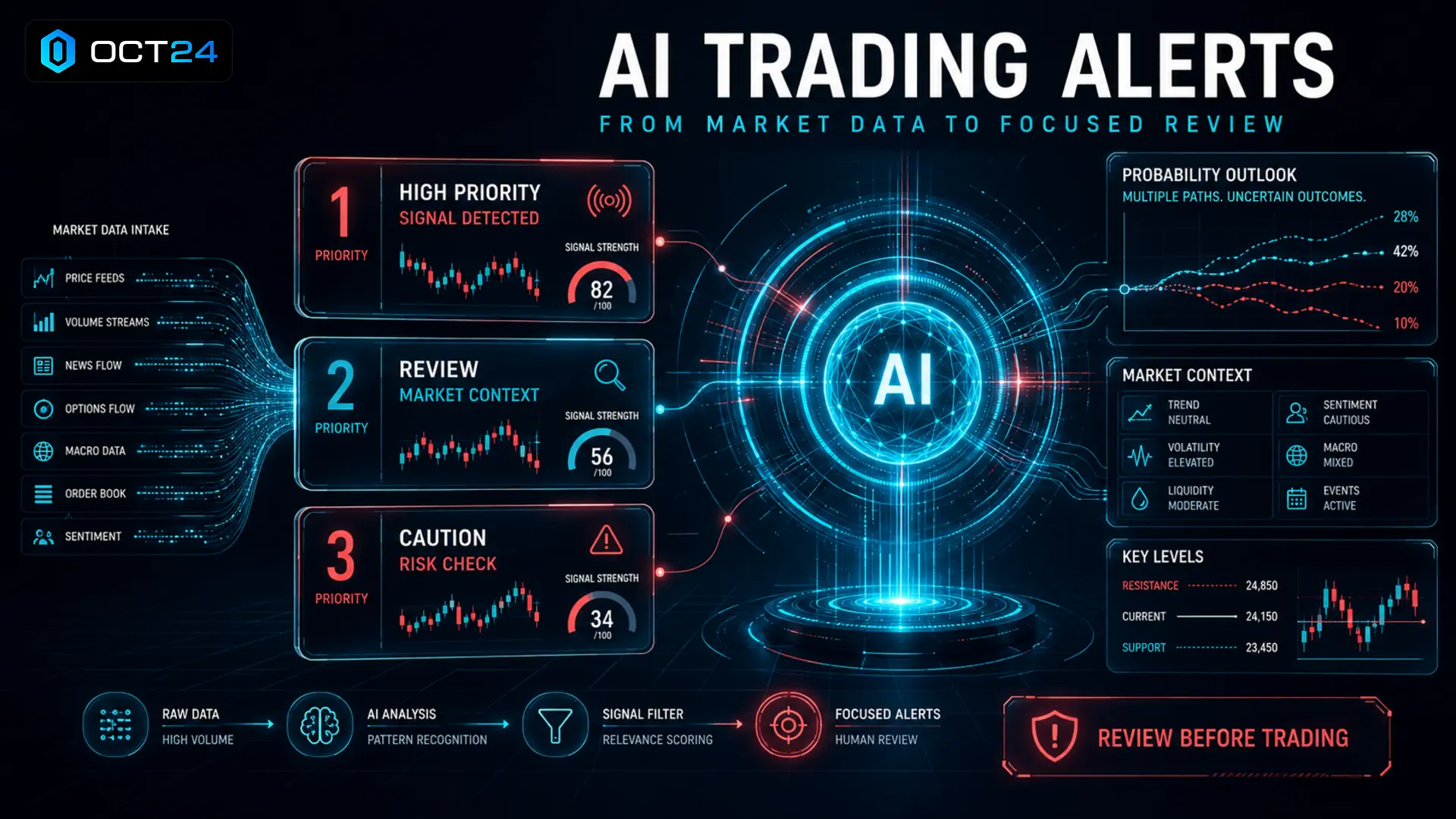
AI trading alerts are notifications or prompts that help traders notice possible market activity. They may be based on price movement, volatility, volume, trend changes, technical indicators, news, or other data points.
Some alerts are simple. For example, a price alert may tell a trader when Bitcoin reaches a certain level. Other alerts are more advanced and may combine several conditions, such as volume growth, trend strength, and volatility.
AI can make alerts more useful by processing more information than a trader can watch manually. Instead of staring at charts all day, the trader can use alerts to know when something deserves attention.
But an alert is not a decision. It is a prompt to review the situation.
This is the first rule traders should remember. An alert should lead to a check, not an automatic trade.
Why AI trading alerts matter
Markets move quickly. Crypto markets can move at any hour, and traders may not have time to watch every chart.
AI trading alerts can help reduce that pressure by pointing attention toward markets that may need review. This is especially helpful for traders who are busy, new, or trying to build a more structured process.
Good alerts can help traders:
- Notice important price movement.
- Avoid watching charts all day.
- Track assets on a focused watchlist.
- Prepare before using one-click trading.
- Review risk before acting.
- Build a more consistent trading routine.
Bad alerts can do the opposite. They can make a trader feel rushed, overconfident, or afraid of missing out.
This is why alerts need rules. A trader should know what each alert means, what action comes next, and when the alert should be ignored.
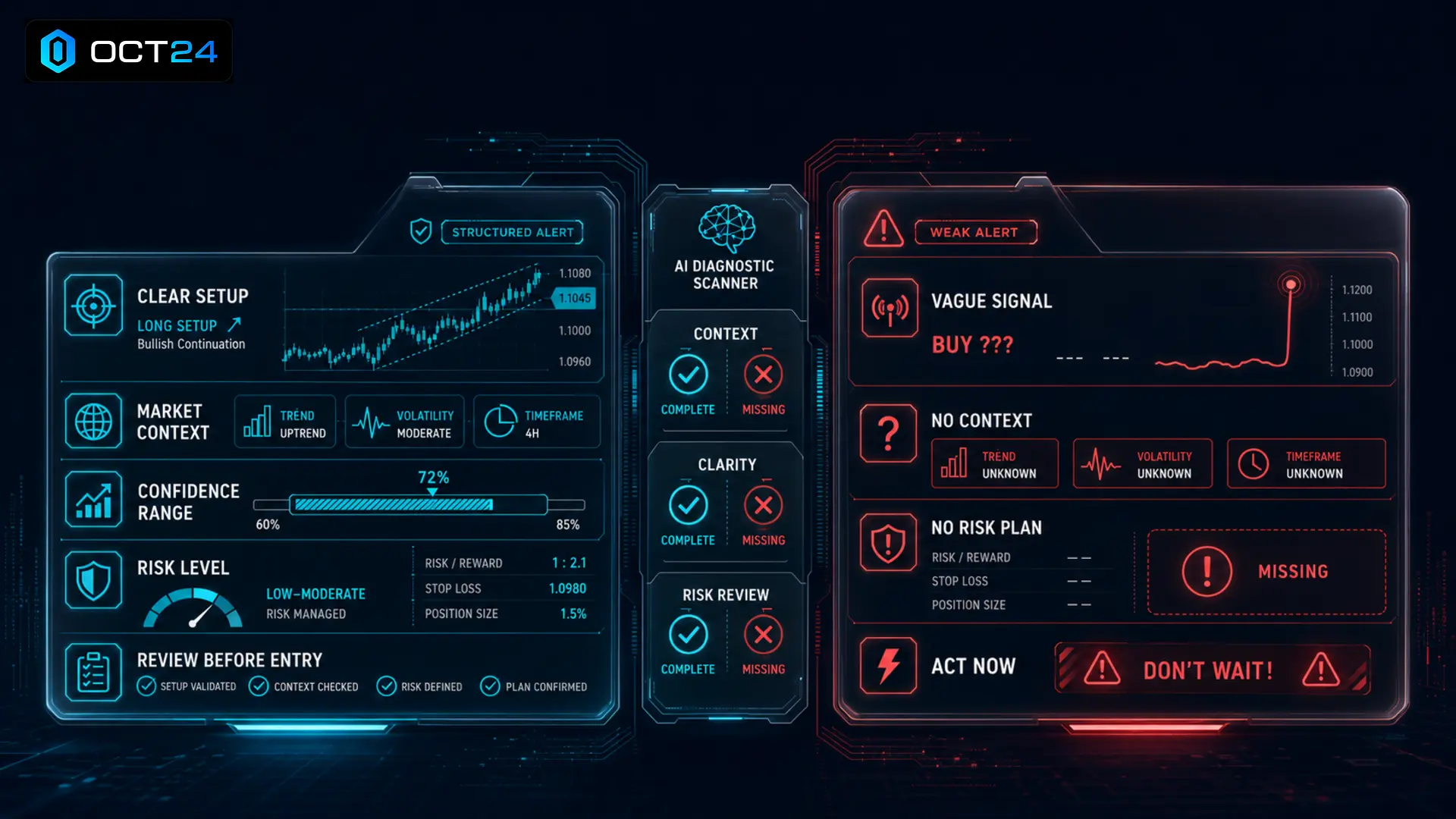
What a useful alert should include
A useful alert gives enough information for the trader to understand why attention is needed. It should not simply say that something is happening. It should help explain what kind of check is needed next.
A strong alert usually answers a few practical questions.
- What asset or market is involved?
- What condition triggered the alert?
- Is the move related to price, volume, volatility, or trend?
- Is the alert early, late, or already extended?
- Does the alert fit the trader’s strategy?
- What risk check should happen before action?
Some alerts will not include all of this information. That is fine. The trader can fill in the missing details with their own review.
The danger comes when traders act on an alert without understanding what it means. This is one of the common AI trading mistakes that can lead to rushed decisions.
A good alert should slow the trader down just enough to review the setup clearly.
Look beyond direction
Many traders focus only on direction. They want to know whether the alert is bullish or bearish. But direction is only one part of the decision.
A useful alert should also make the trader think about quality and risk.
For example, an alert may show that Ethereum is moving higher. That does not automatically mean the trade is good. The move could be late. Volatility could be high. The trader may already have too much exposure to crypto.
Before acting, traders should ask:
- Is the move fresh or already stretched?
- Is there enough liquidity?
- Is volatility manageable?
- Does the trade fit my strategy?
- Does the risk make sense?
- Am I reacting emotionally?
This connects directly with AI trading risk vs reward. A trade can look attractive and still be unsuitable if the downside is too large or if the trader uses too much capital.
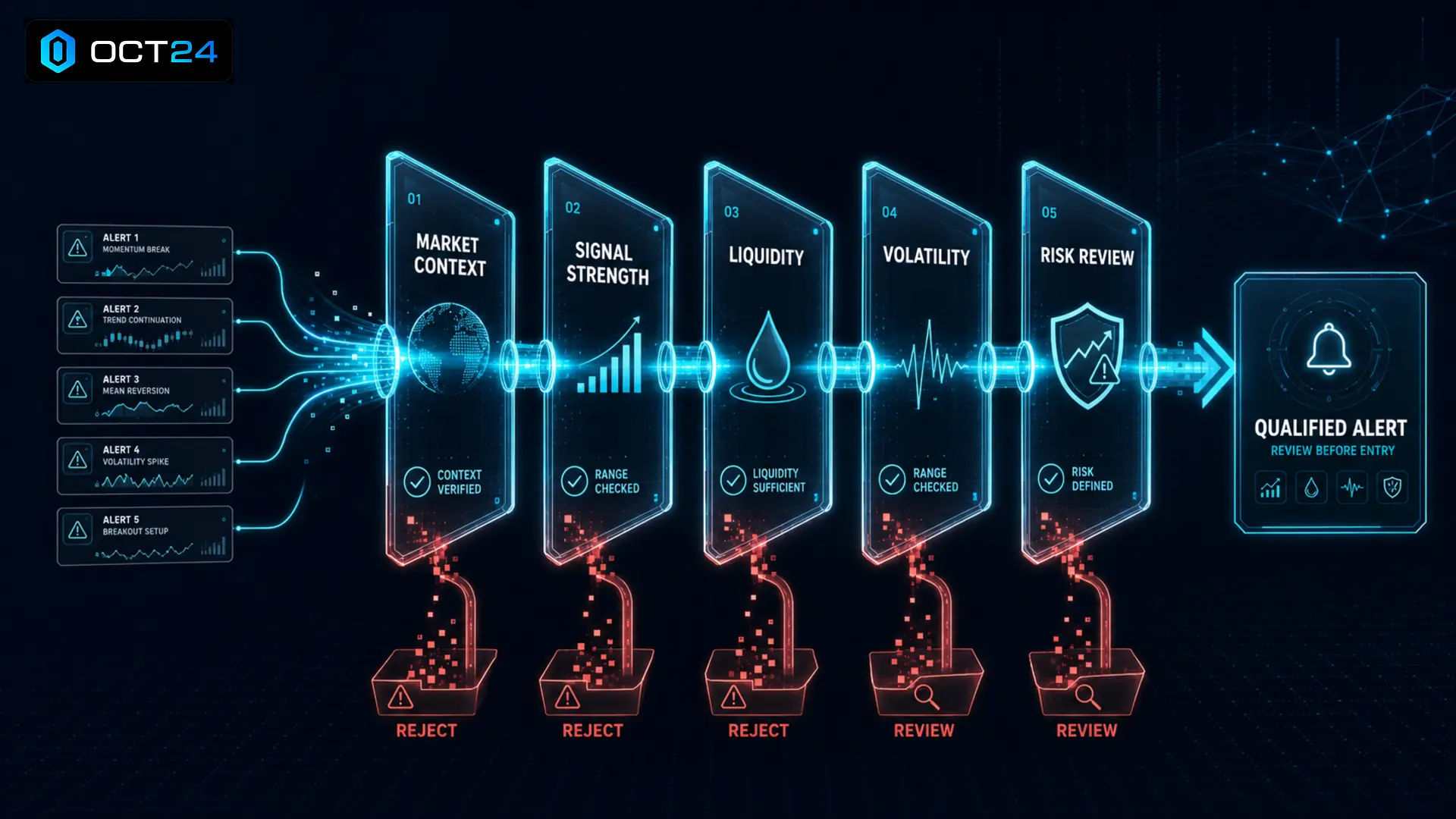
Create a simple alert scoring system
One way to make alerts more useful is to score them before acting. The score does not need to be advanced. It only needs to help the trader slow down and compare alerts with the same basic rules.
For example, a trader could score each alert from one to five in a few categories.
- Clarity of the alert.
- Strength of the market move.
- Volume or activity behind the move.
- Volatility level.
- Fit with the trader’s strategy.
- Risk level.
- Whether the move is early or already extended.
An alert with a clear reason, strong volume, manageable volatility, and good timing may deserve closer review. An alert that is vague, late, or too volatile may be ignored.
This kind of scoring helps traders avoid emotional decisions. Instead of asking, “Is this alert exciting?” the trader asks, “Does this alert meet my rules?”
This matters even more when using faster platforms. When the trading experience is simple and quick, traders need a clear process before they click.
Alert types traders should understand
Not all alerts serve the same purpose. Traders should know what type of alert they are receiving before deciding what to do next.
Price alerts
A price alert triggers when an asset reaches a specific level. This is simple and useful, but it does not explain whether the trade is good.
Volatility alerts
A volatility alert tells traders that movement is increasing. This can create opportunity, but it can also increase risk.
Volume alerts
A volume alert shows that trading activity is increasing. Strong volume can support a move, but traders still need to review context.
Trend alerts
A trend alert may tell traders that an asset is moving in a clearer direction. Trend alerts can be useful for AI trading strategies for beginners, especially when traders are learning to avoid random setups.
Risk alerts
A risk alert may warn traders about high volatility, large exposure, or conditions that may require caution.
The best alerts help traders understand what kind of review is needed. The weakest alerts only create urgency.
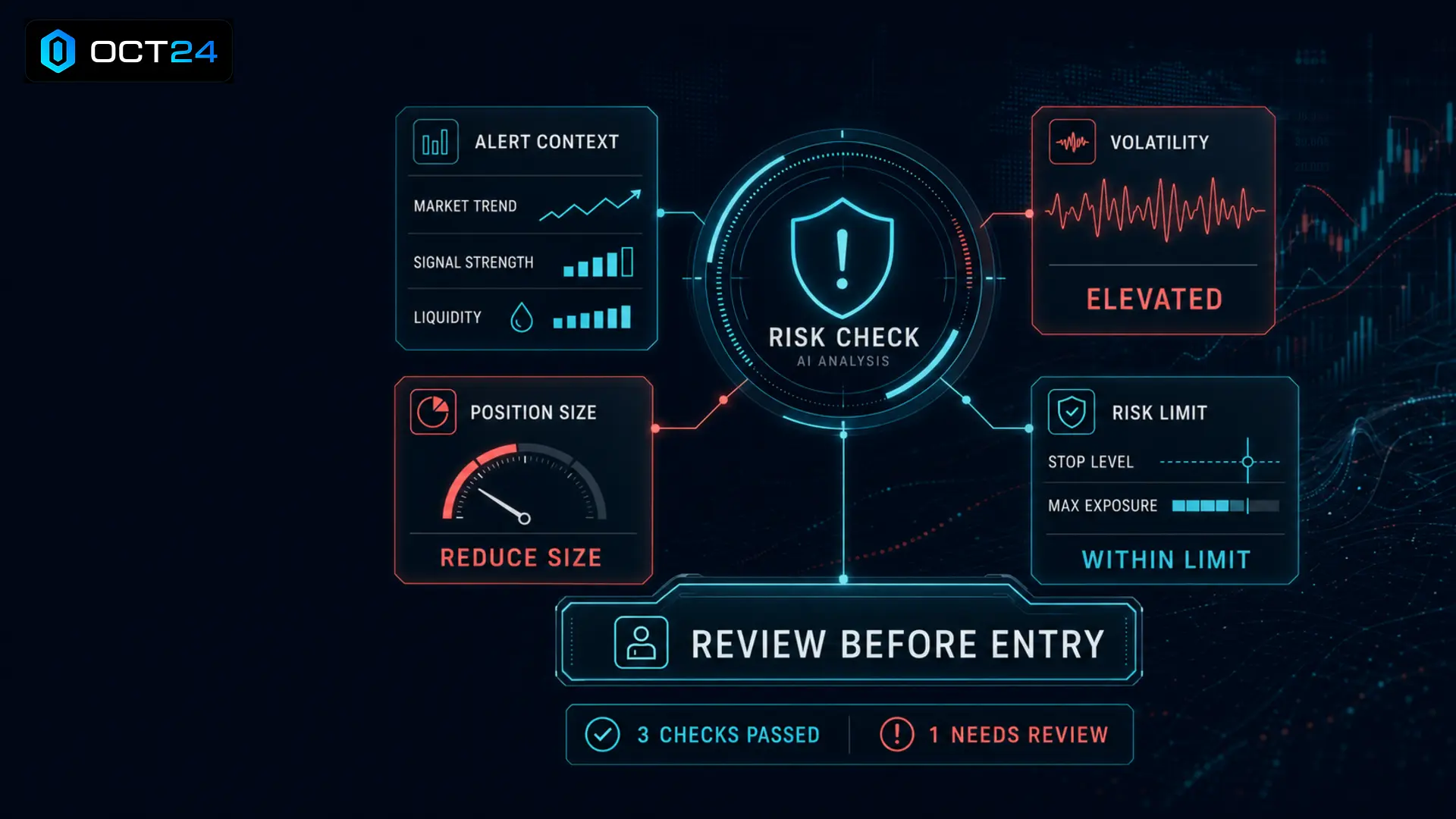
Alert timing matters
Timing can change the quality of an alert. A useful alert should ideally reach the trader when there is still time to review the setup calmly.
Some alerts arrive early. These may help traders prepare before a major move happens. Early alerts can be useful, but they may also create false starts.
Some alerts arrive late. These may confirm that a move has already happened, but the trade may no longer offer a good risk-reward setup.
This is why traders should not judge alerts only by whether the market moved afterward. They should also ask whether the alert arrived at a useful moment.
A simple timing review can help:
- Was the alert early enough to review?
- Was the move already extended?
- Did volatility increase too quickly?
- Was liquidity still reasonable?
- Did the alert appear during a time I could actually make a careful decision?
Good timing does not promise a good outcome. It simply gives the trader a better chance to review the setup before acting.
How OCT24 fits into an alert workflow
OCT24 should be understood as part of a wider trading workflow, not as a full alert and research dashboard.
A trader may use external charts, market news, watchlists, or alert tools to decide which markets deserve attention. That preparation happens before they act.
When the trader moves into OCT24, the experience is different. OCT24 is built around faster AI-powered one-click trading and bot interaction rather than a detailed research screen.
At the point where a trade or bot is presented, users are not currently shown detailed asset information, entry points, or exit points. The key information is centered on target profit, loss coverage, and win rate.
This means traders should not use OCT24 as a replacement for understanding their own risk comfort. Instead, they can use OCT24 after doing preparation, then review the available trade/bot metrics before deciding whether to continue.
This makes OCT24 different from traditional prop-firm-style platforms. The focus is not on long challenge phases or complicated account restrictions. The experience is built around speed, accessibility, AI trading technology, and one-click trading.
Traders who want more background on the platform can visit About OCT24.
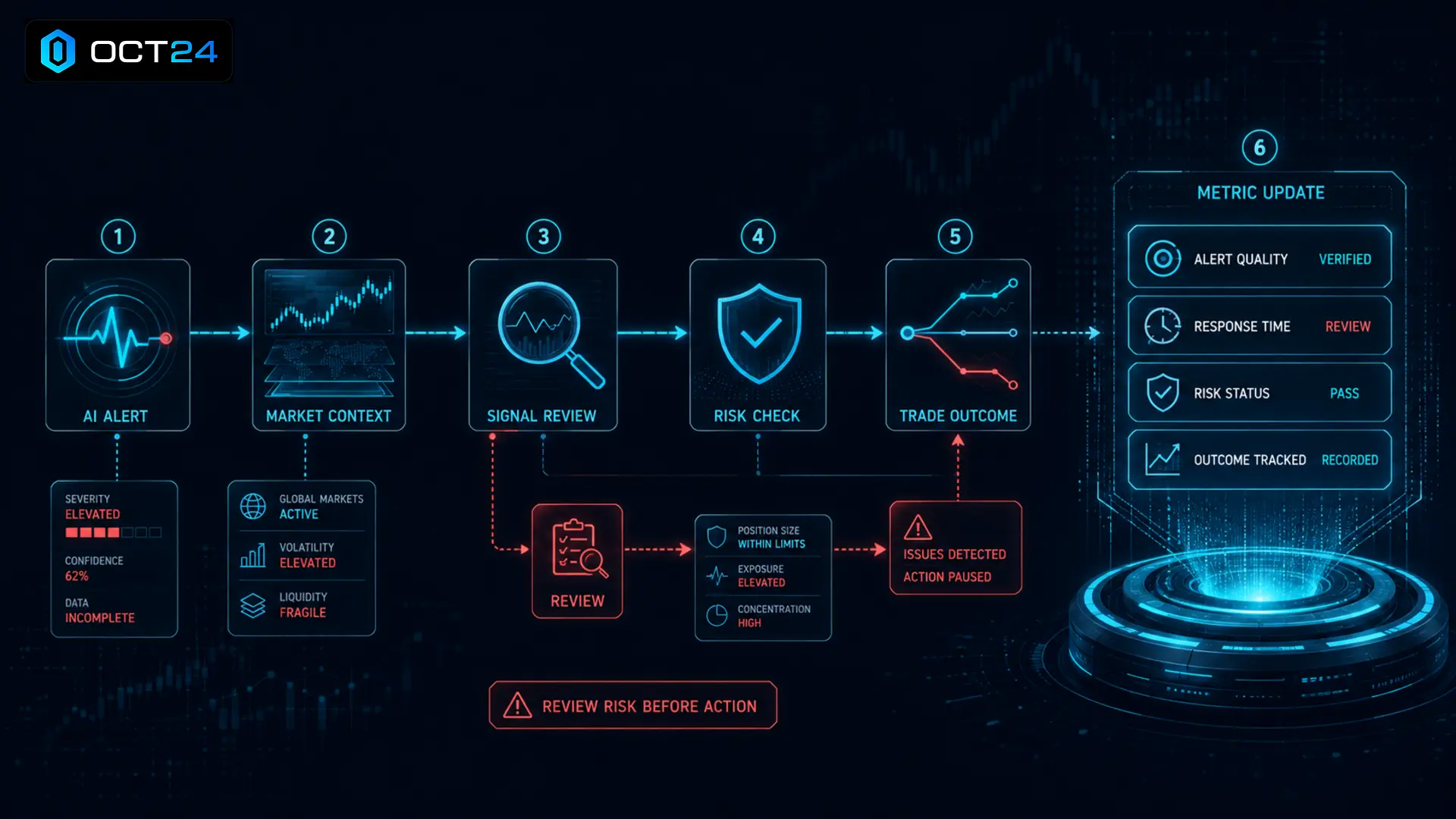
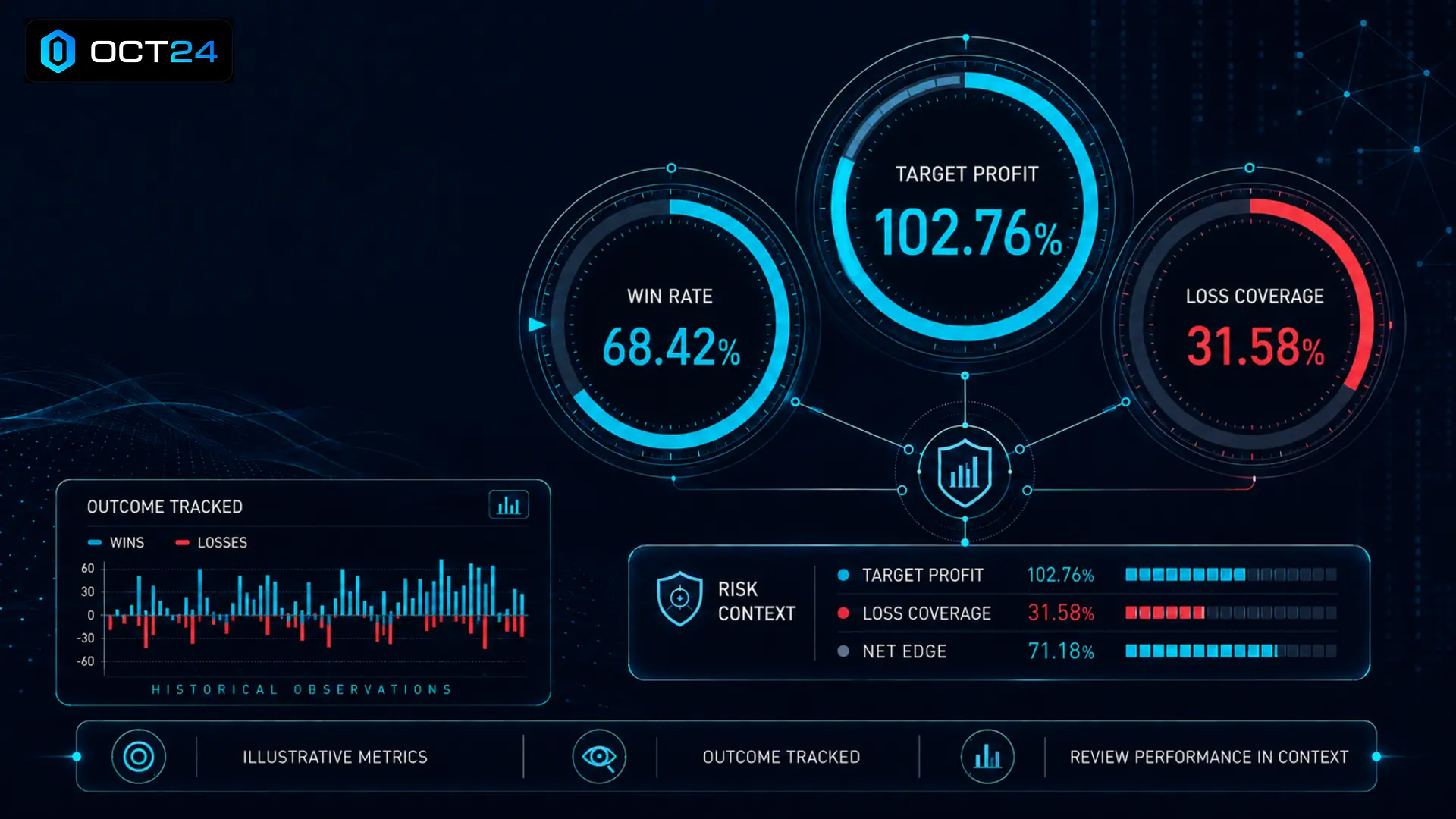
The OCT24 metrics traders should review
Because OCT24 does not currently show full asset, entry, or exit details for each presented trade, users should pay close attention to the metrics that are available.
Target profit
Target profit shows the intended profit outcome for the presented trade or bot cycle. Traders should review whether that target fits their expectations and whether they are comfortable with the risk involved.
Loss coverage
Loss coverage helps users understand the loss-related protection or coverage shown for the presented trade or bot. Traders should review this carefully and avoid assuming it removes all risk.
Win rate
Win rate gives a percentage-based view of historical or expected success for the presented trade or bot. A higher win rate may look attractive, but it should never be treated as certainty.
These metrics can help users make a more informed decision, but they are not the same as a full trading plan. Traders still need to decide how much capital to allocate and whether the trade fits their risk tolerance.
This is where trading bot risk management remains important. Even when a bot or trade looks appealing, risk still needs to be controlled.
How to review an alert before acting
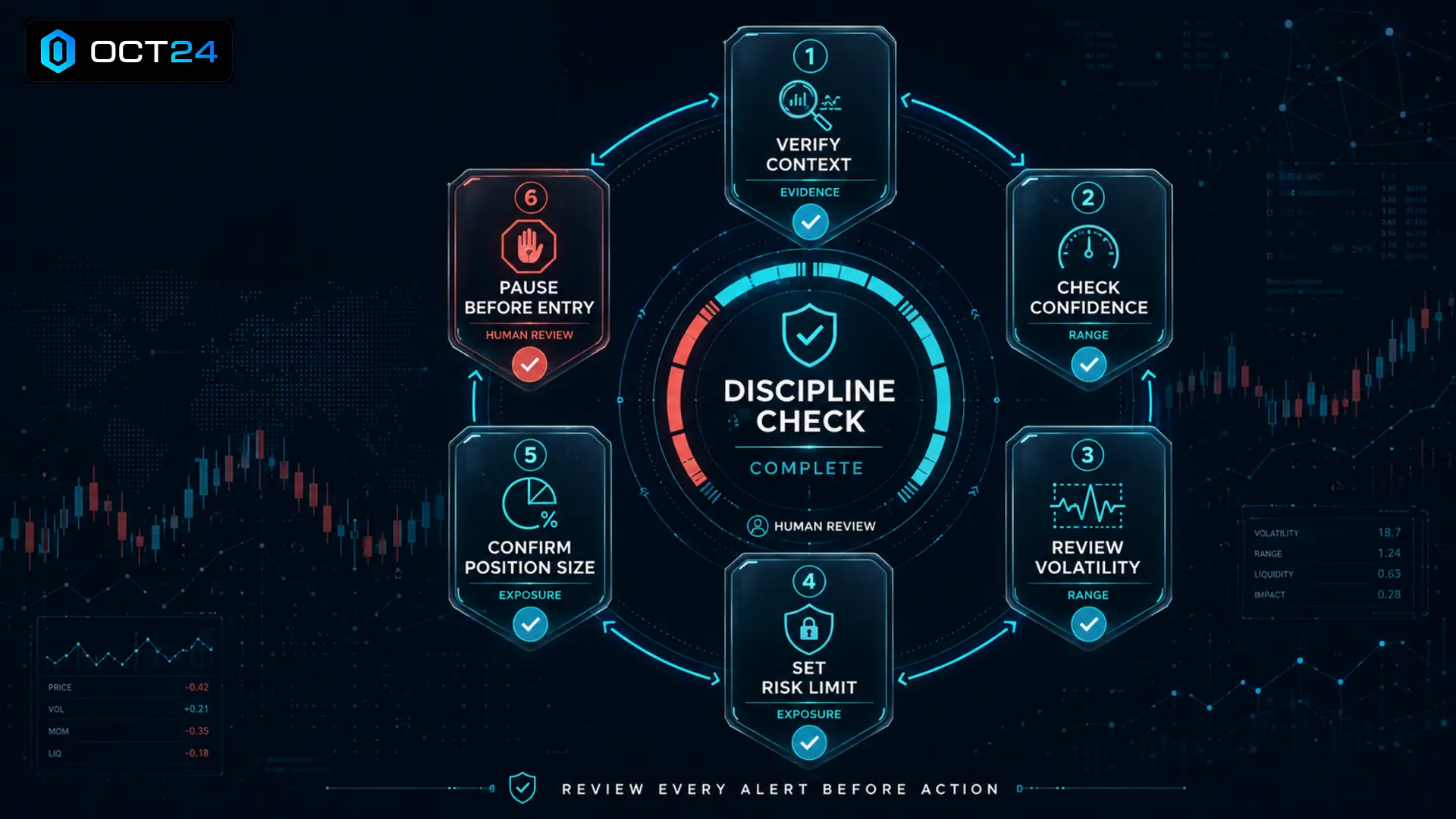
A simple review process can help traders avoid impulsive decisions.
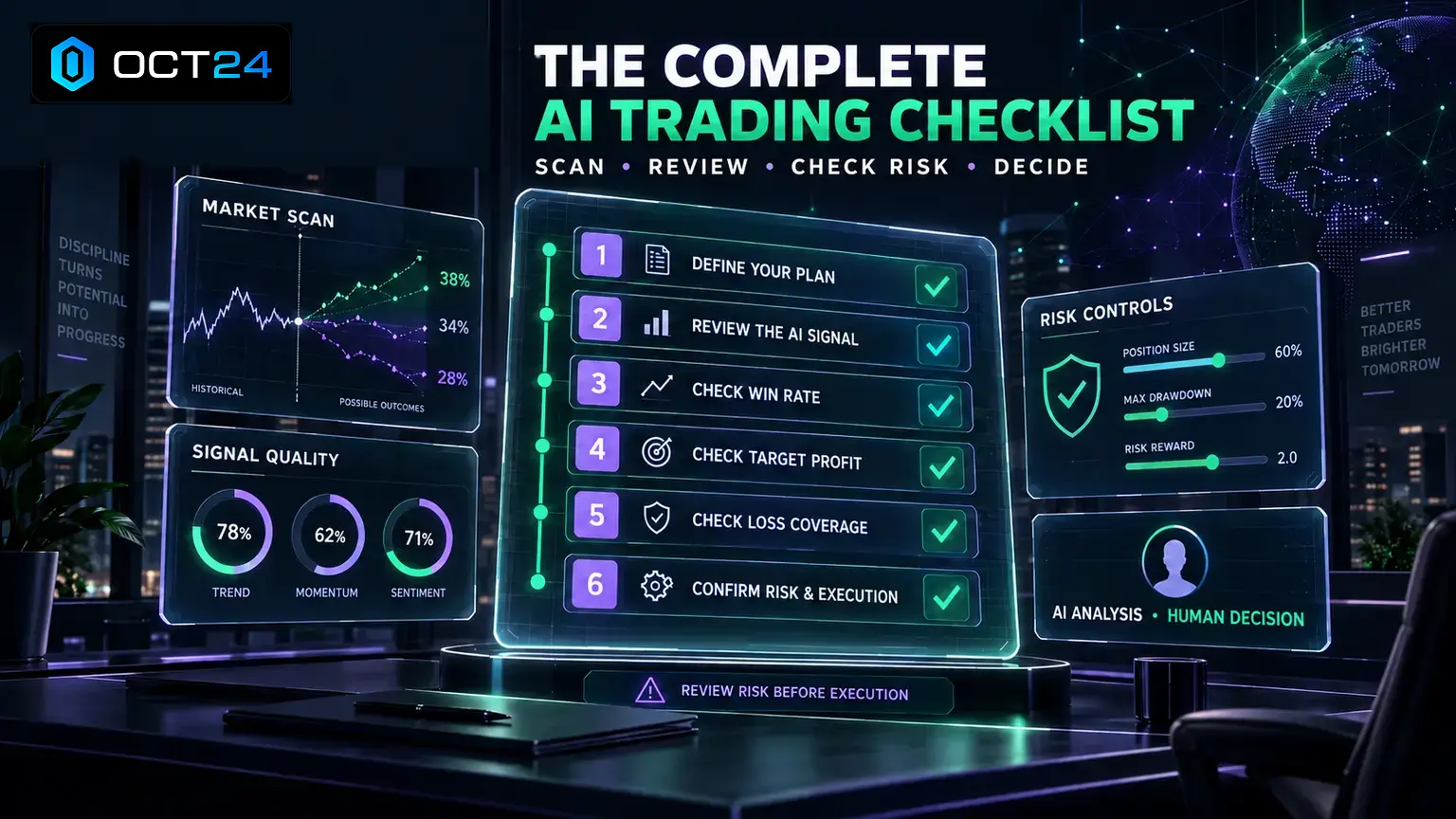
Before acting on an alert, move through these steps.
- Read the alert carefully.
- Check what triggered it.
- Compare it with your watchlist.
- Review market context using your preferred tools.
- Decide whether the setup fits your strategy.
- Check risk, position size, and exposure.
- If using OCT24, review target profit, loss coverage, and win rate.
- Act only if the trade still makes sense.
This process does not need to take hours. It only needs to create a pause between alert and action.
The pause matters because many trading mistakes happen in the first few seconds after a trader sees something exciting.
A simple OCT24 alert-to-action example
Imagine a trader receives an external alert that Ethereum volatility is increasing. The alert does not mean the trader should act immediately. It simply means Ethereum may deserve review.
The trader first checks their watchlist and market context. They ask whether Ethereum is part of their plan, whether volatility is manageable, and whether they already have too much crypto exposure.
If the trader then opens OCT24 and sees a presented trade or bot, they should not assume that the platform is showing a full trade explanation. OCT24 currently focuses the presented trade/bot information around target profit, loss coverage, and win rate.
The trader can then ask:
- Does the target profit fit my expectations?
- Does the loss coverage fit my risk comfort?
- Does the win rate make sense for the risk involved?
- How much capital am I comfortable allocating?
- Am I acting because the trade fits my plan or because the alert made me feel rushed?
If the answers are not clear, skipping the trade may be the better decision. A good alert process gives the trader permission to wait.
How alerts support busy traders
AI trading for busy professionals often comes down to focus. Busy traders may not have time to monitor charts all day, but they still need a way to stay aware of important changes.
Alerts can help by narrowing attention. Instead of watching everything, the trader can decide which markets, conditions, or risk levels deserve notification.
A good alert system should help busy traders know when to check the market, not force them to trade immediately.
OCT24 can support this style of trading by making the action step faster once the trader has reviewed the situation and the available trade/bot metrics. One-click trading can reduce friction, but it should not replace preparation.
Common alert mistakes to avoid
Alerts are useful only when traders use them with discipline. The most common mistakes come from treating alerts as commands instead of prompts.
Using too many alerts
Too many alerts create noise. If a trader receives constant notifications, important alerts become harder to recognize.
Trading every alert
An alert should not automatically become a trade. It should start a review process.
Ignoring risk
A strong alert can still lead to a poor trade if position size is too large or volatility is too aggressive.
Trusting win rate too much
Win rate can be useful, but it should not be treated as a promise. Traders should also review loss coverage, target profit, exposure, and capital allocation.
Assuming OCT24 shows every trade detail
OCT24 does not currently show detailed asset, entry, or exit information for each presented trade. Users should understand what information is available before acting.
These mistakes are closely connected to trading psychology. Alerts can trigger excitement, urgency, and fear of missing out. A clear process helps keep decisions calmer.
How to build a cleaner alert routine
A clean alert routine is simple. It should help traders decide what matters and what does not.
A beginner-friendly routine could look like this:
- Start with a focused watchlist.
- Choose only a few alert types.
- Turn off alerts that create noise.
- Review alerts at planned times when possible.
- Use alerts as prompts, not commands.
- Check risk before execution.
- Review OCT24 trade/bot metrics carefully before acting.
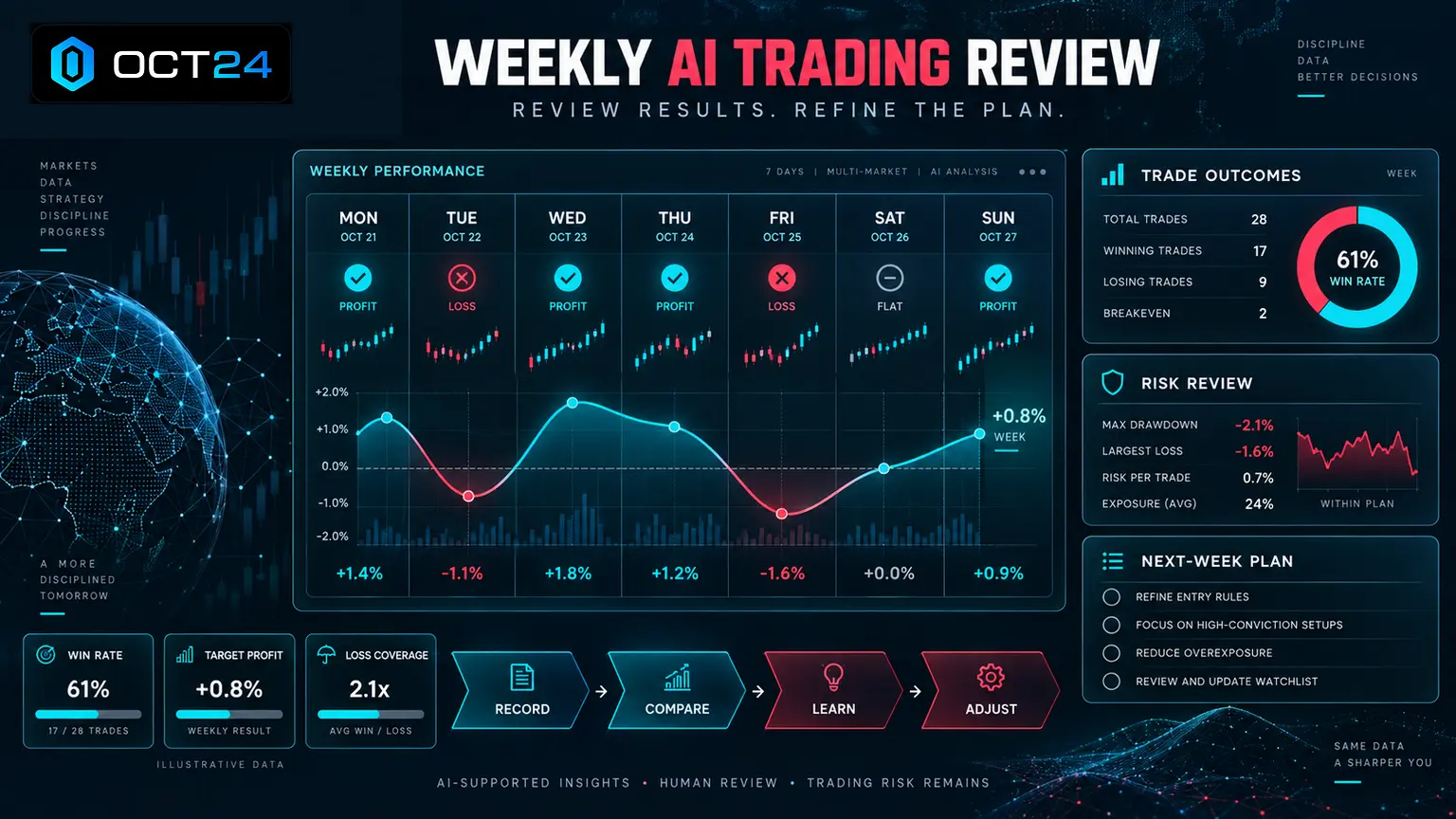
- Update the routine each week.
This connects with a consistent trading routine. The goal is to make trading easier to manage, not more chaotic.
Traders can also use Portfolio Diversification Tools and position sizing controls as part of their wider planning. Alerts are only one piece of the process.
How to reduce alert noise
Alert noise happens when a trader receives too many notifications. At first, this can feel useful. Over time, it usually becomes stressful.
The best way to reduce alert noise is to remove alerts that do not lead to better decisions.
Traders can simplify by asking:
- Do I understand why this alert exists?
- Does this alert support my strategy?
- Does this alert help me manage risk?
- Have I ignored this alert several times?
- Does this alert create urgency without useful information?
If an alert does not help the trader make a clearer decision, it may not belong in the routine.
This is especially important for beginners. A small number of useful alerts is usually better than a long list of alerts that compete for attention.
Where the G6 Trading Bot fits
The G6 Trading Bot can fit into a faster OCT24 trading workflow, especially for users who want a simpler AI-powered experience.
However, traders should still review the available metrics carefully. Target profit, loss coverage, and win rate can help users understand the trade/bot profile being presented, but they do not remove the need for risk control.
This is similar to the wider difference between trading bots vs human traders. Bots and automated systems can support speed and structure, but humans remain responsible for capital decisions and risk tolerance.
A simple way to think about it is this: alerts help you notice, metrics help you review, and risk rules help you decide.
FAQs
What are AI trading alerts?
AI trading alerts are notifications that help traders notice market activity, such as price movement, volatility, volume, or trend changes.
Should I trade every alert I receive?
No. Alerts should be treated as prompts for review, not automatic trade instructions.
What makes an alert useful?
A useful alert helps explain what happened, why it matters, and what the trader should review next.
Does OCT24 show detailed entry and exit points?
No. OCT24 does not currently show detailed asset information, entry points, or exit points for each presented trade. Users mainly review target profit, loss coverage, and win rate.
Can win rate predict the next trade result?
No. Win rate can provide useful context, but it cannot predict any single outcome with certainty.
How should beginners use alerts?
Beginners should start with a small number of alerts, connect them to a watchlist, and review risk before acting.
Can alerts help with one-click trading?
Yes. Alerts can help traders prepare before using one-click trading, but execution should still come after review.
How does OCT24 fit into alert-based trading?
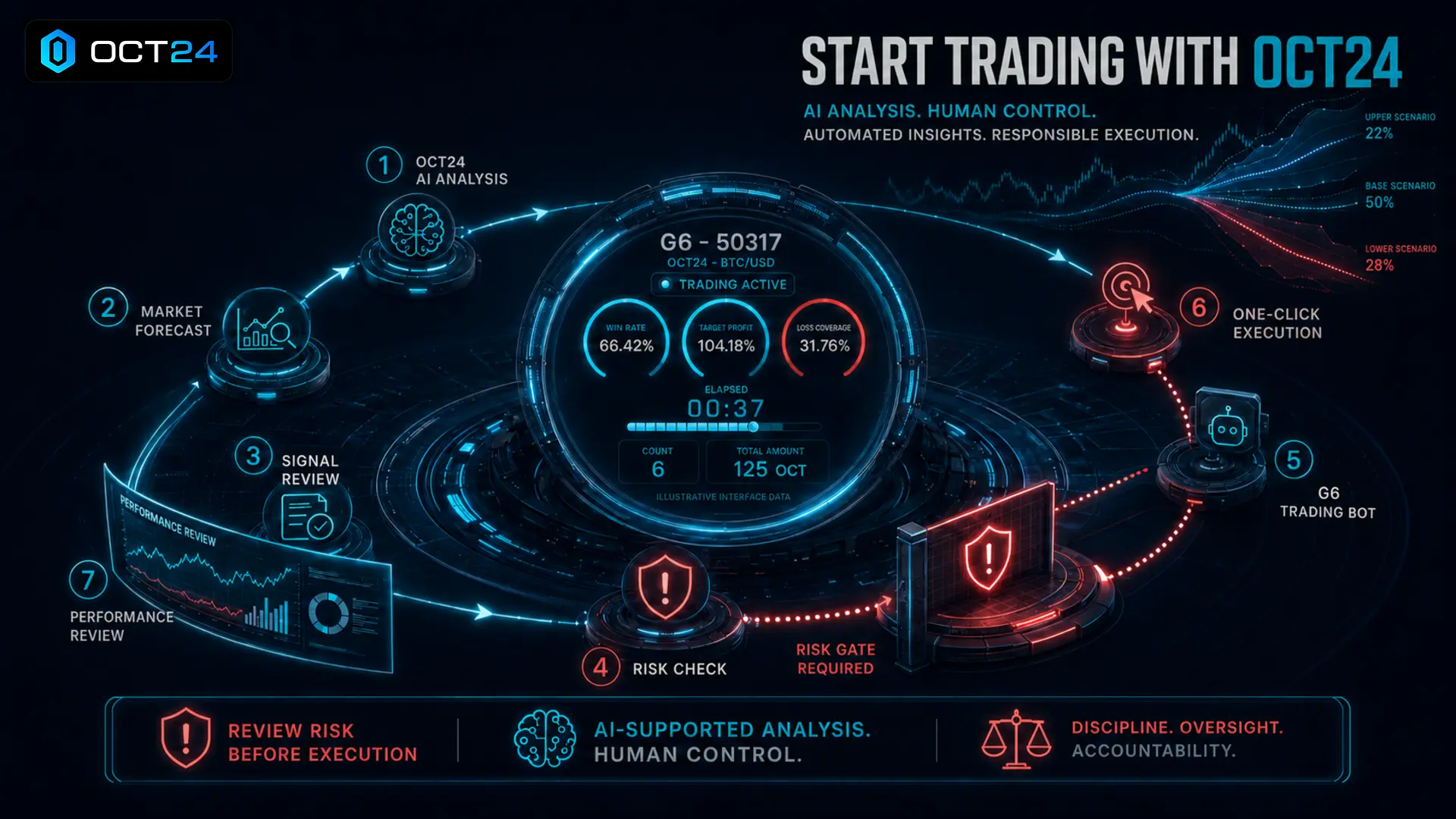
OCT24 can support the action stage of a trading workflow through AI-powered one-click trading and the G6 Trading Bot. Traders should review the available trade/bot metrics before deciding whether to proceed.
Final thoughts
AI trading alerts can help traders stay focused, but only when they are used with discipline. The best alerts do not force action. They help traders know when to review the market, check risk, and decide whether a trade still makes sense.
For OCT24 users, alerts should be part of preparation. OCT24 does not currently provide a full on-platform market-analysis dashboard or detailed asset, entry, and exit information for each presented trade. Users mainly review target profit, loss coverage, and win rate before deciding whether to continue.
That makes personal judgment essential. Traders remain responsible for risk settings, exposure, capital allocation, and execution decisions.
To explore a faster AI-powered one-click trading experience, Start Trading with OCT24.