
AI Trading Strategies for Beginners

AI Trading Strategies help beginners approach active trading with structure instead of guesswork. Rather than reacting emotionally to every price move, a strategy gives traders a clear plan for when to enter, when to exit, and how much risk to take.
For active traders, this matters because short-term markets can move quickly. A day trading strategy or crypto trading strategy needs more than a good idea. It needs rules, timing, risk control, and consistency.
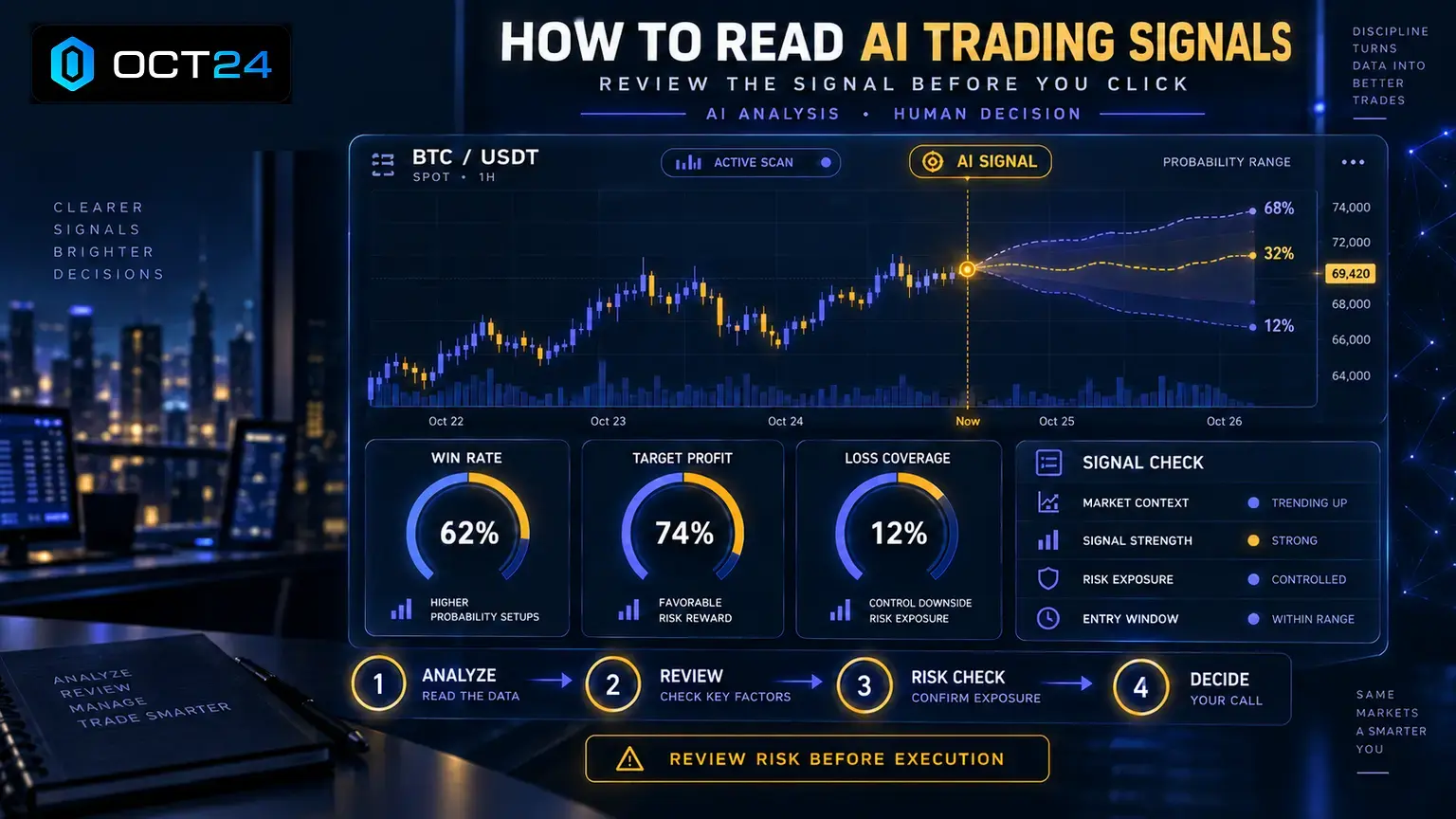
AI can support this process by scanning markets, analyzing conditions, and identifying potential trading opportunities faster than a person could manually. But AI does not remove risk. A good AI trading strategy still needs clear rules and sensible expectations.
What Is an AI Trading Strategy?
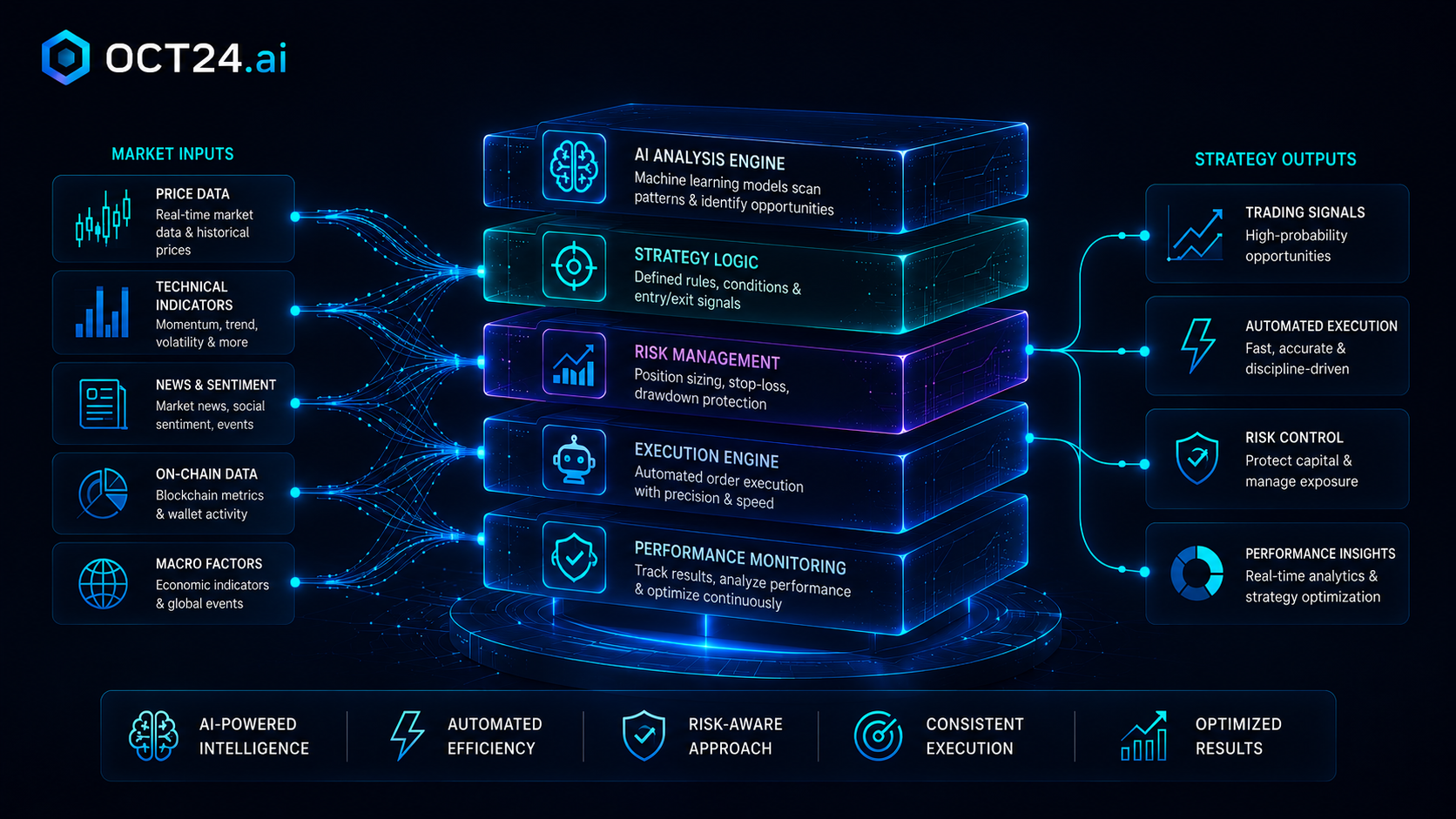
An AI trading strategy is a set of rules that uses artificial intelligence, market data, and trading logic to identify potential trade opportunities.
In active trading, the goal is usually to capture short-term price movements. These may happen within minutes, hours, or a few days. Unlike long-term investing, active trading focuses more on timing, market momentum, volatility, and risk control.
A trading strategy answers questions such as:
- What market conditions should I look for?
- When should I enter a trade?
- Where should I exit if the trade works?
- Where should I exit if the trade fails?
- How much should I risk?
- How often should I trade?
AI can help by analyzing many of these variables in real time. For example, an AI Trading Bot may scan multiple markets, compare technical signals, and identify setups that match predefined criteria.
The strategy is the plan. The AI helps execute or support that plan more efficiently.
Why Beginners Should Start With Simple Strategies
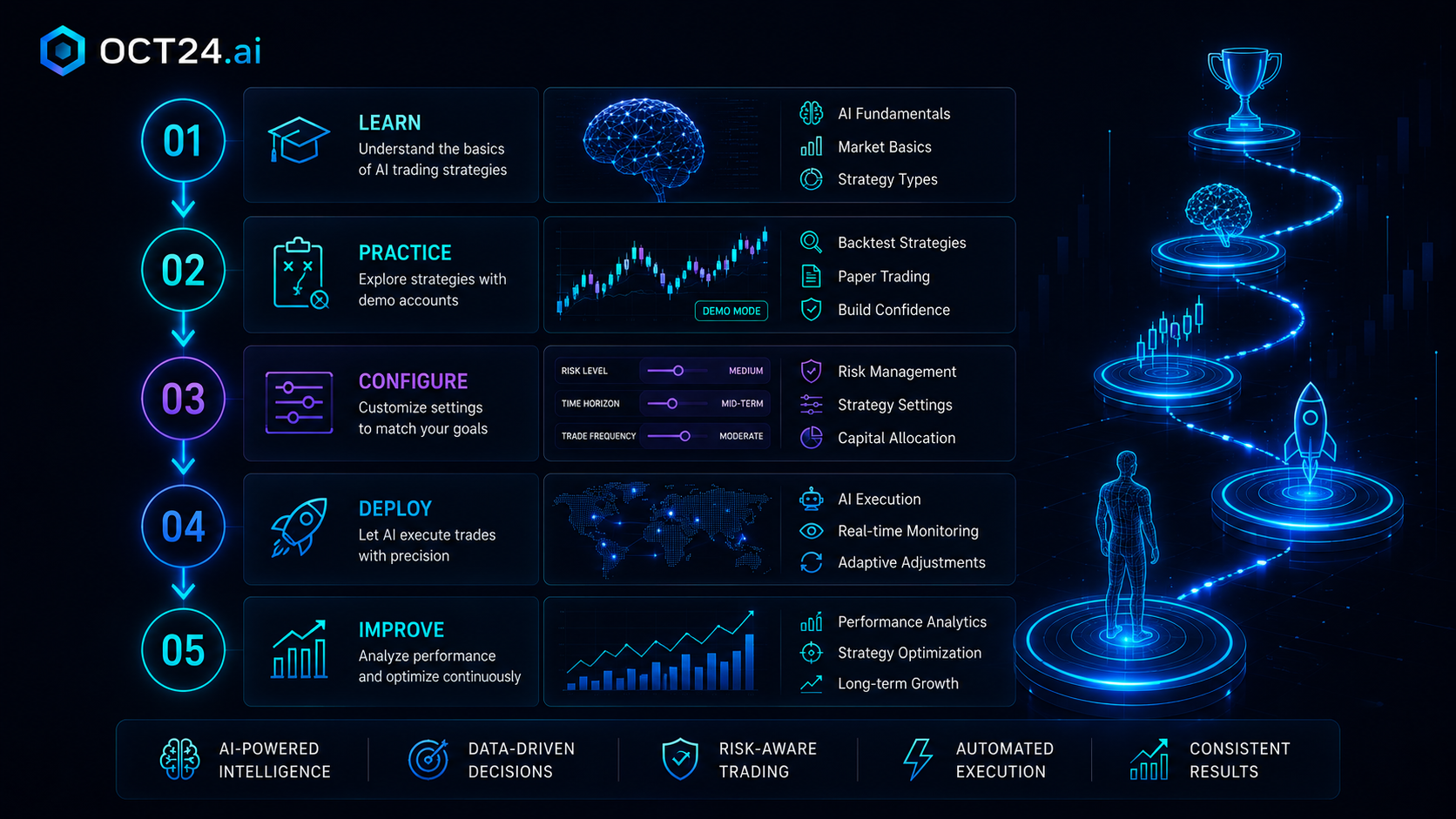
Beginners often make the mistake of trying to trade too many strategies at once. They may watch several indicators, follow multiple markets, and switch methods after every losing trade.
That usually creates confusion.
Simple beginner trading strategies are easier to understand, test, and improve. A basic strategy also helps traders build discipline because there are fewer moving parts.
A beginner should focus on:
- One or two markets
- One clear setup
- Simple entry rules
- Simple exit rules
- Consistent position sizing
- Regular review
Think of it like learning to drive. You do not start by racing on a professional track. You first learn steering, braking, mirrors, and road awareness. Trading works the same way.
AI can simplify the process by reducing the amount of manual analysis required. However, the trader still needs to understand the logic behind the strategy. Read more about AI Trading vs Manual Trading.
A simple AI trading strategy is often better than a complicated one that the trader does not understand.
Beginner-Friendly AI Trading Strategies
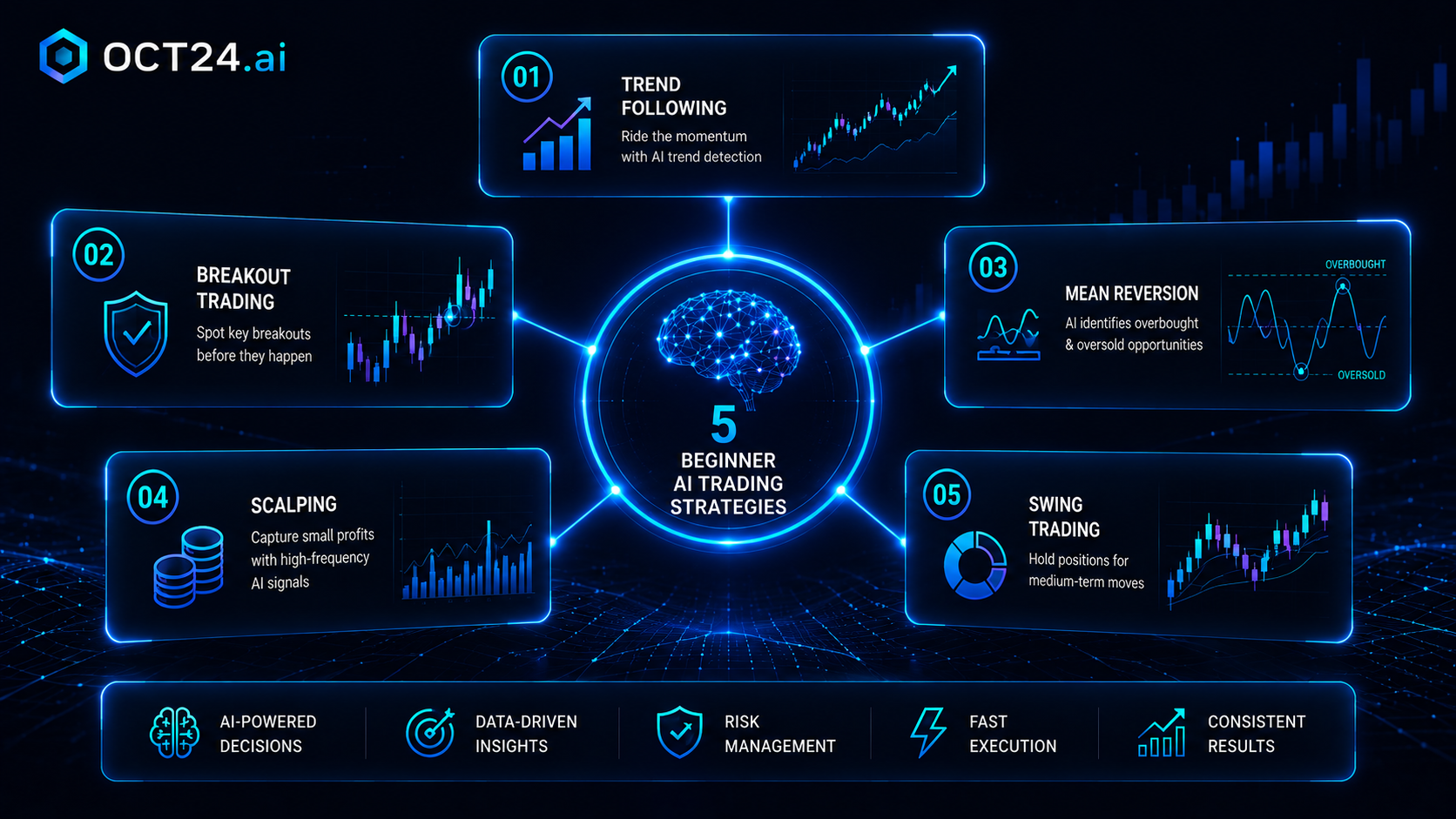
Not every strategy is suitable for beginners. The best starting point is usually a strategy that is easy to explain, easy to monitor, and easy to review.
Below are five beginner-friendly approaches commonly used in active trading.
Trend Following
Trend following is one of the most popular AI trading strategies because it follows a simple idea: trade in the direction of the current trend.
If the market is moving upward, the strategy looks for buying opportunities. If the market is moving downward, it looks for selling opportunities or avoids long trades.
For example, if Bitcoin has been making higher highs and higher lows throughout the day, a trend-following strategy may look for opportunities to enter in the direction of that upward movement.
AI can support trend following by:
- Identifying trend direction
- Measuring trend strength
- Comparing multiple timeframes
- Filtering weak or choppy markets
- Highlighting stronger momentum conditions
This type of strategy can be useful for beginners because it avoids trying to predict reversals. Instead, it focuses on joining an existing move.
Practical takeaway: Trend following works best when markets are clearly moving in one direction. It usually performs poorly in sideways or choppy conditions.
Breakout Trading
Breakout trading focuses on price moving beyond an important level.
A breakout may happen when price moves above resistance or below support. Traders use this as a sign that momentum may be building.
For example, imagine Ethereum has struggled to move above a certain price level several times during the day. If it finally breaks above that level with strong volume, a breakout trader may see that as a potential buying opportunity.
AI can help identify breakouts by analyzing:
- Support and resistance levels
- Volume changes
- Volatility expansion
- Momentum strength
- Historical breakout behavior
This is where understanding How to Read Crypto Charts becomes useful. The trader does not need to analyze every chart manually, but knowing what the AI is detecting helps build confidence.
Practical takeaway: A breakout is stronger when it is supported by volume and momentum. Weak breakouts can quickly fail.
Momentum Trading
Momentum trading focuses on assets that are moving strongly in one direction.
A momentum trader looks for signs that price movement is accelerating. This can happen after news, high volume, technical breakouts, or sudden market interest.
For example, if a crypto asset rises quickly with increasing volume and strong buying pressure, a momentum strategy may look for a short-term continuation.
AI can support momentum trading by scanning markets for:
- Fast price movement
- Rising volume
- Strong directional candles
- Increased volatility
- Unusual market activity
Momentum strategies can be useful for active trading because they focus on short-term opportunities. However, they also require careful risk management because momentum can fade quickly.
Practical takeaway: Momentum trading can move fast. Beginners should avoid chasing trades after the strongest move has already happened.
Support and Resistance
Support and resistance are key price areas where markets often react.
Support is an area where buyers may step in. Resistance is an area where sellers may appear.
A support and resistance strategy looks for potential trades around these levels. For example, if price repeatedly bounces from the same support zone, a trader may look for signs of another bounce. If price breaks through support, the trader may see that as a sign of weakness.
AI can help by:
- Detecting important price levels
- Monitoring how price reacts near those levels
- Comparing historical reactions
- Filtering weak setups
- Tracking volume around key zones
This strategy is useful because it gives beginners clear areas to watch. Instead of trading randomly, the trader focuses on specific price zones.
Practical takeaway: Support and resistance are not exact lines. They are better treated as zones where price may react.
Pullback Trading
Pullback trading means waiting for price to temporarily move against the main trend before entering.
For example, if an asset is trending upward, it may not move up in a straight line. It may rise, pause, pull back, and then continue higher. A pullback trader waits for that temporary dip instead of buying after a large move.
AI can support pullback trading by identifying:
- Trend direction
- Short-term retracements
- Momentum recovery
- Potential re-entry points
- Areas where risk may be more controlled
Pullback trading can be helpful for beginners because it encourages patience. Instead of chasing price, the trader waits for a more structured setup.
Practical takeaway: A pullback is not the same as a reversal. The key is identifying whether the main trend is still intact.
How AI Improves Trading Strategies
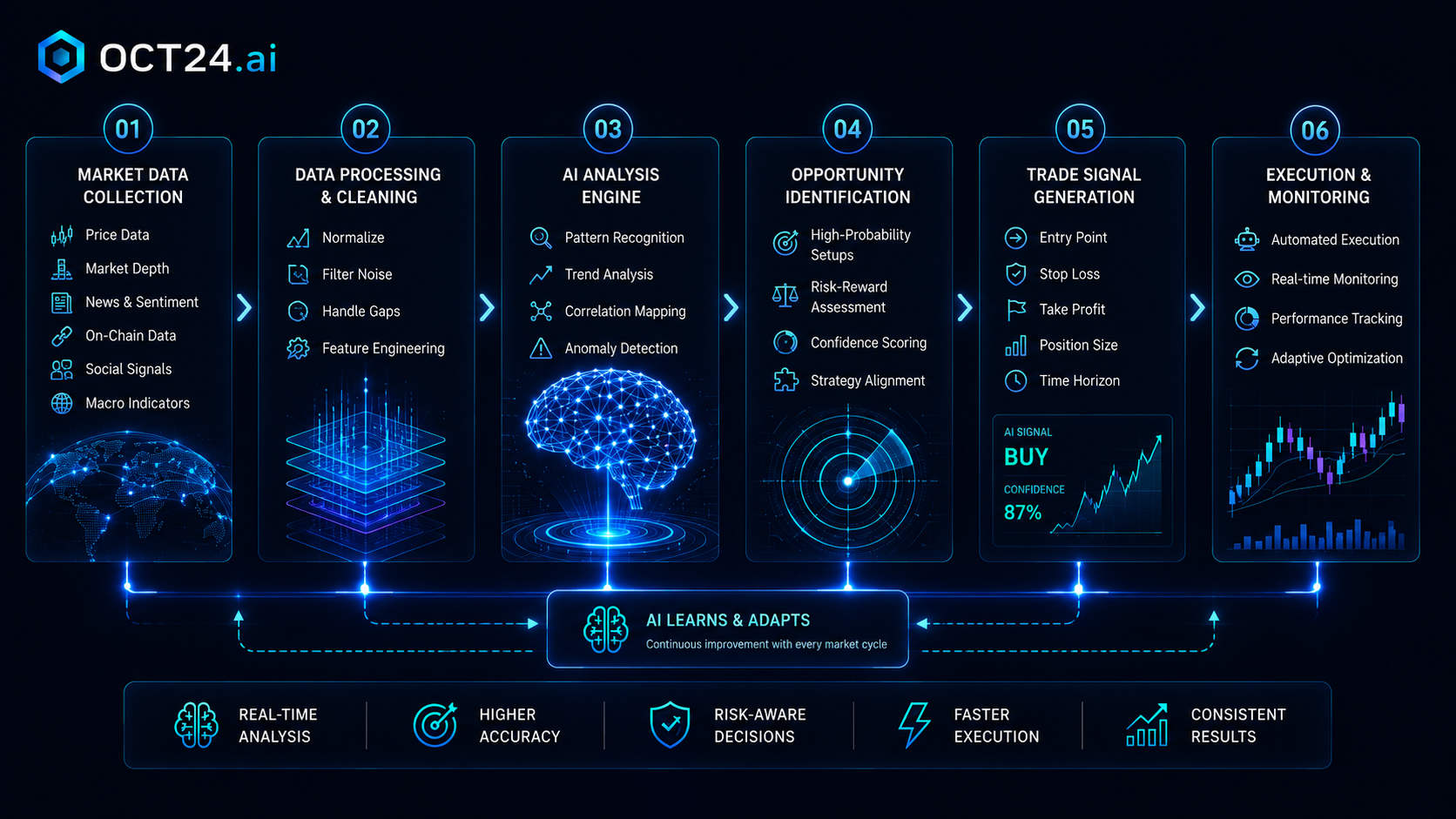
AI improves trading strategies by helping traders process more information faster and more consistently.
A human trader may only be able to monitor a few charts at a time. AI trading software can scan many markets simultaneously and highlight setups that meet specific conditions.
This can help active traders in several ways.
AI Scans Multiple Markets
AI can monitor different assets, timeframes, and conditions at the same time. This is especially helpful for crypto markets, where opportunities can appear at any hour.
AI Identifies Trading Opportunities
Instead of manually searching for every setup, traders can use AI to detect conditions that match their chosen strategy.
For example, if the strategy is breakout trading, AI can monitor resistance levels, volume, and volatility to identify potential breakout conditions.
AI Reduces Manual Chart Analysis
AI does not remove the need to understand the market, but it can reduce repetitive chart scanning. This is one of the key Benefits of AI Trading for active traders.
AI Supports Faster Decisions
Short-term opportunities can disappear quickly. AI can analyze market conditions and present information faster than manual analysis.
AI Improves Consistency
Many beginners struggle because they trade differently from one day to the next. AI can help apply rules more consistently, especially when combined with Automated Trading.
Important: AI can identify opportunities, but it cannot guarantee profitable trades. Markets remain uncertain, and risk management is always required.
Common Mistakes Beginners Make
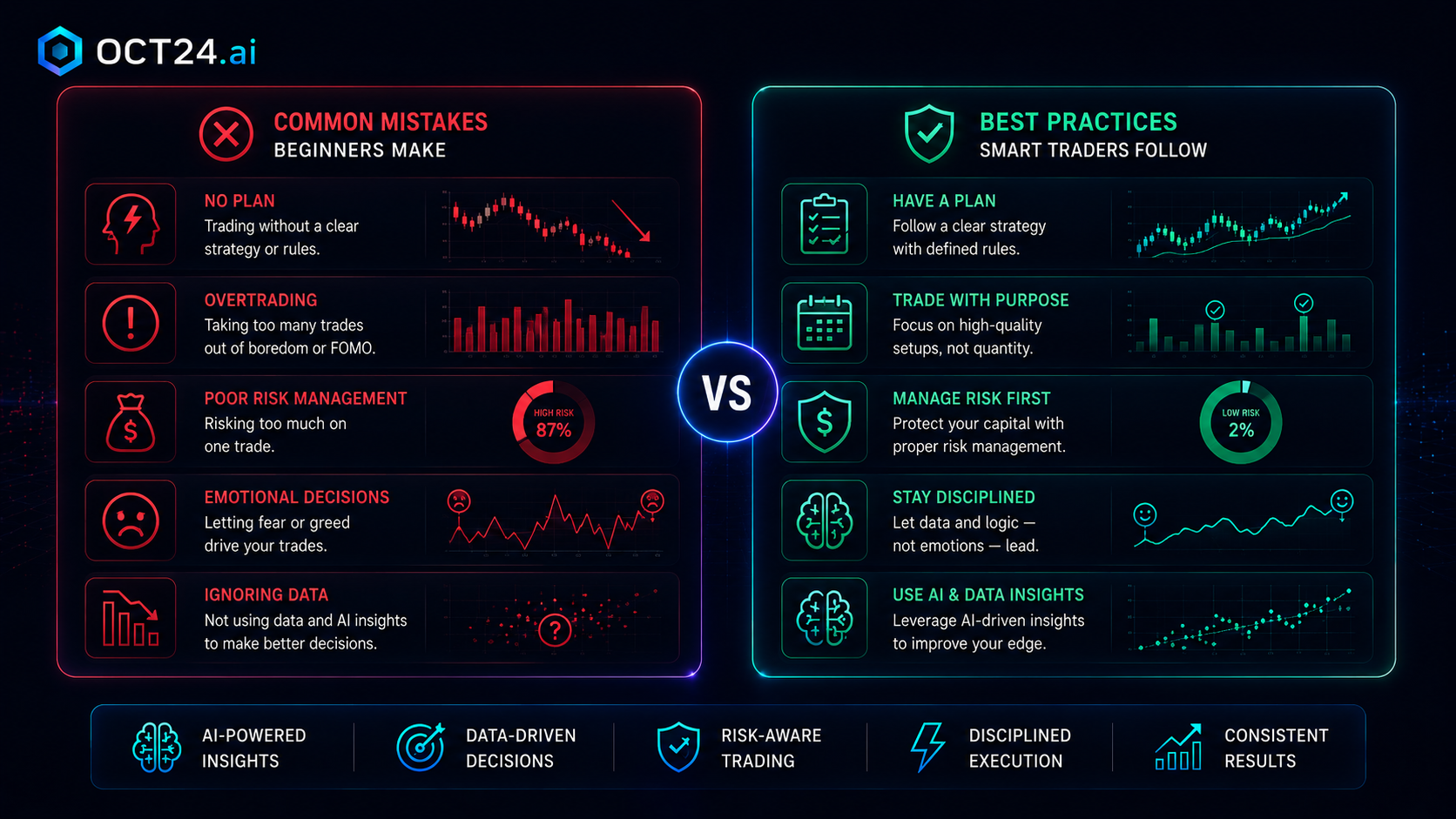
Beginner traders often lose money not because they lack information, but because they lack structure.
Here are common mistakes to avoid.
Overtrading
Overtrading happens when a trader takes too many trades, often out of boredom or impatience.
A good strategy should tell you when not to trade.
FOMO
Fear of missing out causes traders to enter late after a big move has already happened.
AI can help reduce FOMO by focusing on predefined conditions instead of emotional reactions.
Poor Risk Management
A strategy without risk control is incomplete.
Every trade should have a clear risk limit. This includes stop losses, position size, and maximum exposure.
For deeper learning, beginners should study Trading Bot Risk Management and broader Risk Management Strategies before increasing trade size.
Ignoring Stop Losses
Moving or ignoring a stop loss can turn a small loss into a large one.
Stop losses are not signs of failure. They are part of disciplined trading.
Switching Strategies Too Often
No strategy works perfectly all the time. Beginners often abandon a strategy after a few losses, then jump to another method without properly testing it.
Consistency comes from following a plan long enough to evaluate it properly.
Building Your First Trading Plan
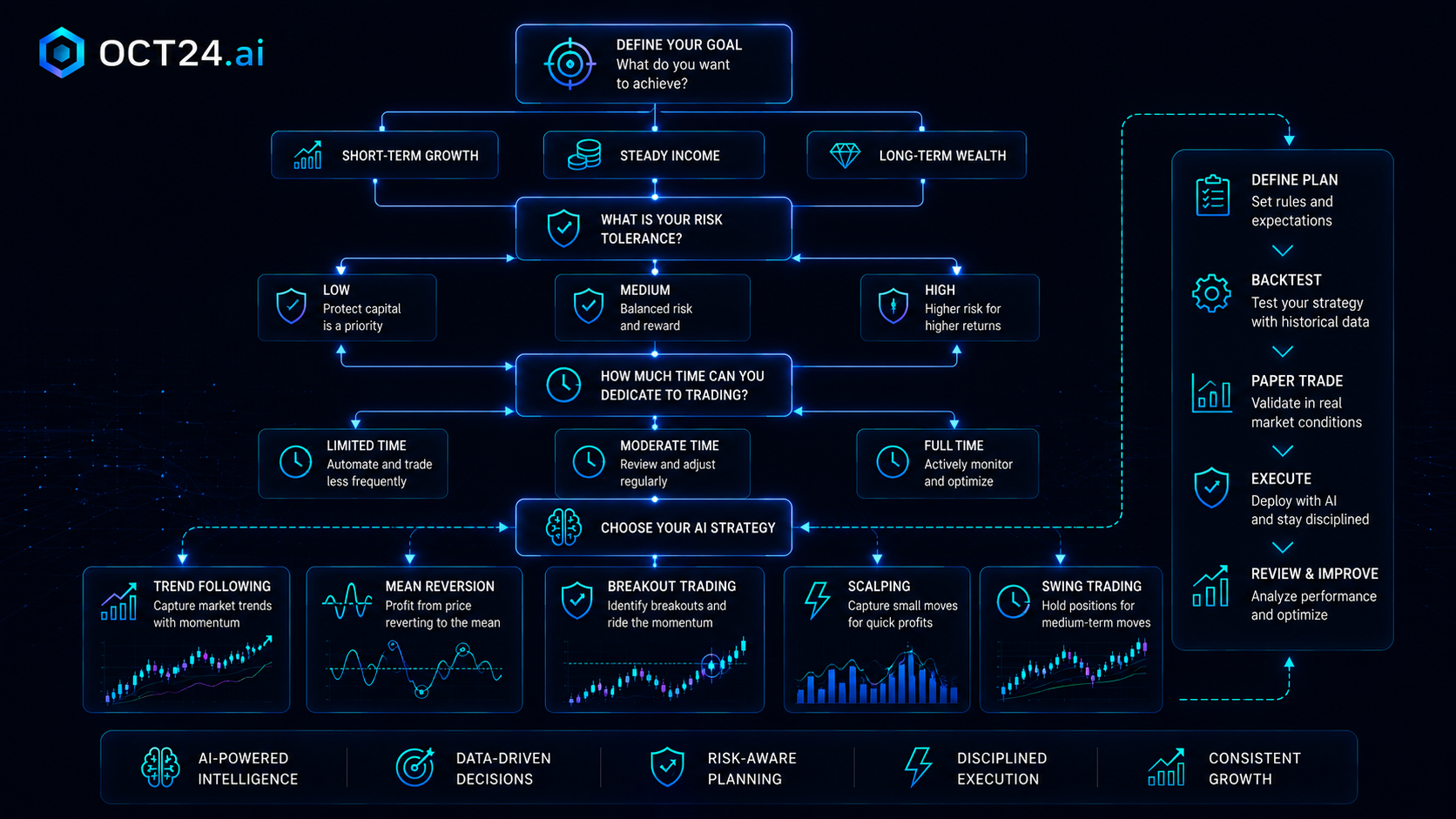
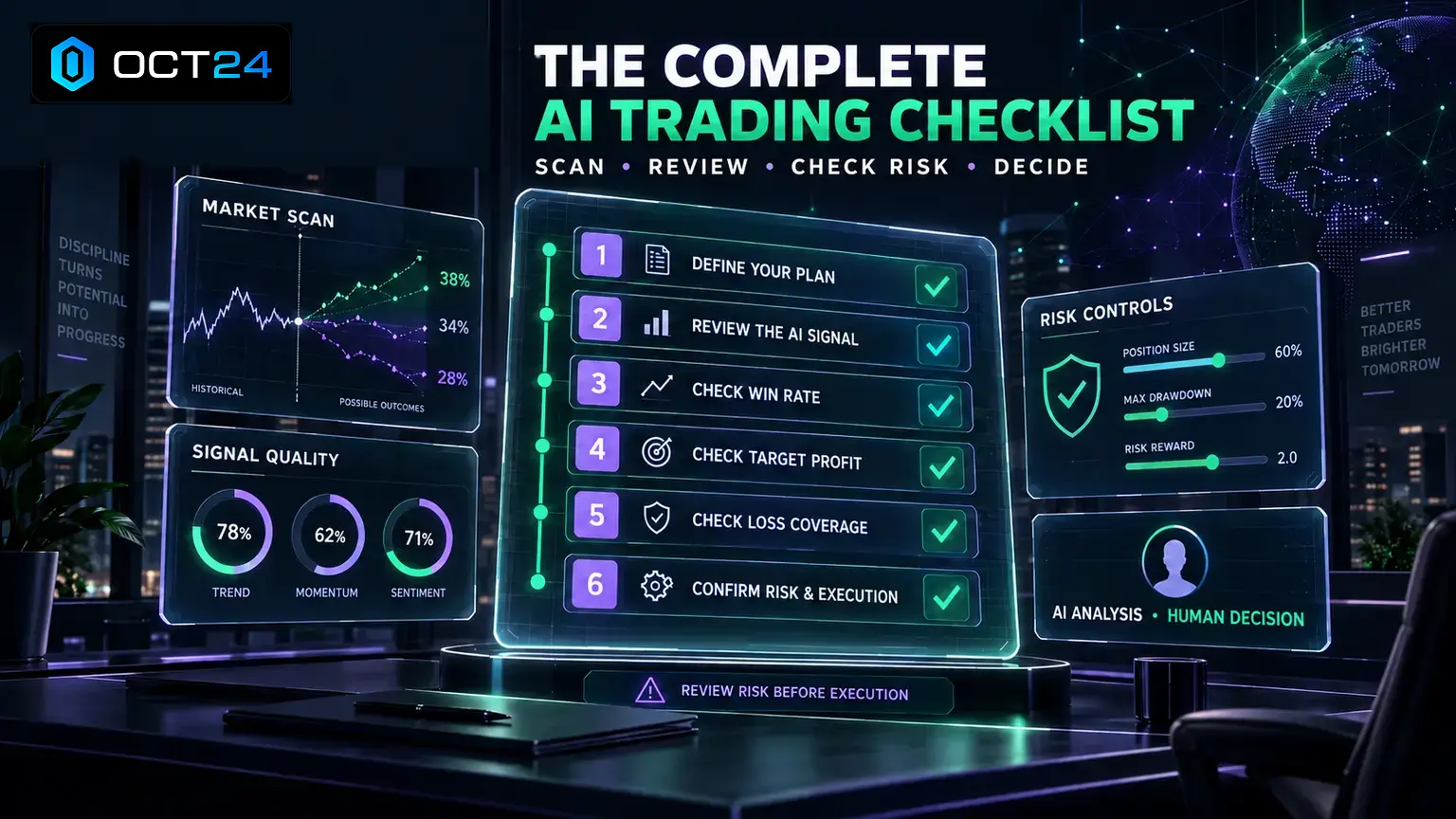
A trading plan turns a strategy into a repeatable process.
Here is a simple step-by-step framework.
Step 1: Choose One Strategy
Start with one strategy, such as trend following or breakout trading.
Avoid combining too many methods at once.
Step 2: Define Entry Rules
Write down what must happen before you enter a trade.
For example:
- Price breaks above resistance
- Volume increases
- Momentum confirms the move
- Risk-reward ratio is acceptable
Step 3: Define Exit Rules
Decide when to take profit and when to exit if the trade fails.
Your exit plan should be clear before entering.
Step 4: Set Stop Losses
A stop loss defines the maximum acceptable loss on a trade.
This helps prevent emotional decision-making.
Step 5: Use Position Sizing
Not every trade should use the same amount of capital.
Position Sizing Controls help traders avoid risking too much on one setup.
Step 6: Manage Portfolio Exposure
If several trades are highly correlated, risk can build quickly.
Portfolio Diversification Tools can help traders avoid concentrating too much exposure in similar assets.
Step 7: Create a Daily Routine
A simple active trading routine may include:
- Review market conditions
- Check open positions
- Watch for strategy setups
- Review risk exposure
- Log completed trades
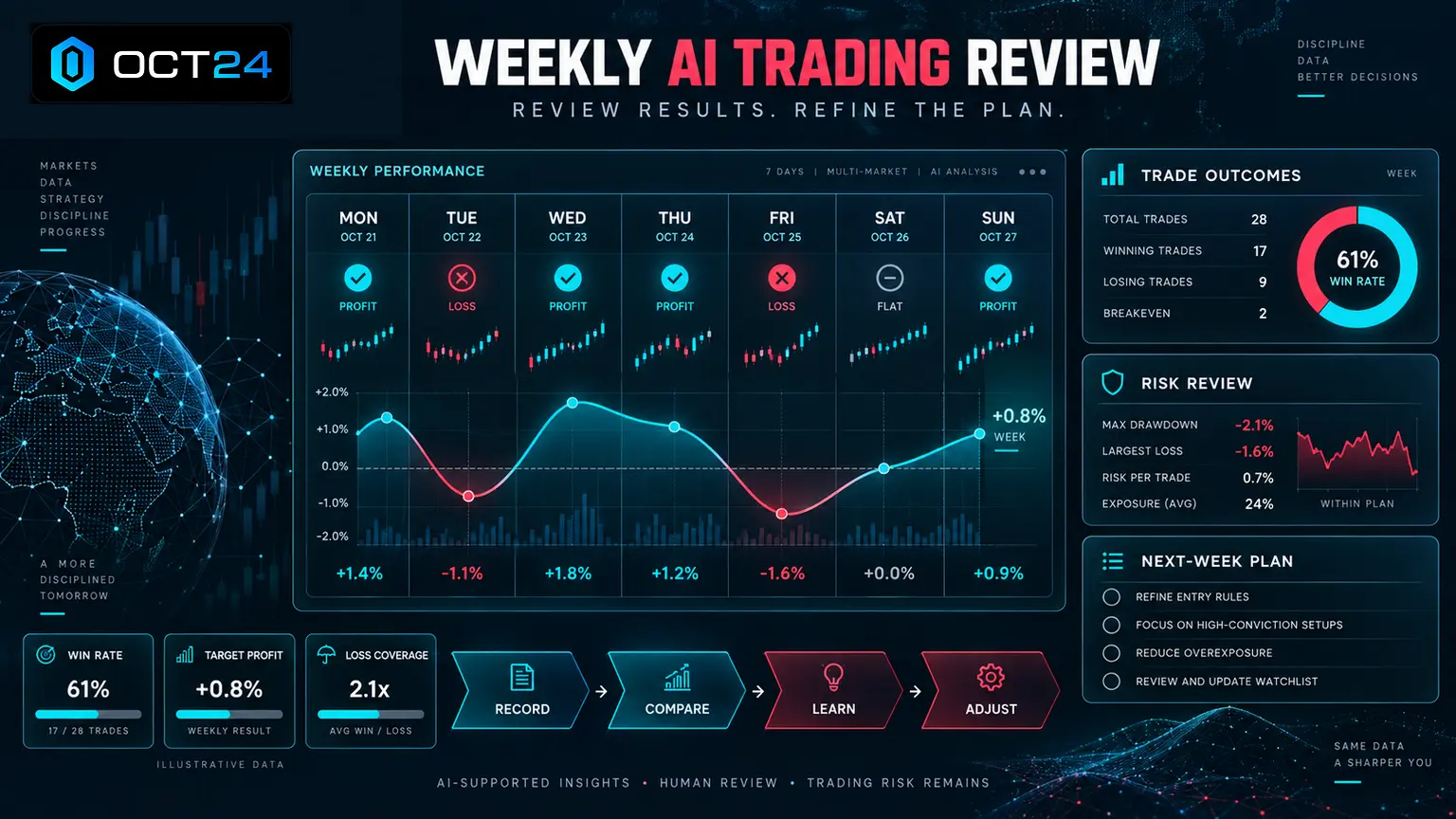
Step 8: Review Results
After each trading session, review what worked and what did not.
A trading journal helps identify patterns in both strategy performance and trader behavior.
This process also connects closely with Algorithmic Trading, where rules are tested, refined, and applied consistently.
How OCT24 Uses AI Trading Strategies
OCT24 is designed to make active trading simpler by combining AI-powered analysis, automation, and one-click execution.
The G6 Trading Bot continuously scans market conditions, identifies potential trading opportunities, and automates the analysis that traders would normally do manually. Instead of spending hours watching charts, users can review opportunities identified by the bot and execute trades with a single click.
The platform supports active traders through:
- AI-powered market analysis
- Real-time market monitoring
- Strategy-based opportunity detection
- Built-in risk management tools
- One-click trade execution
- Portfolio management support
This does not mean traders should ignore risk or trade without understanding the market. AI can improve speed, consistency, and efficiency, but all trading involves risk.
For beginners, the value of OCT24 is that it helps reduce the manual workload while still encouraging structured trading decisions.
To learn more about the platform and its approach to AI-powered active trading, visit About OCT24.
Frequently Asked Questions
What are AI trading strategies?
AI trading strategies are rule-based trading methods that use artificial intelligence and market data to identify potential trading opportunities.
Are AI trading strategies good for beginners?
Yes, if beginners start with simple strategies and use proper risk management. AI can help reduce manual analysis, but it should not replace learning.
What is the best AI trading strategy for beginners?
Trend following and support and resistance strategies are often easier for beginners to understand because they are based on clear market behavior.
Can AI trading strategies be used for day trading?
Yes. AI can support a day trading strategy by scanning markets, analyzing short-term signals, and identifying potential intraday opportunities.
Can AI trading strategies be used for crypto?
Yes. A crypto trading strategy can benefit from AI because crypto markets operate 24/7 and often move quickly.
Does AI guarantee profitable trades?
No. AI can help identify opportunities and improve consistency, but it cannot eliminate market risk or guarantee profits.
How much should beginners risk per trade?
Beginners should risk only a small percentage of their trading capital per trade. The exact amount depends on experience, account size, and risk tolerance.
Should beginners use multiple strategies?
Usually, no. Beginners should start with one strategy, learn it properly, and review results before adding more complexity.
Final Summary
AI Trading Strategies can help beginners approach active trading with more structure, consistency, and discipline.
The best beginner strategies are usually simple. Trend following, breakout trading, momentum trading, support and resistance, and pullback trading can all help traders understand short-term market opportunities.
AI supports these strategies by scanning multiple markets, analyzing conditions, reducing manual chart work, and helping traders make faster decisions. However, AI does not remove risk. Every strategy still needs clear entry rules, exit rules, stop losses, position sizing, and regular review.
For beginners, the goal is not to trade more often. The goal is to trade more consistently.
OCT24 helps simplify this process by using the G6 Trading Bot to analyze market conditions, identify potential opportunities, and support one-click trade execution.

If you are ready to explore AI-powered active trading, Start Trading with OCT24.