
How AI Handles Market Volatility
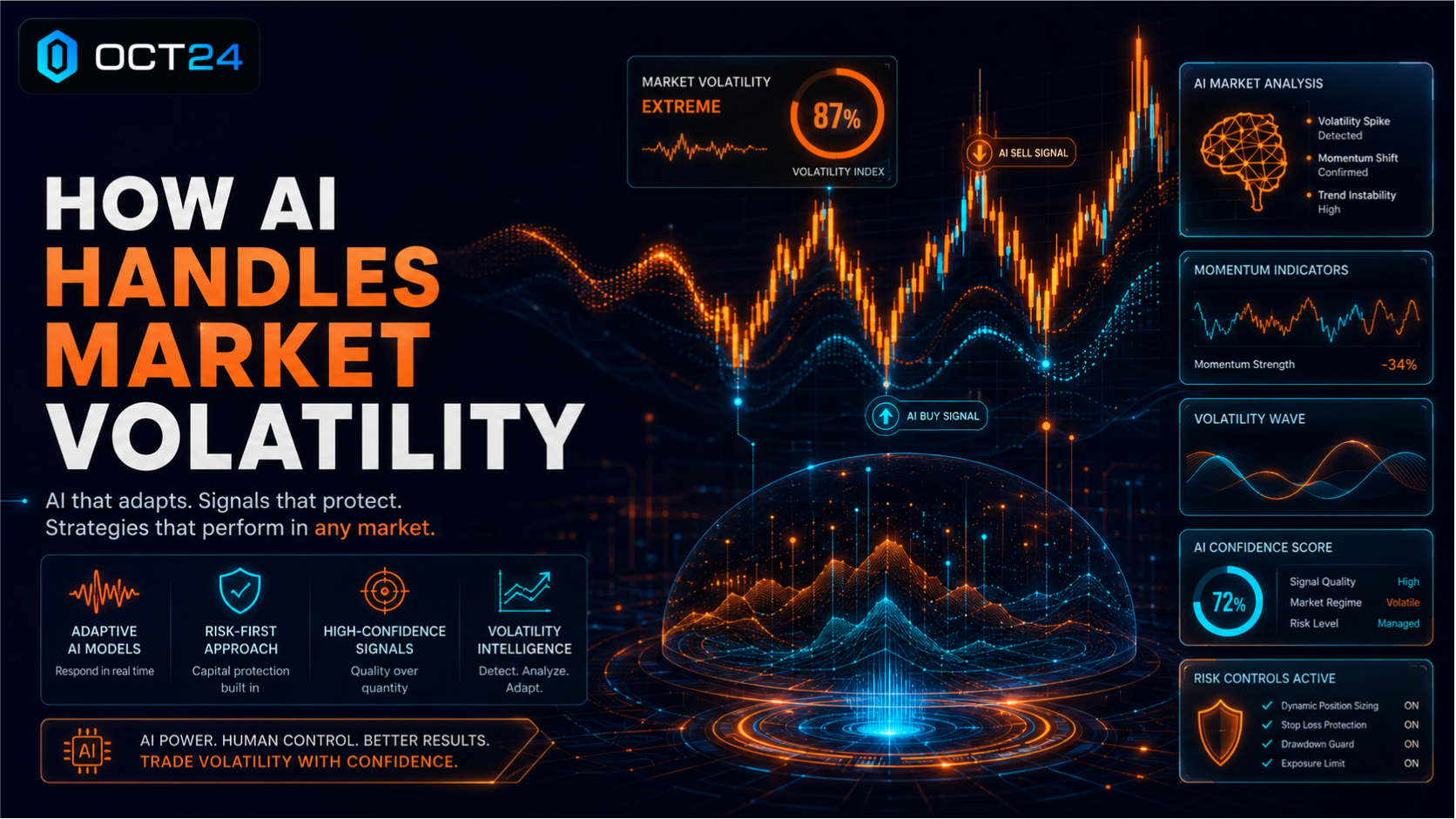
AI Market Volatility is about how artificial intelligence analyzes fast-moving markets, changing prices, and sudden shifts in trading activity.
Volatile markets can move quickly. Prices may rise or fall sharply in a short time. This can make it harder for traders to stay calm, read signals clearly, and manage risk.
AI can help by scanning market data faster than a human trader. It can track price movement, volume, momentum, and unusual activity across active markets.
But AI does not predict every move perfectly.
It does not remove trading risk.
It does not guarantee results.
OCT24 performs much of the market analysis for traders by scanning market conditions, identifying potential opportunities, and presenting AI-supported trading signals in a structured workflow. This can help traders review volatile markets more clearly.
However, traders still need to use proper risk settings, understand their exposure, manage capital responsibly, and make informed decisions.
In AI Trading, speed can help. But speed only becomes useful when it is paired with structure, risk controls, and realistic expectations.
What Is Market Volatility?
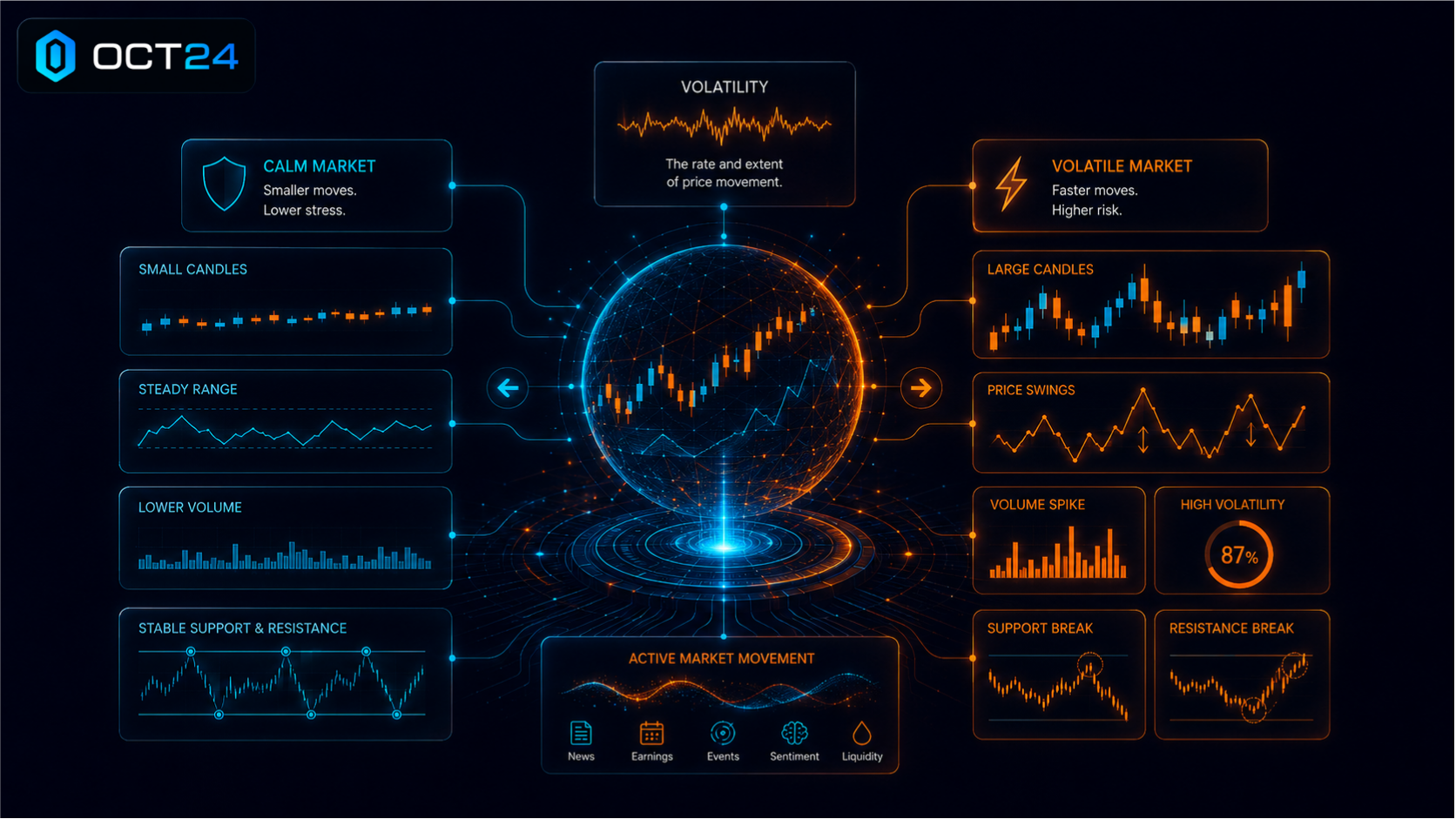
Market volatility means how much and how quickly prices move.
A calm market may move slowly. Prices may rise or fall in smaller steps. Traders usually have more time to review charts, compare signals, and make decisions.
A volatile market is different.
Prices may move sharply in minutes. A trade setup may appear quickly. A signal may change quickly. A stop-loss may be reached faster than expected.
Volatility can create opportunity because price movement may open new trading setups.
But it also creates risk because the market can move against a trader just as quickly.
Crypto markets can be especially volatile. They trade 24/7, react quickly to news, and often experience sharp changes in liquidity, sentiment, and momentum.
This is why active markets require faster analysis and stronger risk controls.
For example, a crypto asset may move up 5% in a short period. That may look like a strong opportunity. But if the move is unstable, price may reverse just as quickly.
Traders can often see Market Volatility through charts.
When learning How to Read Crypto Charts, traders may notice volatility through:
- Large candles
- Long wicks
- Fast price swings
- Sudden volume spikes
- Broken support or resistance levels
- Sharp reversals after breakouts
Volatility is not always bad.
It simply means the market is moving more aggressively.
The key is knowing how to read it and how to manage the risk that comes with it.
Why Volatile Markets Are Difficult for Traders
Volatile markets can be difficult because they move quickly.
A trader may see a setup forming, but by the time they review the chart, the price may already have changed. This can create pressure to act quickly.
That pressure can lead to mistakes.
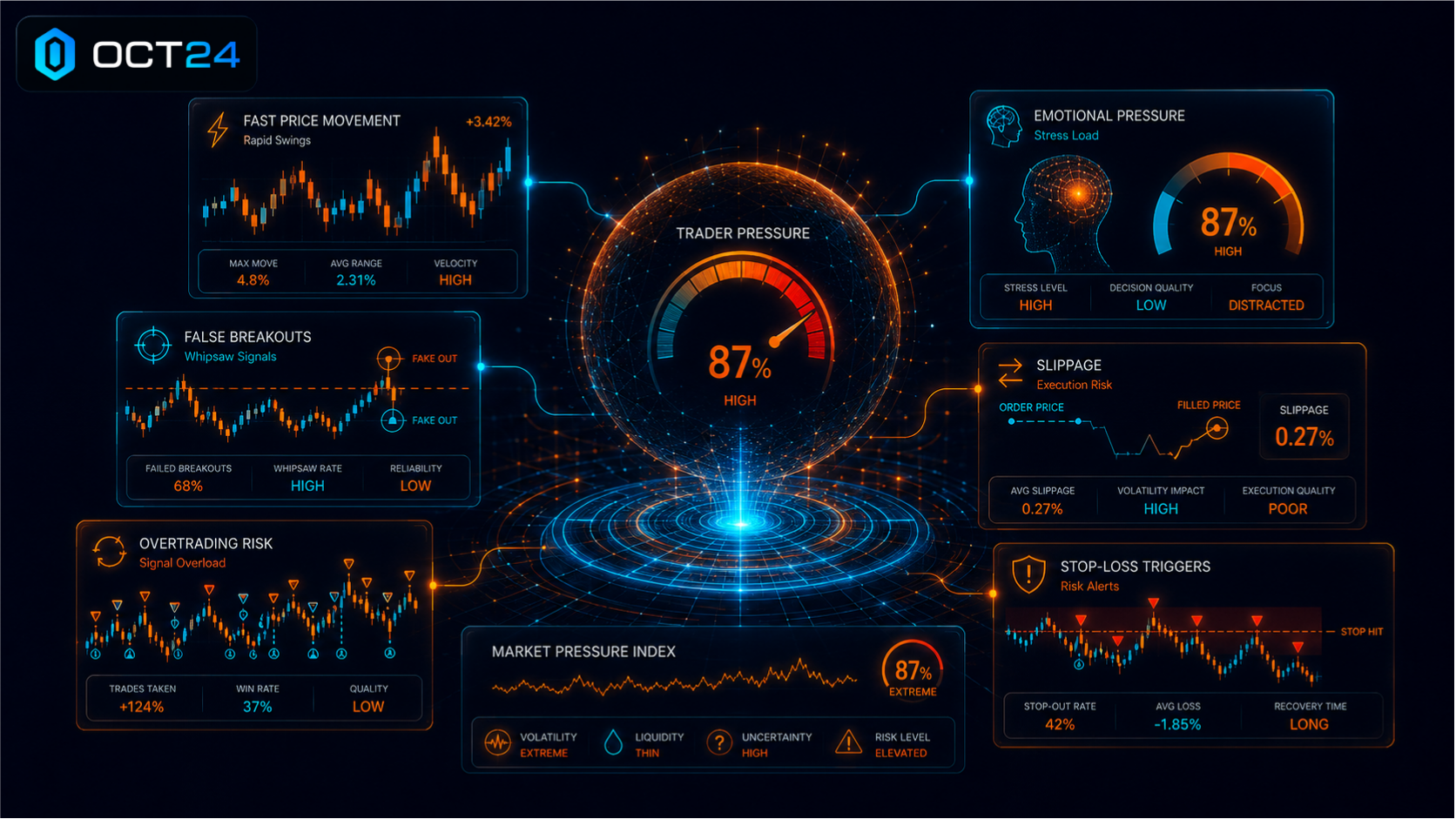
During volatile markets, traders may deal with:
- Fast price moves
- Signals that change quickly
- False breakouts
- Stronger emotions
- Stop-losses being triggered more easily
- Wider spreads
- More slippage
- Overtrading
- Higher trading risk
False breakouts are especially common.
A false breakout happens when price moves above or below an important level, but then quickly reverses. A trader may enter too early and get caught on the wrong side of the move.
Emotions can also become stronger during volatility.
Traders may feel fear when price drops quickly. They may feel FOMO when price rises quickly. They may chase trades because they do not want to miss the move.
These are common Common AI Trading Mistakes.
Volatility can make traders:
- Enter too late
- Exit too early
- Increase position size emotionally
- Ignore risk controls
- Follow signals without review
- Trade too often
This is why Trading Bot Risk Management becomes even more important during volatile markets.
A bot may scan and react faster than a human trader. But if the bot settings are too aggressive, volatility can increase risk quickly.
For example, a bot may identify several signals during a fast-moving market. If there are no limits on position size, trade frequency, or drawdown, the trader may become overexposed before they realize it.
Volatile markets reward structure.
They punish rushed decisions.
AI can help organize the information, but traders still need risk controls.
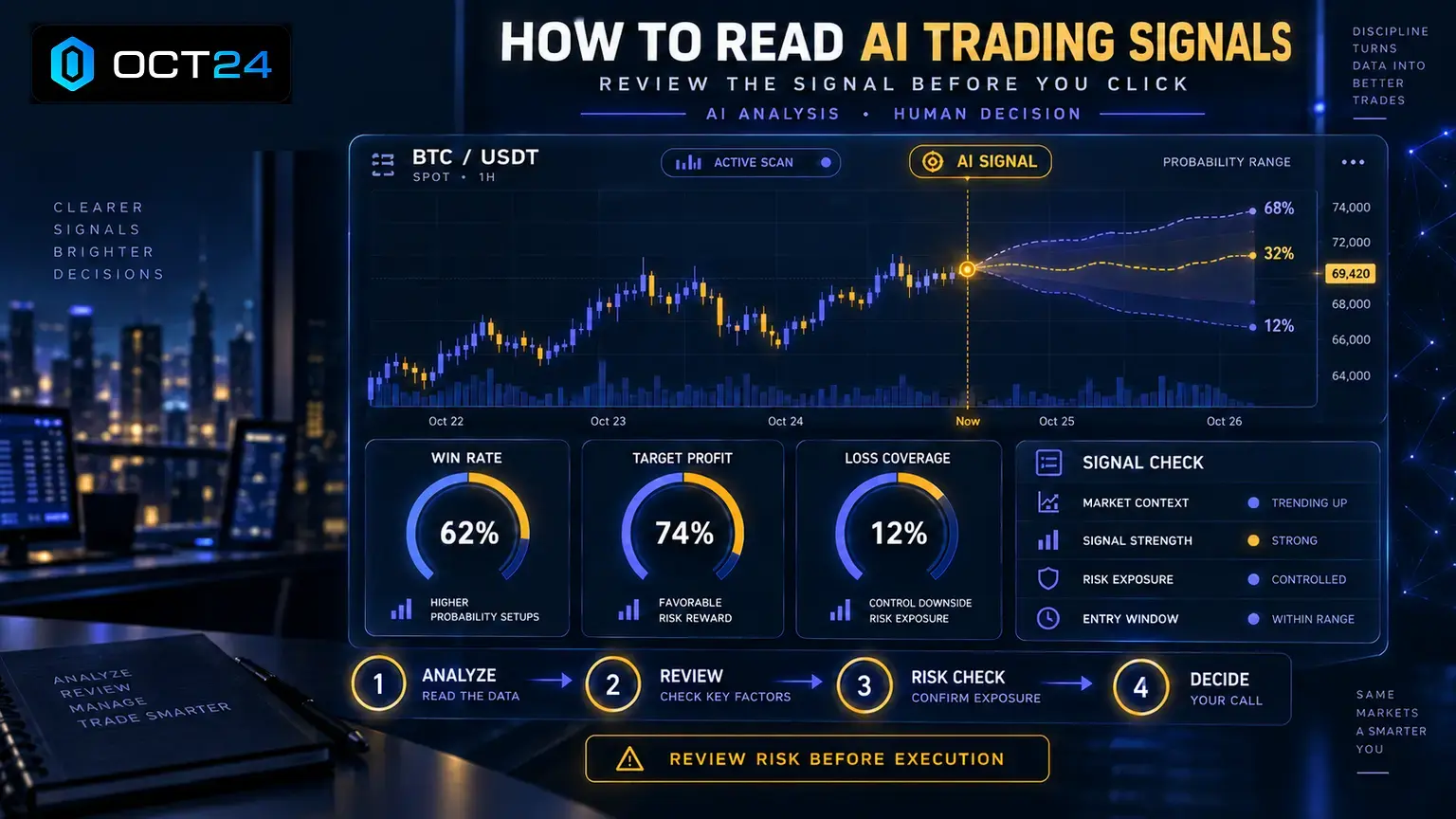
How AI Reads Fast Market Conditions
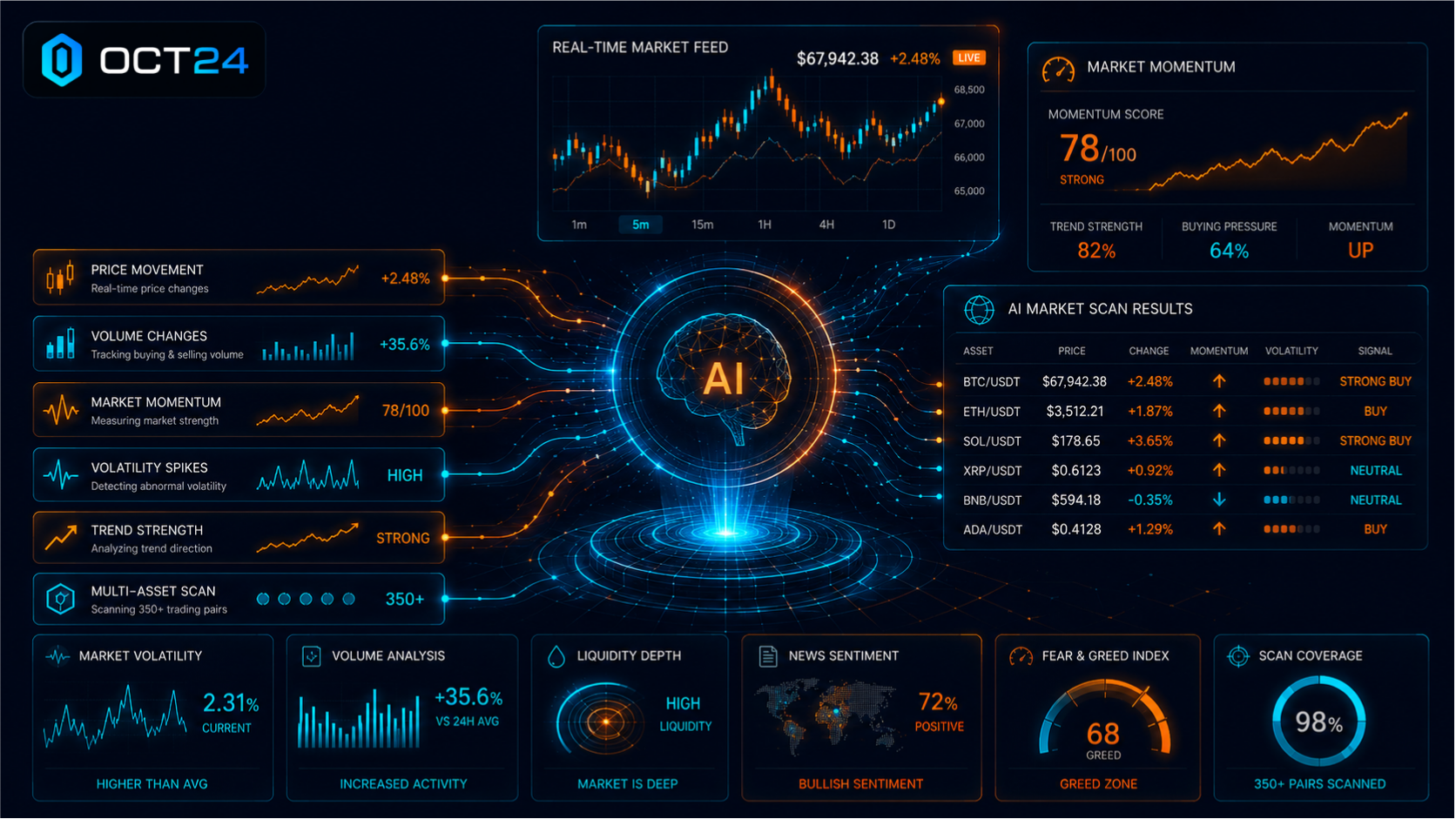
AI can analyze fast market conditions by processing many data points at once.
A human trader may review one chart, one timeframe, or one asset at a time. AI can scan more information much faster.
During active markets, AI may review:
- Real-time price movement
- Volume changes
- Market momentum
- Volatility spikes
- Trend strength
- Support and resistance behavior
- Multiple timeframes
- Multiple assets at once
This matters because volatility is not only about price moving quickly.
It is also about how price moves.
For example, a sharp price increase with strong volume may show stronger momentum. A sharp price increase with weak volume may be less reliable.
AI can compare these signals faster than a trader manually switching between charts.
This connects naturally to How AI Identifies Trading Opportunities. AI can scan active markets for possible setups, unusual movement, and changing conditions.
It can also support How AI Uses Technical Analysis by reviewing indicators, price action, trend behavior, volume, and volatility together.
Instead of looking at one signal alone, AI can compare several inputs at the same time.
For example, AI may review:
- Is price breaking above resistance?
- Is volume increasing?
- Is momentum strengthening?
- Is volatility unusually high?
- Is the trend still intact?
- Are other related assets moving the same way?
When these inputs align, AI may create or support AI Trading Signals.
A trading signal is not a command to trade.
It is a structured way to organize market information.
OCT24 can help traders review fast-moving conditions through AI-supported analysis. Instead of trying to manually watch every chart, traders can use OCT24 to scan active markets, identify potential opportunities, and review signals in a more structured way.
This can help reduce confusion during volatile markets.
But the trader still needs to review risk.
AI can highlight what is happening. It cannot make every decision risk-free.
AI Trading During Volatility: What It Can and Cannot Do
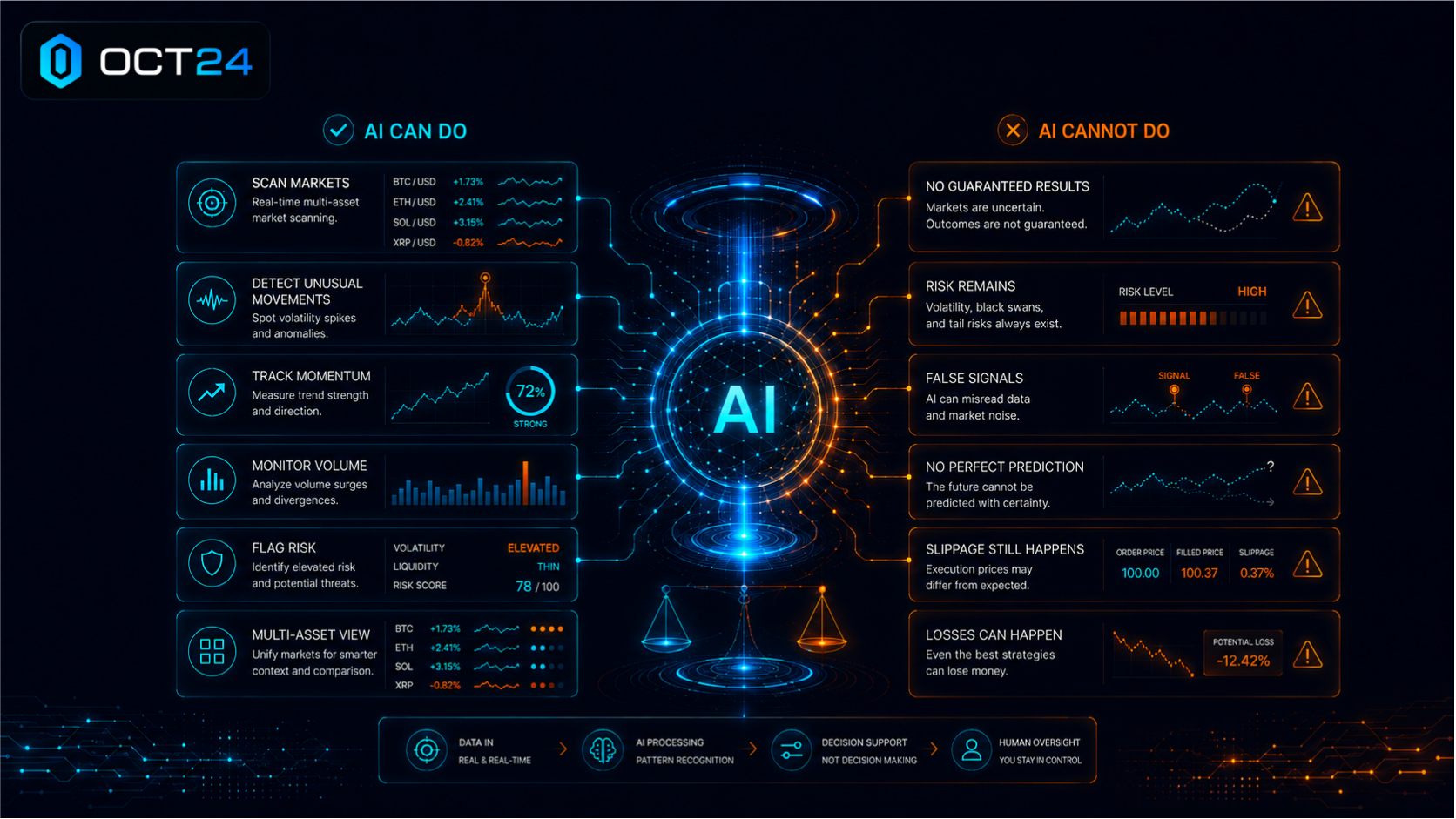
AI trading during volatility can be useful, but it has limits.
AI can help traders process information faster. It can scan markets, compare signals, and detect unusual movement.
But AI cannot guarantee that a trade will work.
This is important to understand.
AI can help with:
- Scanning markets quickly
- Detecting unusual price movement·
- Tracking momentum and volume changes
- Comparing multiple assets
- Identifying possible setups
- Organizing market data into signals
- Reducing emotional decision-making
These are useful advantages in volatile markets.
When price moves quickly, traders may struggle to stay calm. AI can help by organizing the data and showing what the market is doing.
But AI cannot do everything.
AI cannot:
- Guarantee profitable trades
- Predict every market move
- Remove slippage
- Eliminate false signals
- Make poor settings safe
- Replace risk management
- Know a trader’s personal risk tolerance
This is especially important when using AI Trading Bots.
Bots can react quickly. They can follow rules consistently. They can help traders manage active markets more efficiently.
But fast execution is not the same as safe execution.
In Automated Trading, settings matter. If the bot is allowed to trade too often, use too much risk, or continue during poor conditions, losses can build quickly.
This is where AI Trading vs Manual Trading becomes useful to understand.
AI can help with speed, scanning, and consistency. Human traders still need judgment, risk awareness, and realistic expectations.
OCT24 performs market analysis by scanning active markets, identifying potential opportunities, and presenting AI-supported trading signals. But traders still need to review risk settings and decide whether a trade fits their plan.
AI is a tool for better structure.
It is not a guarantee.
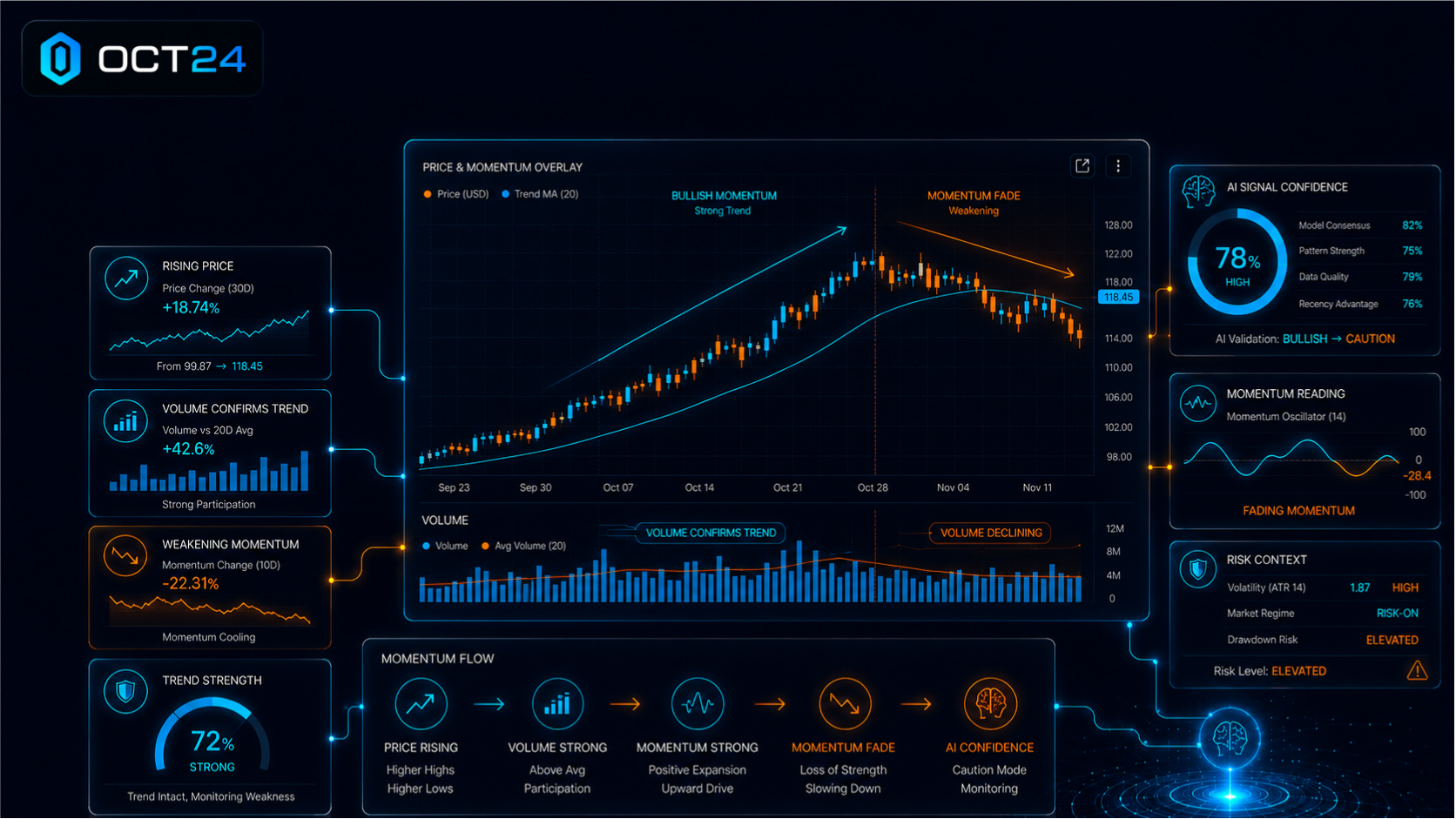
Market Momentum: How AI Tracks Strength and Weakness
Market momentum means the strength behind a price move.
If price is rising quickly and volume is also increasing, momentum may be strong.
If price is rising but volume is falling, the move may be weaker than it looks.
This is important during volatile markets because price can move fast without staying strong.
A market may spike upward, attract attention, and then reverse. Traders who chase the move too late may enter just before momentum fades.
AI can help by comparing price movement, volume, volatility, and trend direction.
It may look at questions such as:
- Is price moving with strong volume?
- Is momentum increasing or fading?
- Is the move aligned with the larger trend?
- Is volatility rising too quickly?
- Is price near support or resistance?
- Are similar assets moving in the same direction?
Momentum can change quickly in active markets.
A strong move can weaken. A weak move can suddenly gain strength. A breakout can turn into a reversal.
This is why traders should not rely on one signal alone.
The Best Indicators for AI Trading may help AI evaluate momentum and trend behavior. These may include moving averages, RSI, MACD, volume indicators, and volatility tools.
But indicators should still be used together with market context.
For example, RSI may show strong momentum, but if price is already extended and volume is falling, the move may carry more risk.
OCT24 can help organize momentum, volatility, and signal information in a more structured workflow. This can make it easier for traders to understand what the market is doing before making a decision.
Understanding volatility and momentum is only the first step.
Traders also need to think about signal quality, trading bot behavior, risk controls, and whether a setup fits their strategy. In active markets, AI can help traders move faster, but responsible decisions still depend on structure, discipline, and clear risk management.
How AI Helps Traders Respond to Volatile Markets
AI can help traders respond to volatile markets by scanning data faster than a person could do manually.
When markets move quickly, traders may struggle to keep up. Prices can change in seconds. Signals can appear and disappear. Several assets may move at the same time.
AI can help by organizing this information into a clearer workflow.
During volatile markets, AI can support traders by:
- Scanning markets faster
- Detecting signals sooner
- Monitoring multiple assets at once
- Identifying unusual price movement
- Comparing volatility across markets
- Reducing emotional reactions
- Organizing market data into clearer signals
These are some of the main Benefits of AI Trading.
A human trader may only be able to focus on a few charts at once. AI can scan many markets, timeframes, and signals much faster.
This does not mean traders should rush.
AI can help traders respond with more structure, but it should not push them into emotional or rushed decisions. Fast markets require clearer thinking, not just faster action.
This is why the quality of the AI Trading Software matters. A strong platform should not only show signals. It should also help traders understand risk, market context, and whether the setup fits their strategy.
OCT24 can support this process by scanning volatile markets, identifying potential opportunities, and presenting AI-supported signals in a more organized workflow.
The goal is simple:
Use AI to reduce confusion, not to chase every fast move.
Trading Bots and Volatility: Why Settings Matter
Trading bots can react quickly during volatile markets.
That speed can be useful. A bot may detect a price move, identify a signal, and prepare an action faster than a human trader.
But speed can also increase risk if the settings are wrong.
During volatile markets, bots may:
- Enter trades faster than humans
- React to price changes quickly
- Detect more signals than usual
- Trade more often during noisy conditions
- Follow rules even when the market becomes unstable
This is why settings matter.
A bot should not be treated as a “set and forget” system. Market conditions change. A strategy that works in calm conditions may not work the same way during high volatility.
This connects to the question Are Trading Bots Worth It?
Trading bots can be useful when they are paired with sensible risk controls. They can help with speed, monitoring, and consistency. But if the settings are too aggressive, they can also increase trading risk.
For example, a bot may see several breakout signals during a fast-moving market. If the bot has no trade frequency limit, weak stop-loss rules, or large position sizes, it may place too many trades too quickly.
That can expose the trader to more risk than expected.
This is also where Trading Bots vs Human Traders becomes important.
Bots are faster. Humans are better at judgment, context, and knowing when to pause. A bot can follow rules, but the trader still needs to decide whether those rules make sense for current market conditions.
In Algorithmic Trading, systems follow predefined rules. In AI vs Algorithmic Trading, AI-supported systems may analyze more data and adapt signal review more dynamically. But both still need risk controls.
OCT24 and the G6 Trading Bot can support automation inside a structured, risk-aware workflow. OCT24 performs most of the market analysis by scanning conditions, identifying opportunities, and presenting AI-supported trading signals.
But traders still need to use suitable settings, understand exposure, and avoid treating automation as a guarantee.
Risk Management During Market Volatility
Risk management becomes more important when markets are volatile.
Volatile markets can create opportunity. But they can also increase trading risk.
A move that looks strong can reverse quickly. A stop-loss can be triggered faster than expected. A signal can change before the trader has time to react.
This is why traders should review risk before acting.
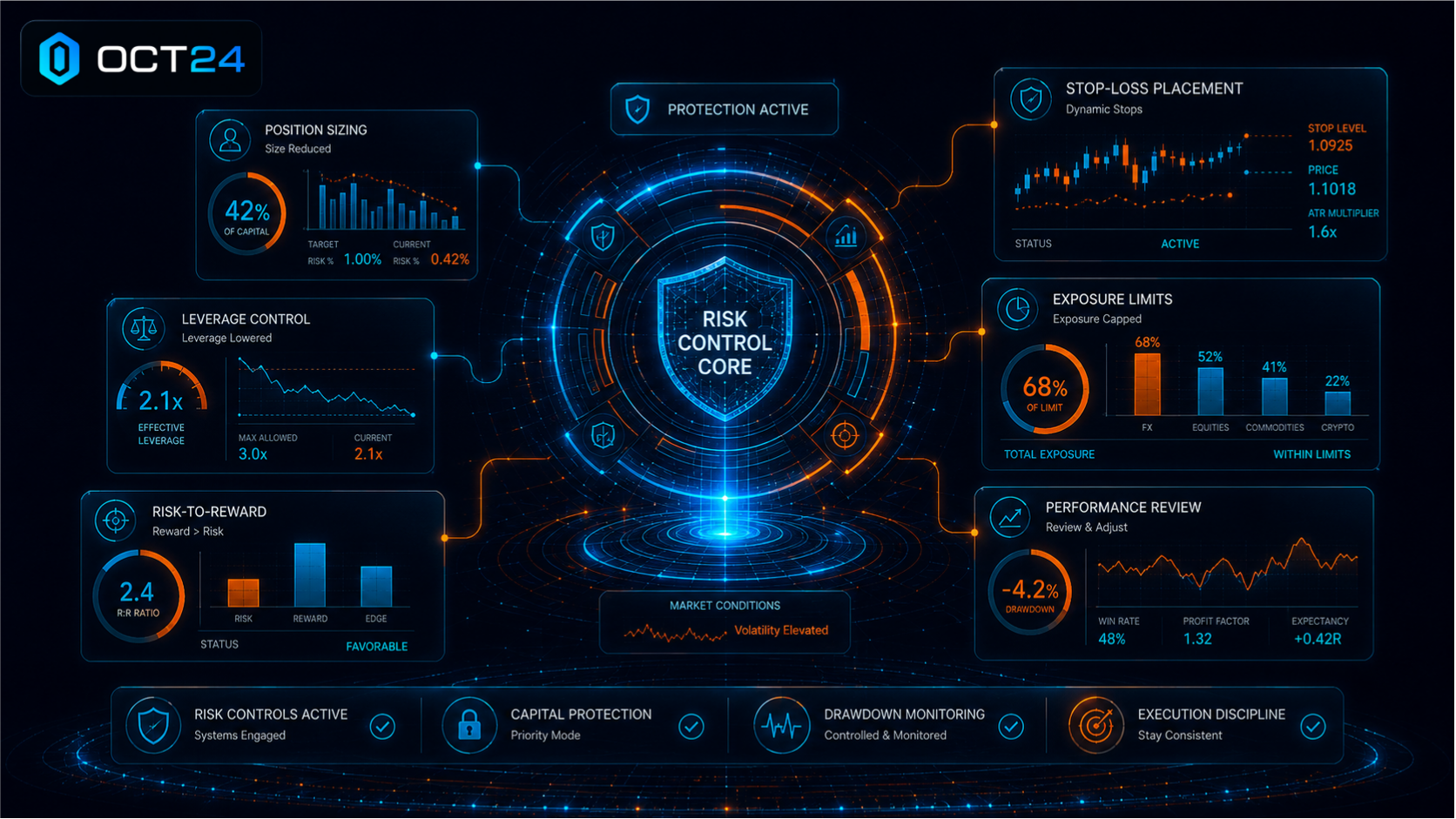
During volatile markets, traders should pay close attention to:
- Position sizing
- Stop-loss placement
- Drawdown limits
- Leverage control
- Exposure limits
- Trade frequency limits
- Risk-to-reward review
- Performance review
Position sizing matters because larger positions can create larger losses. In volatile markets, even a small price move can have a bigger impact.
Stop-loss placement also matters. If the stop is too tight, normal volatility may trigger it too early. If the stop is too wide, the trader may take on too much risk.
Leverage needs extra care. Volatility can make leveraged trades more dangerous because price changes are magnified.
This is where AI Trading Risk vs Reward becomes important.
Before acting, traders should ask:
- What is the possible upside?
- What is the possible downside?
- Is the risk too high for the account?
- Is volatility making the setup less reliable?
- Does this trade still fit the plan?
Trading Bot Risk Management is especially important during volatile conditions. Bots can act quickly, but they still need position limits, stop-losses, drawdown controls, and exposure rules.
OCT24 can help traders review AI-supported signals, volatility conditions, and risk settings before execution. The platform can perform most of the analysis, but traders still need to decide whether the risk is acceptable.
A good trade is not only about finding opportunity.
It is also about controlling downside.
How AI Trading Signals Should Be Used During Volatility
AI trading signals can be helpful during volatile markets.
But they should not be followed blindly.
A signal is decision support. It is not a guarantee. It helps organize market information, but the trader still needs to review the setup.
During volatility, AI Trading Signals may change quickly. A setup may look strong one moment and weaker a few minutes later.
That is why traders should review more than the signal itself.
They should check:
- Trend direction
- Volume
- Market momentum
- Volatility level
- Position size
- Stop-loss placement
- Total exposure
- Whether the setup fits the strategy
One of the most common Common AI Trading Mistakes is chasing every signal during fast markets.
A trader may see a sudden price move and feel pressure to act. But fast movement does not always mean a good trade. Sometimes it means the risk is higher.
Signals should be combined with risk controls.
They should also fit the trader’s strategy.
A Consistent Trading Routine can help here. Traders should review signals, performance, and risk settings regularly instead of reacting emotionally to every price move.
OCT24 presents AI-supported signals in a structured workflow. This can help traders review market information more clearly during active conditions.
But OCT24 does not remove trading risk.
The trader still controls risk settings, capital allocation, and execution choices.
Practical Example: AI Trading During Volatility
Imagine a crypto asset suddenly moves sharply after a major price breakout.
Volume increases quickly.
Momentum strengthens, but volatility also rises.
AI scans the market and detects unusual activity. It sees that price is moving fast, volume is increasing, and the asset is breaking through an important level.
OCT24 presents an AI-supported signal with market context.
Instead of rushing into the trade, the trader reviews the setup.
They check:
- Trend direction
- Volume strength
- Volatility level
- Position size
- Stop-loss placement
- Leverage
- Open exposure
- Risk-to-reward
The trader also asks:
“Am I following the strategy, or am I chasing the move?”
This question matters.
Volatile markets can create pressure. A trader may feel like they need to act immediately. But responsible AI trading during volatility is not only about speed.
It is also about slowing down enough to check risk.
If the setup fits the plan, the trader may decide to use One-Click Trading after reviewing the signal and risk settings.
If the setup does not fit the plan, the trader can wait.
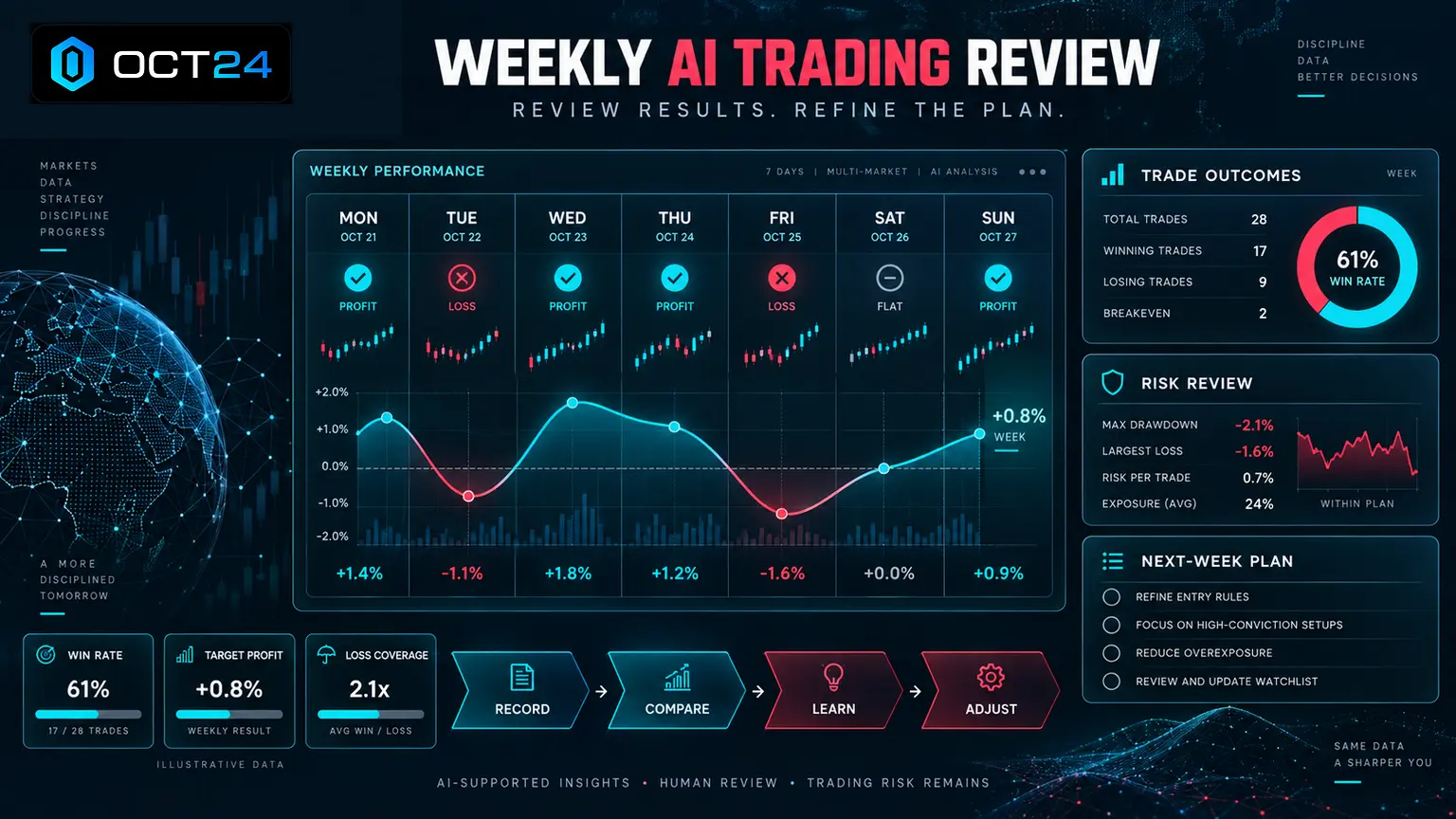
After the trade, the trader reviews performance. They check whether the risk rules were followed and whether the trade made sense in the current market conditions.
This is a more disciplined way to use AI in active markets.
The AI helps identify and organize the opportunity.
The trader still makes the risk decision.
How OCT24 Supports AI Trading During Volatility
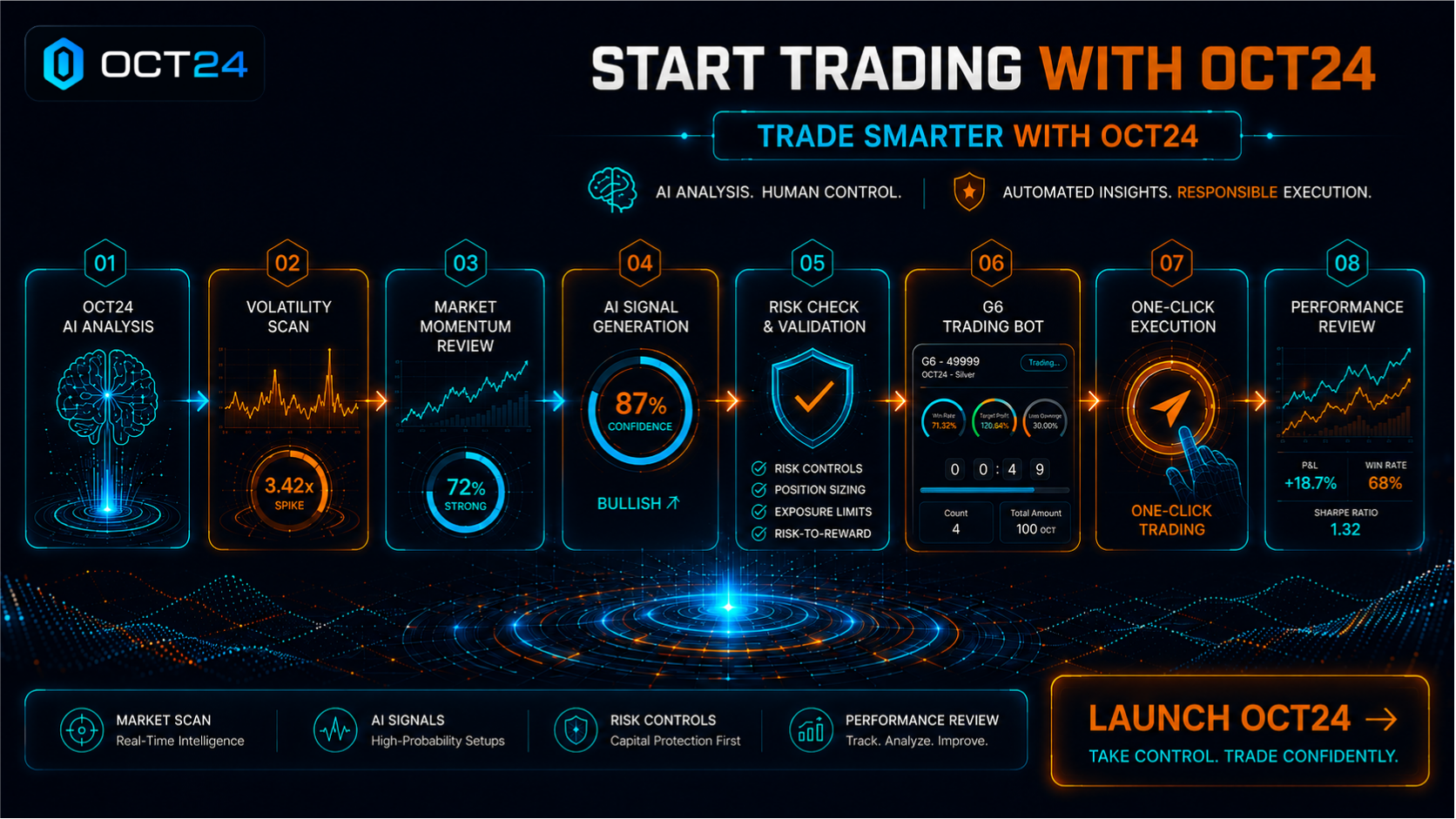
OCT24 is designed to reduce the manual work involved in active trading, especially when markets move quickly.
Volatile markets can be difficult to follow manually. Traders may need to review price movement, market momentum, volatility, signals, risk settings, and execution timing all at once.
OCT24 helps by performing most of the market analysis in a structured workflow.
OCT24 can help by:
- Scanning active market conditions
- Identifying potential trading opportunities
- Reviewing market momentum
- Analyzing volatility changes
- Reviewing technical signals
- Presenting AI-supported trading signals
- Supporting faster execution
- Helping traders review performance over time
The G6 Trading Bot can support this workflow by helping traders use automation more efficiently during active market conditions.
This is also why Choosing the Right AI Trading Platform matters.
A strong platform should help traders do more than act quickly. It should help them understand signals, review risk, and avoid emotional decisions.
OCT24 can help traders:
- Review volatile markets more clearly
- Identify potential opportunities faster
- Understand AI-supported trading signals
- Check risk settings before execution
- Use automation more thoughtfully
- Support One-Click Trading after review
- Reduce emotional decision-making
- Build a more disciplined trading workflow
OCT24 does not guarantee results.
Traders still need to choose appropriate settings, understand exposure, manage capital responsibly, and use the platform with realistic expectations.
For readers who want to learn more about the platform’s approach, About OCT24 can provide more context. For those ready to explore a more structured AI-assisted workflow, Start Trading with OCT24 can be the next step.
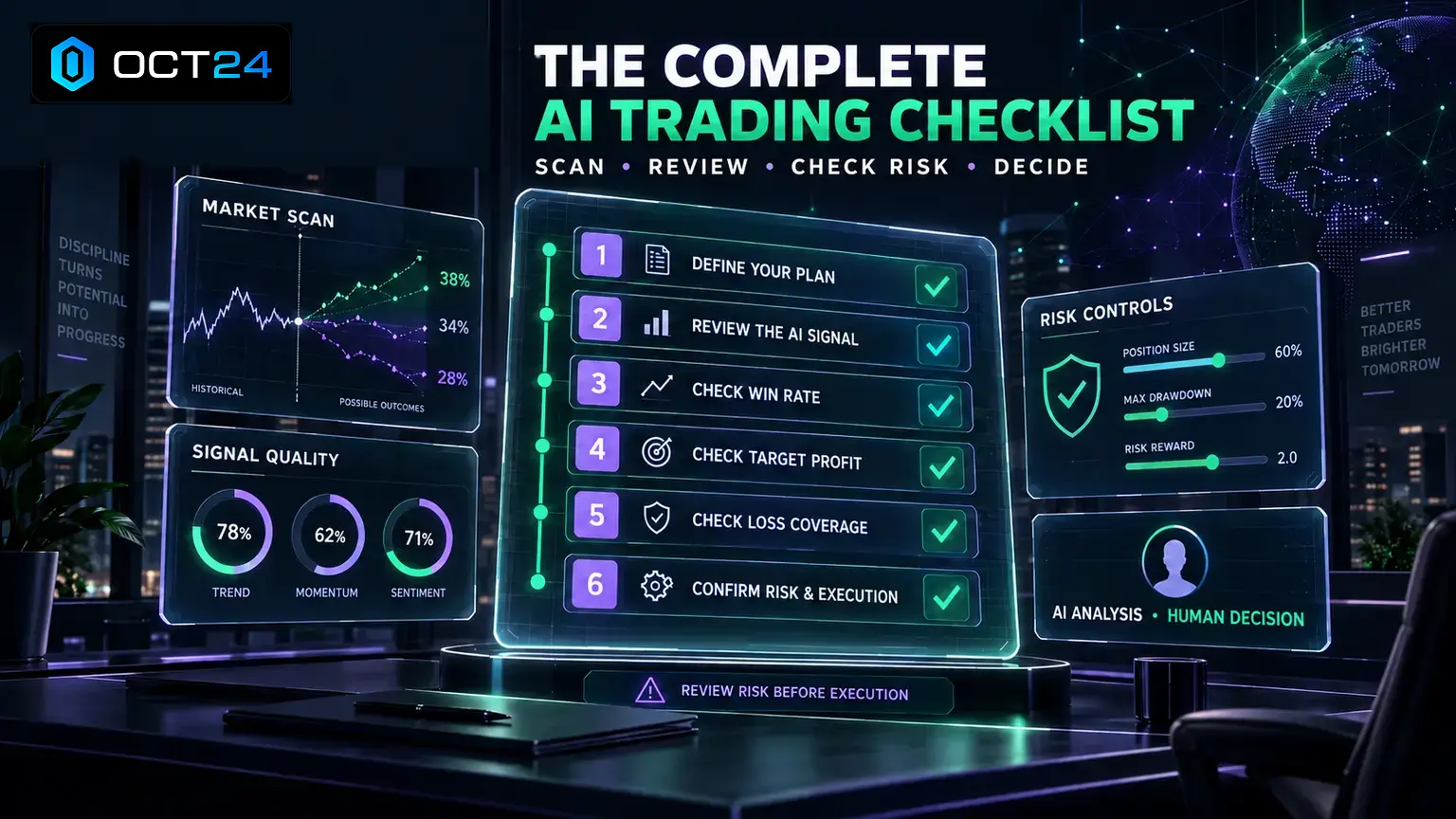
AI Market Volatility Checklist
When markets become volatile, traders should slow down and review the setup carefully.
Use this checklist before acting:
- Is volatility unusually high?
- Is volume supporting the move?
- Is momentum strengthening or fading?
- Is the signal aligned with the trend?
- Is the position size reasonable?
- Is the stop-loss clear?
- Is leverage controlled?
- Is total exposure understood?
- Is the trader chasing the move emotionally?
- Does the trade fit the strategy?
This checklist does not remove risk.
But it helps traders avoid rushed decisions.
AI can help identify what is happening. Risk controls help traders decide what to do about it.
Frequently Asked Questions
What does AI Market Volatility mean?
AI Market Volatility refers to how artificial intelligence analyzes fast-moving market conditions, including price changes, volume shifts, momentum, volatility spikes, and trading signals.
How does AI handle market volatility?
AI handles market volatility by scanning market data quickly, detecting unusual movement, tracking momentum, comparing assets, and organizing information into AI-supported trading signals.
Can AI predict volatile markets?
AI can help detect patterns and changing conditions, but it cannot predict every market move. Volatile markets remain uncertain, and traders still need risk controls.
Is AI trading during volatility risky?
Yes. AI trading during volatility can be risky because prices can move quickly, signals can change, and losses can build faster if settings are too aggressive.
Can trading bots work in volatile markets?
Trading bots can work in volatile markets, but settings matter. Position size, stop-losses, leverage, trade frequency, and exposure limits should be reviewed carefully.
Why do AI trading signals change during volatility?
AI trading signals may change during volatility because price, volume, momentum, and trend strength can shift quickly. A setup that looked strong earlier may weaken as conditions change.
What risk controls matter most during volatile markets?
Important risk controls include position sizing, stop-losses, leverage limits, exposure limits, drawdown limits, trade frequency limits, and regular performance review.
How does OCT24 help traders during volatile markets?
OCT24 helps by performing most of the market analysis, scanning active conditions, identifying potential opportunities, and presenting AI-supported signals in a structured workflow. Traders still remain responsible for risk settings and execution decisions.
What is the G6 Trading Bot?
The G6 Trading Bot is part of OCT24’s AI-assisted trading workflow. It can support market analysis, automation, opportunity detection, and structured execution.
Should traders use one-click trading during volatility?
One-click trading can help traders act efficiently, but it should come after signal review and risk review. Traders should avoid using one-click execution impulsively during volatile markets.
How AI Handles Market Volatility: Key Takeaways
AI can help traders analyze volatile markets faster and more consistently.
It can scan active markets, detect unusual movement, track momentum, and organize signals into a clearer workflow.
But AI does not remove trading risk.
Traders should focus on:
- Market momentum
- Volume
- Volatility changes
- Signal quality
- Position sizing
- Stop-losses
- Leverage control
- Exposure
- Risk-to-reward
- Performance review
OCT24 brings these elements together by performing most of the market analysis while still supporting trader control, risk management, and structured execution.
The platform can help traders review volatile markets more clearly, identify potential opportunities, and use AI-supported signals more responsibly.
But traders still need realistic expectations.
AI can support better decisions, but risk management keeps those decisions grounded.
To explore a more structured AI-assisted trading workflow, Start Trading with OCT24.