
The Psychology of Trading and How AI Helps
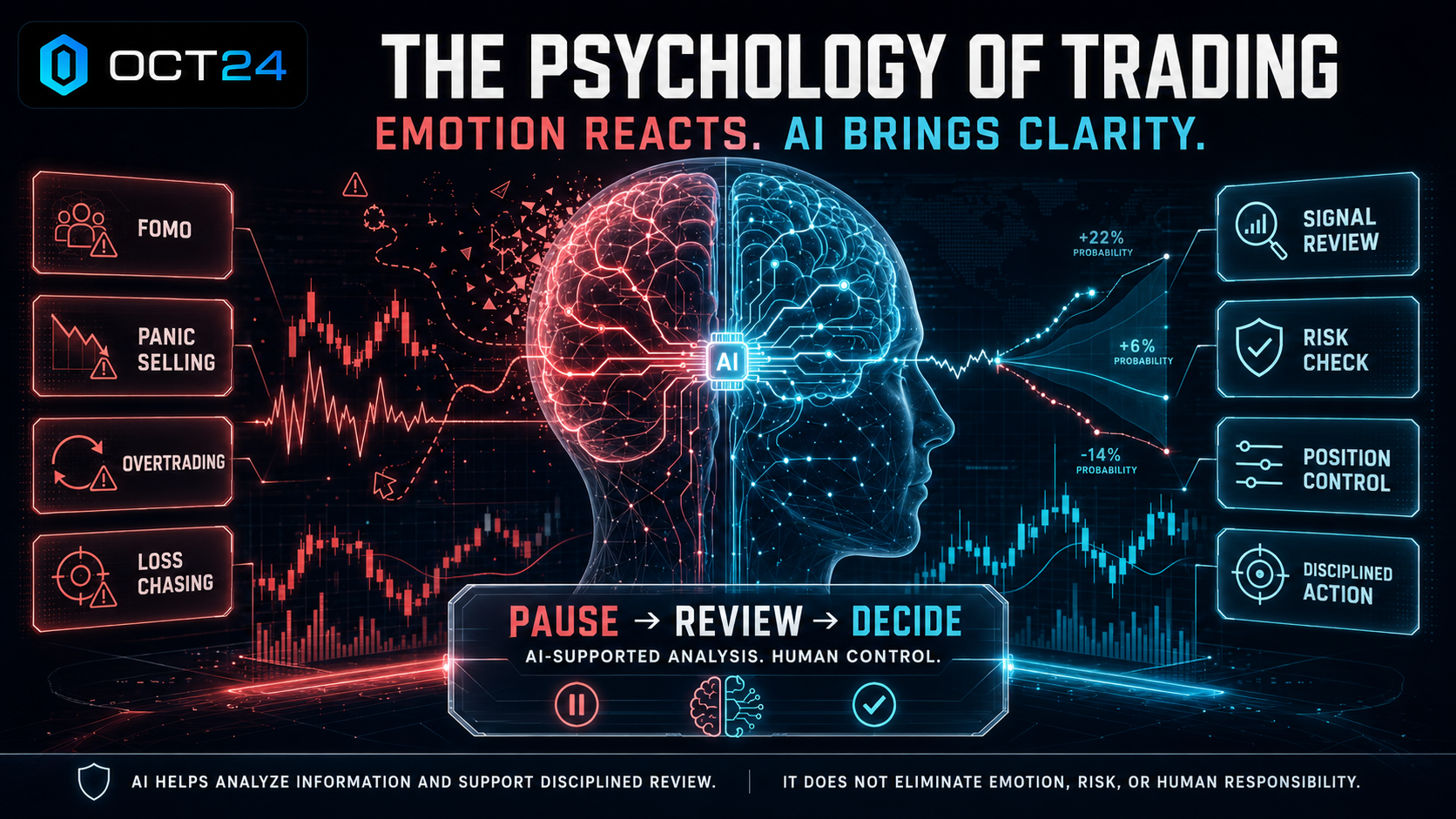
The Psychology of Trading affects every decision a trader makes, even when the charts and market data appear clear.
Trading is not only about finding potential opportunities. It is also about managing fear, greed, impatience, confidence, and expectations.
Two traders can review the same market and reach different decisions. One may see an opportunity. The other may focus on the possibility of a loss.
Previous results can also change how a trader reacts. A recent win may create too much confidence. A recent loss may create fear or a desire to recover quickly.
AI can reduce some of this pressure by scanning markets, comparing data, and organizing information consistently.
OCT24 performs most of the market analysis by scanning market conditions, identifying potential opportunities, and presenting AI-supported trading signals.
This can help traders review the market through a clearer process instead of reacting to every price movement.
However, AI does not remove emotion or trading risk.
The trader still needs to choose suitable settings, manage capital, understand exposure, review signals, and decide whether a trade fits the plan.
AI can create more structure. The trader remains responsible for following it.
What Is the Psychology of Trading?
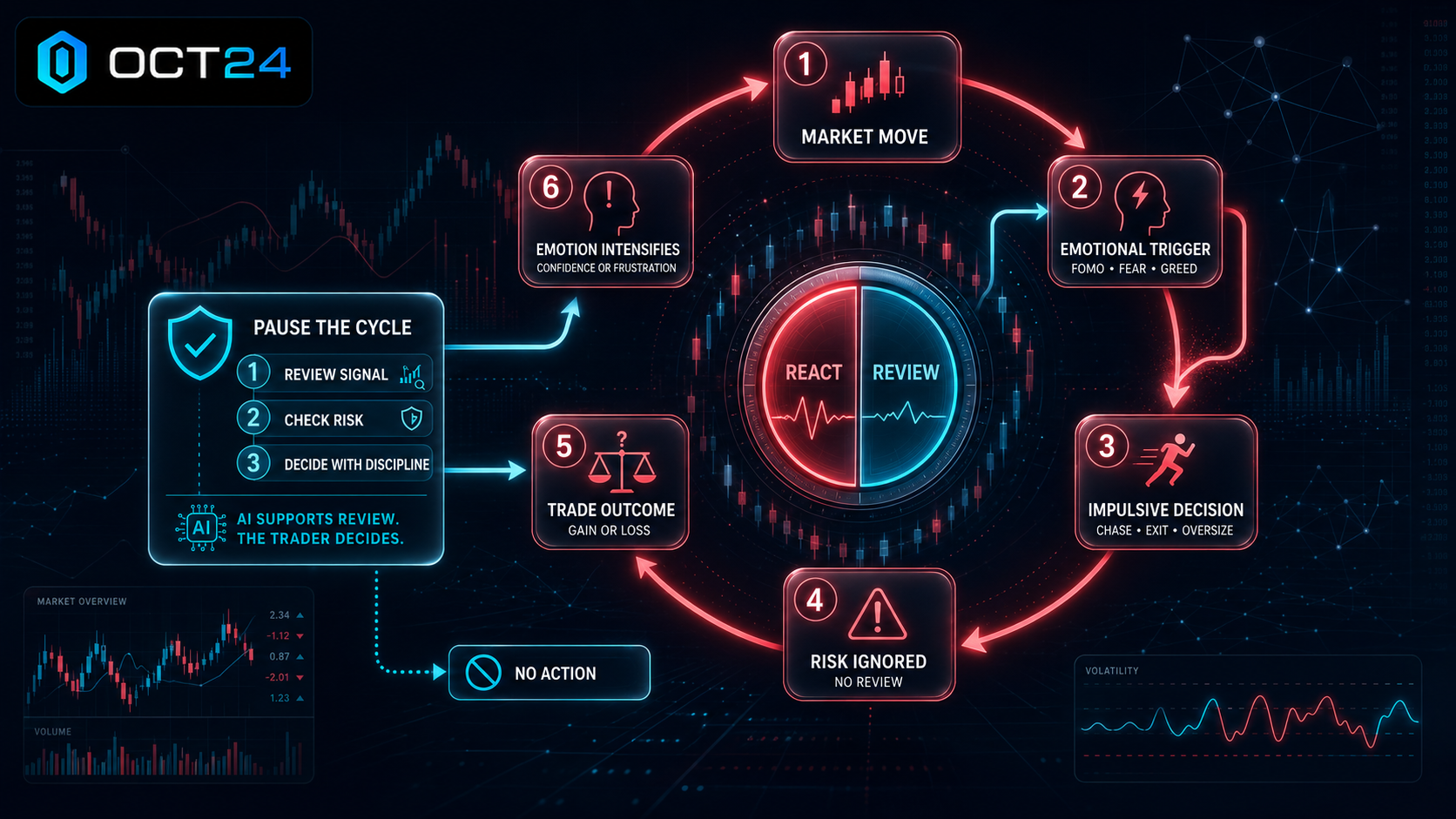
The psychology of trading refers to the emotions, habits, expectations, and behavioral biases that influence how traders analyze markets, manage risk, and make execution decisions.
Trading psychology can affect decisions before, during, and after a trade.
It may influence:
- Which setups a trader notices
- How quickly they enter
- How much capital they use
- Where they place a stop-loss
- Whether they follow the original plan
- How long they hold a position
- How they react to a loss
- Whether they review performance honestly
Two traders may receive the same signal but respond differently.
One trader may have recently experienced several losses and hesitate to enter. Another may have completed several successful trades and use too much risk.
The signal has not changed. The traders’ emotional states have.
Personal risk tolerance, time pressure, existing exposure, and Market Volatility can also affect the decision.
This is one reason AI Trading vs Manual Trading is useful to understand.
Manual decisions can be flexible and include human judgment. They can also be affected by fear, excitement, tiredness, and impatience.
AI can review the same market conditions more consistently. It still cannot decide how much emotional or financial pressure a trader can handle.
Why Emotions Become Stronger During Trading
Trading creates strong emotions because money is at risk and the outcome is uncertain.
Price movements provide immediate feedback. A trader can watch a position gain or lose value in real time.
This can make every movement feel important.
Winning trades may create excitement and confidence. Losing trades may feel personal, even when the loss was part of a reasonable strategy.
Social media can add more pressure.
Traders may see screenshots of profitable trades without seeing the losses, leverage, or risk behind them. This can create the feeling that everyone else is finding opportunities.
Fast-moving markets can make emotional reactions stronger.
Imagine a trader watching a crypto asset rise quickly. Volume is increasing, social media is active, and the price has already moved far from the original entry area.
The trader feels pressure to act before the opportunity disappears.
Without a plan, that pressure may lead to a late entry, a larger position, or no clear stop-loss.
The emotion becomes stronger because the trader has not defined what a valid trade should look like.
A clear strategy and risk process cannot remove uncertainty. They can give the trader something more reliable than emotion to follow.
Fear in Trading
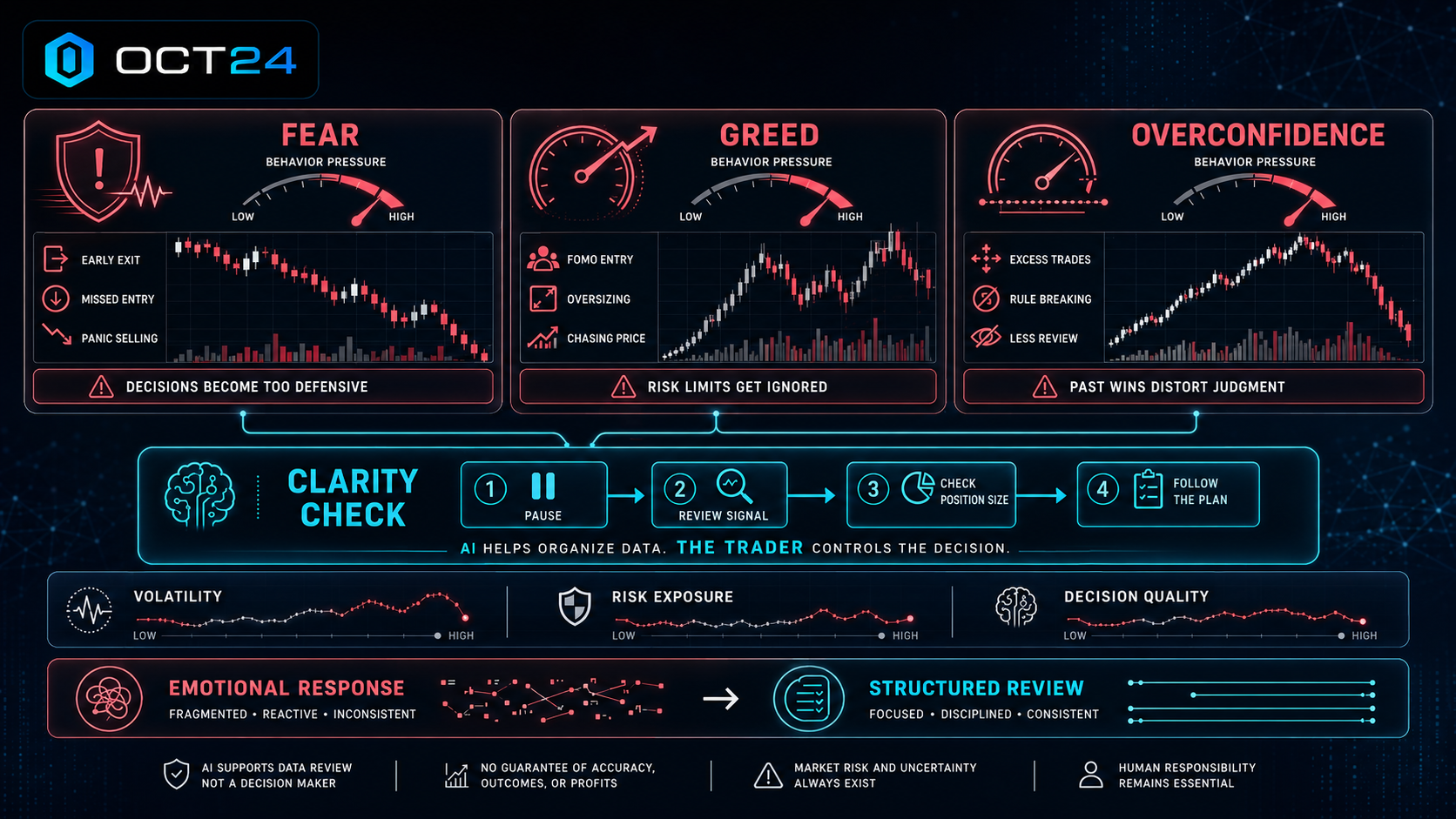
Fear can appear in several ways.
A trader may close a profitable trade too early because they are afraid the gain will disappear.
They may hesitate when a valid setup appears because the previous trade lost money. They may also check an open position constantly and react to normal price movement.
Fear can lead traders to:
- Exit too early
- Avoid valid setups
- Move stop-losses without a clear reason
- Close positions during normal volatility
- Use inconsistent position sizes
- Ignore the strategy after a loss
- Avoid reviewing performance
Fear is not always negative.
It may be a warning that the position is too large, leverage is too high, or the trader does not understand the setup.
The important question is where the fear comes from.
If the trade follows the plan and uses appropriate risk, normal market movement should not automatically change the decision.
If the trader feels unable to accept the planned loss, the position may be too large.
OCT24 can reduce some uncertainty by performing most of the analysis and presenting market information in a structured signal.
The trader still needs to decide whether the risk is personally acceptable.
The goal is not to eliminate fear. It is to prevent fear from replacing the trading plan.
Greed and Overconfidence
Greed can encourage traders to want more from a trade than the strategy supports.
Overconfidence often develops after several successful trades.
A trader may begin to believe they understand the market better than they actually do. They may increase position size, use more leverage, or take weaker setups.
Common signs include:
- Increasing risk too quickly
- Ignoring daily limits
- Taking trades outside the strategy
- Refusing to use a stop-loss
- Trading more frequently
- Treating confidence as certainty
- Assuming a winning streak will continue
Imagine a trader who completes four profitable trades.
On the fifth trade, they double the normal position size because they feel confident. The setup is weaker, but the trader ignores the warning signs.
The market reverses, and one loss removes much of the earlier progress.
One successful period does not prove that future signals will work.
The question Can AI Predict the Market? has the same answer whether a trader feels confident or uncertain: no system knows the future with certainty.
AI works with data, patterns, and probabilities. A strong setup can still fail.
Confidence should come from following a tested process, not from expecting the next trade to win.
FOMO in Trading
FOMO in Trading means fear of missing out on a market move or potential profit.
It often appears when price is moving quickly or when other traders are discussing a successful opportunity.
FOMO can lead to:
- Entering after price has already moved
- Chasing breakouts without confirmation
- Using a larger position than planned
- Ignoring risk-to-reward
- Following every alert
- Abandoning the strategy
- Trading because of social media pressure
These are common Common AI Trading Mistakes.
A trader may see a signal after the best entry area has passed. Instead of waiting, they enter because they do not want to miss the move.
The possible upside may now be smaller, while the distance to a sensible stop-loss may be larger.
This creates a weaker trade even if the original signal was useful.
Missing a trade is not the same as losing money.
Markets continue to create new opportunities. A trader does not need to participate in every move.
OCT24 can scan active markets and identify potential opportunities, reducing the pressure to search constantly.
The trader still needs to decide whether the opportunity remains suitable when it is reviewed.
AI may identify the setup. Discipline determines whether the trader waits for the right conditions.
Loss Aversion and Holding Losing Trades
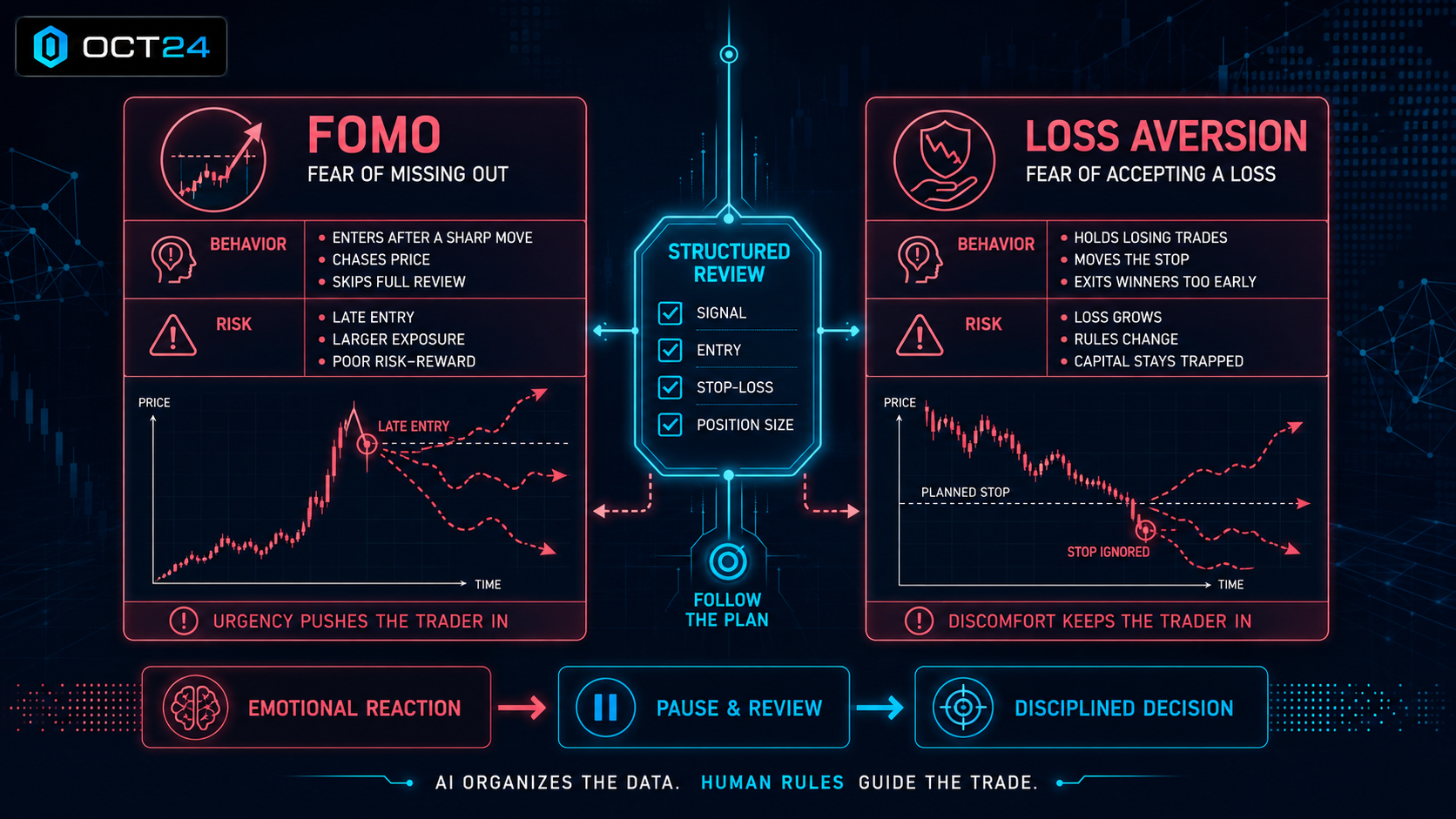
Loss aversion means people often feel the pain of a loss more strongly than the satisfaction of a similar gain.
This can affect how traders manage winning and losing positions.
A trader may close a small profit quickly because they want to protect it. At the same time, they may hold a losing trade for too long because closing it would make the loss feel final.
Loss aversion may cause traders to:
- Move a stop-loss farther away
- Refuse to close an invalid setup
- Hope that price will recover
- Add more capital to a losing position
- Close winning trades too early
- Avoid reviewing losing decisions
- Treat an unrealized loss as if it does not matter
The market does not know the trader’s entry price.
Price will not reverse simply because the trader wants to recover the loss.
Predefined exit rules can help.
Before entering, the trader should know which market condition would show that the setup is no longer valid.
A stop-loss may support that plan, but it does not guarantee a particular execution price. Fast markets, gaps, and low liquidity can still affect the result.
The purpose of an exit rule is not to avoid every loss.
It is to prevent hope from becoming the only reason for staying in a trade.
Revenge Trading and Overtrading
Revenge trading happens when a trader tries to recover a loss quickly through another trade.
The next decision is driven by frustration rather than a valid setup.
A trader may increase position size, use more leverage, or enter immediately after a loss. They may abandon the strategy because they want the account to return to its previous balance.
This can lead to Overtrading.
Common warning signs include:
- Trading immediately after a loss
- Increasing risk without a planned reason
- Taking several weak setups
- Ignoring daily loss limits
- Using excessive leverage
- Trading outside normal hours
- Entering without completing a signal review
The market does not know or care about the trader’s previous result.
A loss does not make the next trade more likely to succeed.
After a difficult trade, a short pause can be useful.
The trader can review whether the setup was valid, whether the risk rules were followed, and whether current emotions are affecting the next decision.
If the trader cannot review the next opportunity calmly, not trading may be the more disciplined choice.
Confirmation Bias and Selective Thinking
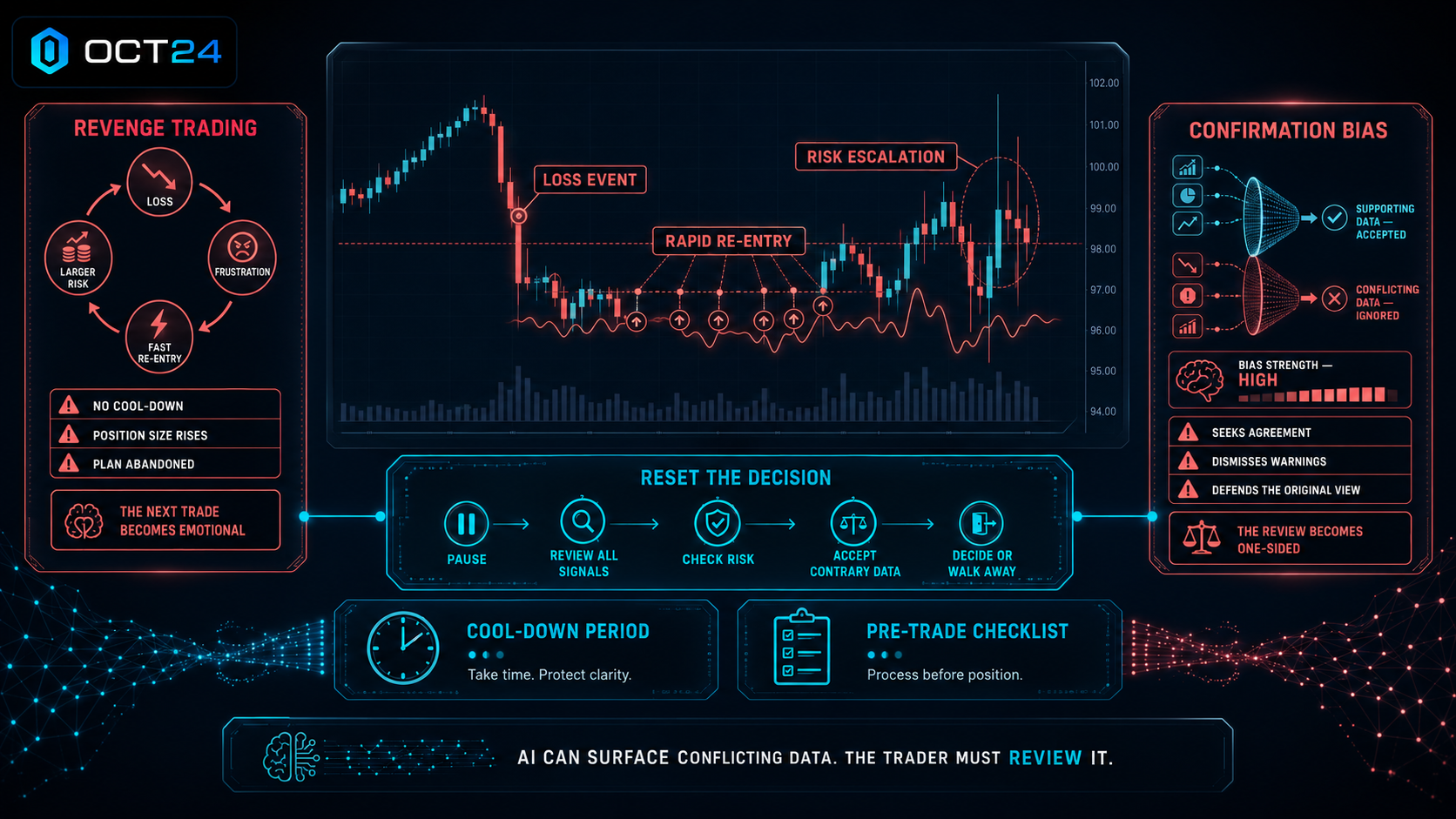
Confirmation bias means looking for information that supports an existing opinion while ignoring information that challenges it.
A trader who wants to buy may focus only on positive signals.
They may notice rising momentum but ignore falling volume. They may focus on a short-term breakout while ignoring resistance on a higher timeframe.
Confirmation bias can include:
- Following only bullish or bearish opinions
- Ignoring conflicting indicators
- Dismissing negative news
- Rejecting signals that challenge the trade
- Changing the analysis to justify an entry
- Searching social media for agreement
AI can help compare several market inputs more consistently.
OCT24 may review price movement, momentum, volatility, and technical conditions before presenting an AI-supported signal.
This can make the analysis less dependent on the trader’s preferred outcome.
However, the trader can still ignore the signal or risk warning if it does not match what they want to believe.
AI can organize the evidence. The trader must be willing to review all of it.
How AI Can Support Better Trading Psychology
AI can support better trading psychology by reducing manual chart review, applying analysis consistently, organizing trading signals, and helping traders follow a more structured decision process.
This is one of the practical Benefits of AI Trading.
AI does not feel fear, greed, excitement, or frustration.
It can scan markets without becoming tired or impatient. It can compare the same market conditions using a more consistent process.
AI may help by:
- Scanning multiple markets
- Comparing several data points
- Identifying potential opportunities
- Reducing pressure to watch every chart
- Organizing information into clearer signals
- Applying predefined analysis rules
- Supporting performance review
- Reducing impulsive market searching
This connects to How AI Identifies Trading Opportunities.
OCT24 performs most of the market analysis by reviewing active conditions and presenting potential opportunities through AI-supported signals.
The trader can spend less time searching and more time reviewing whether the opportunity fits the strategy and risk plan.
This may reduce some emotional pressure.
It does not make every decision correct.
AI improves structure. It does not guarantee the outcome.
What AI Cannot Fix for the Trader
AI cannot automatically fix poor discipline.
It cannot make excessive leverage, oversized positions, or unrealistic expectations safe.
AI cannot prevent a trader from:
- Ignoring a stop-loss
- Increasing risk emotionally
- Chasing a losing trade
- Changing strategies constantly
- Following every signal
- Refusing to accept a loss
- Overriding the trading plan
- Avoiding performance review
These are important AI Trading Myths to understand.
AI does not remove trader responsibility.
A platform may present a well-supported opportunity, but the trader can still use an unsuitable position size or execute without checking exposure.
The trader may also interfere with an automated strategy because of fear or impatience.
AI can create a more consistent framework.
The trader must choose to follow that framework.
AI Trading Signals and Emotional Decisions
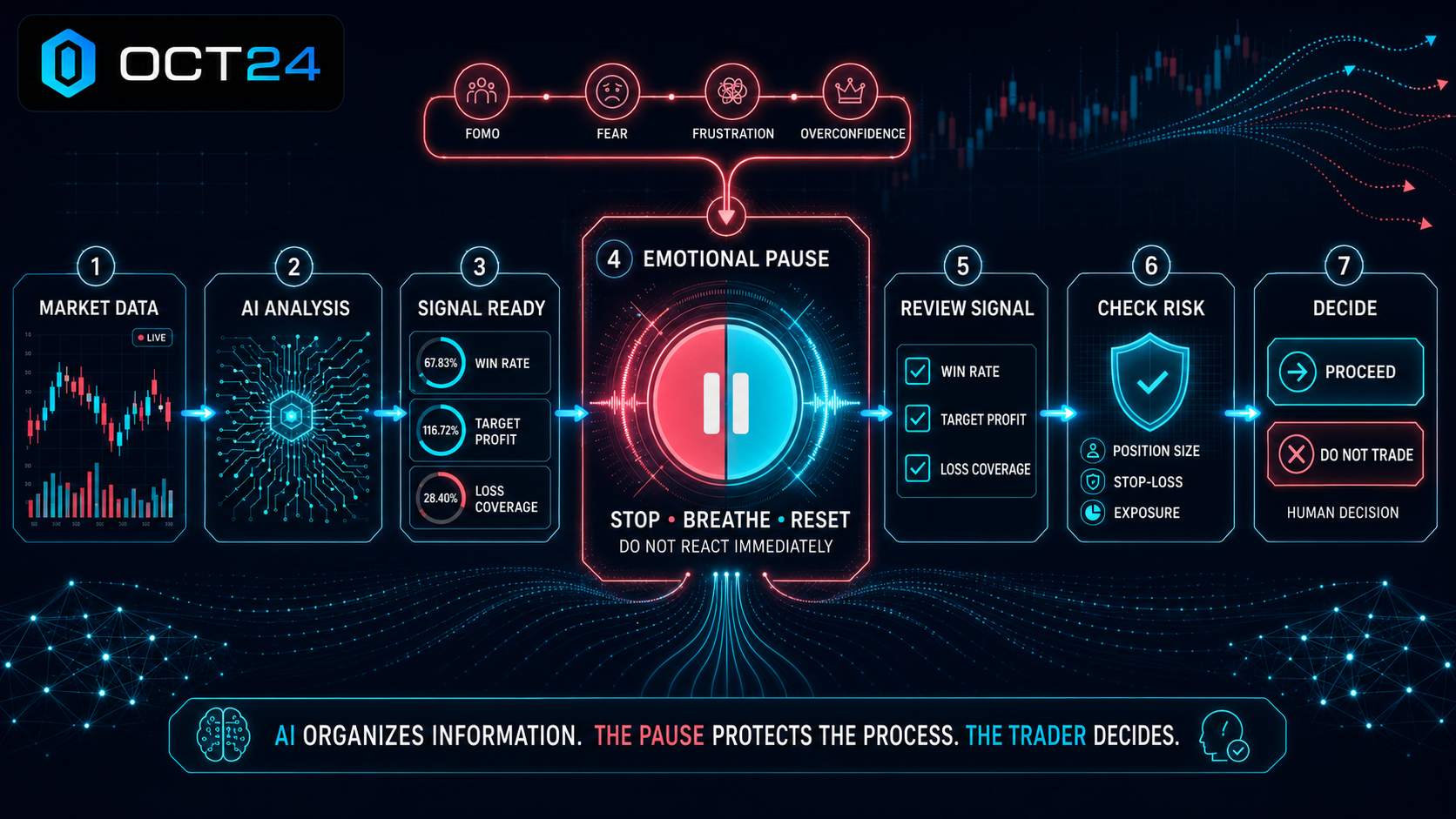
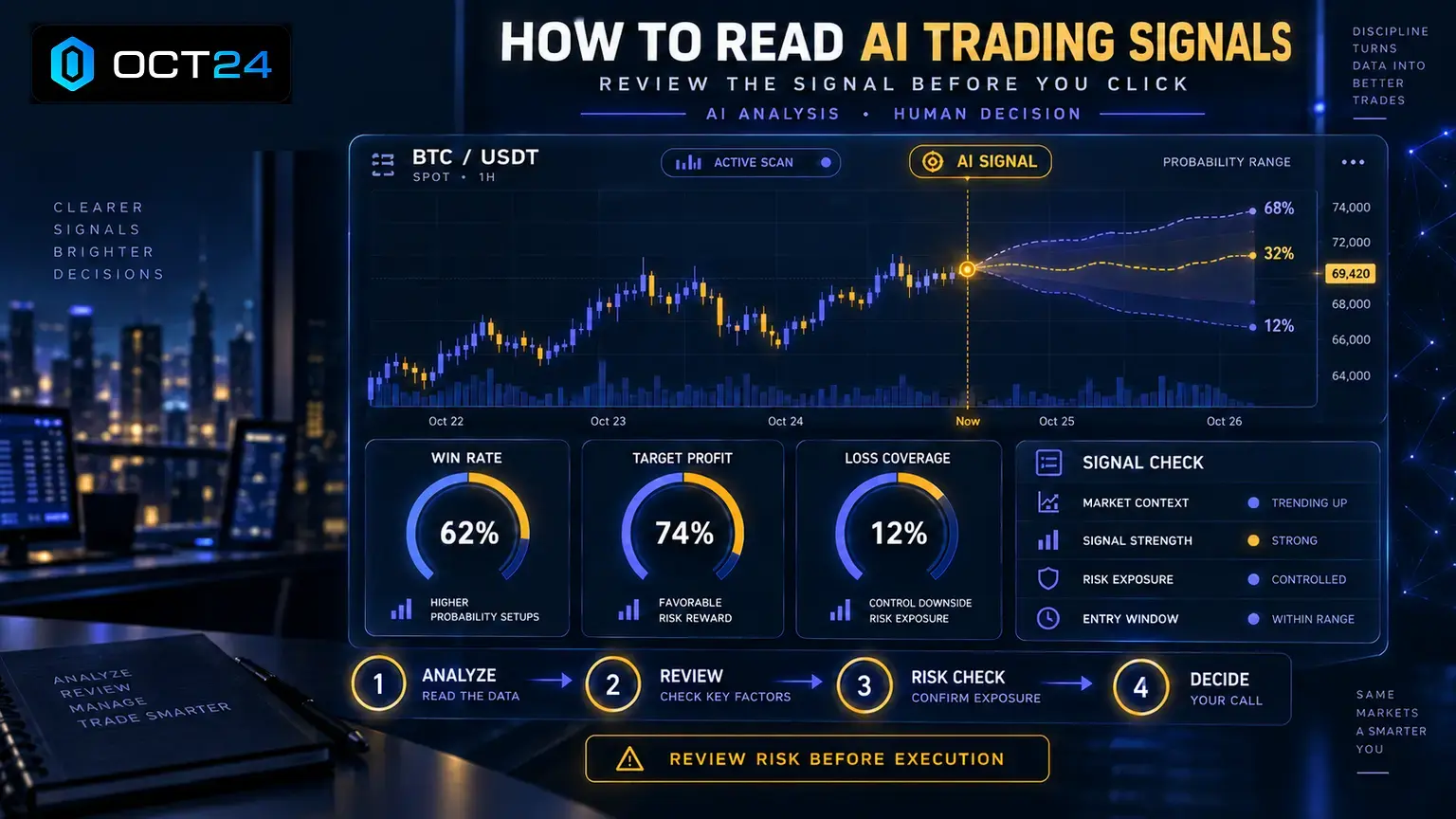
AI Trading Signals can create a useful pause between market movement and execution.
A signal organizes information about a potential opportunity. It is not a guaranteed instruction to trade.
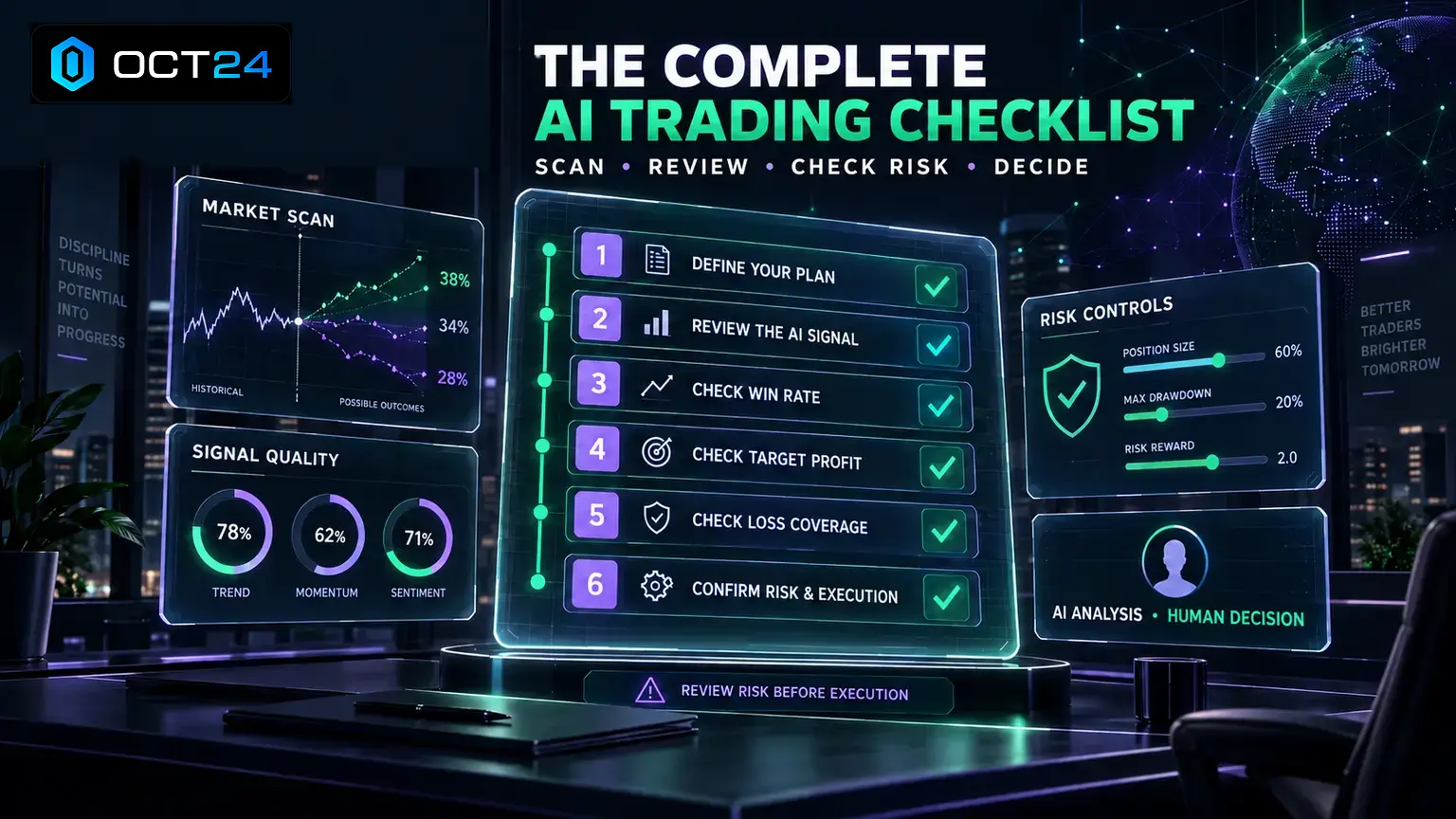
Before acting, ask:
- Does the signal fit my strategy?
- What is the current trend?
- Is volume supporting the move?
- Is volatility unusually high?
- What is the potential downside?
- Where is the stop-loss?
- Is the position size appropriate?
- How much exposure is already open?
- Am I following the plan or reacting emotionally?
- Would I take this trade without social media influence?
OCT24 performs most of the analysis and presents AI-supported signals in a structured workflow.
The trader can use the checklist to decide whether the setup and risk remain suitable.
This review does not need to take hours.
Its purpose is to prevent fear, excitement, or urgency from becoming the only reason for execution.
Trading Bots, Automation, and Emotional Control
AI Trading Bots and Automated Trading can support consistency by following predefined rules.
Bots do not become tired, fearful, greedy, or impatient.
They can monitor markets continuously and repeat the same process without emotional hesitation.
This can reduce some repetitive decisions.
However, bots can still follow poor settings.
If position limits are too high or trade-frequency controls are weak, automation can increase risk quickly.
Traders can also interfere emotionally by changing settings after every loss or stopping the system during normal strategy drawdowns.
This is why Trading Bot Risk Management matters.
Traders should review:
- Position limits
- Stop-loss settings
- Drawdown controls
- Leverage
- Trade frequency
- Total exposure
- Recent performance
- Conditions that should pause the bot
The question Are Trading Bots Worth It? depends on the strategy, settings, oversight, and realistic expectations.
Understanding Trading Bots vs Human Traders also helps.
Bots provide speed and consistency. Humans remain responsible for strategy, risk tolerance, unusual market conditions, and final accountability.
The G6 Trading Bot can support automation within OCT24’s structured workflow.
OCT24 performs most of the analysis, while the trader remains responsible for settings, capital allocation, and execution decisions.
Automation can reduce emotional repetition. It cannot replace oversight.
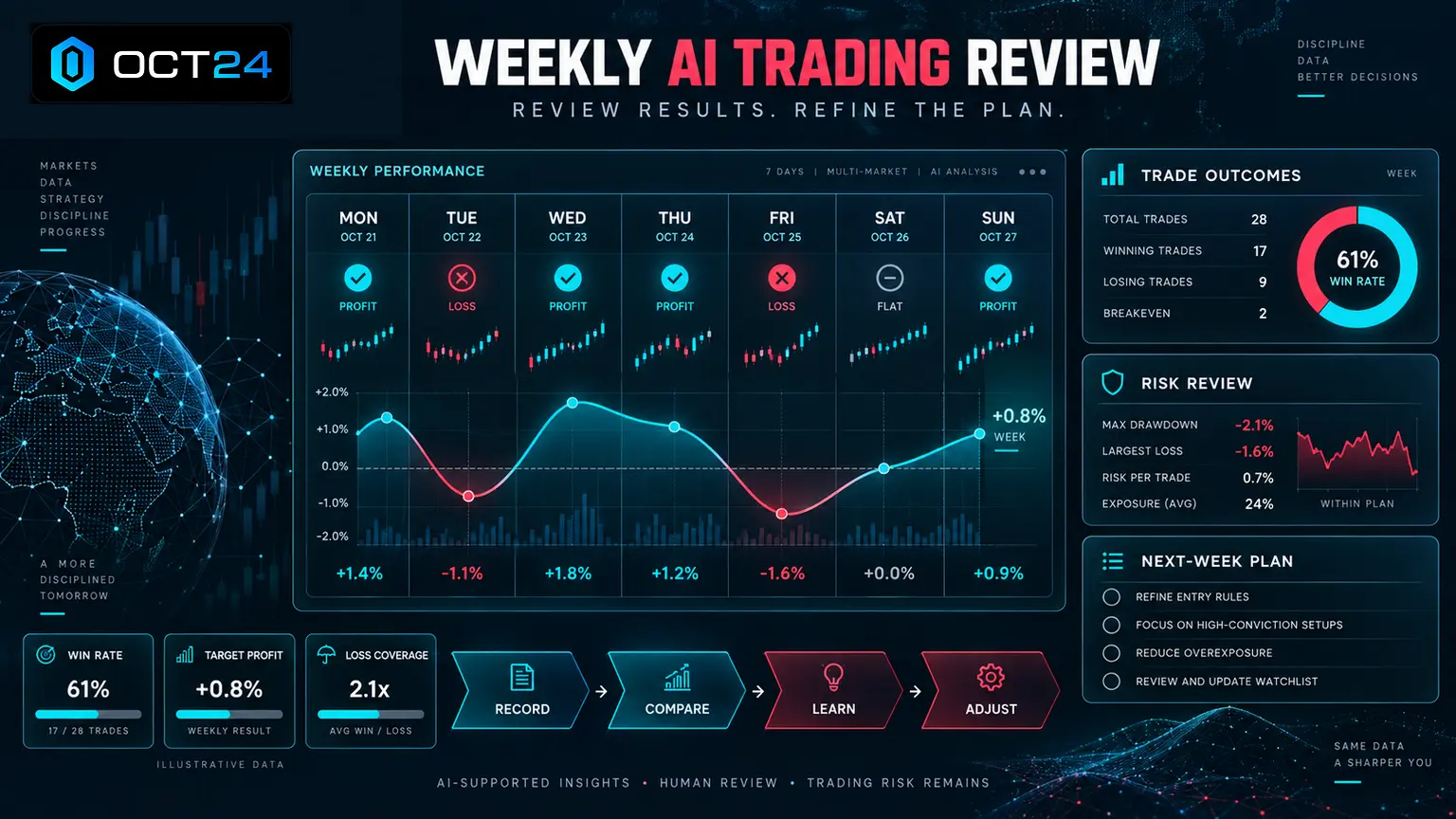
Building a Consistent Trading Routine
A Consistent Trading Routine can reduce emotional decisions by giving the trader clear steps to follow.
The routine should be simple enough to use every time.
Before Trading
- Review current market conditions
- Check scheduled news or events
- Review open exposure
- Confirm daily risk limits
- Review OCT24 signals
- Decide which setups are valid
- Set a maximum number of trades
Before Execution
- Confirm the setup fits the strategy
- Check position size
- Check stop-loss placement
- Review risk-to-reward
- Check leverage
- Review total exposure
- Write down the reason for entering
After Trading
- Record the decision
- Review whether the rules were followed
- Note any emotional reactions
- Review the result without judging the entire strategy
- Avoid changing settings immediately after one loss
- Schedule any strategy review for a calmer time
A routine creates space between emotion and action.
It also makes performance easier to review because every trade follows a similar process.
The goal is not to remove flexibility.
The goal is to stop momentary feelings from changing the rules without a valid reason.
Risk Management as a Psychological Tool

Risk management controls financial exposure, but it can also reduce emotional pressure.
When traders know the possible downside before entering, they may find it easier to follow the plan.
Important controls include:
- Position sizing
- Stop-losses
- Drawdown limits
- Leverage control
- Exposure limits
- Trade-frequency limits
- Risk-to-reward
- Daily loss limits
- Performance review
Position Sizing Controls help traders choose how much capital to allocate to a trade.
Imagine two traders using the same setup.
The first uses a position that feels too large and checks the market every minute. Normal price movement creates fear, and the trader exits early.
The second uses a smaller position based on a predefined risk limit. The trade can still lose, but the trader finds it easier to follow the original plan.
Smaller positions do not remove risk. They may make the possible loss more manageable.
Portfolio Diversification Tools can help traders see whether too much capital depends on one asset or market direction.
Several positions may appear different but still move together during a wider market decline.
Risk Management Strategies should be decided before emotion becomes intense.
Clear limits give traders a reason to stop, reduce exposure, or avoid a trade even when excitement is high.
How One-Click Trading Fits a Disciplined Process
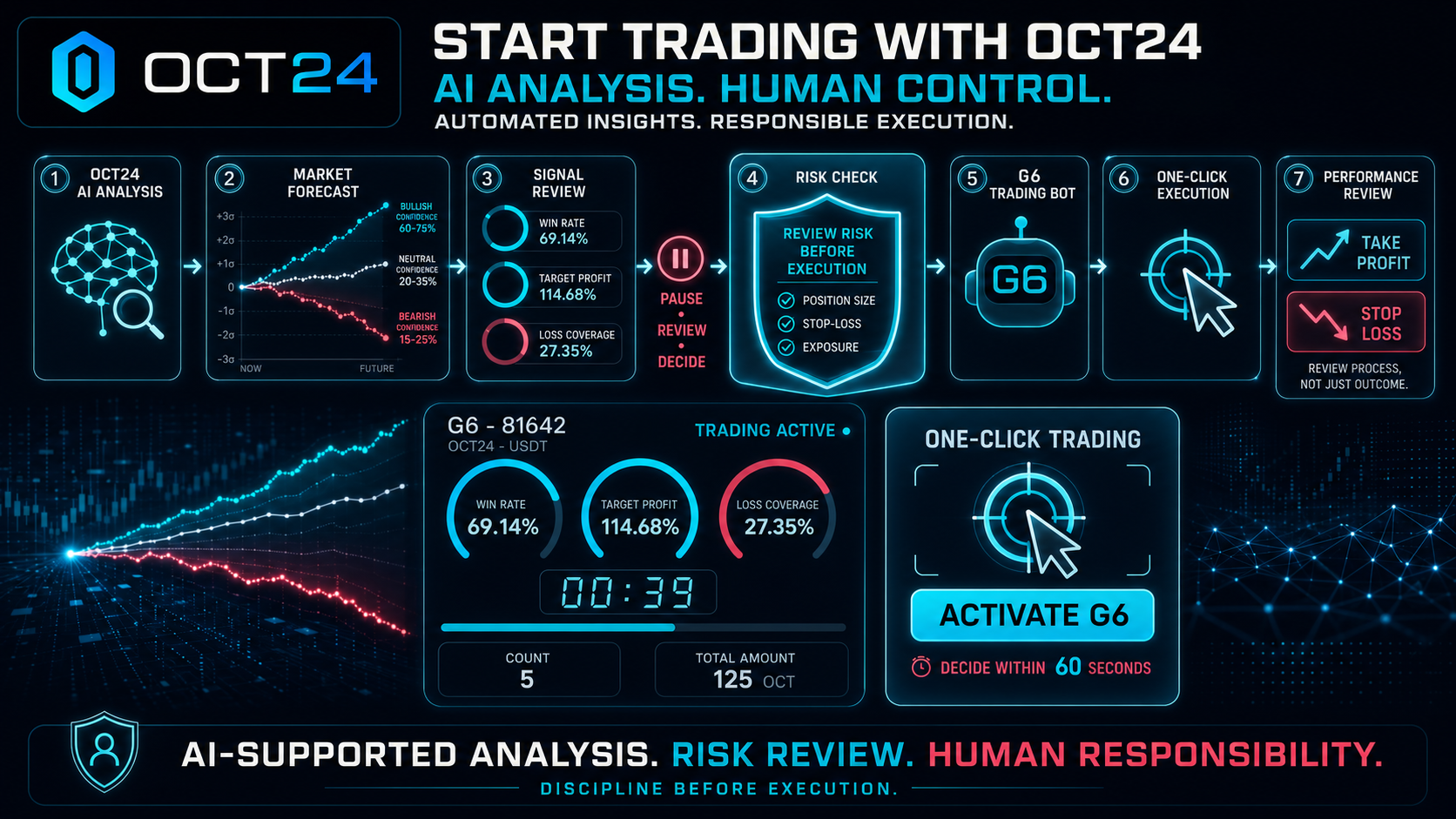
One-Click Trading can reduce the delay between a completed review and execution.
It should not turn a fast emotional reaction into an immediate trade.
The process should be:
- Market analysis
- Signal review
- Strategy check
- Position sizing
- Exposure review
- Risk check
- Execution decision
OCT24 can perform most of the market analysis and present the potential opportunity.
The trader then reviews the signal, risk settings, and exposure.
If the setup fits the plan, one-click execution may make the final action more efficient.
If the setup does not fit the plan, speed does not make it suitable.
Faster execution should follow disciplined thinking. It should not replace it.
How OCT24 Supports More Disciplined Trading
OCT24 is designed to reduce the manual work involved in active trading and create a more structured workflow.
The platform performs most of the market analysis by:
- Scanning market conditions
- Identifying potential opportunities
- Reviewing market momentum
- Monitoring volatility
- Reviewing technical signals
- Presenting AI-supported trading signals
- Supporting risk checks
- Supporting faster execution
- Helping traders review performance
This may help traders spend less time searching through charts and reacting to every market movement.
OCT24 can help traders:
- Review opportunities more consistently
- Follow a structured signal-review process
- Check risk before execution
- Use automation more thoughtfully
- Reduce repetitive emotional decisions
- Build a more consistent routine
- Review performance instead of reacting to one result
The G6 Trading Bot can support automation within this workflow.
However, OCT24 does not remove emotion, market risk, or trader responsibility.
Traders still need to choose suitable settings, understand exposure, manage capital, and decide whether a trade fits their plan.
OCT24 performs most of the analysis. The trader controls risk and execution.
Readers who want to understand the platform’s wider approach can visit About OCT24.
Practical Example: Trading Emotion vs a Structured Process
Imagine a trader sees a crypto asset moving quickly.
The price is rising, social media is active, and the trader feels pressure to enter immediately.
Emotional Response
The trader:
- Enters without reviewing the signal
- Uses too much capital
- Has no clear stop-loss
- Ignores current exposure
- Watches every price movement
- Exits emotionally when price changes
The trade may win or lose. The main problem is that the decision has no clear process.
Structured OCT24-Supported Response
The trader allows OCT24 to perform most of the market analysis.
OCT24 identifies a potential opportunity and presents an AI-supported signal.
The trader:
- Reviews trend, momentum, volume, and volatility
- Confirms the setup fits the strategy
- Checks position size and stop-loss
- Reviews leverage and total exposure
- Decides whether the risk is acceptable
- Uses one-click execution only after review
- Reviews performance afterward
AI does not guarantee that the second trade will win.
The difference is that the second decision follows a clearer and more controlled process.
Trading Psychology Checklist
Before execution, ask:
- Am I following my strategy?
- Am I feeling fear, greed, FOMO, or frustration?
- Am I trying to recover a previous loss?
- Does this signal fit my trading plan?
- Is my position size appropriate?
- Is my stop-loss clear?
- Is leverage controlled?
- Do I understand my total exposure?
- Am I ignoring information that challenges my opinion?
- Would I take this trade without social media influence?
- Can I accept the planned loss?
- Will I review the decision afterward?
A checklist cannot remove emotion.
It can help traders notice emotion before it changes the decision.
Frequently Asked Questions
What is the psychology of trading?
The psychology of trading refers to the emotions, habits, expectations, and behavioral biases that influence market analysis, risk management, and execution decisions.
Why is trading psychology important?
Trading psychology affects entries, exits, position sizing, stop-loss use, leverage, trade frequency, and whether traders follow their plans.
What emotions affect traders most?
Common emotions include fear, greed, FOMO, frustration, impatience, regret, and overconfidence.
What is FOMO in trading?
FOMO is the fear of missing a market move or potential profit. It can lead to late entries, rushed decisions, and excessive risk.
What is revenge trading?
Revenge trading is entering new trades emotionally in an attempt to recover a previous loss quickly.
What is loss aversion?
Loss aversion means people often feel the pain of a loss more strongly than the satisfaction of a similar gain. It can cause traders to hold losing positions too long.
Can AI remove emotion from trading?
No. AI can analyze data without emotion, but traders can still change settings, ignore signals, increase risk, or execute emotionally.
How can AI support trading discipline?
AI can reduce manual chart review, apply analysis consistently, identify potential opportunities, and organize signals into a repeatable process.
Do AI trading signals prevent emotional mistakes?
No. Signals can organize market information, but traders still need to review risk, strategy fit, position size, and exposure.
Can trading bots improve consistency?
Bots can follow rules consistently and monitor markets without fatigue. They still require suitable settings, risk controls, and oversight.
How does risk management help trading psychology?
Risk management defines the possible downside before execution. This may reduce emotional pressure and make it easier to follow the plan.
How does OCT24 support a more disciplined workflow?
OCT24 performs most of the market analysis, identifies potential opportunities, and presents AI-supported signals for structured review.
What is the G6 Trading Bot?
The G6 Trading Bot supports automation within OCT24’s AI-assisted workflow. Traders remain responsible for settings, risk, capital, and execution decisions.
Can AI trading guarantee profits?
No. AI can support analysis and consistency, but markets remain uncertain and every trade can lose.
The Psychology of Trading and How AI Helps: Key Takeaways
Emotions can affect:
- Market analysis
- Entries and exits
- Position sizing
- Stop-loss use
- Leverage
- Trade frequency
- Strategy consistency
AI can help by:
- Reducing manual chart review
- Applying analysis consistently
- Identifying potential opportunities
- Organizing trading signals
- Supporting a repeatable process
- Reducing some impulsive decisions
- Helping traders review performance
AI cannot:
- Guarantee profits
- Remove market risk
- Eliminate emotion
- Fix poor risk settings
- Make oversized positions safe
- Replace discipline
- Remove trader responsibility
OCT24 brings these elements together by performing most of the market analysis while supporting trader control, risk management, and structured execution.
The platform can reduce manual work and organize potential opportunities into AI-supported signals.
The trader still chooses risk settings, manages capital, reviews exposure, and decides whether to execute.
Better trading psychology does not mean feeling nothing.
It means recognizing emotion and following a clear process instead of reacting impulsively.
To explore a more structured and disciplined AI-assisted trading workflow, Start Trading with OCT24.