
How AI Trading Bots Work Behind the Scenes
Have you ever wondered what actually happens between the moment a market moves and the moment an AI trading bot places a trade?
To most traders, it looks almost instantaneous. A price changes, a signal appears, and an order is executed. Behind the scenes, however, an AI trading bot performs hundreds of calculations, analyses multiple sources of market information, evaluates risk, and communicates with an exchange. All within milliseconds.
This speed is one of the reasons AI-powered trading has become increasingly popular. But speed alone isn't what makes an AI trading bot effective. The real advantage lies in its ability to process vast amounts of information, follow predefined rules consistently, and react without emotion.
If you've already read our guide to AI Trading, this article takes you one step further by looking under the hood to explore how an AI trading bot actually works.
The Anatomy of an AI Trading Bot
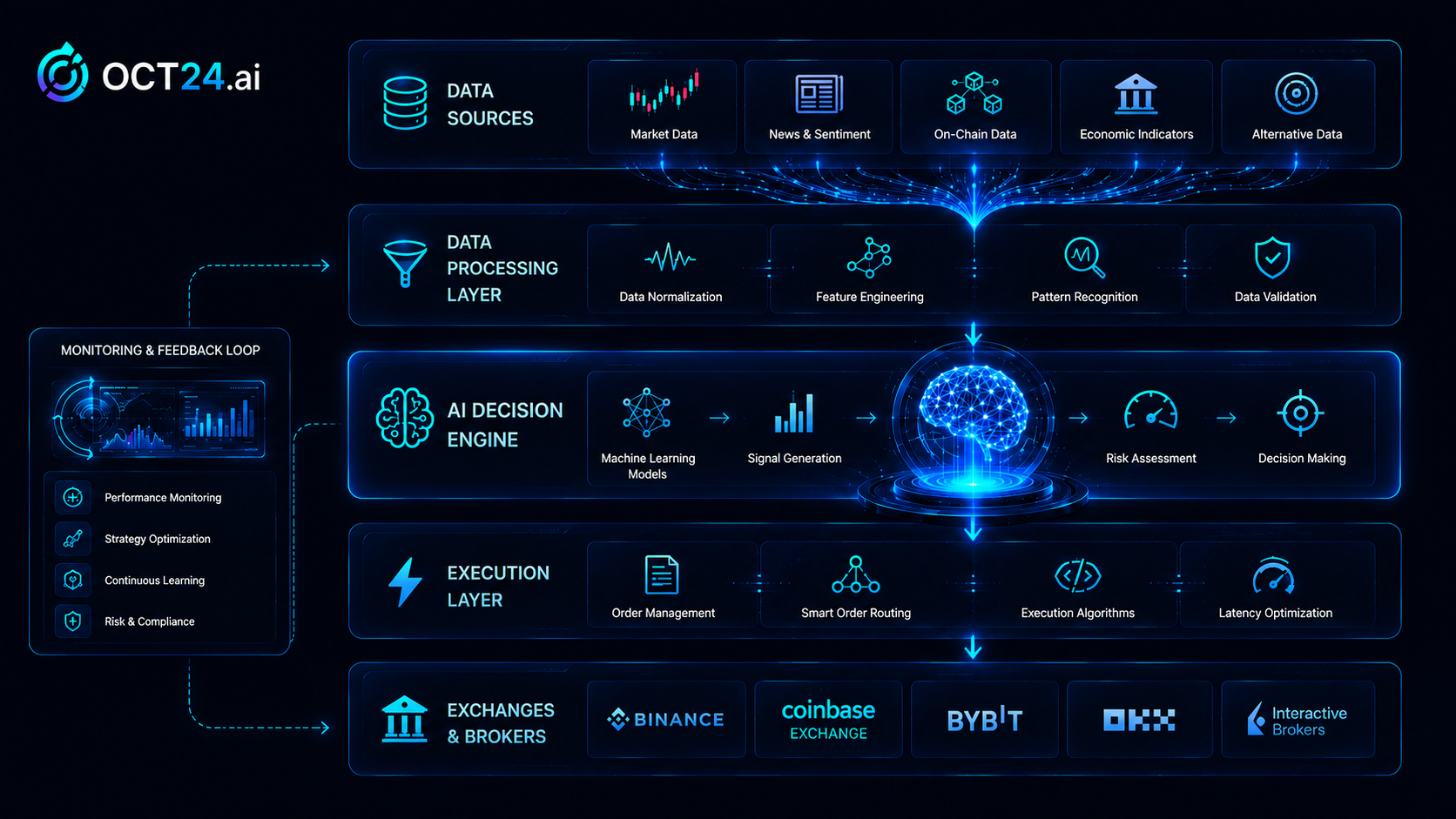
Think of an AI trading bot like a modern aircraft.
A passenger sees the aircraft take off, cruise, and land, but underneath the cockpit are dozens of systems working together simultaneously. Navigation systems, weather radar, engines, communications, and safety systems all contribute to a successful flight.
An AI trading bot works in much the same way. Rather than being one piece of software making simple buy or sell decisions, it is a collection of specialized components that work together.
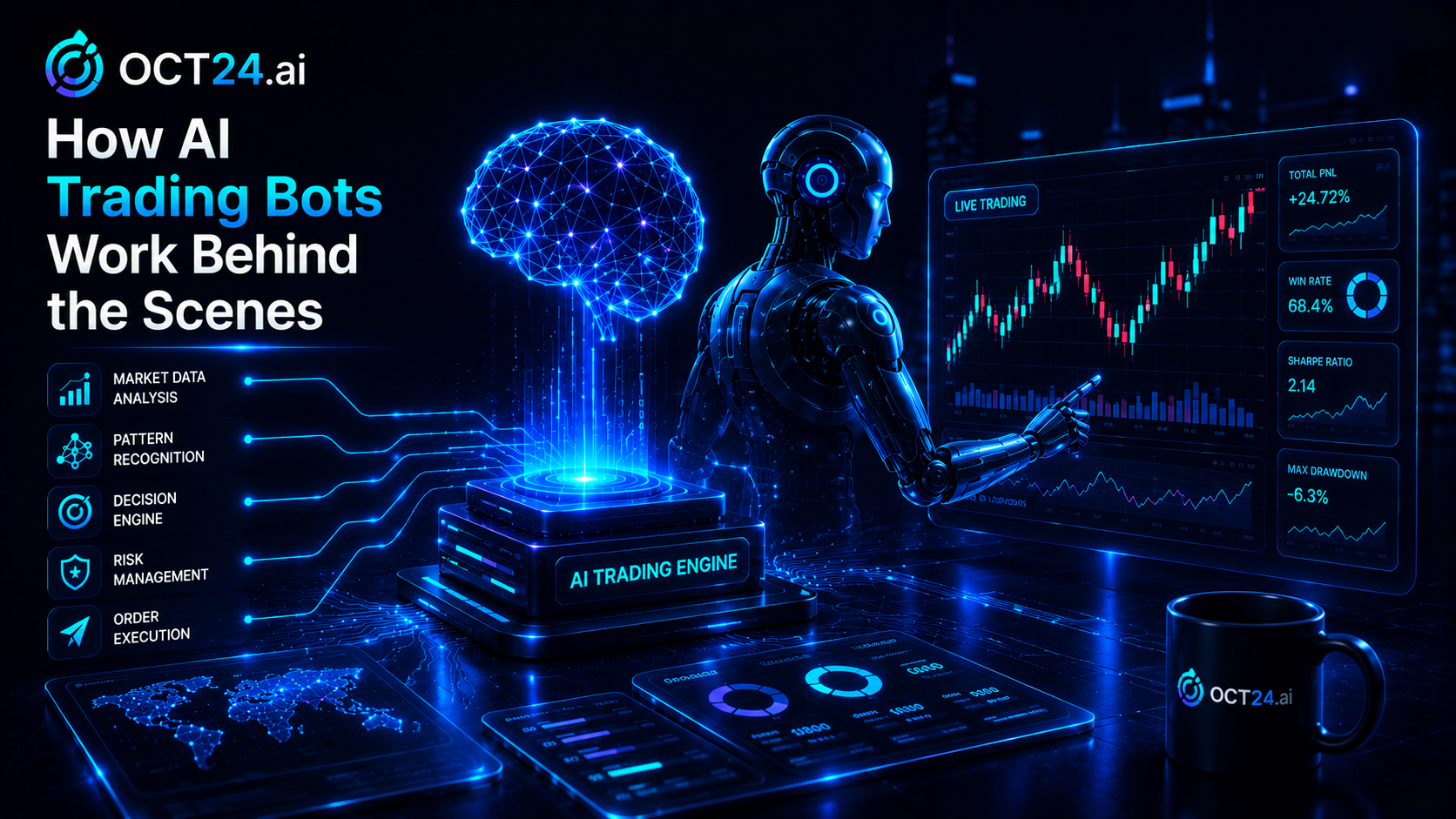
The major components include:
Market Data Engine
AI Decision Engine
Machine Learning Models
Risk Engine
Execution Engine
Performance Analytics
Each component performs a specific task before passing information to the next stage.
Market Data Engine
Every decision starts with data.
The Market Data Engine continuously receives information from exchanges and market data providers. Rather than looking at a single chart, it collects thousands of live updates every second.
Its job is to answer questions such as:
- What is the current market price?
- How much volume is being traded?
- Is buying pressure increasing?
- Is volatility rising?
- Has liquidity changed?
Without accurate market data, even the most sophisticated AI cannot make reliable decisions.
AI Decision Engine
Once data arrives, the Decision Engine begins analyzing it.
Instead of reacting to one indicator, it evaluates multiple factors simultaneously.
Imagine trying to solve a puzzle with only one piece. That is similar to relying on a single indicator.
The Decision Engine combines technical indicators, historical patterns, market sentiment, and probability models to create a much clearer picture before considering a trade.
Machine Learning Models
Machine learning allows the system to recognize relationships hidden within historical data.
Rather than memorizing exact market movements, these models learn which conditions have historically led to higher or lower probabilities of success.
As markets evolve, models can be retrained using new data, helping them remain relevant over time.
Risk Engine
Professional trading systems spend as much time evaluating risk as they do searching for opportunities.
Before any order reaches the market, the Risk Engine checks whether the trade complies with predefined rules.
These checks might include:
- Maximum risk per trade
- Current portfolio exposure
- Daily loss limits
- Position size
- Existing open positions
Only if these conditions are satisfied can the trade move to the next stage.
Execution Engine
The Execution Engine communicates directly with the exchange.
Its responsibility is simple:
Place the right order, at the right price, as quickly as possible.
Even small delays can significantly affect trading performance.
Performance Analytics
Once a trade closes, the work is not finished.
Performance Analytics records every action taken by the trading bot.
This information is used to evaluate:
- Win rate
- Average return
- Drawdown
- Execution quality
- Strategy performance
Over time, these insights help traders refine their strategies and improve decision-making.
Step 1 — Connecting to the Exchange
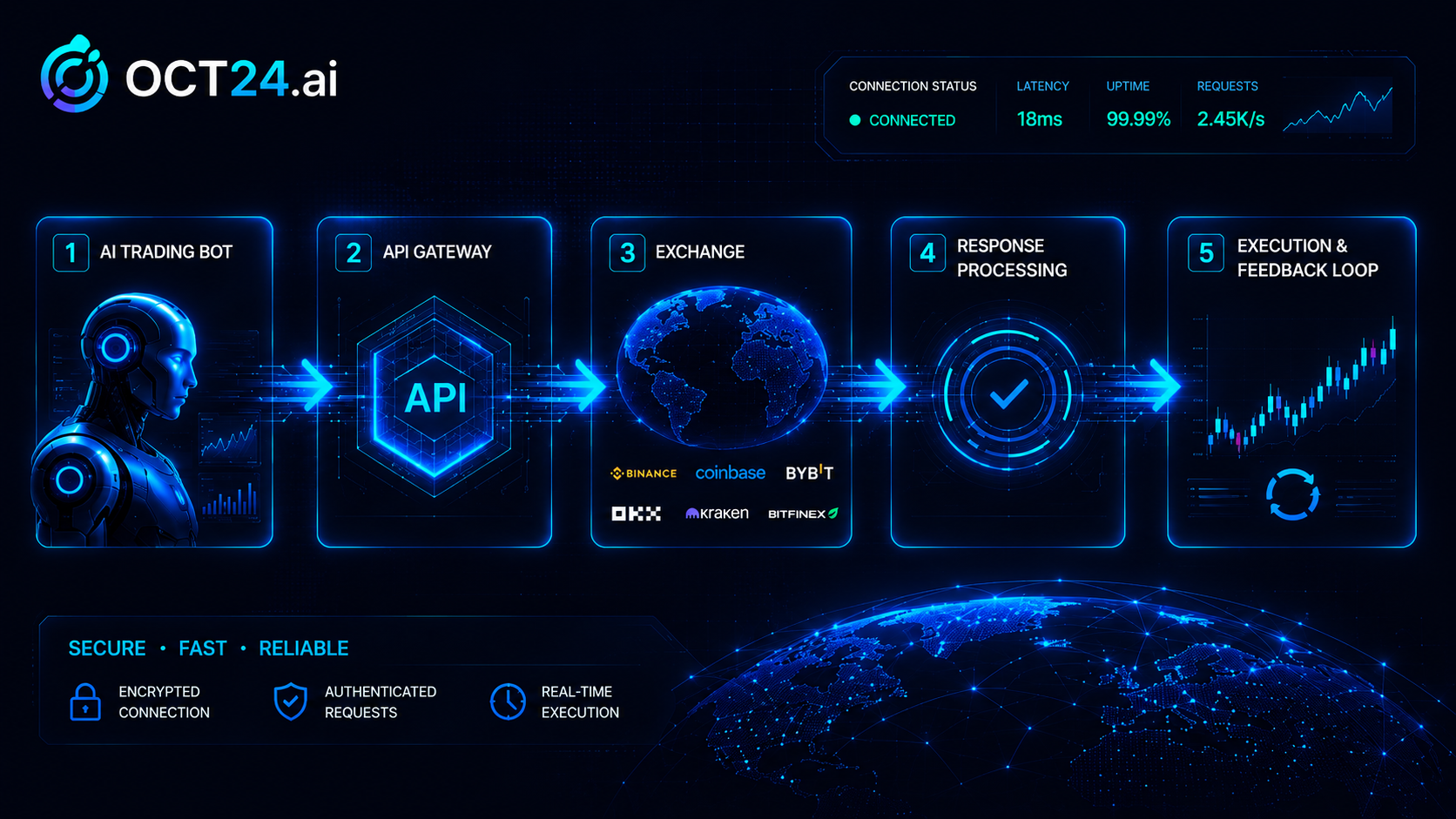
Before a trading bot can analyze markets or place trades, it must establish a secure connection with the exchange.
This is achieved using an Exchange API (Application Programming Interface).
An API acts like a secure digital bridge between the trading platform and the exchange.
Instead of manually opening a website and clicking "Buy" or "Sell," the trading bot sends encrypted requests through the API.
These requests allow the bot to:
- Receive live prices
- View order books
- Monitor account balances
- Submit new orders
- Modify existing orders
- Cancel pending orders
Authentication keys ensure only authorized users can access the account.
Low latency is equally important.
When markets move rapidly, even delays measured in milliseconds can impact execution quality.
Step 2 — Collecting Market Data
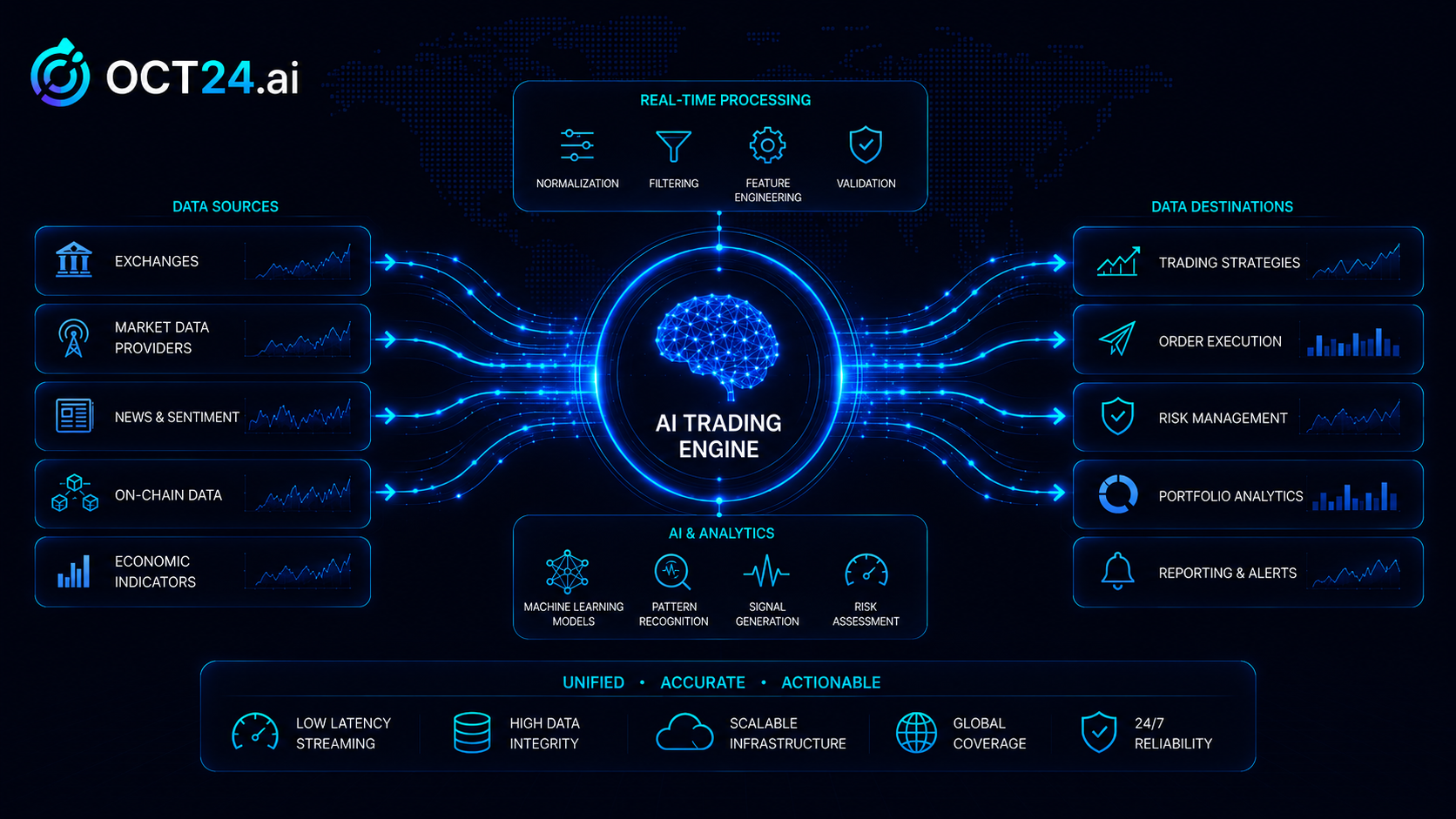
Once connected, the AI trading bot begins collecting information from multiple sources.
Professional bots rarely rely on a single chart.
Instead, they combine numerous datasets.
These include:
OHLC Candles
Every candlestick contains four important values:
- Open
- High
- Low
- Close
Together, these provide a concise summary of market activity over a specific timeframe. Learn more about How to Read Crypto Charts.
Trading Volume
Volume shows how actively an asset is being traded.
Strong price movements supported by high volume often carry greater significance than moves occurring on low volume.
Bid and Ask Prices
The difference between buyers and sellers helps determine current market liquidity.
Order Book
The order book reveals where large buying and selling interest exists.
Professional traders often use this information to identify areas of potential support or resistance.
Open Interest
In derivatives markets, open interest measures the number of active contracts.
Rising open interest can provide valuable insight into market participation.
Volatility
Markets constantly change between periods of low and high volatility.
Trading strategies often adapt depending on current market conditions.
News and Economic Events
Some systems incorporate scheduled economic announcements or breaking news that may influence prices.
Market Sentiment
Advanced AI systems can analyze financial news, community discussions, and social sentiment to identify changing market psychology.
The more high-quality information available, the better informed the trading bot becomes.
Step 3 — Analyzing the Market
Raw data has little value until it is analyzed.
This is where technical analysis meets artificial intelligence.
Rather than relying on a single indicator, AI combines hundreds of signals simultaneously.
Common analytical tools include:
- Moving Averages
- Relative Strength Index (RSI)
- MACD
- Bollinger Bands
- Support and Resistance
- Trend Strength Indicators
- Momentum Indicators
- Volatility Measurements
For example, a trading bot may identify:
- A long-term uptrend
- Increasing trading volume
- RSI returning from oversold territory
- Strong support holding
- Positive momentum building
Individually, none of these signals guarantee success.
Together, however, they create a stronger probability that market conditions favor a particular outcome.
This layered approach is one reason Algorithmic Trading Explained has become such an important topic for modern traders.
Step 4 — Machine Learning
Machine learning adds another layer of intelligence.
Instead of following fixed rules forever, machine learning models identify recurring patterns in historical data.
Importantly, they do not predict the future with certainty.
Instead, they calculate probabilities.
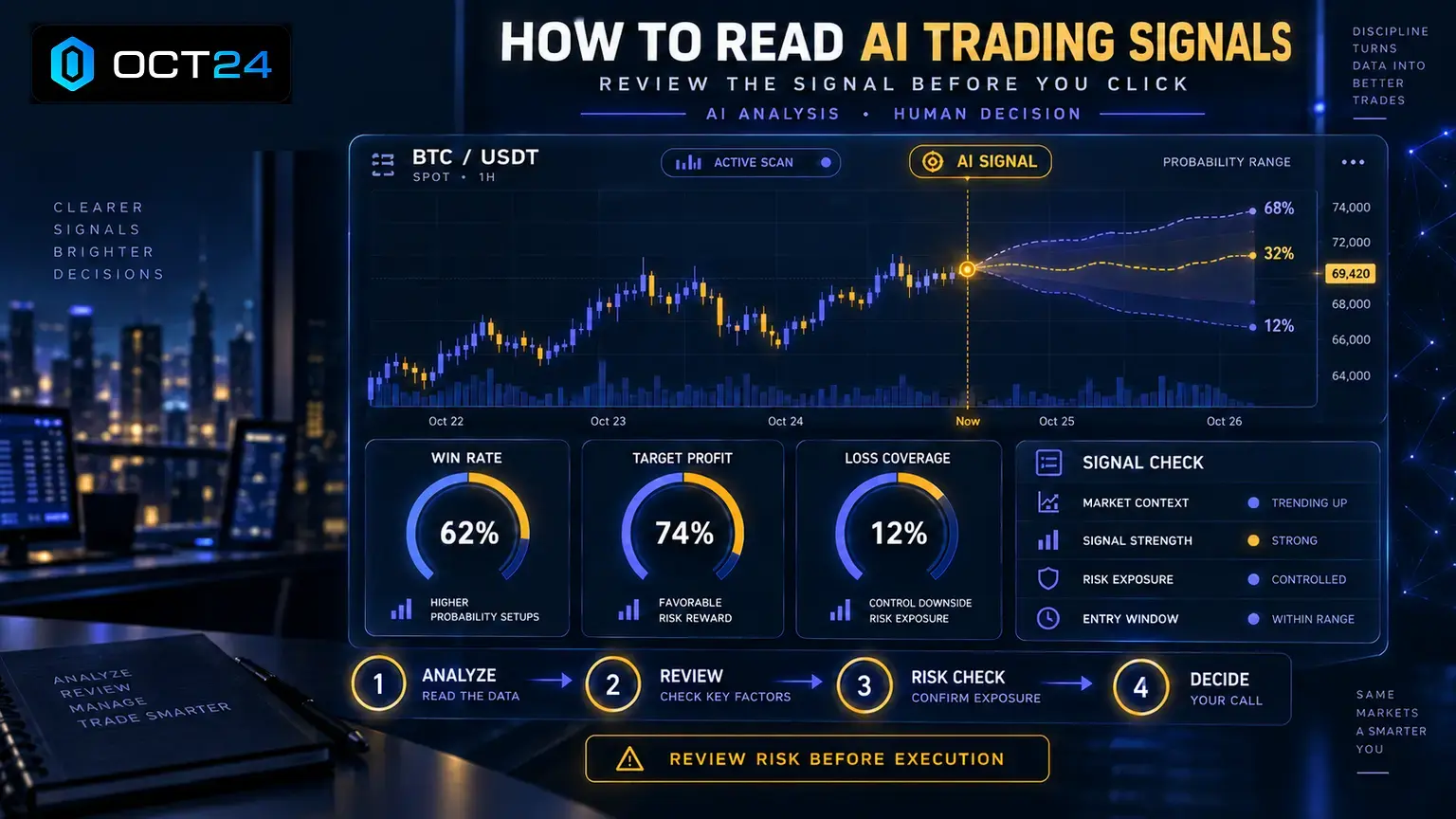
A model might determine that market conditions similar to the current environment have historically resulted in successful trades 72% of the time.
Confidence scoring allows the trading bot to distinguish between:
- High-confidence opportunities
- Moderate opportunities
- Situations where no trade should be taken
Sometimes, choosing not to trade is the smartest decision.
Step 5 — The Decision Engine
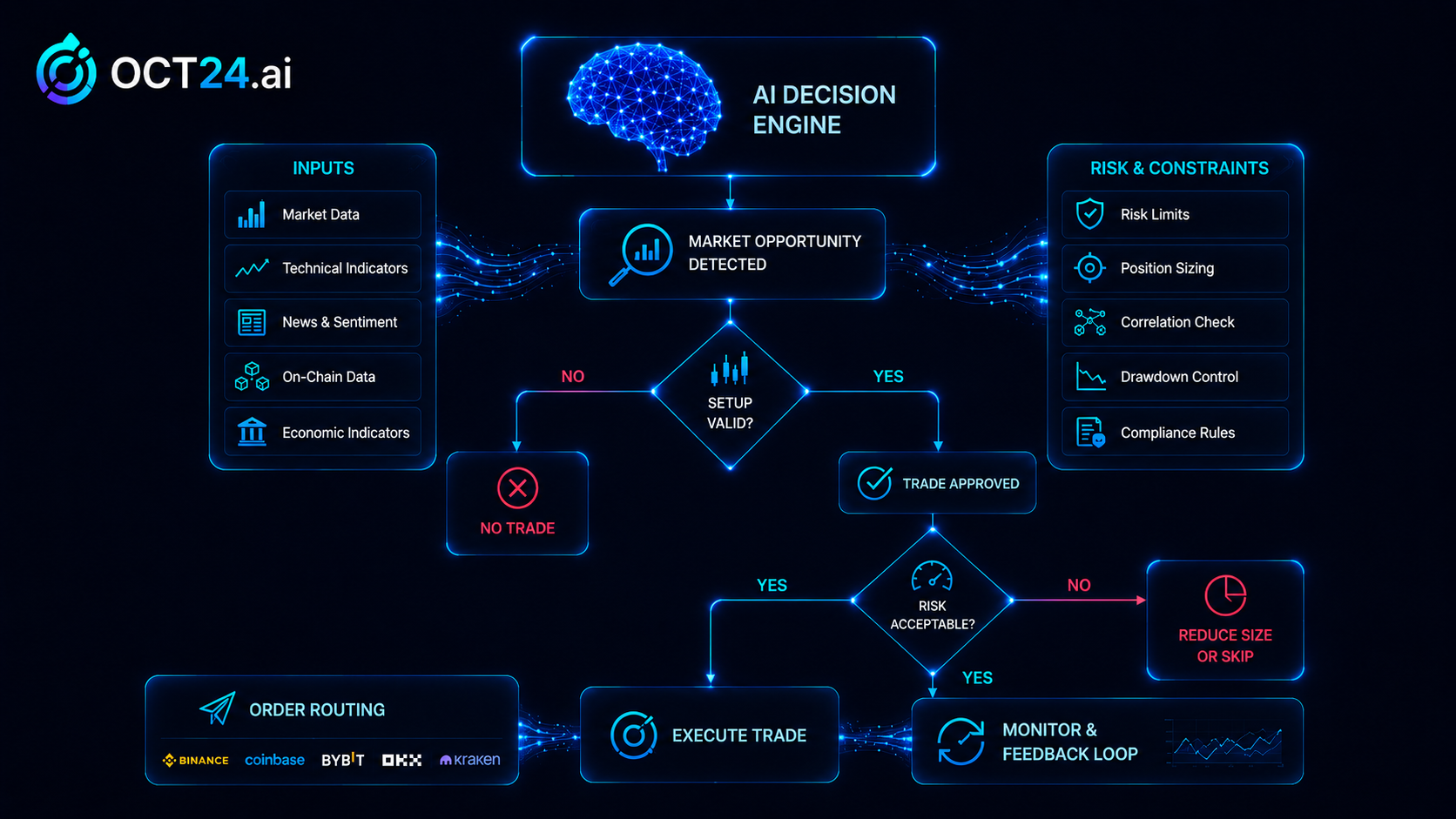
Once analysis is complete, the Decision Engine evaluates whether a trade meets every predefined condition.
Imagine the following scenario:
Bitcoin breaks above resistance.
Volume increases sharply.
Momentum strengthens.
RSI confirms the breakout.
Volatility remains manageable.
Risk limits allow additional exposure.
Only when all conditions align does the system generate a Buy signal.
Professional bots also define situations where no trade should occur.
Avoiding poor-quality trades is often more valuable than finding additional opportunities.
Step 6 — Risk Management
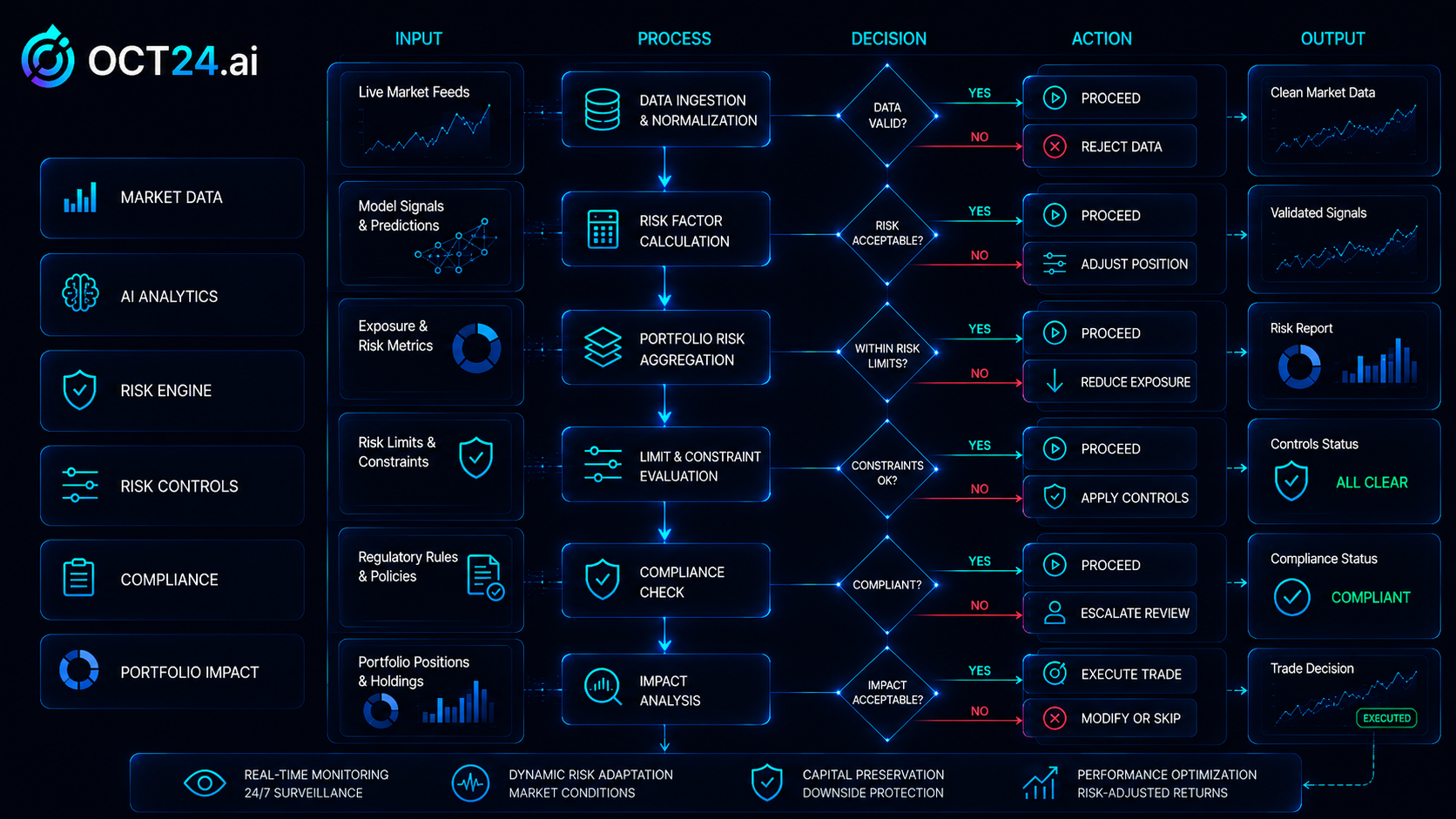
Risk management is arguably the most important component of any trading system.
Many professional trading firms devote more resources to managing risk than developing new trading strategies.
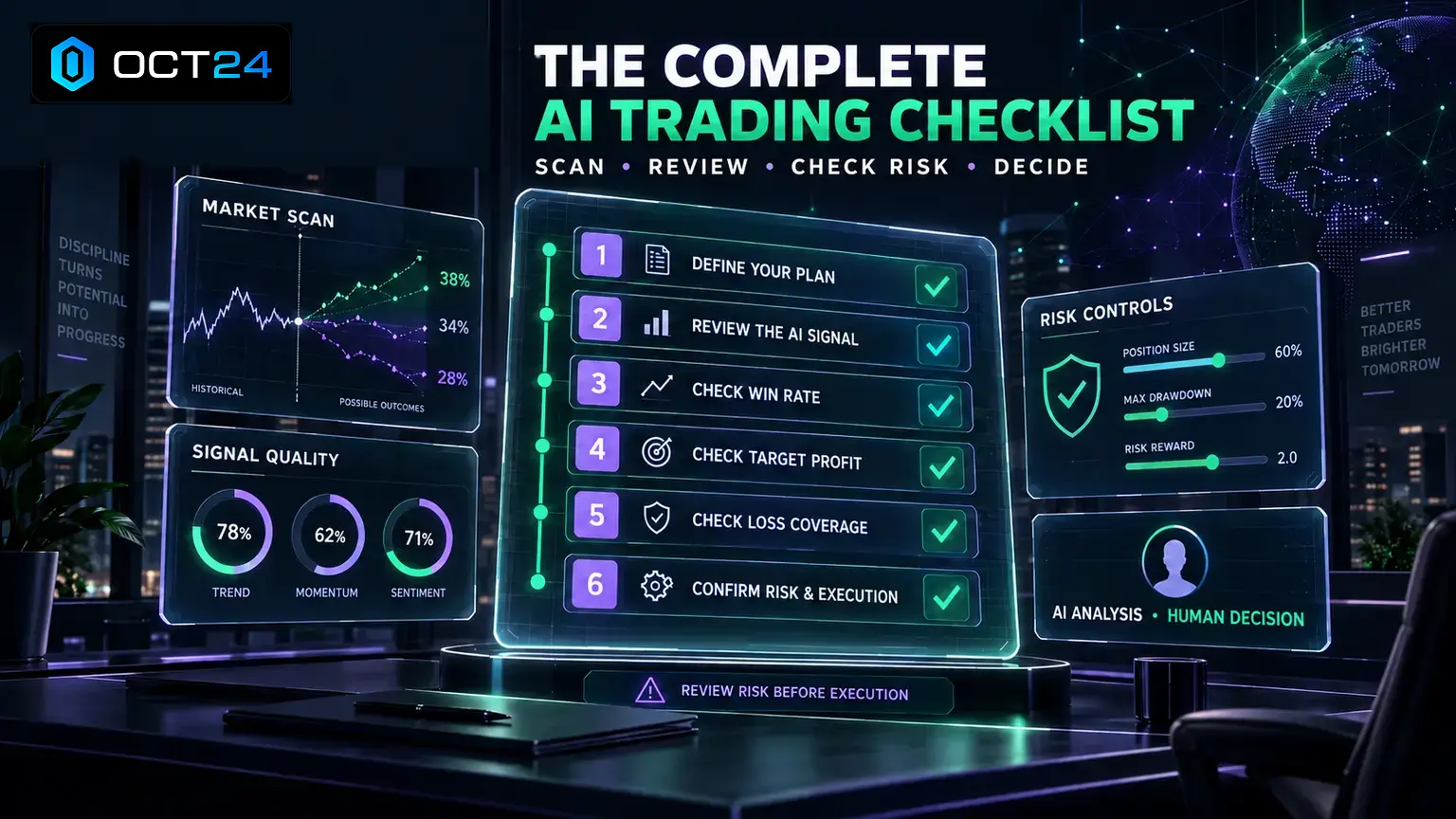
Before any order is placed, the Risk Engine evaluates multiple safeguards.
Position Sizing
Not every opportunity deserves the same investment.
Using Position Sizing Controls, the system determines how much capital should be allocated to each trade.
Portfolio Exposure
Opening multiple positions in highly correlated assets can increase overall portfolio risk.
Portfolio Diversification Tools help reduce unnecessary concentration.
Stop Loss
Every trade should define the maximum acceptable loss before entering the market.
Take Profit
Successful systems also determine where profits should be secured.
Maximum Daily Loss
Many professional systems stop trading automatically after reaching predefined daily loss limits.
Drawdown Protection
If a strategy begins underperforming, additional safeguards may reduce trading activity until conditions improve.
Circuit Breakers
Extreme market events can trigger automatic pauses, preventing new trades until stability returns.
This layered approach is central to effective Trading Bot Risk Management.
Step 7 — Order Execution
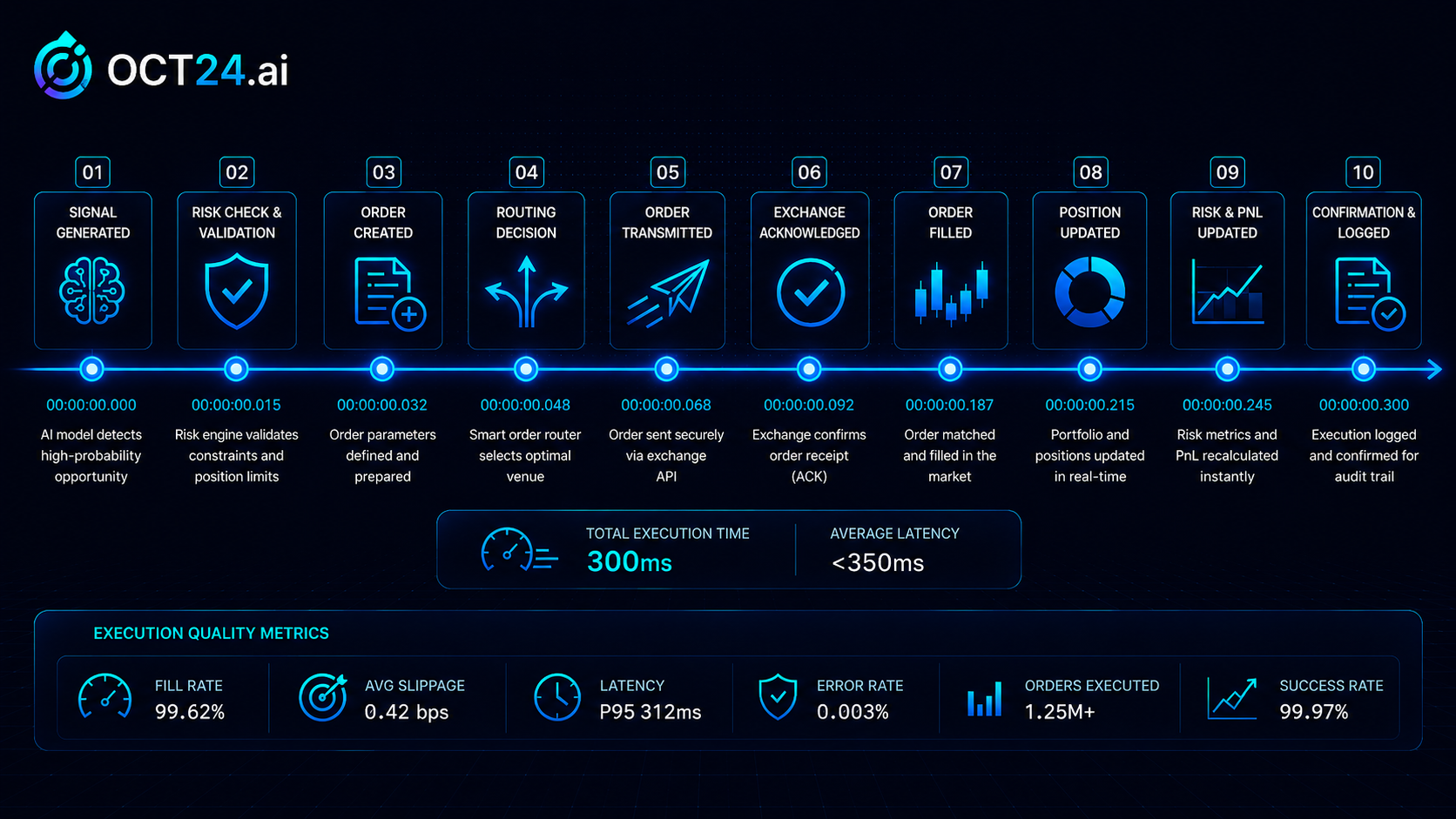
Once approved, the Execution Engine submits the order.
Different order types serve different purposes.
Order Type:
Market Order
Purpose:
Immediate execution
Order Type:
Limit Order
Purpose:
Execute at a specified price
Order Type:
Stop Order
Purpose:
Trigger after a price level is reached
Execution quality depends on several factors.
Liquidity
Highly liquid markets generally provide smoother execution.
Slippage
During volatile conditions, the executed price may differ slightly from the expected price.
Partial Fills
Large orders are sometimes filled across multiple transactions.
Professional execution systems continuously monitor these factors to optimize performance.
Step 8 — After the Trade
Once the position closes, valuable information becomes available.
Every completed trade is logged.
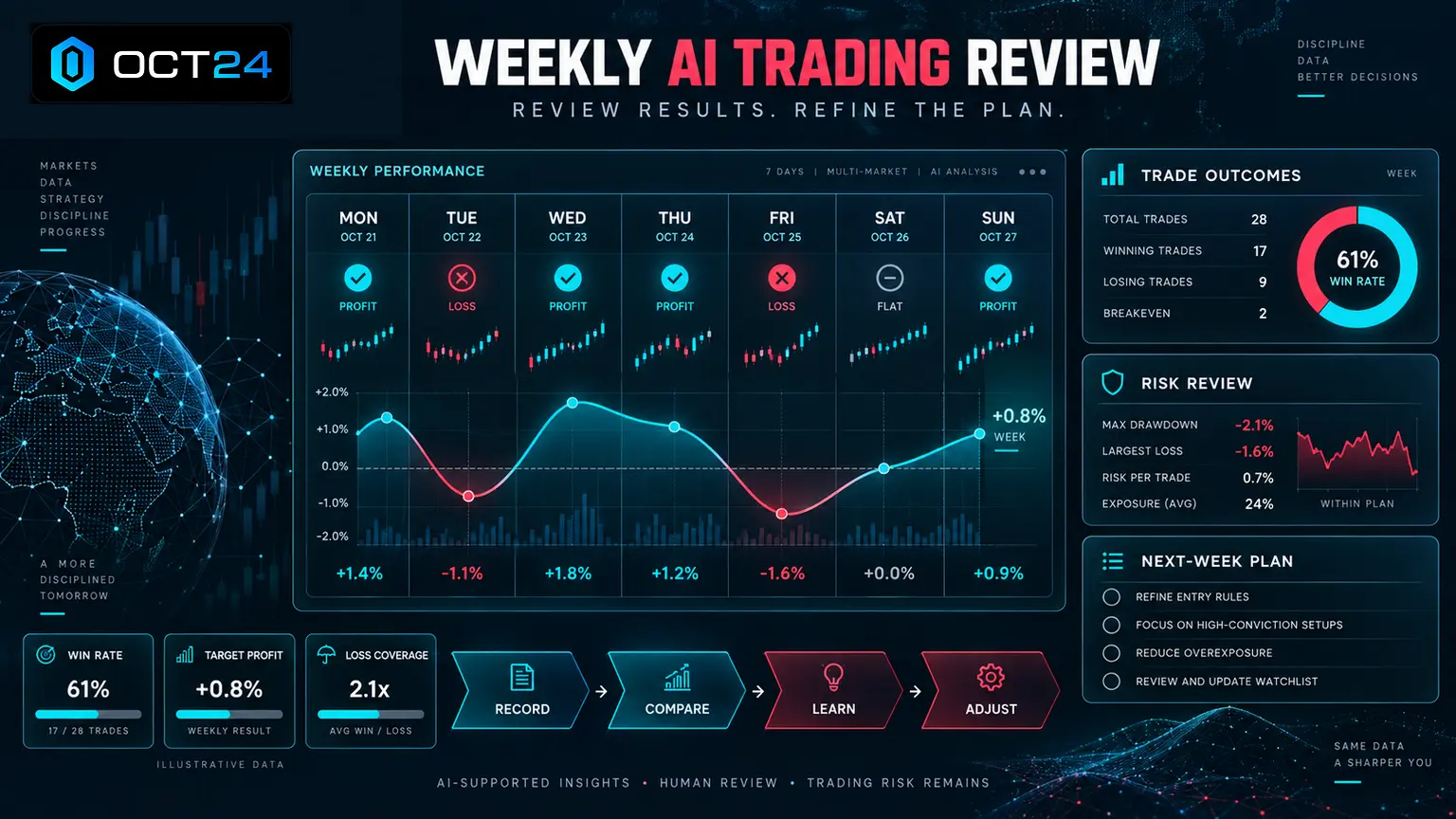
Performance metrics may include:
- Entry price
- Exit price
- Holding time
- Profit or loss
- Win rate
- Maximum drawdown
- Risk-to-reward ratio
These analytics allow traders to evaluate long-term performance rather than judging success based on individual trades.
Why Human Oversight Still Matters
AI trading bots are powerful tools, but they are not autonomous financial experts.
Markets evolve, regulations change, and unexpected events occur.
Human oversight remains essential for:
- Reviewing strategy performance
- Adjusting risk parameters
- Monitoring changing market conditions
- Evaluating new opportunities
The strongest results often come from combining intelligent automation with informed human decision-making.
While understanding how an AI trading bot works is important, technology is only one part of successful trading. Understanding the Benefits of AI Trading is equally important, including improved consistency, faster market analysis, reduced emotional decision-making, and the ability to monitor markets around the clock.
For a more detailed comparison, see Trading Bots vs Human Traders.
How OCT24 Uses AI Trading Technology
The G6 Trading Bot is designed to help traders analyze markets more efficiently by combining automation, data analysis, and structured risk controls.
Rather than relying on a single indicator, the platform evaluates multiple market conditions simultaneously to support more informed trading decisions.
Features include:
- AI-assisted market analysis
- Real-time monitoring
- Automated workflows
- Integrated risk controls
- Portfolio management support
The goal is not to remove the trader from the process, but to provide intelligent tools that simplify analysis and improve consistency.
Frequently Asked Questions
How fast can an AI trading bot make decisions?
Many modern systems can analyze data and submit orders within milliseconds, depending on exchange connectivity and infrastructure.
Does an AI trading bot predict the future?
No. AI evaluates probabilities based on historical and real-time data rather than making certain predictions.
What data does an AI trading bot analyze?
Trading bots may analyze price action, volume, order books, volatility, technical indicators, market sentiment, and economic events.
Why is risk management so important?
Even highly accurate strategies experience losing trades. Risk management helps limit losses and preserve capital over the long term.
Can beginners use AI trading bots?
Yes. Many AI trading platforms provide user-friendly interfaces, educational resources, and automated features to help beginners get started.
Do AI trading bots work with cryptocurrency?
Yes. Cryptocurrency markets operate 24/7, making them particularly well suited to automated trading systems.
Can one bot monitor multiple assets?
Yes. Modern AI trading software can analyze hundreds of markets simultaneously.
Are trading bots worth it?
This depends on your trading goals, strategy, and risk management. AI trading bots can analyze markets and execute trades far faster than humans, but they are not guaranteed to generate profits.
To help you decide whether automation is right for you, read our complete guide: Are Trading Bots Worth It?
What's the next step after learning how bots work?
Understanding the technology is only the beginning. Exploring Automated Trading and practical risk management techniques will help you use these tools more effectively.
Final Summary
An AI trading bot is far more than an automated buy-and-sell tool. Behind every trade lies a sophisticated workflow that begins with live market data, progresses through technical analysis and machine learning, passes through strict risk controls, and ends with fast, efficient execution.
Every stage has a purpose. Market data provides the raw information, analysis identifies potential opportunities, the decision engine filters those opportunities, the risk engine protects capital, and the execution engine delivers trades with speed and precision.
Understanding this lifecycle helps explain why AI trading has become such an important part of modern financial markets. More importantly, it shows that successful automation depends not only on finding opportunities, but also on managing risk, maintaining discipline, and continuously evaluating performance.
If you're ready to see how intelligent automation can support your trading journey, explore the G6 Trading Bot, learn more About OCT24, and Start Trading with OCT24.