
AI Trading vs Manual Trading: Which Is Better?
Should you trust artificial intelligence to trade on your behalf, or should you make every trading decision yourself?
That is the central question behind AI Trading vs Manual Trading. Both approaches can be effective, but they work in very different ways. Manual trading depends on human research, judgment, timing, and discipline. AI trading uses data, algorithms, automation, and predefined rules to analyze markets and support trading decisions.
Neither approach is automatically better for everyone. The right choice depends on your goals, experience level, available time, risk tolerance, and preferred trading style.
For some traders, manual trading offers flexibility and control. For others, AI trading provides structure, speed, and consistency. Many modern traders use a hybrid approach, combining human strategy with AI-powered analysis and automation.
This guide compares both methods clearly so you can decide which one makes more sense for your trading journey.
What Is Manual Trading?
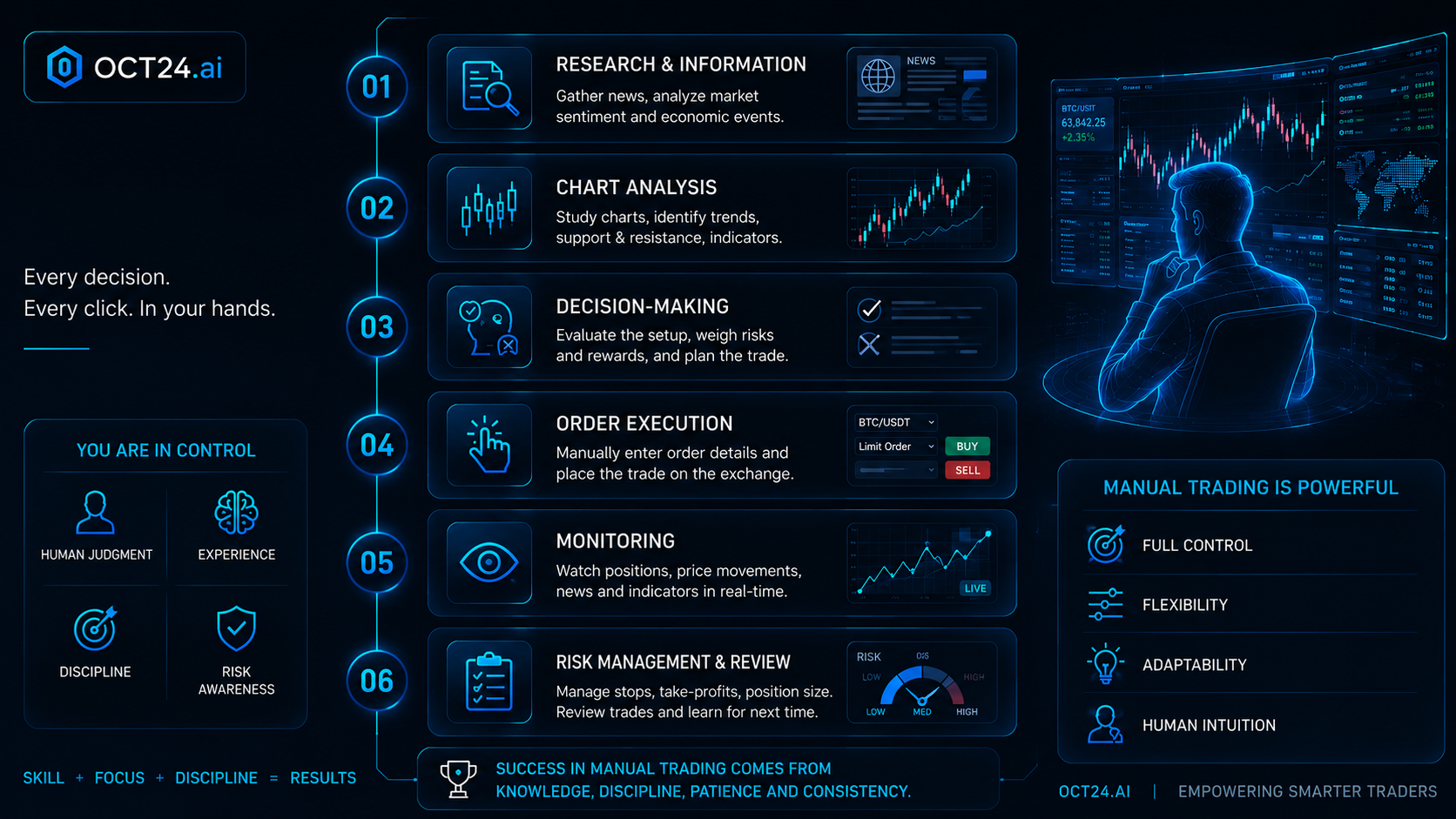
Manual trading is the traditional approach to buying and selling financial assets. A manual trader studies the market, analyses price movements, decides when to enter or exit a trade, and places the order themselves.
A manual trader may use:
- Price charts
- Technical indicators
- News reports
- Economic data
- Market sentiment
- Personal experience
- Trading journals
- Risk management rules
For example, a manual crypto trader might open a Bitcoin chart, look for support and resistance levels, check trading volume, review recent news, and decide whether the market looks strong enough to enter a long position.
Manual trading gives the trader full control. The trader decides what to trade, when to trade, how much to risk, and when to exit.
However, this control also comes with responsibility. Manual traders must manage emotions, avoid impulsive decisions, monitor positions, and stay disciplined even during volatile market conditions.
A manual trader is like a pilot flying a plane by hand. They can respond creatively to changing conditions, but they must remain focused, calm, and alert at all times.
What Is AI Trading?
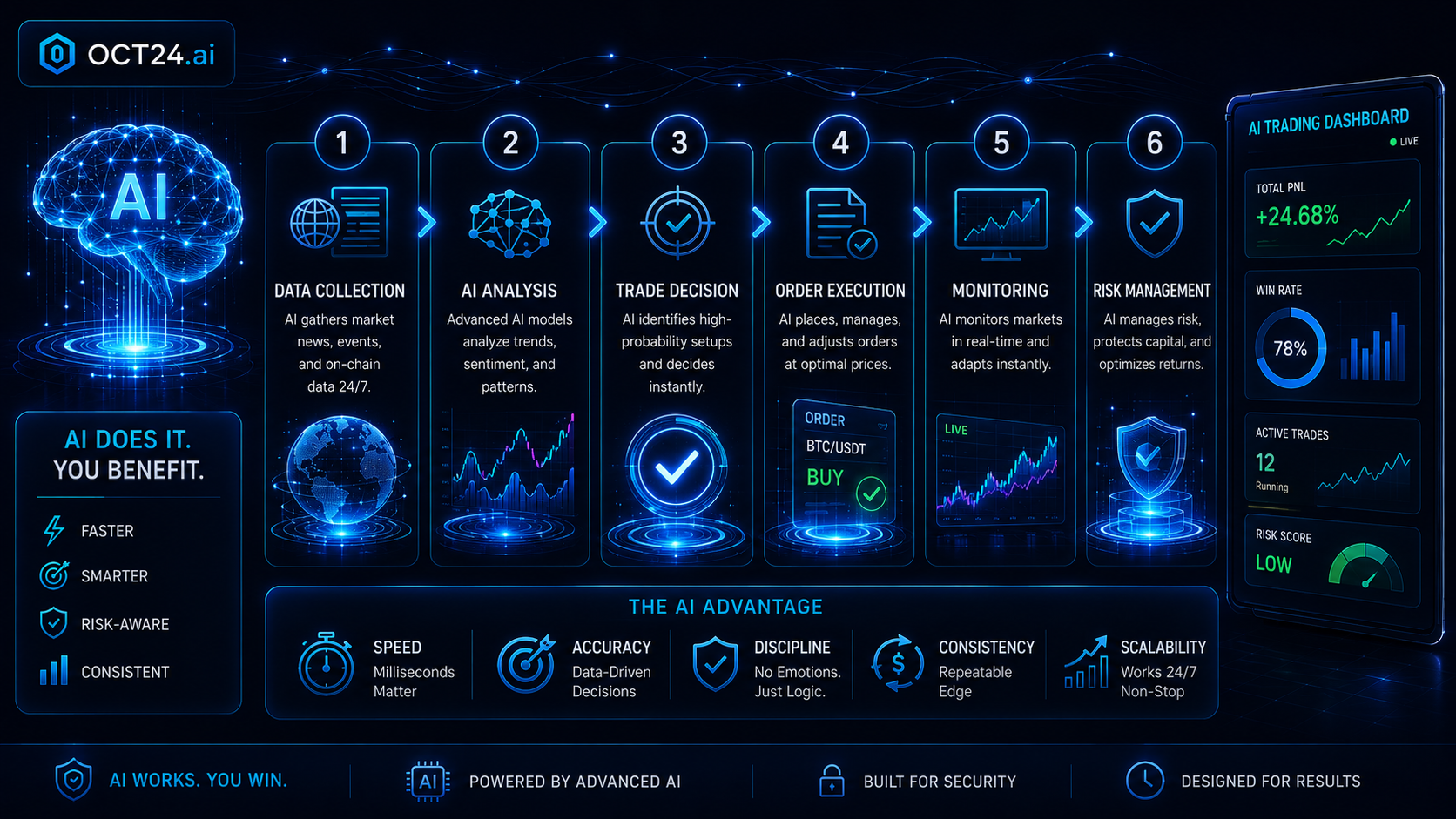
AI trading uses artificial intelligence, algorithms, and automation to analyze markets and support trading decisions.
Instead of manually checking every chart, an AI trading system can process large amounts of market data, identify potential opportunities, monitor risk conditions, and execute trades based on predefined logic.
If you are new to the concept, start with our complete guide to AI Trading. For a deeper technical explanation, read How AI Trading Bots Work Behind the Scenes.
In simple terms, AI trading is designed to help traders make faster, more consistent, and more data-driven decisions.
An AI trading system may analyze:
- Price action
- Market volume
- Volatility
- Technical indicators
- Order book activity
- Historical patterns
- Sentiment signals
- Portfolio exposure
An AI trading bot does not get tired, distracted, impatient, or emotional. It follows its rules consistently.
However, AI trading is not magic. It does not guarantee profits, and it still requires proper strategy, risk controls, and human oversight.
AI Trading vs Manual Trading: Side-by-Side Comparison
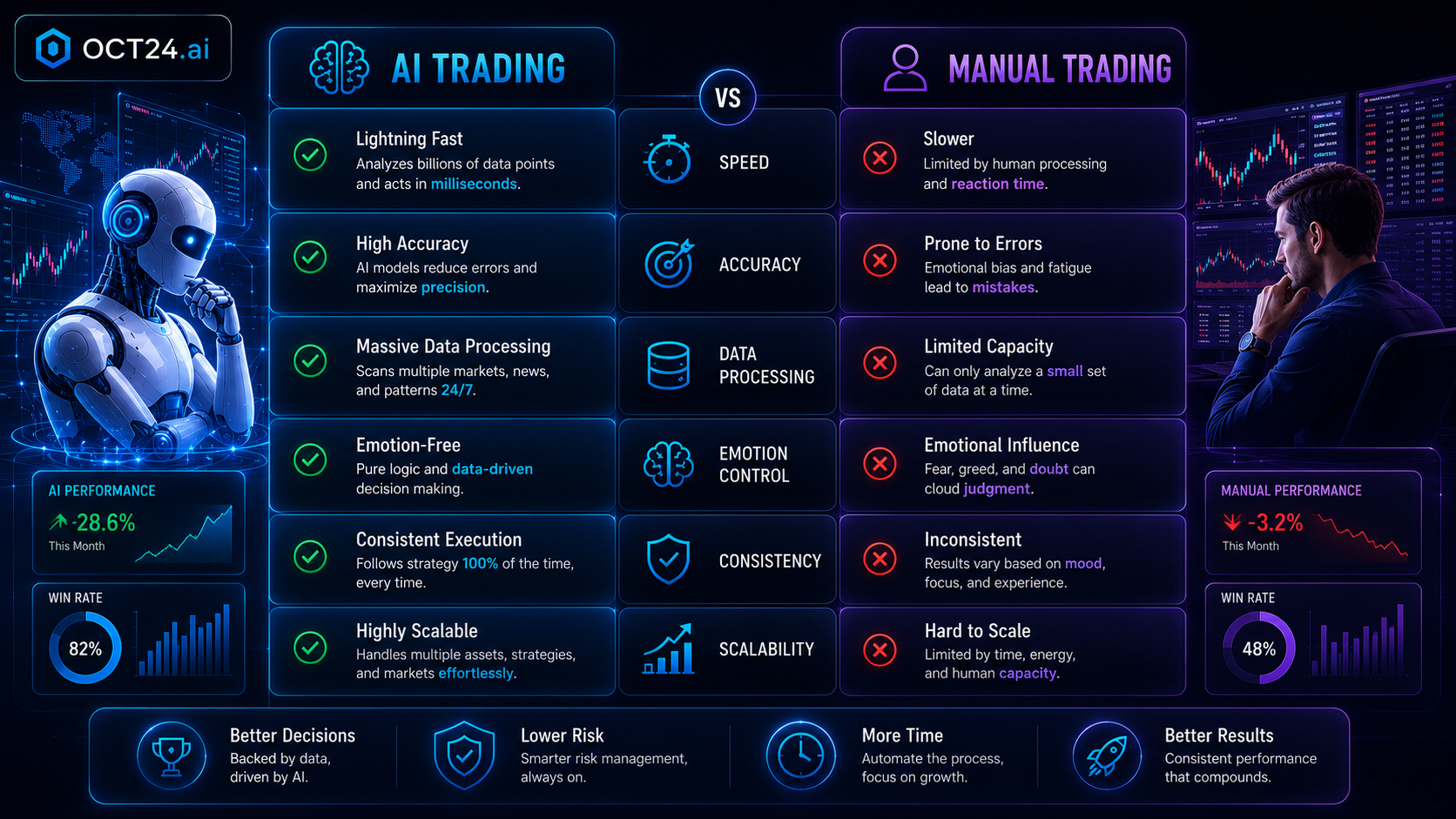
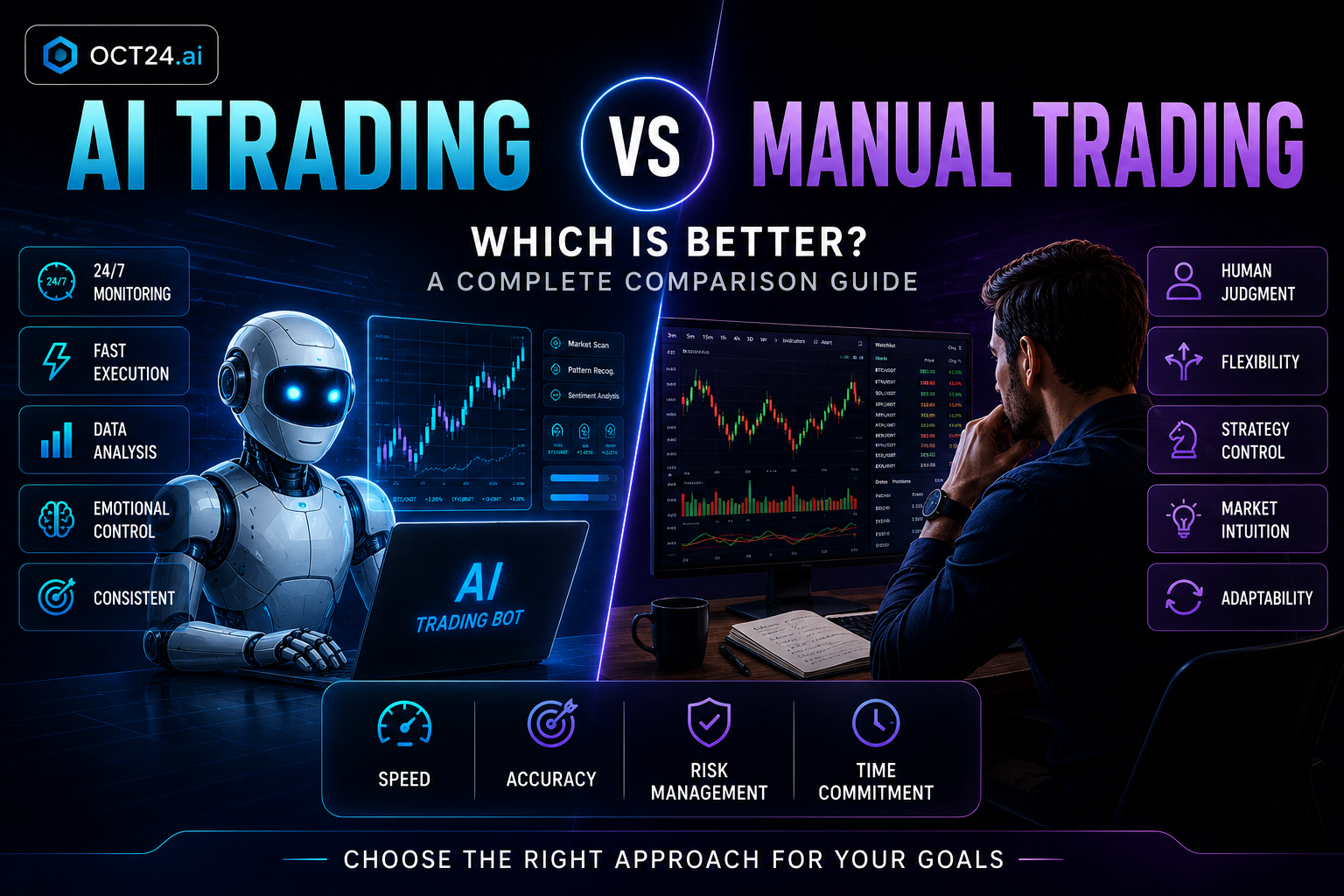
The main difference between AI trading and manual trading is how decisions are made.
Manual trading relies on human judgement. AI trading relies on data processing, algorithms, automation, and predefined rules.
Speed
AI trading is much faster than manual trading.
An AI system can scan multiple markets, analyze indicators, calculate risk, and send an order in milliseconds. A human trader usually needs more time to review charts, interpret signals, and place a trade.
This matters most in fast-moving markets such as cryptocurrency, forex, or high-volatility assets.
Manual trading can still work well for slower strategies, such as swing trading or long-term investing, where decisions do not need to be made instantly.
Accuracy
Accuracy does not mean predicting the future. It means following a strategy correctly and consistently.
Manual traders may make mistakes when they are tired, rushed, distracted, or emotional. They might enter the wrong order size, ignore a stop loss, or take a trade that does not match their plan.
AI trading systems can reduce these execution errors because they follow predefined rules.
However, AI is only as good as the strategy, data, and risk settings behind it. A poorly designed algorithm can still produce poor results.
Emotional Control
This is one of the biggest differences.
Manual traders often struggle with fear, greed, hesitation, and overconfidence. These emotions can lead to revenge trading, FOMO, and abandoning a trading plan.
AI trading removes emotional decision-making from execution. If the conditions are met, the system acts. If the conditions are not met, it does nothing.
That consistency is one of the major Benefits of AI Trading.
Market Monitoring
Manual traders can only monitor a limited number of markets at once.
AI trading software can monitor many assets simultaneously. This is especially useful in crypto markets, where prices move 24/7.
A human trader may miss an opportunity while sleeping, working, or focusing on another asset. An automated trading system can continue monitoring in the background.
Consistency
Manual traders may trade differently depending on mood, confidence, recent losses, or market pressure.
AI trading systems are more consistent because they follow the same rules every time.
This does not mean every trade will be profitable. It means the process is repeatable.
In trading, a repeatable process is often more valuable than a lucky trade.
Scalability
Manual trading becomes harder as the number of markets increases.
A trader can realistically monitor only a small number of charts carefully. AI trading can scale across many assets, timeframes, and strategies.
For example, an AI trading bot may monitor Bitcoin, Ethereum, Solana, forex pairs, and multiple indicators at the same time.
A manual trader would struggle to do that with the same speed and consistency.
Learning Curve
Manual trading requires learning chart reading, market structure, technical indicators, risk management, psychology, and execution.
AI trading also requires learning, but the focus is different. Traders need to understand how automation works, how risk settings are configured, and how to interpret AI-generated insights.
Manual trading teaches market intuition. AI trading teaches system-based thinking.
Both require education.
Time Commitment
Manual trading is time-intensive.
You need to research, analyze, execute, monitor, and review trades yourself.
AI trading can reduce the time spent on repetitive tasks. It can help with scanning markets, identifying setups, and executing rules.
This makes AI trading attractive to busy professionals who cannot watch charts all day.
Risk Management
Manual traders must apply risk rules themselves. This requires discipline.
AI systems can apply risk controls automatically, including stop losses, position limits, and exposure rules.
That said, the trader still needs to set sensible risk parameters. Automation does not remove responsibility.
Strong Trading Bot Risk Management remains essential.
Adaptability
Manual traders can adapt quickly to unusual events.
For example, if unexpected news breaks, a human trader may understand the wider context faster than a system that relies mostly on historical patterns.
AI systems are excellent at processing structured data, but humans are often better at interpreting complex, unusual, or emotional market events.
This is why many traders combine both approaches.
A Day in the Life of an AI Trader vs a Manual Trader
To understand the difference, imagine two traders starting the same trading day.
Morning Preparation
The manual trader begins by checking charts, reading market news, reviewing economic events, and marking key levels.
They may spend 30 minutes to several hours preparing.
The AI trader starts by reviewing system alerts, open positions, risk exposure, and performance data. The platform has already scanned markets overnight.
The AI trader is not starting from zero. They are reviewing what the system has already processed.
Market Analysis
The manual trader studies each chart individually. They check indicators, price action, support and resistance, and volume.
If they trade crypto, they may also need to understand How to Read Crypto Charts across multiple timeframes.
The AI trader uses AI-generated insights to identify potential setups. The system may highlight assets with unusual volume, momentum shifts, or changing volatility.
The human still makes strategic decisions, but the AI reduces the manual workload.
Trade Execution
The manual trader places the order themselves.
This gives full control, but also introduces the risk of hesitation or poor timing.
The AI trader may use automation to execute once predefined conditions are met. This can reduce delay and improve consistency.
This is where Automated Trading becomes especially useful.
Monitoring
The manual trader must watch the trade closely, especially if the market is volatile.
The AI trader can rely on real-time monitoring, alerts, and automated risk controls.
This does not mean the AI trader ignores the trade. It means they are supported by systems that continue watching even when they are not staring at the screen.
Risk Management
The manual trader must choose position size, stop loss, and take profit levels.
The AI trader can use predefined rules and Position Sizing Controls to help calculate exposure more consistently.
For broader portfolio protection, Portfolio Diversification Tools can help reduce the risk of being overexposed to one market or asset class.
End-of-Day Review
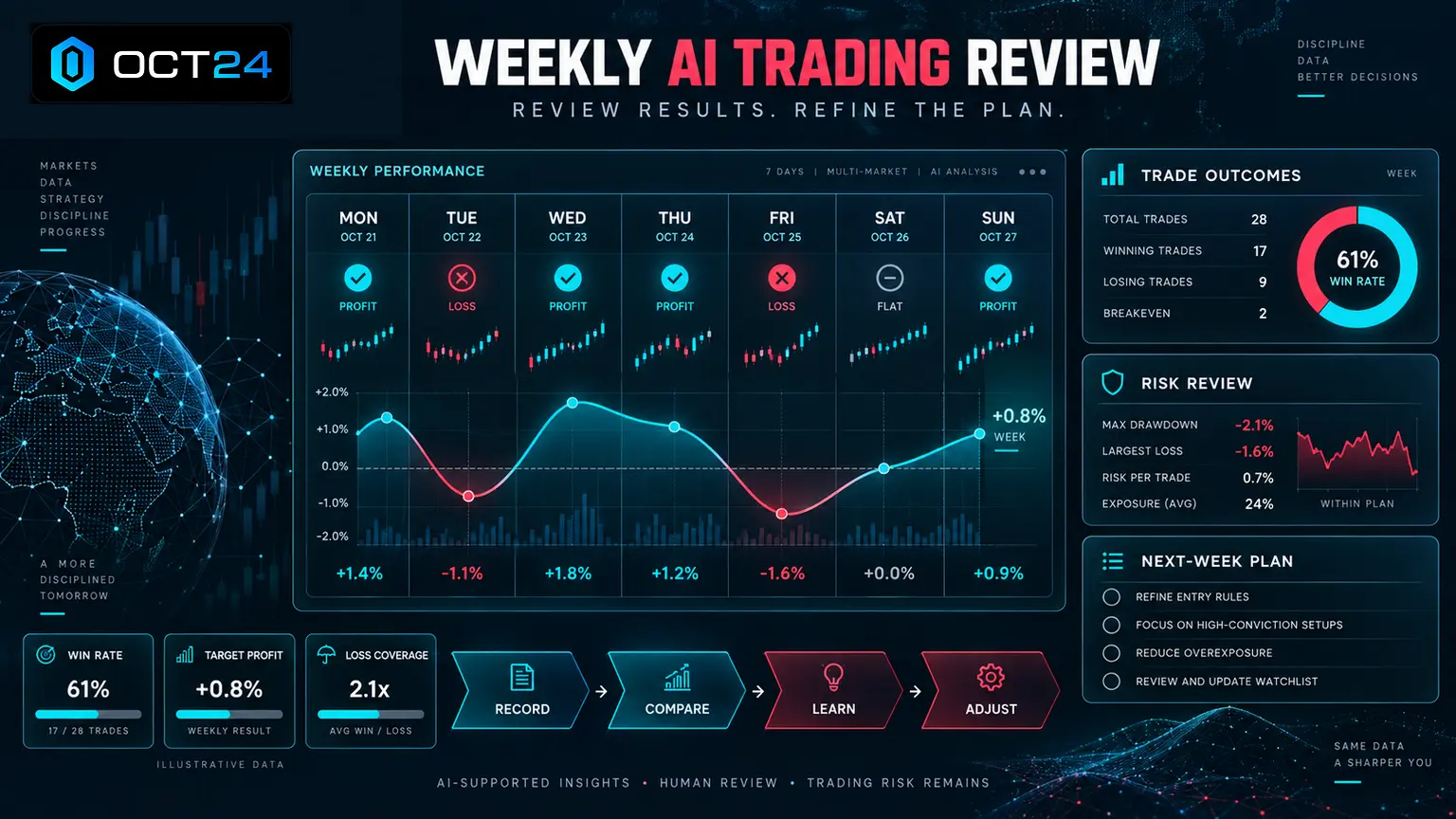
The manual trader reviews their trades and writes notes in a journal.
The AI trader reviews analytics, performance metrics, execution quality, and system behavior.
Both approaches benefit from review. The difference is that AI trading can capture more structured data automatically.
Where AI Trading Has the Advantage
AI trading is strongest when speed, consistency, and data processing matter most.
24/7 Monitoring
AI trading can monitor markets continuously.
This is especially useful for cryptocurrency markets, which do not close overnight or on weekends.
A crypto trading bot can scan markets while the trader sleeps.
Processing Large Datasets
AI can analyze far more information than a human trader can process manually.
It can combine price action, volume, volatility, indicators, historical data, and sentiment signals at the same time.
A manual trader may look at five or ten signals. AI trading software can evaluate hundreds.
Fast Execution
AI systems can react quickly when conditions are met.
This is useful in volatile markets where price can move rapidly.
A delay of even a few seconds can affect entry price, slippage, and trade quality.
Consistency
AI does not change its mind because of fear or excitement.
It follows the rules it has been given.
This makes AI useful for traders who struggle with discipline.
Removing Emotional Bias
Many traders know what they should do, but fail to do it under pressure.
They move stop losses, enter too late, exit too early, or overtrade after a loss.
AI trading can help reduce these emotional mistakes by applying rules consistently.
Multi-Market Analysis
AI can monitor many markets simultaneously.
This is helpful for active traders who want to track multiple crypto pairs, forex pairs, or asset classes.
A human trader may miss opportunities simply because they cannot watch everything at once.
Where Manual Trading Still Wins
AI trading has many advantages, but manual trading remains valuable.
Macroeconomic Interpretation
Markets do not move only because of chart patterns.
Interest rates, inflation, regulation, geopolitics, and central bank decisions can all influence price behavior.
Human traders are often better at interpreting these broader themes.
Breaking News
AI can process news quickly, but humans may better understand nuance.
For example, two headlines may look similar but have very different market implications depending on context.
A skilled trader can interpret tone, timing, and significance.
Market Intuition
Experienced traders develop intuition through years of observation.
They may recognize when a market "feels wrong" even if the indicators appear favorable.
This intuition is difficult to fully automate.
Strategy Adaptation
AI follows predefined logic.
Humans can question whether the strategy itself still makes sense.
If market structure changes, a human trader may adapt faster than an automated system that still relies on old assumptions.
Creativity
Manual traders can develop new ideas, test unusual setups, and combine information in creative ways.
AI is powerful, but it is still guided by data, models, and rules.
Exceptional Market Events
During extreme events, markets may behave in ways that historical data does not capture well.
Human oversight is especially important during these periods.
This is why the debate around Trading Bots vs Human Traders is not really about replacement. It is about understanding where each side performs best.
Common Mistakes Manual Traders Make That AI Helps Avoid
Manual trading gives freedom, but freedom can create mistakes.
Revenge Trading
A trader takes a loss and immediately tries to win the money back.
This often leads to larger losses.
AI does not revenge trade. It waits for the next valid setup.
Fear of Missing Out
FOMO happens when a trader enters late because they are afraid of missing a move.
AI systems can reduce this by only acting when predefined conditions are met.
Overtrading
Manual traders sometimes take too many trades because they are bored, impatient, or emotionally attached to the market.
AI can help filter low-quality setups.
Hesitation
A manual trader may see a valid setup but hesitate.
By the time they act, the opportunity may be gone.
AI can execute immediately when conditions are satisfied.
Ignoring Stop Losses
One of the most damaging mistakes is moving or removing a stop loss.
AI systems can apply stop-loss rules automatically.
Confirmation Bias
Manual traders sometimes look only for information that supports their existing opinion.
AI can evaluate data more objectively, although it still depends on how the system is designed.
Can You Combine AI Trading and Manual Trading?
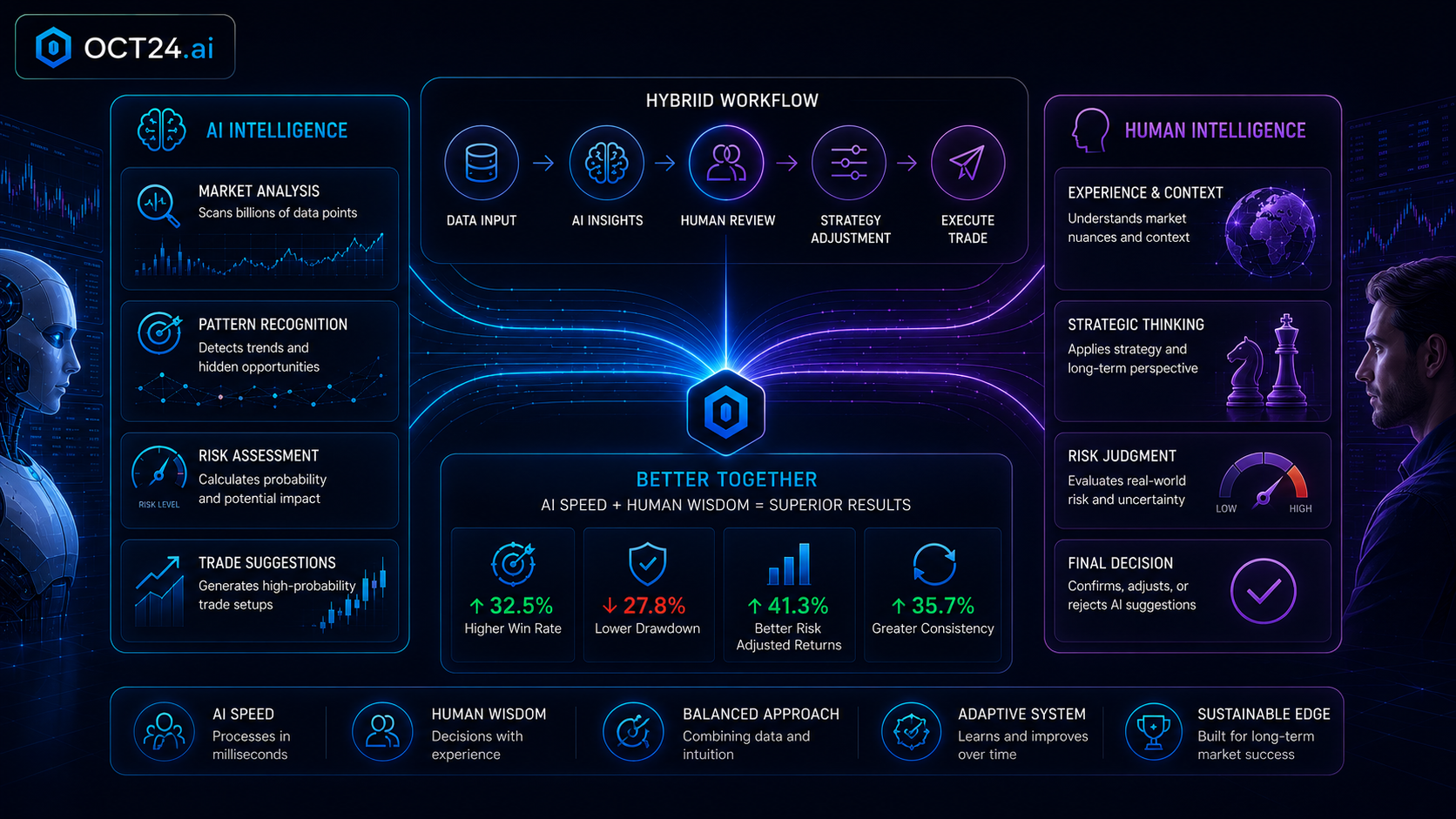
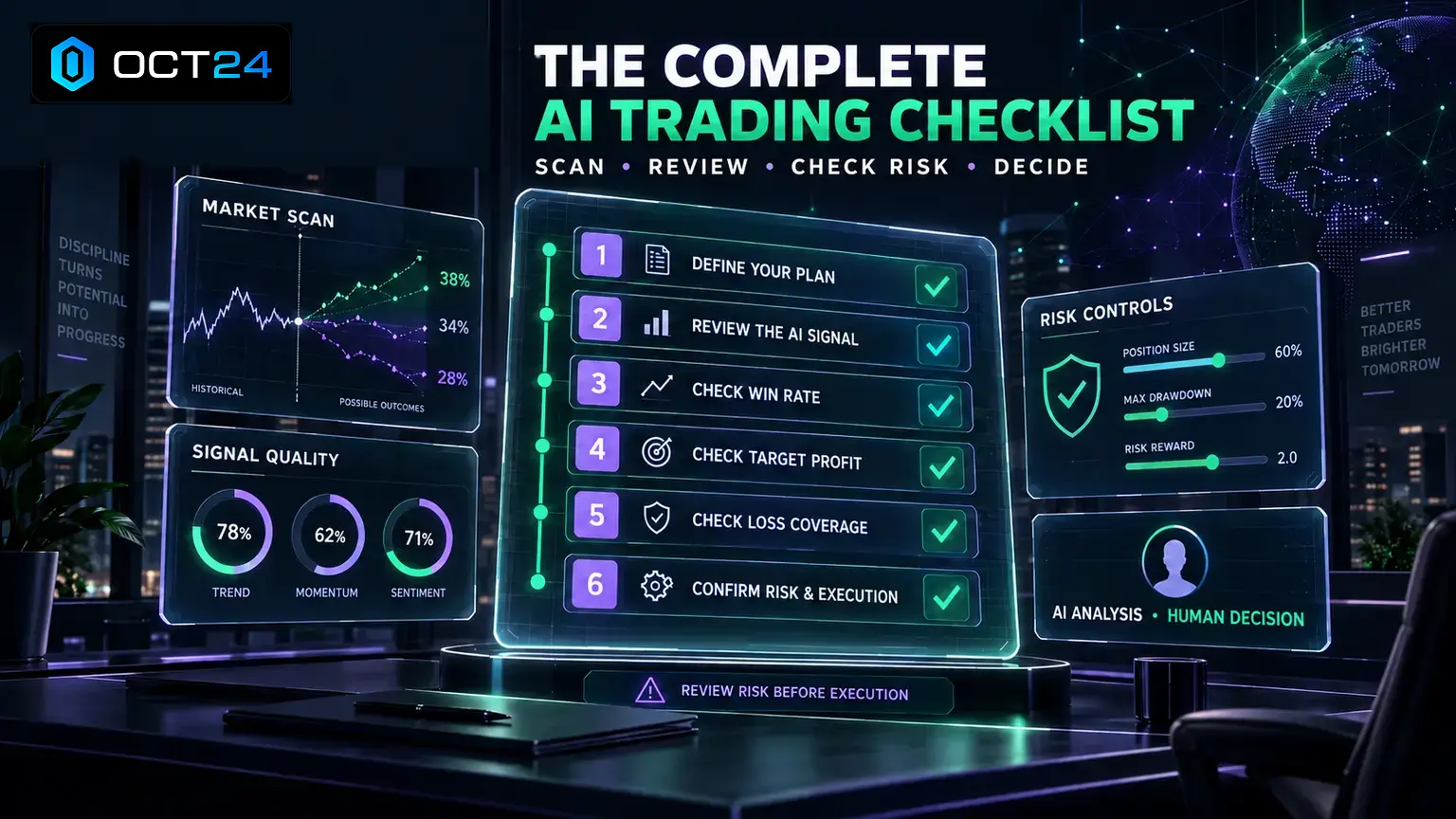
Yes. In many cases, the best approach is not AI trading or manual trading. It is a hybrid model.
Hybrid trading combines human judgement with AI-powered support.
A trader might use AI for:
- Market scanning
- Signal detection
- Risk calculations
- Trade alerts
- Automated execution
- Performance tracking
The human trader remains responsible for:
- Strategy selection
- Risk tolerance
- Market interpretation
- Oversight
- Long-term decision-making
Think of AI as a co-pilot.
The pilot still understands the destination, weather conditions, and flight plan. The co-pilot helps monitor systems, manage information, and reduce workload.
This is often the most practical model for beginner and intermediate traders.
It allows traders to benefit from Algorithmic Trading concepts without fully giving up human control.
Which Approach Is Right for You?
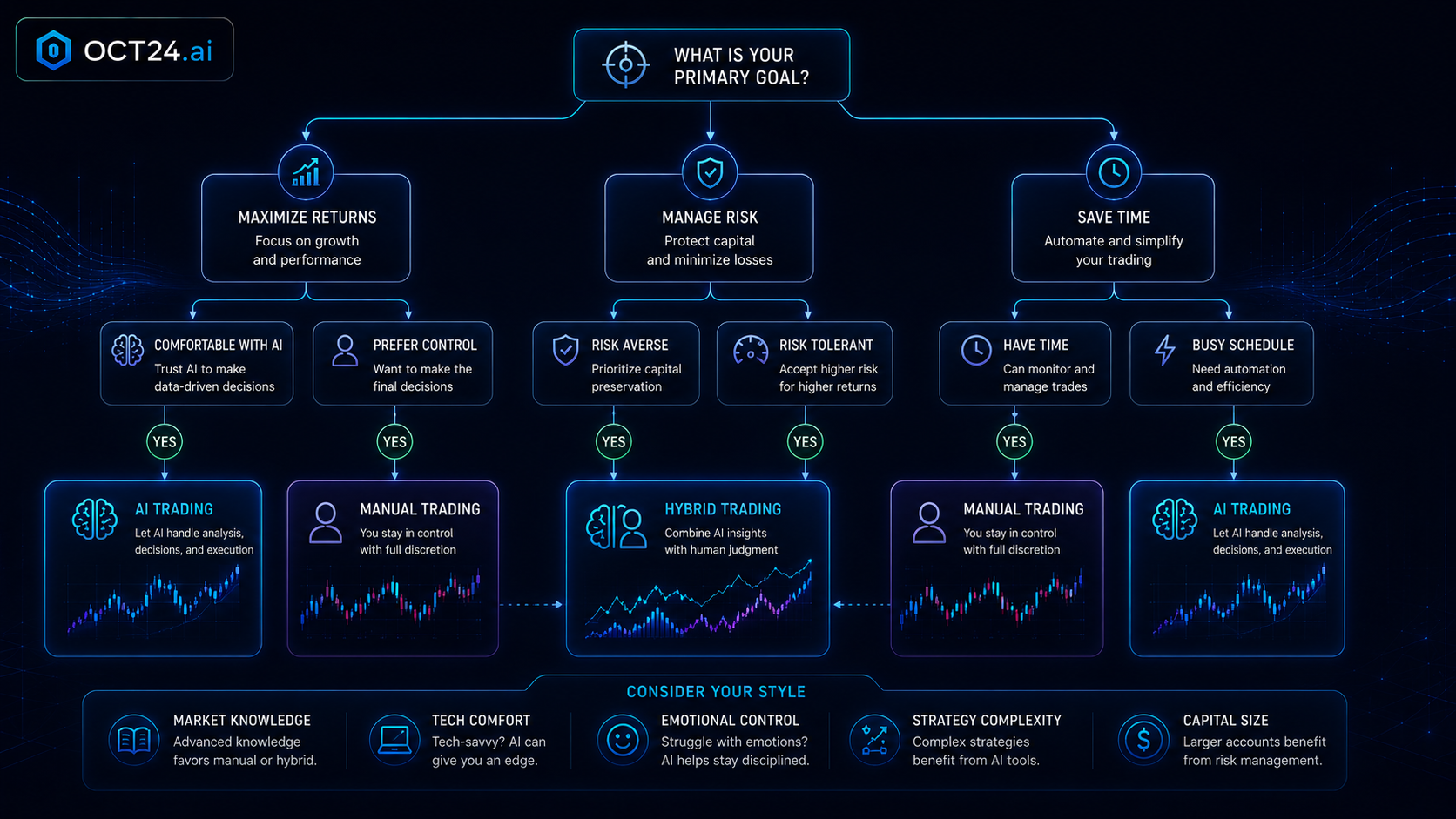
The best choice depends on your situation.
Beginners
Beginners may benefit from AI trading tools because they can simplify analysis and reduce emotional decision-making.
However, beginners should still learn trading basics. AI should support learning, not replace it.
A beginner who uses AI without understanding risk may still make poor decisions.
Busy Professionals
AI trading may be especially useful for people who cannot monitor markets all day.
Automation, alerts, and real-time monitoring can reduce the time required to stay informed.
Full-Time Traders
Full-time traders may use both approaches.
They may rely on manual analysis for strategy and AI tools for scanning, execution, and risk monitoring.
Long-Term Investors
Long-term investors may not need fast execution, but AI can still help with portfolio monitoring, market insights, and risk analysis.
Active Crypto Traders
Active crypto traders often benefit from AI because crypto markets operate continuously.
A crypto trading bot can monitor markets 24/7 and react to predefined conditions even when the trader is offline.
The key question is not:
"Which is better?"
The better question is:
"Which approach fits my goals, available time, and ability to manage risk?"
How OCT24 Uses AI Trading Technology
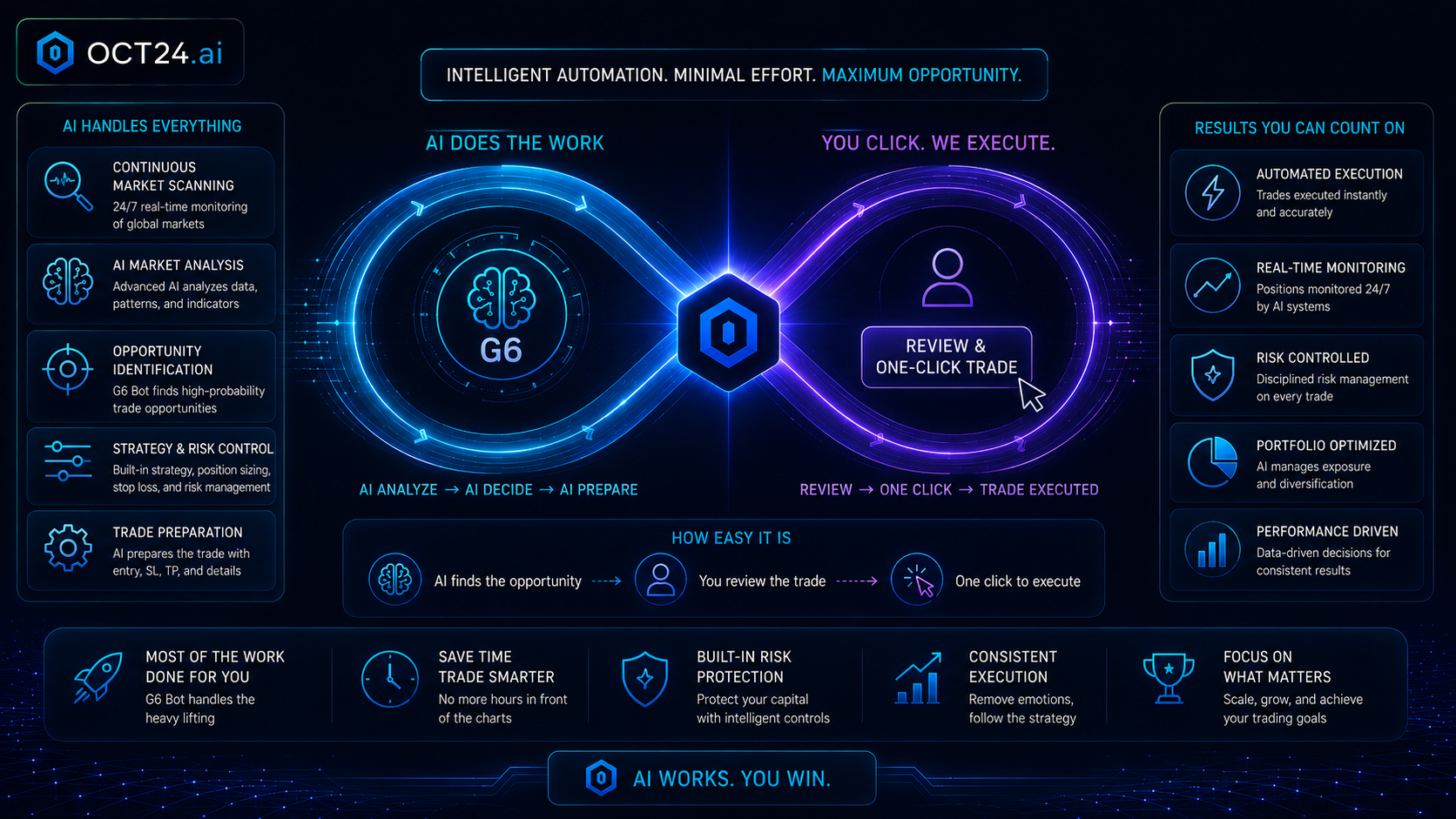
OCT24 is designed to make AI trading simpler and more accessible.
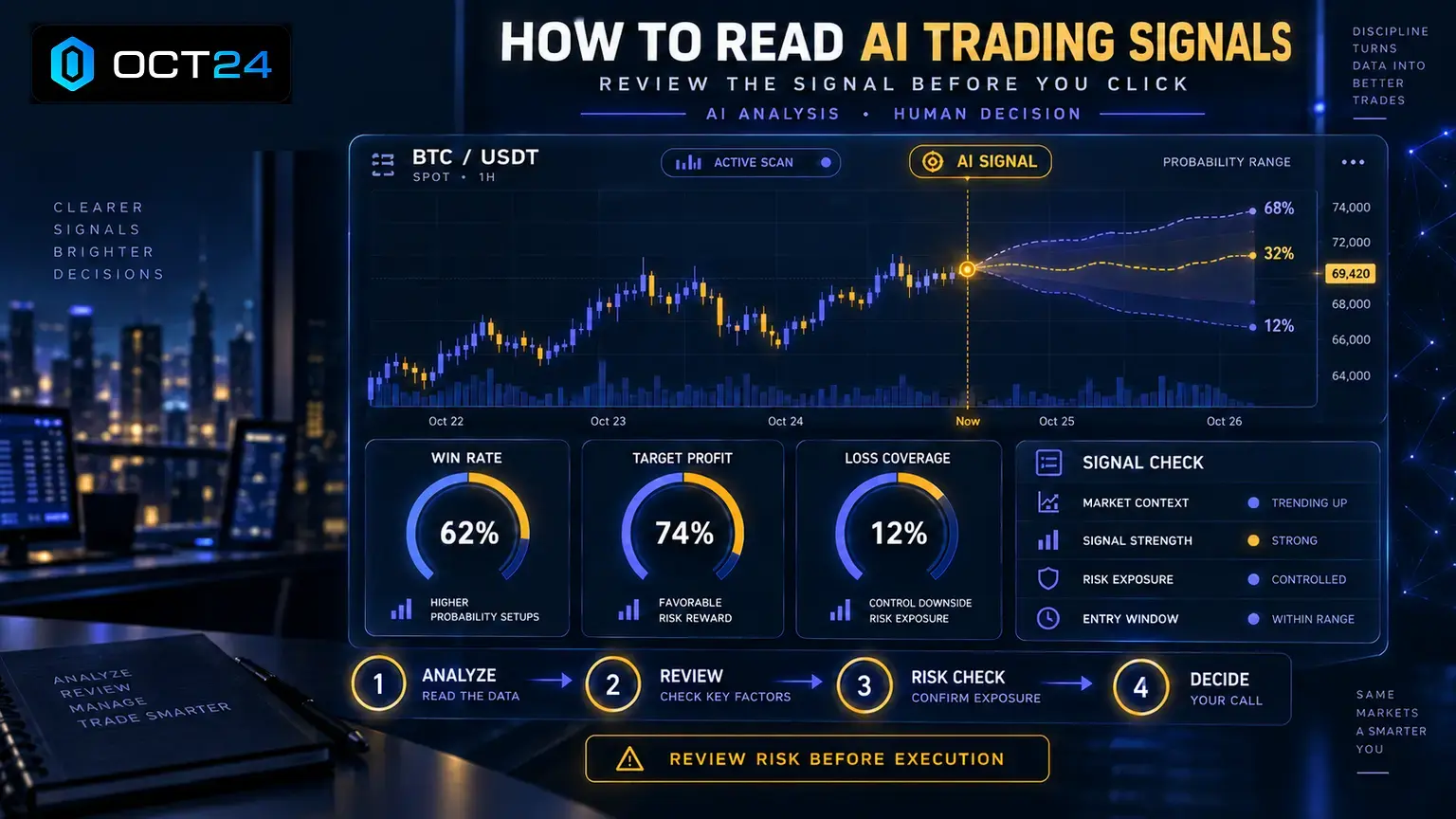
The G6 Trading Bot continuously monitors the markets, analyzes trading opportunities, and identifies setups that match its strategy. Instead of spending hours watching charts and searching for trades, the bot does most of the analysis for you.
When a trading opportunity is found, you can review the details and place the trade with a single click. This saves time while making it easier to trade with confidence.
The platform also includes real-time market monitoring, built-in risk controls, and portfolio management tools to help traders stay organized and manage risk more effectively.
While the G6 Trading Bot automates much of the trading process, it's important to remember that all trading involves risk. AI can help improve speed, consistency, and efficiency, but it cannot guarantee profits.
To learn more about the platform and the technology behind the G6 Trading Bot, visit About OCT24.
Frequently Asked Questions
Is AI trading better than manual trading?
AI trading is better for speed, consistency, automation, and analyzing large datasets. Manual trading is better for human judgement, market interpretation, and adapting to unusual events. The best choice depends on your trading style and goals.
Can beginners use AI trading?
Yes. Beginners can use AI trading platforms, but they should still learn the basics of market structure, risk management, and trading psychology. AI can support learning, but it should not replace education.
Do professional traders use AI?
Yes. Many professional traders and institutions use algorithms, automation, and AI-assisted tools. They often combine technology with human oversight and risk management.
Is manual trading becoming obsolete?
No. Manual trading is not obsolete. Human judgement remains valuable, especially during breaking news, unusual market conditions, and long-term strategy decisions.
Can I combine AI trading and manual trading?
Yes. Many traders use a hybrid approach. AI can assist with scanning, alerts, execution, and risk monitoring, while the human trader controls strategy and oversight.
Does AI trading guarantee profits?
No. AI trading does not guarantee profits. Markets remain uncertain, and losses are always possible. Risk management is essential.
Which approach requires less time?
AI trading usually requires less time for market monitoring and execution. Manual trading requires more active involvement, especially for short-term traders.
Is AI trading good for crypto markets?
AI trading can be useful in crypto markets because they operate 24/7 and move quickly. However, crypto markets are volatile, so risk controls are especially important.
Do I still need to understand charts if I use AI?
Yes. Even if you use AI, understanding charts helps you interpret signals and make better decisions. AI tools are more useful when you understand the market context behind them.
How do I get started?
Start by learning the basics of trading, risk management, and automation. Then explore an AI trading platform that offers clear tools, risk controls, and educational support.
Final Summary
AI trading and manual trading each have strengths.
Manual trading gives traders full control, flexibility, and the ability to apply human judgement. It is useful for interpreting news, adapting strategies, and understanding market context.
AI trading offers speed, consistency, automation, and the ability to analyze large amounts of data. It can reduce emotional decision-making and help traders monitor markets more efficiently.
For many traders, the best solution is not choosing one over the other. A hybrid approach can combine the strategic thinking of a human trader with the speed and discipline of AI-powered tools.
The right choice depends on your goals, experience, time commitment, and risk tolerance.
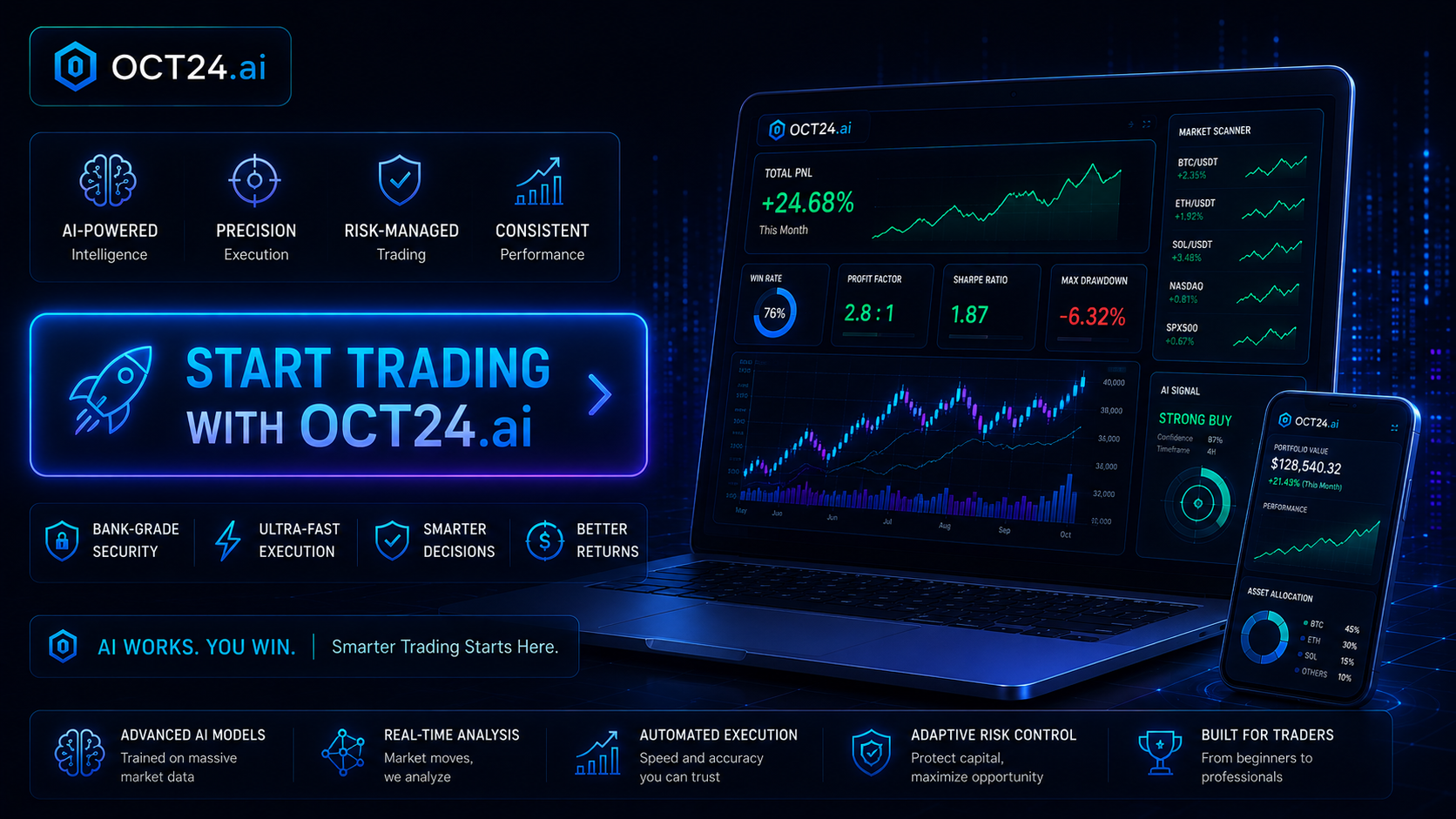
If you are ready to explore how intelligent automation can support your trading journey, discover the G6 Trading Bot and Start Trading with OCT24.