
How to Build an AI Trading Watchlist

An AI trading watchlist helps traders focus on the assets, market themes, and trade conditions they want to monitor before they act. Instead of reacting to every price move, a watchlist gives the trader a smaller group of markets to follow with more discipline.
This is especially useful for beginner and intermediate traders. Crypto markets move quickly, and it is easy to jump between Bitcoin, Ethereum, trending altcoins, and social media headlines without a clear plan.
A watchlist does not need to be complicated. It should help you decide what deserves attention, what should be ignored for now, and what information you still need before taking a trade.
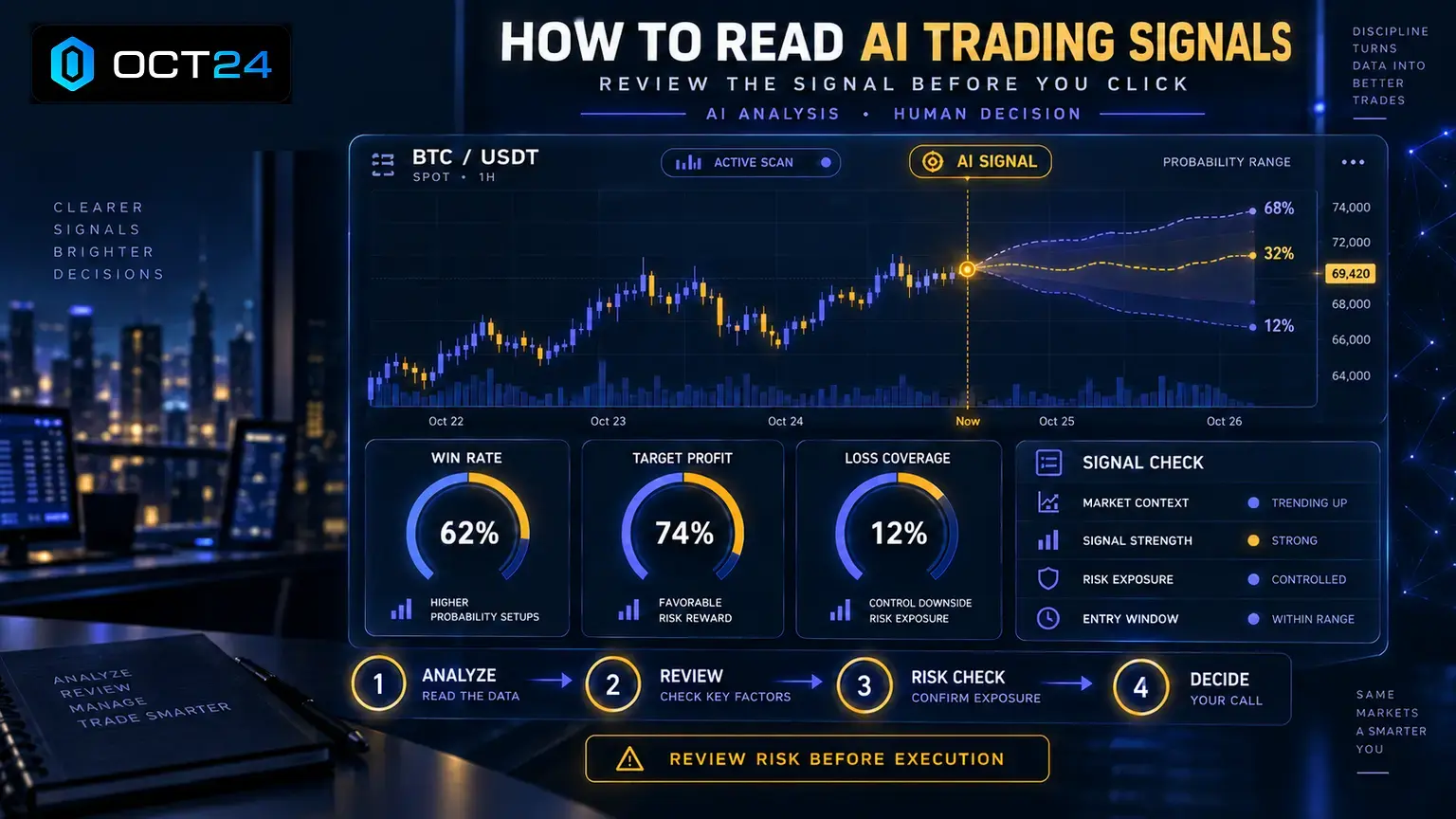
OCT24 fits into this workflow after the trader has a clearer idea of what they want to watch and how much risk they are willing to take. The platform does not currently provide a full asset research dashboard, detailed entry and exit levels, or direct market-analysis tools on the platform. When a trade or bot is presented, the key information shown is focused on trade/bot metrics such as target profit, loss coverage, and win rate.
That means traders should still prepare their own watchlist, understand their exposure, and make informed decisions before using one-click trading or the G6 Trading Bot. OCT24 can make the trading experience faster and simpler, but it does not remove trading risk or promise results.
What is an AI trading watchlist?
An AI trading watchlist is a focused list of assets or markets that a trader wants to monitor with help from AI tools, external charts, alerts, news, or platform metrics.
The main goal is focus.
Instead of trying to watch every market at once, the trader creates a smaller list. That list may include major crypto assets, high-liquidity pairs, assets showing relative strength, or markets connected to a specific strategy.
A watchlist is not the same as a trade list. Being on the watchlist does not mean the trader should enter immediately. It only means the asset is worth monitoring.
This distinction matters. A watchlist helps traders prepare. A trade decision still requires risk checks, position sizing, and a clear reason to act.
Why an AI trading watchlist matters
Most traders are not short on information. They are overloaded by it.
Markets are noisy. Price alerts, crypto news, social media posts, and fast-moving charts can make every asset feel urgent. Without a watchlist, traders may end up chasing whichever coin is moving the most that day.
A watchlist creates structure. It gives the trader a defined group of markets to review instead of jumping between unrelated ideas.
This can help traders:
- Focus on higher-quality opportunities.
- Avoid random trading decisions.
- Compare assets more calmly.
- Track crypto market rotation.
- Prepare before using one-click trading.
- Review risk before committing capital.
- Build a more consistent trading routine.
For OCT24 users, the watchlist is especially useful because OCT24 does not currently show detailed asset information, entry points, or exit points for each presented trade. The trader should use their own watchlist and preparation to understand what kind of exposure they are comfortable with before acting.
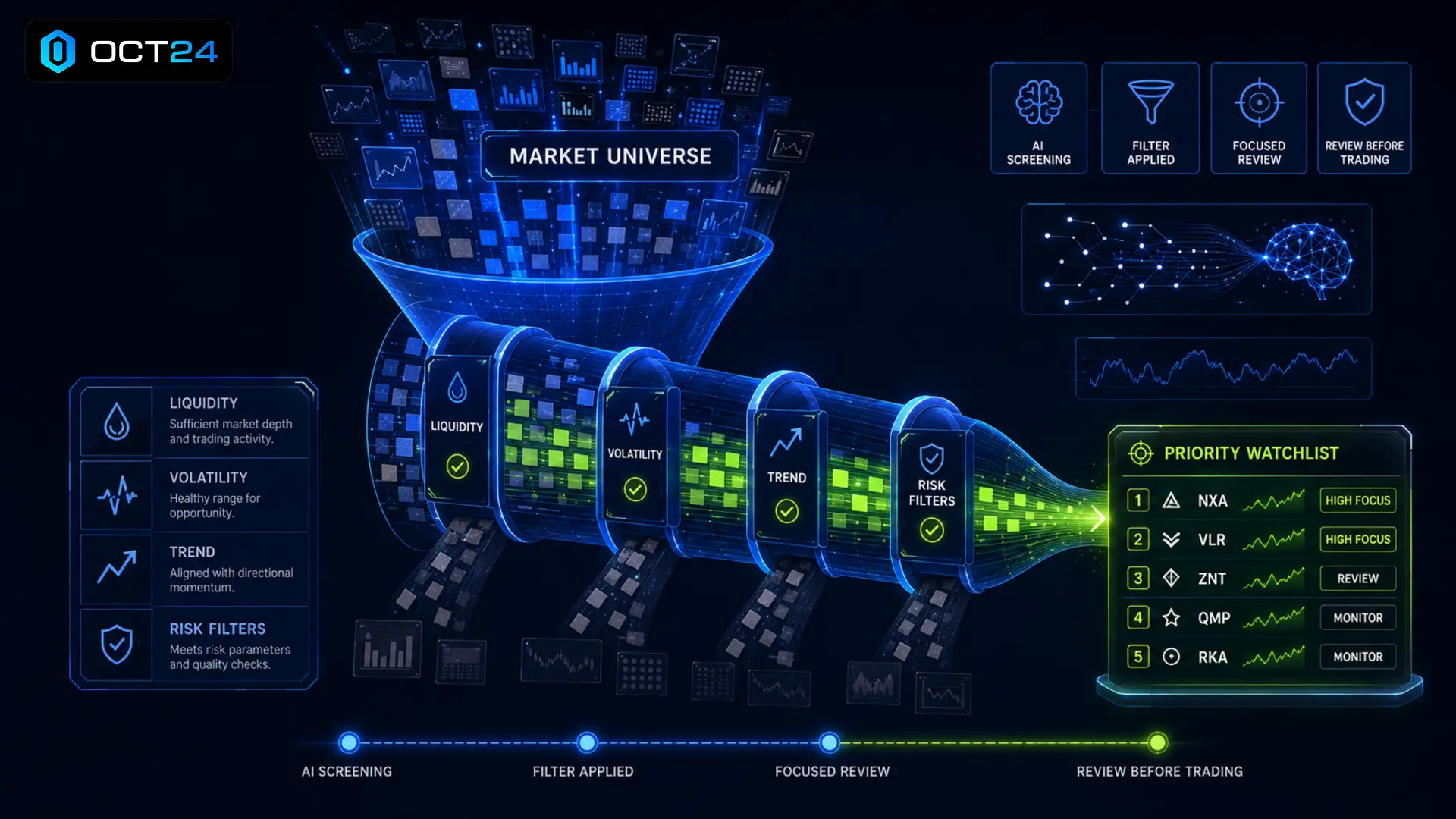
Start with a focused market universe
The first step is choosing the market universe. This means deciding which assets are allowed to appear on your watchlist in the first place.
Beginner traders often make the list too broad. They may try to track every major crypto asset, every trending token, and every asset mentioned in the news. That usually creates confusion.
A better approach is to start smaller. Choose a group that is large enough to offer opportunity but small enough to understand.
A beginner crypto watchlist might include:
- Bitcoin.
- Ethereum.
- Two or three major large-cap altcoins.
- One or two assets with strong liquidity.
- One asset being watched for relative strength.
This does not mean the trader can never expand. It means the first watchlist should be manageable.
A smaller list also makes it easier to compare what is happening before using an AI trading platform. The trader can understand the broader market first, then decide whether a presented trade or bot fits their risk comfort.
Choose watchlist criteria that matter
A watchlist should not be random. Every asset should earn its place on the list for a clear reason.
Good criteria are simple and practical. They help the trader decide whether an asset deserves attention before any trade decision is made.
Useful criteria may include:
- Strong trading volume.
- Clear price structure.
- Recent volatility.
- A visible trend or range.
- High market interest.
- Strong relative performance.
- Liquidity that supports smoother execution.
- A clear reason for watching the asset.
Not every trader will use the same criteria. A short-term trader may care more about volatility and speed. A cautious trader may prefer larger assets with cleaner trends.
The important point is consistency. If the criteria change every day, the watchlist becomes emotional instead of useful.
This connects with how AI uses technical analysis. AI can help traders think about price behavior, trend quality, and volatility, but the trader still needs to understand what they are watching and why.
Separate core assets from active opportunities
A practical watchlist often works better when it is split into two groups: core assets and active opportunities.
Core assets are markets the trader checks regularly. These may include Bitcoin, Ethereum, and other major assets that influence wider crypto sentiment.
Active opportunities are assets that currently show stronger movement, unusual volume, improving momentum, or a reason to watch more closely.
This structure keeps the list organized. The trader can monitor major market direction while still leaving room for new opportunities.
For example, Bitcoin may remain on the core list because it often affects crypto sentiment. Ethereum may also remain on the core list because ETH/BTC relative strength can provide clues about market rotation.
An altcoin might only appear on the active list if it meets the trader’s criteria. If the setup fades, it can be removed.
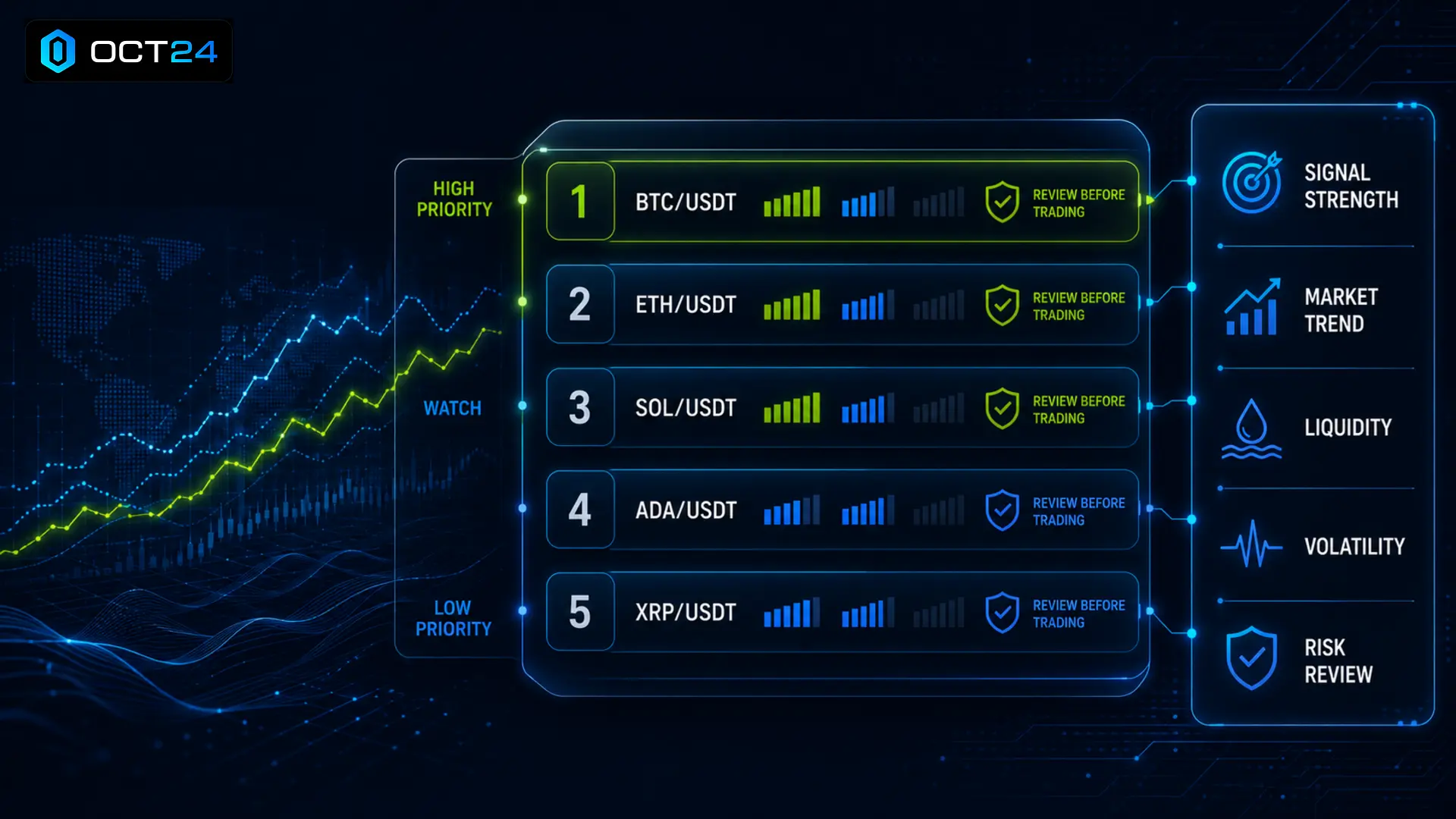
Create a simple watchlist scoring system
A watchlist becomes more useful when each asset can be scored in a simple way. The score does not need to be complex. It only needs to help the trader compare assets with the same basic rules.
For example, a trader could score each asset from one to five in a few categories.
- Trend clarity.
- Trading volume.
- Volatility level.
- Market interest.
- Risk-reward potential.
- Fit with the current strategy.
An asset with a clear trend, strong liquidity, and manageable volatility may deserve closer attention. An asset with weak structure, low volume, and unclear direction may stay off the list for now.
This scoring system helps reduce emotional trading. Instead of saying, “This asset feels exciting,” the trader asks, “Does this asset meet my watchlist rules?”
That matters when using OCT24 because the platform experience is designed to be fast and simple. If the trader has not done any preparation, speed can make it easier to act before thinking through exposure and risk.
Use watchlists to prepare for trade metrics
When OCT24 presents a trade or bot, the user does not currently see a detailed breakdown of the underlying asset, entry point, or exit point. The information is centered on metrics such as target profit, loss coverage, and win rate.
That makes the watchlist even more important. The watchlist helps the trader prepare before reviewing a trade or bot metric screen.
For example, the trader can use their watchlist to think through:
- Which markets they are comfortable trading.
- How much volatility they can accept.
- Whether they already have too much crypto exposure.
- How much capital they are willing to allocate.
- Whether they are comfortable with the loss coverage shown.
- Whether the target profit and win rate fit their expectations.
The watchlist does not reveal the exact trade details inside OCT24. Instead, it helps the trader stay clear about their own boundaries before using the platform.
How OCT24 supports a simpler trading workflow
OCT24 supports the trader by making the trading experience simpler and faster. The platform is built around AI trading technology, one-click trading, and the G6 Trading Bot.
The important distinction is that OCT24 is not currently a full market-research dashboard. Users are not shown detailed asset analysis, entry levels, exit levels, or a full explanation of the trade being taken.
Instead, when a trade or bot is presented, the user mainly reviews key metrics such as target profit, loss coverage, and win rate. These metrics can help the user understand the basic risk-and-result profile being shown, but they do not replace personal judgment.
This is why a watchlist still matters. The trader should know what markets they are interested in, how much exposure they are comfortable with, and what risk level makes sense before using one-click trading.
OCT24 is also different from traditional prop-firm-style challenge platforms. The focus is not on complicated challenge phases, payout rules, or restricted account structures. The experience is built around faster access, AI-powered trading tools, and simpler user interaction.
Traders who want to learn more about the platform can visit About OCT24.

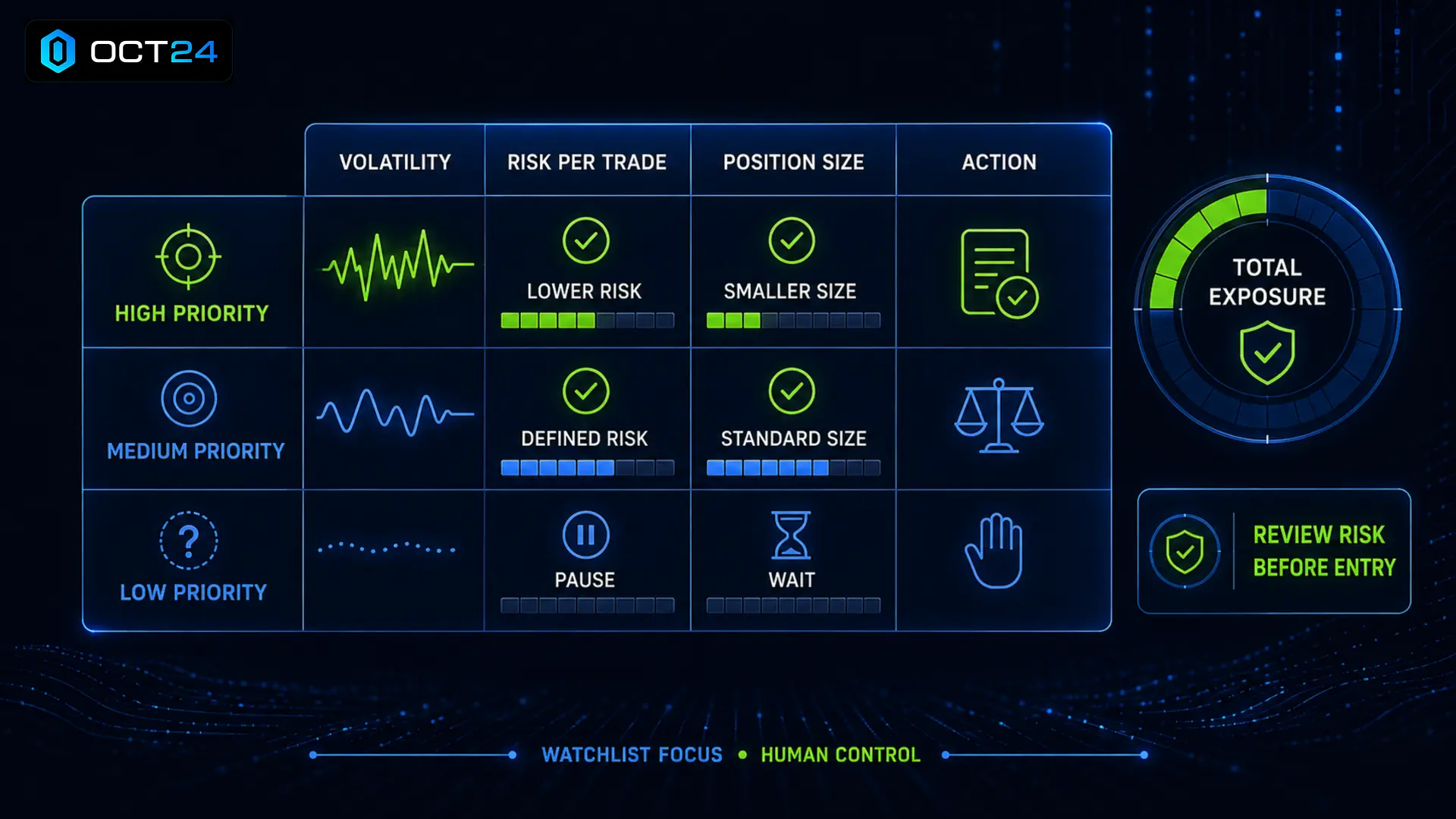
Add risk filters before execution
A watchlist should include risk filters before any trade is entered. This keeps the trader from turning a fast trading experience into an impulsive decision.
Risk filters are simple questions that protect the trader from acting too quickly.
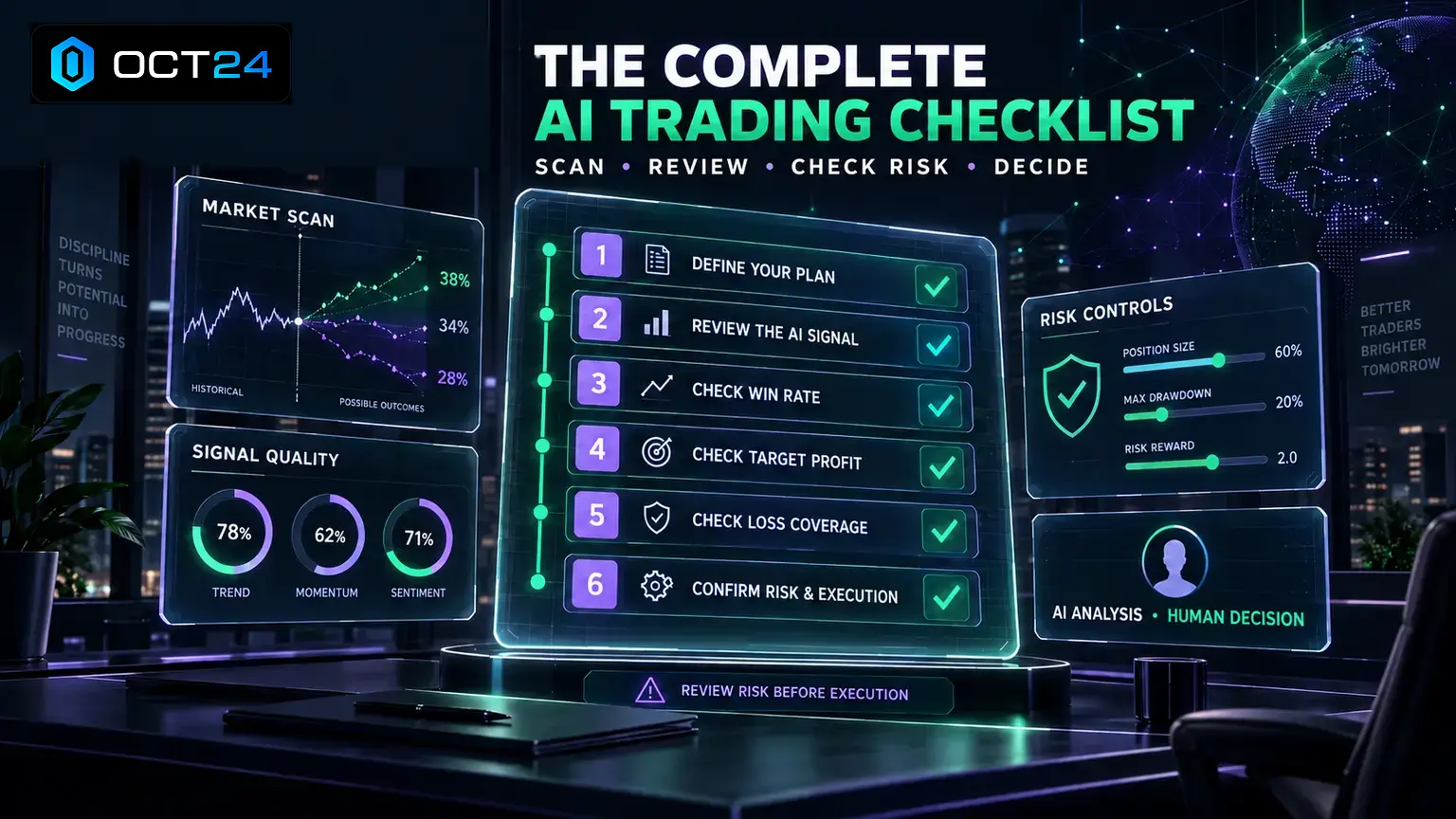
Before moving from watchlist to execution, ask:
- Is this asset too volatile for my account size?
- Am I comfortable with my total crypto exposure?
- What position size is reasonable?
- How much capital am I willing to risk?
- Does the target profit fit my expectations?
- Does the loss coverage fit my risk tolerance?
- Does the win rate shown make sense for the level of risk?
- Am I trading because it fits my plan or because I feel pressure to act?
These checks connect closely with AI trading risk vs reward. A trade or bot can look attractive but still be unsuitable if the trader is allocating too much capital or ignoring downside risk.
OCT24 can make the action step simpler, but the trader still controls exposure, capital allocation, and execution choices.
Connect the watchlist to your trading strategy
A watchlist works best when it supports a defined strategy. Without a strategy, the list can become a collection of interesting assets with no clear action plan.
Beginner traders can keep this simple. If the strategy is trend-following, the watchlist should focus on assets with clearer trends. If the strategy is breakout-based, the list should focus on assets forming tight ranges or important levels.
This is why AI trading strategies for beginners should not be separated from watchlist planning. The watchlist should support the strategy, not distract from it.
A trader might create watchlist categories such as:
- Trend watch.
- Breakout watch.
- Volatility watch.
- Relative strength watch.
- Avoid for now.
The final category is important. Sometimes the best decision is to avoid an asset until conditions improve.
Know when to remove an asset
A strong watchlist is not only built by adding assets. It is also built by removing assets that no longer deserve attention.
This can feel difficult because traders often become attached to markets they have watched for a long time. But if an asset no longer fits the criteria, keeping it on the list can create distraction.
An asset may need to be removed or paused when:
- Volume drops and execution becomes harder.
- The trend becomes unclear.
- Volatility becomes too aggressive for the trader’s risk level.
- The asset no longer matches the current strategy.
- Better opportunities are appearing elsewhere.
- The trader is watching it only because of habit.
Removing an asset is not a negative decision. It simply means the asset is not useful right now. The trader can always add it back later if conditions improve.
Use one-click trading only after review
One-click trading is useful because it can make the trading experience faster and simpler. But it should come after preparation, not before it.
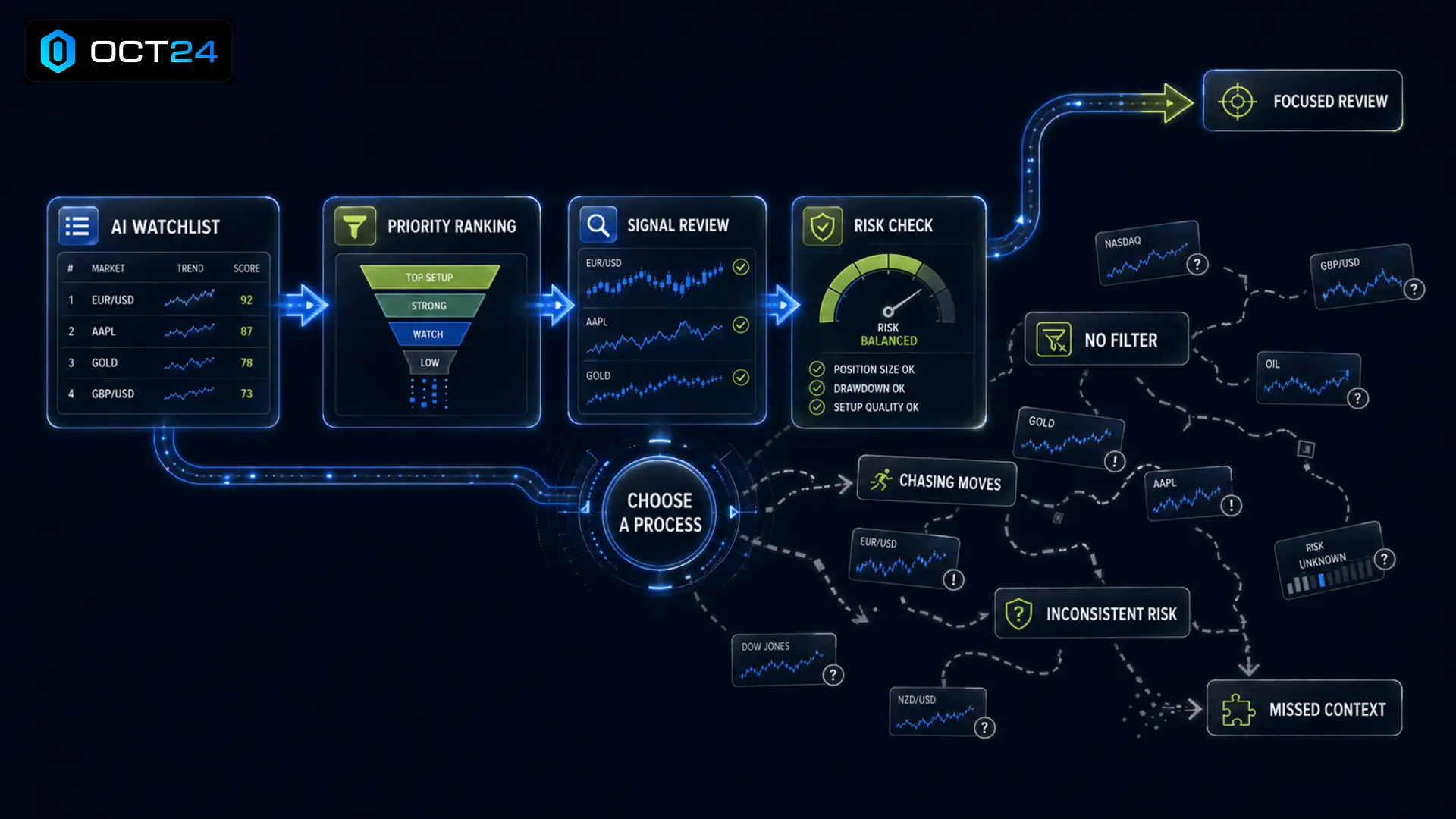
A better workflow is: watchlist, personal review, metric check, risk check, then execution.
OCT24 is built around the idea that modern trading should feel cleaner, faster, and more accessible. One-click trading helps reduce unnecessary friction once a trader has reviewed the trade/bot metrics and decided they are comfortable proceeding.
The G6 Trading Bot can also fit into this workflow when traders want a faster AI-supported trading experience. The important point is that speed should not replace risk control.
A trader should not move from watchlist to trade simply because a metric looks attractive. The trade should fit the plan, the risk should be acceptable, and the capital allocation should make sense.
Review and refresh your watchlist
An AI trading watchlist should not stay frozen forever. Markets change, and the watchlist should change with them.
Some assets may stop moving. Some may become too volatile. Others may show stronger relative strength. A watchlist is useful only if it stays connected to current conditions.
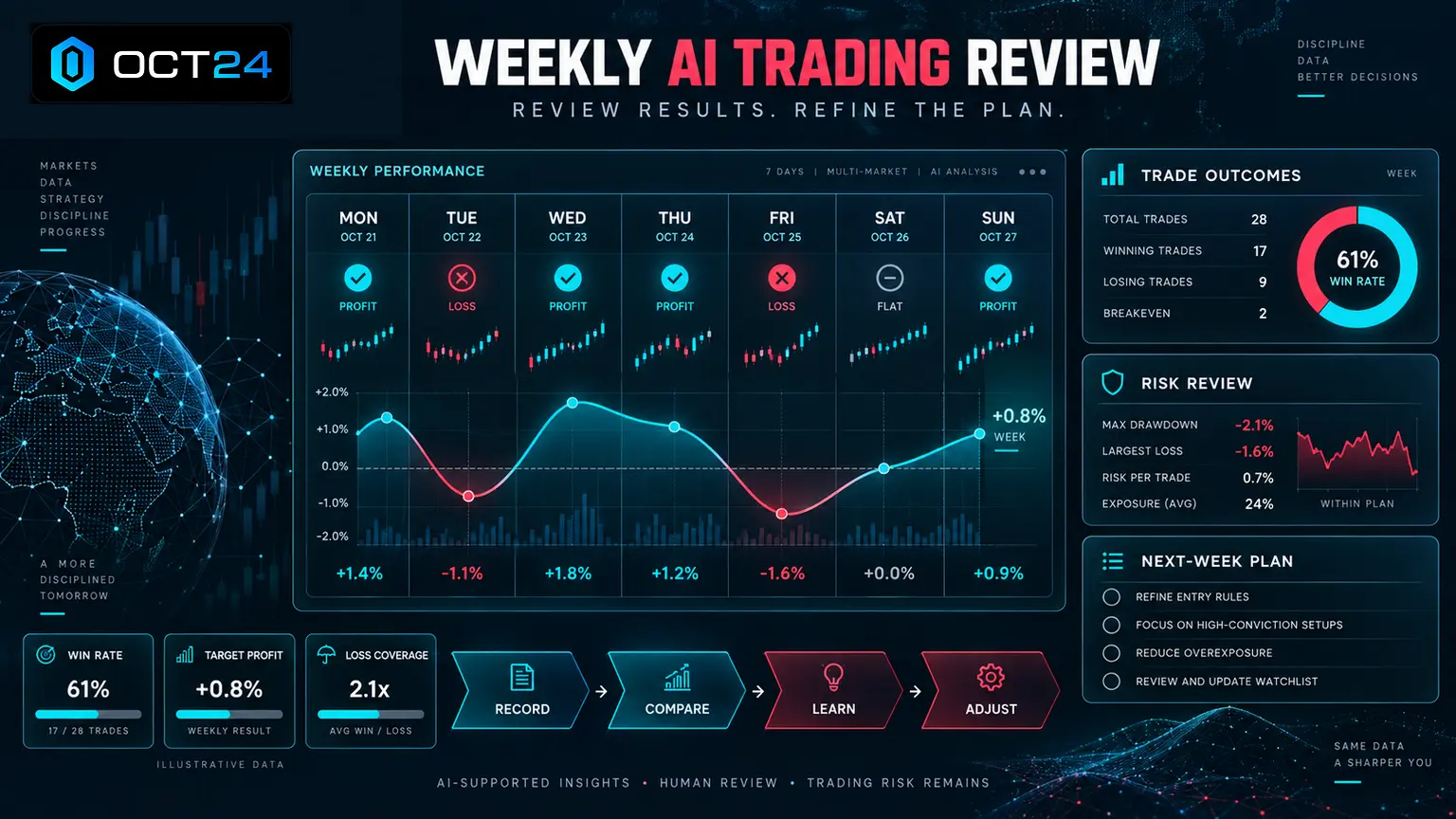
A weekly review can help traders keep the list clean.
During the review, ask:
- Which assets still deserve attention?
- Which assets have become noisy or unclear?
- Which ideas worked well?
- Which ideas failed?
- Was risk controlled properly?
- Did I trade the plan or chase the market?
- Should any assets be removed for the next week?
This connects naturally with a consistent trading routine. The goal is not to rebuild everything every day. The goal is to keep the watchlist useful and current.

A simple AI trading watchlist example
Imagine a trader wants to build a beginner-friendly crypto watchlist before using OCT24.
They start with Bitcoin and Ethereum as core assets. These help them understand broad crypto sentiment and whether market leadership is changing.
Next, they add a few large-cap assets with strong liquidity. They avoid very small or unclear assets because those may create more risk than they are ready to manage.
Then they review their watchlist using external charts, news, market context, and their own trading rules. They decide which assets they are comfortable watching and which ones should be ignored for now.
After that, they open OCT24 and review the trade or bot information presented on the platform. Since OCT24 does not currently show detailed asset, entry, or exit information, the trader focuses on the metrics available: target profit, loss coverage, and win rate.
If those metrics fit the trader’s risk comfort and capital plan, they may decide to proceed. If not, they skip the trade.
This is a simple process, but it is powerful because it prevents random trading.
Common mistakes to avoid
A watchlist is only useful if it helps the trader stay focused. Some mistakes can turn it into another source of confusion.
Making the list too large
If the watchlist has too many assets, the trader may feel the same overload as before. Start smaller and expand only when the process is clear.
Adding assets because they are popular
Popularity is not a trading plan. An asset should be added because it meets useful criteria, not because it is trending online.
Ignoring the metrics shown
On OCT24, the target profit, loss coverage, and win rate are important parts of the presented trade or bot information. Traders should review those numbers carefully before acting.
Assuming the platform gives full trade details
Traders should understand that OCT24 does not currently show detailed asset, entry, or exit information for each presented trade. This makes personal preparation and risk review important.
Never removing assets
If an asset no longer fits the criteria, remove it. A watchlist should stay clean.
Treating the watchlist as a prediction
A watchlist does not predict results. It only helps traders organize markets and prepare decisions.
How to use OCT24 without overcomplicating the process
The purpose of OCT24 is to make AI-supported trading more accessible. Traders should not need a complicated system just to take part in a modern one-click trading experience.
This is also where OCT24 feels different from traditional prop-firm-style platforms. Many prop firm models are built around challenge phases, strict account rules, payout limits, and delayed approval processes. That can make the trading experience feel more complicated than it needs to be.
OCT24 is built around a more direct experience: AI trading technology, one-click trading, flexible account usage, and faster interaction. For watchlist building, that means the trader can prepare separately, then use OCT24’s available trade/bot metrics to make a more informed decision.
The goal is not to make trading effortless. The goal is to make the workflow clearer. Traders can use their watchlist to prepare, then use OCT24 to review target profit, loss coverage, and win rate before deciding whether to act.
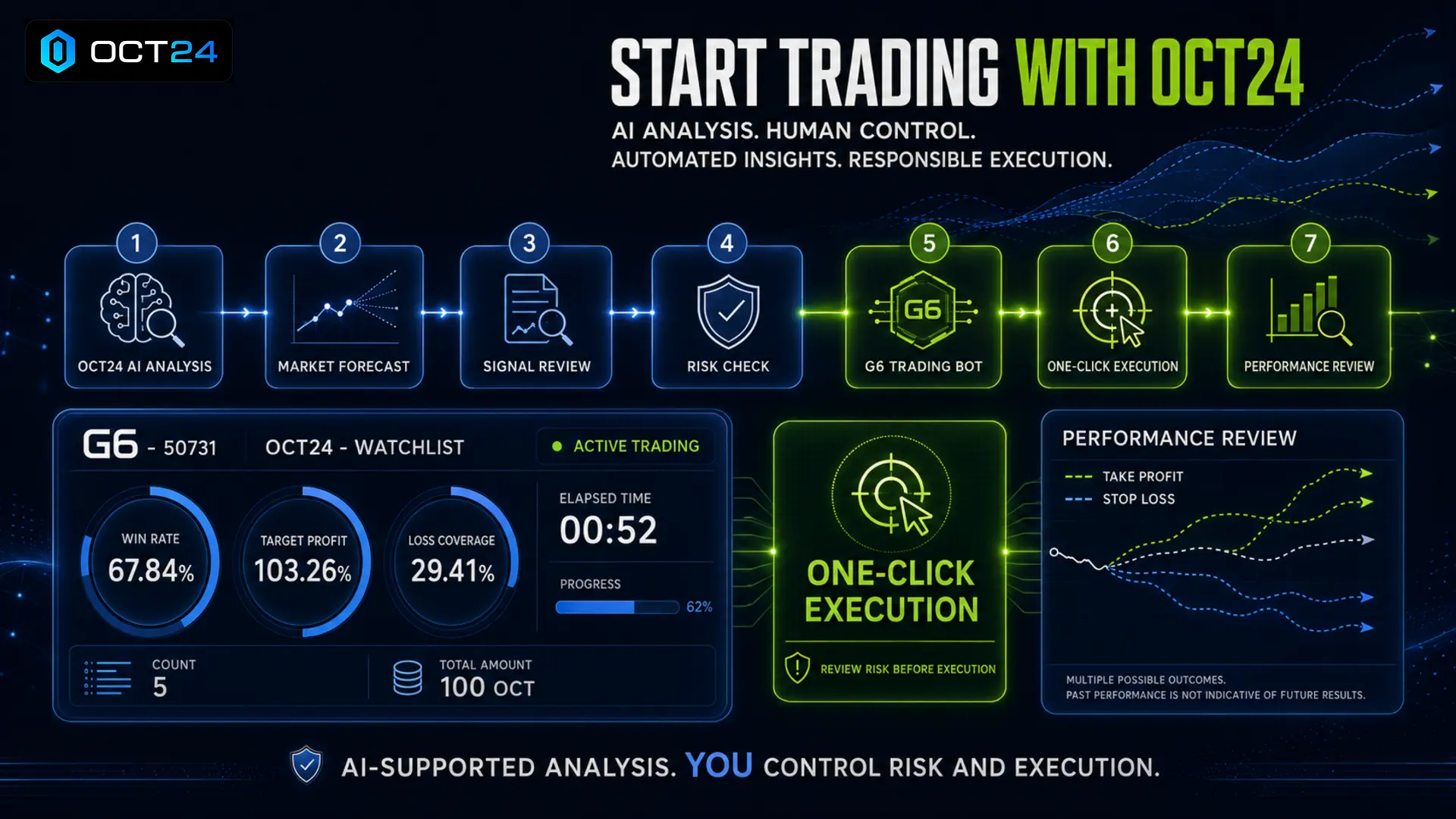
A simple OCT24 watchlist workflow can look like this:
- Choose a focused market universe.
- Build a personal watchlist outside the platform.
- Review market context using your preferred tools.
- Open OCT24 and review the presented trade or bot metrics.
- Check target profit, loss coverage, and win rate.
- Compare those metrics with your risk comfort.
- Use one-click trading only after review.
- Review performance and update your watchlist.
This keeps the trader involved in the decisions that matter while using OCT24 to reduce friction in the trading process.
It also reflects the bigger goal of OCT24: making modern AI trading faster, simpler, and more accessible without turning the experience into a complicated challenge-based system.
FAQs
What is an AI trading watchlist?
An AI trading watchlist is a focused group of assets that a trader monitors using AI tools, external charts, alerts, news, or personal trading criteria.
How many assets should be on a beginner watchlist?
Many beginners should start with a small list of core assets and a few active opportunities. The list should be large enough to find ideas but small enough to review properly.
Should I trade every asset on my watchlist?
No. A watchlist is for monitoring and preparation. A trade should only happen after risk checks, metric review, and position sizing decisions.
Does OCT24 show the asset, entry point, and exit point for each trade?
No. OCT24 does not currently show detailed asset information, entry points, or exit points for each presented trade. The platform shows trade/bot metrics such as target profit, loss coverage, and win rate.
Can OCT24 help with one-click trading?
Yes. OCT24 is built around a faster one-click trading experience. Traders should still review the available metrics and manage risk before acting.
Does an AI watchlist remove trading risk?
No. A watchlist can help organize information, but trading still involves risk. Traders remain responsible for risk settings, exposure, and execution choices.
How often should I update my watchlist?
Many traders benefit from reviewing the watchlist weekly and making smaller updates when market conditions change.
Is the G6 Trading Bot useful for watchlist traders?
The G6 Trading Bot can support a faster AI-powered trading workflow. Traders should still manage risk and review target profit, loss coverage, and win rate carefully.
Final thoughts
An AI trading watchlist helps traders stay focused in fast-moving markets. It turns a noisy market into a smaller group of assets that can be reviewed with more structure and discipline.
For OCT24 users, the watchlist is best understood as preparation. OCT24 does not currently provide a full on-platform market-analysis dashboard or show detailed asset, entry, and exit information for each presented trade. Instead, users mainly review trade/bot metrics such as target profit, loss coverage, and win rate.
That makes personal risk review important. The trader still controls risk settings, exposure, capital allocation, and execution decisions.
The best watchlist is not the biggest one. It is the one that helps the trader make clearer decisions before using faster trading tools.
To build a cleaner AI-supported trading workflow, Start Trading with OCT24.