
Take Profit vs Stop Loss: How AI Traders Plan Exits
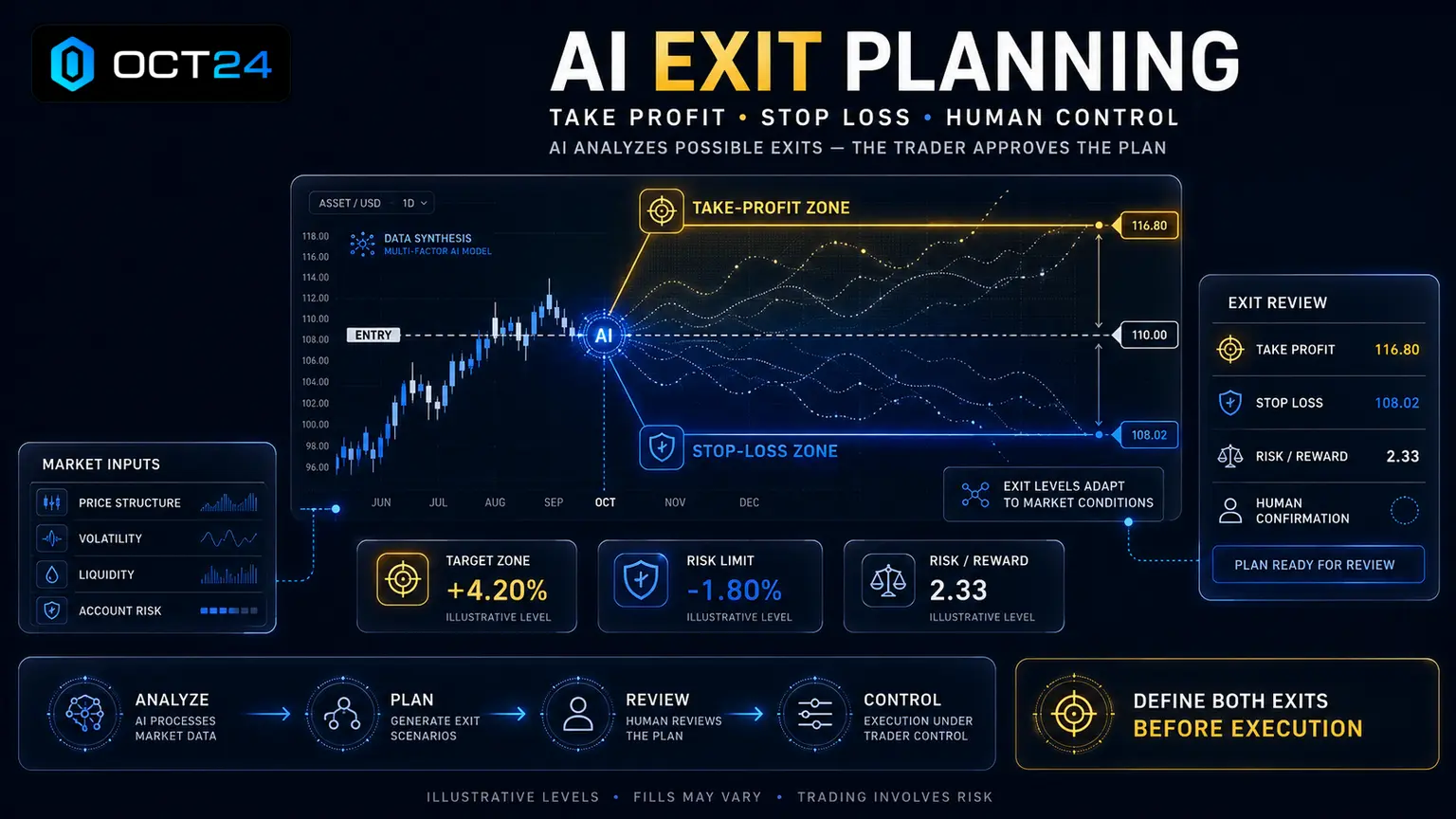
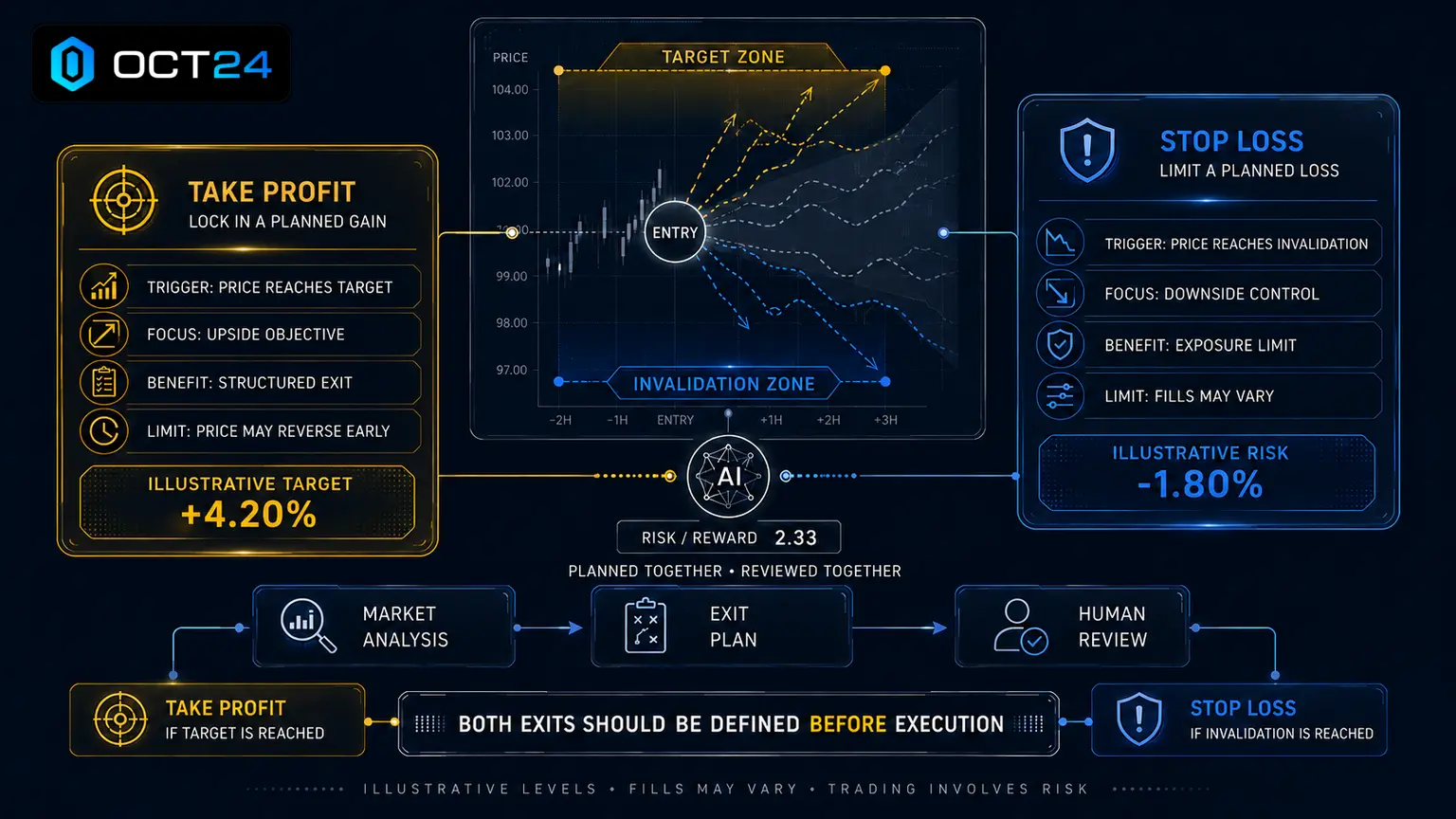
Take profit vs stop loss is one of the simplest ways to understand exit planning in trading. A take-profit point defines where a trade aims to lock in a gain, while a stop-loss defines how downside is managed if the trade moves the wrong way.
In manual trading, the trader usually plans these exit levels. On OCT24, users do not manually plan exits. The AI bot plans the exit structure for the user, while the user reviews key trade information such as target profit, loss coverage, and win rate before deciding whether to execute.
OCT24 performs most of the market analysis by scanning market conditions, identifying potential opportunities, and presenting AI-supported trading signals. The platform does not remove trading risk or guarantee results. Traders still need to manage exposure, capital allocation, and execution decisions responsibly.
What Take Profit and Stop Loss Mean
A take-profit level is the planned area where a trade aims to close with a gain. It helps prevent a trader from holding too long after the trade has already reached its objective.
A stop-loss is the planned risk boundary if the trade moves against the setup. It helps stop a single trade from becoming an uncontrolled loss.
Together, these two ideas create an exit plan. One side defines the intended reward. The other side defines the downside control.
In AI trading, the process can be handled differently from manual chart trading. Instead of asking the user to calculate exact exit levels, the bot can apply its own logic to structure the trade.
This is important for OCT24 users because the platform is built around a simplified bot experience. The AI bot plans exits for the user. The user does not manually choose the exact take-profit or stop-loss points inside the platform.
Why Exit Planning Matters Before a Trade Starts
Many traders think mostly about entries. They ask when to enter, what signal looks strongest, and whether the market is moving fast enough.
Exit planning asks a more complete question: what happens after the trade starts? Without an exit plan, traders may hesitate, hold too long, close too early, or change their mind after emotions take over.
A good exit plan gives structure before the market starts testing the trader. It does not guarantee a profit. It simply helps define the trade before pressure arrives.
This is why trading bot risk management matters. Bots can follow predefined logic without fear, impatience, or excitement. Human traders still need to decide whether the trade fits their account and risk comfort.
When exit planning is handled by a bot, the trader should focus on what they can control: whether to take the trade, how much exposure to use, and whether the potential reward and downside fit their plan.
Manual Exit Planning vs AI Bot Exit Planning
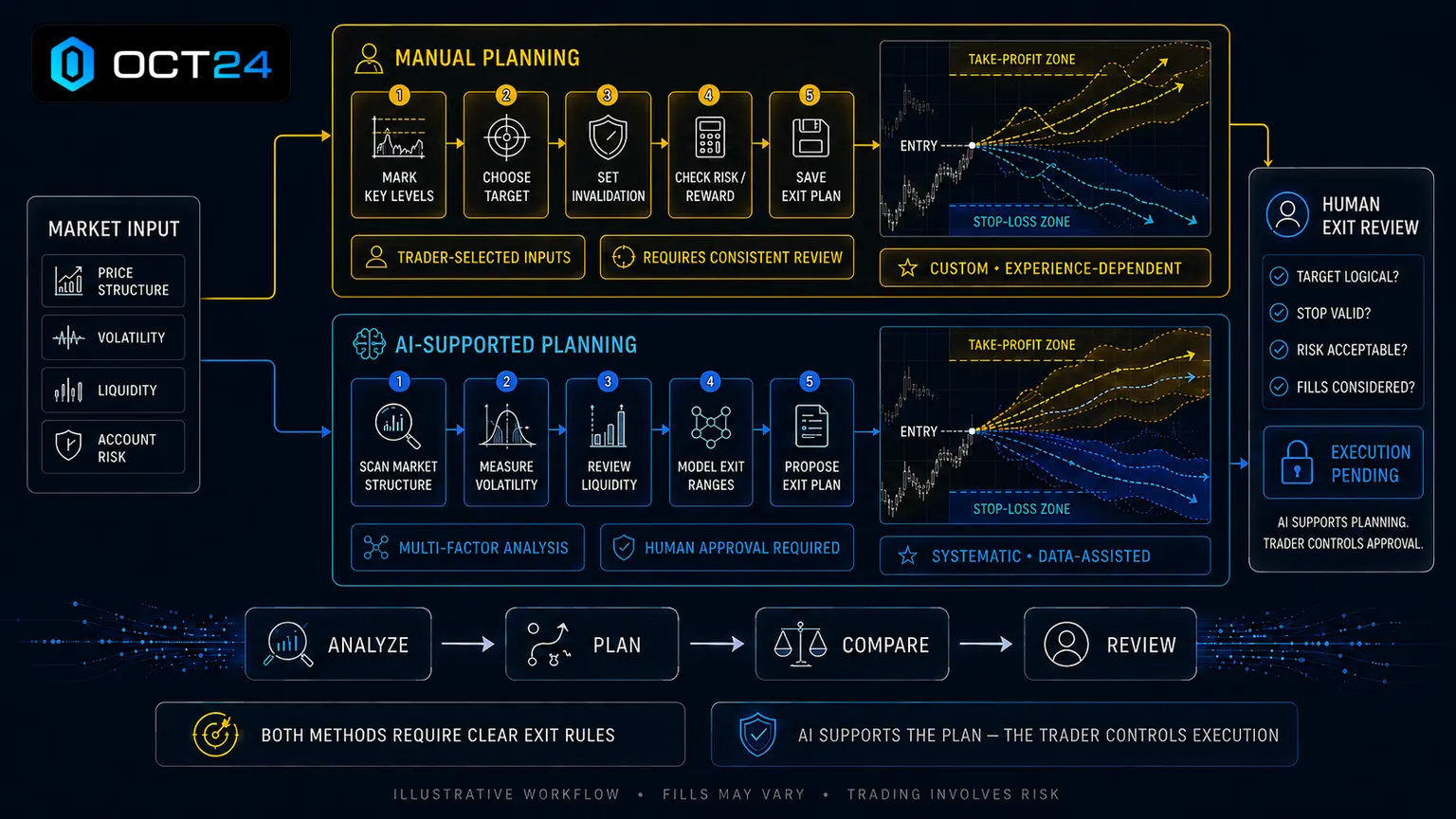
Manual exit planning usually requires chart analysis. A trader may place a take-profit level near resistance and a stop-loss near support. They may also use a percentage target, volatility range, or risk-to-reward rule.
This can work, but it takes experience. Beginners often place exits too close, too far away, or in areas that do not match current market behavior.
AI bot exit planning is different. The bot can structure the trade based on its own analysis and rules. The trader does not need to manually draw every level or calculate every possible exit point.
This is one of the practical differences between AI trading vs manual trading. Manual trading gives the trader direct control over every detail. AI-supported trading can simplify the process by handling more of the analysis and trade structure.
OCT24 follows the simplified AI-supported model. The user sees key decision information, but the AI bot plans the exit structure behind the trade.
How OCT24 Handles Exit Planning
OCT24 is designed to reduce the amount of manual analysis a user needs to do. The platform scans market conditions, identifies potential opportunities, and presents AI-supported trading signals through its bot experience.
When a trade or bot opportunity is shown, users do not receive a full manual trading ticket with detailed asset commentary, exact entry points, or exact exit points. The experience is intentionally simpler.
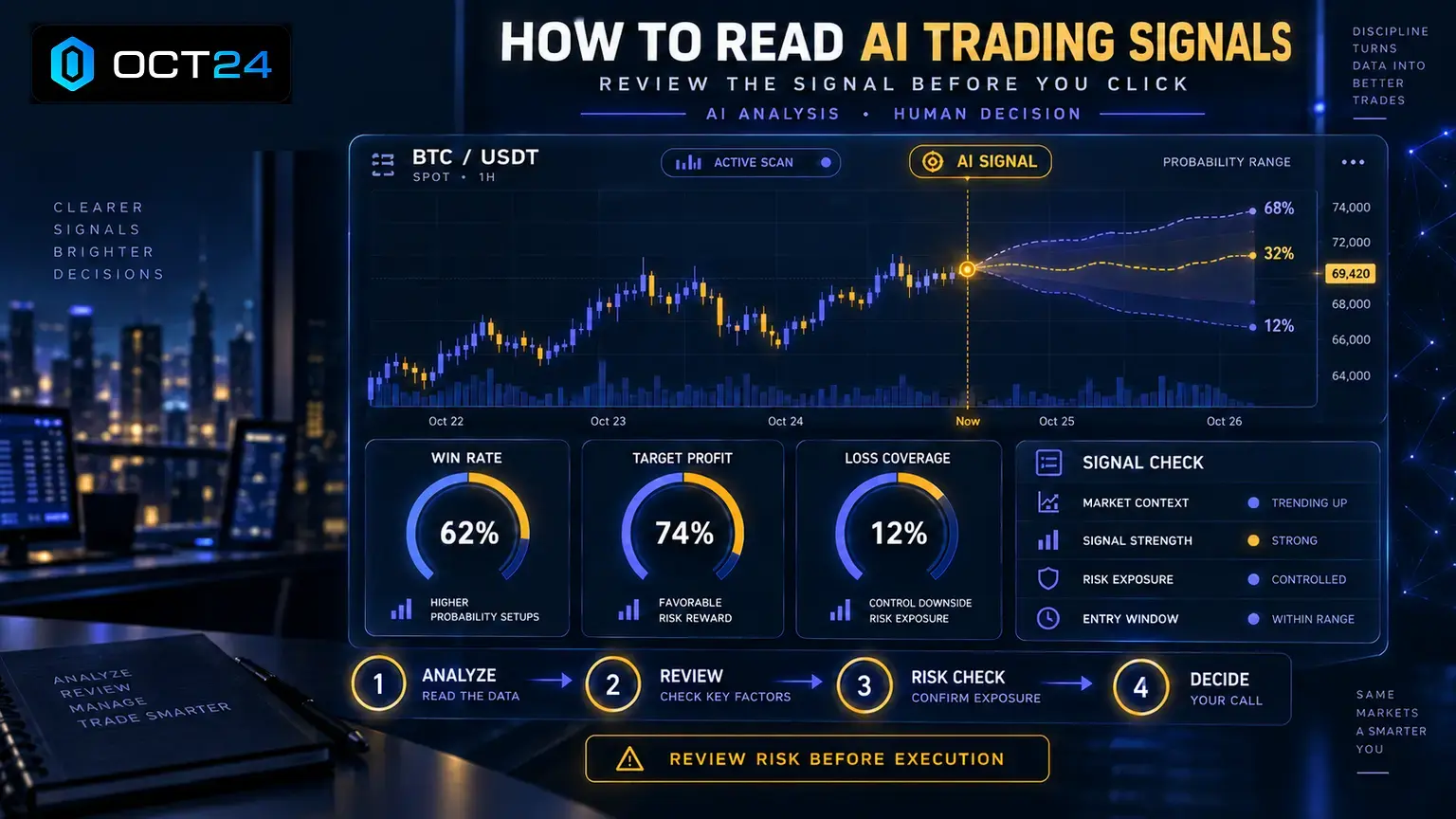
The main information users can review includes target profit, loss coverage, and win rate. These details help the user understand the trade objective, downside context, and stated performance profile.
For exit planning, the key point is direct: OCT24 users do not manually plan exits. The AI bot plans exits for the user as part of the trade structure.
That can make trading easier to approach, especially for users who do not want to build their own exit plans from charts. It does not mean the trade is risk-free. The user still chooses whether the opportunity is suitable and how much exposure to use.
How Target Profit Fits Into Exit Planning
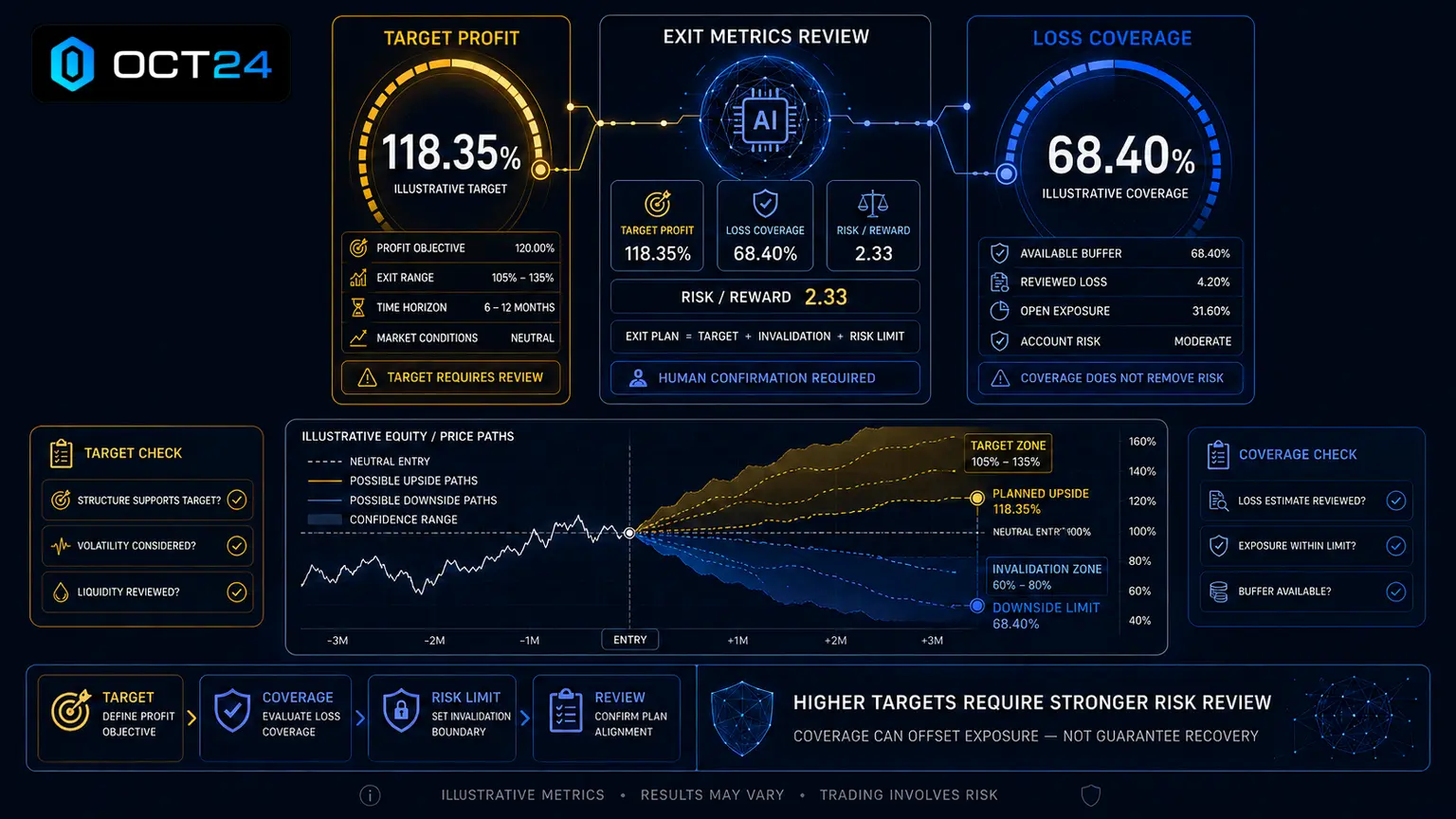
Target profit is the visible reward objective. It tells the user what the trade is aiming to achieve if conditions work in its favor.
On OCT24, target profit is especially important because users are not manually placing take-profit levels themselves. The AI bot handles the exit planning, while the user reviews the target profit as part of the decision process.
A target profit should not be treated as a guaranteed outcome. It is an objective, not a promise.
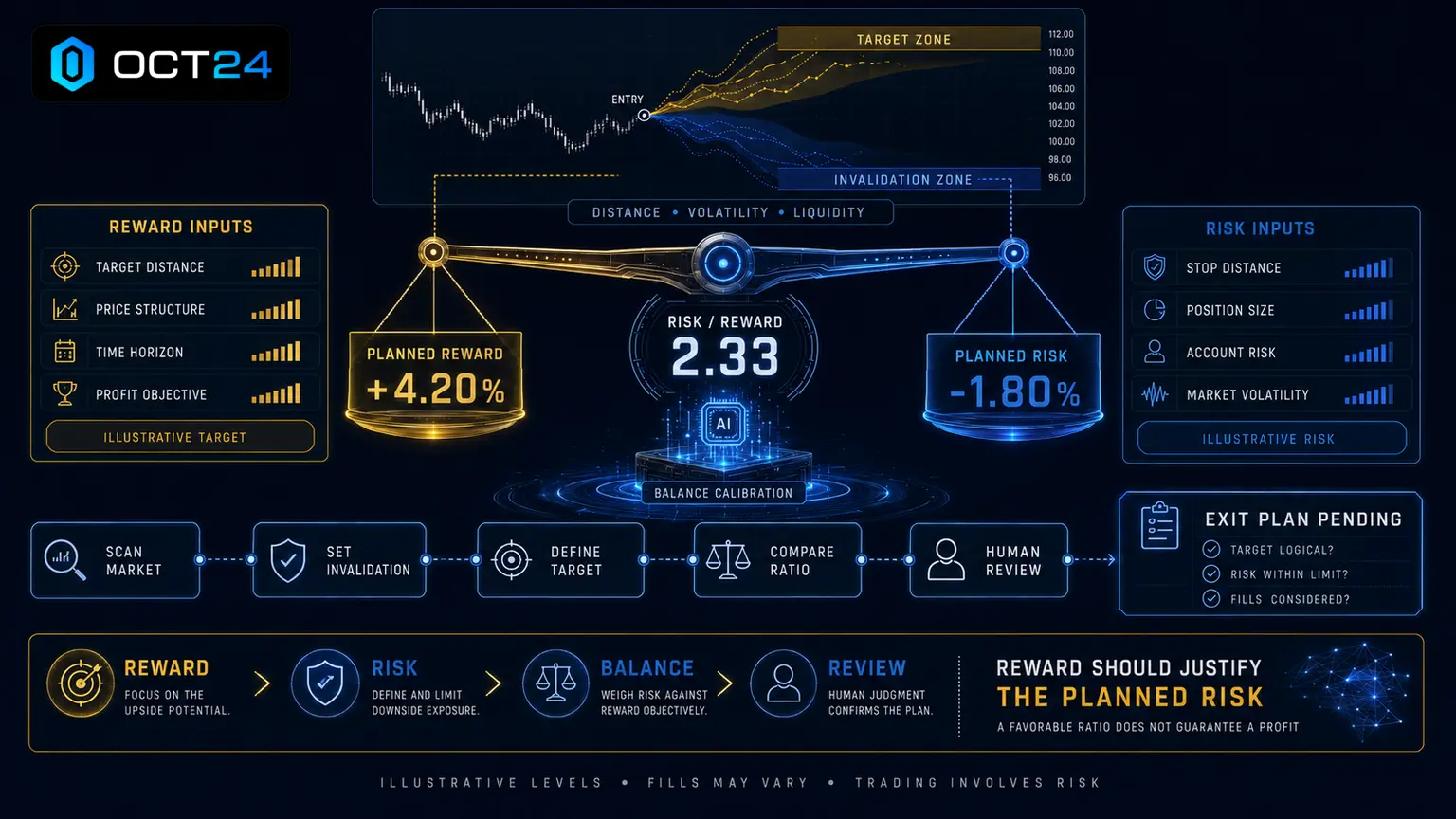
This is where AI trading risk vs reward becomes useful. Traders should compare the target profit with the possible downside, their account size, and their personal risk tolerance.
If the target looks attractive but the user is uncomfortable with the exposure, the trade may not be suitable. Exit planning only works well when the account-level risk also makes sense.
How Loss Coverage Fits Into Exit Planning
Loss coverage helps users understand how downside is presented within the trade or bot structure. It is one of the most important risk details for OCT24 users to review.
Loss coverage is not the same as a guarantee. It is part of the trade information that helps the user think about risk before deciding whether to execute.
Because OCT24 users do not manually set stop-loss levels, loss coverage becomes a key piece of the review process. It gives practical context around how the trade handles downside risk.
This connects closely with AI trading and stop-loss planning. The bot handles the stop-loss planning and exit structure, while the user reviews the available information and decides whether the trade fits their own risk comfort.
A user should never increase exposure only because loss coverage looks reassuring. Capital allocation still matters.
Why Win Rate Is Not Enough
Win rate can help users understand how often a trade type or bot profile is expected to succeed, but it should not be the only decision point.
A high win rate does not remove the need for exit planning. A strategy can win often and still have losses that matter if exposure is too large.
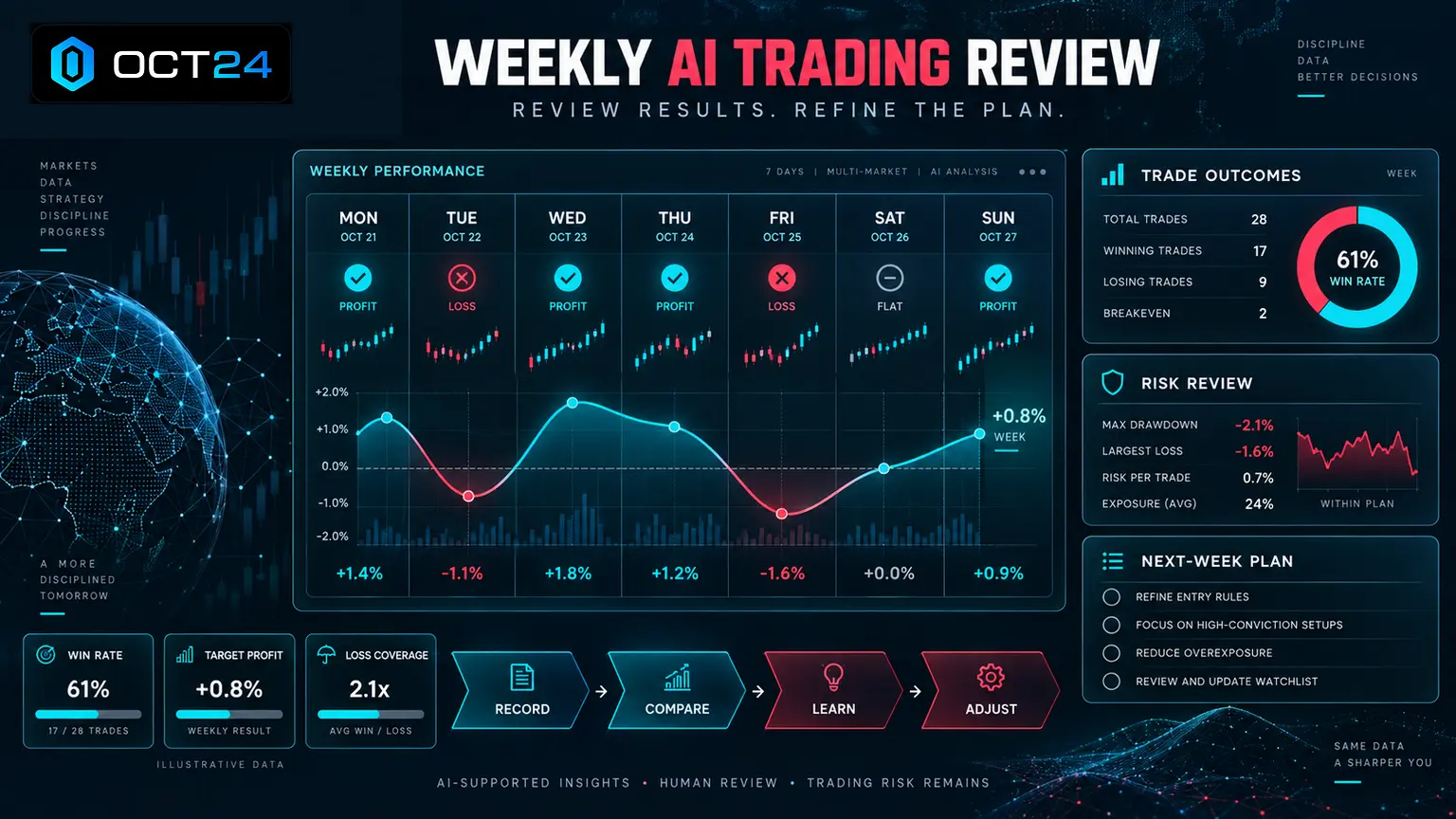
This is why reviewing AI trading performance over time matters. Traders should think about consistency, drawdowns, risk exposure, and whether the bot’s trade style fits their account plan.
On OCT24, win rate should be reviewed alongside target profit and loss coverage. These details work together. None of them should be used alone.
The practical question is not only “Can this trade win?” The better question is “Does this trade’s potential reward and downside fit my risk plan?”
How AI Uses Market Conditions to Plan Exits
AI can process market information quickly. It can review price behavior, volatility, momentum, and signal quality faster than most manual traders can.
This connects with how AI uses technical analysis. Instead of relying on one chart detail, AI can compare several inputs and use them to support a structured trade plan.
Exit planning depends heavily on market conditions. A calm market may need a different exit structure than a volatile market. A strong trend behaves differently from a sideways range.
OCT24 uses AI-supported analysis to present trading opportunities without requiring users to scan every market manually. The AI bot plans exits inside the trade structure.
The user does not need to calculate each take-profit or stop-loss level, but they still need to understand that AI support does not guarantee a specific result.
Exit Planning in Volatile Markets
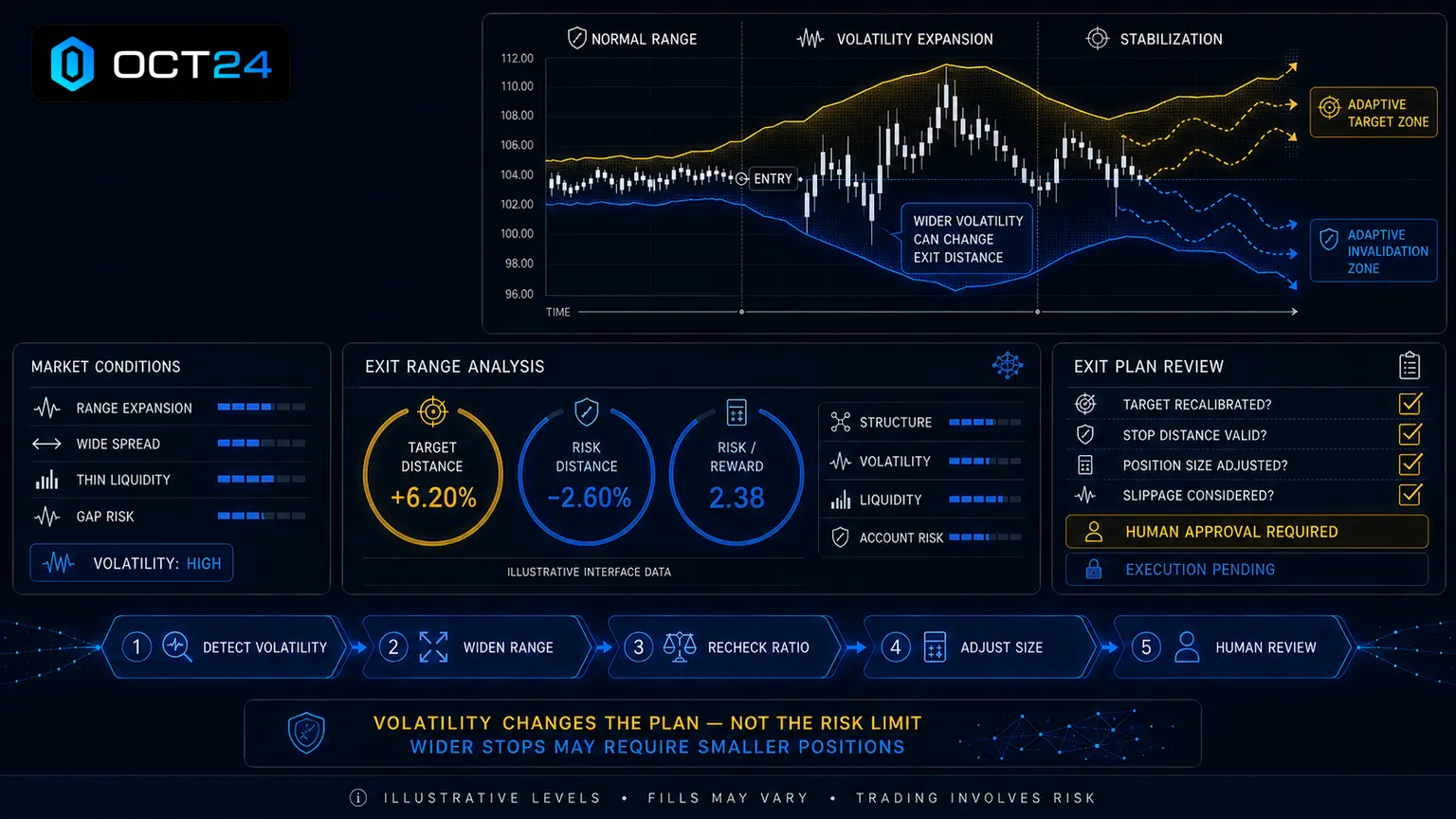
Volatility makes exit planning more important because price can move sharply in both directions. A trade may approach its target quickly, then reverse just as quickly.
In volatile crypto markets, manual exit planning can be stressful. Traders may move their stop, close too early, or hold too long because the price action feels urgent.
AI can help by applying structure during changing conditions. This is related to how AI handles market volatility because the system can scan movement and respond according to its trade logic.
On OCT24, the bot handles exit planning, including the take-profit and stop-loss structure. The user is not manually adjusting exits during the trade setup.
That still leaves an important decision for the user: whether the target profit, loss coverage, and win rate make sense for their capital and risk tolerance.
Exit Planning in Sideways Markets
Sideways markets create a different problem. Price may move back and forth without strong follow-through, which can make exits harder to judge manually.
AI trading during sideways markets requires selectivity because not every short-term movement deserves action. Weak movement can create signals that look valid for a short time and then fade.
Manual traders may try to place take-profit and stop-loss levels near the edges of a range. This can work, but it can also lead to repeated small exits if the market remains choppy.
With OCT24, the user does not manually create the exit plan. The bot handles the trade structure, and the user reviews the available trade information before choosing whether to proceed.
If the market feels unclear or the user is uncomfortable with the possible downside, skipping the trade can be a valid decision.
How Exit Planning Helps Manage Drawdowns
Drawdown is the decline from a previous account high to a lower point. It matters because trading is not only about one trade. It is about how many trades affect the account over time.
Understanding drawdown in trading helps users think beyond a single target profit. A trade can have a clear exit plan and still be part of a difficult period if several trades lose in a row.
AI can help manage drawdowns by applying consistent structure and reducing emotional changes to the plan. It cannot remove drawdowns entirely.
This is where manage drawdowns becomes relevant. Traders need to control exposure so that normal losing periods do not become account-level stress.
OCT24’s AI bot handles exit planning, but users still decide how much capital to risk. That decision affects how drawdowns feel in practice.
Position Size Still Controls the Real Impact
Exit planning defines the trade structure. Position size defines how much the outcome matters to the account.
A well-planned exit can still feel uncomfortable if the trader commits too much capital. This is why users should not treat automation as permission to increase exposure without thinking.
OCT24 can simplify the trade review process, but it cannot know every user’s personal financial situation, risk tolerance, or account goals.
A practical approach is to use smaller exposure while learning how the bot experience works. This allows the user to understand target profit, loss coverage, and win rate without putting too much pressure on each decision.
Exit planning and position sizing work together. One controls structure. The other controls impact.
Why Exit Planning Reduces Emotional Trading
Emotional trading often appears when a trader has no clear exit plan. They may hold a losing trade because they hope it recovers or close a winning trade too early because they fear losing the gain.
AI-supported exit planning can reduce some of that pressure. The bot follows the trade structure instead of reacting to fear or excitement.
This is useful for traders trying to avoid overtrading. When exits are not planned clearly, traders may jump into new trades too quickly after a win or loss.
OCT24’s one-click trading experience can make execution simpler, but speed should not replace review. Users should still check the available trade details before acting.
The best use of AI is structured decision support, not blind clicking.
Where the G6 Trading Bot Fits
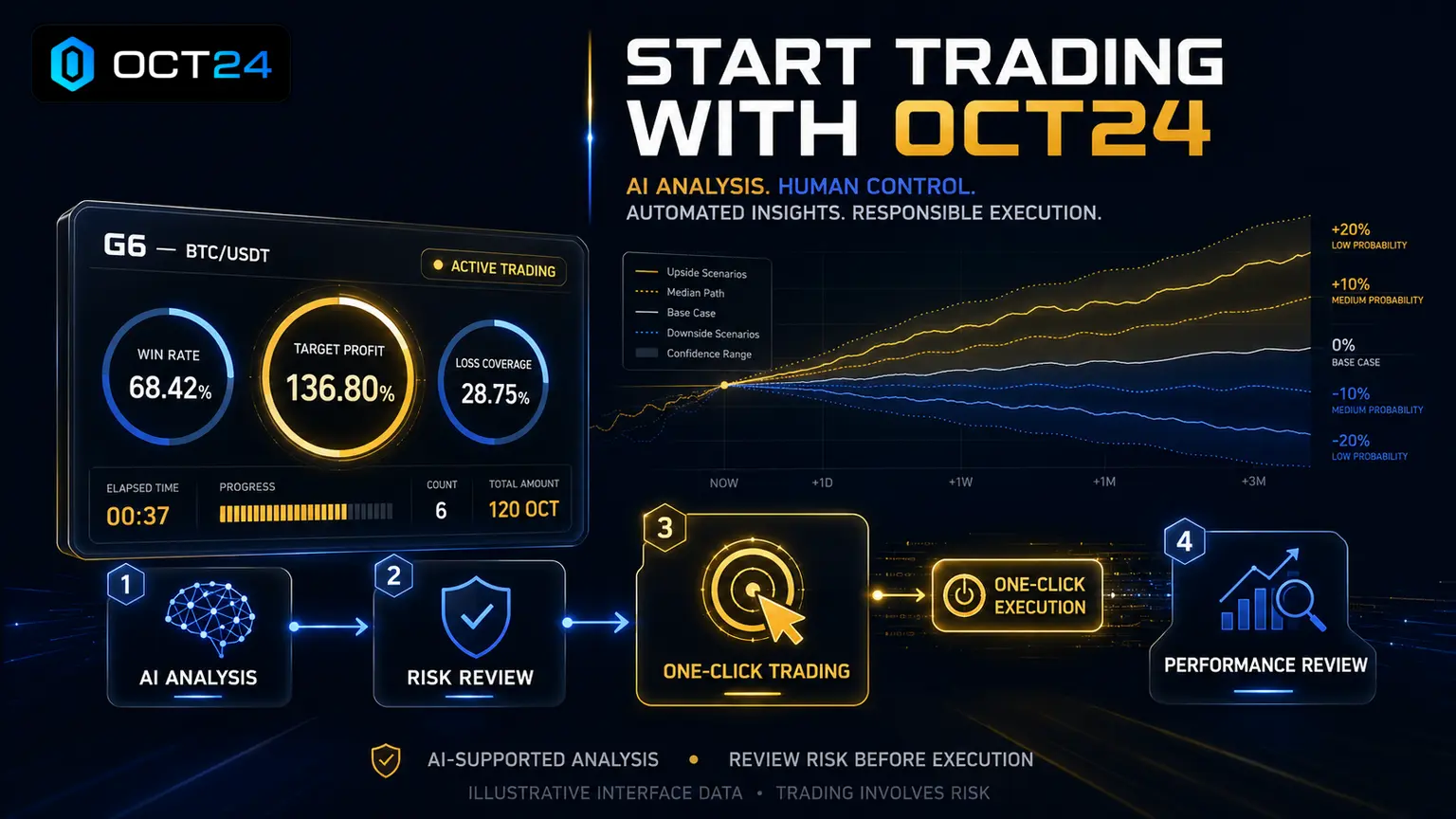
The G6 Trading Bot is part of the OCT24 bot experience and is designed around simple interaction with AI-supported trading opportunities.
For exit planning, the important point is that the bot plans the exit structure. Users do not manually create take-profit or stop-loss levels before execution.
This can reduce complexity for beginners, but it also makes review discipline important. Users should consider target profit, loss coverage, win rate, and account exposure before acting.
The G6 Trading Bot should not be treated as a profit guarantee. It is a tool within the OCT24 experience, and every trade still carries risk.
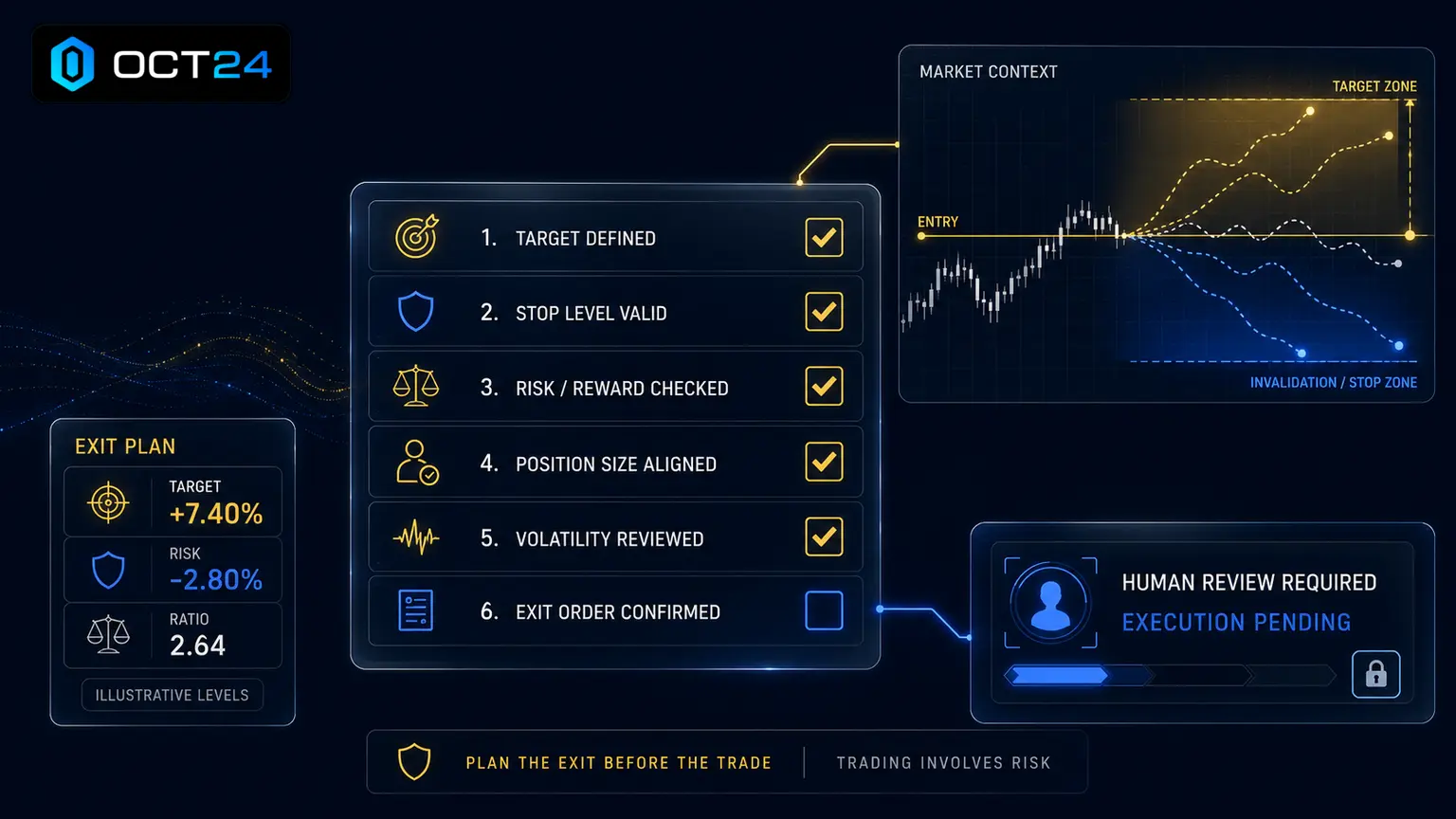
A Simple OCT24 Exit Review Checklist
Because OCT24 users do not manually plan exits, the review process should focus on the information users can actually see and control.
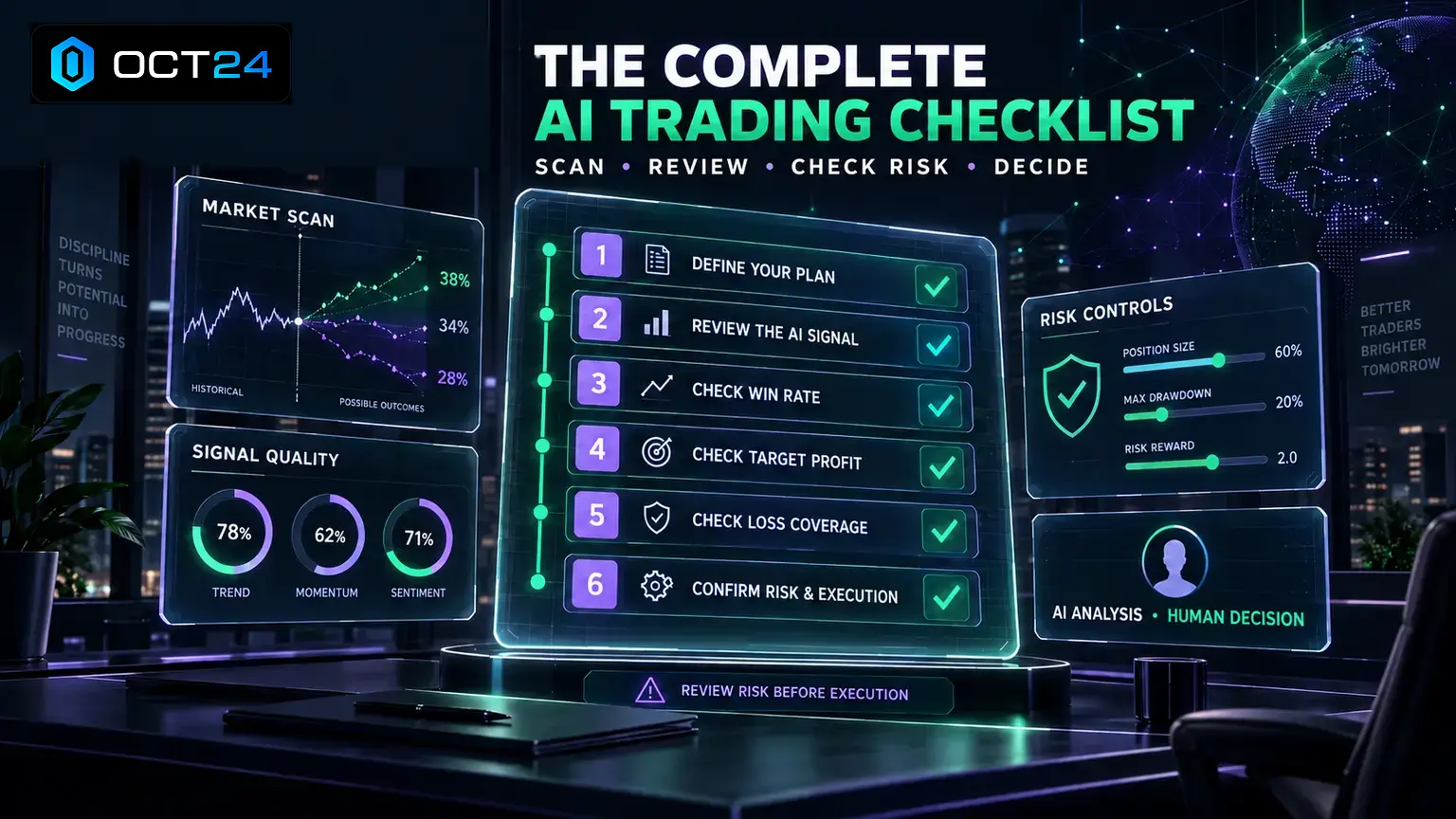
Before executing an OCT24 opportunity, review these questions:
- Do I understand the target profit?
- Have I reviewed the loss coverage?
- Does the win rate fit the risk profile?
- Is my exposure reasonable for my account?
- Am I comfortable with the possible downside?
- Am I taking this trade because it fits my plan?
- Do I understand that the AI bot plans exits for me?
- Would I still accept this trade after a previous loss?
This checklist is simple, but it helps users avoid reacting only to potential reward. It keeps attention on the full exit and risk picture.
Common Mistakes With Take Profit and Stop Loss
One common mistake is focusing only on the take-profit side. Traders naturally like the reward number, but reward only matters when the risk is acceptable.
Another mistake is assuming that stop-loss planning removes risk. A stop-loss can help structure downside, but markets can still move unexpectedly.
Traders also need to avoid common AI trading mistakes such as overtrusting automation, ignoring exposure, and treating every signal as equally strong.
A final mistake is chasing signals after the trade has already moved. AI trading signals without chasing the market requires patience and discipline, even when the platform makes execution fast.
OCT24 helps simplify trading decisions, but users still need a risk-aware process before clicking.
How Beginners Should Think About AI Exit Planning
Beginners do not need to master every technical detail before understanding exits. The basic idea is straightforward: every trade needs a plan for both reward and risk.
AI trading strategies for beginners should always include exit awareness. A trade idea is incomplete if it only explains why to enter and ignores how the trade may close.
OCT24 makes this easier because the AI bot plans exits for the user. The user does not need to manually calculate take-profit or stop-loss levels.
However, beginners should still review the trade information carefully. Target profit, loss coverage, win rate, and exposure are practical decision inputs.
The goal is not to trade perfectly. The goal is to make decisions that are structured, understandable, and responsible.
How Exit Planning Fits Into a Consistent Routine
A consistent trading routine helps users review each opportunity the same way. This reduces random decisions based on mood, impatience, or recent results.
With OCT24, a simple routine may include reviewing target profit, checking loss coverage, checking win rate, deciding exposure, and then choosing whether to execute.
This connects with building a consistent trading routine because the trader’s process should remain stable even when market conditions change.
The AI bot handles exit planning. The user handles the account-level decision.
That balance is important. It allows automation to simplify the trade structure while keeping the trader responsible for risk.
FAQs
What is the difference between take profit and stop loss?
Take profit defines where a trade aims to close with a gain. Stop loss defines how downside is managed if the trade moves against the setup.
Does OCT24 allow users to manually plan exits?
No. OCT24 users do not manually plan exits inside the platform. The AI bot plans the exit structure, while users review target profit, loss coverage, win rate, exposure, and execution decisions.
Does OCT24 show exact take-profit and stop-loss levels?
OCT24 focuses on simplified trade or bot information such as target profit, loss coverage, and win rate. It does not currently present a full manual trading ticket with detailed entry and exit levels for every opportunity.
Is AI exit planning risk-free?
No. AI exit planning can help structure a trade, but it does not remove market risk or guarantee results.
Why is target profit important?
Target profit helps users understand the trade objective. It should be reviewed with loss coverage, win rate, and account exposure before execution.
Why is loss coverage important?
Loss coverage gives context around downside handling. It should be treated as risk information, not as a guarantee.
Should win rate decide whether I trade?
No. Win rate should be reviewed alongside target profit, loss coverage, account size, and personal risk tolerance.
Can AI help reduce emotional exit decisions?
AI can help by applying structured exit logic without fear or excitement. The trader still needs to manage exposure and decide whether the trade fits their plan.
Where can I learn more about OCT24?
You can learn more through About OCT24 or review AI-supported opportunities when you Start Trading with OCT24.
Final Thoughts
Take profit vs stop loss is really a discussion about balance. One side defines the trade objective. The other side defines downside control.
In manual trading, the user usually plans both exits. With OCT24, the AI bot plans exits for the user as part of the trade structure. The user reviews simplified information such as target profit, loss coverage, and win rate.
This makes the experience easier, but it does not remove responsibility. The trader still controls exposure, capital allocation, and execution decisions.
Used responsibly, OCT24 can help traders interact with AI-supported opportunities in a simpler and more structured way. The platform handles much of the analysis and exit planning, while the trader manages account-level risk.
The best approach is direct: let the bot handle the exit plan, but do not let automation replace risk judgment.
Learn more at OCT24, read more on About OCT24, or Start Trading with OCT24 when you are ready to review AI-supported trading opportunities with a clear exit and risk mindset.