
AI Trading for Volatile Crypto Markets
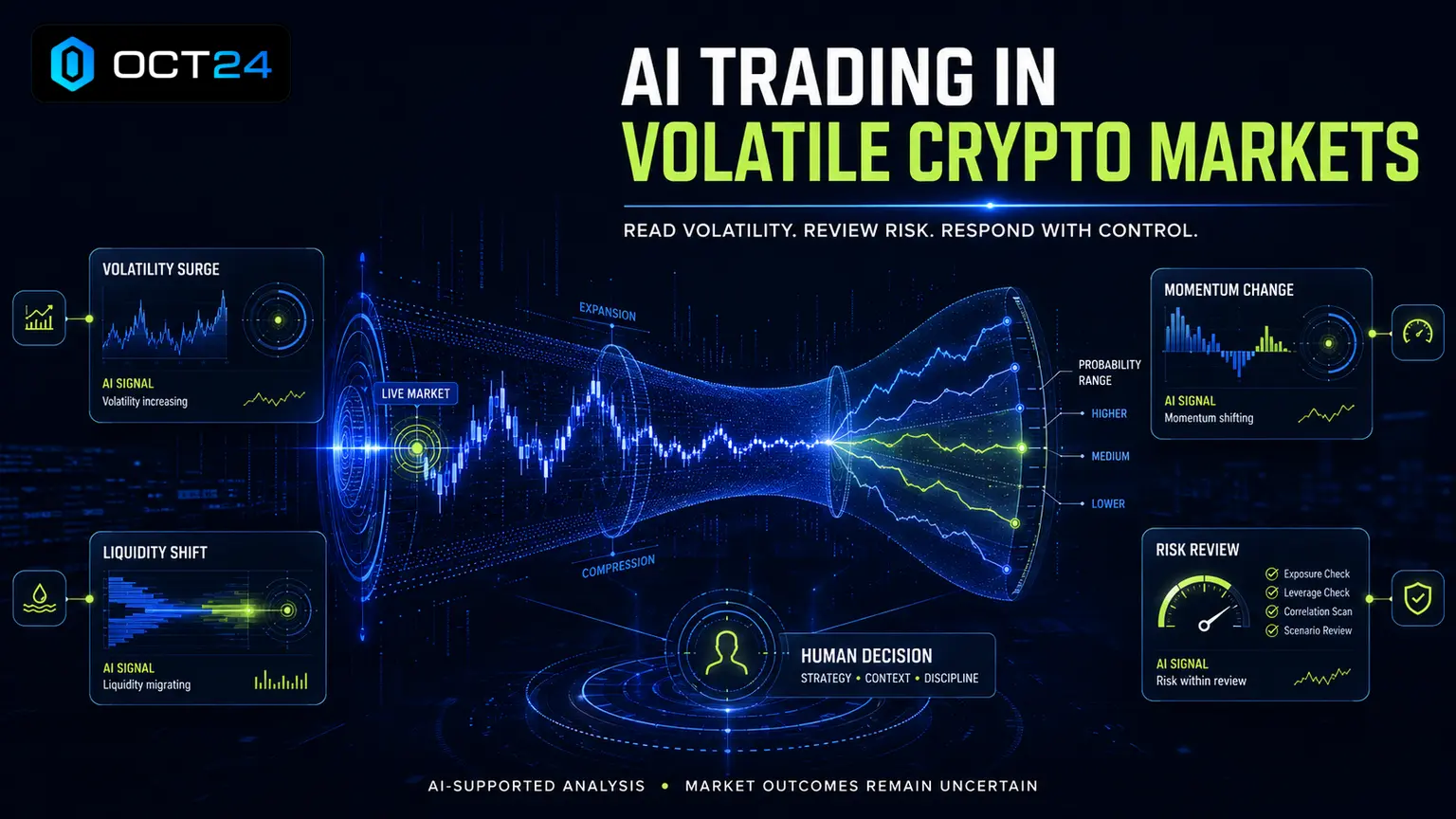
AI trading for volatile crypto markets can help traders review fast-moving conditions with more structure and less emotion. Crypto volatility can create opportunity, but it can also increase risk quickly when traders react without a plan.
The short answer is simple: AI can support volatile crypto trading by scanning market conditions, identifying potential signals, and helping traders compare opportunities before acting. It does not remove risk, guarantee results, or make every fast move worth trading.
Volatile markets are difficult because price can move sharply in both directions. A trade that looks strong one minute can weaken quickly. A trader who is excited by speed can easily overtrade, oversize, or ignore risk.
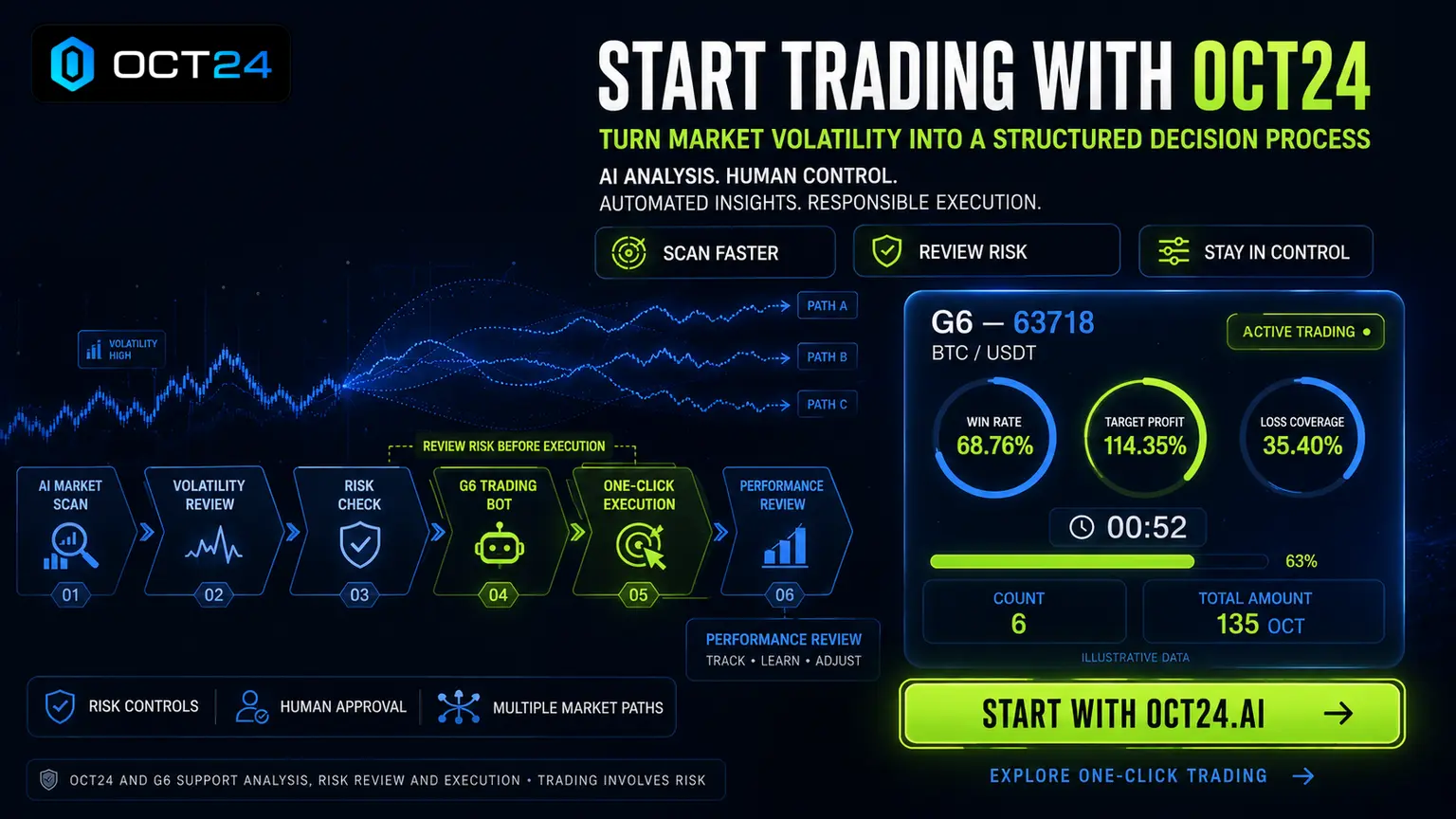
OCT24 supports a simpler AI-powered trading experience by presenting AI-supported trade and bot opportunities with visible metrics such as target profit, loss coverage, and win rate. Traders still need to manage exposure, capital allocation, risk settings, and execution decisions.
Why volatile crypto markets need structure
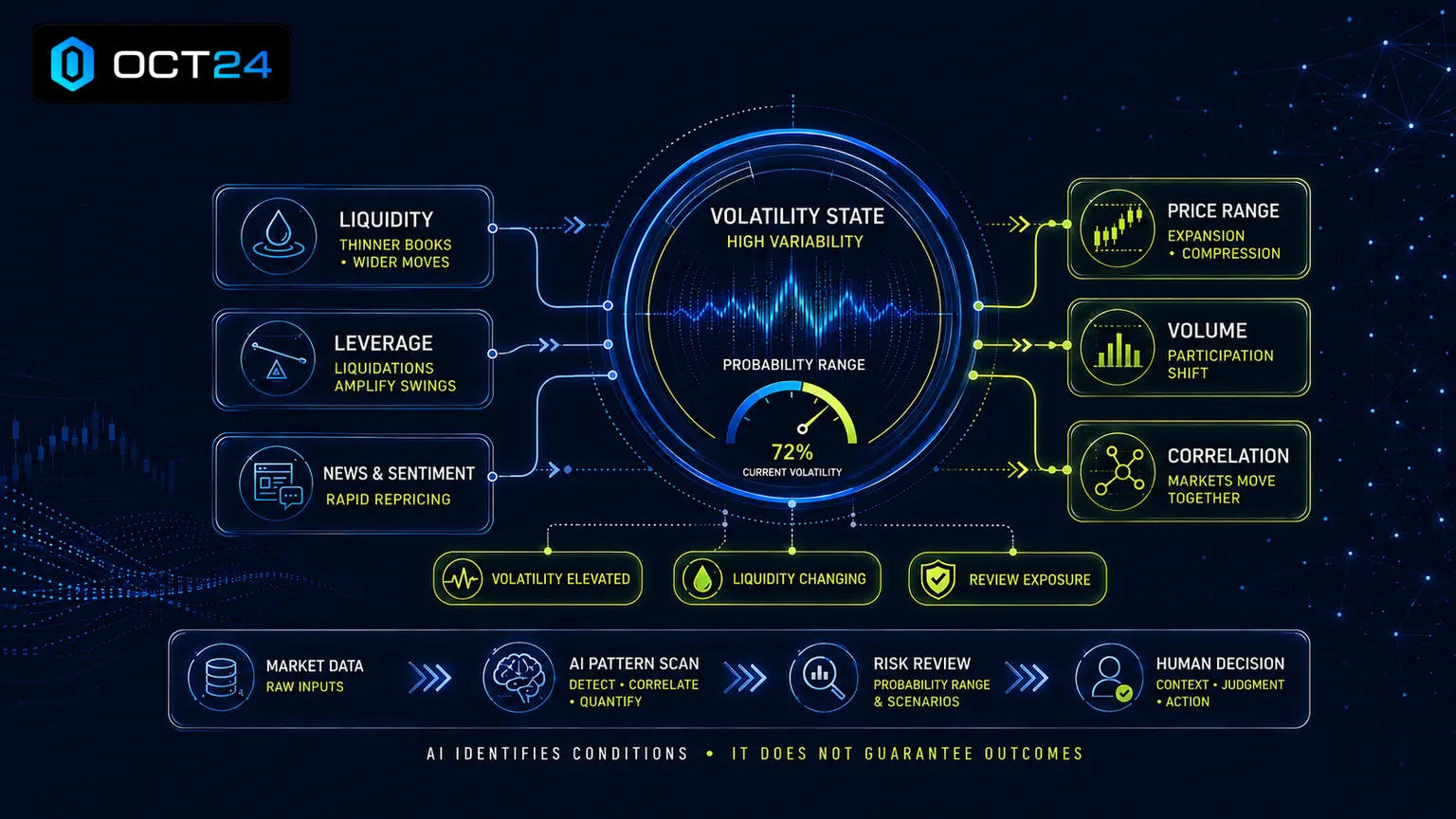
Crypto markets can move faster than many beginners expect. Bitcoin, Ethereum, and altcoins can react to liquidity shifts, news, sentiment, leverage, and market rotation within a short period.
Volatility is not automatically good or bad. It simply means price is moving more sharply. For traders, that can create more potential opportunity and more potential risk at the same time.
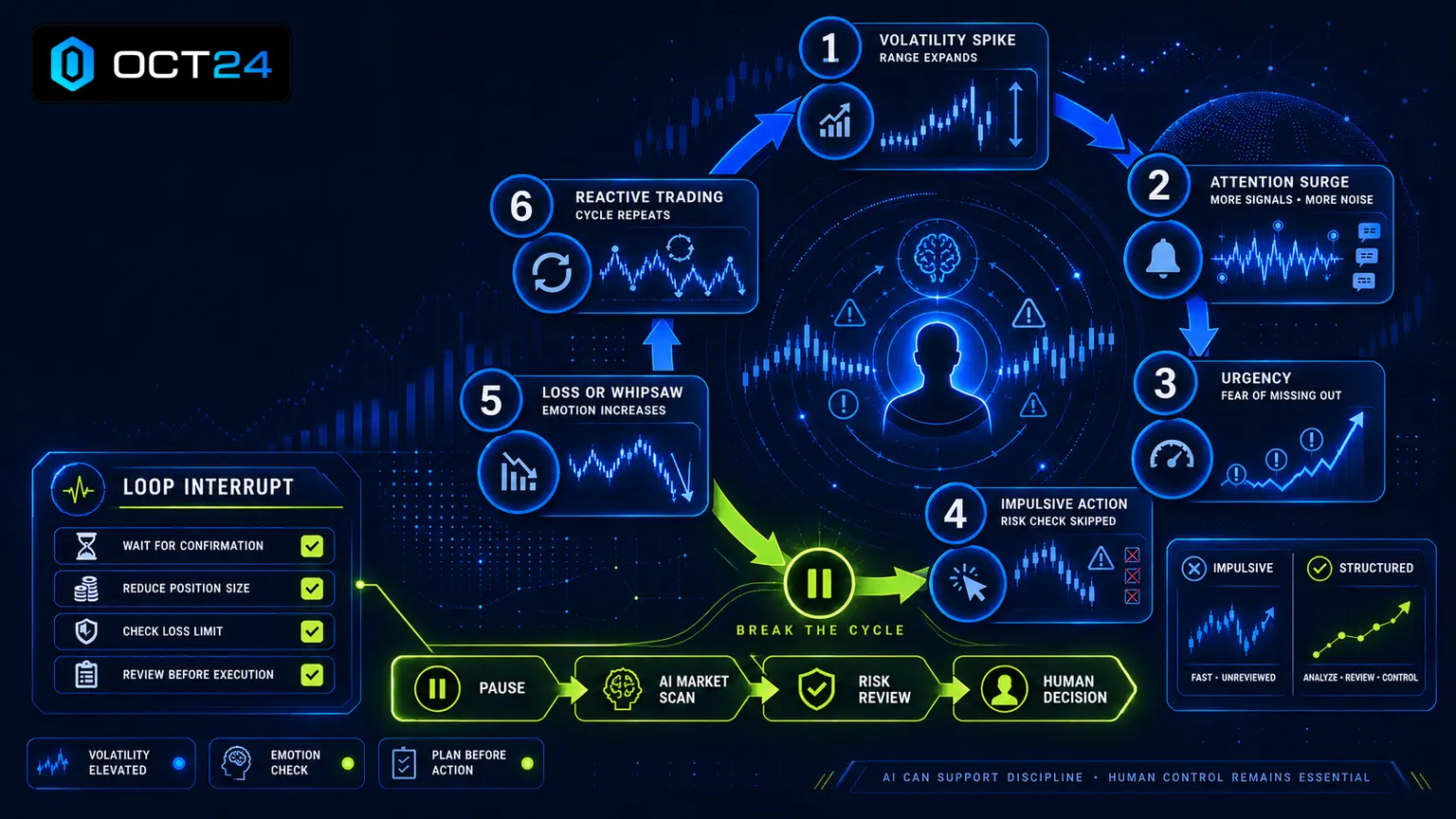
The problem is that volatility often makes traders feel urgent. They may think they need to act before the move disappears. That feeling can lead to weak entries, rushed exits, or larger positions than planned.
This is why structured review matters. A volatile market should not make the trader abandon rules. It should make the trader use rules more carefully.
AI can help by reducing some of the manual pressure and giving traders a clearer process before acting.
What makes crypto volatility different
Crypto volatility is different because the market runs all day, every day. There is no closing bell that forces traders to step away. A sudden move can happen at any time.
Volatility can also spread quickly across assets. Bitcoin may move first, Ethereum may follow, and altcoins may react even more sharply. Sometimes smaller assets move because of liquidity rather than strong fundamentals.
This is why understanding crypto market rotation can help traders. Not every coin moves for the same reason, and not every fast move deserves action.
Volatility also creates false confidence. A trader may win quickly during one fast move and then assume the next move will behave the same way.
AI-supported review can help traders slow down and ask whether the current move is a real opportunity or just noise.
How AI helps filter market noise
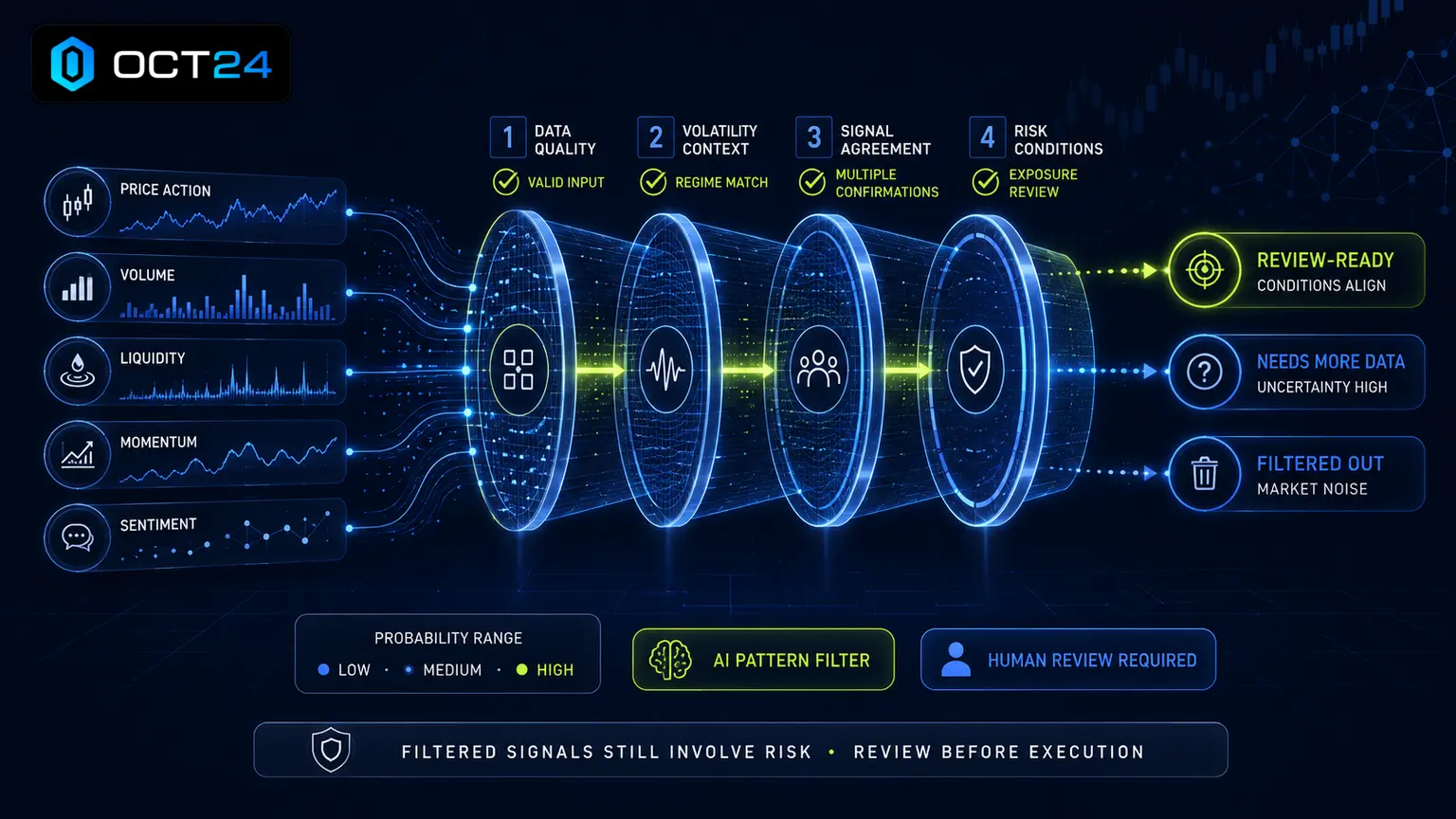
One of the biggest challenges in volatile crypto markets is noise. Prices move quickly, candles expand, and alerts appear more often. The trader may feel surrounded by information but still lack clarity.
AI can help by scanning market conditions and identifying potential opportunities that match certain signals or patterns. This can reduce the need to manually jump between dozens of charts.
That does not mean every AI-supported signal should be used. It means the trader starts with a more organized review process.
This connects with AI trading signals and how AI uses technical analysis. Signals are useful because they organize information. They are not guarantees.
In volatile markets, a signal should be treated as a reason to review, not a command to trade.
How AI helps traders avoid emotional reactions
Volatile crypto markets can trigger strong emotions. Traders may feel excitement when prices rise, fear when prices fall, and pressure when other people seem to be making money.
AI can help create a more structured decision point between market movement and trader action. Instead of reacting immediately, the trader can review whether the opportunity fits their risk plan.
This connects with trading psychology. AI does not remove emotion from the trader, but it can help reduce emotional decision-making by creating a repeatable review process.
A useful question during volatility is: am I acting because the setup is clear, or because the market feels exciting?
If the answer is excitement, waiting may be the better decision.
Risk management matters more during volatility
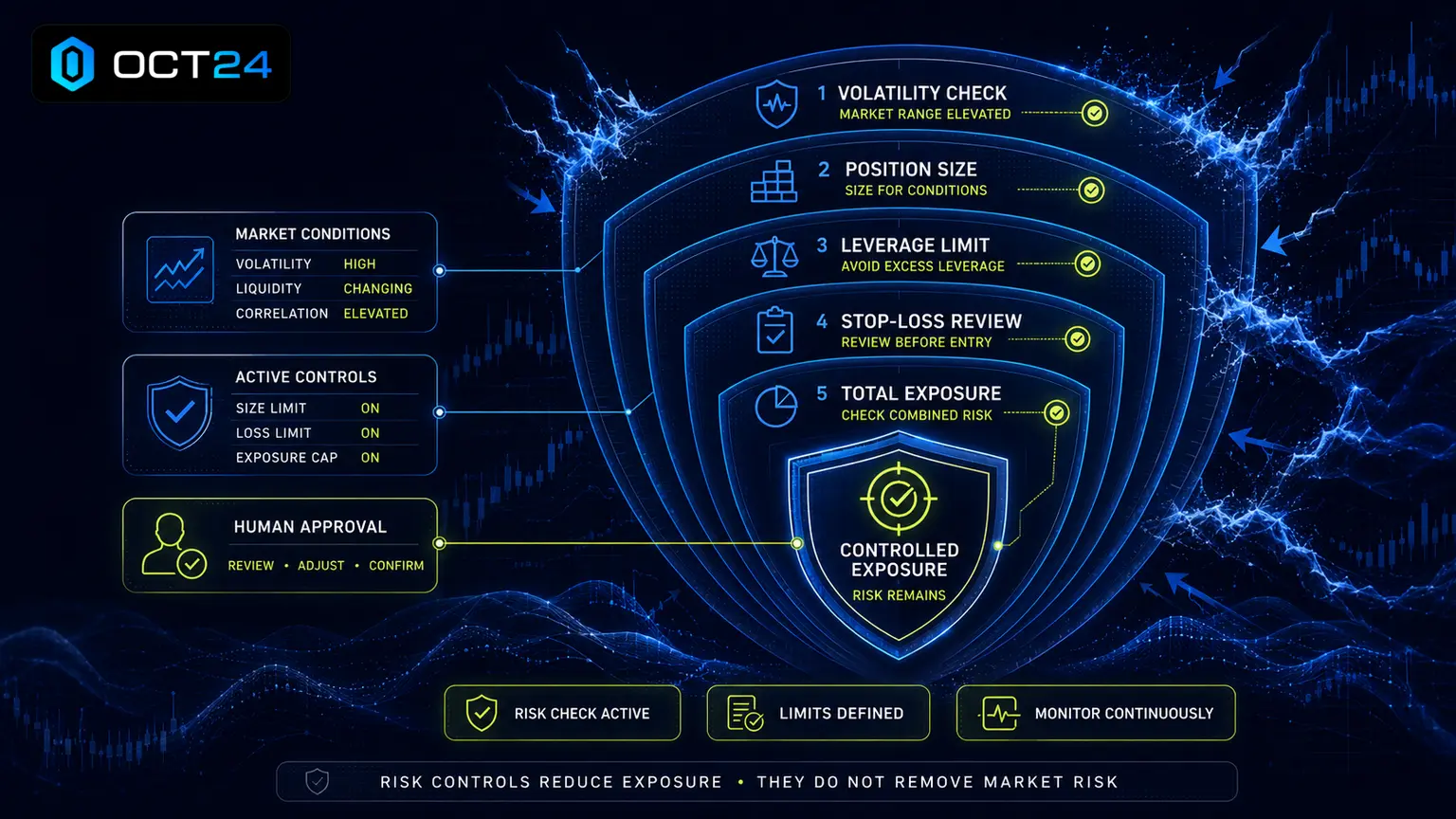
Risk management becomes more important when price moves quickly. A position that feels small in calm conditions may become uncomfortable when the market moves sharply.
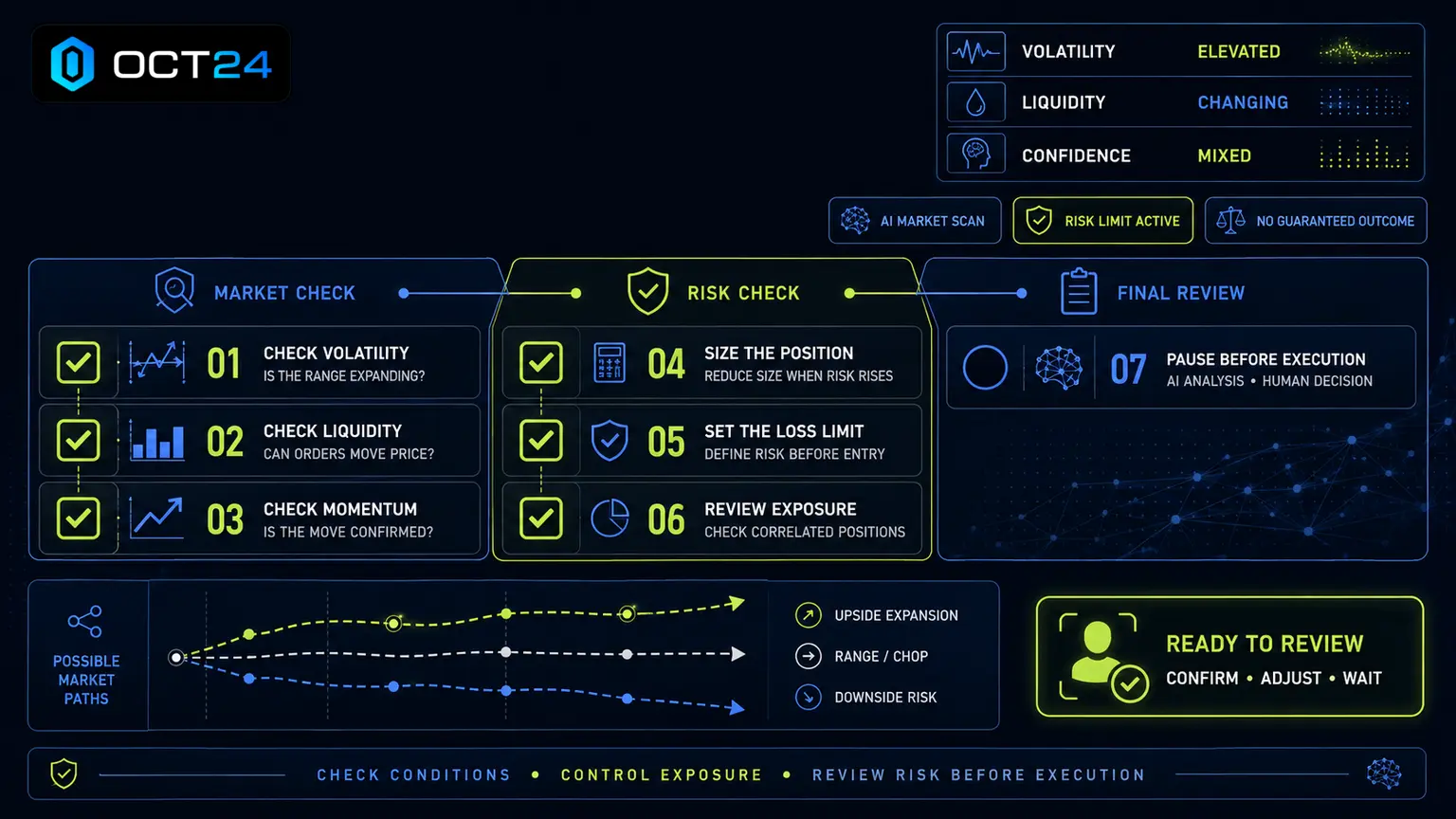
Traders should review position size, capital allocation, daily limits, and possible downside before acting. Volatility can make losses happen faster, so the risk decision needs to happen before execution.
Useful risk checks include the following.
- Is the trade size appropriate for current volatility
- Is the trader already near a daily or weekly loss limit
- Does the possible reward justify the downside
- Would a sudden reversal damage the account
- Is the trader taking the trade because of a plan or because of urgency
- Should position size be reduced until conditions calm down
These ideas connect directly to trading bot risk management, position sizing controls, and AI trading risk vs reward.
AI-supported review can help by giving the trader a reason to pause before clicking. The trader can compare the signal with current volatility instead of reacting only to speed.
A simple approach is to reduce position size when candles become larger, spreads feel wider, or the market starts reversing quickly. Smaller exposure can give the trader more room to think clearly.
In volatile markets, risk should usually be adjusted before the trade begins. Waiting until a trade is already moving against you can make the decision more emotional.
Where OCT24 fits into volatile crypto trading
OCT24 is designed to make AI-supported trading simpler by presenting trade and bot opportunities in a structured way. The platform performs much of the market scanning and opportunity identification behind the scenes, then presents AI-supported trading signals for user review.
For accuracy, it is important to understand the current user experience. OCT24 does not currently provide a full on-platform market analysis dashboard for every opportunity, and users do not see detailed asset information or exact entry and exit points for every trade. Users review visible metrics such as target profit, loss coverage, and win rate.
These metrics can help traders think about potential reward, downside, and probability. They do not remove volatility risk. A trader can still lose money if they use too much capital, click too often, or ignore risk rules.
The G6 Trading Bot may appeal to traders who want a faster AI-powered workflow. Speed can be useful in crypto, but speed should be paired with stricter review during volatile markets.
OCT24 works best when traders review the available metrics, compare them with account limits, and decide whether current conditions support action.
OCT24 can help by presenting simplified trade and bot information, but the trader still needs to decide whether current volatility makes the opportunity suitable.
This is why traders should review whether an opportunity is still early enough to make sense. Chasing late movement can create poor risk and make exits more stressful.
Volatility can also change how traders read confidence. A fast move may look strong, but it may also mean the easy part of the move has already happened.
How to read OCT24 metrics during volatile markets
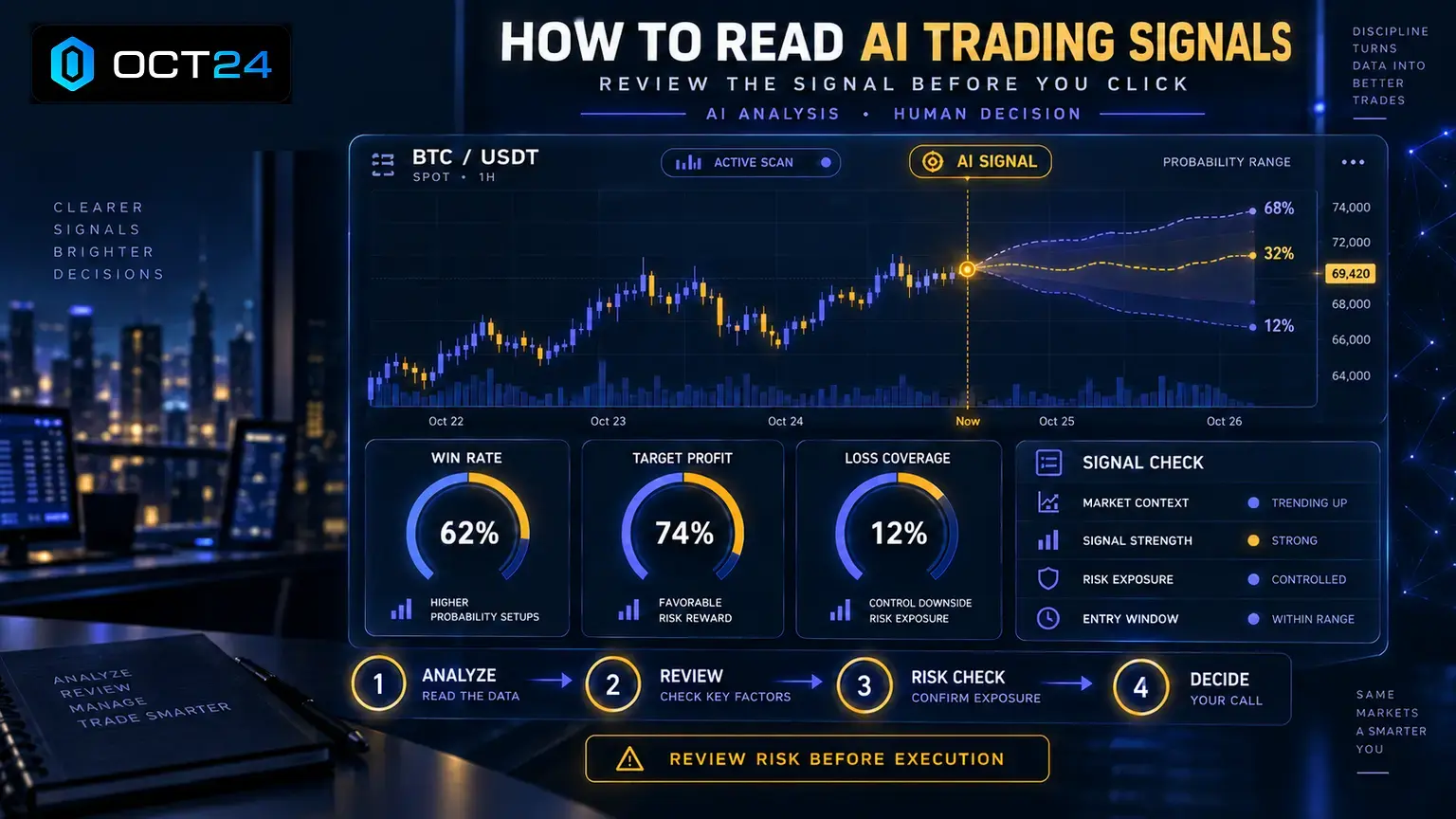
During volatility, OCT24 users should review target profit, loss coverage, and win rate together. None of these metrics should be used alone.
Target profit helps frame possible upside. Loss coverage helps frame downside. Win rate gives useful context, but it does not guarantee the next outcome.
A volatile market can change the meaning of these metrics. A target that looks realistic in calm conditions may become harder to evaluate when price is moving sharply. Loss coverage may matter more when reversals are sudden.
A simple OCT24 review can include these questions.
- Does the target profit justify the current volatility
- Is the loss coverage acceptable for my account size
- Am I relying too much on win rate
- Would I still take this trade if the market reversed quickly
- Should I reduce capital allocation because conditions are unstable
This connects with AI trading performance. The trader should review how decisions perform across different market conditions, not only whether one trade wins or loses.
The platform can simplify the review process, but the user still controls the final decision. That is especially important when price movement is fast and emotions are high.
If the market is moving sharply, the trader may decide to use less capital or skip opportunities that would normally seem acceptable. Volatile conditions can change the comfort level of a trade.
When using OCT24 in volatile markets, the visible metrics should be reviewed more carefully than usual. The trader should ask how target profit, loss coverage, and win rate fit the current environment.
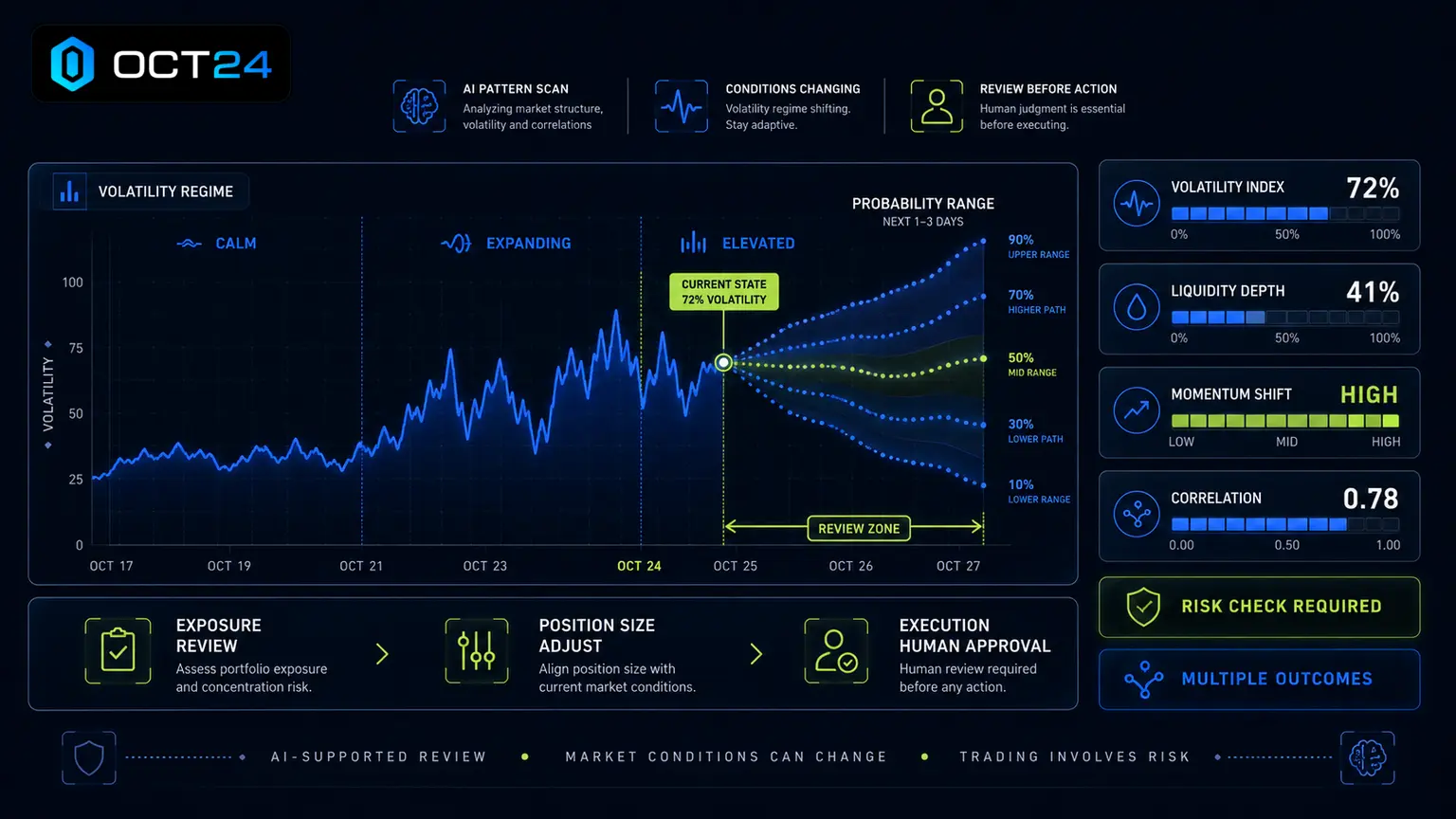
AI trading during volatility versus sideways markets
Volatile markets and sideways markets require different thinking. Volatility creates fast movement. Sideways markets create repeated false starts and reversals.
AI can help traders review which environment they are in. That matters because the wrong strategy in the wrong environment can create poor results.
If the market is volatile, the trader may need smaller size, faster review, and stricter risk limits. If the market is sideways, the trader may need patience, fewer trades, and better filters.
This is why AI trading during sideways markets is an important companion topic. Not every market needs the same response.
A good AI-supported workflow helps traders adapt rather than force one approach into every condition.
How volatility affects entries and exits
Volatility can make entries and exits harder. A trader may enter after a big move and then watch price reverse quickly. Another trader may exit too early because normal volatility feels stressful.
AI-supported review can help traders think more clearly about timing, but it cannot make timing perfect.
This connects with AI trading entry and exit signals. Entry and exit signals are decision-support tools. They are not promises that a move will continue.
During volatility, traders should avoid chasing candles simply because they are large. A large candle may show momentum, but it may also mean the move is already extended.
The better question is whether the opportunity still fits the risk plan after the move has already happened.
How AI can help traders avoid overtrading in volatile markets
Volatility often increases trade frequency. The market moves more, alerts appear more often, and traders feel that more opportunities are available.
More movement does not always mean better opportunity. Sometimes it simply means more noise.
AI can help reduce overtrading by filtering opportunities and encouraging traders to focus on selected signals rather than every price move.
This connects directly with avoid overtrading. In volatile markets, discipline often means taking fewer trades, not more.
A trader should ask whether each trade is part of a plan or simply a reaction to market speed.
AI can support discipline by helping traders focus on filtered opportunities. The trader still needs a limit on how many times they will act in one session.
This is risky because volatile markets can change direction quickly. The same speed that creates a fast win can also create a fast loss.
Overtrading during volatility often starts with one good trade. The trader sees a quick result, feels confident, and then starts taking every movement seriously.
AI-supported tools can help organize the decision process, but the trader still needs to review behavior after the session is finished.
This review matters because volatile sessions can feel successful even when the process was weak. A trader may make money while still taking too much risk. That kind of win can teach the wrong lesson.
Before trading, the trader decides risk limits and maximum activity. During trading, the trader checks whether each opportunity still fits those limits. After trading, the trader reviews whether volatility helped the process or made decisions worse.
A useful volatility plan has three parts: what to do before trading, what to do during trading, and what to review afterward.
Volatility, drawdowns, and recovery pressure
Volatile markets can create drawdowns quickly. A few oversized trades during unstable conditions can push an account below its recent high.
This is why traders need to understand drawdown in trading and how AI can help traders manage drawdowns.
A drawdown during volatility can create recovery pressure. The trader may want to win back losses quickly, which can lead to larger positions or more trades.
AI-supported review can help slow that process down. It gives the trader a structured way to compare current opportunities with risk limits before acting.
The goal is not to recover everything immediately. The goal is to protect the account and return to clear decisions.
A beginner checklist for volatile crypto markets
Beginners should keep volatility rules simple. The more complex the rules are, the harder they become to follow when prices move quickly.
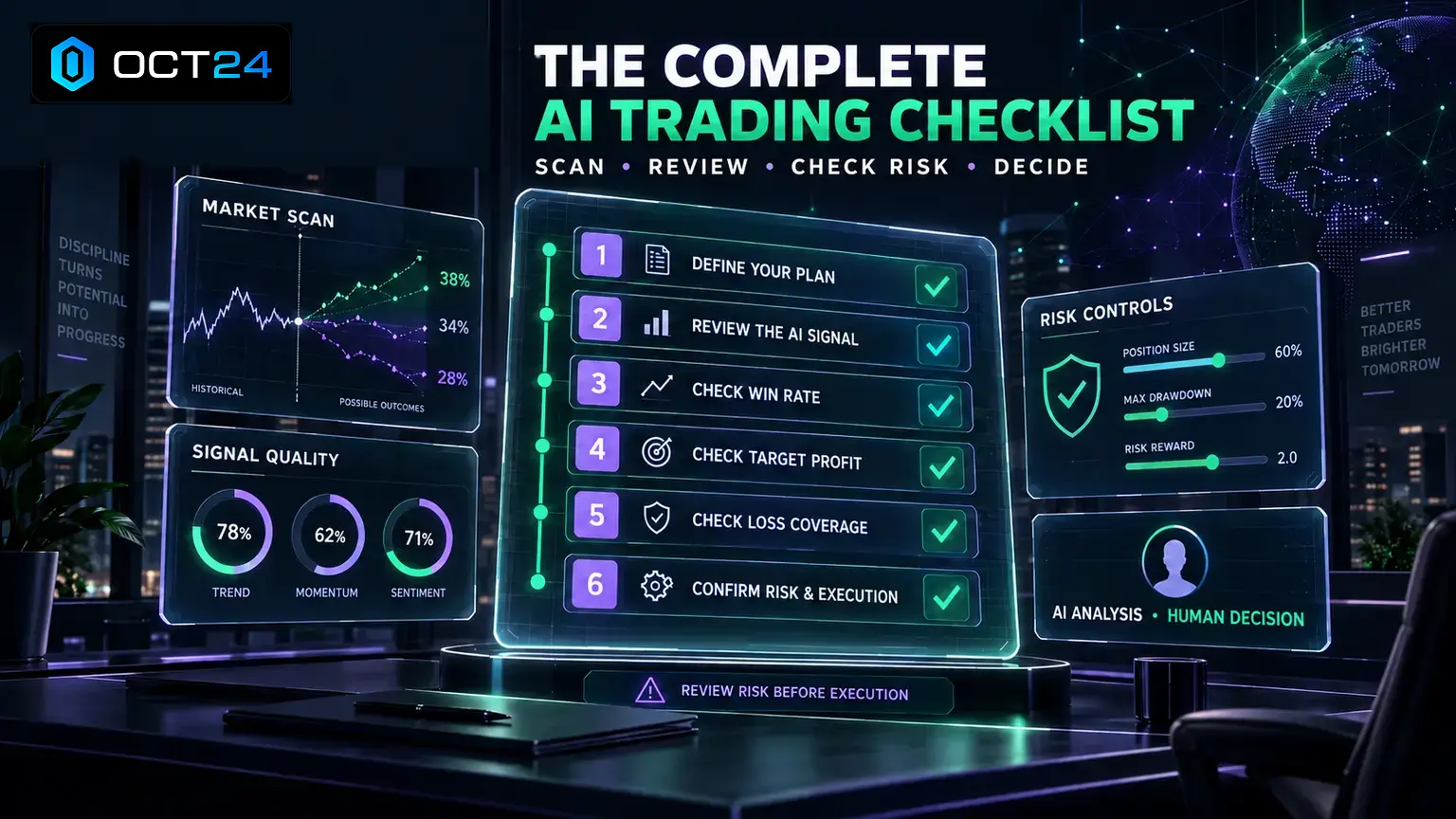
Before taking a trade in a volatile market, ask the following.
- Is the market moving clearly or just sharply
- Is my position size smaller because volatility is higher
- Do I understand the possible downside
- Have I already taken enough trades today
- Am I using AI support as a filter or as an excuse to act
- Does the opportunity fit my risk limit
- Would waiting protect my account better than trading
This checklist can support a consistent trading routine. A routine helps traders stay calm when the market becomes fast.
The best traders do not need to act on every move. They need a repeatable way to decide which moves deserve attention.
Using OCT24 responsibly in volatile crypto markets
OCT24 users can approach volatile markets with a simple rule: review before execution. The platform can present AI-supported opportunities, but the user decides whether the risk makes sense.
A responsible OCT24 process might look like this.
- Review the available trade or bot opportunity
- Check target profit, loss coverage, and win rate
- Compare the metrics with current volatility
- Reduce capital allocation when conditions feel unstable
- Use one-click trading only after the decision is clear
- Stop when daily risk or drawdown limits are reached
This keeps one-click trading inside a risk-aware process. The click may be simple, but the decision should still be careful.
Readers who want to understand the company’s approach can visit About OCT24. Traders ready to explore the platform can Start Trading with OCT24.
OCT24 users can make this practical by deciding their limits before reviewing the next trade or bot opportunity. The platform can present signals, but the trader decides when enough is enough.
Without a stop point, the market decides when the session ends. That can lead to fatigue, overtrading, and poor risk control.
A volatile market plan should also include a stop point. This could be a daily loss limit, a maximum number of trades, or a rule to pause after two emotional decisions.
By reviewing the session, traders can use AI-supported workflows more responsibly next time. The goal is not only to trade faster. The goal is to make better decisions under pressure.
This kind of review helps traders improve without assuming every result was caused by the tool. Sometimes the issue is market condition. Sometimes it is trade frequency. Sometimes it is the trader’s reaction to speed.
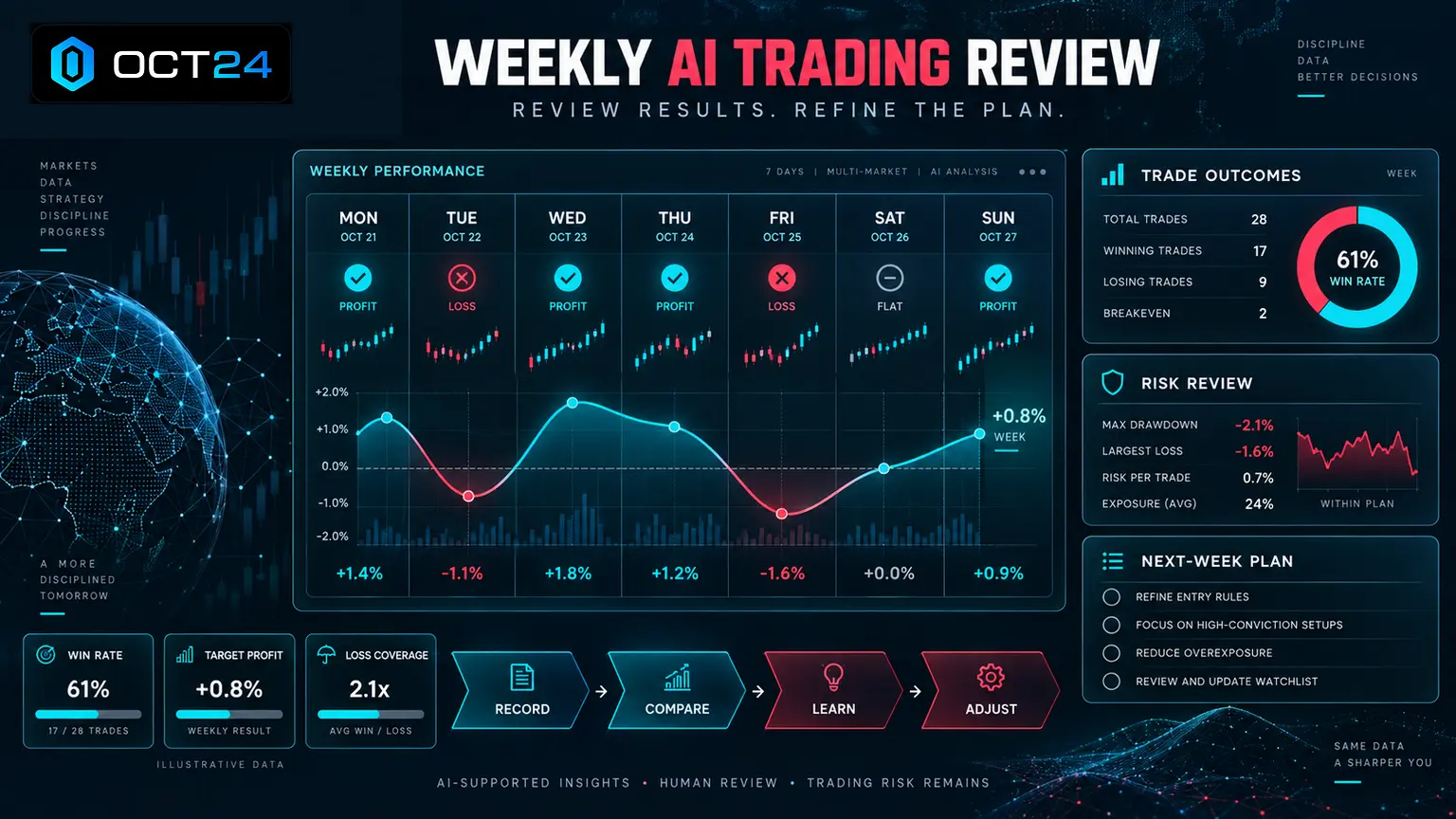
After a volatile session, traders should review what actually happened. Did they follow the plan? Did they reduce size when conditions became unstable? Did they stop when the session became emotional?
FAQs
Is AI trading useful for volatile crypto markets?
AI trading can be useful because it helps organize market review, signal filtering, and risk checks. It does not remove volatility risk or guarantee results.
Why are crypto markets so volatile?
Crypto markets can be volatile because they trade continuously and react quickly to liquidity, news, sentiment, leverage, and rotation between assets.
Can AI predict volatile crypto moves?
AI can identify patterns and potential signals, but it cannot predict every move with certainty. Traders still need risk controls.
How should beginners trade during volatility?
Beginners should use smaller position sizes, fewer trades, clear risk limits, and a structured review process before acting.
Does OCT24 show exact entry and exit points?
OCT24 currently focuses on simplified trade and bot review metrics such as target profit, loss coverage, and win rate, rather than detailed entry and exit information for every opportunity.
Can the G6 Trading Bot help during volatile markets?
The G6 Trading Bot can support a faster AI-powered workflow, but traders still need clear capital limits and responsible execution choices.
What OCT24 metrics matter during volatility?
Target profit, loss coverage, and win rate all matter. Traders should review them together and compare them with current market conditions.
Should traders take more trades when crypto is volatile?
Not always. More movement can mean more noise. Traders should focus on quality, risk, and discipline rather than trade frequency.
Can AI help traders avoid overtrading?
AI can help by filtering opportunities and reducing random chart reactions, but traders still need personal limits and discipline.
Does OCT24 remove crypto trading risk?
No. OCT24 does not remove trading risk or guarantee results. Traders remain responsible for risk settings, exposure, capital allocation, and execution decisions.
Final thoughts
AI trading for volatile crypto markets can help traders bring more structure to fast and emotional conditions. It can support market scanning, signal review, and risk-aware decision-making.
The key is to treat volatility with respect. Fast markets can create opportunity, but they can also create losses quickly when traders oversize, overtrade, or chase movement.
OCT24 supports a simpler AI-powered trading experience by presenting AI-supported trade and bot opportunities with visible metrics such as target profit, loss coverage, and win rate. Those metrics can help users review opportunities, but they do not guarantee outcomes.
The trader remains responsible for risk settings, exposure, capital allocation, and execution decisions.
Used responsibly, AI can help traders slow down, filter noise, and make more disciplined choices in volatile crypto markets.
Start Trading with OCT24 to explore a simpler AI-supported trading experience while keeping volatility risk and capital protection at the center of every decision.