
How AI Detects Weak Trading Setups
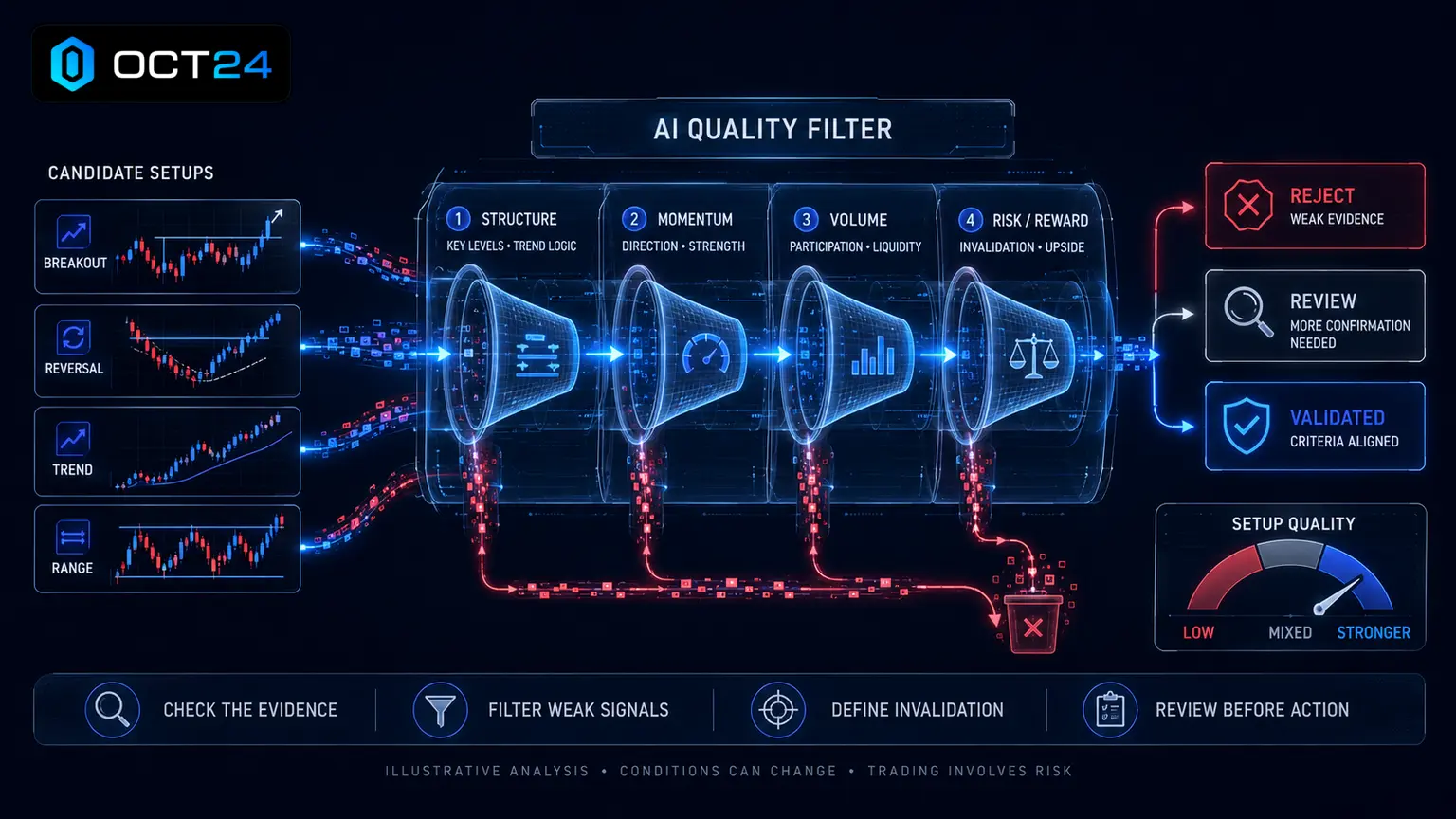
Weak trading setups are one of the most common reasons traders enter positions that look interesting at first but fail to offer enough structure, confirmation, or risk control. AI can help detect these weaker conditions by scanning market behavior, comparing signal quality, and filtering out trades that may look exciting but lack a stronger reason to act.
This matters because many losing trades do not begin as obvious mistakes. They often begin as unclear setups, late entries, thin momentum, poor timing, or emotional decisions made after a trader feels they may be missing out.
OCT24 is built around a simpler AI trading experience. The platform performs most of the market analysis for the user by scanning market conditions, identifying potential opportunities, and presenting AI-supported trading signals through its trading bot experience.
At the same time, OCT24 does not remove trading risk or guarantee results. Traders still need to review the available trade or bot information, understand target profit, loss coverage, and win rate, choose suitable exposure, manage capital responsibly, and decide whether to execute.
Why Weak Trading Setups Matter
A weak setup is not simply a trade that loses money. A strong setup can still lose because markets are uncertain. A weak setup is a trade idea that does not have enough quality before the outcome is known.
That difference is important. Traders cannot control the final result of every trade, but they can control the quality of the setups they choose to engage with.
Weak setups often appear when a market is unclear. Price may be moving, but the move may not have enough strength. A chart may look active, but the direction may not be reliable. A signal may appear, but the surrounding conditions may not support it.
This is where AI trading signals can help. AI systems can scan more information than most traders can process manually and highlight signals that fit certain patterns. They can also help traders slow down when the available setup does not look as clean as it should.
The goal is not to avoid every losing trade. That is not realistic. The goal is to avoid low-quality situations where the trade looks more like a guess than a structured decision.

What Makes a Trading Setup Weak?
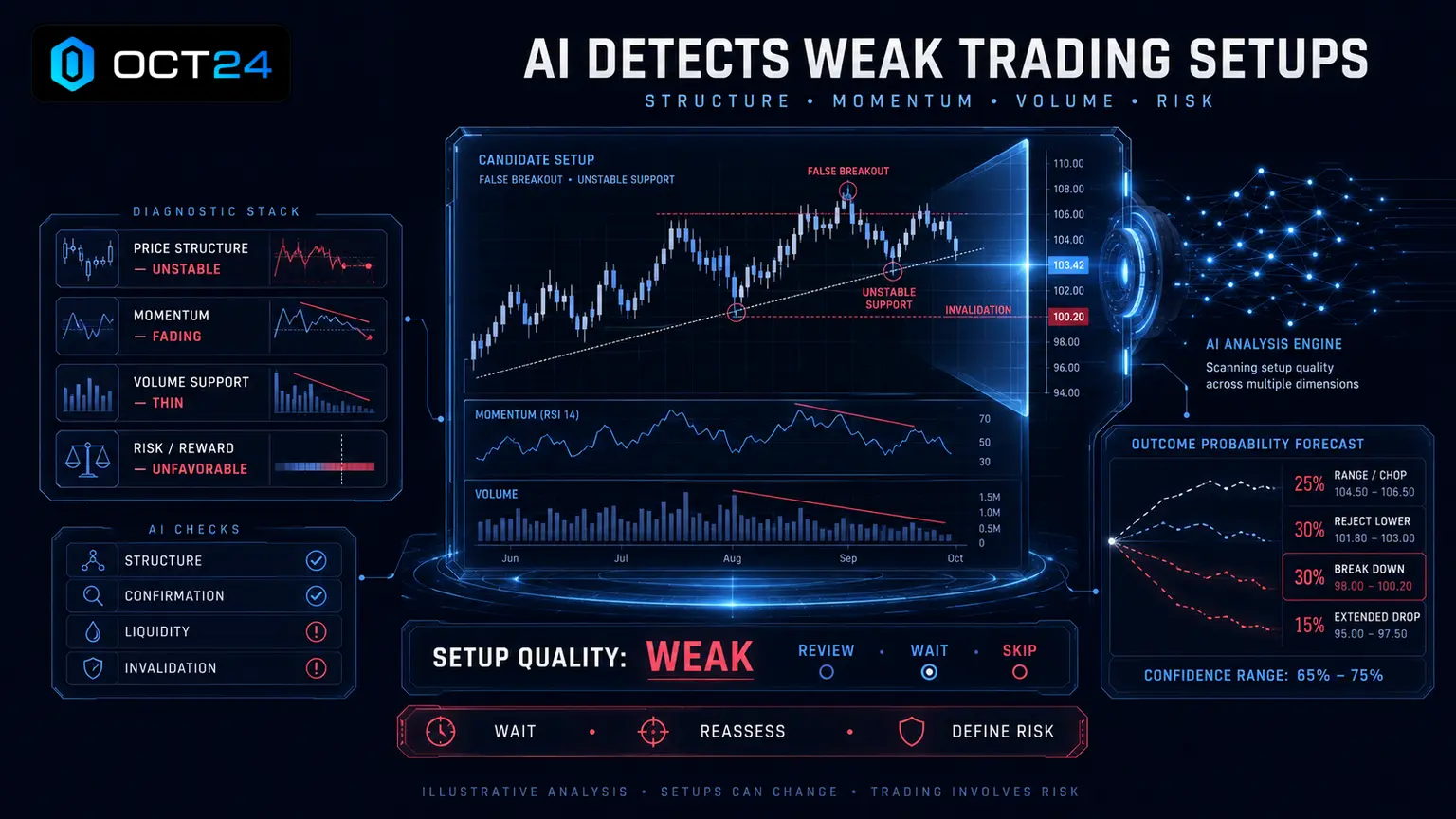
A weak trading setup usually has several small problems rather than one obvious flaw. Each problem may look minor on its own, but together they can reduce the quality of the opportunity.
For example, a trader may see price moving higher and assume the trend is strong. But if the move is happening on weak momentum, near a resistance area, after a long rally, and without clear confirmation, the setup may be much weaker than it first appears.
Common signs of weak trading setups include:
- Unclear market direction
- Weak or fading momentum
- No clean confirmation
- Poor risk-to-reward structure
- Late entry after the move has already happened
- Low volume or thin market activity
- Mixed signals across different timeframes
- Emotional pressure to enter quickly
These are the kinds of issues that make manual trading difficult. A trader may focus on one attractive detail and ignore the rest of the picture.
That is one reason many traders study common AI trading mistakes. Even when using automated tools, the trader can still make poor decisions by overcommitting, ignoring risk, or treating every signal as equally strong.
Why Weak Setups Are Hard to Spot Manually
Manual traders often struggle with weak setups because the market creates constant noise. Price moves up, pulls back, breaks a small level, reverses, then moves again. In real time, every movement can feel important.
This is especially difficult for beginner traders. A setup may look strong because price is moving fast, but fast movement alone does not mean the setup is high quality.
Human traders also bring emotion into the process. After missing a move, it becomes easier to chase the next one. After a loss, it becomes tempting to take another trade quickly. After a win, confidence can make a weak setup look better than it really is.
This is where comparing trading bots vs human traders can be useful. Bots do not feel fear of missing out, frustration, or excitement. They follow programmed logic. Humans still need to decide how much risk to take and whether the available information fits their own plan.
AI does not make trading perfect. But it can reduce the amount of manual scanning a trader needs to do and help bring more structure into a process that is often emotional.
How AI Looks for Missing Confirmation
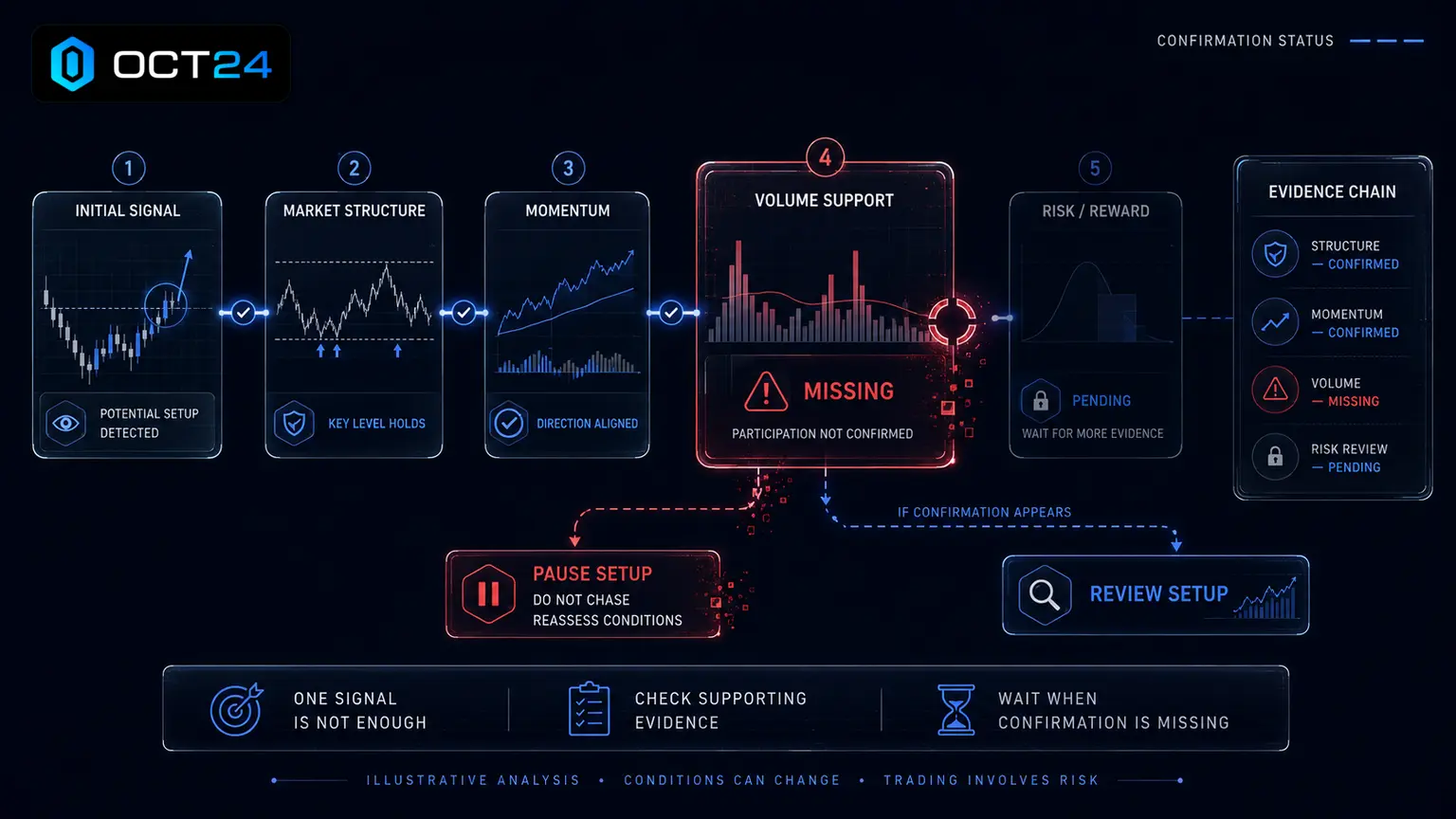
A strong setup usually has more than one reason behind it. A weak setup often depends on only one signal.
For example, price may break above a short-term level. That can be useful, but it may not be enough on its own. AI can help by checking whether the move is supported by other conditions, such as momentum, trend direction, volatility, and recent market behavior.
This idea is closely related to how AI uses technical analysis. Instead of looking at one indicator in isolation, AI can compare multiple data points and look for alignment. When the pieces do not align, the setup may be weaker.
Missing confirmation can show up in several ways:
- Price moves in one direction, but momentum does not follow
- A breakout happens, but the market quickly returns to the range
- The trade appears late after most of the move has already happened
- Short-term and longer-term conditions disagree
- The market lacks follow-through after the initial signal
This does not mean every unconfirmed setup must be ignored. Some traders use aggressive strategies by design. But beginners usually benefit from being more selective.
OCT24 helps simplify this process by presenting AI-supported trading opportunities rather than requiring users to manually scan every chart themselves. The trader still needs to review the available risk information and decide whether the trade fits their own comfort level.
Weak Momentum and Poor Trend Quality
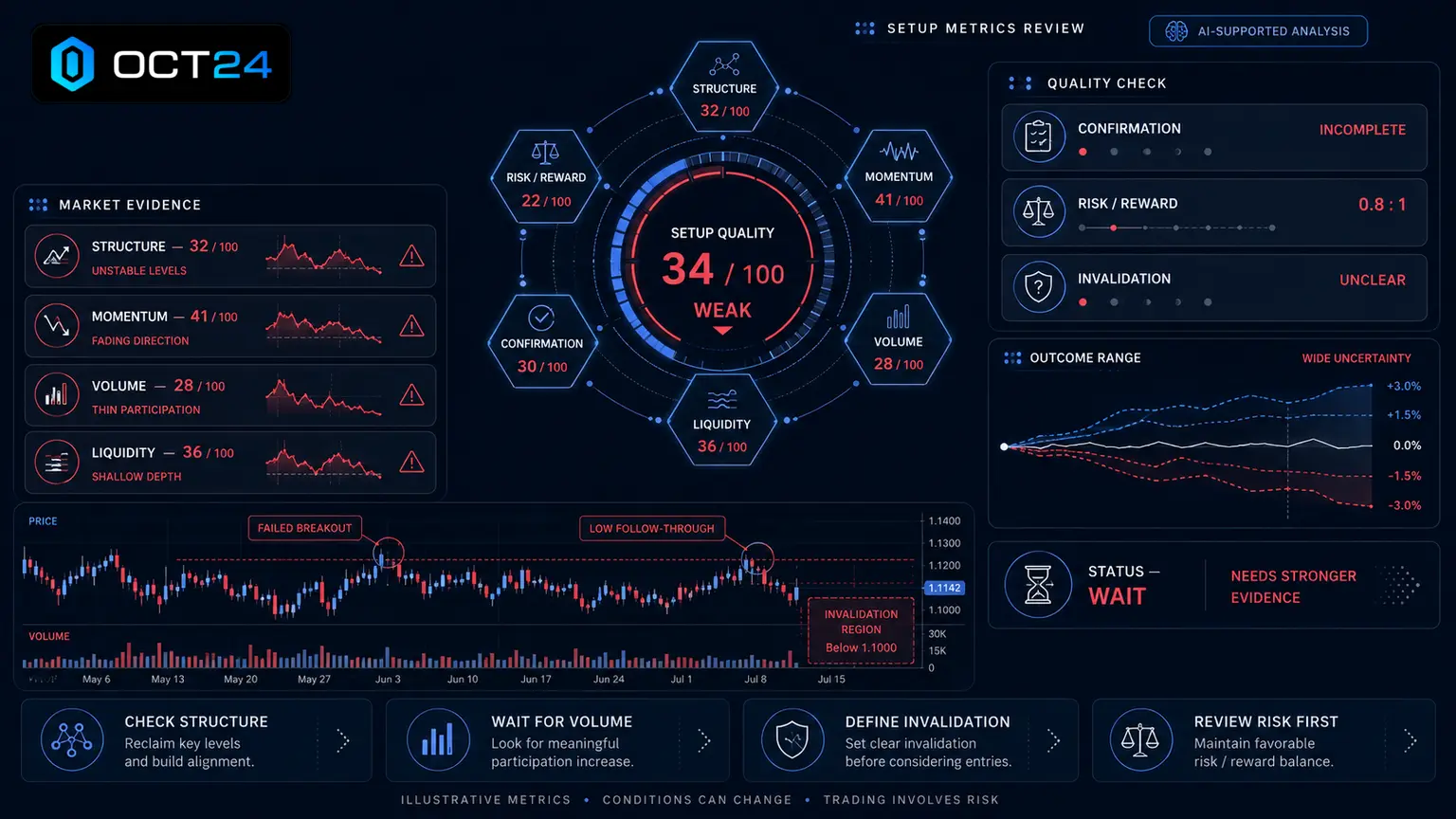
Many weak setups appear inside markets that are moving, but not moving with quality. Price may be drifting higher or lower, yet the move may lack conviction.
A strong trend often has cleaner direction, better follow-through, and fewer signs of hesitation. A weak trend may produce frequent reversals, shallow breakouts, or moves that quickly fade.
AI market trend identification can help traders understand whether a move has stronger structure or whether it is simply short-term noise. This is important because weak trends often create signals that look valid for a moment and then fail.
A simple example is a crypto asset that rises 3 percent in a short burst after a quiet session. A trader may assume the asset is beginning a new trend. But if the move happens without broader market support, with low liquidity, and after repeated failed breakouts, the setup may be weak.
The problem is not that the asset moved. The problem is that the move may not have enough support behind it.
Sideways Markets Create Many Weak Setups
Sideways markets are one of the easiest places to mistake activity for opportunity. Price may move up and down inside a range, but the market may not have a clear direction.
In a sideways market, many signals can appear and fail quickly. Breakouts may reverse. Pullbacks may go nowhere. Momentum may start and stop repeatedly.
This is why AI trading during sideways markets requires more discipline. A signal that looks strong in a trending market may be much less useful when price is trapped in a range.
AI can help by scanning whether the current environment supports follow-through. If conditions are choppy, the setup may deserve more caution, smaller exposure, or no action at all.
OCT24 users should remember that the platform does not currently show a full analysis dashboard with detailed asset commentary, entry levels, or exit levels for every presented trade. The user sees key trade or bot information such as target profit, loss coverage, and win rate, then makes an execution decision based on their own risk tolerance.

Low Liquidity Can Make Setups Look Better Than They Are
Low liquidity can make markets move sharply without strong participation. This can create the appearance of strength even when the setup is fragile.
In crypto, this happens often with smaller altcoins. A sudden move can look powerful, but if there are not enough buyers or sellers behind it, the move may reverse quickly.
This is why traders often compare Bitcoin vs Ethereum trading signals differently from smaller assets. Larger markets may still be volatile, but they usually have deeper liquidity than smaller coins.
Weak liquidity can create several problems:
- Price may jump quickly and then retrace
- Spreads may widen during active periods
- Signals may trigger on temporary moves
- Risk may change faster than expected
- The trade may become harder to manage if conditions shift
AI can help by scanning market behavior across many conditions, but traders should still avoid assuming every fast move is a strong setup.
How OCT24 Helps Surface AI-Supported Opportunities
OCT24 is designed to reduce the amount of manual market scanning a trader needs to do. Instead of asking users to analyze every chart from scratch, OCT24 scans market conditions, identifies potential opportunities, and presents AI-supported trading signals through its trading bot environment.
This is useful for traders who want a simpler way to interact with markets. The platform is not asking the user to build a full technical model before every trade.
However, it is important to describe this accurately. OCT24 does not currently provide a full set of on-platform tools for detailed market analysis. When a trade or bot is presented, the user does not see full asset research, exact entry points, or exact exit points in the same way they might on a professional charting platform.
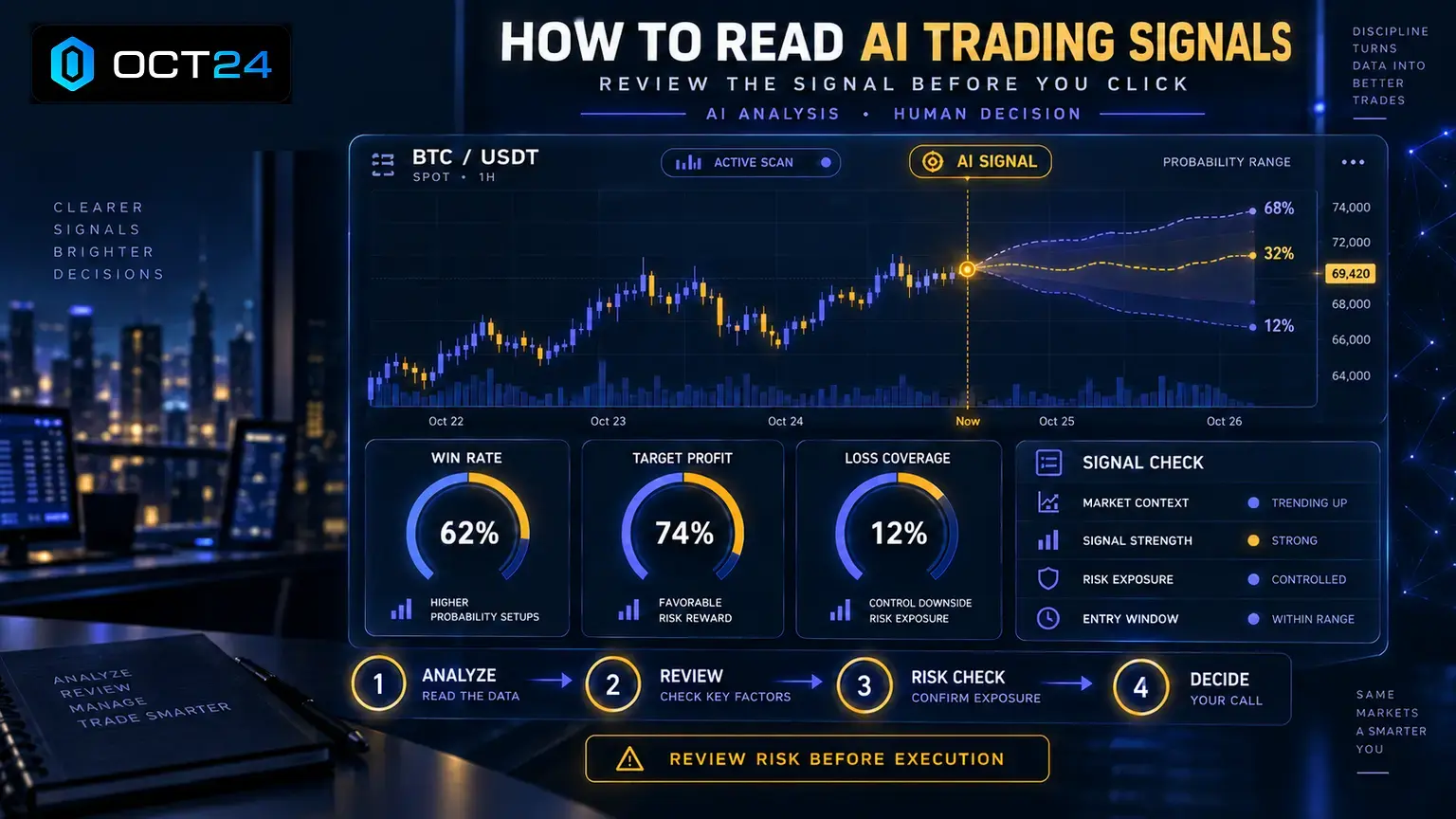
Instead, OCT24 focuses on simplified decision information. Traders can review details such as target profit, loss coverage, and win rate. These details can help the user think about potential reward, downside coverage, and historical or model-based performance expectations.
That makes risk judgment essential. A trade can look attractive because the target profit seems interesting, but the trader still needs to decide whether the exposure is appropriate.
How to Review Target Profit Without Getting Distracted
Target profit is one of the first numbers traders notice. That makes sense. People naturally look at what they might gain before thinking about what they might lose.
But target profit should never be reviewed alone. A high target can still belong to a weak setup if the conditions behind the trade are unclear or if the downside is too large for the trader’s account.
A practical way to think about target profit is simple: the number tells you what the trade is aiming for, not what the trade is guaranteed to deliver.
This is where AI trading risk vs reward becomes important. Traders should ask whether the potential result makes sense compared with the risk they are taking, the size of their balance, and the way they normally manage capital.
If the target profit looks appealing but the trader feels uncomfortable with the possible loss, the setup may not be suitable for that trader.
How Loss Coverage Fits Into Weak Setup Detection
Loss coverage can help traders understand how downside is handled within the trade or bot structure. It is an important detail because weak setups often become more dangerous when traders ignore downside risk.
A trader should not treat loss coverage as permission to overcommit. It is part of the risk picture, not a reason to stop thinking about risk.
Trading bot risk management still matters because every trader has a different account size, comfort level, and tolerance for drawdowns. A setup that feels reasonable for one trader may be too aggressive for another.
Weak setups can become especially harmful when traders increase position size because they assume a tool will protect them completely. No platform can remove market uncertainty.
OCT24 presents simplified information to help users make faster decisions, but the trader remains responsible for capital allocation, risk settings, exposure, and execution choices.
Why Win Rate Should Not Be Used Alone
Win rate is useful, but it can also be misunderstood. A high win rate does not automatically mean a setup is strong. A lower win rate does not automatically mean a setup is useless.
The quality of a setup depends on the full risk profile. A strategy can win often but lose heavily when it is wrong. Another strategy can win less often but have better control over losses.
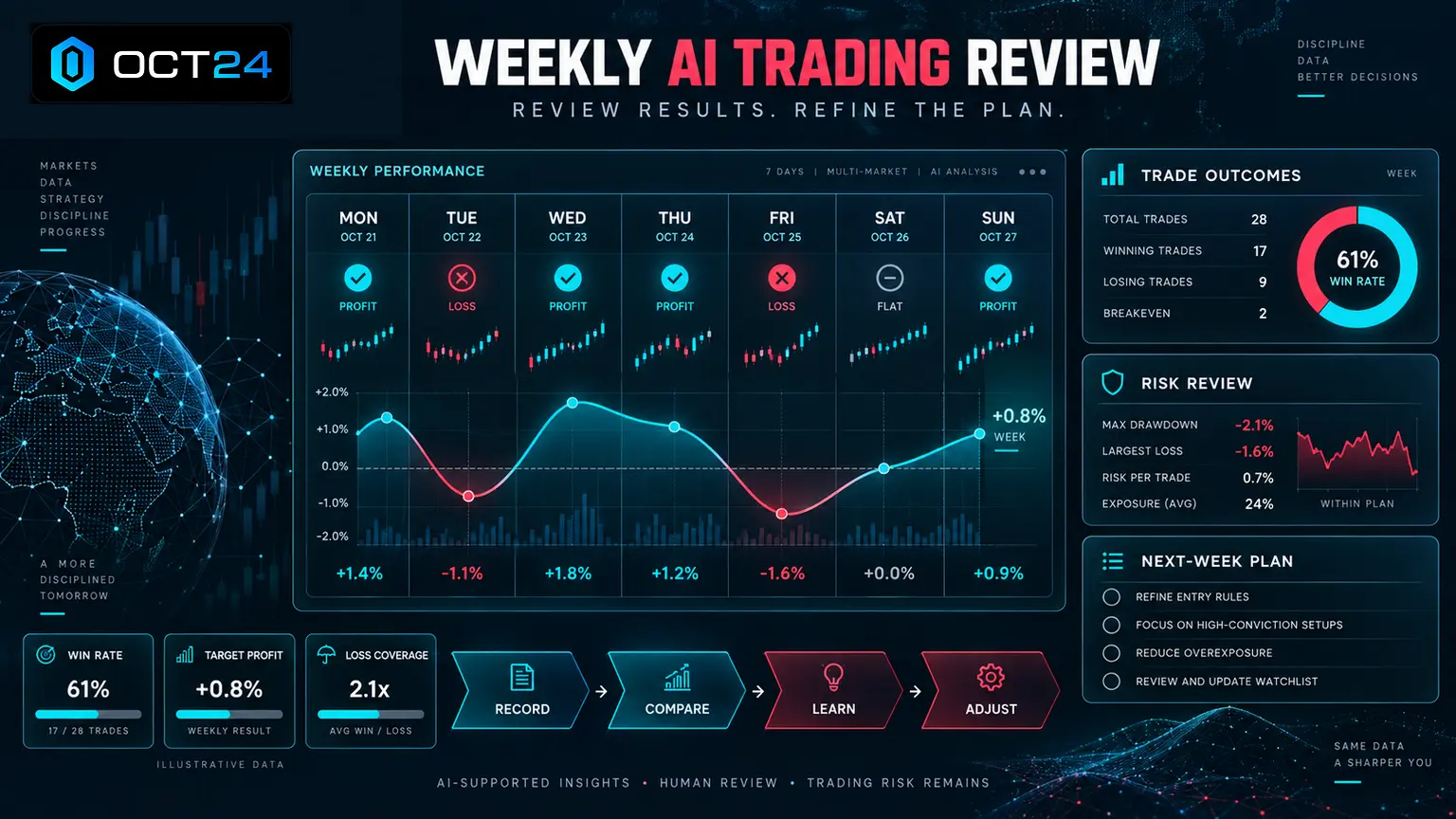
This is why reviewing AI trading performance is important over time. Traders should look beyond one number and think about consistency, drawdown, risk exposure, and whether the strategy fits their trading style.
For OCT24 users, win rate should be one part of the decision. It should be reviewed together with target profit, loss coverage, account size, and personal risk tolerance.
A weak setup often becomes easier to spot when the trader stops asking only “Can this win?” and starts asking “Does this risk make sense for me?”
AI Can Help Traders Avoid Overtrading
Overtrading often happens when traders treat too many weak setups as opportunities. The market is always moving, so there is always something that looks tradable.
AI can help by creating more structure. Instead of reacting to every small move, traders can use AI-supported systems to focus on setups that meet stronger conditions.
This connects directly with the idea of avoid overtrading. The goal is not to trade more often. The goal is to avoid forcing trades when the setup is unclear.
A trader who is bored, frustrated, or impatient is more likely to accept weak signals. AI can reduce some of that pressure by doing much of the scanning work, but it cannot replace discipline.
The trader still needs to decide when not to act. Sometimes the best response to a weak setup is to do nothing.

Weak Setups During Volatile Markets
Volatility can create strong opportunities, but it can also create many weak setups. A fast market can make almost every move look urgent.
In volatile crypto markets, prices can move sharply in both directions. A signal can appear strong, then reverse before the trader has time to reassess. This is why traders need to respect position size, loss coverage, and account exposure.
AI can help scan changing conditions quickly, but volatility still increases uncertainty. Traders should avoid assuming that more movement always means better opportunity.
A weak setup in a volatile market often has one clear warning sign: the possible loss feels too large compared with the trader’s comfort level.
When that happens, the setup may not be suitable, even if the signal looks interesting.
Weak Setups During Low-Volatility Markets
Low-volatility markets can also create weak setups, but for a different reason. Instead of moving too fast, the market may not move enough.
When price is quiet, traders may become impatient. They may take signals that appear inside small ranges, even when there is no clear momentum. This can lead to false starts and repeated small losses.
A low-volatility setup may be weak if the market lacks direction, if price is stuck near the middle of a range, or if the trade needs a large move that current conditions do not support.
OCT24 can help by simplifying the opportunity review process. Still, traders should remember that a quiet market can make weak setups look cleaner than they are because there is less visible chaos on the chart.
Quiet does not always mean safe. Sometimes it means the market is waiting.
Where the G6 Trading Bot Fits
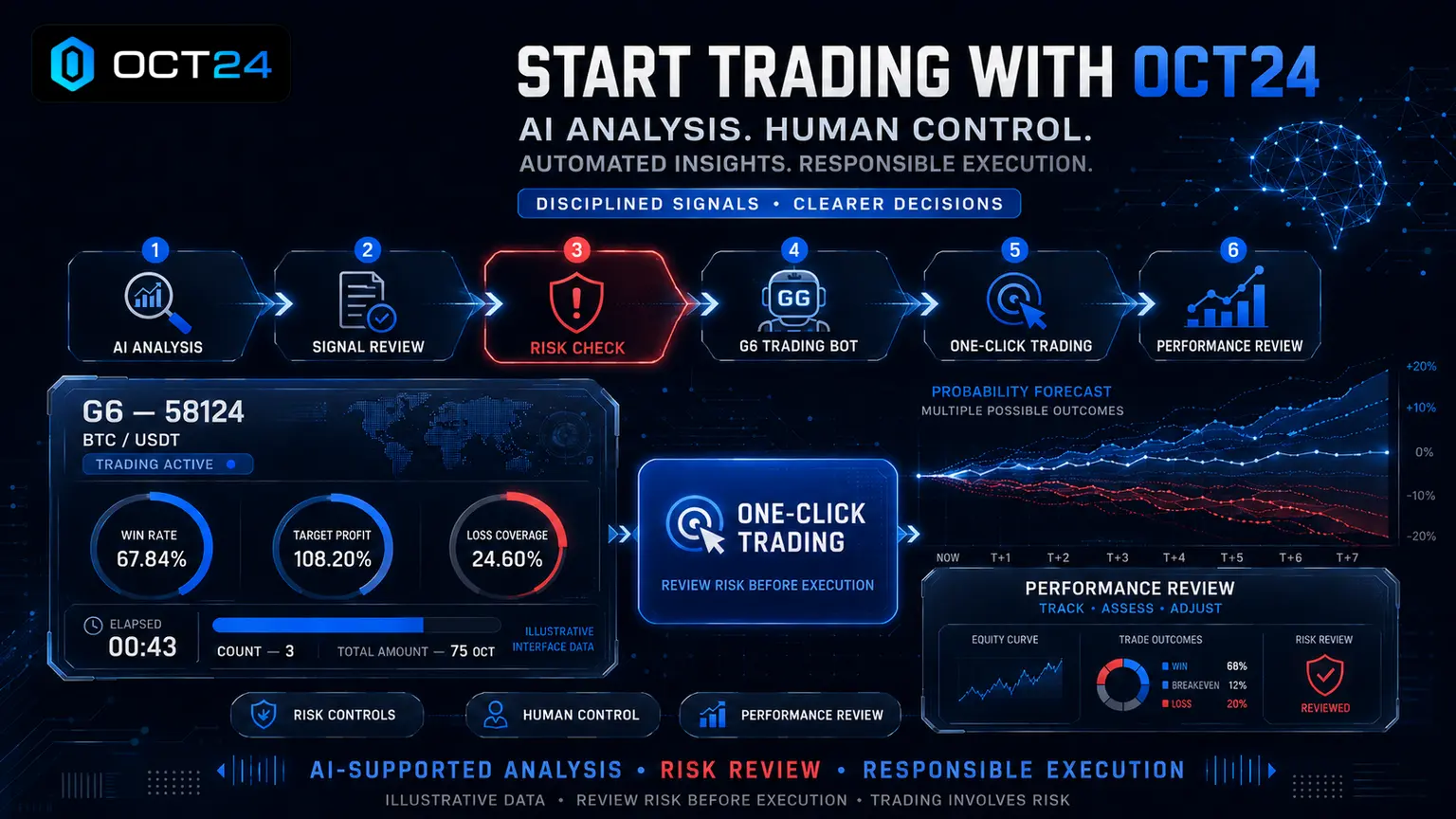
The G6 Trading Bot is part of the OCT24 trading bot experience and is designed around fast, simplified user interaction. It gives users a way to engage with AI-supported trading opportunities without building a full manual trading workflow from scratch.
For weak setup detection, the important point is not that any bot can guarantee better outcomes. It cannot. The useful point is that an AI-supported bot can reduce manual scanning and present a more structured trading opportunity for the user to review.
Before using any bot, traders should review the information available to them. On OCT24, this includes key details such as target profit, loss coverage, and win rate. These numbers should be treated as decision inputs, not promises.
If a trader does not understand the risk, does not feel comfortable with the exposure, or is trading only because the outcome looks exciting, the setup may be too weak for that trader.
A Simple Checklist for Spotting Weak Trading Setups
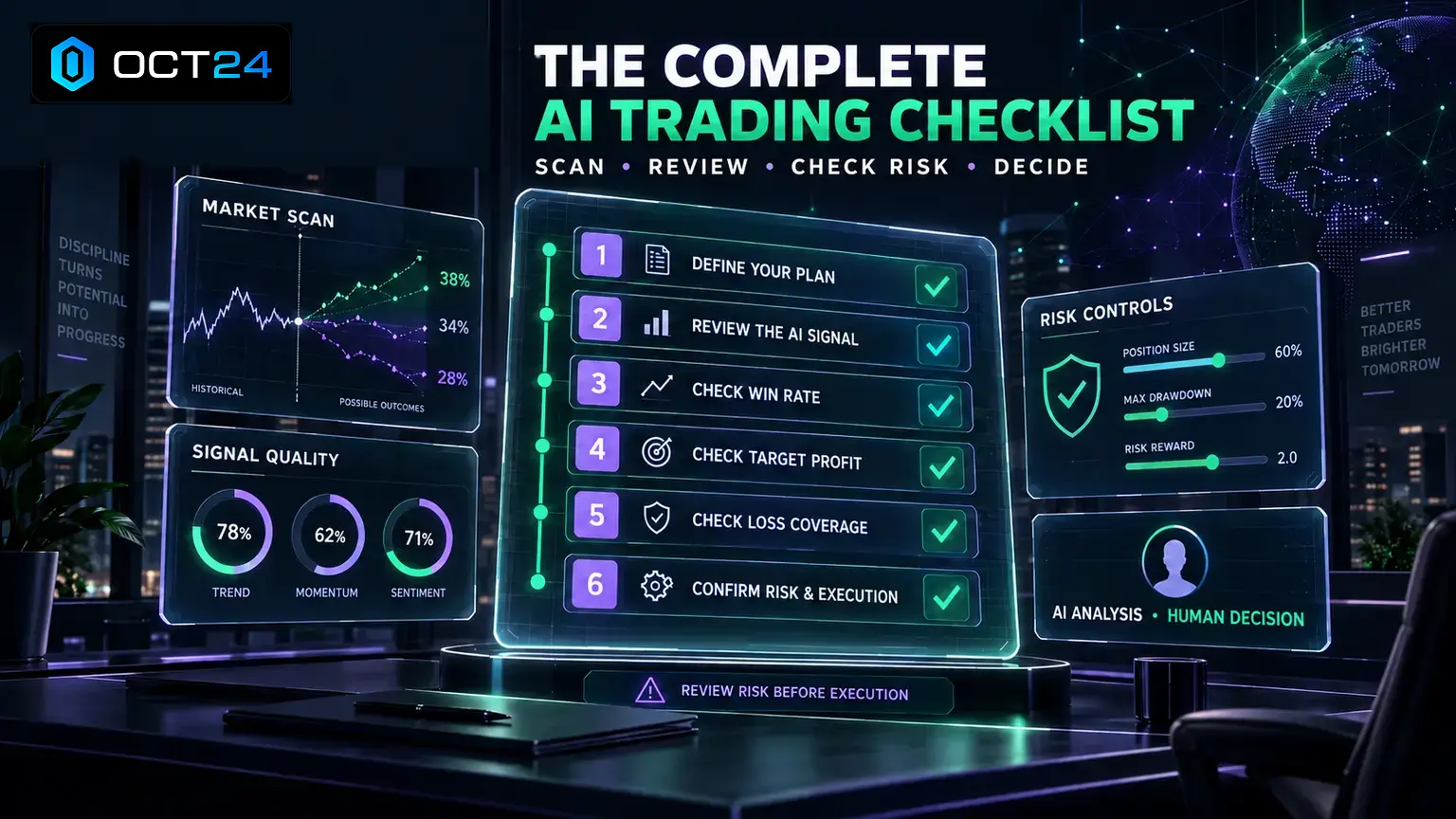
A checklist helps traders slow down before making a decision. It does not need to be complicated. The best checklist is one the trader can actually use.
Before acting on a signal, ask:
- Is the market direction clear?
- Does the setup fit the current market environment?
- Is the target profit realistic for the conditions?
- Do I understand the loss coverage?
- Does the win rate make sense with the risk?
- Am I using a responsible position size?
- Am I trading because the setup is strong or because I feel impatient?
- Would I still take this trade if I had just lost the previous one?
These questions can help separate structured decisions from emotional reactions.
They also help traders use one-click trading responsibly. Faster execution is useful only when the decision process remains disciplined. Speed should make trading simpler, not careless.
How Weak Setup Detection Supports a Better Trading Routine
A strong trading routine is not built around taking every signal. It is built around reviewing signals consistently and knowing when to avoid low-quality opportunities.
This is why a consistent trading routine matters. Traders who follow a routine are less likely to chase random market moves and more likely to review risk before acting.
AI can support that routine by handling much of the scanning work. OCT24 can present AI-supported opportunities, but the user should still apply a personal decision process.
A simple routine might include checking the available bot information, reviewing target profit, reviewing loss coverage, considering win rate, deciding position size, and confirming that the trade fits the trader’s risk comfort.
This process does not need to take long. It simply needs to happen before execution.
Weak Setups Are Not Always Obvious
One of the biggest mistakes traders make is assuming weak setups are easy to identify. In reality, many weak setups look attractive at first.
They may have a clean short-term move. They may appear during a popular market narrative. They may come after several winning trades, when the trader feels more confident.
This is why AI trading myths can be dangerous. Some traders believe AI removes the need for judgment. It does not. AI can help with scanning, filtering, and signal presentation, but trading remains risky.
The better mindset is balanced. AI can support decision-making, but traders should still ask whether the setup fits their own risk limits and account plan.
Weak setup detection is not about fear. It is about selectivity.
How Beginners Can Use AI Without Becoming Dependent on It
Beginners often use AI because they want a simpler way to understand trading opportunities. That is reasonable. Markets can be overwhelming, and manual analysis takes time to learn.
The key is to use AI as a structured support system, not as a reason to stop thinking. Traders should still learn basic risk concepts, understand position size, and avoid treating any signal as guaranteed.
Articles on AI trading strategies for beginners can help users build this foundation without getting lost in advanced charting language.
OCT24 is useful for traders who want a cleaner experience because it reduces the need to manually scan markets. But the trader remains responsible for deciding whether to act and how much capital to risk.
A beginner who understands this distinction is less likely to misuse AI-supported signals.
What Traders Should Do When a Setup Feels Unclear
If a setup feels unclear, the trader has options. The answer does not always need to be yes or no immediately.
A trader can reduce exposure, wait for another opportunity, compare the signal with their normal routine, or skip the trade entirely. Skipping a trade is a valid decision.
This is especially important when using AI trading alerts. Alerts can help draw attention to potential opportunities, but they should not create pressure to act instantly.
A useful rule is simple: if the trader cannot explain why the risk makes sense, the setup may not be ready.
OCT24 helps reduce complexity, but it does not remove the need for judgment. The trader still controls execution.
FAQs
What is a weak trading setup?
A weak trading setup is a trade idea that lacks enough structure, confirmation, or risk control before the trade is taken. It may still win, but the decision is usually less supported than a stronger setup.
Can AI detect weak trading setups?
AI can help detect weak trading setups by scanning market conditions, comparing signal quality, and identifying situations where confirmation, momentum, or risk structure may be weaker. It cannot guarantee that a trade will win or lose.
Does OCT24 show full entry and exit details?
OCT24 currently focuses on simplified trade or bot information such as target profit, loss coverage, and win rate. It does not currently provide a full on-platform market analysis dashboard with detailed asset research, exact entry points, or exact exit points for every presented trade.
Should traders avoid every weak-looking setup?
Not every unclear setup needs the same response. Some traders may reduce exposure, wait for more confirmation, or skip the trade. The key is to avoid treating uncertain setups as if they are high-confidence opportunities.
Can a strong setup still lose money?
Yes. A strong setup can still lose because markets are uncertain. The purpose of filtering weak setups is to improve decision quality, not to remove risk.
How should traders use OCT24 when reviewing setup quality?
Traders can use OCT24 to review AI-supported trading opportunities and consider available details such as target profit, loss coverage, and win rate. They should still manage risk, choose responsible exposure, and make informed execution decisions.
Does a high win rate mean a setup is strong?
No. Win rate is only one part of the picture. Traders should also consider risk size, loss coverage, target profit, drawdown potential, and whether the trade fits their account plan.
How does weak setup detection help with risk management?
Weak setup detection helps traders avoid situations where the signal quality does not justify the risk. This supports better risk management because traders can be more selective before committing capital.
Is OCT24 suitable for beginners?
OCT24 may appeal to beginners who want a simpler AI-supported trading experience. New users should still learn basic risk management, avoid overexposure, and only trade with capital they can afford to risk. To learn more about the platform, visit About OCT24 or Start Trading with OCT24.
Final Thoughts
Weak trading setups are dangerous because they often look reasonable in the moment. A market may be moving. A signal may appear. A target profit may look attractive. But if the setup lacks confirmation, direction, momentum, or suitable risk structure, it may not be strong enough to justify action.
AI can help by scanning market conditions, filtering noise, and presenting more structured trading opportunities. OCT24 uses this idea to simplify the trading experience by performing much of the market analysis for the user and presenting AI-supported signals through its trading bot environment.
The trader still controls risk settings, exposure, capital allocation, and execution decisions.
Used responsibly, OCT24 can help traders spend less time reacting to market noise and more time reviewing whether a trade fits their risk plan. It does not guarantee outcomes, and it does not remove the need for discipline.
The best traders are not the ones who take every setup. They are the ones who know when a setup is not strong enough.
Learn more at OCT24, explore the company on About OCT24, or Start Trading with OCT24 when you are ready to review AI-supported trading opportunities for yourself.