
What Are Confirmation Signals in Trading?
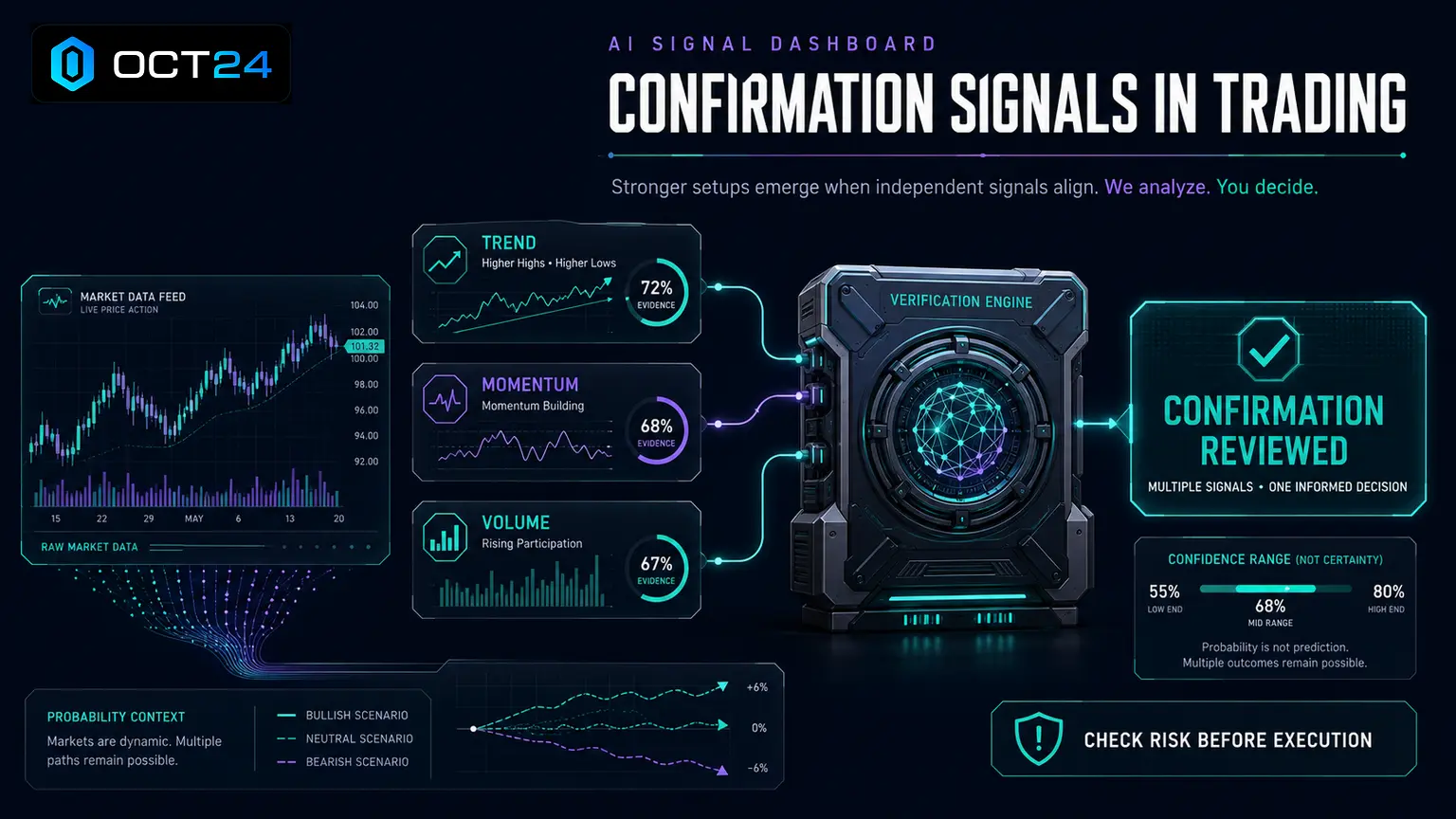
Confirmation signals in trading are extra pieces of evidence that help traders decide whether a trade setup looks strong enough to consider. Instead of entering a trade from one chart pattern, one indicator, or one feeling, a trader looks for several signals that point in the same direction. In AI-supported trading, confirmation signals can include a clear Win Rate, a realistic Target Profit, and strong Loss Coverage before execution.
For beginner crypto traders, confirmation signals matter because crypto markets can move quickly and emotionally. A single signal can look exciting, but it may not tell the full story. OCT24 is designed to simplify this review process by scanning market conditions, identifying potential opportunities, and presenting AI-supported trading signals that traders can review before they decide whether to activate a trade.
This does not mean confirmation signals remove risk. They do not guarantee profits, predict the future with certainty, or make trading automatic income. They are decision-support tools. Traders still remain responsible for exposure, capital allocation, risk settings, and the final execution decision.
Why Confirmation Signals Matter in Trading
A confirmation signal helps answer a simple question: does this trade idea have enough supporting evidence? In crypto trading, price can rise, fall, reverse, or stall very quickly. One indicator may suggest strength, while another part of the market shows hesitation. Confirmation signals help traders slow down and compare the setup before acting.
This is especially useful for new traders who may feel pressure when a market is moving fast. A sudden candle, a social media post, or a sharp breakout can make a trade feel urgent. But urgency is not the same as quality. Confirmation signals help separate a structured trading opportunity from a reaction to market noise.
In traditional chart analysis, traders may look for confirmation from volume, trend direction, support and resistance, moving averages, momentum indicators, or candlestick patterns. In AI Trading, confirmation can also come from how an AI system scores or organizes a potential setup. The goal is not to find perfect certainty. The goal is to build a more balanced view before entering.
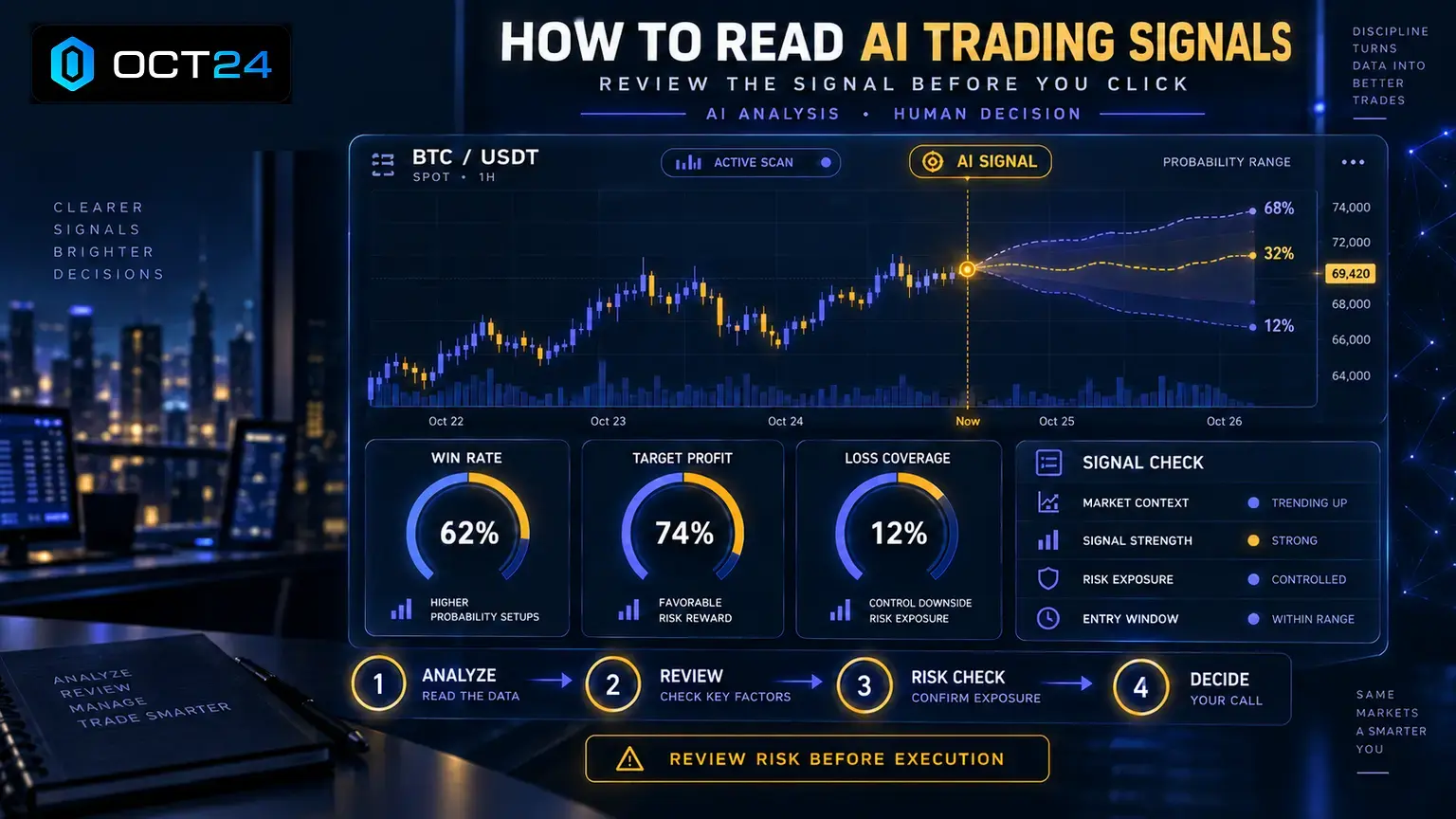
OCT24 makes this easier by presenting a simplified signal view. Instead of asking beginners to study many technical indicators at once, the platform focuses attention on key trade-review metrics such as Win Rate, Target Profit, and Loss Coverage. These signals help traders compare opportunity, risk, and potential outcome in one place.
The Simple Meaning of Confirmation Signals
A confirmation signal is not a promise. It is a supporting sign. If several supporting signs agree, the setup may look stronger. If the signs conflict, the trader may need to be more cautious or skip the opportunity. This is why confirmation matters before entering a trade.
For example, a crypto asset may be moving upward, but that alone is not enough. A trader may want to know whether the move has enough strength, whether the potential reward is reasonable, and whether the downside risk is controlled. In an OCT24-style review, that means looking closely at Win Rate, Target Profit, and Loss Coverage together.
A signal can be useful even when it tells a trader not to act. Many traders think a signal only matters when it says enter. In reality, a good confirmation process can also protect a trader from low-quality setups. A weak Win Rate, unrealistic Target Profit, or poor Loss Coverage can be a reason to stay patient.
This is one reason confirmation signals are closely connected to Trading Psychology. Traders often want action because action feels productive. A confirmation process helps replace that feeling with a calmer question: does the setup actually meet my standards?
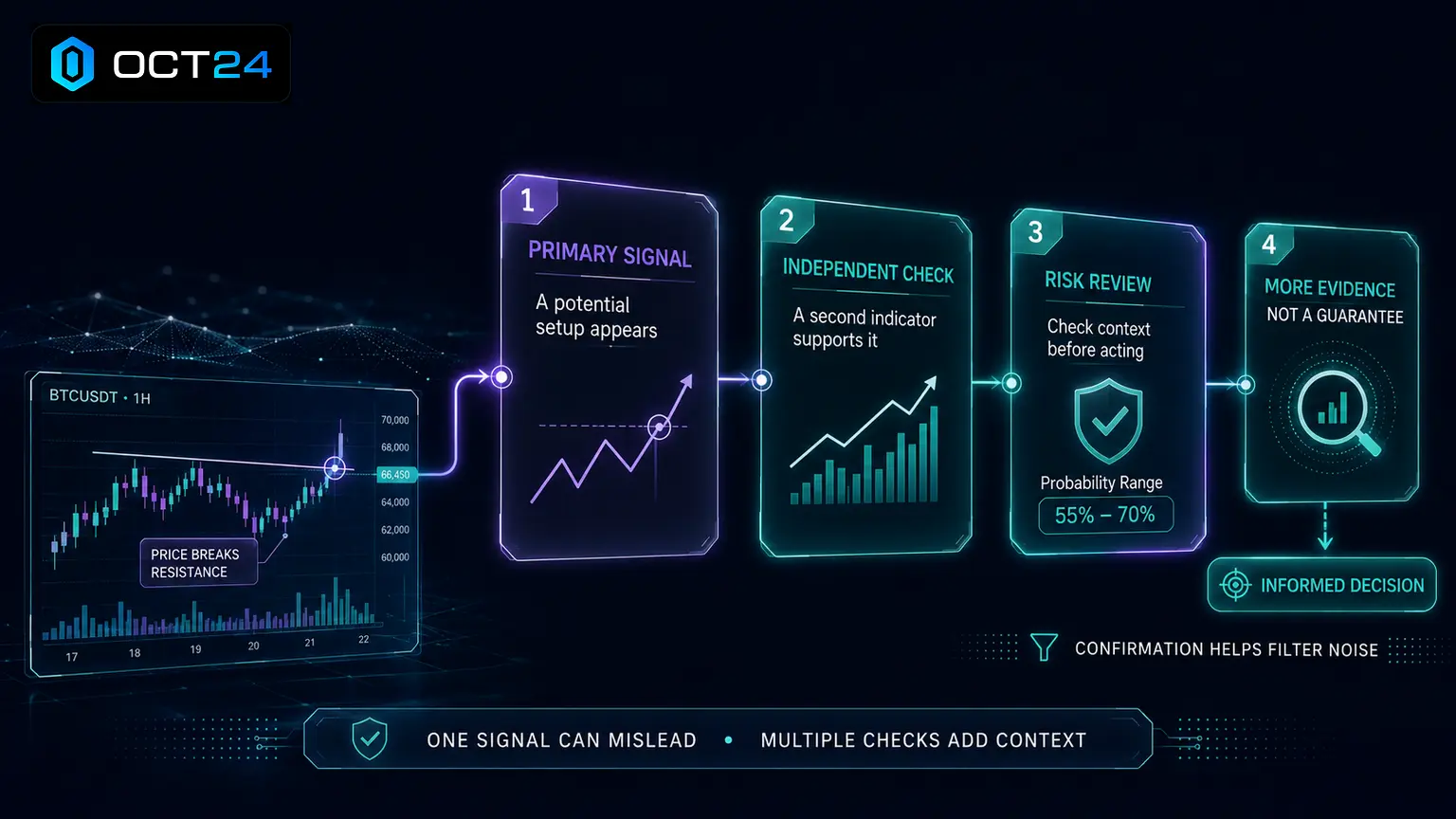
The Three Main Confirmation Signals OCT24 Traders Should Review
OCT24 users should pay close attention to three practical confirmation signals before activating a trade: Win Rate, Target Profit, and Loss Coverage. These three metrics work best when they are reviewed together, not separately. Each one answers a different part of the trade-quality question.
Win Rate helps the trader understand how often similar setups may have performed successfully based on the platform signal view. Target Profit shows the potential upside objective for the opportunity. Loss Coverage shows how much downside protection or risk coverage is being presented in relation to the setup.
A trade may look attractive if the Target Profit is high, but that does not automatically make it a strong opportunity. If Loss Coverage is weak, the trade may expose the trader to too much downside. If Win Rate is low, the setup may not have enough historical or model-supported confidence to match the trader’s comfort level.
This is where AI Trading Signals become more useful. A signal is stronger when it gives context. OCT24 helps traders review the opportunity as a set of related metrics, which can be easier than jumping between multiple charts, indicators, and opinions.
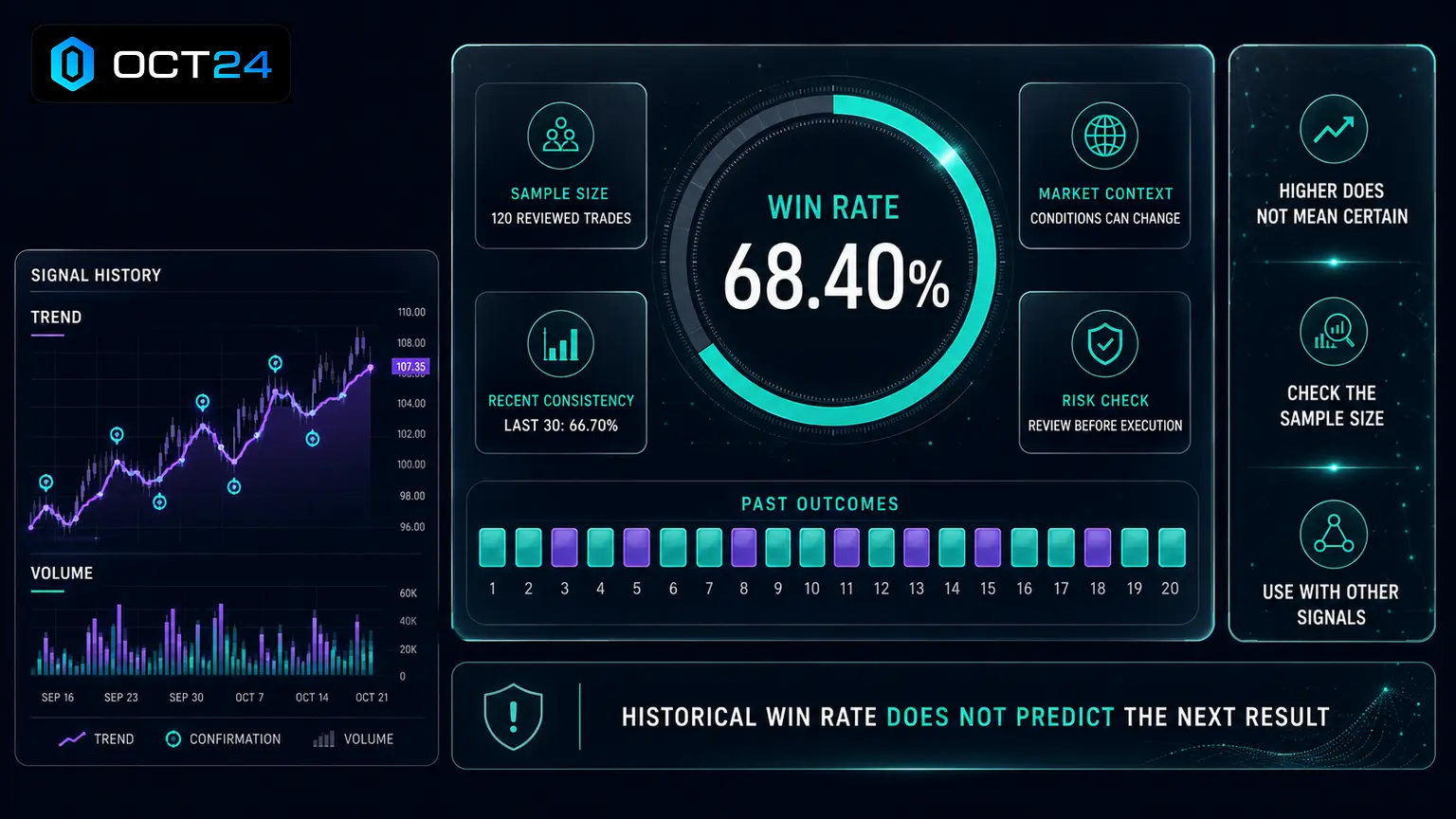
Win Rate as a Confirmation Signal
Win Rate is one of the first confirmation signals many traders notice because it feels simple. A higher Win Rate can suggest that the setup has stronger support than a lower one. But traders should be careful not to treat Win Rate as a guarantee. Even a strong Win Rate does not mean the next trade will succeed.
The best way to use Win Rate is as a confidence filter. It helps traders compare one possible trade against another. If two opportunities appear at the same time, the one with a stronger Win Rate may deserve closer review. But it still needs to be checked against Target Profit and Loss Coverage.
A high Win Rate with a very small Target Profit may not be as attractive as it first appears. A lower Win Rate with a larger Target Profit may also carry more risk than a beginner expects. This is why comparing signals matters. Win Rate tells only part of the story.
For OCT24 traders, Win Rate can be a useful first checkpoint in a fast decision window. The platform scans market conditions and presents AI-supported opportunities, but the trader still needs to decide whether the signal matches their personal risk tolerance and account situation.
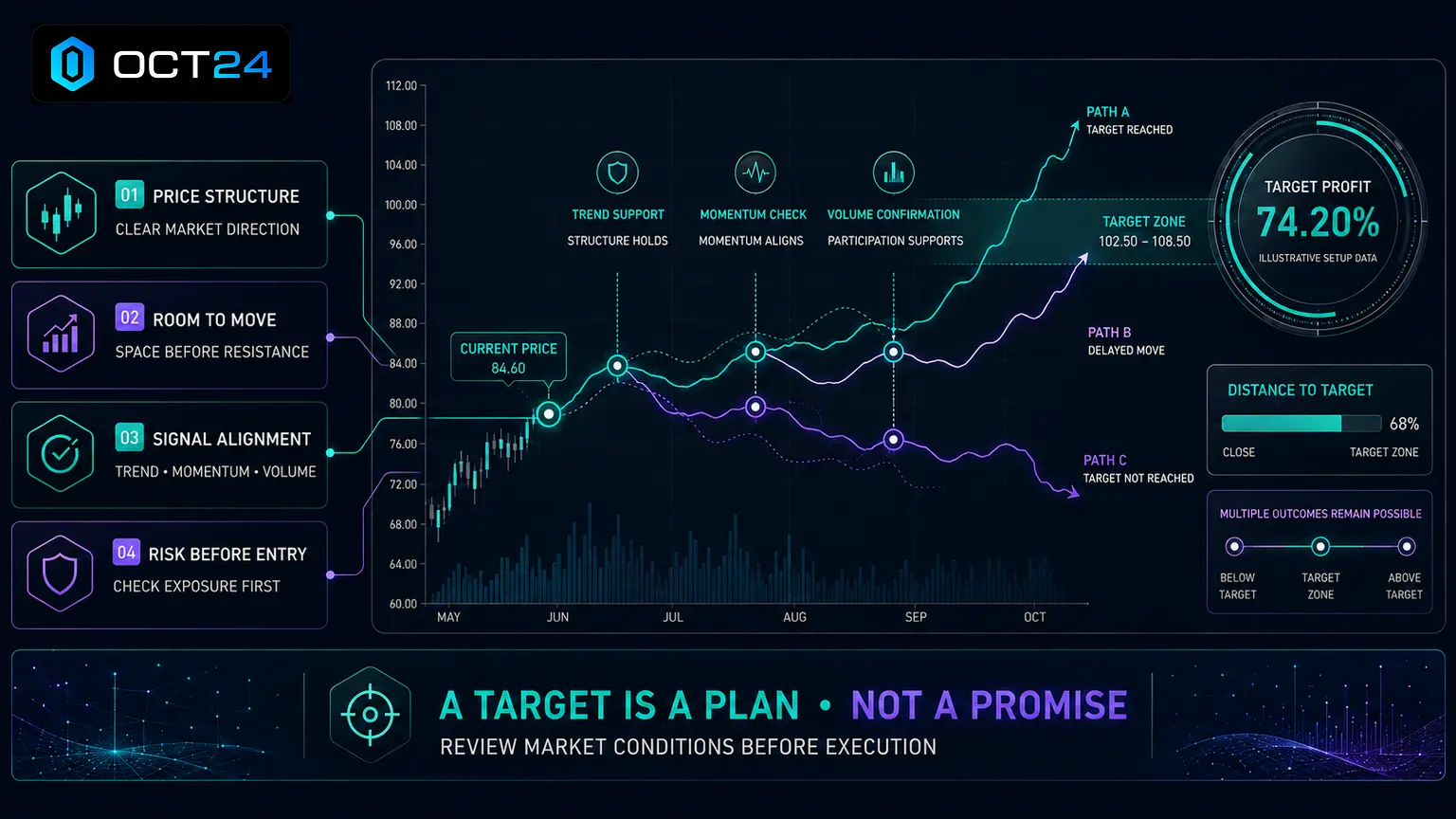
Target Profit as a Confirmation Signal
Target Profit helps traders understand what the trade is aiming for. It gives the opportunity a clearer objective. Without a target, traders can become emotional after entry. They may exit too early, hold too long, or change their plan because price moves quickly.
In OCT24, the AI bot plans the trade objective for the user. This is important because users are not manually designing the exit plan themselves. The trader reviews the Target Profit shown in the signal and decides whether the potential reward is suitable before activating the bot.
Target Profit works as a confirmation signal when it looks realistic for the market conditions. If the target is too small, the opportunity may not be worth the exposure. If the target looks too ambitious for the current market, the setup may require extra caution. The number should be reviewed in context.
This connects with AI Trading Strategies because a strong strategy is not only about finding direction. It also needs a clear idea of potential reward. Target Profit helps traders think about whether the opportunity is meaningful enough to justify risk.
Loss Coverage as a Confirmation Signal
Loss Coverage is one of the most important confirmation signals for risk-aware trading. It helps traders think about downside before they focus too much on potential reward. A setup can look exciting, but if the risk side is weak, the opportunity may not be suitable.
Loss Coverage is especially useful for beginners because it keeps risk visible. Many new traders naturally look at upside first. They ask how much they might make. A better question is: what happens if this does not work? Loss Coverage brings that question into the review process.
OCT24 does not remove market risk. Crypto can move sharply, and no AI system can guarantee that a trade will avoid losses. Traders still need to manage exposure, capital allocation, and overall account risk. Loss Coverage helps support that review by showing how the signal handles downside risk.
This is closely related to Trading Bot Risk Management. Confirmation signals are not just about finding entries. They are also about deciding whether a trade is worth the risk before entering.

How Confirmation Signals Work Together
The strongest confirmation signal is often not one number. It is the relationship between several numbers. Win Rate, Target Profit, and Loss Coverage should be read as a group. When all three support the trade, the setup may look more balanced. When one of them is weak, the trader should pause.
A balanced signal might show a reasonable Win Rate, a realistic Target Profit, and acceptable Loss Coverage. This does not make the trade safe or certain, but it does give the trader a more complete view. The setup has support from more than one angle.
A conflicting signal might show a high Target Profit but poor Loss Coverage. Another may show strong Loss Coverage but a weak Win Rate. A third may show a good Win Rate but a Target Profit that is too small to justify the trade. These conflicts do not always mean the trade is bad, but they do mean the trader should think carefully.
This is where Automated Trading and Algorithmic Trading can help organize information. Automation can scan and structure large amounts of market data faster than a manual trader, but the final decision still needs human judgment.
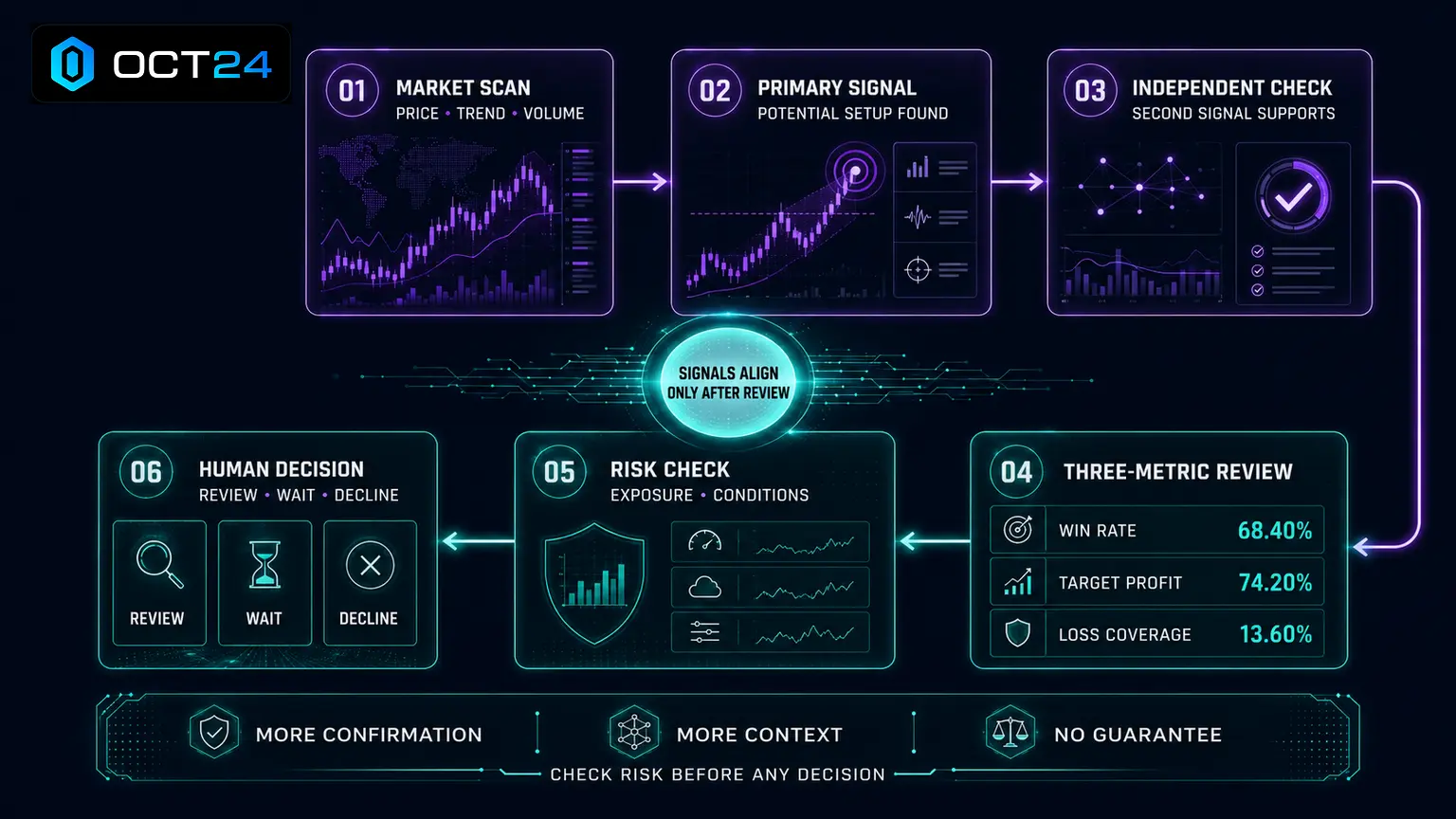
Why One Signal Alone Can Be Misleading
One signal can create overconfidence. If a trader only sees a strong Win Rate, they may ignore weak risk coverage. If they only look at Target Profit, they may chase upside. If they only look at Loss Coverage, they may miss whether the trade has enough reward potential.
This is why confirmation is different from prediction. A confirmation signal does not say, this will happen. It says, this setup has supporting evidence worth reviewing. That difference is important for responsible crypto trading.
Many trading mistakes happen when traders simplify the decision too much. They may enter because price is moving, because they feel late, or because one number looks attractive. Comparing confirmation signals creates a more disciplined process.
OCT24 is useful here because it reduces the amount of scattered information a beginner needs to process. The platform can scan market conditions and present a structured signal view, helping traders review the setup without building every chart from scratch.
Confirmation Signals and Crypto Market Volatility
Crypto markets are known for volatility. Price can move sharply after news, liquidations, ETF flows, macro data, or sudden changes in market sentiment. In that environment, confirmation signals help traders avoid reacting too quickly.
During volatile periods, a trade may appear and disappear quickly. OCT24’s one-click workflow is built around efficient signal review, but fast access should still be paired with discipline. The trader should compare Win Rate, Target Profit, and Loss Coverage before deciding whether to activate.
This is why How AI Handles Market Volatility is such an important topic for beginners. Volatility can create opportunity, but it can also magnify mistakes. Confirmation signals help traders focus on quality rather than speed alone.
A good confirmation process can also reduce emotional trading. When price is moving quickly, the trader has a simple checklist to return to. Is the Win Rate acceptable? Is the Target Profit realistic? Is Loss Coverage strong enough for the exposure?
How OCT24 Uses AI Support in Signal Review
OCT24 positions AI support as a way to handle much of the market-scanning process. The platform can review market conditions, identify potential opportunities, and present AI-supported trading signals in a simplified format. This helps beginners who do not want to manually study every chart, indicator, and market pair.
The role of the trader is still important. OCT24 does not remove responsibility from the user. The trader reviews the signal, considers the displayed metrics, manages exposure, and decides whether to activate the opportunity. AI support can reduce manual analysis, but it does not replace responsible decision-making.
This is also why confirmation signals are useful for people comparing Trading Bots vs Human Traders. Human traders bring judgment, context, and personal risk control. AI systems bring speed, structure, and data processing. A better trading process uses both strengths.
Users who want to understand the broader platform can read About OCT24 earlier in their research journey. The important point is that OCT24 is designed to make signal review simpler, not to claim certainty or remove risk.
Confirmation Signals Before One-Click Trading
One-click execution is convenient, but convenience should not turn into careless action. Before clicking into a trade, a trader should understand what the signal is showing. In OCT24, that means reviewing the Win Rate, Target Profit, and Loss Coverage before the entry window passes.
This can be especially helpful for busy traders. A person may not have time to build a complete manual analysis every time the market moves. With AI Trading for Busy Professionals, the goal is to create a more efficient review process while still keeping the trader in control of the decision.
The same idea applies to One-Click Trading. The value is not that a click creates certainty. The value is that a trader can review a structured signal and act quickly if it fits their risk comfort. If the confirmation signals do not line up, skipping the trade can be the better decision.
A simple pre-click routine may include three questions: Does the Win Rate support the setup? Does the Target Profit look worthwhile? Does the Loss Coverage make the downside acceptable? If the answer is unclear, the trader does not need to force the trade.
How Beginners Can Read Confirmation Signals
Beginners do not need to memorize every technical indicator to understand confirmation signals. The starting point is much simpler. Look for agreement. If several important signals support the same setup, the trade may deserve attention. If the signals disagree, slow down.
A beginner can also learn from the way signals change over time. If Win Rate drops, Target Profit narrows, or Loss Coverage weakens, the setup may not be as strong as it first looked. This type of observation helps traders build patience and better judgment.
It also helps to understand basic chart behavior. Even if OCT24 performs most of the market analysis, traders benefit from learning How to Read Crypto Charts so they can understand why signals may strengthen or weaken.
The goal is not to become a professional analyst overnight. The goal is to build enough understanding to review AI-supported signals responsibly. Confirmation signals give beginners a practical bridge between raw market data and a final trading decision.
Common Mistakes When Using Confirmation Signals
The first mistake is treating confirmation signals as guarantees. A strong signal can still fail because markets are uncertain. Crypto can move against a setup due to news, liquidity changes, sudden volatility, or broader risk-off sentiment.
The second mistake is ignoring one weak metric because two others look attractive. For example, a trader may see strong Win Rate and Target Profit but ignore weak Loss Coverage. That can lead to oversized risk. Confirmation works best when all important signals are reviewed together.
The third mistake is entering every signal. A signal is an opportunity to review, not an instruction to trade. Skilled traders often protect themselves by skipping setups that do not fit their risk plan. This is a key part of Position Sizing Controls and Portfolio Diversification Tools.
The fourth mistake is changing behavior after a loss. A trader may increase exposure to recover quickly or take the next trade without reviewing the metrics. Confirmation signals are most useful when they are part of a consistent routine, not something used only when the trader feels calm.
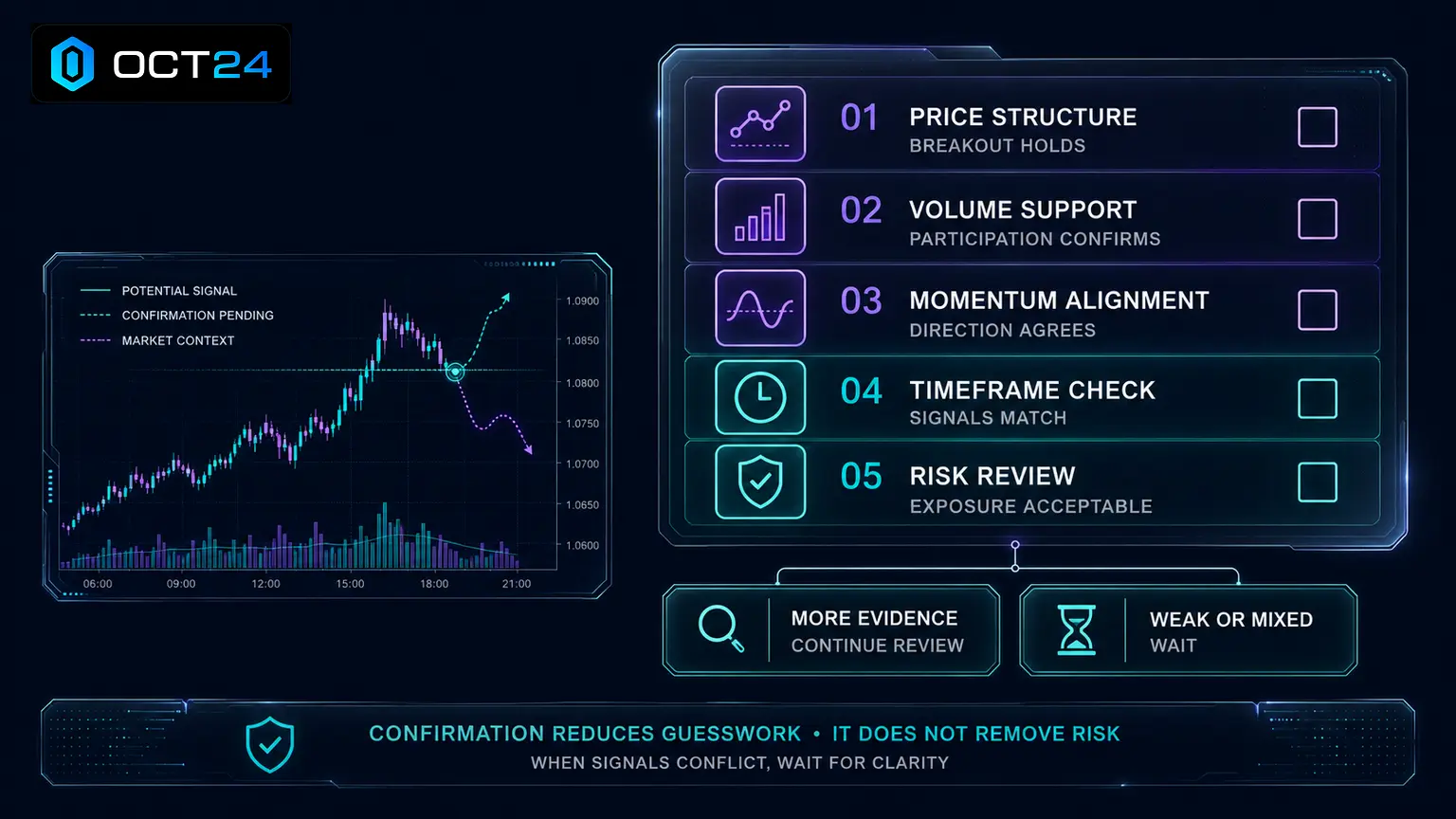
A Practical Confirmation Signal Checklist
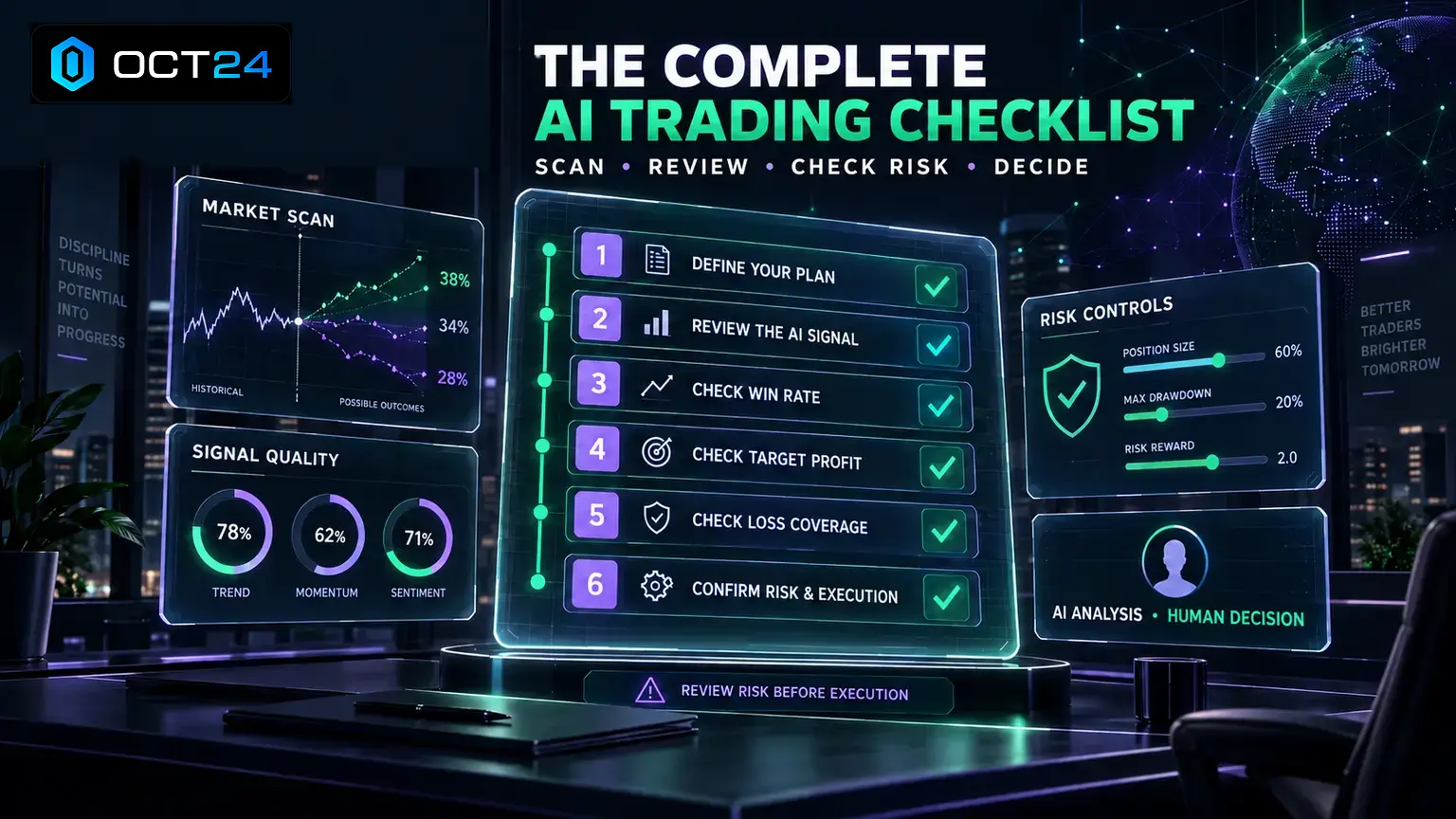
A simple checklist can make confirmation signals easier to use. Before entering a trade, traders can review the same questions each time. This creates consistency and helps reduce emotional decision-making.
Start with Win Rate. Is the Win Rate strong enough for your comfort level, or does it suggest that the setup is uncertain? Then review Target Profit. Is the potential objective meaningful, realistic, and worth the exposure? Then review Loss Coverage. Does the downside protection look acceptable for your account size and risk tolerance?
Next, look at the relationship between all three. A trade with a moderate Win Rate, strong Target Profit, and solid Loss Coverage may require different thinking than a trade with a high Win Rate, weak Target Profit, and thin Loss Coverage. The signal should be judged as a complete setup.
Finally, decide whether the trade fits your personal rules. This is where the trader’s responsibility comes in. OCT24 can support analysis and signal review, but it cannot decide how much risk is appropriate for every individual.
How Confirmation Signals Support Better Trading Habits
Good trading is not only about finding opportunities. It is also about building habits that can survive winning streaks, losing streaks, and emotional market conditions. Confirmation signals support those habits because they create a repeatable review process.
Instead of asking, do I feel good about this trade, the trader asks, what do the signals show? That shift matters. It moves the decision away from hope, fear, and urgency. It also makes the trade easier to review afterward.
This connects with the wider Benefits of AI Trading. AI support can help traders organize information, reduce manual scanning, and improve consistency. But the benefit is strongest when traders use the information responsibly.
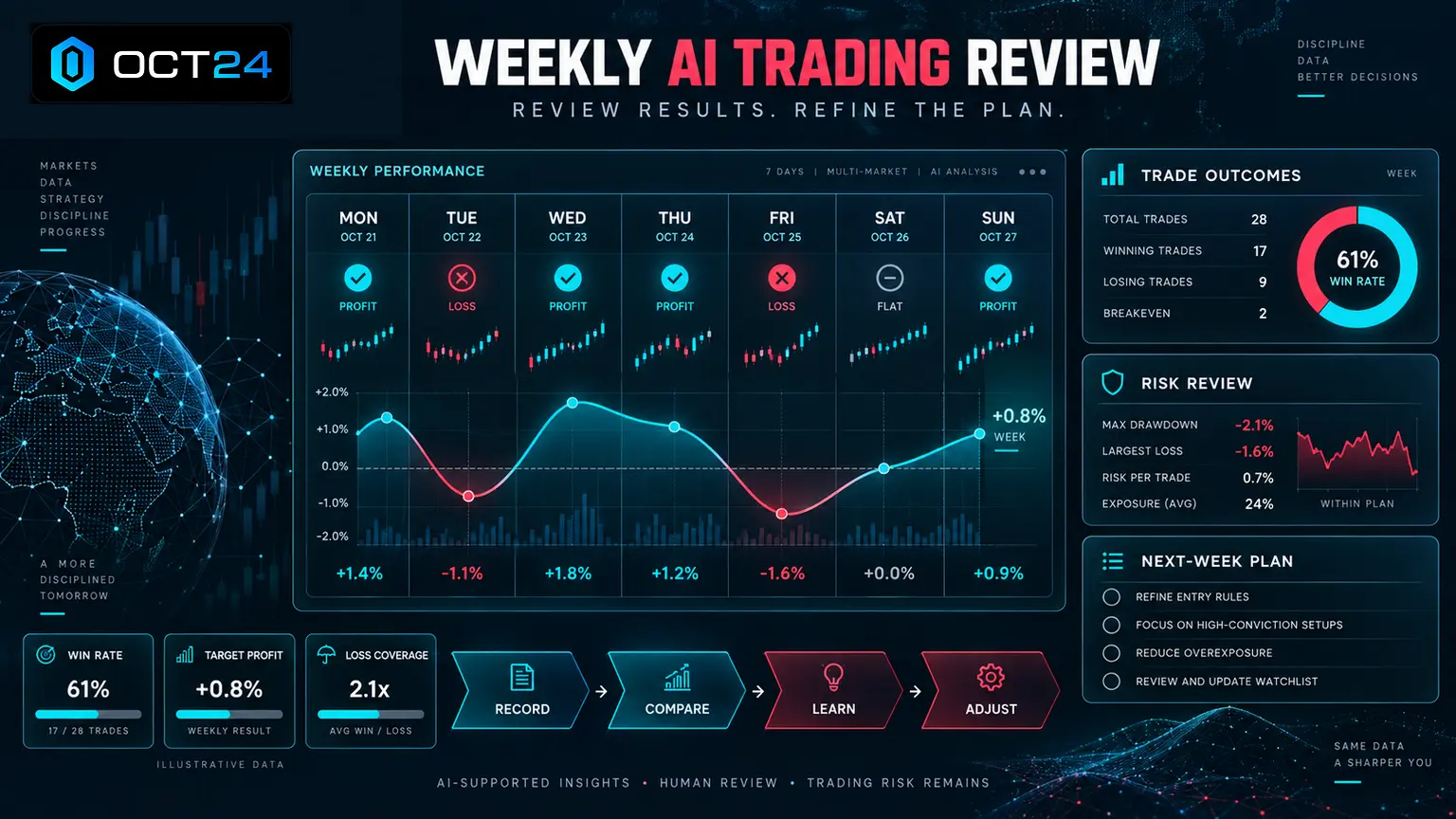
A trader who reviews confirmation signals consistently may become better at spotting weak setups, avoiding rushed entries, and understanding why some trades are worth skipping. Over time, that discipline can matter as much as any individual trade.
What Confirmation Signals Cannot Do
Confirmation signals have limits. They cannot control the market, remove volatility, guarantee a profitable result, or protect a trader from every loss. They are tools for better review, not certainty.
They also cannot replace personal risk management. A trader still needs to decide how much capital to expose, how often to trade, and whether the current opportunity fits their account situation. Even a strong signal can be unsuitable if the trader is overexposed.
This is why articles about AI Trading Myths are important. One common myth is that AI removes the need for human judgment. In reality, AI-supported trading works best when the trader understands what the system is showing and stays responsible for the final decision.
OCT24 can simplify the review process, but it should be used with realistic expectations. The platform may help traders identify opportunities and review signals faster, but trading still involves risk.
When a Confirmation Signal Is Not Strong Enough
Sometimes the best use of confirmation signals is deciding not to trade. If Win Rate is weak, Target Profit is unattractive, or Loss Coverage feels too thin, the setup may not be worth activating. Waiting can be a valid trading decision.
This is difficult for many beginners because skipping a trade can feel like missing out. But avoiding weak opportunities is part of long-term discipline. A trader does not need to enter every signal to use an AI trading platform effectively.
If signals conflict, the trader can treat the opportunity as unclear. An unclear trade does not need to become an active trade. The market will continue offering new setups, and OCT24 can continue scanning conditions for fresh opportunities.
This mindset helps traders avoid chasing. Instead of reacting to every movement, they wait for stronger alignment between the core confirmation signals. That is a more practical way to approach crypto markets.
How to Use OCT24 Confirmation Signals Responsibly
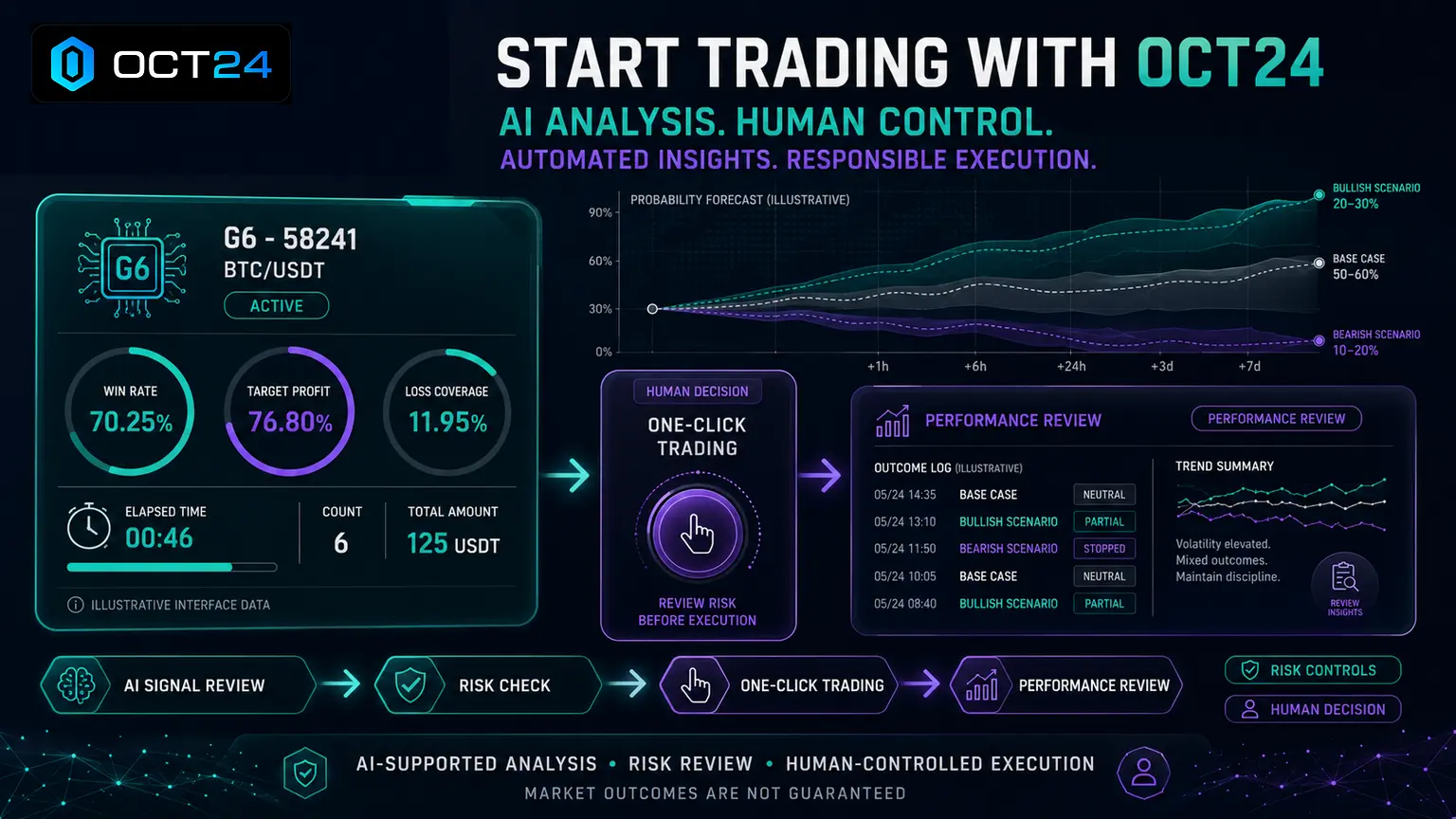
A responsible OCT24 workflow starts with review. First, let the platform scan market conditions and present the AI-supported opportunity. Then check the Win Rate, Target Profit, and Loss Coverage. Then decide whether the setup fits your risk comfort and account exposure.
If the setup looks balanced, the trader may choose to activate the bot within the available entry window. If the setup looks weak or unclear, the trader can let it pass. This keeps control in the trader’s hands while still benefiting from AI-supported analysis.
Traders who want a simpler way to review AI-supported crypto opportunities can explore the G6 Trading Bot and compare how its signal workflow fits their approach. The goal is not to remove risk. The goal is to make the review process clearer and more structured.
For readers ready to explore OCT24’s signal-based workflow, Start Trading with OCT24 can be a natural next step after learning how confirmation signals work.
Final Thoughts
Confirmation signals in trading help traders review a setup with more structure before entering. For OCT24 users, the most important signals to compare are Win Rate, Target Profit, and Loss Coverage. When these metrics support each other, the setup may be easier to review. When they conflict, the trader should slow down and think carefully.
The real value of confirmation signals is not certainty. It is clarity. They help traders avoid reacting to one number, one candle, or one emotion. OCT24 can support this process by scanning market conditions, identifying potential opportunities, and presenting AI-supported signals in a simplified way.
Trading still involves risk, and every trader remains responsible for exposure, capital allocation, risk settings, and execution decisions. If you are ready to review AI-supported crypto opportunities with a simpler signal workflow, explore OCT24 or Start Trading with OCT24 when you are ready.
FAQs
What are confirmation signals in trading?
Confirmation signals are supporting signs that help traders decide whether a setup has enough evidence to consider. They may include metrics, chart behavior, risk checks, or AI-supported signal data.
What are the most important confirmation signals on OCT24?
The most important OCT24 confirmation signals to review are Win Rate, Target Profit, and Loss Coverage. These help traders compare confidence, reward potential, and downside risk before activation.
Does a confirmation signal guarantee a profitable trade?
No. Confirmation signals do not guarantee profits or remove market risk. They help organize decision-making, but crypto trading can still result in losses.
Why should traders compare Win Rate and Target Profit?
Win Rate shows confidence in the setup, while Target Profit shows the potential objective. Comparing both helps traders avoid focusing only on probability or only on reward.
Why is Loss Coverage important?
Loss Coverage helps traders keep downside risk visible. It supports more responsible trading by making risk part of the decision before entry.
Can confirmation signals help beginners?
Yes. Confirmation signals can make trading decisions easier to review because they give beginners a simple structure to follow instead of relying only on emotion or guesswork.
Should traders enter every AI-supported signal?
No. A signal is an opportunity to review, not an instruction to trade. Traders should skip setups that do not fit their risk comfort, exposure, or account plan.
How does OCT24 support confirmation signal review?
OCT24 supports confirmation signal review by scanning market conditions, identifying potential opportunities, and presenting AI-supported trading signals with key metrics for trader review.