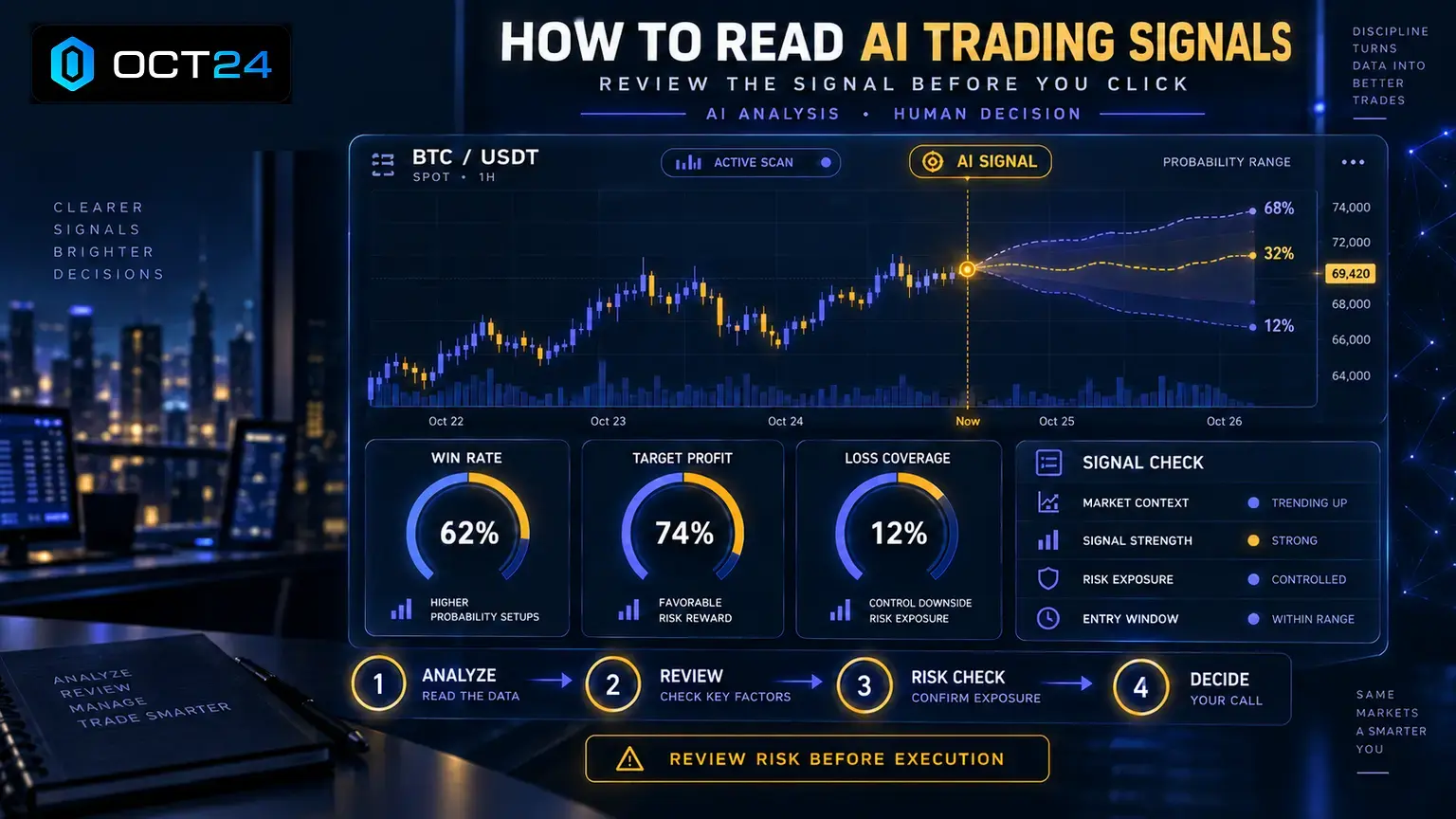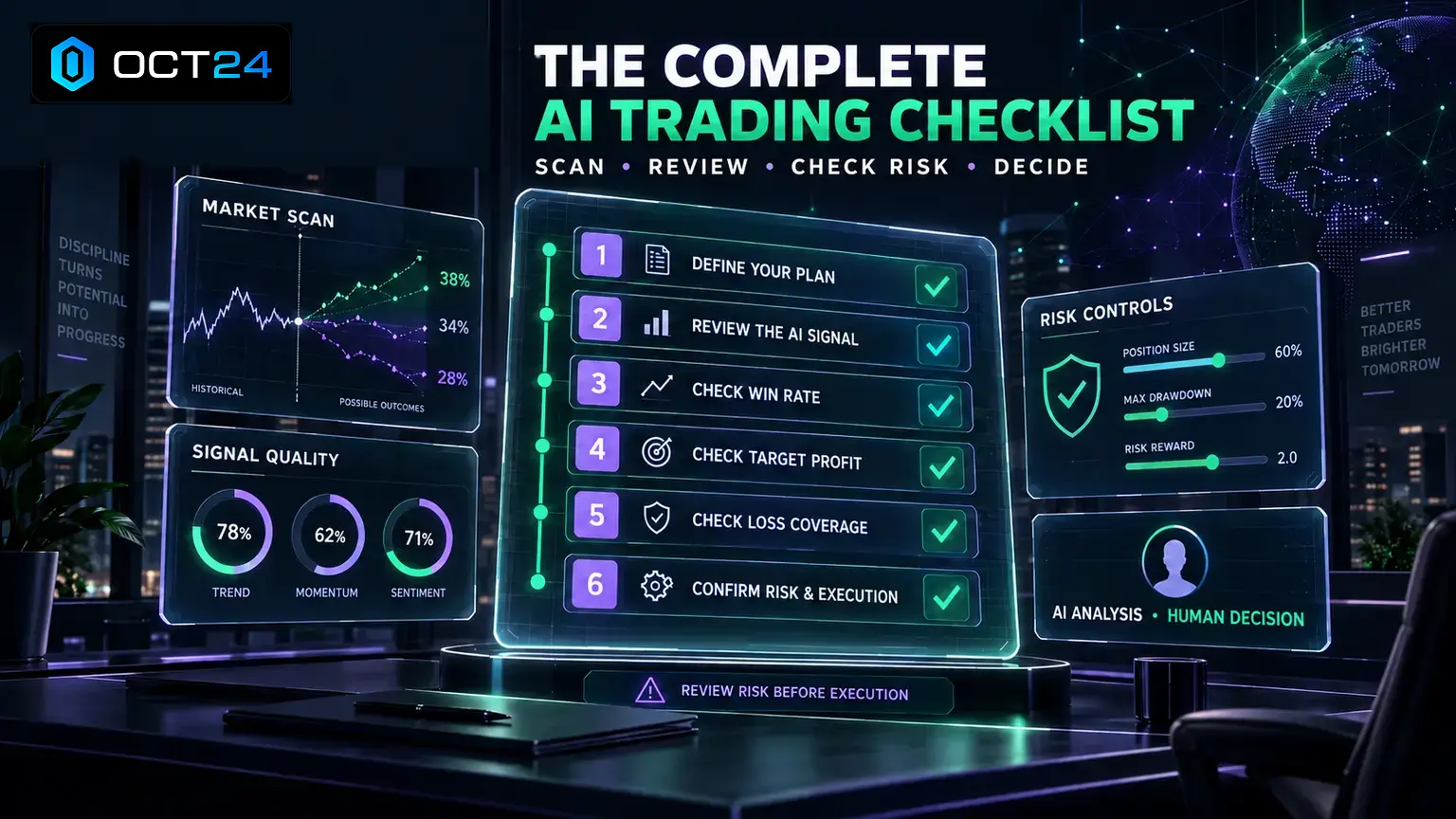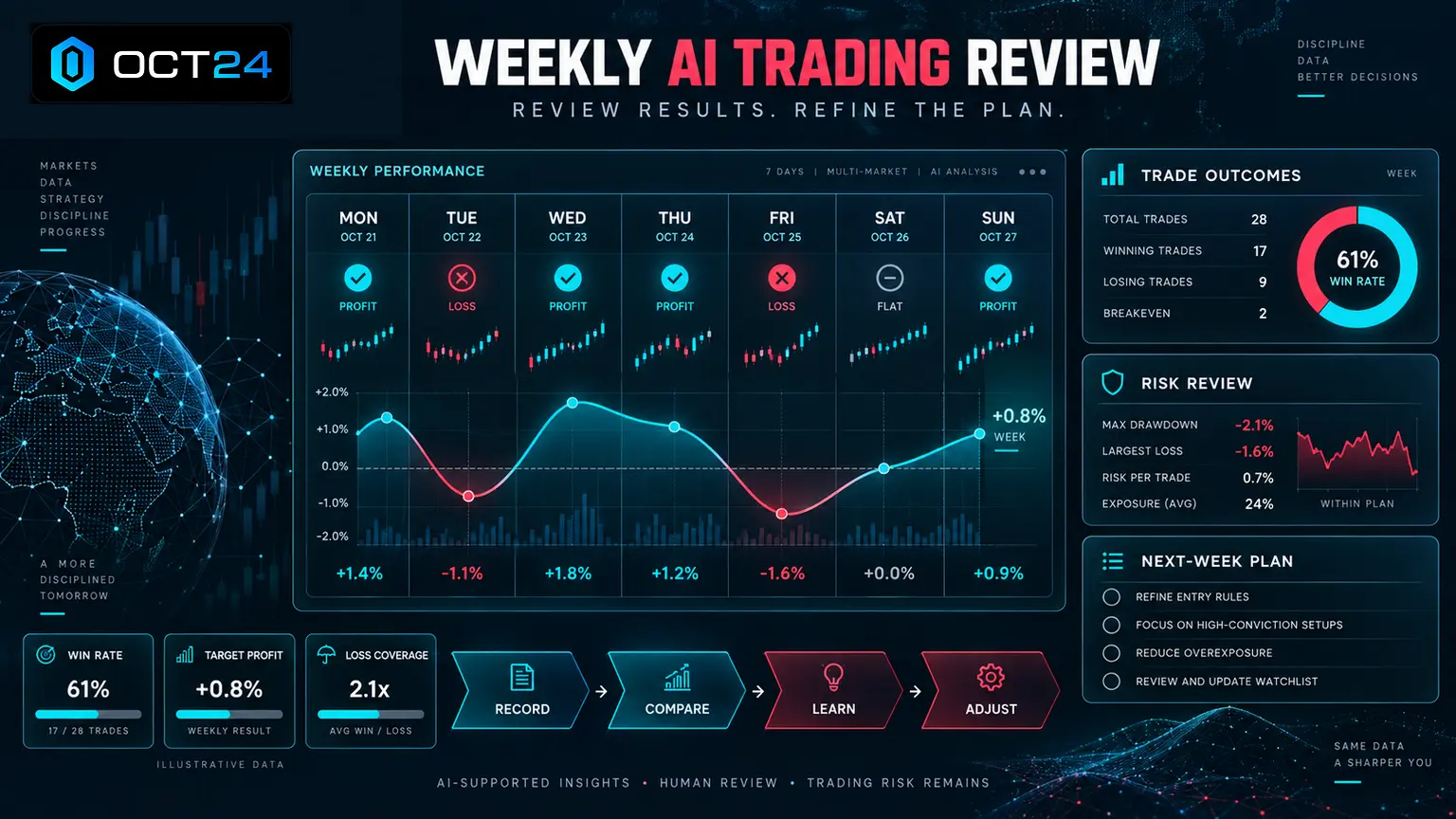

Algorithmic Trading Explained
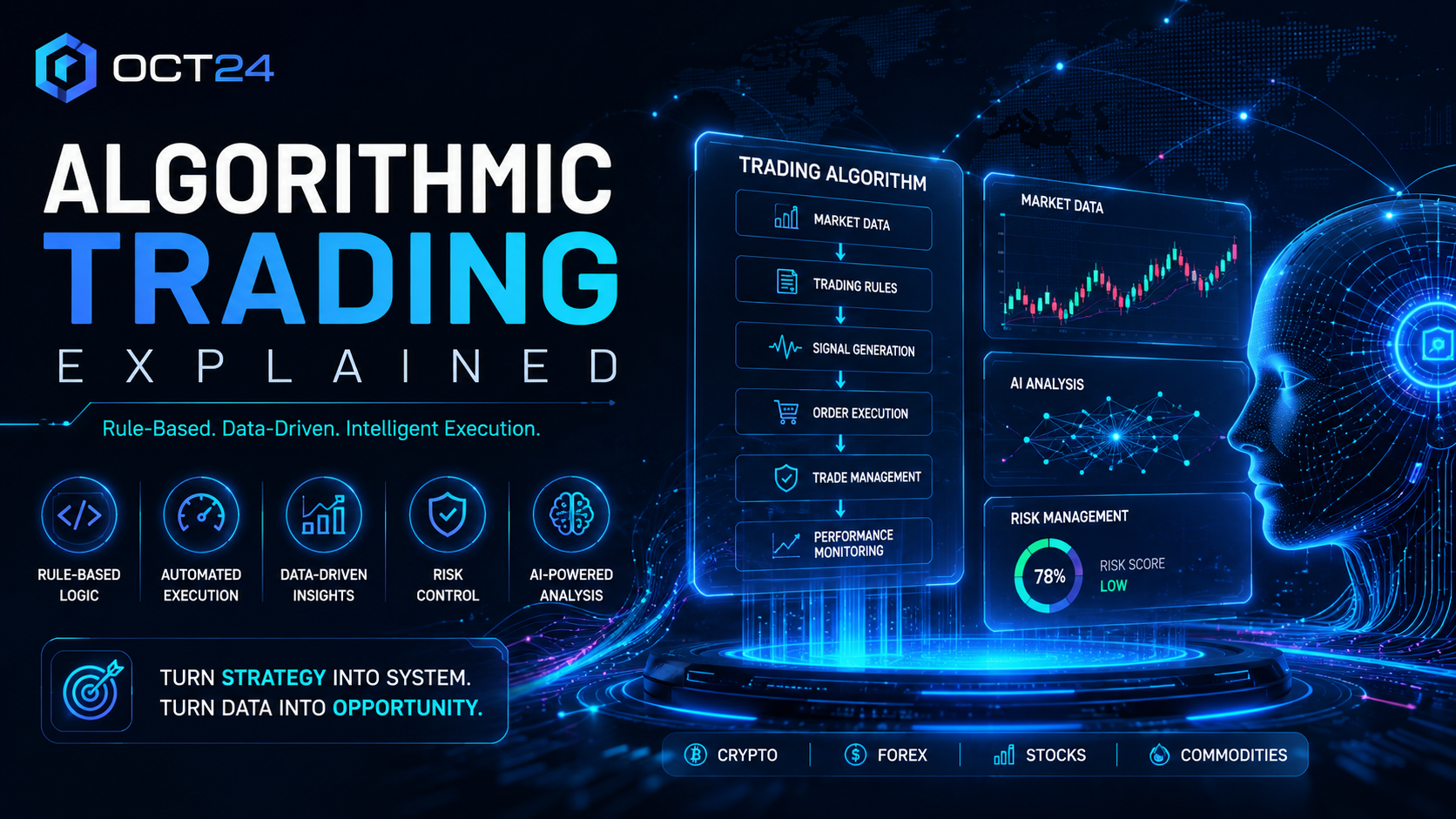
Algorithmic Trading has transformed the way financial markets operate by replacing many manual trading tasks with predefined rules and automated execution. Whether you're trading cryptocurrencies, stocks, or forex, trading algorithms can analyze market data, identify opportunities, and execute trades far faster than any human.
If you've already explored AI Trading, How AI Trading Bots Work Behind the Scenes, AI Trading vs Manual Trading and AI Trading Strategies, the next step is understanding the technology that powers many modern trading platforms. Although algorithmic trading and AI trading are closely related, they are not the same. Understanding the difference will help you make better decisions when choosing an active trading platform.
In this guide, you'll learn how algorithmic trading works, how trading algorithms make decisions, where artificial intelligence fits into the picture, and why algorithmic trading has become an essential part of today's financial markets.
What Is Algorithmic Trading?
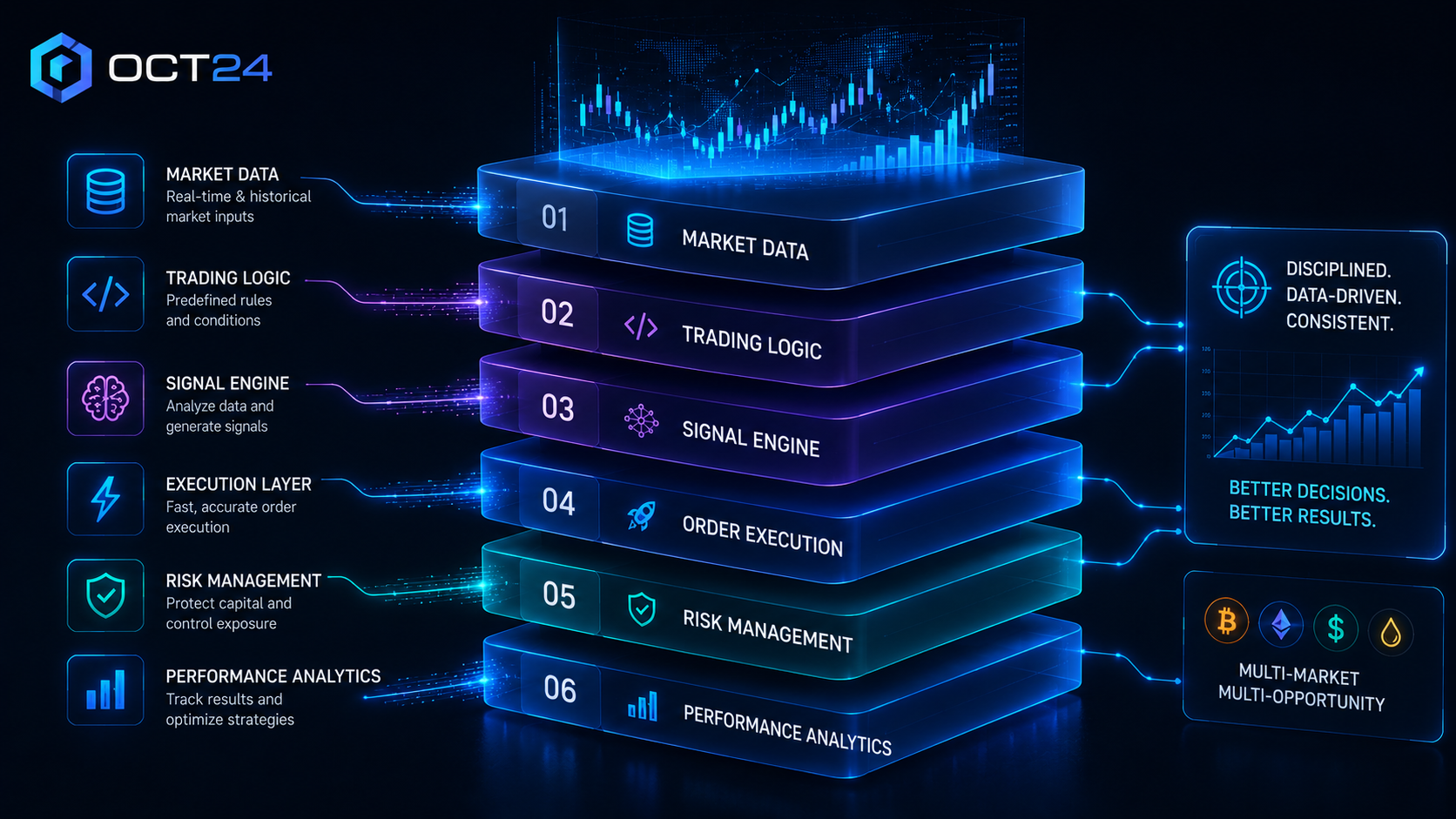
Algorithmic trading is the process of using predefined rules to automatically identify and execute trading opportunities.
Instead of manually watching charts and deciding when to buy or sell, a trader creates—or uses—a set of trading rules that determine exactly when a trade should be opened or closed. These rules are known as a trading algorithm.
Think of it like using GPS navigation.
You choose your destination, and the GPS follows a series of predefined rules to determine the best route. It constantly evaluates new information, such as traffic or road closures, but it follows an established decision-making process to reach your destination.
Algorithmic trading works in a similar way.
Rather than making emotional decisions, the algorithm follows specific conditions before taking action.
A typical trading algorithm may evaluate factors such as:
- Current market price
- Trading volume
- Trend direction
- Volatility
- Technical indicators
- Time of day
- Risk limits
When all required conditions are met, the algorithm generates a trading signal or executes an order automatically, depending on how the platform is designed.
This rule-based approach allows traders to remain disciplined, reduce emotional decision-making, and respond quickly to changing market conditions.
Did You Know?
Today, a significant portion of trading volume across global financial markets is generated through algorithmic trading systems rather than manual trading.
How Algorithmic Trading Works
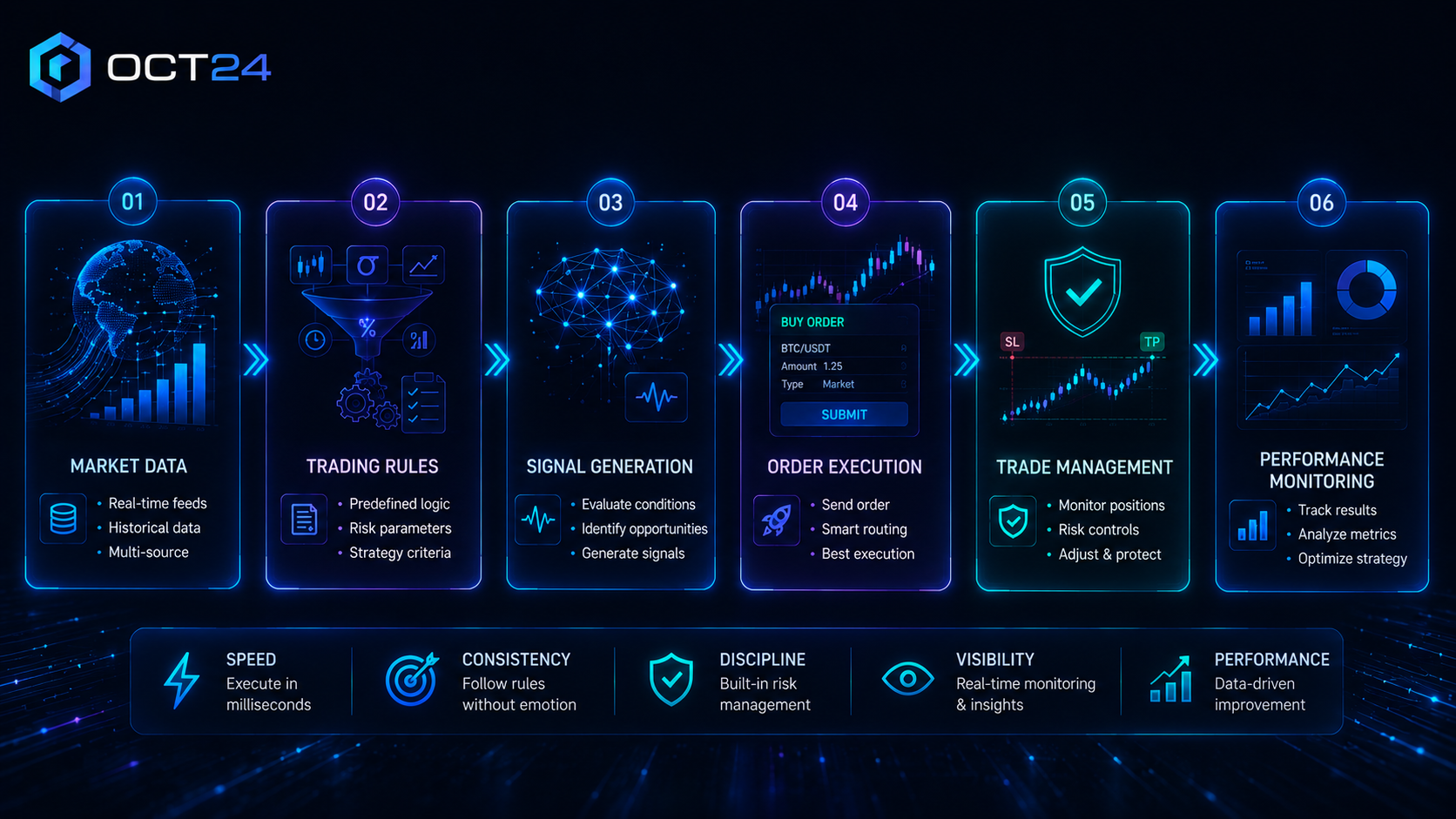
Although algorithmic trading sounds complex, the underlying process is surprisingly logical. Every trading algorithm follows a sequence of steps designed to convert market data into trading decisions.
Let's walk through the process.
Step 1: Collect Market Data
Every algorithm begins by collecting live market information.
This may include:
- Current prices
- Historical price movements
- Trading volume
- Bid and ask prices
- Technical indicators
- Market volatility
Because financial markets change every second, algorithms continuously receive updated information.
Imagine trying to monitor hundreds of cryptocurrency charts at the same time. For a human trader, this would be impossible. A trading algorithm can process that information almost instantly.
Step 2: Apply Trading Rules
Next, the algorithm compares incoming market data against a predefined set of trading rules.
For example:
- Has Bitcoin broken above a resistance level?
- Is trading volume increasing?
- Is the RSI above 60?
- Is volatility within acceptable limits?
- Does the trade meet the required risk-to-reward ratio?
The algorithm checks every condition before moving forward.
Unlike human traders, it never becomes impatient or ignores its own rules because of fear or excitement.
Step 3: Generate a Trading Signal
If all trading conditions are satisfied, the algorithm identifies a potential trading opportunity.
Depending on the platform, this signal may:
- Notify the trader
- Recommend a trade
- Prepare an order
- Automatically continue to execution
Modern Automated Trading platforms often combine this process with additional risk checks before allowing an order to proceed.
Step 4: Execute the Trade
Once a valid opportunity has been identified, the system submits the trade according to its predefined instructions.
This includes:
- Entry price
- Order type
- Position size
- Stop-loss level
- Profit target
Because computers execute instructions much faster than humans, algorithmic trading can respond to rapidly changing market conditions within fractions of a second.
For active traders, this speed can make a significant difference when market momentum changes quickly.
Step 5: Monitor the Position
The algorithm's job doesn't stop once a trade has been opened.
It continues monitoring:
- Price movement
- Risk exposure
- Stop-loss levels
- Profit targets
- Market volatility
Some algorithms may also adjust protective orders if market conditions change, while others simply continue following the original trading plan.
This structured monitoring helps remove much of the emotion that often affects manual traders.
Step 6: Evaluate Performance
After each trade, performance data can be reviewed to determine how effectively the strategy is working.
Typical performance metrics include:
- Win rate
- Average profit
- Average loss
- Maximum drawdown
- Risk-to-reward ratio
- Strategy consistency
Professional traders regularly review this information to determine whether adjustments are necessary.
Algorithmic trading is not about finding a perfect strategy—it is about consistently following a well-designed process.
Algorithmic Trading vs AI Trading
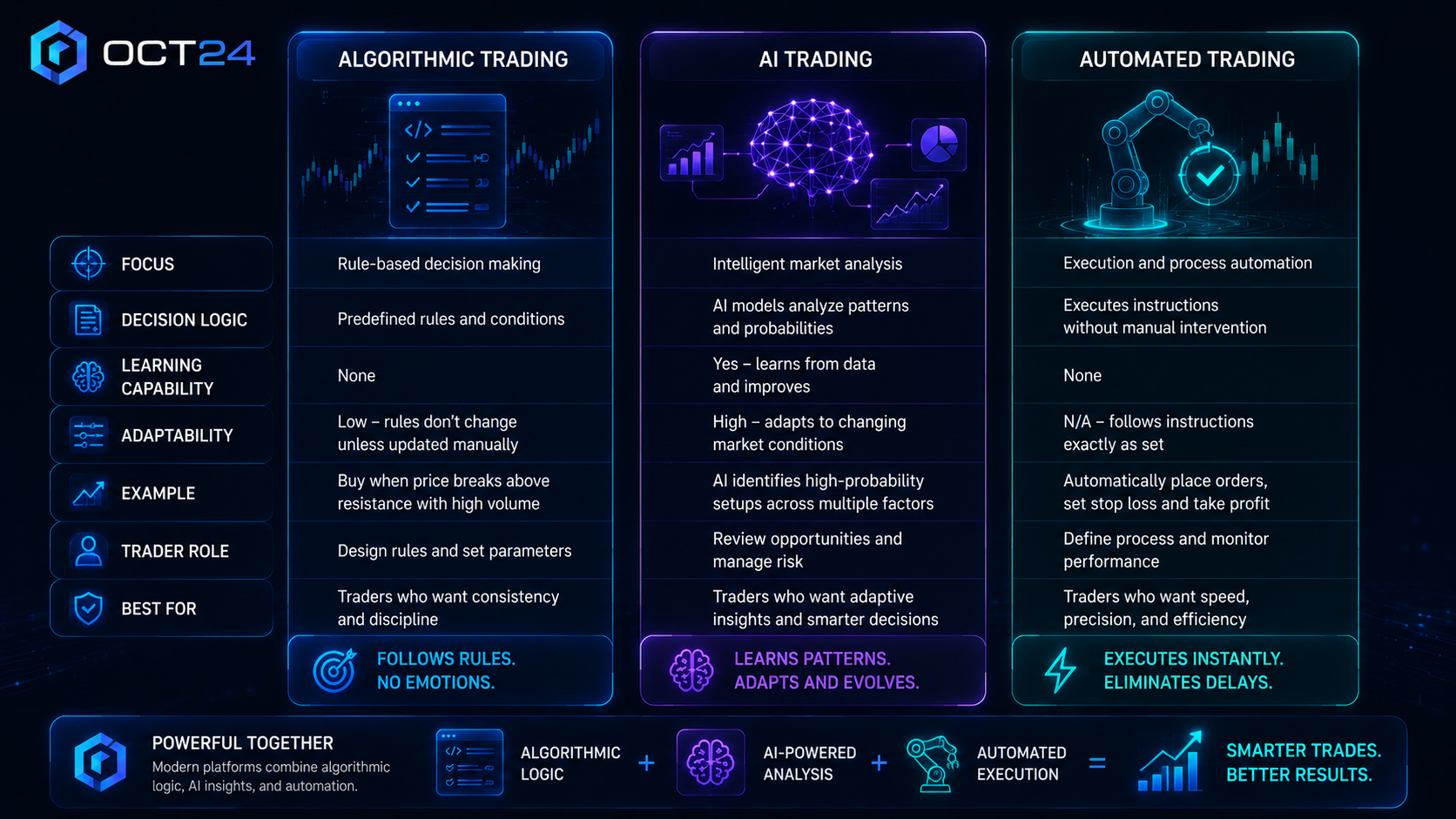
Many people assume algorithmic trading and AI trading are identical. While they are closely related, they solve different problems.
The easiest way to understand the difference is to think about decision-making.
Traditional algorithmic trading follows predefined rules.
AI trading adds intelligent analysis that can evaluate changing market conditions before identifying potential opportunities.
Here's a simple comparison.
Traditional Algorithmic Trading
A traditional trading algorithm might say:
"If Bitcoin closes above resistance and volume increases by 20%, generate a buy signal."
Those rules never change unless a developer updates them.
The system follows the same logic every time.
AI Trading
An AI-powered system analyzes a much broader range of information before identifying potential opportunities.
Rather than relying on a single technical condition, AI may evaluate:
- Multiple indicators
- Historical price behavior
- Market volatility
- Momentum
- Cross-market relationships
- Probability models
Instead of following one fixed rule, AI attempts to determine whether current market conditions resemble patterns that have historically produced favorable trading opportunities.
This additional layer of analysis allows AI to support more informed decision-making while still operating within defined risk parameters.
It's important to understand that AI does not replace algorithmic trading.
Instead, many modern trading platforms combine algorithmic execution with AI-powered market analysis.
This is one of the key Benefits of AI Trading for active traders.
Is Algorithmic Trading the Same as Automated Trading?
The terms "algorithmic trading" and "automated trading" are often used interchangeably, but they describe different parts of the trading process.
Algorithmic trading refers to the decision-making logic.
Automated trading refers to the execution of those decisions.
An easy analogy is a coffee machine.
The recipe tells the machine exactly how to make the coffee.
The machine follows that recipe automatically.
The recipe represents the algorithm.
The machine represents automation.
In trading, the algorithm decides what should happen.
Automation decides how that decision is carried out.
Many modern platforms combine both technologies.
For example:
- The algorithm identifies a trading opportunity.
- Risk management rules are checked.
- The trading platform prepares the order.
- Automation executes the trade according to predefined instructions.
Platforms may also combine algorithmic trading with AI-powered market analysis, creating a more intelligent workflow without requiring the trader to manually monitor every chart.
Understanding this distinction becomes increasingly important as you explore more advanced trading technology.
In the next lesson, we'll take a closer look at Automated Trading and how it simplifies active trading for both beginners and experienced traders alike.
Common Types of Trading Algorithms
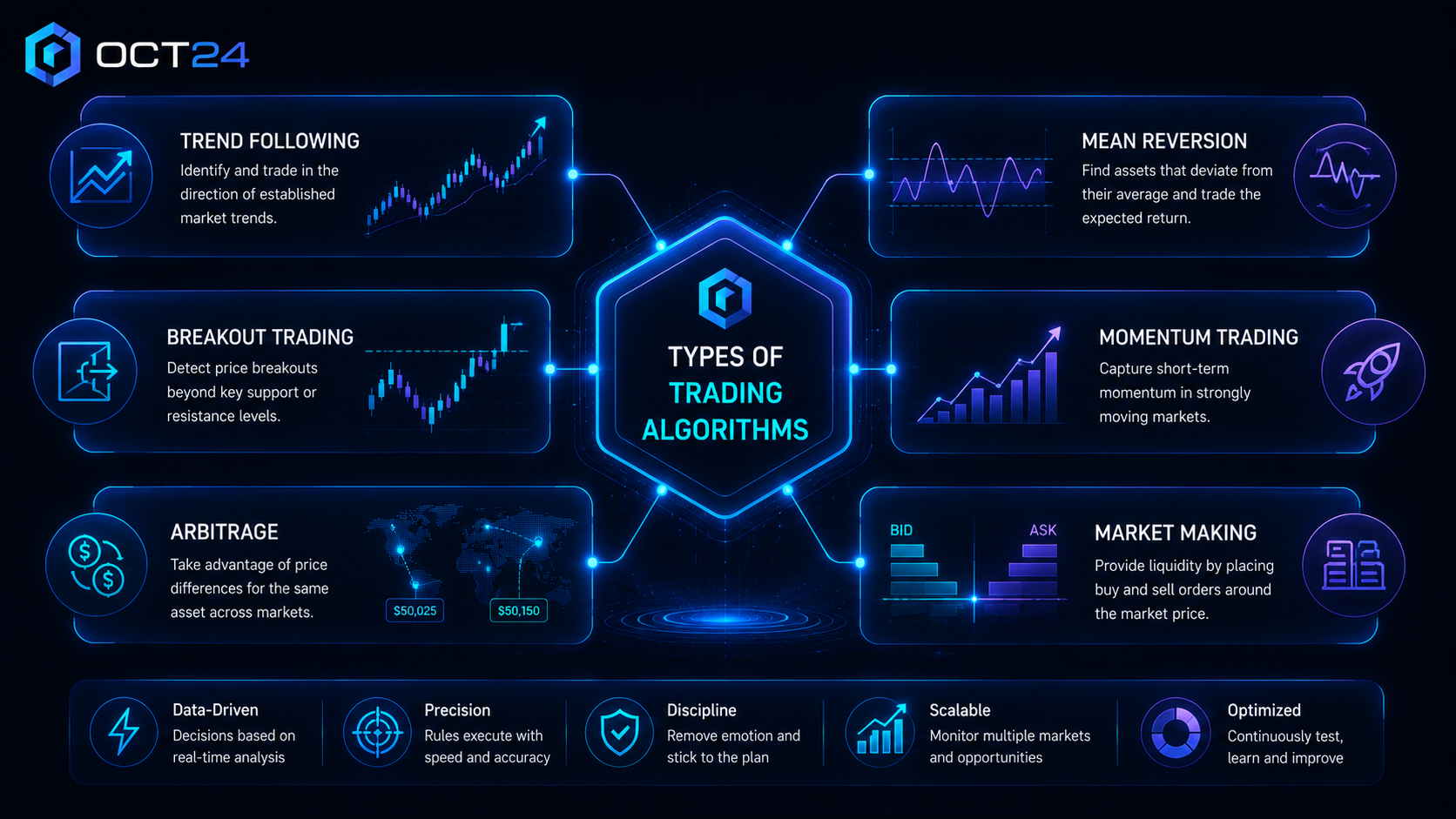
Although thousands of trading algorithms exist, most are built around a relatively small number of trading concepts.
Here are some of the most common approaches.
Trend Following
Trend-following algorithms identify markets that are already moving in a clear direction.
Rather than trying to predict reversals, they look for opportunities to trade alongside existing momentum.
For example, if Bitcoin continues making higher highs and higher lows, a trend-following algorithm may identify buying opportunities that match its predefined criteria.
Mean Reversion
Mean reversion assumes that prices often move back toward their historical average after unusually large moves.
If price moves significantly above or below its normal range, the algorithm looks for signs that it may return toward its average level.
This approach works best in ranging markets but may struggle during strong trends.
Breakout Trading
Breakout algorithms monitor important support and resistance levels.
When price breaks through one of these levels with sufficient momentum and volume, the algorithm identifies a potential trading opportunity.
Understanding How to Read Crypto Charts helps traders better understand why breakout algorithms respond to these key technical levels.
Momentum Trading
Momentum algorithms search for assets experiencing strong directional movement.
These systems attempt to capture short-term trends while momentum remains strong.
Because momentum can change quickly, these algorithms often include strict Trading Bot Risk Management rules to help protect capital.
Arbitrage
Arbitrage algorithms look for price differences between markets.
If the same asset trades at different prices on two exchanges, the algorithm attempts to profit from the temporary pricing gap before it disappears.
These opportunities often exist for only a few seconds, making algorithmic execution essential.
Market Making
Market-making algorithms continuously place buy and sell orders around the current market price.
Their objective is to profit from the spread between buying and selling prices while providing liquidity to the market.
Although commonly used by institutional firms, the underlying concept helps illustrate the wide variety of tasks trading algorithms can perform.
Advantages of Algorithmic Trading
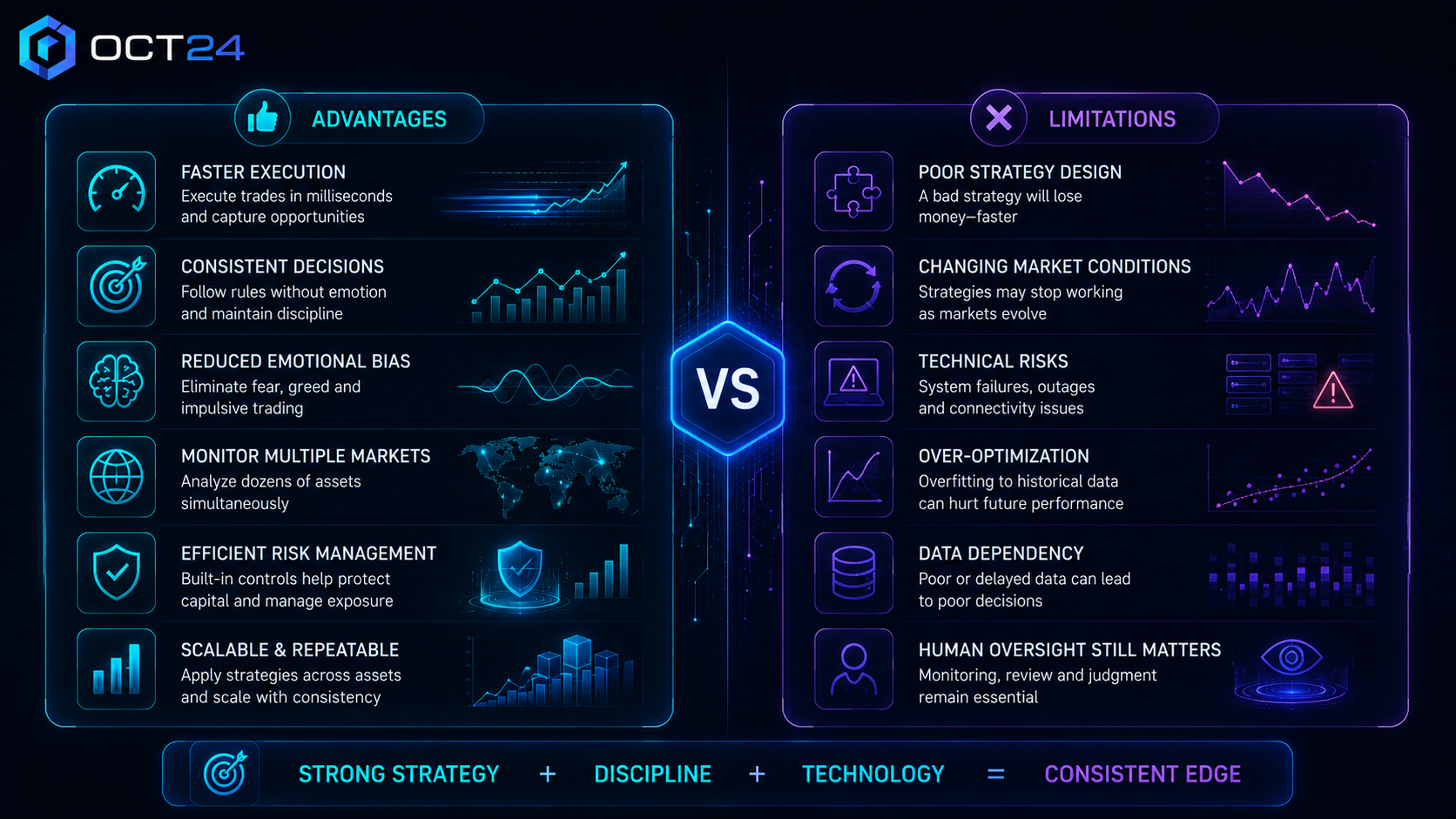
Algorithmic trading has become increasingly popular because it helps traders execute strategies with greater speed, consistency, and discipline. While no trading approach guarantees success, algorithms can remove many of the limitations associated with manual trading.
Faster Execution
Financial markets can change within seconds, especially during periods of high volatility.
A human trader may need to analyze a chart, confirm a setup, place an order, and manage risk manually. An algorithm can complete those same tasks almost instantly once its trading conditions are met.
For active traders, faster execution can help reduce delays between identifying an opportunity and acting on it.
Consistent Decision-Making
One of the biggest challenges in trading is consistency.
Human traders often make different decisions under different emotional conditions. Fear, excitement, frustration, or overconfidence can all influence trading behavior.
Algorithms do not experience emotions.
If market conditions match the predefined trading rules, the algorithm responds exactly the same way every time.
This consistency makes it easier to evaluate whether a trading strategy is genuinely effective.
Reduced Emotional Trading
Many trading mistakes occur because emotions override a trading plan.
Examples include:
- Chasing rapidly rising prices
- Closing profitable trades too early
- Holding losing trades for too long
- Ignoring stop losses
- Overtrading after a loss
Algorithmic trading removes much of this emotional decision-making by following predefined rules.
Combined with strong Trading Bot Risk Management, this structured approach can help traders remain disciplined during volatile market conditions.
Monitoring Multiple Markets
Most traders can only monitor a few charts at one time.
Trading algorithms can continuously evaluate dozens—or even hundreds—of assets simultaneously.
Instead of manually switching between charts, traders can allow the algorithm to monitor markets and identify opportunities that meet predefined conditions.
This makes algorithmic trading particularly valuable in cryptocurrency markets, where trading opportunities can appear around the clock.
Scalability
Once an algorithm has been developed and tested, it can often be applied across multiple assets or markets.
For example, a trend-following strategy could monitor:
- Bitcoin
- Ethereum
- Solana
- XRP
- Other major cryptocurrencies
Rather than creating an entirely new workflow for each asset, the same trading logic can often be adapted across multiple markets.
Efficient Risk Management
Modern algorithmic trading systems often include predefined risk controls.
Examples include:
- Maximum position size
- Stop-loss placement
- Daily loss limits
- Trade frequency limits
- Portfolio exposure monitoring
These controls help traders apply disciplined risk management more consistently.
Learning concepts such as Position Sizing Controls and Portfolio Diversification Tools can further strengthen an algorithmic trading strategy by ensuring that no single trade or asset carries excessive risk.
Practical Takeaway
The greatest strength of algorithmic trading is not that it predicts markets—it is that it consistently follows a well-defined trading process.
Limitations of Algorithmic Trading
Although algorithmic trading offers many advantages, it is not a guaranteed path to profitable trading.
Algorithms are only as effective as the strategies behind them.
Understanding their limitations helps traders set realistic expectations.
Poor Strategy Design
A poorly designed trading strategy remains poor, regardless of how quickly it executes.
If the underlying trading logic does not have a statistical edge, automation simply allows bad decisions to happen faster.
Successful algorithmic trading starts with sound trading principles rather than sophisticated technology.
Changing Market Conditions
Markets constantly evolve.
Strategies that perform well during strong trends may struggle during periods of low volatility or sideways price movement.
For this reason, many professional traders regularly review and refine their trading algorithms to ensure they remain suitable for current market conditions.
Technical Failures
Like any technology, algorithmic trading systems rely on software, internet connectivity, and reliable market data.
Potential issues include:
- Internet outages
- Data feed interruptions
- Exchange connectivity problems
- Software bugs
- Hardware failures
Although reputable trading platforms include safeguards, traders should still understand that technical risks exist.
Over-Optimization
One common mistake is designing an algorithm that performs exceptionally well on historical data but struggles in live markets.
This is known as over-optimization or "curve fitting."
The algorithm becomes too closely tailored to past market behavior rather than adapting to future market conditions.
Professional strategy development focuses on creating robust trading rules rather than perfect historical results.
Dependence on Quality Data
Algorithms make decisions based on the information they receive.
If market data is delayed, inaccurate, or incomplete, trading decisions may also be affected.
Reliable market data is therefore a critical component of any algorithmic trading system.
Human Oversight Still Matters
Although algorithms automate many aspects of trading, human oversight remains important.
Traders should continue reviewing:
- Overall strategy performance
- Market conditions
- Risk exposure
- Portfolio allocation
- Platform performance
Algorithmic trading should be viewed as a powerful tool rather than a complete replacement for sound judgment.
Real-World Example: An Algorithmic Trade From Start to Finish
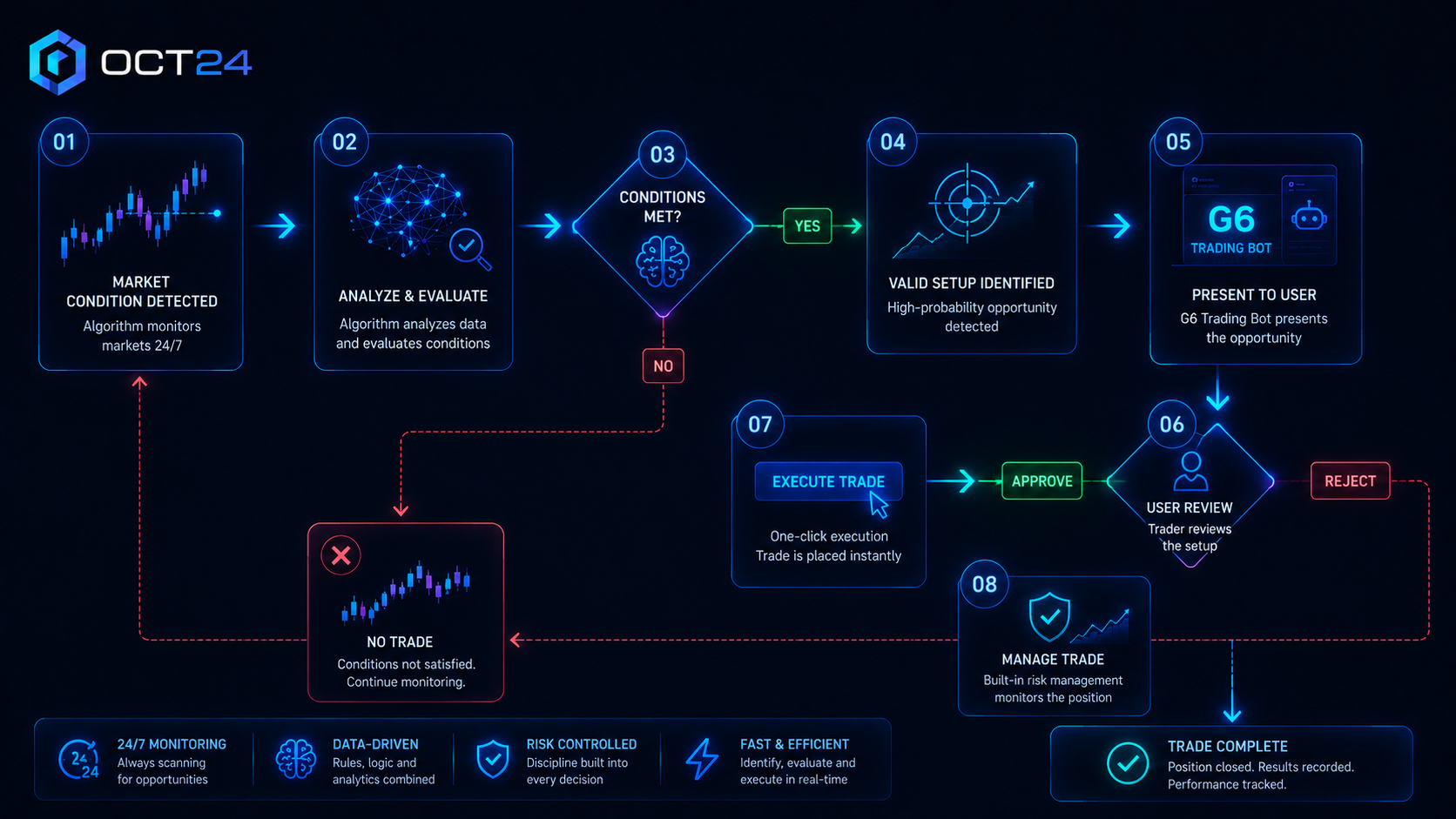
To see how these concepts come together, imagine the following scenario.
A trading algorithm is monitoring Bitcoin throughout the trading day.
- Bitcoin breaks above a predefined resistance level.
- Trading volume increases, confirming stronger market participation.
- The algorithm checks its predefined trading rules.
- Market conditions satisfy all required criteria.
- The algorithm identifies a valid trading opportunity.
- The G6 Trading Bot presents the opportunity to the user.
- The trader reviews the setup and executes the trade with a single click.
- Built-in risk controls monitor the open position until the trade closes.
Notice that the trader does not need to watch charts for hours or manually search for setups.
The algorithm performs the continuous market analysis, while the trader remains in control of the final execution.
This approach combines the speed of automation with the reassurance of human oversight.
How OCT24 Uses Algorithmic Trading
OCT24 simplifies algorithmic trading by combining rule-based trading logic with AI-powered market analysis.
The G6 Trading Bot continuously monitors market conditions, evaluates trading opportunities, and applies predefined algorithmic rules before presenting potential trades to the user.
Rather than requiring traders to build algorithms or write code, the platform automates much of the technical analysis behind the scenes.
Key capabilities include:
- Algorithmic trading logic
- AI-powered market analysis
- Continuous market monitoring
- Built-in risk management
- One-click trade execution
When the system identifies a trading opportunity that meets its criteria, users can review the setup and execute the trade with a single click.
This approach allows traders to benefit from sophisticated algorithmic technology without needing programming knowledge or advanced technical expertise.
For readers who want to learn more about the company's technology and approach to AI-powered trading, visit About OCT24.
Frequently Asked Questions
What is algorithmic trading?
Algorithmic trading uses predefined rules to analyze market data and identify or execute trading opportunities automatically.
Is algorithmic trading the same as AI trading?
No. Algorithmic trading follows predefined rules, while AI trading adds intelligent analysis that can evaluate changing market conditions before identifying opportunities.
Is algorithmic trading the same as automated trading?
Not exactly. Algorithmic trading refers to the decision-making logic, while automated trading refers to executing those decisions without manual intervention.
Can beginners use algorithmic trading?
Yes. Many modern trading platforms make algorithmic trading accessible without requiring programming knowledge.
Do I need programming skills?
No. Platforms like OCT24 allow users to benefit from algorithmic trading without writing code or building algorithms themselves.
Is algorithmic trading legal?
Yes. Algorithmic trading is widely used across financial markets, although traders should always comply with the regulations that apply in their jurisdiction.
Can algorithmic trading lose money?
Yes. Like all trading methods, algorithmic trading involves risk. Poor strategy design, changing market conditions, and unexpected events can all lead to losses.
What markets use algorithmic trading?
Algorithmic trading is commonly used in cryptocurrency, stocks, forex, commodities, and other financial markets.
How do I get started?
Start by understanding how trading algorithms work, learning the fundamentals of AI Trading, developing strong risk management habits, and choosing a platform that matches your experience and trading goals.
Final Summary
Algorithmic Trading provides a structured, disciplined approach to active trading by following predefined rules instead of emotional decision-making.
Throughout this guide, you've learned how trading algorithms collect market data, evaluate trading conditions, generate signals, and support consistent trade execution. You've also seen how algorithmic trading differs from AI trading and automated trading, and why each plays a different role in modern financial markets.
While algorithms offer advantages such as speed, consistency, and efficient market monitoring, they are not a substitute for sound trading principles. Success still depends on quality strategies, disciplined Trading Bot Risk Management, and ongoing performance review.
Modern platforms like OCT24 combine algorithmic trading, AI-powered market analysis, automation, and one-click execution to simplify active trading without requiring users to build algorithms or write code themselves.
If you're ready to explore intelligent, AI-assisted active trading, Start Trading with OCT24 and discover how the G6 Trading Bot can help simplify your trading workflow.