
What Is Automated Trading?
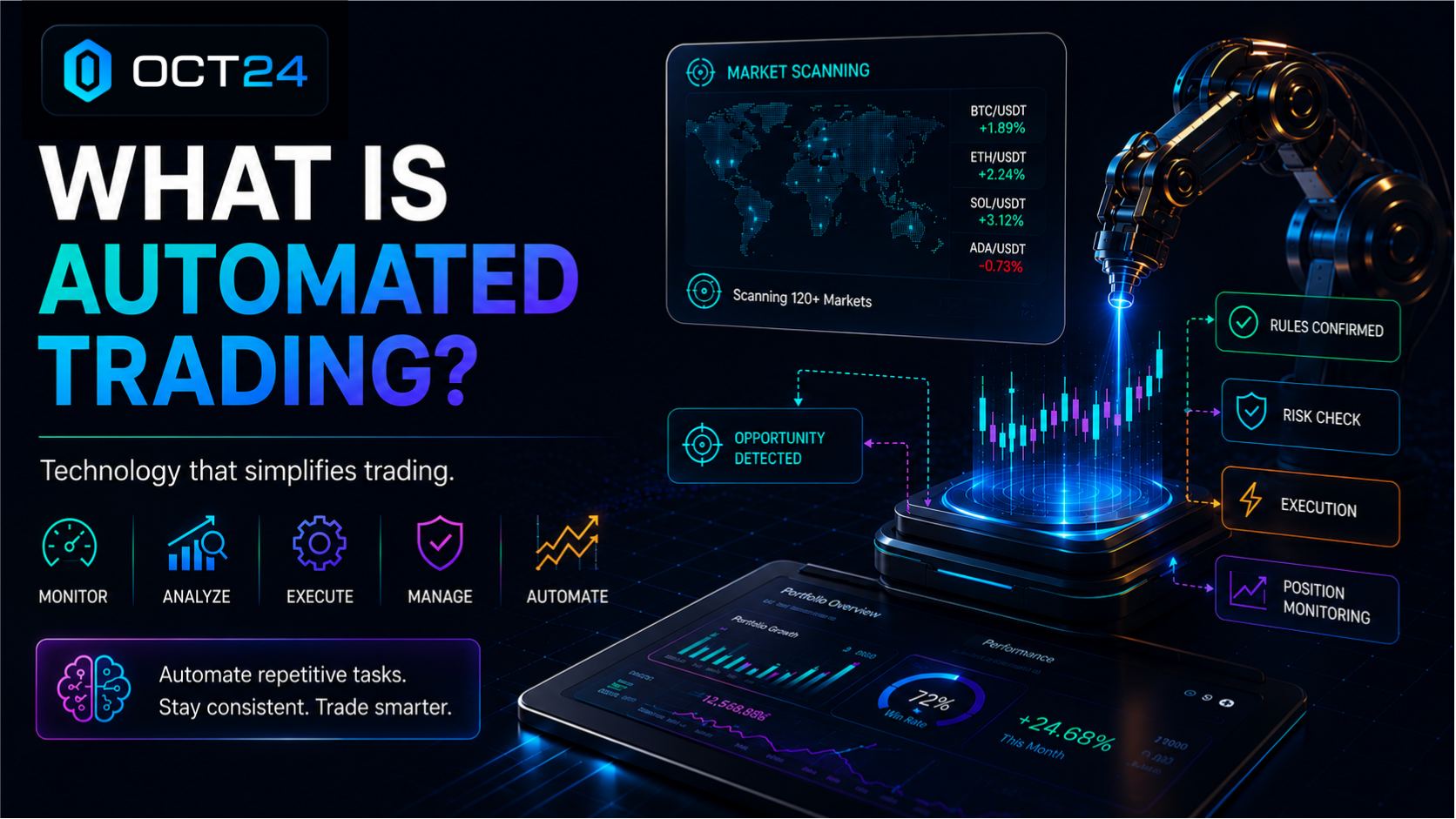
Automated Trading uses technology to carry out trading tasks with minimal manual effort. Instead of constantly watching charts, calculating trade setups, and manually placing orders, an automated trading system monitors the market, identifies opportunities based on predefined rules, and helps execute trades more efficiently.
If you've already explored AI Trading, How AI Trading Bots Work Behind the Scenes, AI Trading Strategies, and Algorithmic Trading, this article explains the next piece of the puzzle: automation. While algorithms determine what should happen, automation focuses on making it happen consistently and efficiently.
For active traders, automation isn't about removing human involvement entirely. Instead, it's about eliminating repetitive tasks, improving consistency, and allowing traders to focus on making informed decisions rather than spending hours monitoring the markets.
What Is Automated Trading?
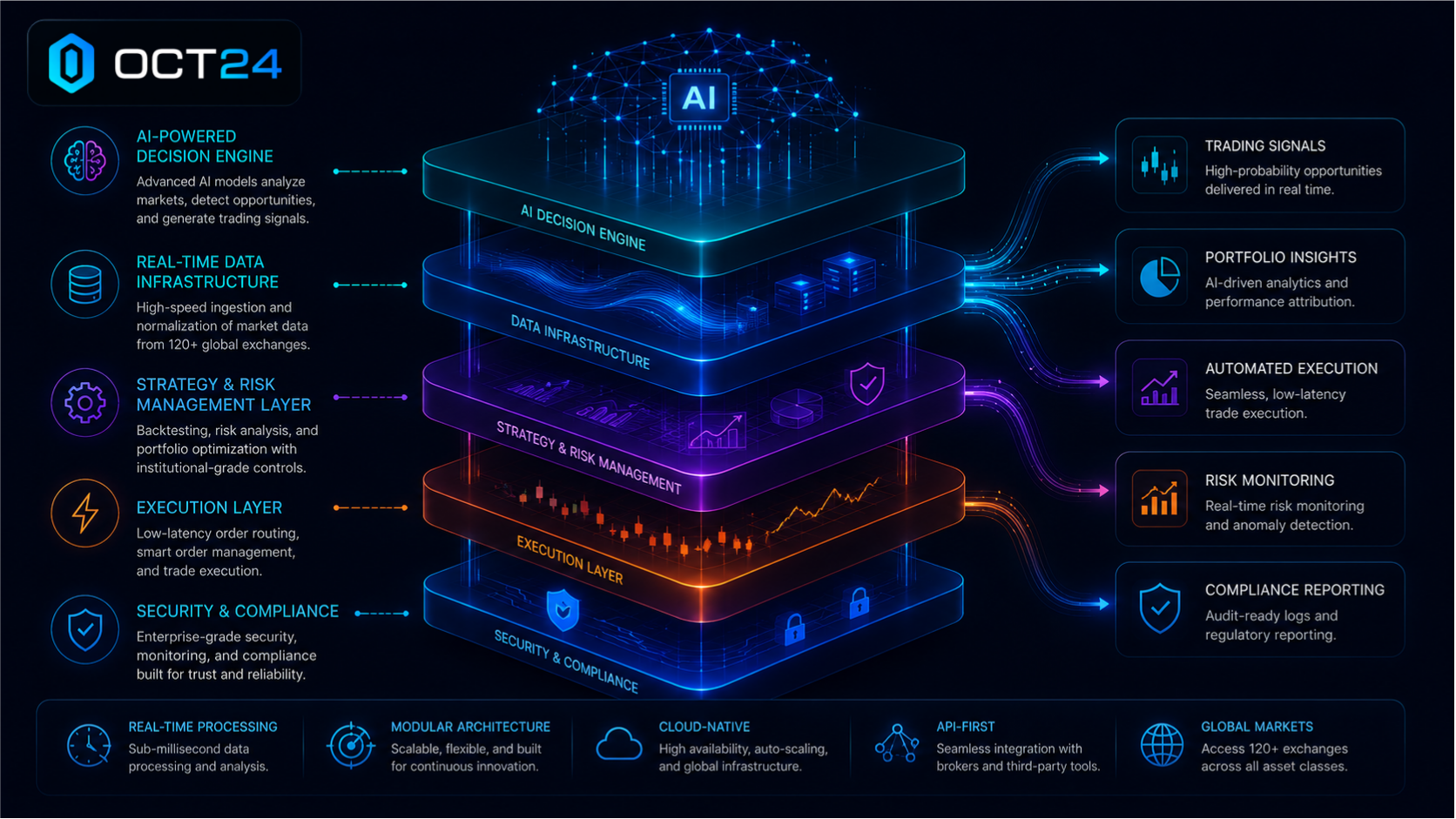
Automated trading is the use of software to perform trading tasks automatically based on predefined rules or market conditions.
Rather than manually analyzing charts, entering orders, and managing every position yourself, an automated trading system continuously performs many of these tasks for you.
Think of it like using a modern thermostat in your home.
Instead of adjusting the temperature every few minutes, you set your preferred conditions once. The thermostat continuously monitors the environment and automatically makes adjustments whenever they're needed.
Automated trading works in much the same way.
Instead of reacting emotionally to every market movement, the system continuously monitors market conditions and follows a structured process to identify and manage trading opportunities.
Common tasks that can be automated include:
- Monitoring multiple markets simultaneously
- Identifying trading opportunities
- Verifying trading conditions
- Preparing trade orders
- Applying predefined risk controls
- Monitoring open positions
This allows traders to spend less time performing repetitive tasks and more time reviewing opportunities and managing their overall trading strategy.
Did You Know?
Automated trading isn't limited to institutional investors. Modern trading platforms have made automation accessible to everyday traders without requiring programming knowledge.
How Automated Trading Works
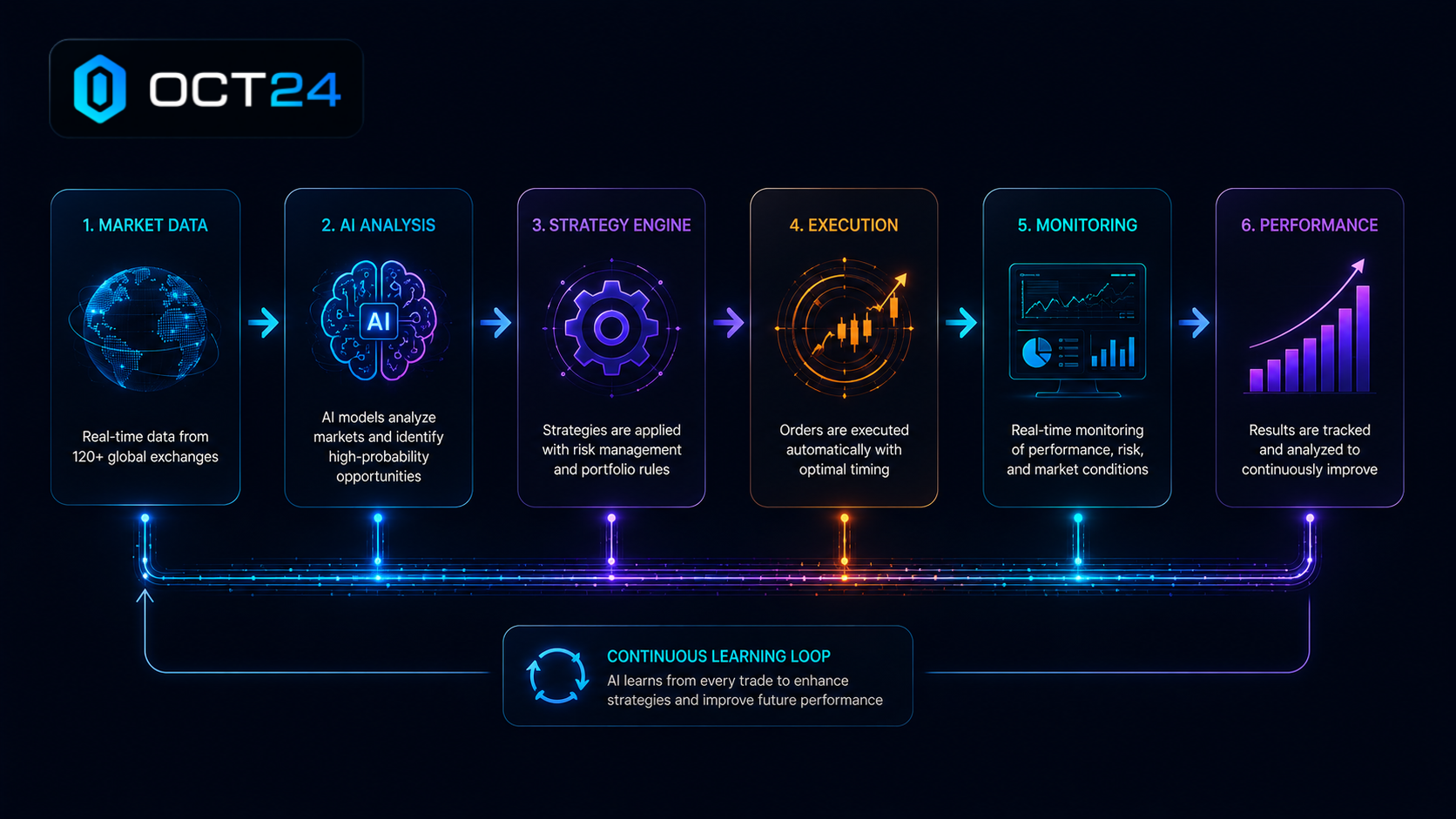
Although automated trading systems can appear sophisticated, they generally follow a logical workflow. Each stage helps reduce manual effort while maintaining a consistent trading process.
Let's walk through a typical automated trading workflow.
Step 1: Continuous Market Monitoring
The process begins by monitoring live market data.
Instead of watching one or two charts manually, an automated trading system continuously scans multiple markets for changes in price, volume, momentum, and other trading conditions.
This monitoring happens around the clock, allowing traders to identify opportunities that might otherwise be missed.
Step 2: Opportunity Detection
As new market data becomes available, the system evaluates whether current conditions match predefined trading criteria.
For example, it may look for:
- A breakout above resistance
- Increasing trading volume
- Strong market momentum
- Favorable volatility
- Multiple technical confirmations
Rather than requiring the trader to search for these setups manually, the system performs the analysis automatically.
Step 3: Rule Verification
Finding a potential opportunity isn't enough.
Before moving forward, the automated trading system verifies that every required condition has been satisfied.
This may include checking:
- Entry criteria
- Risk limits
- Position size
- Existing portfolio exposure
- Market conditions
Only when every requirement has been met does the workflow continue.
This helps improve consistency by ensuring the same trading standards are applied every time.
Step 4: Order Preparation
Once a valid opportunity has been identified, the system prepares the trade.
Depending on the platform, this may include:
- Selecting the trading pair
- Calculating position size
- Preparing stop-loss levels
- Defining profit targets
- Configuring the order type
By automating these repetitive tasks, traders can avoid many of the manual errors that occur during fast-moving markets.
Step 5: Trade Execution
After the trade has been prepared, it is ready for execution.
Some trading platforms execute trades automatically once all conditions have been met.
Others present the opportunity to the user for approval before execution.
This approach allows traders to benefit from automation while still maintaining control over their trading decisions.
Step 6: Position Monitoring
Automation doesn't stop after a trade has been opened.
The system continues monitoring the position by tracking:
- Market movement
- Stop-loss levels
- Profit targets
- Risk exposure
- Overall portfolio impact
Continuous monitoring helps traders respond more efficiently as market conditions change.
Practical Takeaway
The greatest strength of automated trading isn't simply placing trades faster—it's consistently following the same disciplined process every time.
Automated Trading vs Algorithmic Trading
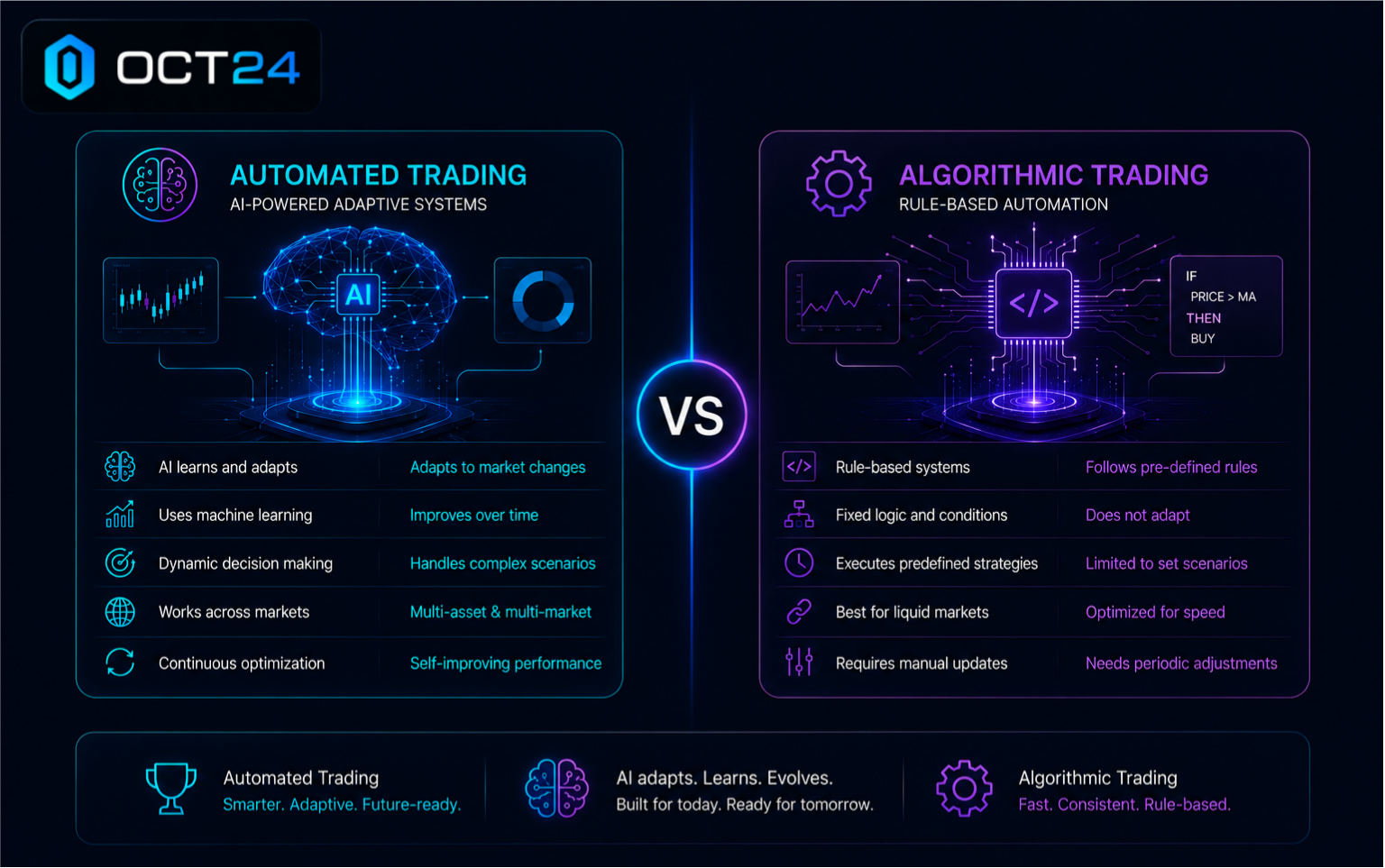
The terms "automated trading" and "algorithmic trading" are often used together, but they describe different aspects of the trading process.
The easiest way to understand the difference is to separate decision-making from execution.
Algorithmic Trading
Algorithmic trading focuses on the trading logic.
It defines what should happen.
For example:
"If Bitcoin breaks above resistance while trading volume increases by 20%, generate a buy opportunity."
These predefined rules form the algorithm.
Automated Trading
Automated trading focuses on carrying out those decisions.
It determines how the trading process is performed.
Automation may:
- Monitor markets continuously
- Verify trading conditions
- Prepare trade orders
- Apply risk controls
- Execute trades
- Monitor open positions
In other words, automation performs the repetitive work that would otherwise require constant manual attention.
How Modern Platforms Combine Both
Today's trading platforms often combine algorithmic trading with automation.
The algorithm identifies a valid trading opportunity.
The automation manages the workflow required to prepare and execute that opportunity.
Many modern platforms also add AI-powered market analysis to improve how opportunities are identified before the automated workflow begins.
Each technology serves a different purpose:
- Algorithmic Trading provides the trading rules.
- Automated Trading performs the trading tasks.
- AI Trading adds intelligent market analysis.
Together, these technologies create a more efficient trading experience while allowing traders to remain in control.
If you're still deciding whether technology-assisted trading is right for you, our guide to AI Trading vs Manual Trading explores how automation changes the trading experience compared to placing every trade manually.
Components of an Automated Trading System
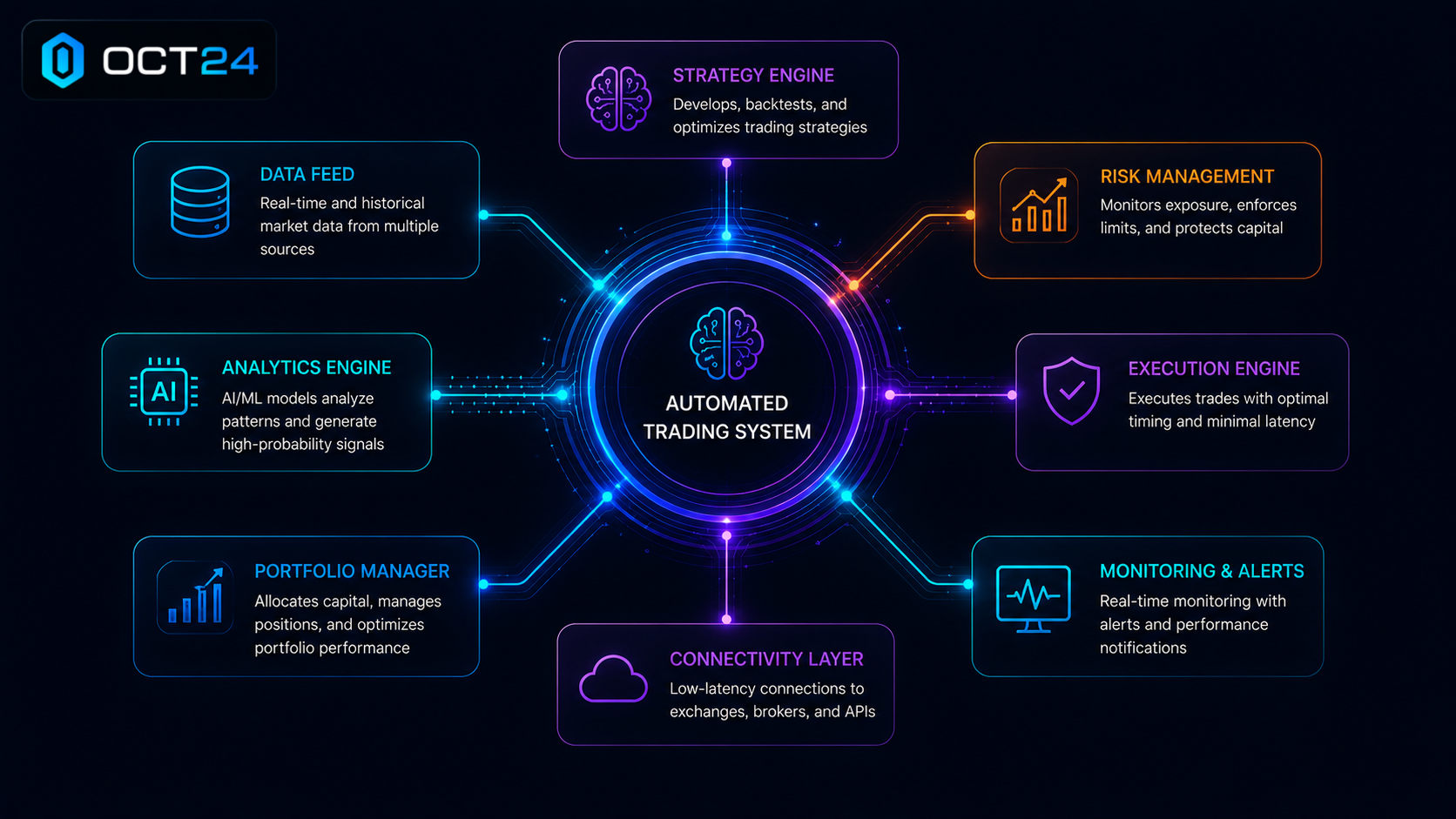
Although every platform is different, most automated trading systems include five core components working together.
Market Data
Everything begins with live market information.
The system continuously receives updates such as:
- Price movements
- Trading volume
- Market volatility
- Technical indicators
- Order book activity
Without reliable market data, no automated system can make informed decisions.
Trading Logic
The trading logic defines the conditions that must be satisfied before a trading opportunity is identified.
These rules determine:
- When to enter a trade
- When to avoid a trade
- Which markets to monitor
- Which strategies to follow
This component provides the structure behind the automated workflow.
Risk Controls
Effective automation always includes risk management.
Common safeguards include:
- Maximum position sizes
- Stop-loss limits
- Portfolio exposure limits
- Daily trading limits
- Risk-to-reward requirements
These controls help ensure that automation follows disciplined trading practices rather than simply executing trades as quickly as possible.
Execution Engine
The execution engine carries out the trading workflow.
Its responsibilities include:
- Preparing orders
- Confirming trading conditions
- Submitting trades
- Recording execution details
Fast and reliable execution becomes especially important during periods of increased market volatility.
Performance Monitoring
After trades have been completed, the system continues tracking performance.
Important metrics may include:
- Win rate
- Average return
- Average loss
- Strategy consistency
- Overall portfolio performance
Reviewing these metrics helps traders understand whether their trading approach continues to perform as expected over time.
Benefits of Automated Trading
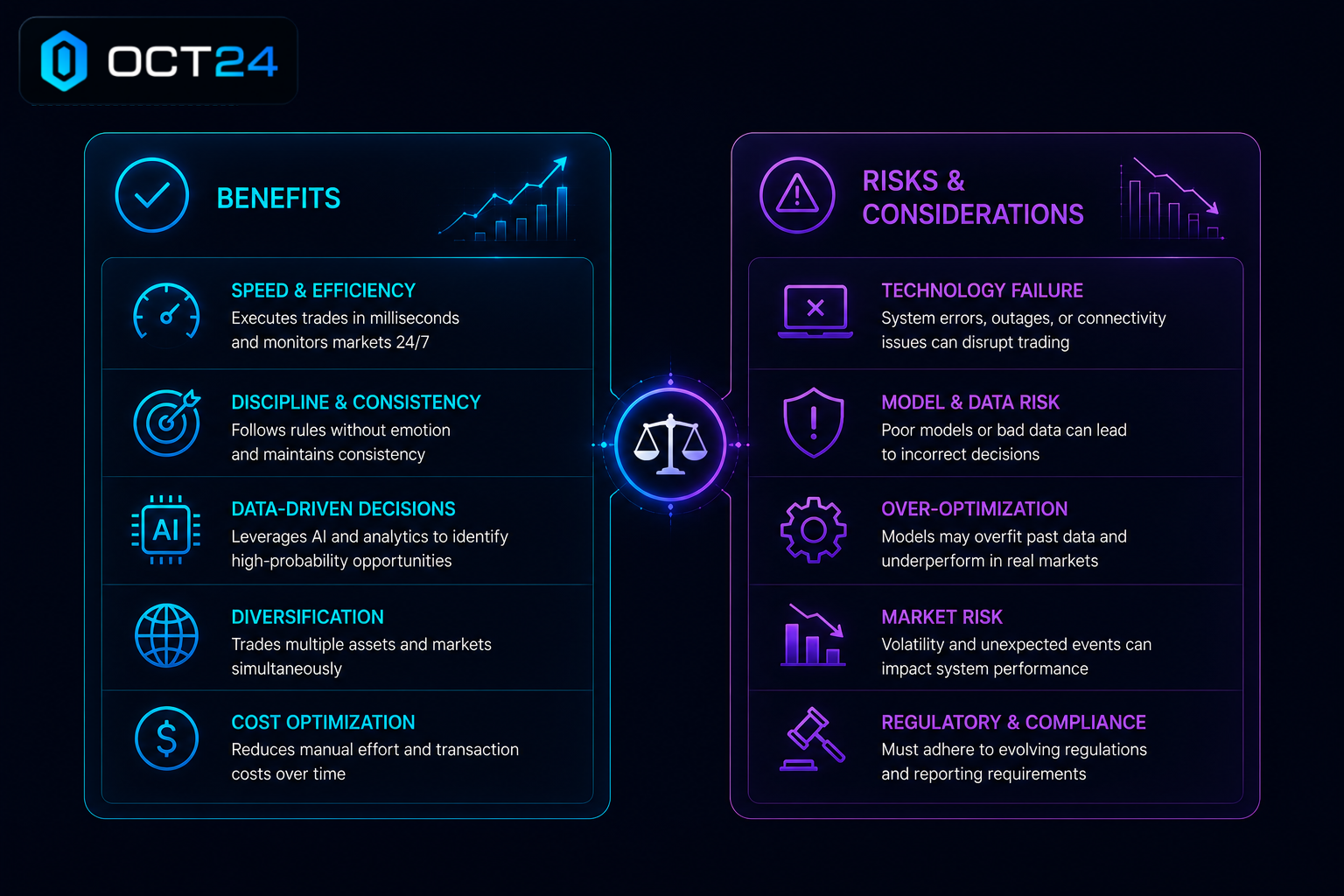
Automated trading has become increasingly popular because it helps traders execute their strategies more efficiently and consistently. While no trading system can eliminate risk, automation removes many of the repetitive tasks that can slow traders down or lead to costly mistakes.
Faster Execution
Financial markets move quickly, especially in cryptocurrency trading.
By the time a manual trader analyzes a chart, places an order, and confirms the trade, market conditions may have already changed.
An automated trading system performs much of this workflow within seconds, allowing traders to respond to opportunities more efficiently.
For active traders, faster execution can help reduce delays between identifying a setup and acting on it.
Greater Consistency
Consistency is one of the biggest challenges for new traders.
Many traders follow their plan during calm markets but abandon it during periods of volatility.
Automation helps solve this problem by applying the same predefined workflow every time.
Whether markets are rising, falling, or moving sideways, the system follows the same process without becoming impatient or emotional.
Reduced Emotional Trading
Fear and greed often cause traders to make poor decisions.
Examples include:
- Chasing rapidly rising prices
- Closing profitable trades too early
- Refusing to accept small losses
- Trading out of frustration after a losing position
Automation removes many of these emotional reactions by following predefined rules instead of impulses.
Combined with strong Trading Bot Risk Management, this structured approach helps traders remain disciplined during changing market conditions.
24/7 Market Monitoring
Unlike traditional financial markets, cryptocurrency markets never close.
Monitoring price movements twenty-four hours a day simply isn't realistic for most people.
Automated trading systems continuously monitor markets, allowing traders to identify opportunities even when they are away from their computers.
This continuous monitoring is one of the biggest advantages of modern trading platforms.
Multi-Market Scanning
Most traders can only watch a handful of charts at the same time.
Automated systems can scan dozens—or even hundreds—of markets simultaneously.
Instead of manually switching between assets, the platform continuously searches for opportunities that match predefined trading conditions.
This makes it much easier to identify short-term trading opportunities across multiple cryptocurrencies.
Improved Trading Discipline
Successful trading depends on following a consistent process.
Automation encourages discipline by reducing unnecessary manual decisions throughout the trading workflow.
Instead of wondering what to do next, traders follow a structured process that has already been defined.
Learning concepts such as Position Sizing Controls and Portfolio Diversification Tools further strengthens this disciplined approach by helping traders manage both individual trades and overall portfolio risk.
Practical Takeaway
Automation doesn't replace good trading habits—it helps traders apply them more consistently.
Risks and Limitations
Although automated trading offers many advantages, it should not be viewed as a guarantee of profitable trading.
Like any technology, automation works best when combined with sound trading principles and ongoing oversight.
Poor Trading Strategies
Automation can execute a strategy perfectly, but it cannot turn a poor strategy into a profitable one.
If the underlying trading rules have no statistical edge, automating them simply allows bad decisions to happen more efficiently.
Successful automated trading always begins with a well-designed trading approach.
Technical Failures
Automated trading systems rely on technology.
Potential issues include:
- Internet outages
- Software failures
- Exchange downtime
- Delayed market data
- Hardware problems
Although reputable trading platforms include safeguards, traders should still understand that technical risks exist.
Connectivity Issues
Even the best trading system depends on stable connections between exchanges, market data providers, and trading infrastructure.
Temporary interruptions may delay trade execution or prevent orders from being processed as expected.
Reliable platforms work to minimize these risks, but they cannot eliminate them completely.
Changing Market Conditions
Financial markets constantly evolve.
A trading approach that performs well during strong trends may struggle during periods of low volatility or rapidly changing market sentiment.
For this reason, traders should regularly review strategy performance rather than assuming past success will continue indefinitely.
Overreliance on Automation
One of the most common beginner mistakes is assuming automation removes the need for oversight.
It doesn't.
Automation simplifies execution, but traders should still review:
- Strategy performance
- Market conditions
- Risk exposure
- Portfolio allocation
- Overall trading objectives
Automation is most effective when it supports informed decision-making rather than replacing it entirely.
Real-World Example: An Automated Trade
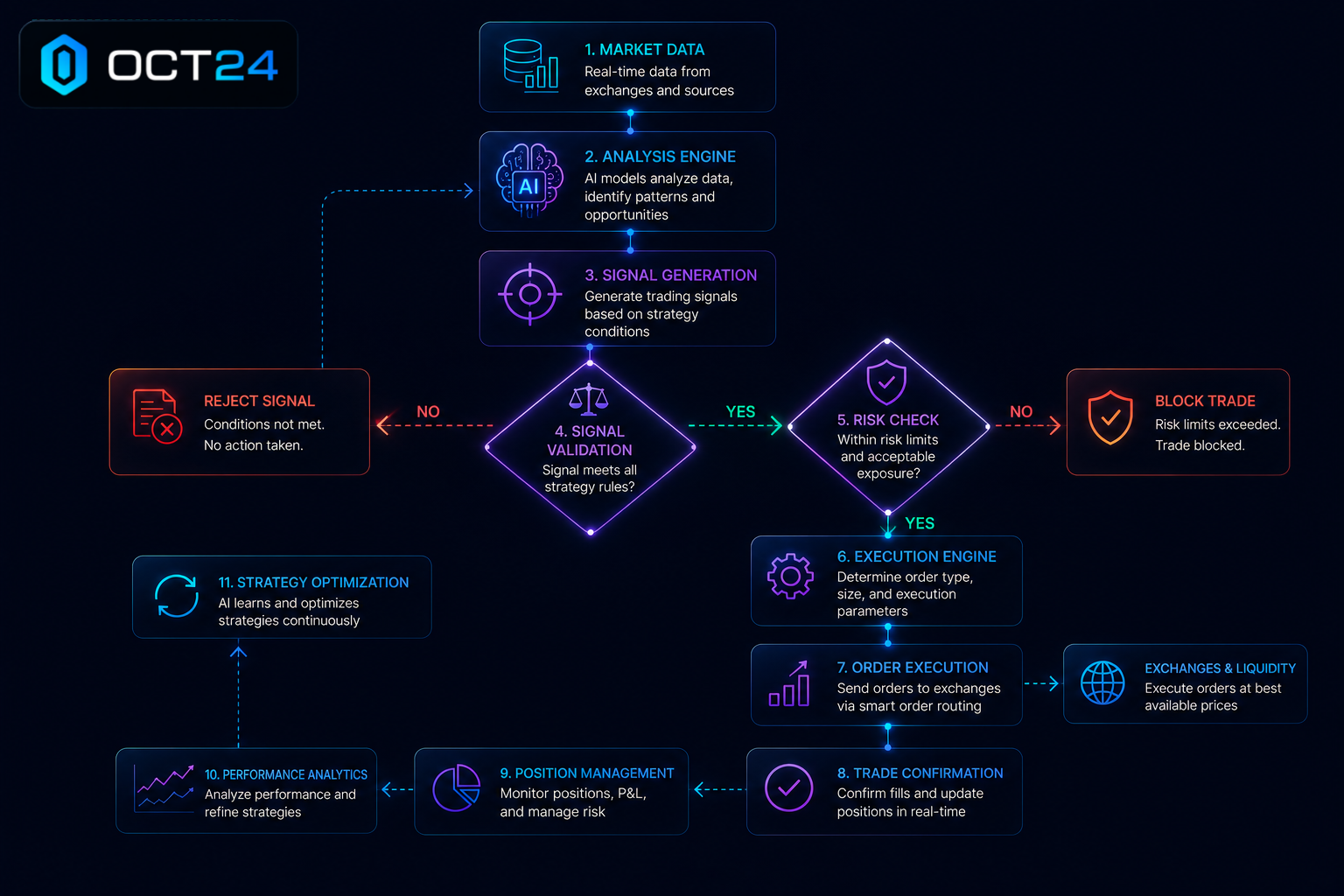
Let's look at how an automated trading workflow might operate in practice.
Imagine Bitcoin begins gaining momentum after breaking above a key resistance level.
- The platform continuously scans multiple cryptocurrency markets.
- Market conditions begin matching predefined trading criteria.
- The trading system verifies that all required conditions have been satisfied.
- A potential trading opportunity is identified.
- Built-in risk controls check position size and overall portfolio exposure.
- The opportunity is presented to the user.
- The trader reviews the setup and executes the trade with a single click.
- The platform continues monitoring the position, tracking stop-loss levels, profit targets, and overall risk until the trade is complete.
Notice that the trader doesn't need to spend hours watching charts or manually searching for setups.
Automation handles much of the repetitive workflow, while the trader remains responsible for reviewing and approving the final trade.
This combination of efficiency and human oversight is what makes modern automated trading platforms so effective.
How OCT24 Uses Automated Trading
OCT24 is designed to simplify active trading by combining automation with intelligent market analysis.
The G6 Trading Bot continuously monitors market conditions, evaluates trading opportunities using AI-powered analysis and algorithmic decision logic, and automates much of the trading workflow before presenting opportunities to the user.
Rather than requiring traders to watch charts throughout the day, write trading algorithms, or configure complex automation, the platform handles the technical work behind the scenes.
Key capabilities include:
- Continuous market monitoring
- AI-powered market analysis
- Algorithmic decision logic
- Automated trade preparation
- Built-in risk management
- One-click trade execution
When the system identifies a trading opportunity that meets its predefined criteria, users simply review the opportunity and execute the trade with a single click.
This approach allows traders to benefit from sophisticated trading technology while remaining in control of their trading decisions.
To learn more about the company's technology and approach to AI-assisted trading, visit About OCT24.
Frequently Asked Questions
What is automated trading?
Automated trading uses software to monitor markets, identify trading opportunities, and automate trading tasks according to predefined rules or workflows.
Is automated trading the same as algorithmic trading?
No. Algorithmic trading defines the decision-making rules, while automated trading performs the workflow and execution based on those rules.
Is automated trading the same as AI trading?
Not exactly. AI trading uses artificial intelligence to analyze market conditions, while automated trading focuses on carrying out trading tasks efficiently. Many modern platforms combine both technologies.
Can beginners use automated trading?
Yes. Many trading platforms are designed to make automated trading accessible without requiring programming knowledge or technical expertise.
Does automated trading guarantee profits?
No. Automated trading can improve consistency and efficiency, but all trading involves risk, and no system can guarantee profitable results.
Is automated trading legal?
Yes. Automated trading is widely used across financial markets, although traders should always ensure they comply with the regulations in their country.
Do I still need to monitor automated trades?
Yes. Even with automation, traders should regularly review performance, monitor risk, and ensure their overall trading strategy remains appropriate for current market conditions.
How do I get started with automated trading?
Start by learning the fundamentals of How to Read Crypto Charts, understanding the Benefits of AI Trading, choosing a reputable trading platform, and developing strong risk management habits before trading with real capital.
Final Summary
Automated Trading simplifies active trading by reducing repetitive manual work while helping traders follow a structured and disciplined process.
Throughout this guide, you've learned how automated trading systems monitor markets, identify opportunities, prepare trades, execute workflows, and continue monitoring open positions. You've also seen how automation differs from algorithmic trading and why both technologies often work together within modern trading platforms.
While automation offers significant advantages—including faster execution, improved consistency, continuous market monitoring, and reduced emotional decision-making—it remains a tool rather than a guarantee of success. Effective trading still depends on sound strategies, disciplined Trading Bot Risk Management, and regular performance reviews.
Platforms like OCT24 combine AI-powered market analysis, algorithmic decision logic, and automated trading workflows to simplify active trading without requiring users to build algorithms or spend hours watching the markets.
If you're ready to experience intelligent, streamlined trading, Start Trading with OCT24 and discover how the G6 Trading Bot can help simplify your trading workflow.