
Crypto Trading Liquidity Explained for Beginners
Crypto trading liquidity means how easily a cryptocurrency can be bought or sold without causing a big change in price. A liquid market usually has many buyers, many sellers, strong trading volume, tight spreads, and enough market depth to handle orders smoothly. An illiquid market can move sharply, create slippage, and make entries or exits less predictable.
For beginners, liquidity is one of the most important crypto trading concepts to understand. It affects how quickly trades can be filled, how much the final price may differ from the expected price, and how risky a setup may feel in fast market conditions. OCT24 helps simplify this process by scanning crypto market conditions, identifying potential opportunities, and presenting AI-supported trading signals for review.
Liquidity does not remove trading risk. A liquid market can still fall, reverse, or become volatile. OCT24 can support analysis and signal review, but traders remain responsible for exposure, capital allocation, risk settings, and execution decisions.
What Is Crypto Trading Liquidity?
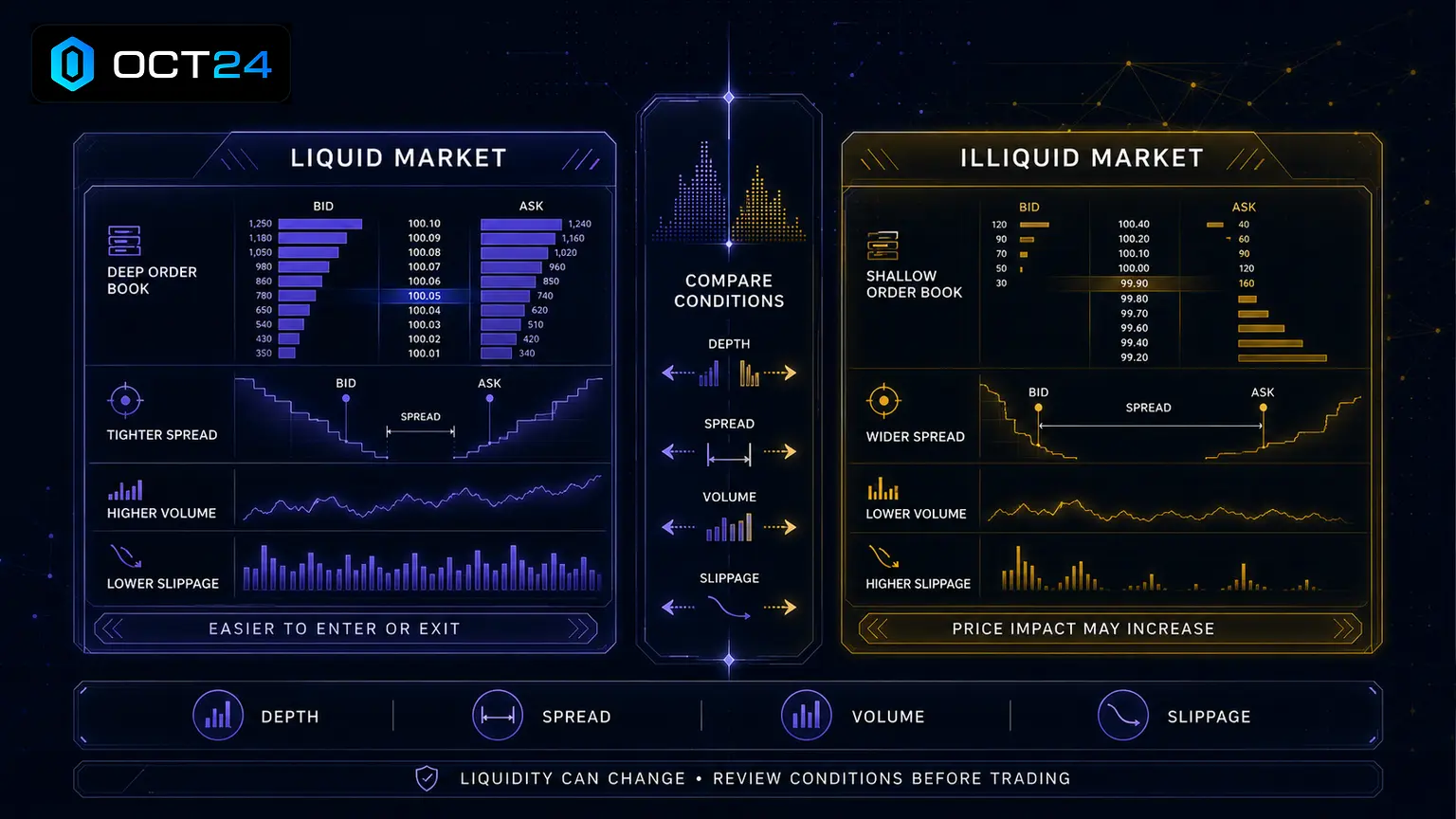
Crypto trading liquidity is the amount of active buying and selling available in a market. If many traders are willing to buy and sell at prices close to the current price, the market is usually more liquid. If there are few buyers or sellers, the market may be less liquid.
A simple way to think about liquidity is ease of movement. In a liquid market, it is usually easier to enter or exit a position close to the expected price. In an illiquid market, the price may jump around more because there are not enough orders available at each level.
This matters because crypto prices can move quickly. A beginner may see a coin rising and assume it is easy to trade. But if the market has low liquidity, the real trade experience may be different from the chart. The order may fill at a worse price, or the price may move sharply after entry.
Liquidity is part of basic AI Trading education because AI-supported systems still need market conditions that can support execution. A strong-looking setup may be less useful if the market is too thin, too volatile, or too unstable.
Why Liquidity Matters for Beginner Crypto Traders
Liquidity matters because it affects the quality of a trade before the trade even begins. When liquidity is stronger, traders usually have a clearer market, tighter pricing, and more reliable execution. When liquidity is weaker, small orders can have a bigger effect on price.
For beginners, this can be confusing. A chart may show a big move, but the actual trading conditions behind that move may be poor. The market may have a wide spread, thin order book, low volume, or sudden price gaps. These issues can make a trade more difficult to manage.
This is why liquidity connects with Risk Management Strategies. Risk is not only about whether price goes up or down. It is also about whether the market can handle the trade at a fair price and whether the trader understands the possible downside.
OCT24’s AI-supported workflow can help beginners by reducing the amount of manual scanning needed. The platform presents potential opportunities in a structured way, but the trader still needs to review the signal and decide whether the opportunity fits their comfort level.
The Difference Between Liquid and Illiquid Crypto Markets
A liquid crypto market usually has high volume, many active participants, and tighter pricing between buyers and sellers. Bitcoin and Ethereum are often more liquid than small or newly listed coins because they have deeper markets and more trading activity.
An illiquid crypto market usually has fewer participants and less market depth. Price can move sharply because there are not enough orders available to absorb buying or selling. This can make the market look exciting, but it can also make it harder to enter or exit cleanly.
Beginner traders often notice price movement first, but liquidity helps explain whether that movement is stable. A coin may rise quickly because demand is strong, or it may rise quickly because the order book is thin. Those are very different situations.
This is one reason traders should learn How to Read Crypto Charts. Charts show price, but liquidity helps explain what may be happening underneath the price movement.
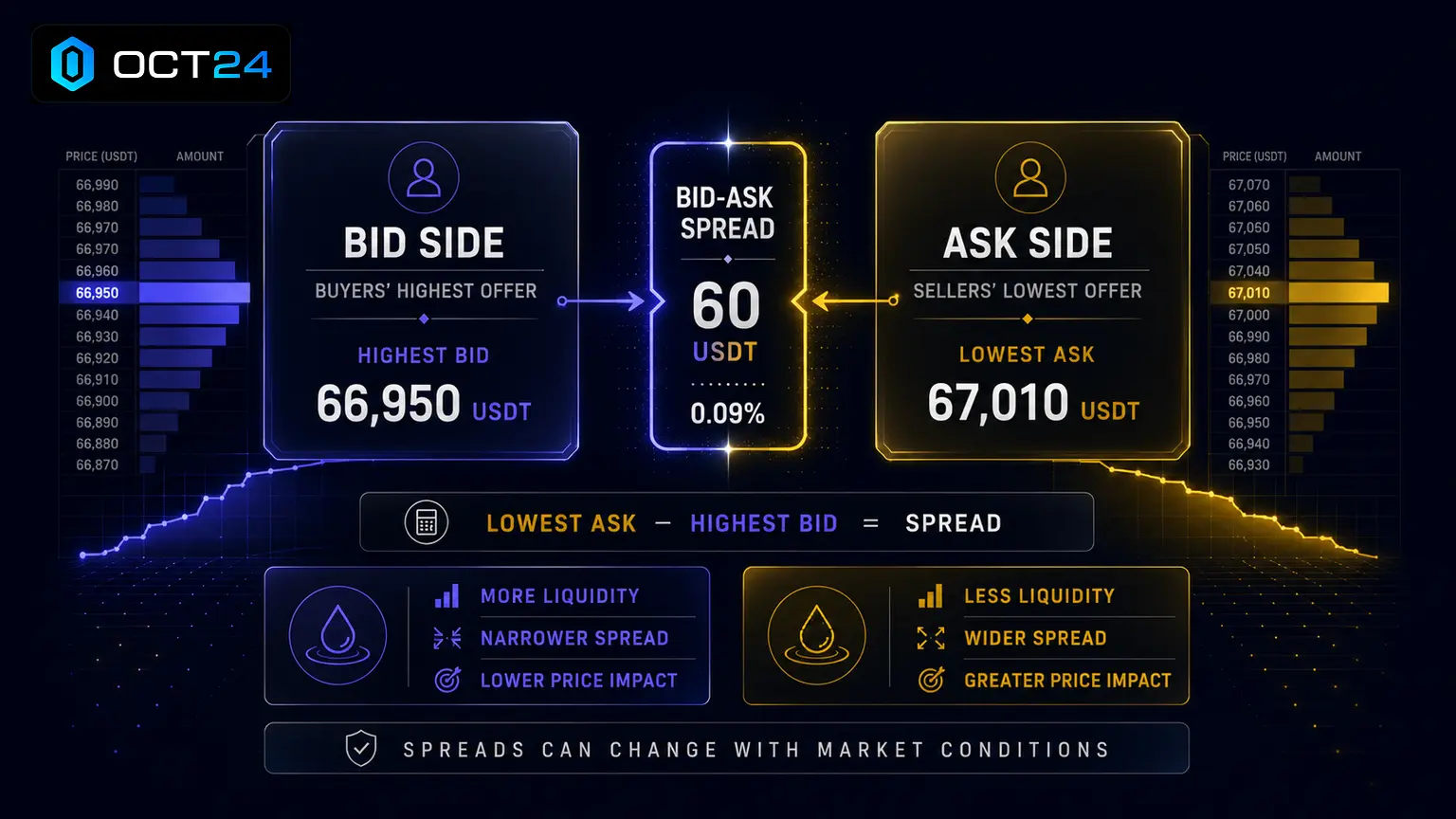
Bid-Ask Spread Explained Simply
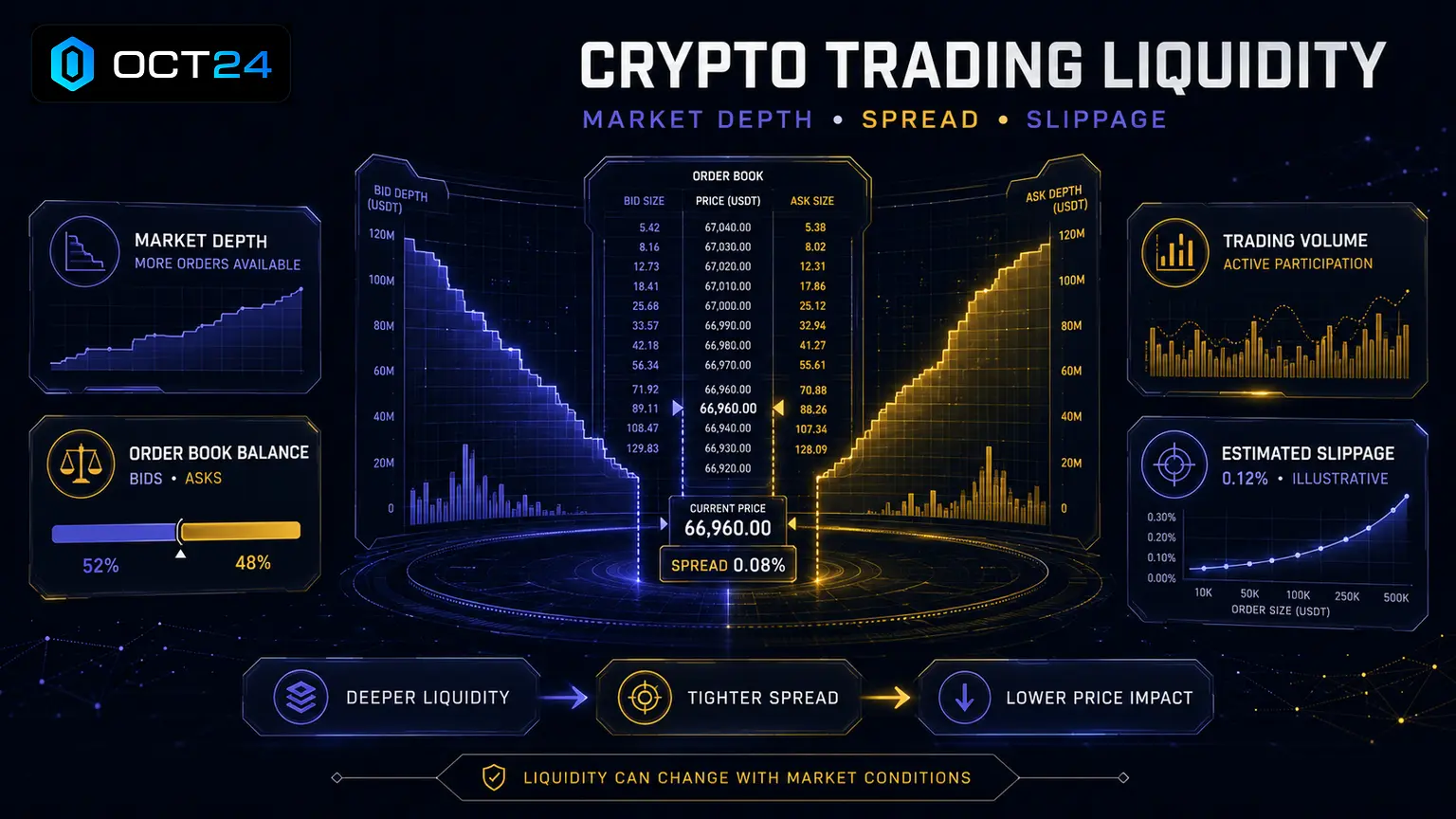
The bid-ask spread is the gap between the highest price buyers are willing to pay and the lowest price sellers are willing to accept. In a liquid market, this gap is usually smaller. In an illiquid market, the gap may be wider.
A tight spread is usually better for traders because it means the market price is more efficient. A wide spread can make trading more expensive because the trader may enter at a less favorable price. For beginners, this can feel invisible until the trade is already placed.
For example, if a crypto asset shows a price of $100 but sellers are only available at $101 and buyers are only available at $99, the spread is wide. The trader may not get the price they expected. That difference can matter, especially with short-term trades.
AI-supported platforms can help by scanning conditions and presenting clearer trading opportunities, but they do not erase spreads or market structure. Traders should still understand that spread is part of trading cost and execution quality.
Market Depth and the Order Book
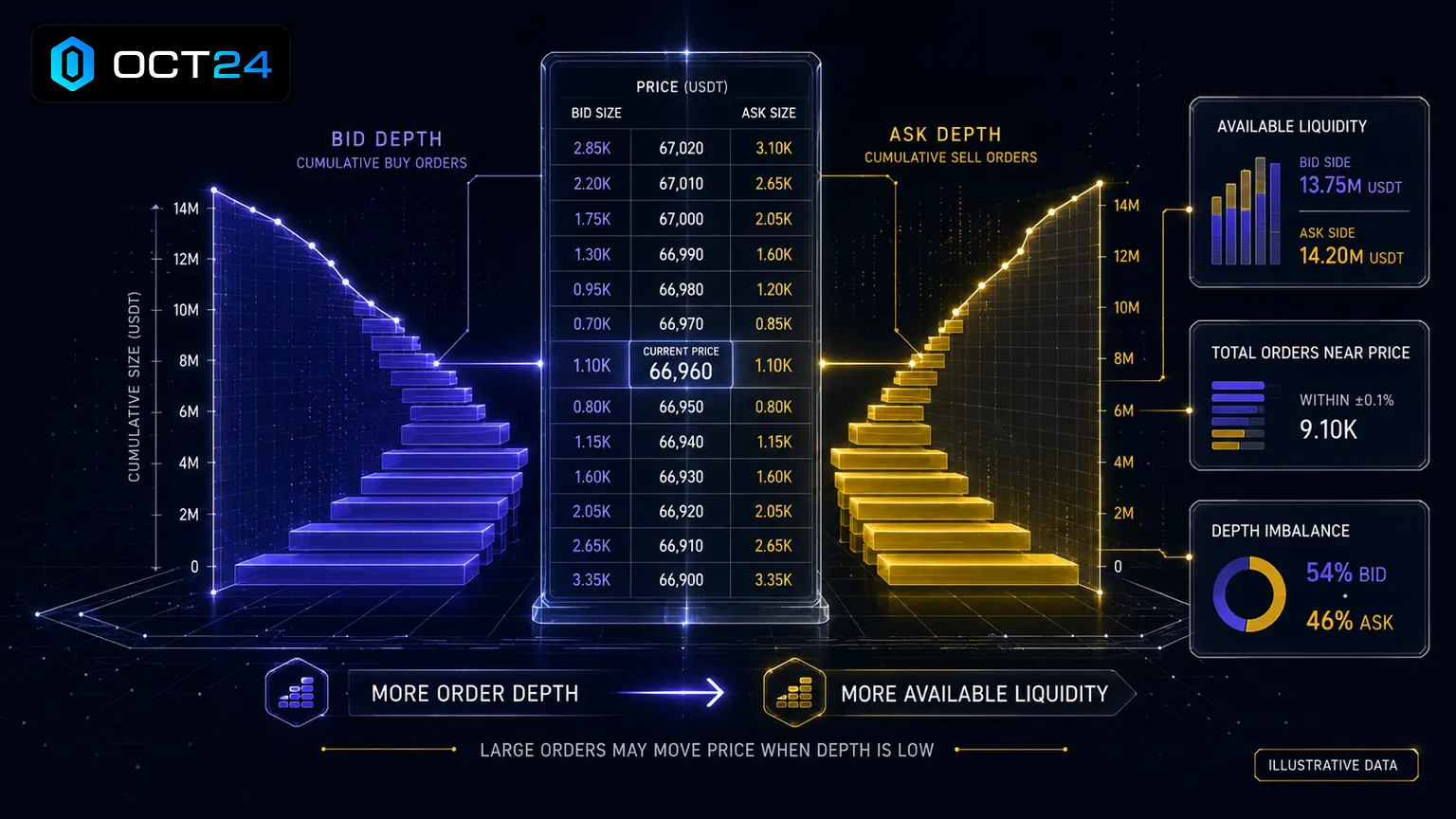
Market depth shows how many buy and sell orders are available at different prices. A deeper market has more orders sitting near the current price. A thinner market has fewer orders, which can make price easier to move.
The order book is where these buy and sell orders are listed. Beginners do not need to become order book experts, but they should understand the basic idea: if there are not enough orders available, price may move more sharply when someone buys or sells.
Market depth is important because it affects slippage. If a trader wants to buy but there are not enough sellers near the current price, the order may fill at higher prices. If a trader wants to sell but buyers are thin, the order may fill lower than expected.
This is where Algorithmic Trading and Automated Trading can be useful. Automated systems can process market information quickly, but liquidity still matters because every trade must interact with real market conditions.
What Is Slippage in Crypto Trading?
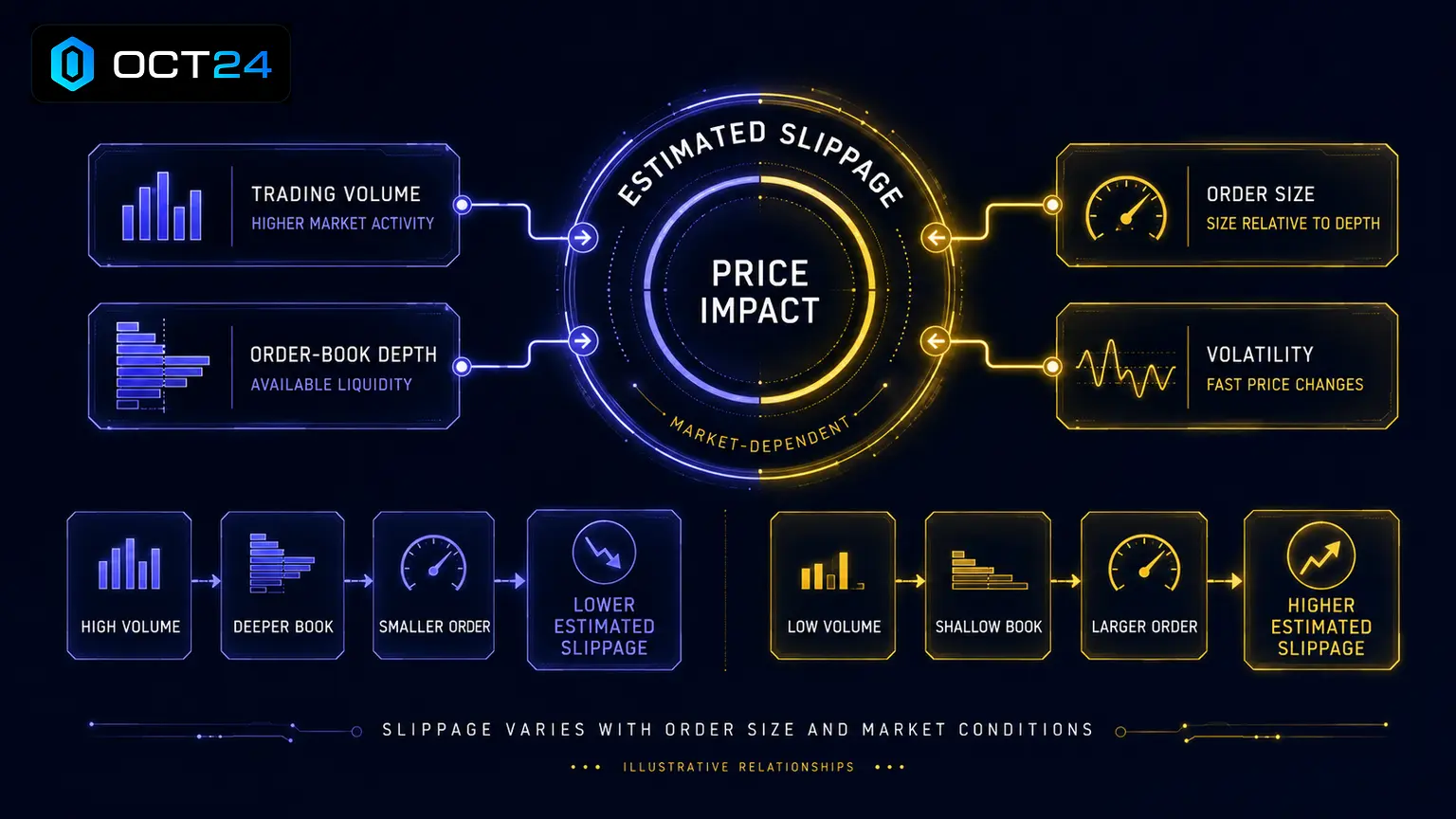
Slippage happens when a trade fills at a different price from the price expected. It can happen in any market, but it is more common when liquidity is low, volatility is high, or an order is large compared with the available market depth.
For beginners, slippage can be surprising. The chart may show one price, but the executed trade may happen at another. Even a small difference can affect the trade outcome, especially when target profit is small or market movement is fast.
Slippage is one reason traders should not focus only on potential reward. A trade that looks attractive on the surface may become less attractive if execution quality is poor. This is why liquidity belongs in every basic crypto trading risk discussion.
OCT24 can help simplify signal review, but it does not remove slippage risk from the market. Traders still need to understand that execution can be affected by liquidity, volatility, and order flow.
How Liquidity Affects Volatility
Liquidity and volatility are closely connected. When liquidity is strong, the market may absorb orders more smoothly. When liquidity is weak, even moderate buying or selling can push price around quickly.
This does not mean liquid markets cannot be volatile. Bitcoin and Ethereum can still move sharply. But in general, stronger liquidity gives the market more depth, while weaker liquidity can make price movement more jumpy and unpredictable.
This is why How AI Handles Market Volatility is relevant to liquidity education. AI can help scan and organize volatile conditions, but volatility still needs respect. A fast market can create opportunity and risk at the same time.
For OCT24 users, liquidity is part of the bigger signal review process. A trader should look at the opportunity, review the displayed signal metrics, and consider whether the market environment feels suitable for their risk comfort.
Trading Volume vs Liquidity
Trading volume and liquidity are related, but they are not exactly the same. Volume shows how much trading has happened over a period of time. Liquidity shows how easily trades can happen now without moving price too much.
A market can have high reported volume but still feel difficult to trade if the order book is thin or the spread is wide. This is why volume alone should not be treated as perfect proof of liquidity. It is useful, but it is not the full picture.
Beginners often look for high-volume coins because they feel safer. That can be a reasonable starting point, but traders should still pay attention to spread, market depth, volatility, and overall signal quality.
This connects with AI Trading Signals because a good signal review process should help traders think beyond one number. A strong trading opportunity usually needs more than price movement or volume alone.
How AI Can Help Review Liquidity Conditions
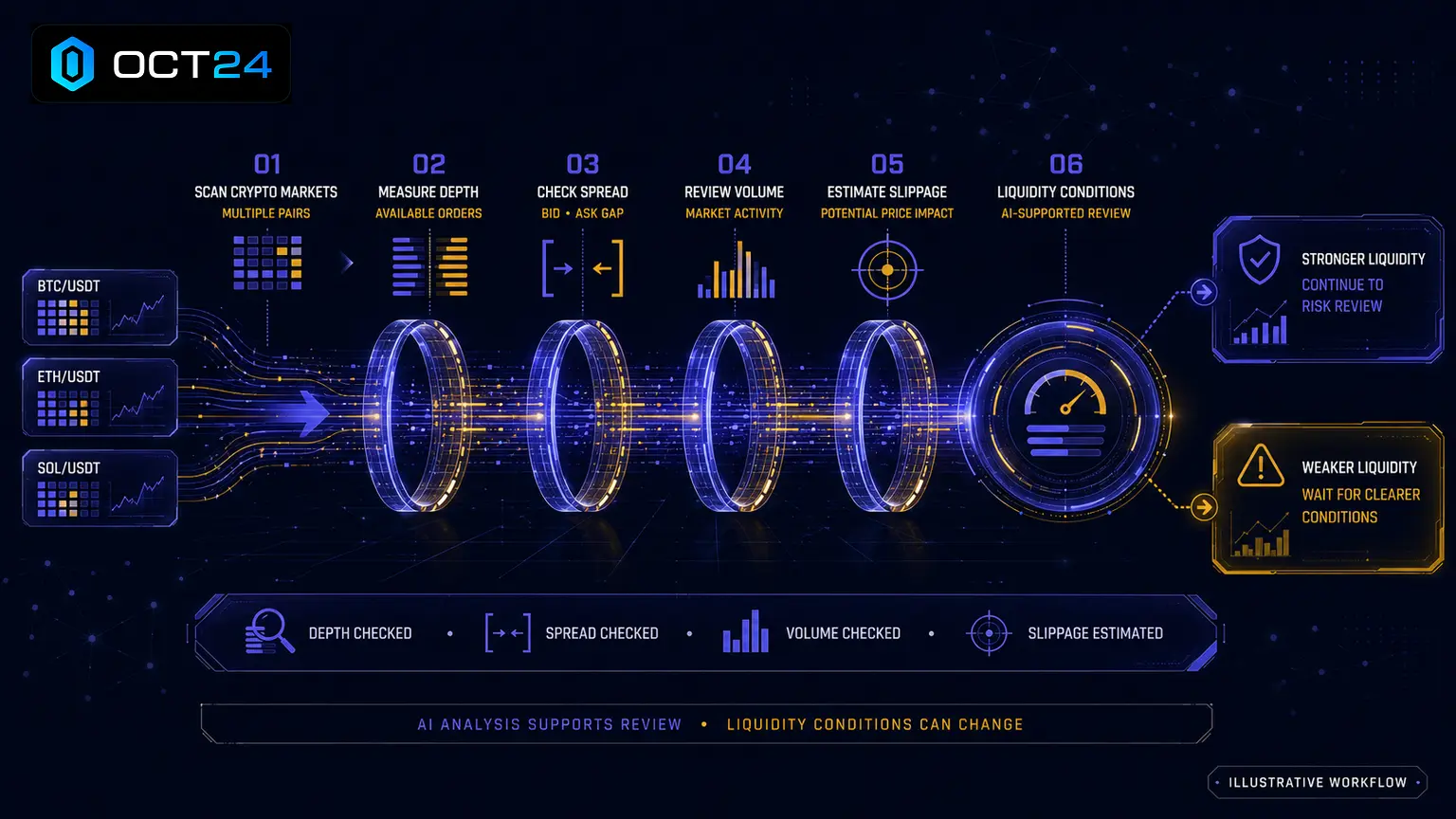
AI can help review liquidity conditions by scanning large amounts of market information quickly. It can help identify when conditions appear more favorable, when a market looks unstable, or when a setup may not have enough support.
This can be useful for beginners because liquidity is not always easy to see. A trader may understand the chart direction but miss the deeper conditions behind the trade. AI support can help organize those conditions into a simpler review process.
OCT24 positions AI as a way to do much of the market analysis before a trader sees a potential opportunity. The platform can scan crypto conditions, identify possible setups, and present AI-supported signals that help traders make a more informed decision.
This is one of the practical Benefits of AI Trading. AI can support speed and structure, but it should still be used with realistic expectations. It helps with review; it does not make outcomes certain.
Liquidity and OCT24 Signal Review
OCT24 signal review is designed to be simple for beginners. Instead of asking users to choose every market or build every analysis manually, OCT24 presents potential opportunities and key signal information for the trader to review.
Liquidity is part of the background that can affect whether a setup is practical. A trade opportunity may look more useful when the market has enough activity, a cleaner price structure, and conditions that support smoother execution.
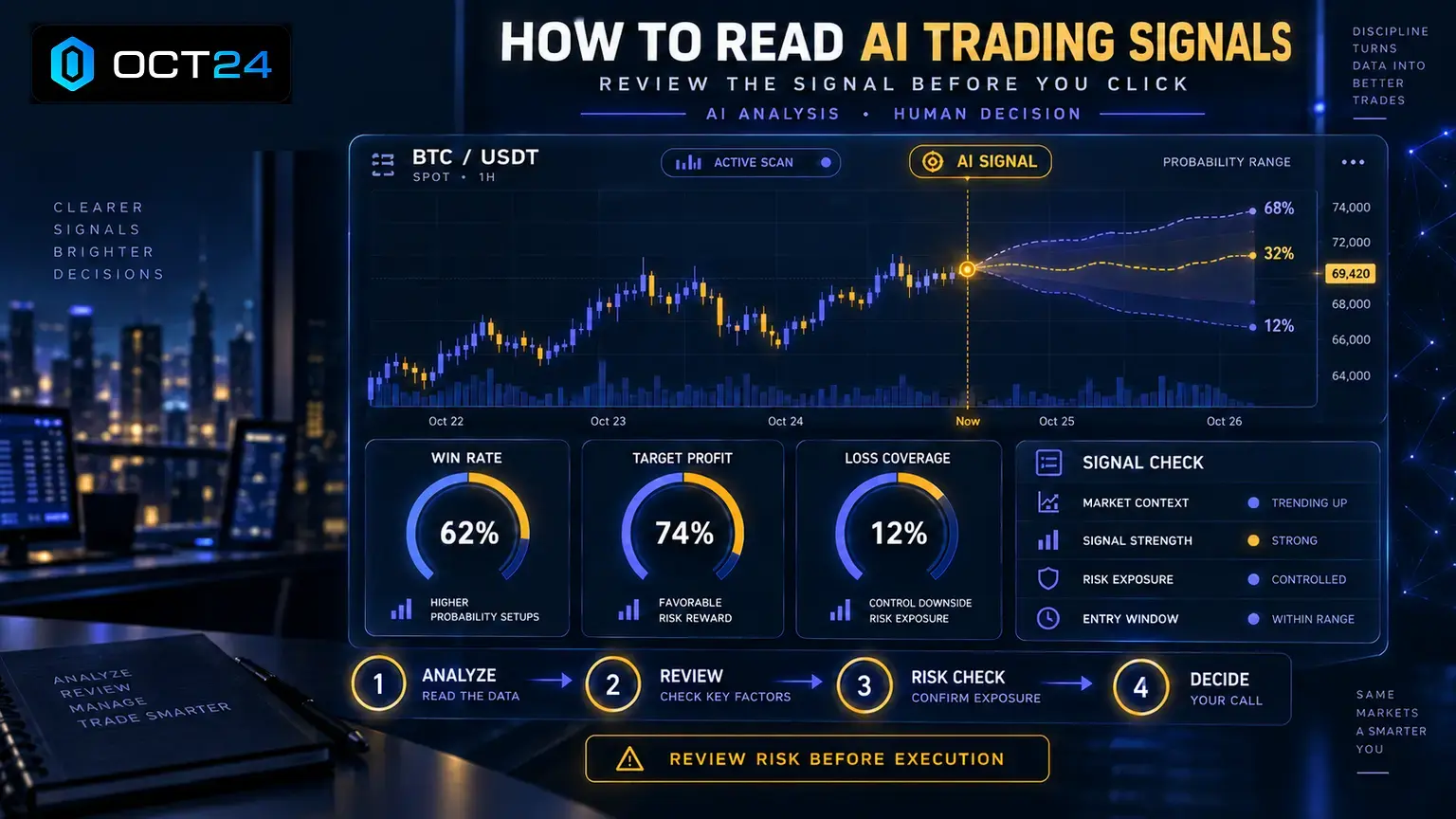
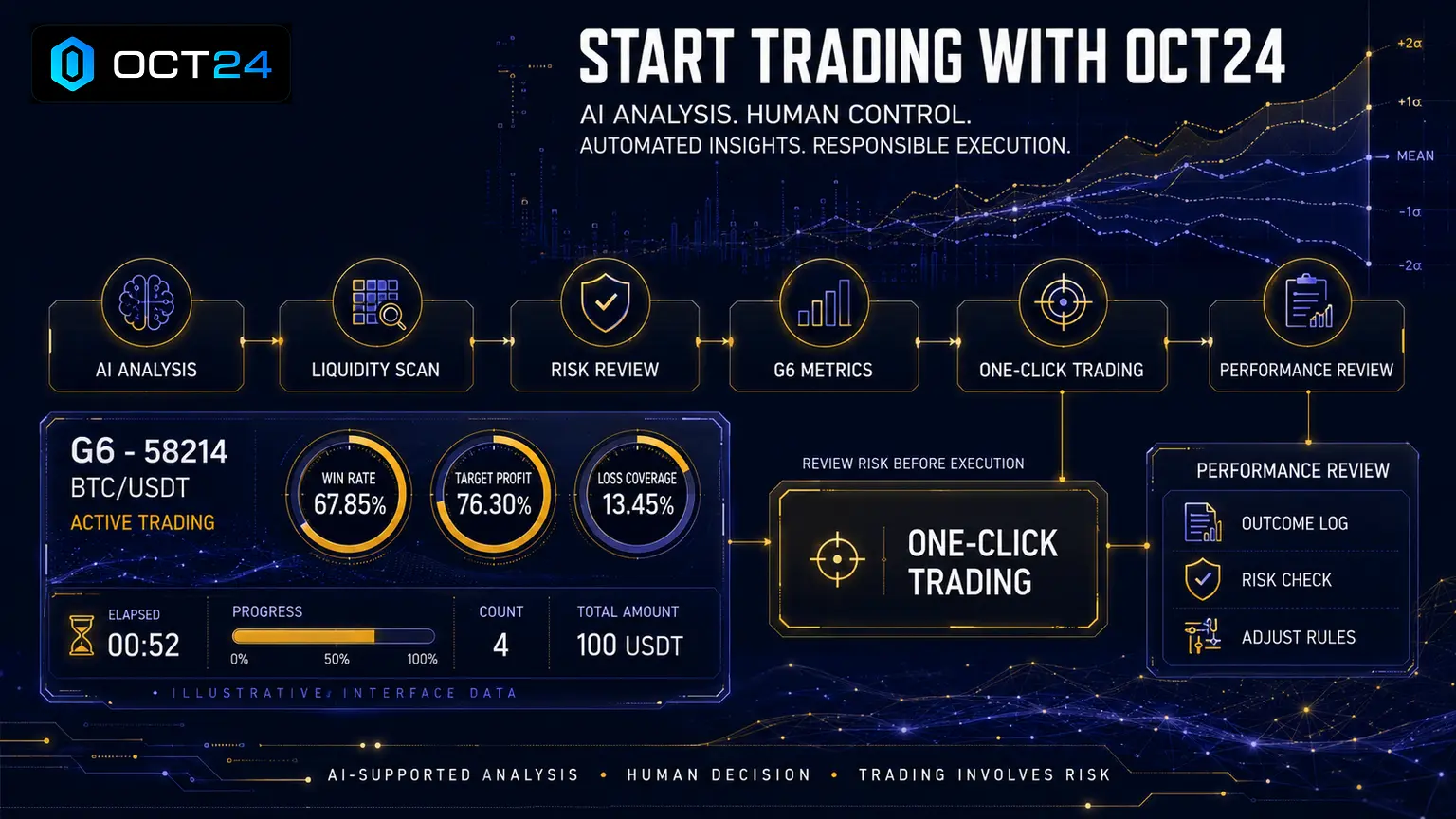
OCT24 users should still focus on the core decision signals presented in the platform, including Win Rate, Target Profit, and Loss Coverage. These metrics help traders review the opportunity from different angles before choosing whether to activate.
The trader remains responsible for the final decision. OCT24 can help scan conditions and present a clearer setup, but the user still decides whether the trade fits their exposure, account plan, and risk comfort.
Win Rate, Target Profit, and Loss Coverage in Liquid Markets
Liquidity can affect how traders interpret Win Rate, Target Profit, and Loss Coverage. A signal may look stronger when the market conditions are cleaner and easier to trade. A signal may require more caution when the market is thin or unstable.
Win Rate helps traders review the confidence side of the opportunity. Target Profit helps traders understand the potential objective. Loss Coverage helps traders keep downside risk visible. These three signals should be compared together, especially when liquidity conditions are changing.
A high Target Profit may look appealing, but if liquidity is weak, reaching that objective may be less reliable. Strong Loss Coverage may help frame risk, but it does not remove the possibility of slippage or sudden movement. A good review process looks at the whole picture.
This is why AI Trading Strategies should include both opportunity and risk. Traders should not only ask whether a trade can move in their favor. They should also ask whether the market can support the trade quality they expect.
Liquidity Risk and Position Sizing
Liquidity risk becomes more important as position size increases. A small trade in a liquid market may have little effect on execution. A larger trade in a thinner market may experience more slippage or more difficulty entering and exiting cleanly.
This is why Position Sizing Controls matter. Position size should match the trader’s account, risk tolerance, and the market conditions. A trader should not increase size only because a setup looks exciting.
Liquidity risk also connects with Portfolio Diversification Tools. If a trader has too much exposure in one coin, one market theme, or one direction, liquidity problems can become more stressful during sharp moves.
OCT24 does not remove these responsibilities. It can support signal review and market scanning, but traders still need to decide how much capital to expose and whether the opportunity fits their broader risk plan.
How Liquidity Supports One-Click Trading
One-click trading can be useful because it makes execution simpler after a trader reviews a signal. But one-click trading still depends on market conditions. Liquidity, volatility, and execution quality can all affect the trading experience.
In OCT24, the AI bot can identify a crypto opportunity and present it to the user for review. The user does not manually pick every market. The trader reviews the key signal information and decides whether to activate within the available window.
This is why liquidity education is important for One-Click Trading. A simple interface can help beginners act efficiently, but the trader still needs to understand that simple execution does not mean risk-free trading.
For busy users, AI Trading for Busy Professionals can make the review process more manageable. AI support can reduce manual scanning, while the trader still controls whether the opportunity fits their risk comfort.
Common Liquidity Mistakes Beginners Make
The first mistake is assuming a rising price means a good trading opportunity. A low-liquidity coin can rise quickly because there are not many sellers, but it can also fall quickly for the same reason.
The second mistake is ignoring spread. A wide bid-ask spread can make trading more expensive. Beginners may not notice this until their trade fills at a worse price than expected.
The third mistake is treating volume as the only liquidity signal. Volume is useful, but traders should also think about market depth, spread, slippage, and volatility.
The fourth mistake is using too much size in a thin market. This can make losses harder to manage and can create more emotional pressure. This is closely linked to Trading Psychology because poor liquidity can make traders panic or overreact.
How to Think About Liquidity Before Entering a Trade
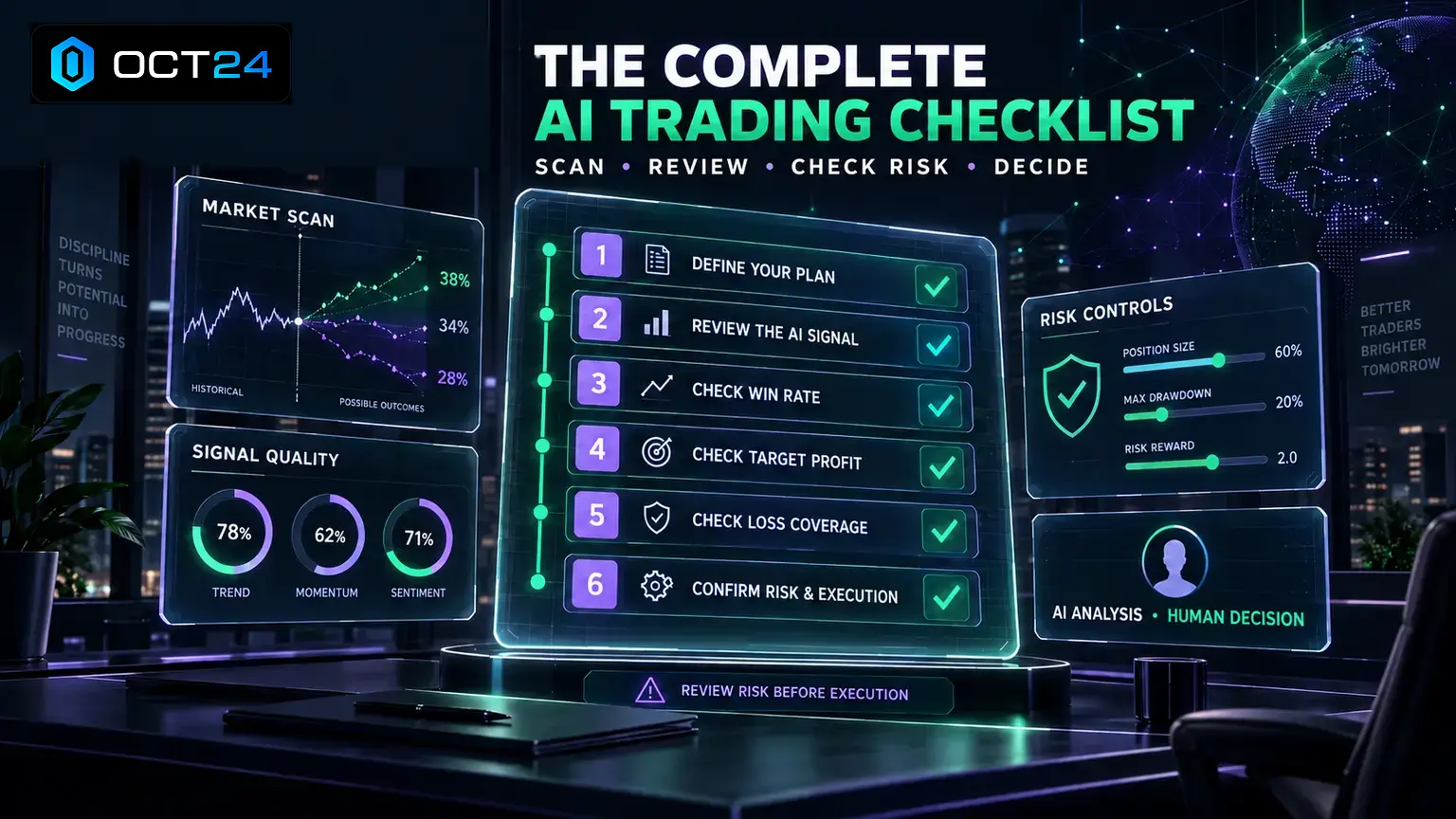
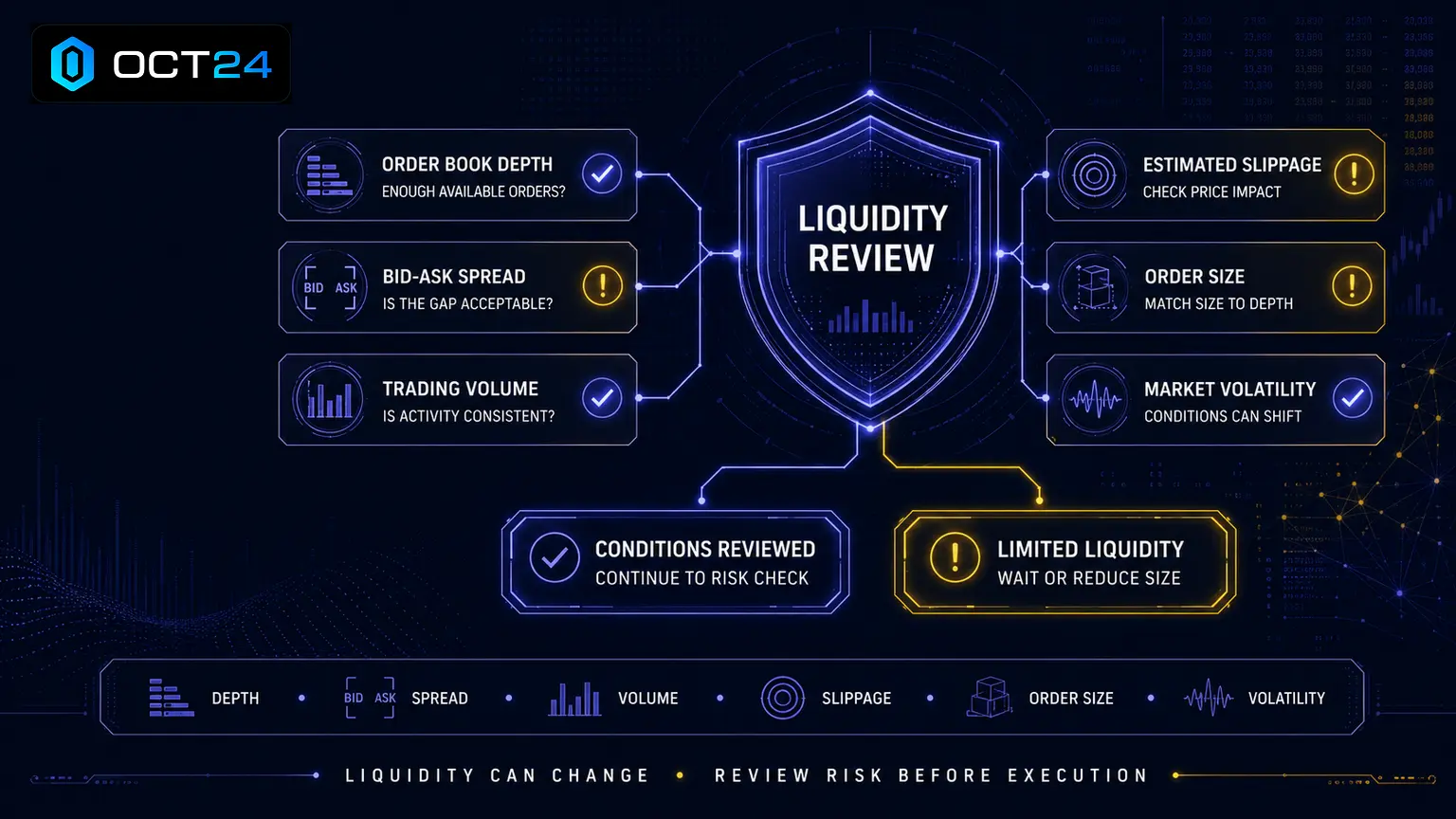
Before entering a trade, beginners can ask a few simple liquidity questions. Is the market active? Does the price move smoothly or jump suddenly? Does the spread look reasonable? Does the opportunity fit the trader’s size and risk comfort?
A trader does not need to become an expert order book reader to ask better questions. The goal is to avoid entering trades without understanding basic market conditions. Liquidity review helps traders avoid being surprised by poor execution or sudden price movement.
This is also where Trading Bot Risk Management becomes practical. A bot can help execute or manage a signal workflow, but the trader still needs to understand the risk environment around the trade.
OCT24 can help by presenting AI-supported trading signals in a cleaner format. Still, a responsible trader should review the opportunity and decide whether the conditions are suitable before activation.
Choosing a Platform That Makes Liquidity Easier to Understand
A beginner-friendly trading platform should make important information easier to review. It should not bury users under technical terms or push them to trade without context. Clear signal review can help traders make calmer decisions.
When comparing platforms, traders should look for simple explanations, clear risk information, and realistic claims. A platform should not promise guaranteed results or suggest that AI removes all trading risk.
This is why Choosing the Right AI Trading Platform matters. The right platform should help traders understand opportunities, compare signals, and stay aware of risk before execution.
Readers who want to understand OCT24’s broader positioning can read About OCT24 during their research process. The platform is built around AI-supported crypto trading signals, simple review, and user-controlled activation decisions.
Liquidity, AI Trading Bots, and Human Control
Liquidity also matters when using trading bots. Bots can react quickly, follow structured logic, and support execution workflows, but they still operate inside real markets. If market conditions are thin or volatile, risk remains.
This is why comparing Trading Bots vs Human Traders is useful. Bots can bring speed and consistency. Humans remain responsible for account context, exposure, and whether a trade makes sense for their situation.
OCT24’s G6 Trading Bot workflow is designed around AI-supported signal review and one-click activation. The user can review metrics such as Win Rate, Target Profit, and Loss Coverage before deciding whether to activate the opportunity.
Traders should avoid the myth that AI bots make liquidity risk disappear. That idea belongs in the wider conversation around AI Trading Myths. AI can support better review, but it cannot remove uncertainty from crypto markets.
Final Thoughts
Crypto trading liquidity explains how easily a coin can be bought or sold without causing a major price change. For beginners, liquidity is important because it affects spread, slippage, volatility, market depth, and execution quality.
A liquid market does not guarantee a successful trade, and an illiquid market is not automatically bad. The key is understanding the conditions before entering. OCT24 can support this process by scanning crypto markets, identifying potential opportunities, and presenting AI-supported trading signals for review.
Traders still remain responsible for risk settings, exposure, capital allocation, and execution decisions. To explore a simpler way to review AI-supported crypto trading opportunities, visit OCT24 or Start Trading with OCT24 when you are ready.
FAQs
What does liquidity mean in crypto trading?
Liquidity means how easily a cryptocurrency can be bought or sold without causing a major price change. Higher liquidity usually means smoother trading conditions.
Why is liquidity important for beginners?
Liquidity is important because it affects spread, slippage, market depth, volatility, and execution quality. Beginners need to understand these basics before trading.
What is an illiquid crypto market?
An illiquid crypto market has fewer buyers and sellers, less depth, and often wider spreads. Price may move sharply because there are not enough orders available.
Is high trading volume the same as high liquidity?
Not always. Volume shows how much trading happened over a period of time, while liquidity shows how easily trades can happen near the current price.
What is slippage in crypto trading?
Slippage happens when a trade fills at a different price from the expected price. It is more common in low-liquidity or highly volatile markets.
How can AI help with liquidity review?
AI can help by scanning market conditions, organizing signal information, and highlighting potential opportunities for trader review. It does not remove liquidity risk.
Does OCT24 remove liquidity risk?
No. OCT24 can support market scanning and AI-supported signal review, but liquidity risk, market volatility, and losses are still possible.
What should traders review before activating a trade?
Traders should review the opportunity, market conditions, Win Rate, Target Profit, Loss Coverage, exposure, and whether the trade fits their risk comfort.