
Why Traders Should Compare Signals Before Entering a Trade
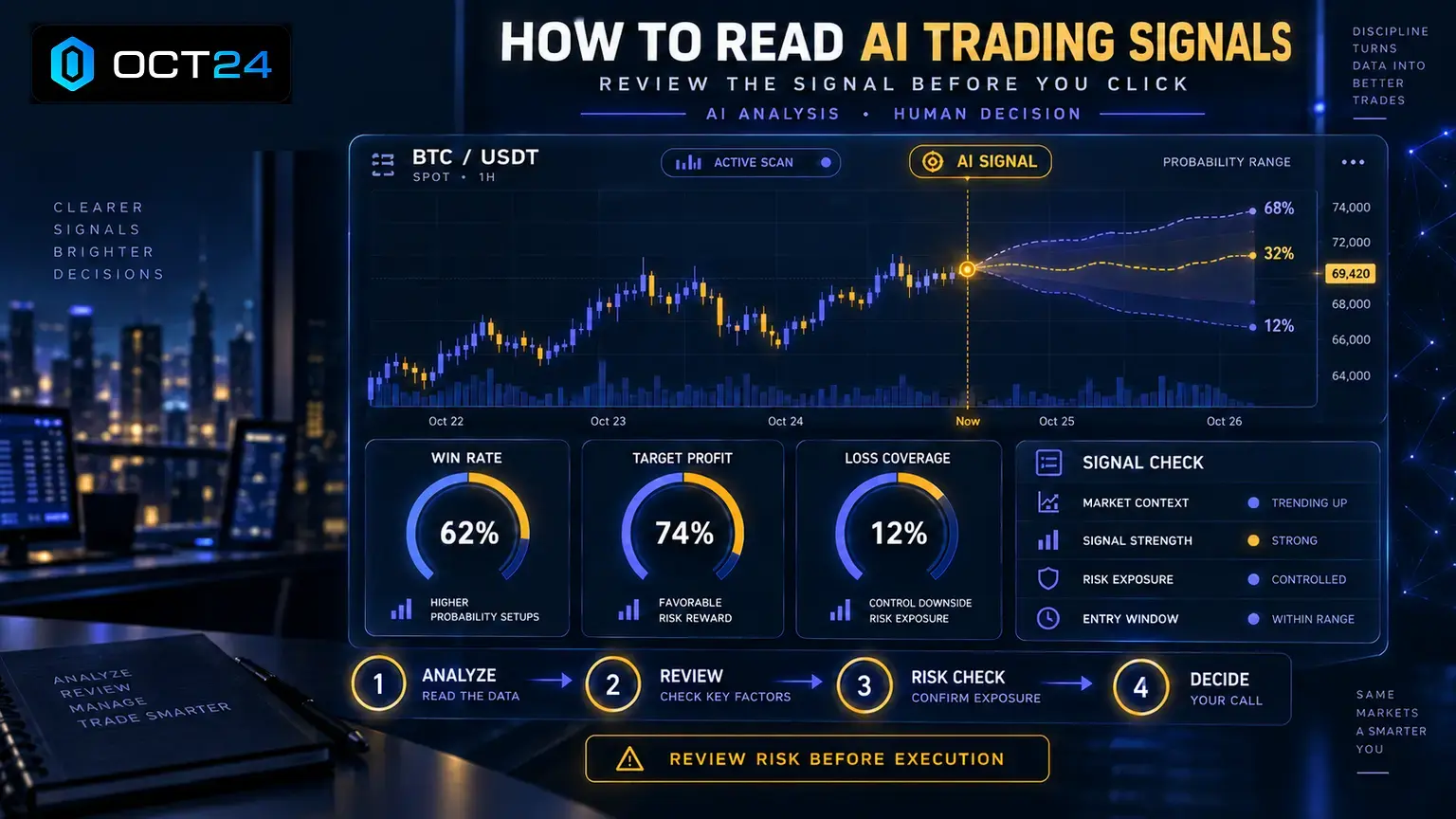
Traders should compare signals before entering a trade because no single number tells the full story. On OCT24, the three most important signals to review are Win Rate, Target Profit, and Loss Coverage.
These three signals work together. Win Rate gives context about the trade or bot profile. Target Profit shows the intended reward. Loss Coverage helps the trader understand downside handling. Looking at only one of them can create a misleading picture.
OCT24 performs most of the market analysis by scanning market conditions, identifying potential opportunities, and presenting AI-supported trading signals. OCT24 does not remove trading risk or guarantee results. Traders still need to manage exposure, capital allocation, and execution decisions responsibly.
Why Signal Comparison Matters
A trade can look attractive when one signal stands out. A high Win Rate can look reassuring. A strong Target Profit can look exciting. Good Loss Coverage can make the trade feel more controlled.
The problem is that each signal only explains one part of the trade. A high Win Rate does not mean the trade is suitable. A strong Target Profit does not mean the downside is comfortable. Loss Coverage does not mean the trade is risk-free.
Signal comparison helps traders slow down before acting. Instead of asking only whether one number looks good, the trader asks whether the full setup makes sense.
This is especially important with one-click trading. Fast execution can be useful, but it should still follow a clean review process.
The goal is not to make trading complicated. The goal is to avoid making a decision from one attractive number alone.
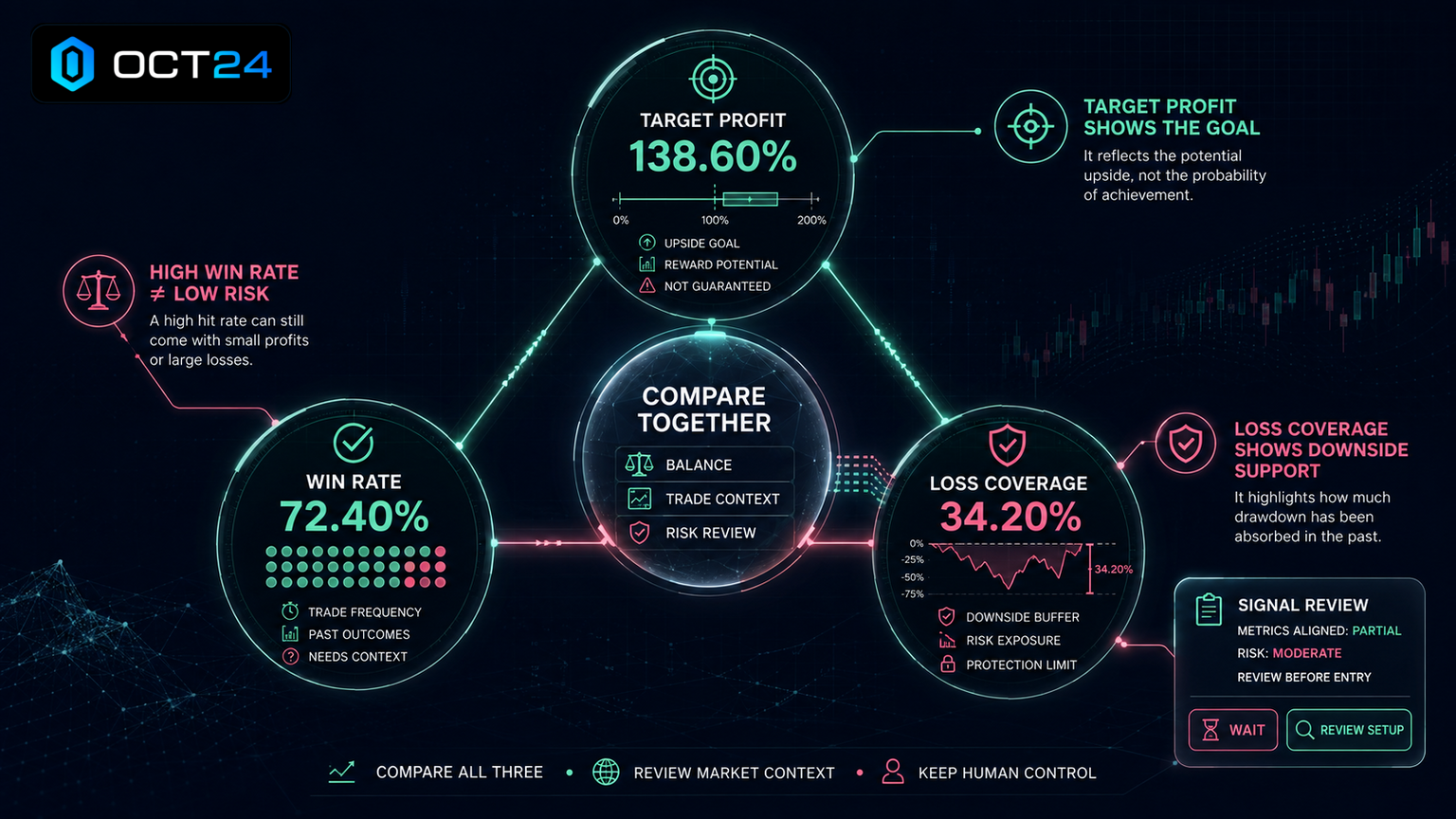
The Three OCT24 Signals to Compare
OCT24 users should focus mostly on three visible trade signals: Win Rate, Target Profit, and Loss Coverage. These are the main numbers that help users review a trading opportunity before activation.
Win Rate helps users understand how often the trade or bot profile is expected to succeed based on the available model or historical context. It is useful, but it should not be treated as a guarantee.
Target Profit shows the intended outcome if the trade works as planned. It helps the trader understand the reward objective before entering.
Loss Coverage gives context around downside handling. It helps the trader think about risk before deciding whether the opportunity fits their account.
Together, these signals create a simple review framework. The trader is not manually analyzing every asset, entry point, or exit point. OCT24 simplifies the experience by presenting key decision information while the trader remains responsible for risk.
Why One Signal Is Not Enough
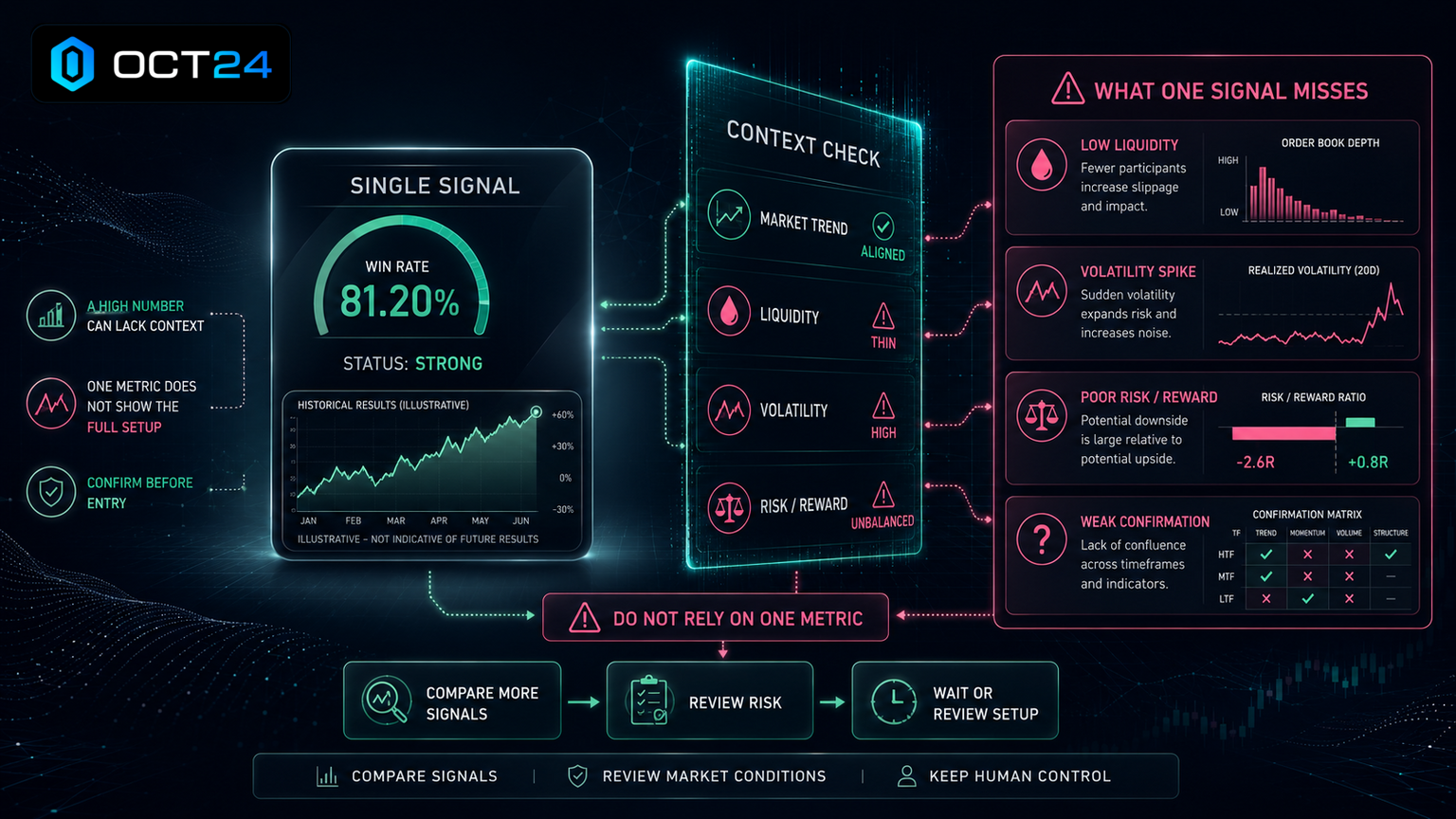
Relying on one signal is one of the easiest ways to make a rushed decision. A trader may focus on the number that feels most exciting and ignore the rest of the picture.
For example, a high Target Profit may look appealing. But if the Win Rate is low or the Loss Coverage does not fit the user’s comfort level, the trade may not be right for that trader.
A high Win Rate can also be misleading if the potential reward is small compared with the trader’s risk tolerance. Win Rate tells part of the story, not the full story.
This is why AI trading signals should be reviewed as a group. The strongest decisions usually come from comparing the signals together.
OCT24 makes this easier by reducing the amount of manual scanning required. The user can focus on reviewing the trade information instead of trying to analyze every chart from scratch.
How OCT24 Presents Signal Information
OCT24 is designed to simplify the trading workflow. The platform scans market conditions, identifies potential opportunities, and presents AI-supported trading opportunities through its bot experience.
The user does not currently receive a full manual trading ticket with detailed asset commentary, exact entry points, or exact exit points for every opportunity. The platform is built around simplified decision information.
That makes Win Rate, Target Profit, and Loss Coverage even more important. These are the signals users can compare before deciding whether to activate a trade.
OCT24 should not be described as only a passive analysis tool. It performs much of the market scanning and opportunity identification for the user. At the same time, it does not remove the need for user judgment.
The trader still controls whether to enter, how much exposure to use, and whether the opportunity fits their capital plan.
How to Read Win Rate Correctly
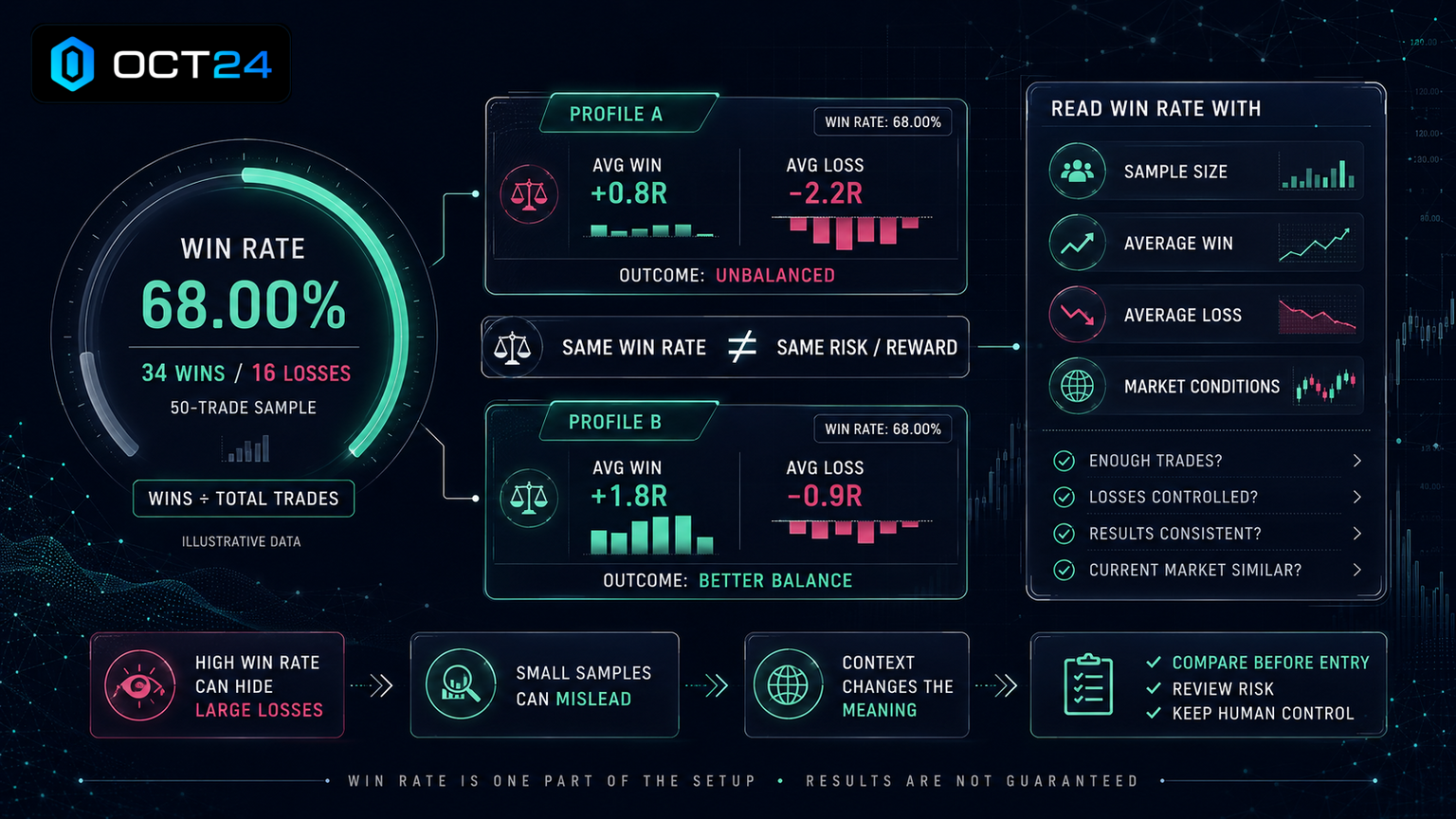
Win Rate is often the first number traders look at because it feels easy to understand. A higher Win Rate can appear more reassuring than a lower one.
But Win Rate should never be used alone. A trade can have a high Win Rate and still create losses when it is wrong. A lower Win Rate can still be acceptable if the reward and risk structure make sense for the trader.
The practical question is not only “How often can this win?” The better question is “Does the Win Rate make sense when I compare it with Target Profit and Loss Coverage?”
This connects with AI trading performance because traders need to look beyond one trade and think about consistency over time.
A strong Win Rate should support the decision. It should not replace risk review.
How to Read Target Profit Correctly
Target Profit shows what the trade is aiming for. It helps traders understand the reward side before they enter.
A higher Target Profit may look better, but it can also come with trade-offs. The market may need to move further, conditions may need to remain favorable, or the setup may involve more uncertainty.
Target Profit should be compared with Win Rate and Loss Coverage. If the target looks attractive but the Win Rate is weaker, the trader should slow down and think carefully.
This is where AI trading risk vs reward becomes useful. Reward only matters when it is reviewed beside the possible downside and the user’s account exposure.
On OCT24, Target Profit is a decision input. It is not a guaranteed result.
How to Read Loss Coverage Correctly
Loss Coverage helps users understand downside handling. It is especially important because risk often feels less exciting than potential profit, but it matters more when the trade goes wrong.
Loss Coverage should not be treated as a promise that losses cannot happen. It is a risk signal, not a guarantee.
A user should compare Loss Coverage with the other signals. If the Win Rate looks strong and the Target Profit looks attractive, but the user is still uncomfortable with the downside, the trade may not be suitable.
This connects with trading bot risk management. Automated systems can help structure trades, but the trader still needs to manage account-level exposure.
Loss Coverage is there to help the user think about downside before clicking, not after.
How the Three Signals Work Together
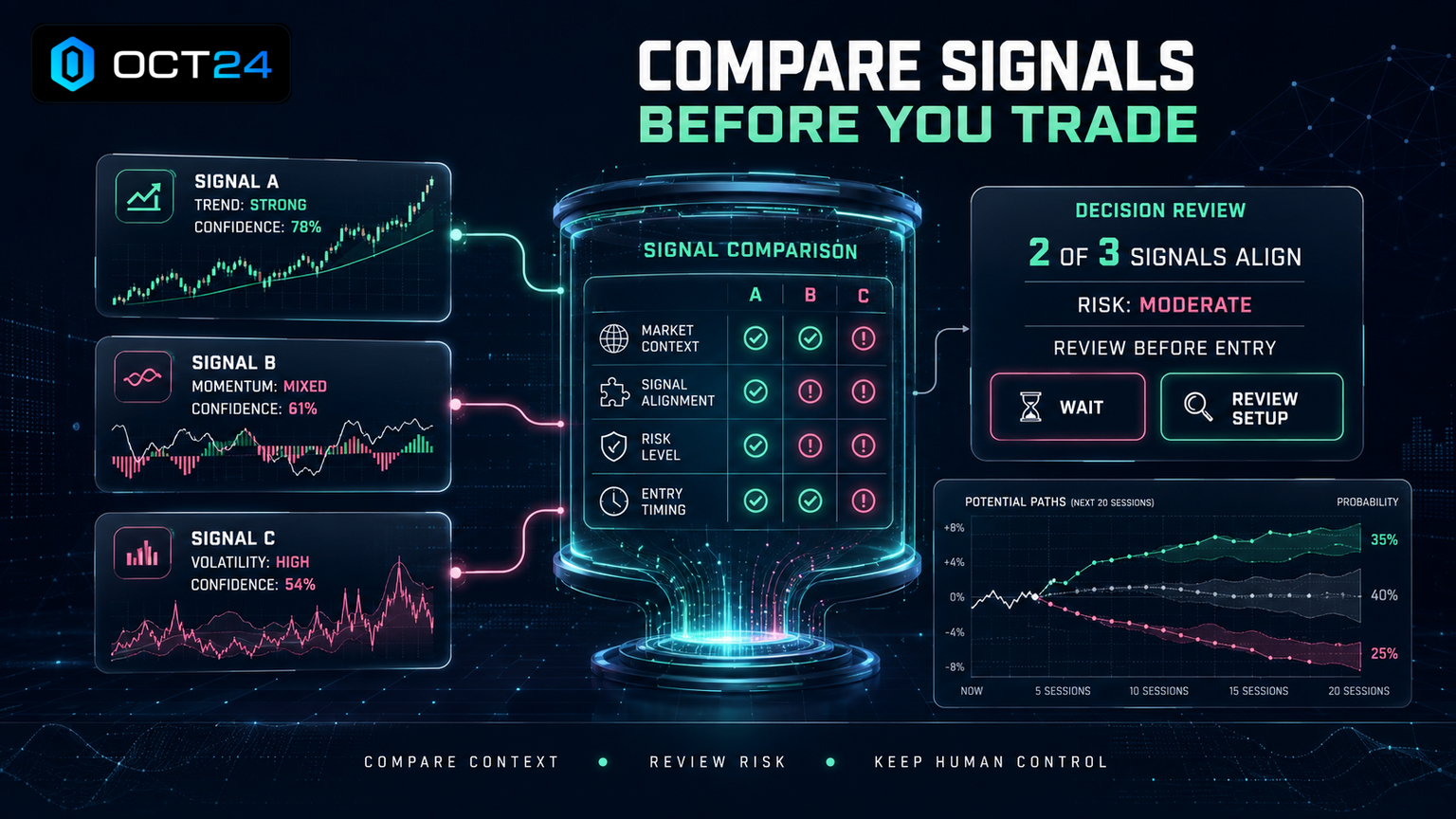
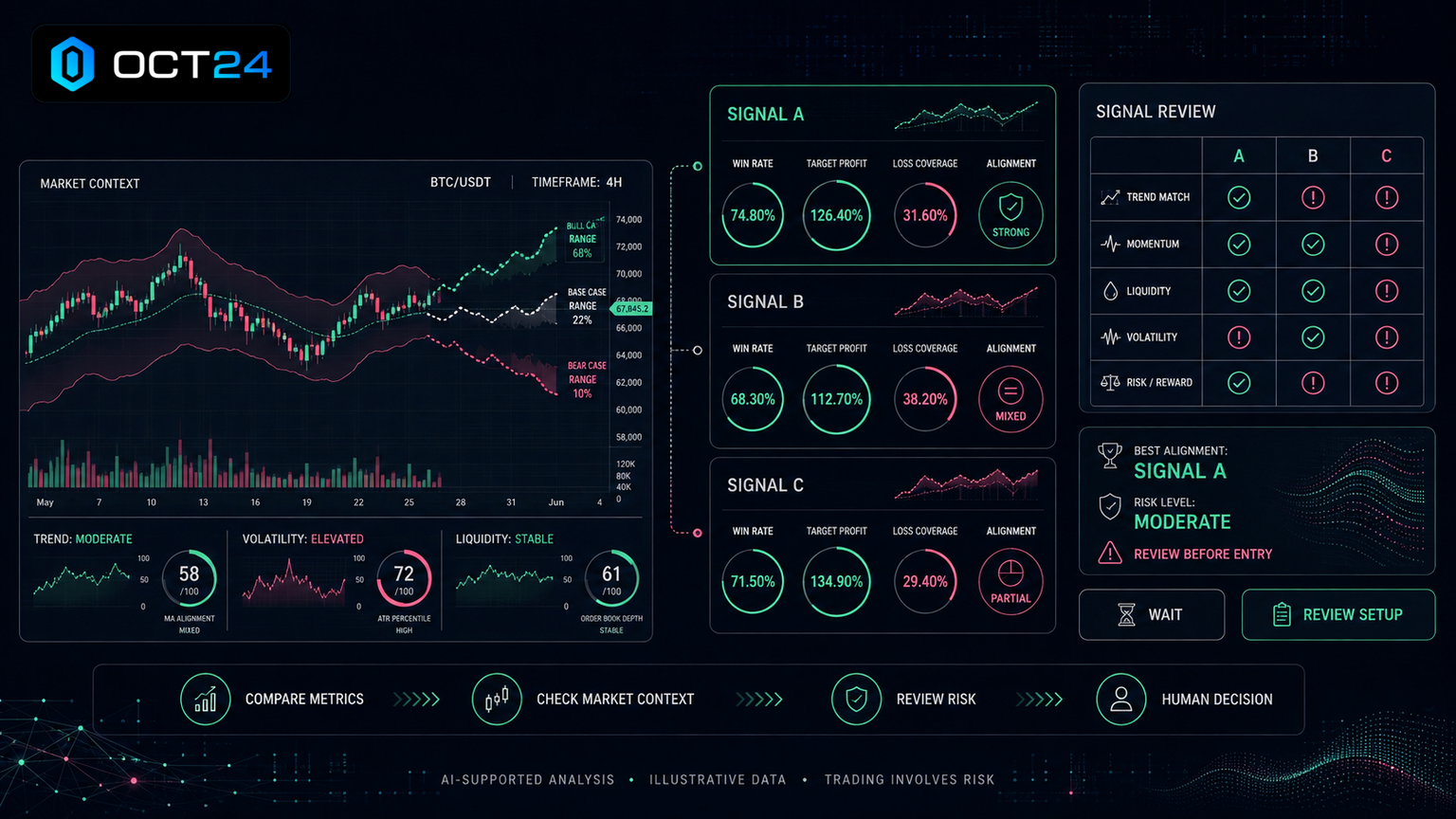
The best way to use Win Rate, Target Profit, and Loss Coverage is to compare them as a group.
A balanced opportunity may have a Win Rate that feels reasonable, a Target Profit that fits the trade profile, and Loss Coverage that the user is comfortable accepting.
A less suitable opportunity may have one attractive number but two weaker ones. For example, the Target Profit may look strong, but the Loss Coverage may not fit the user’s account comfort. Or the Win Rate may look good, but the reward may feel too small for the risk.
This is why comparing signals before entering a trade helps reduce emotional decisions. It forces the trader to look at the whole picture instead of reacting to one number.
The comparison does not need to be complicated. It simply needs to happen every time.
Signal Comparison During Volatile Markets
Volatility can make signals feel more urgent. When prices move quickly, traders may feel they need to act immediately.
In volatile crypto markets, that urgency can create mistakes. A trade may look strong for a moment and then reverse quickly. A user may focus only on Target Profit and ignore Loss Coverage.
AI can help by scanning market conditions and presenting opportunities, but how AI handles market volatility does not remove uncertainty.
During volatile periods, signal comparison becomes more important. Traders should ask whether the Win Rate, Target Profit, and Loss Coverage still make sense together.
If volatility makes the downside feel uncomfortable, the trader can choose not to enter.
Signal Comparison During Sideways Markets
Sideways markets can also create signal confusion. Price may move enough to look active, but not enough to show clear direction.
AI trading during sideways markets requires patience because many signals can fade quickly. A trade may show a reasonable target, but the market may not have enough momentum to reach it cleanly.
In this environment, traders should compare whether Win Rate supports the opportunity, whether Target Profit is realistic, and whether Loss Coverage feels acceptable.
If the signals do not work together, the trade may be weaker than it first appears.
Sometimes the best decision is to wait for a clearer setup.
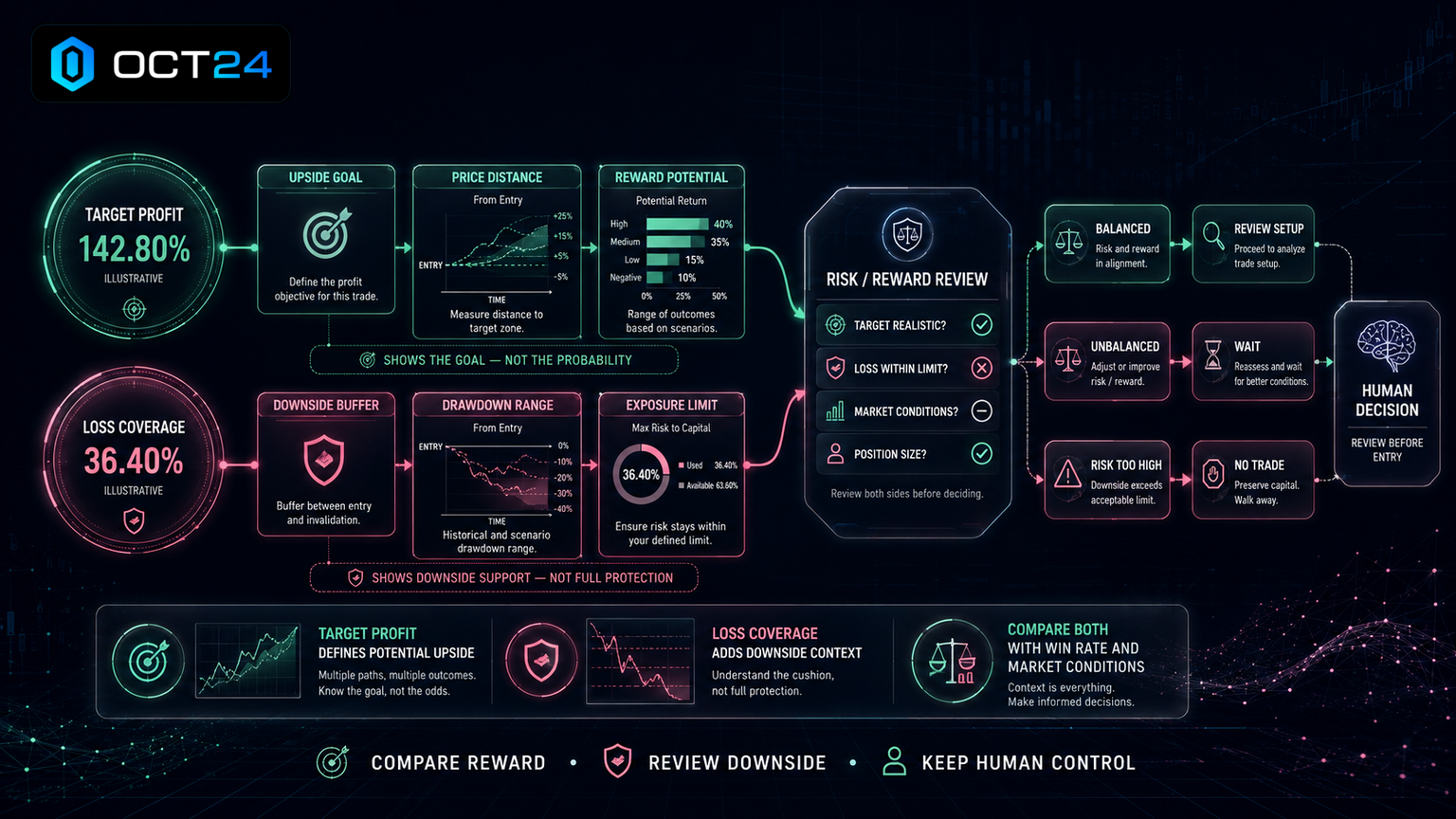
How Signal Comparison Helps Traders Avoid Overtrading
Overtrading often happens when traders treat every opportunity as urgent. They see a signal, feel excitement, and enter before reviewing the full picture.
Learning to avoid overtrading starts with a pause. Comparing Win Rate, Target Profit, and Loss Coverage creates that pause.
This review process helps the trader decide whether the opportunity truly fits their plan. It can also stop the trader from entering only because the platform makes execution simple.
OCT24’s one-click trading experience can make activation fast, but the decision should still be deliberate.
Fast execution works best when the review process is disciplined.
How Signal Comparison Helps Identify Weak Setups
Weak trading setups often look attractive at first. They may have one good-looking signal, but the full picture may not support the trade.
For example, a trade may show strong Target Profit but weaker Loss Coverage. Another may show a reasonable Win Rate but a reward that does not feel worth the risk.
AI can help by scanning market conditions and presenting potential opportunities, but the trader should still compare the signals before entering.
This process helps separate structured decisions from emotional reactions.
A weak setup is not always obvious. Comparing the three core signals makes it easier to spot possible problems before activation.
Where the G6 Trading Bot Fits
The G6 Trading Bot is part of the OCT24 bot experience. It gives users a simplified way to review AI-supported trading opportunities.
For signal comparison, the key point is simple. The user should review the visible signals before activating a trade. That means looking at Win Rate, Target Profit, and Loss Coverage together.
The G6 Trading Bot should not be treated as a guarantee of profit. It is a tool within the OCT24 experience, and trading risk still applies.
The trader remains responsible for exposure, capital allocation, and execution choices.
A Simple Signal Comparison Checklist
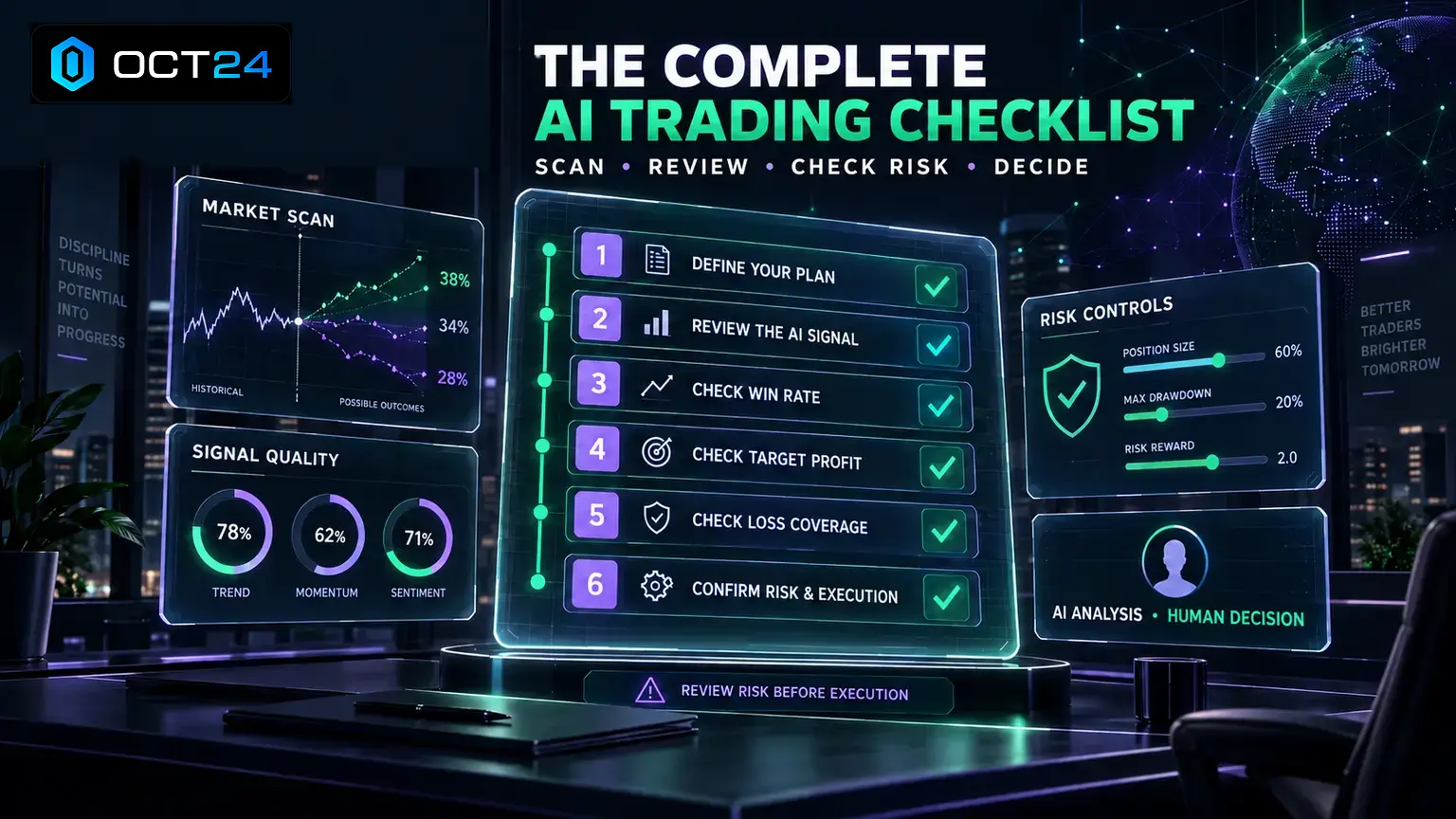
A simple checklist can help traders build a repeatable process before entering a trade.
Before activating an OCT24 opportunity, review these questions:
- Is the Win Rate strong enough for this type of trade?
- Does the Target Profit make sense with the market conditions?
- Is the Loss Coverage comfortable for my account?
- Do the three signals support each other?
- Am I focusing too much on one number?
- Is my exposure reasonable?
- Would I still take this trade after a previous loss?
- Am I entering because the trade fits my plan, not because I feel rushed?
This checklist does not make trading risk-free. It simply helps traders think more clearly before they act.
Common Mistakes When Comparing Signals
One common mistake is treating Win Rate as the only number that matters. Win Rate is useful, but it does not show the full risk profile.
Another mistake is chasing the highest Target Profit. A larger target may require more market movement or more uncertainty.
A third mistake is ignoring Loss Coverage because it feels less exciting than potential profit. Loss Coverage is often the number that helps traders stay realistic.
Traders also need to avoid common AI trading mistakes such as overtrusting automation, increasing exposure too quickly, and assuming every signal is equally strong.
Good signal comparison is simple: review all three numbers, then decide whether the trade still fits your account.
How Beginners Should Compare Signals
Beginners should not overcomplicate signal comparison. The point is to build a clear habit before entering any trade.
AI trading strategies for beginners should include a signal review step because beginners are more likely to react to the number that looks most exciting.
A beginner-friendly process is to start with Win Rate, then review Target Profit, then review Loss Coverage. After that, ask whether the three signals make sense together.
OCT24 helps by presenting these signals in a simplified way. The user does not need to manually inspect every asset or chart, but they still need to make a responsible decision.
The more consistent the review process becomes, the easier it is to avoid emotional entries.
How Signal Comparison Fits Into a Routine
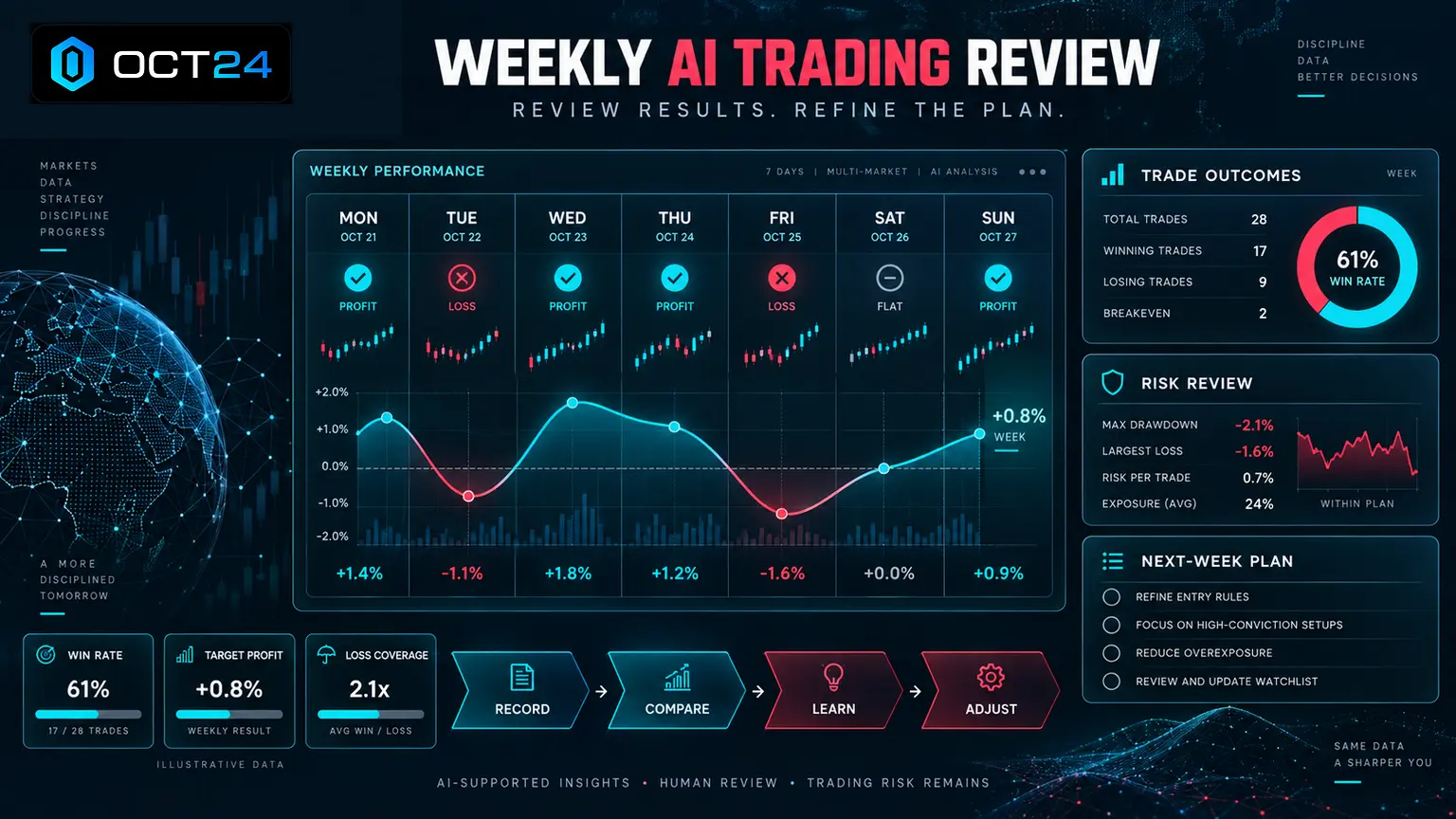
A consistent trading routine helps traders review each opportunity the same way. This matters because trading decisions can become emotional when the market is moving quickly.
A simple OCT24 routine may include checking Win Rate, checking Target Profit, checking Loss Coverage, deciding exposure, and then choosing whether to activate the trade.
This connects with building a consistent trading routine because the process stays the same even when the market feels different.
The trader does not need to force every opportunity. They can compare the signals and decide that a trade is not suitable.
That is still a good decision. Not entering a weak trade is part of responsible trading.
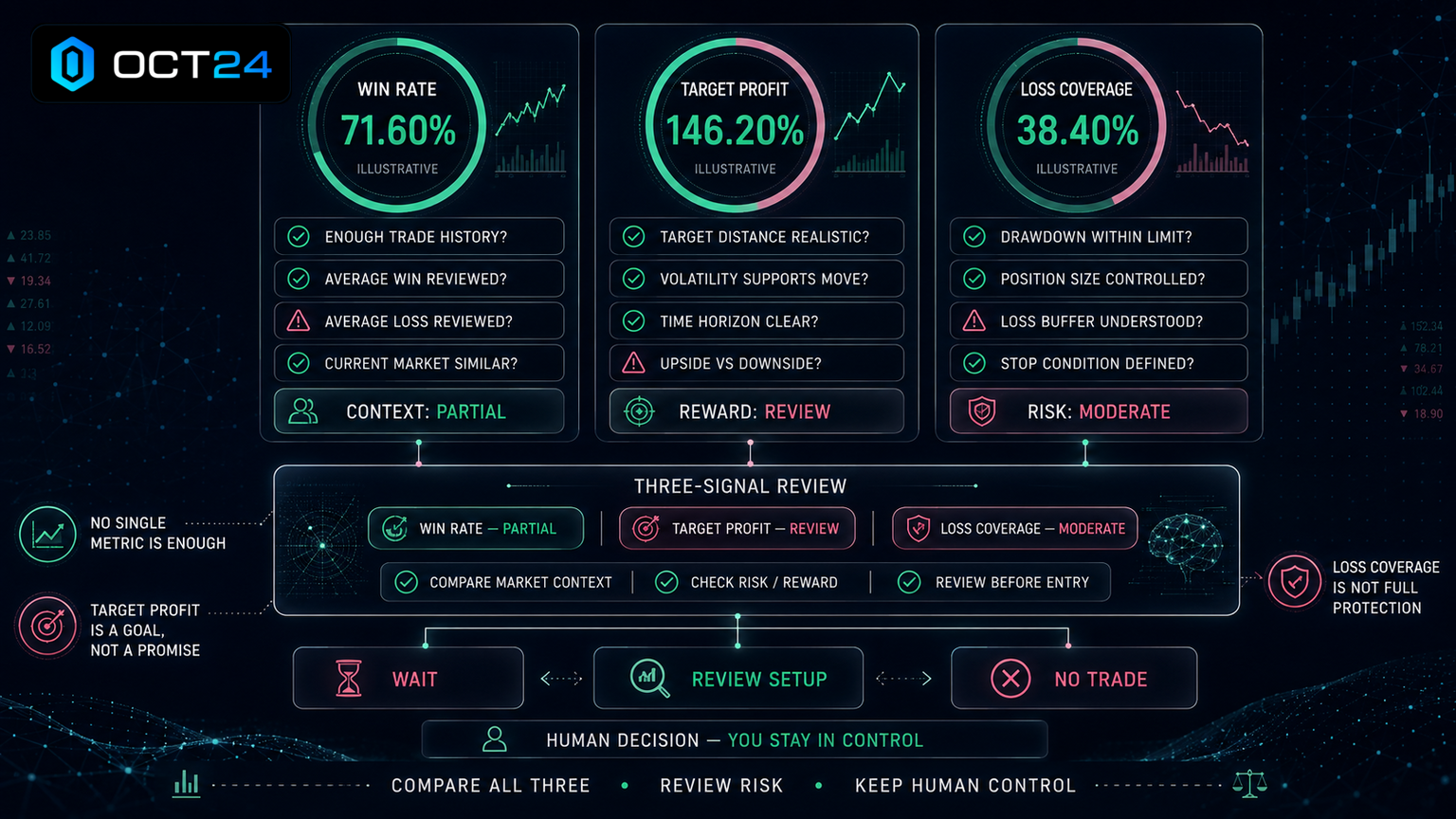
How to Make the Final Decision Before Entering
A simple rule can help: if one signal makes you uncomfortable, do not ignore it just because another signal looks appealing. Compare the full set of numbers before entering.
This is where discipline becomes useful. Traders do not need every opportunity to be perfect. They need a consistent way to decide which opportunities are worth taking and which ones are better left alone.
A third trade may look appealing until the trader reviews Loss Coverage. If the possible loss does not fit their account size or current mindset, the trade may not be right for them even if the other numbers look attractive.
Another trade may show a higher Target Profit but a Win Rate that does not feel as strong. This may suggest a more aggressive opportunity. Some traders may be comfortable with that kind of setup, while others may prefer to wait for a cleaner balance.
For example, a trade may show a strong Win Rate but a lower Target Profit. This may suggest a more modest opportunity. It could still be useful for a trader who values consistency and does not want to chase large moves.
Sometimes the three signals will not feel perfectly aligned. That does not automatically mean the trade is bad. It means the trader should slow down and review the setup more carefully.
What to Do When the Signals Do Not Agree
The trader still has an important role. They need to decide whether the opportunity fits their own capital, risk comfort, and current trading routine.
OCT24 helps simplify this decision by presenting the key signal information in a direct format. The platform does not ask users to manually inspect every chart, calculate every indicator, or build a full market thesis from scratch. OCT24 performs most of the market analysis behind the scenes and presents the trading opportunity with the core decision metrics the user needs to review.
This is why signal comparison matters. It helps traders separate emotional attraction from practical fit.
Now imagine a second opportunity. The Target Profit is smaller, but the Win Rate is stronger and the Loss Coverage feels easier to manage. For a trader who wants a calmer routine, that second trade may fit their plan better than the first one. It may not look as exciting at first glance, but it may be easier to understand and easier to review responsibly.
A beginner may be tempted to focus on the highest Target Profit because it feels like the clearest reward. But a high reward target can be less useful if the Win Rate is weaker or if the Loss Coverage does not fit the trader’s comfort level. A trade can look attractive on one number and still feel too aggressive when the full signal picture is reviewed.
The key is not to ask, “Which number looks most exciting?” The better question is, “Do these numbers make sense together?”
Imagine a trader sees an OCT24 trading opportunity with a strong Win Rate, a moderate Target Profit, and a Loss Coverage figure that feels comfortable for their account size. That setup may look more balanced than a trade with a very high Target Profit but weaker protection around the possible loss.
FAQs
Why should traders compare signals before entering a trade?
Traders should compare signals because one number does not explain the full trade. Win Rate, Target Profit, and Loss Coverage should be reviewed together before activation.
What are the main OCT24 signals to compare?
The main OCT24 signals to compare are Win Rate, Target Profit, and Loss Coverage. These help users review reward, downside context, and trade profile before entering.
Is Win Rate the most important signal?
Win Rate is important, but it should not be used alone. It should be compared with Target Profit and Loss Coverage.
Does a high Target Profit mean a better trade?
Not always. A higher Target Profit may look attractive, but traders should compare it with Win Rate, Loss Coverage, and account exposure.
Does Loss Coverage remove risk?
No. Loss Coverage gives downside context, but it does not remove trading risk or guarantee results.
Does OCT24 show full asset analysis for every trade?
OCT24 currently focuses on simplified trade or bot information such as Win Rate, Target Profit, and Loss Coverage. It does not show detailed asset research, exact entry points, or exact exit points for every opportunity.
Can signal comparison help avoid overtrading?
Yes. Comparing signals creates a pause before activation, which can help traders avoid entering only because they feel rushed.
How does OCT24 support signal comparison?
OCT24 scans market conditions, identifies potential opportunities, and presents AI-supported trading signals that users can review before execution.
Where can I learn more about OCT24?
You can learn more through About OCT24 or review AI-supported opportunities when you Start Trading with OCT24.
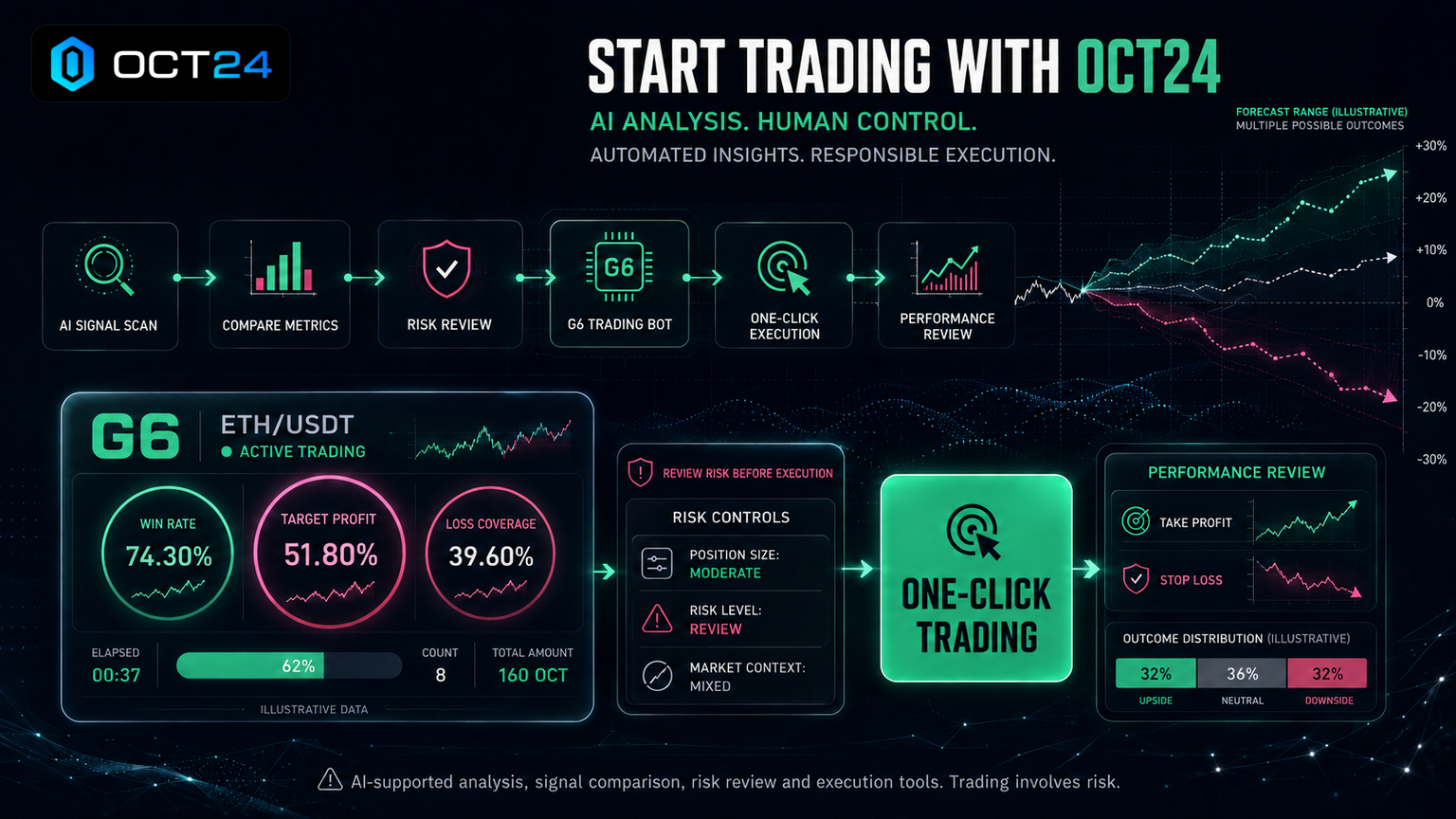
Final Thoughts
Comparing signals before entering a trade helps traders avoid making decisions from one attractive number alone.
On OCT24, the three core signals to compare are Win Rate, Target Profit, and Loss Coverage. Together, they help users review the trade profile, reward objective, and downside context before activation.
OCT24 performs most of the market analysis by scanning market conditions and presenting AI-supported opportunities. The trader still controls exposure, capital allocation, and execution decisions.
Used responsibly, signal comparison can make one-click trading more disciplined. It helps traders slow down, review the full picture, and avoid acting only because a trade looks exciting.
The best trade review is simple: compare the signals, check your risk, then decide whether the opportunity fits your plan.
Learn more at OCT24, read more on About OCT24, or Start Trading with OCT24 when you are ready to review AI-supported trading opportunities with a clearer signal comparison process.