
How AI Helps Traders Stay Objective
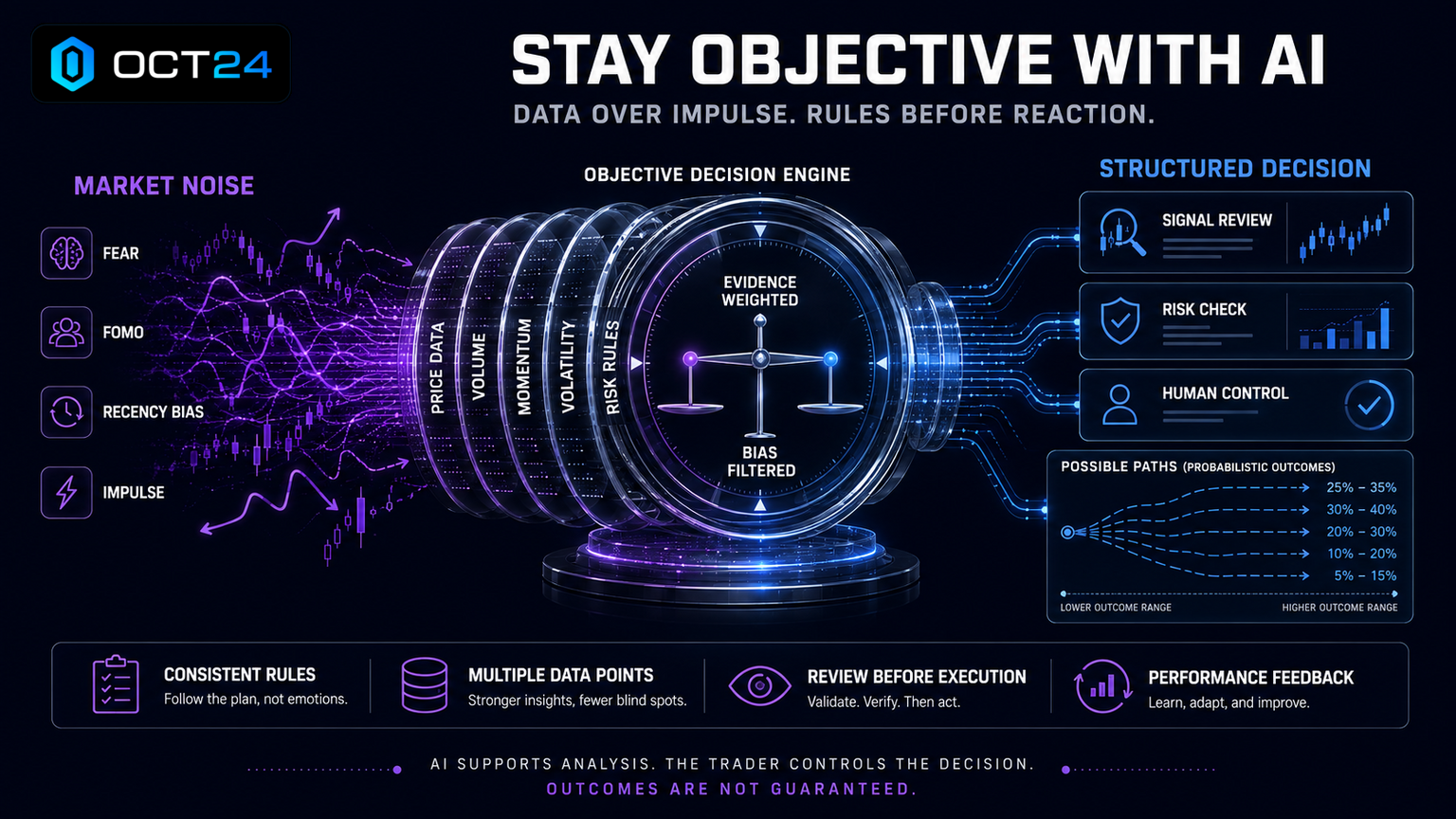
AI helps traders stay objective by turning emotional trading decisions into a more structured review process. Instead of reacting to fear, excitement, or market noise, traders can use AI-supported signals to slow down, compare the available information, and decide whether a trade fits their risk comfort.
This matters because crypto markets move quickly. A sudden green candle can make traders feel like they are missing out. A sharp pullback can make them close too early, double down too fast, or jump into a trade without checking the full setup.
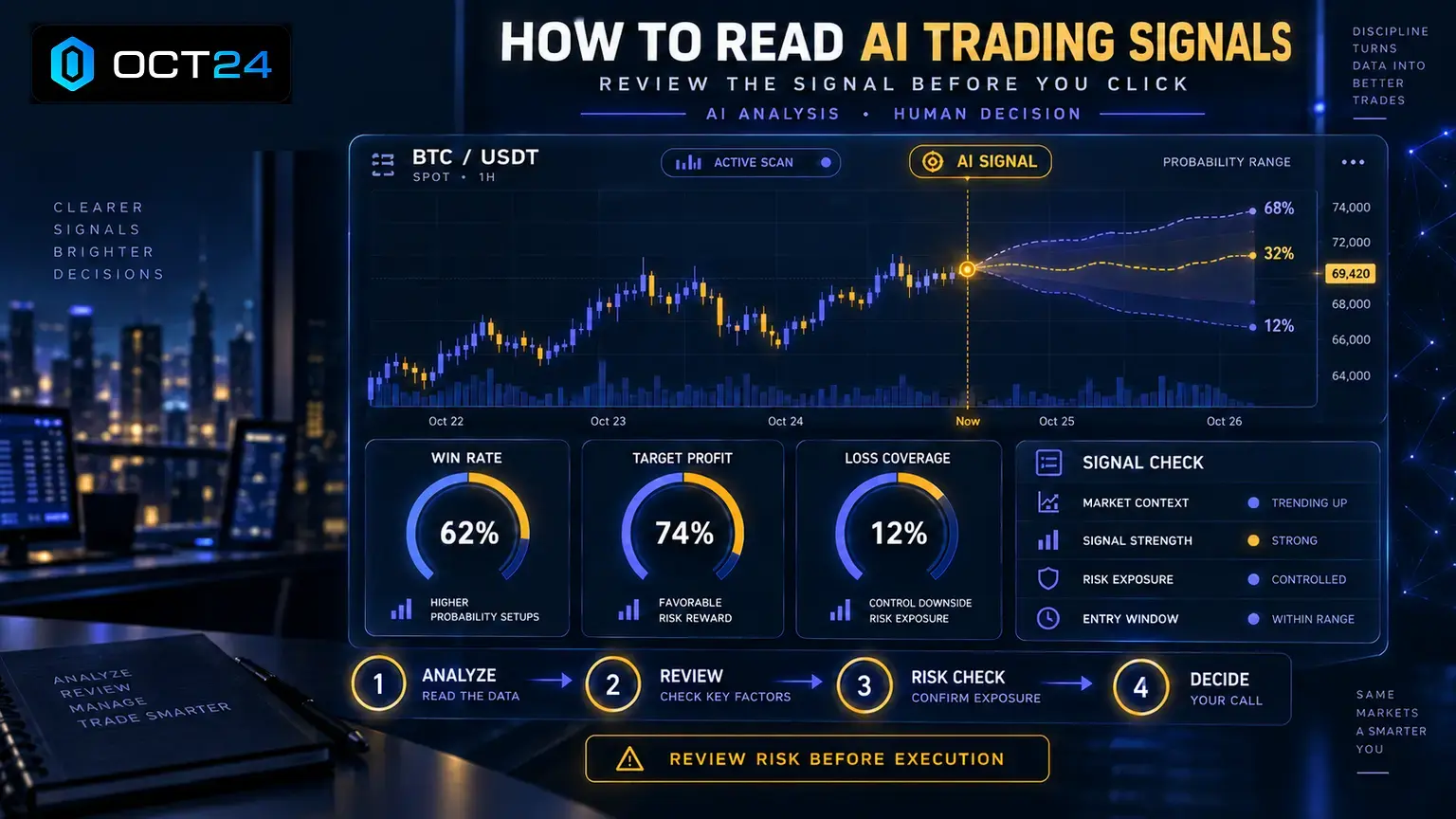
OCT24 is built around a simpler decision process. The platform performs most of the market analysis by scanning market conditions, identifying potential opportunities, and presenting AI-supported trading signals. The trader then reviews key details such as Win Rate, Target Profit, and Loss Coverage before deciding whether to activate a trade.
That does not mean AI removes risk. It means AI can help make the decision feel less emotional and more consistent.
How AI Helps Traders Stay Objective in Fast Markets
AI helps traders stay objective in fast markets by keeping the decision focused on signals instead of emotions. When markets move quickly, a trader may feel pressure to act immediately. AI can help by organizing the trade opportunity into a clearer set of numbers and conditions.
In manual trading, the trader often has to watch charts, compare timeframes, check indicators, read news, and manage emotions at the same time. That can become overwhelming, especially for beginners.
With OCT24, the AI bot handles most of the market scanning and presents an opportunity in a more direct way. The user does not need to pick the crypto market manually or study every asset before seeing a potential trade. The user reviews the signal information and decides whether the trade fits their comfort level.
This can make the process feel more objective because the trader is not starting from a blank chart. They are reviewing a structured opportunity.
Why Objectivity Is Hard for Traders
Most traders know they should stay calm. The hard part is doing it when real money, fast price movement, and uncertainty are involved.
A trader may enter too early because they are afraid of missing out. They may exit too quickly because one red candle makes them nervous. They may keep trading after a loss because they want to recover immediately.
These reactions are normal. They are also one reason trading psychology matters so much. Even a trader with a good strategy can make poor decisions if emotion takes over.
AI cannot remove human emotion completely. But it can help reduce the number of emotional decisions a trader needs to make in the moment.
Instead of asking, “What do I feel like doing right now?” the trader can ask, “What do the signals show?”
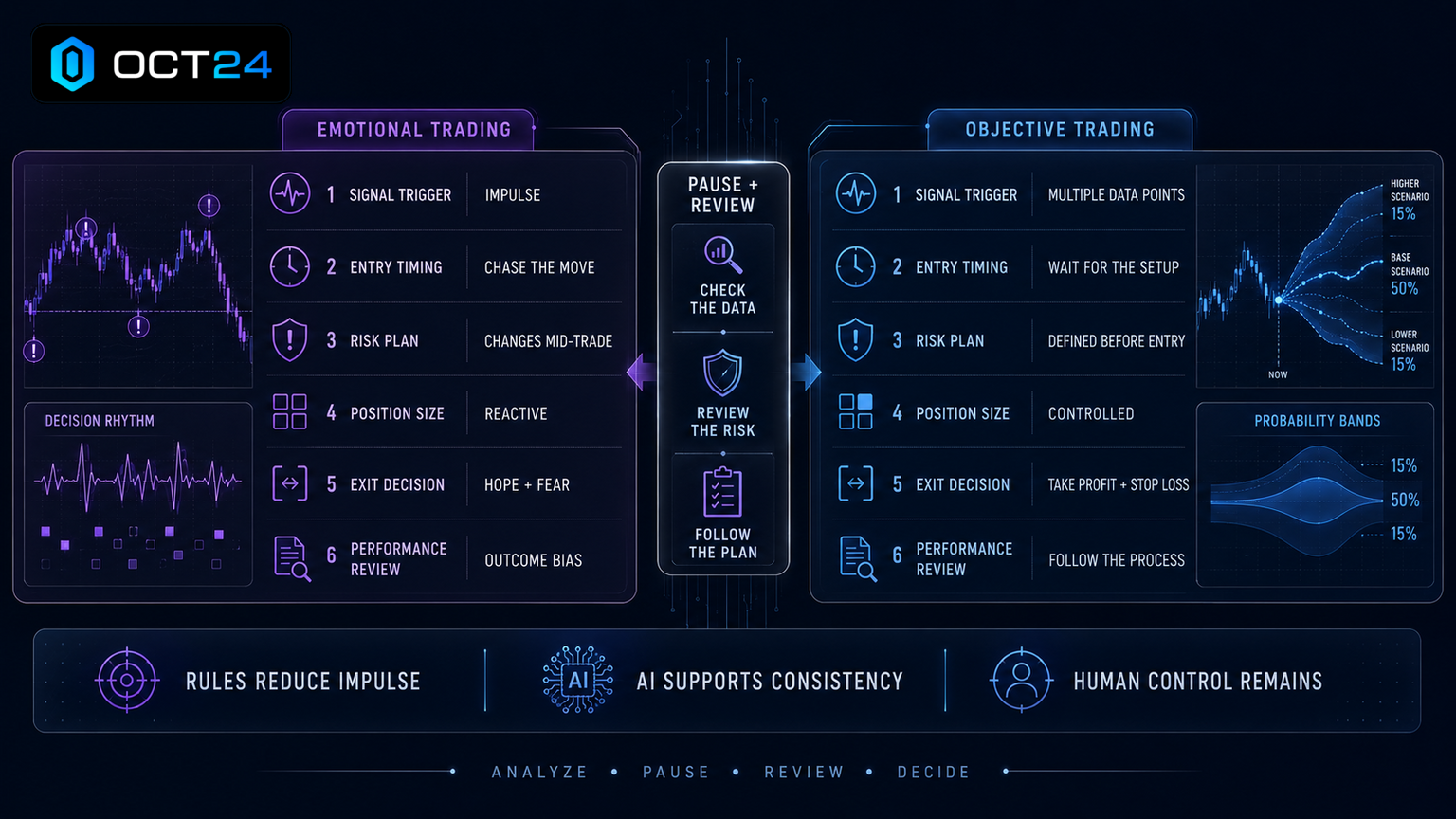
The Difference Between Objective Signals and Emotional Reactions
An emotional reaction usually comes from pressure. It may sound like this:
- The market is moving without me.
- I need to enter now.
- I lost the last trade, so I need to win this one.
- This looks exciting, so I should take it.
- I do not want to miss the next move.
An objective review sounds different. It may sound like this:
- What is the Win Rate?
- Is the Target Profit realistic?
- Does the Loss Coverage fit my account?
- Am I comfortable with the risk?
- Does this trade fit my routine?
That change in thinking is important. It turns the decision from a reaction into a review.
How OCT24 Supports More Objective Decisions
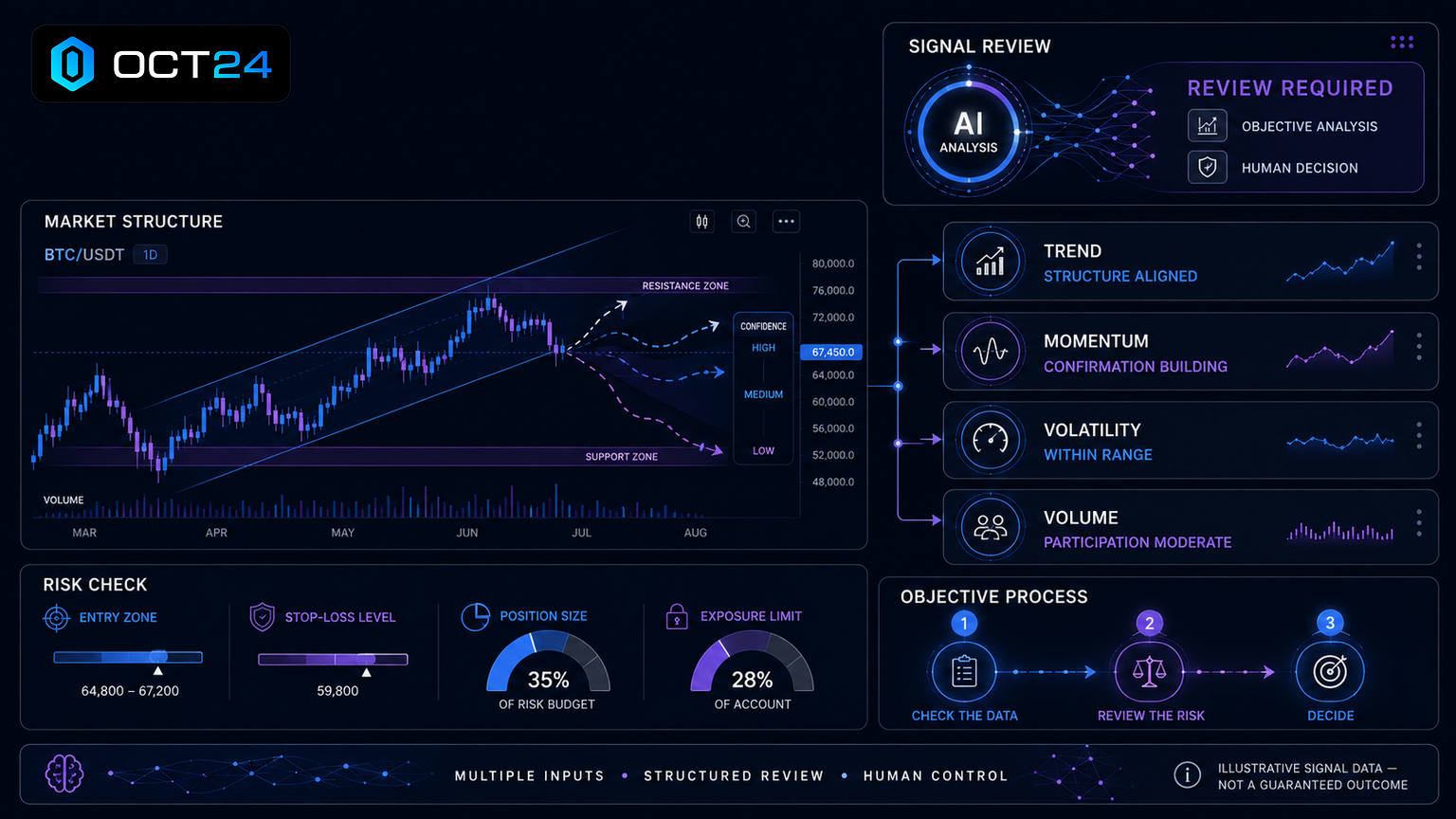
OCT24 supports more objective decisions by reducing the amount of manual market analysis the user has to do before reviewing a trade. The AI bot scans market conditions, identifies potential opportunities, and presents AI-supported trading signals in a simplified format.
This does not mean the platform shows every piece of market research behind the trade. At the moment, OCT24 does not present full asset research, exact entry details, or exact exit details for each opportunity. The main decision information shown to the user is focused on Win Rate, Target Profit, and Loss Coverage.
That makes the review process simple. The trader is not trying to understand every indicator or market structure detail before deciding. They are comparing the signal metrics that OCT24 presents and deciding whether they want to activate the bot.
This is also where one-click trading becomes useful. The process is faster and cleaner, but the trader still needs to stay responsible. A quick trade decision should still be a thoughtful trade decision.
Why Three Core Signals Matter
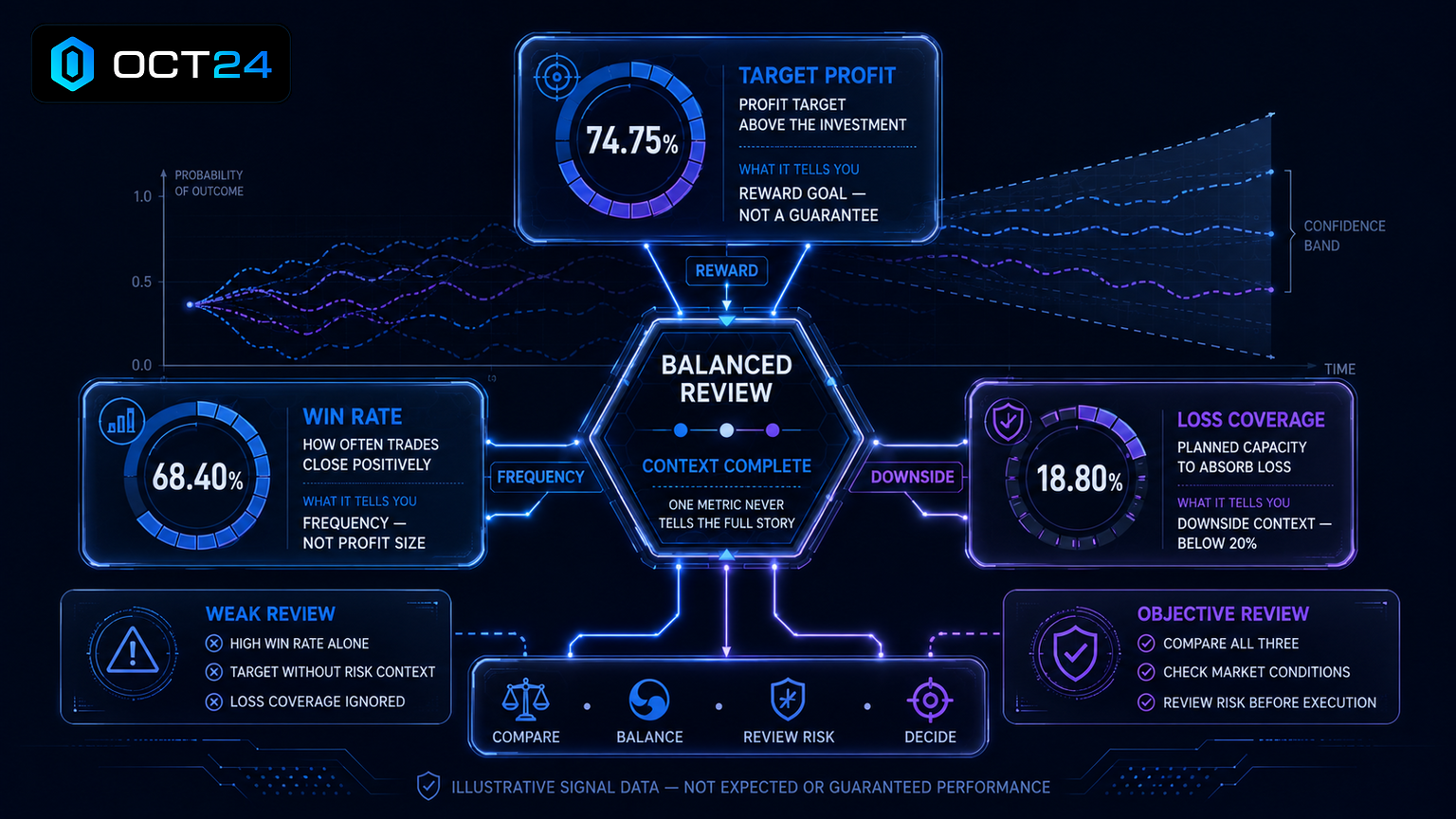
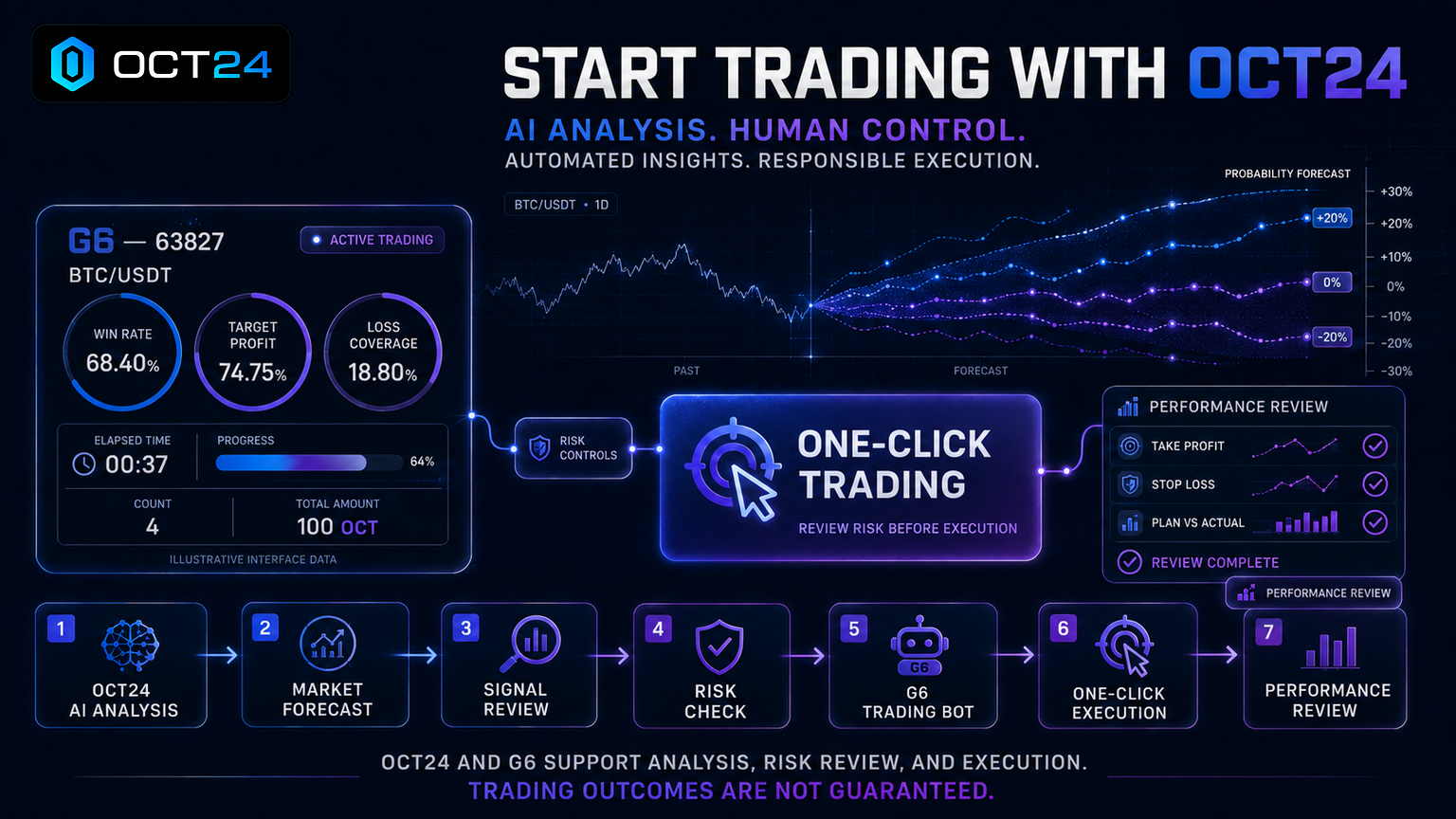
For OCT24 users, objectivity starts with the three core signals: Win Rate, Target Profit, and Loss Coverage.
These signals help the trader review the opportunity from more than one angle. Win Rate helps the trader think about probability. Target Profit helps the trader understand the possible reward. Loss Coverage helps the trader think about downside protection and risk comfort.
No single number should control the full decision. A high Win Rate may look attractive, but it does not guarantee the trade will win. A high Target Profit may look exciting, but it may also come with more uncertainty. Loss Coverage can help frame risk, but it does not remove trading risk.
A more objective trader compares all three together.
Using Win Rate Without Getting Carried Away
Win Rate is one of the easiest numbers to understand, which is why many traders focus on it first. A higher Win Rate can make a trade feel more comfortable.
But Win Rate should not be treated as a promise. It is a signal, not a guarantee.
A trader who wants to stay objective should ask what the Win Rate means in context. Is it strong enough to consider? Does it match the Target Profit? Does the Loss Coverage feel reasonable?
This helps avoid a common mistake: taking a trade just because one number looks good.
Using Target Profit Without Chasing Big Numbers
Target Profit shows the potential upside of the trading opportunity. It can be useful because it helps traders understand what the AI bot is aiming for in that trading cycle.
The emotional mistake is chasing the biggest Target Profit every time. Bigger numbers can feel more exciting, but they are not always the best fit for every trader.
A beginner may be better served by asking whether the Target Profit makes sense with the other signals. If the Target Profit looks high but the Loss Coverage feels uncomfortable, the trade may not fit the trader’s plan.
Objective trading is not about choosing the most exciting number. It is about choosing the setup that makes sense.
Using Loss Coverage Without Ignoring Risk
Loss Coverage helps traders think about the downside of a trade. It is important because many emotional trading mistakes happen when traders focus only on potential profit.
OCT24 presents Loss Coverage as part of the signal review process. This helps the trader pause and ask a practical question: “Am I comfortable with the possible downside of this trade?”
Loss Coverage does not mean the trade is risk-free. Crypto markets can move quickly, and any trade can lose. But seeing risk information before activation can help traders avoid entering purely because they feel excited.
This is one of the clearest ways AI can support objectivity. It keeps risk visible at the moment when emotions may be focused on reward.
How AI Helps Reduce Overtrading
Overtrading often happens when a trader feels the need to always be active. They may take trades because they are bored, frustrated, impatient, or trying to recover from a previous loss.
AI can help reduce this by turning trading into a signal-based process. Instead of constantly hunting for a trade, the trader waits for the platform to present a potential opportunity.
OCT24 does not require the user to manually search through crypto markets for hours. The AI bot scans market conditions and presents opportunities when available. The user then decides whether to activate the trade based on the signal information.
This can help traders avoid overtrading because they are not forcing setups from a blank screen.
Why Objectivity Still Requires Human Judgment
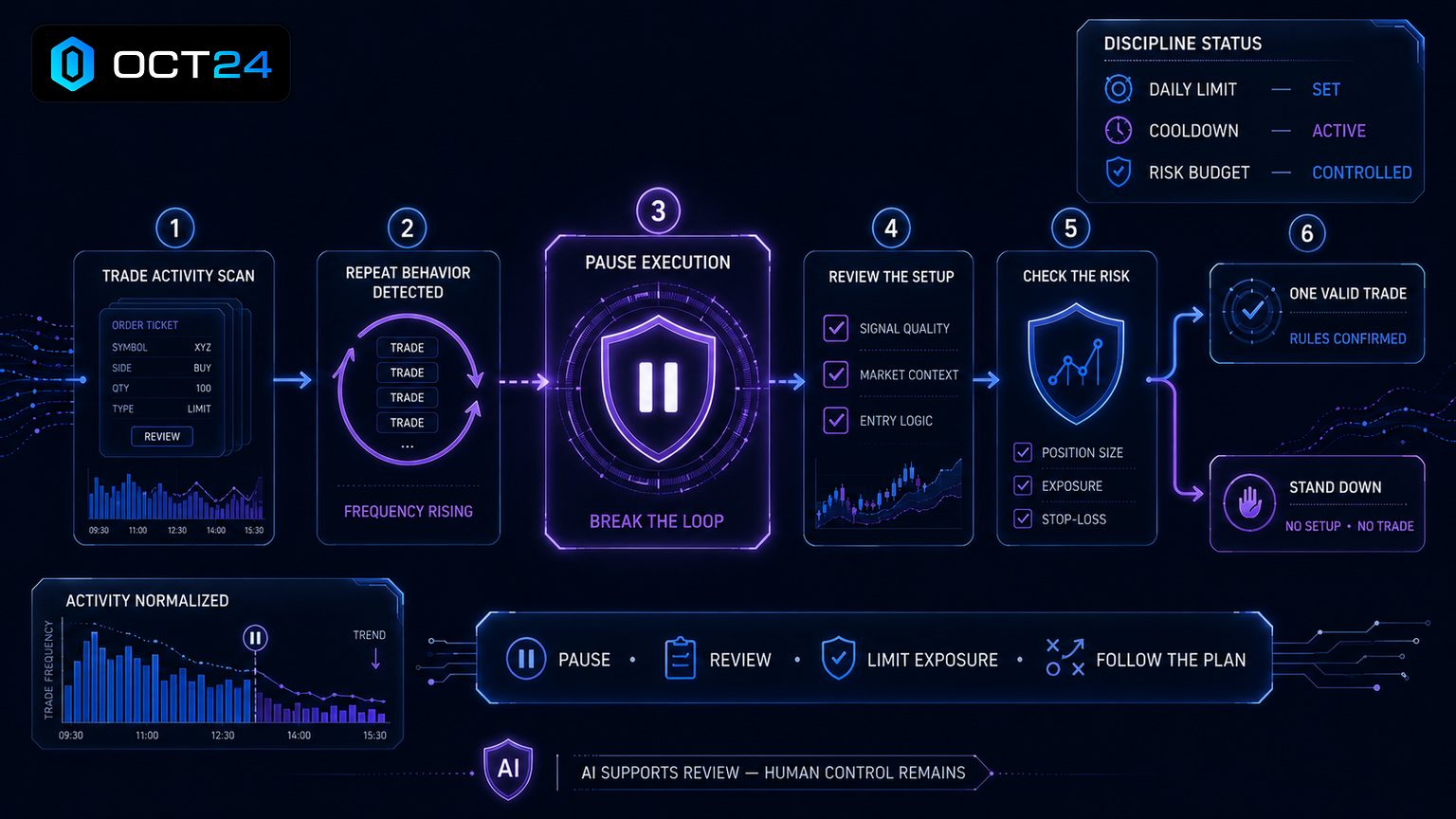
AI can support objectivity, but it does not replace judgment. This is an important point for beginner traders.
OCT24 may perform most of the market analysis and present a trade opportunity, but the trader still decides whether to activate the bot. The trader also remains responsible for capital allocation, exposure, and whether the trade fits their current risk comfort.
This is where AI trading vs manual trading becomes a useful comparison. Manual traders make many decisions themselves from start to finish. AI-supported traders may receive a more structured signal, but they still need to review it responsibly.
The goal is not to remove the trader from the process. The goal is to make the trader’s decision clearer and less emotional.
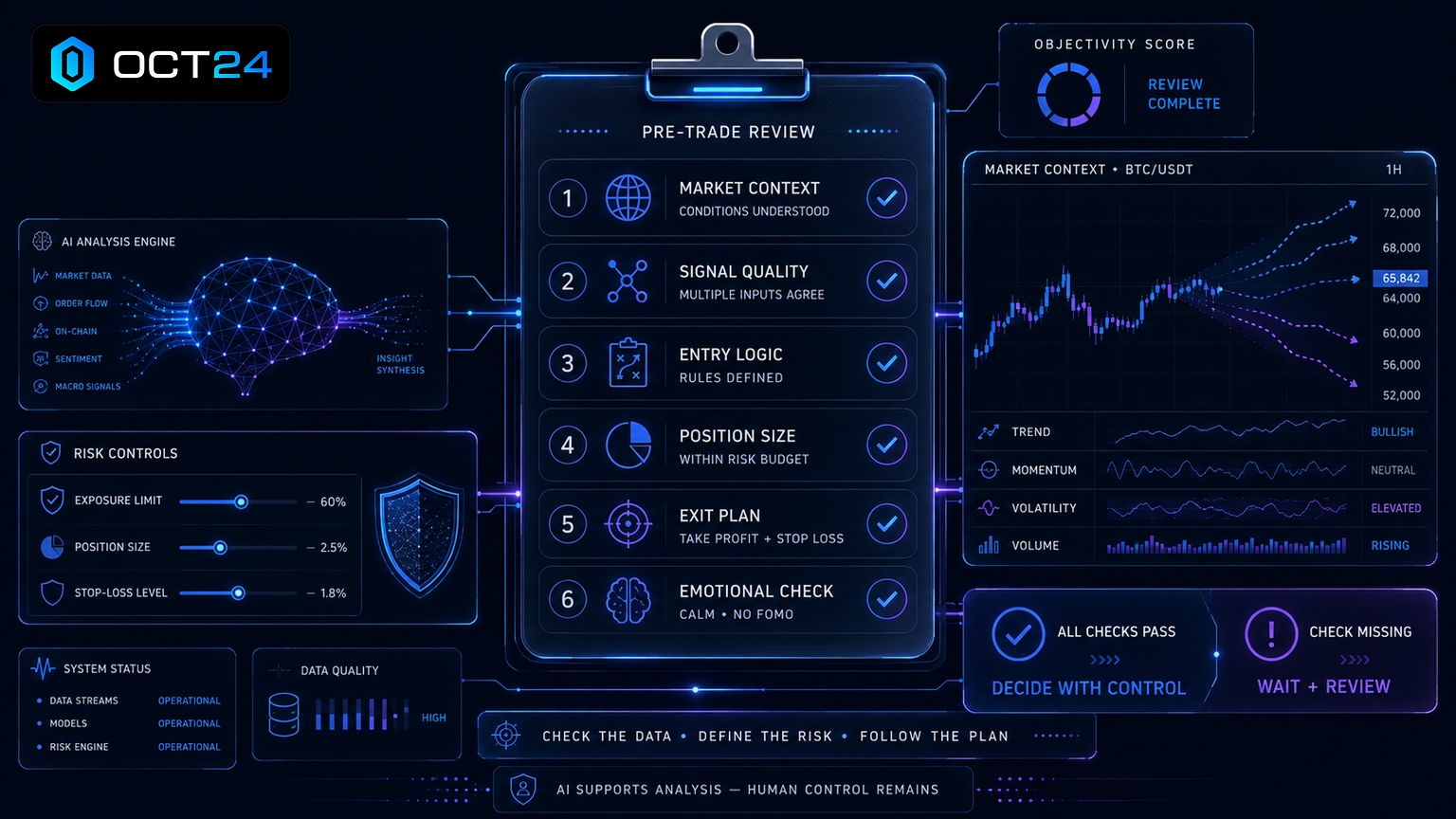
A Simple Pre-Trade Objectivity Check
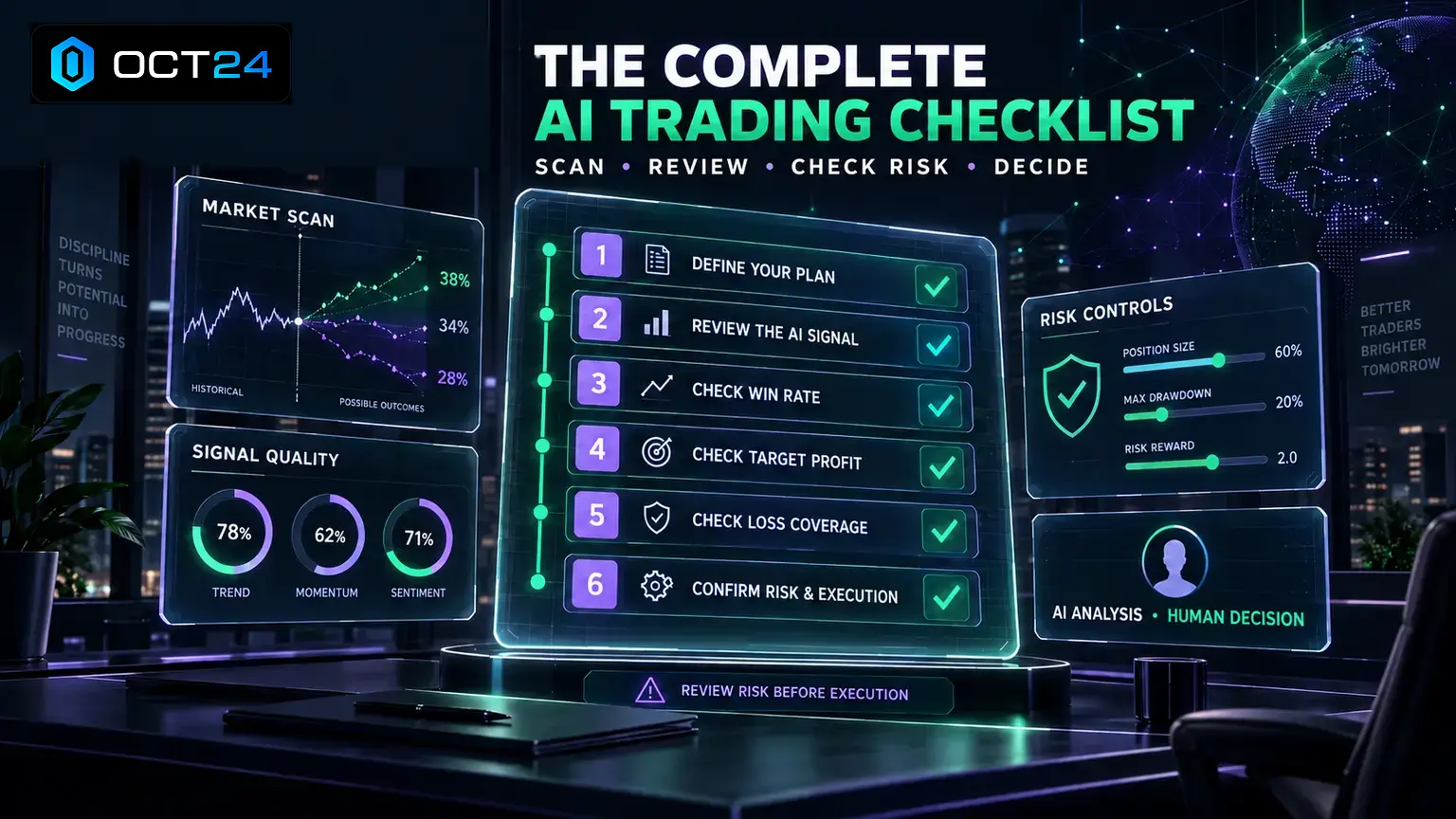
Before activating an AI-supported trade, traders can use a short objectivity check. The goal is to slow the decision down just enough to avoid emotional action.
- Do I understand the Win Rate?
- Does the Target Profit make sense?
- Am I comfortable with the Loss Coverage?
- Am I entering because the signal fits, not because I feel rushed?
- Does this trade fit my account size?
- Would I still take this trade after a previous loss?
- Am I prepared for the trade to lose?
- Can I review this decision calmly later?
This type of checklist is simple, but it can help. It gives the trader a repeatable process instead of relying on mood.
How Objective Trading Helps During Volatile Markets
Volatile markets can make emotions stronger. Fast price movement can make traders feel like they need to act immediately.
This is where how AI handles market volatility becomes relevant. AI can scan changing market conditions faster than a person can manually review multiple charts. It can then present a trading opportunity in a format that is easier to review.
The trader still needs to be careful. Volatility can create opportunity, but it can also increase risk. A strong-looking trade can still lose if the market changes quickly.
Objectivity means reviewing the signal without assuming that fast movement equals a good trade.
How Objective Trading Helps During Sideways Markets
Sideways markets can create a different emotional problem. Instead of panic, traders may feel boredom or impatience.
During AI trading during sideways markets, some traders may force entries because the market feels quiet. Others may enter weak setups because they want something to happen.
AI-supported trading can help by giving the trader a more structured reason to review or ignore a trade. If the signal information does not look strong enough, the trader can skip it.
This is still an active decision. Choosing not to trade can be just as important as entering.
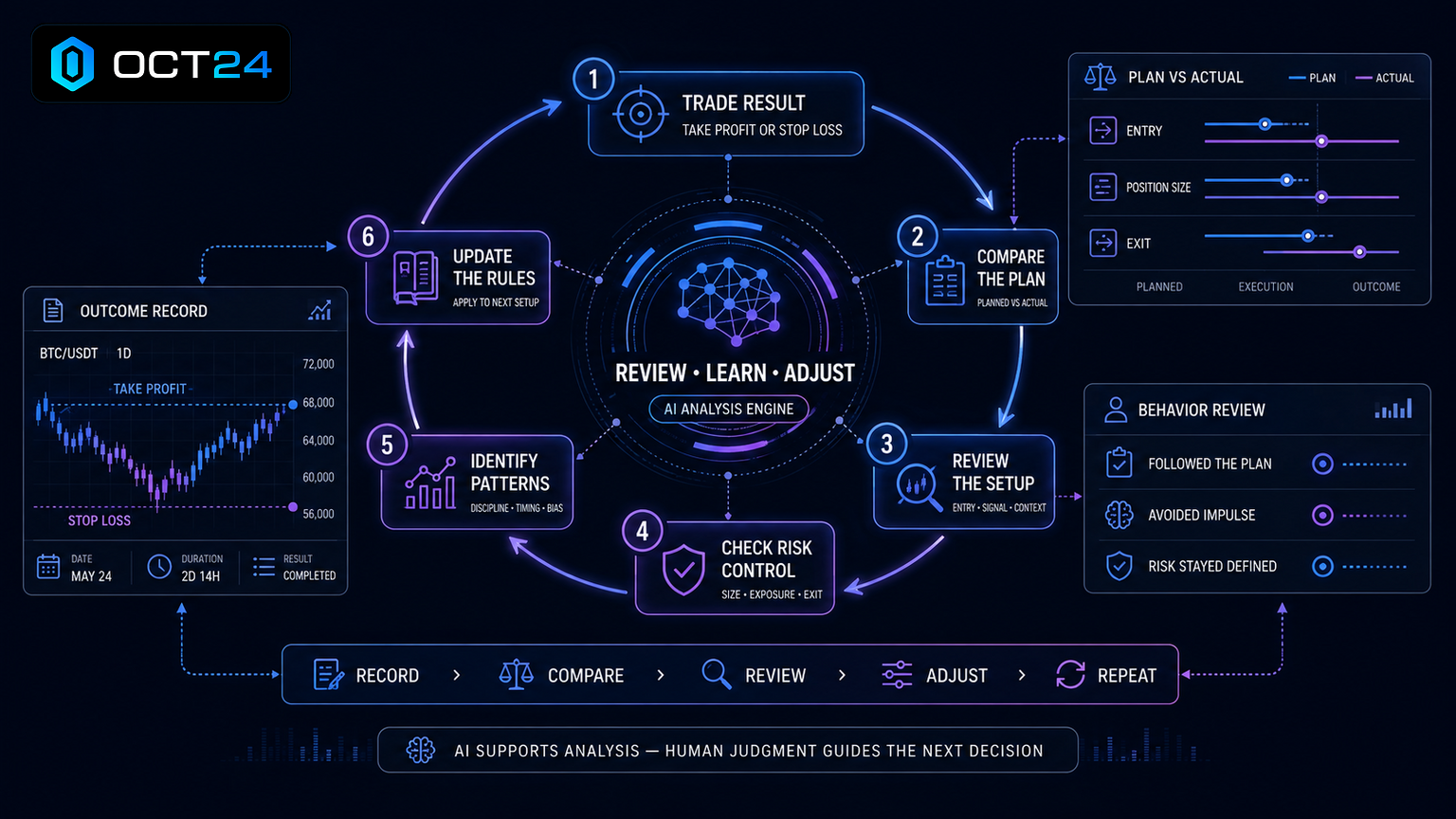
How AI Helps Traders Learn From Results
Objectivity does not stop when the trade ends. Traders also need to review their results without becoming too emotional.
After a win, it is easy to become overconfident. After a loss, it is easy to become frustrated. Both reactions can lead to poor decisions later.
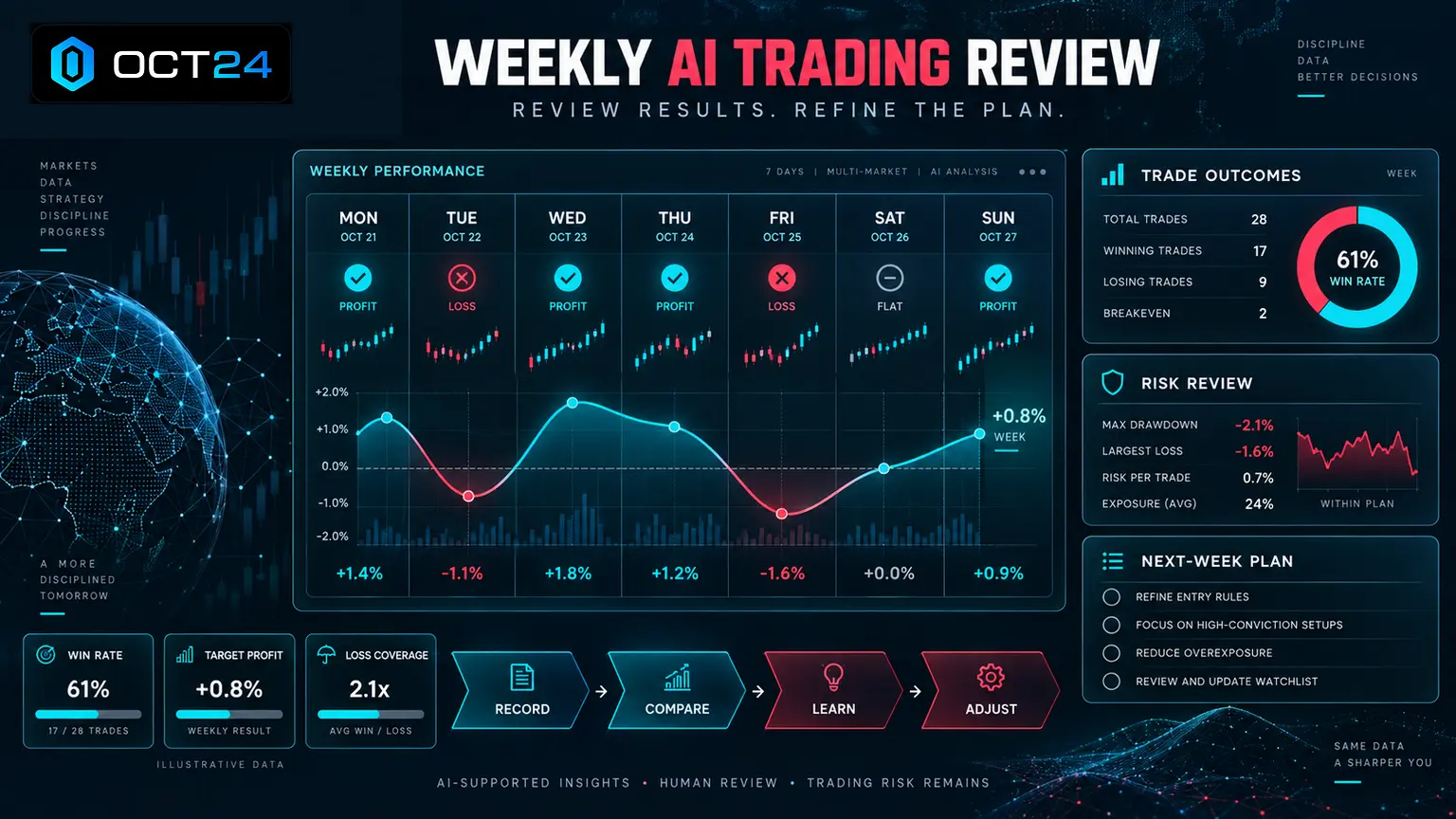
A more objective trader reviews the process, not only the outcome. Did the signal make sense? Was the trade size reasonable? Did the trader enter calmly? Did the decision fit the routine?
This connects with AI trading performance because results should be reviewed over time. One trade does not prove that a system works or fails. Patterns matter more than single outcomes.
Common Emotional Mistakes AI Can Help Reduce
AI-supported trading can help reduce several emotional mistakes, especially when the trader uses the signals carefully.
- Entering because of fear of missing out.
- Taking trades after a loss to recover quickly.
- Ignoring risk because the profit number looks attractive.
- Overreacting to short-term price movement.
- Taking too many trades without a routine.
- Changing behavior after one win or one loss.
- Trusting one signal without comparing the full setup.
These are some of the most common AI trading mistakes beginners should avoid. The platform can help structure the decision, but the trader still needs discipline.
Where the G6 Trading Bot Fits
The G6 Trading Bot is relevant because it represents the kind of fast, simplified trading experience OCT24 is building around. The bot presents a trade opportunity and gives the trader a limited window to decide whether to activate it.
This can support objectivity because the decision is narrowed down to the available signal information. Instead of choosing a market manually, the user reviews the bot’s metrics and decides whether the trade fits their comfort level.
That speed should not be confused with certainty. A fast decision still needs to be responsible.
How Objective Trading Builds a Better Routine
Objectivity becomes easier when it is part of a consistent trading routine. Traders do not need to reinvent their decision process every time they see a new opportunity.
A simple routine may look like this:
- Review the signal.
- Check Win Rate.
- Check Target Profit.
- Check Loss Coverage.
- Decide whether the trade fits the account.
- Activate only if the setup feels reasonable.
- Review the result later.
This kind of routine helps traders avoid changing their behavior based on emotion. It also makes performance review more useful because the trader can compare similar decisions over time.
What AI Cannot Do for Objectivity
It is also important to understand the limits. AI can support objectivity, but it cannot guarantee the right decision.
AI cannot remove market risk. It cannot promise that a trade will win. It cannot make every signal perfect. It also cannot decide how much risk is personally comfortable for each trader.
On OCT24, the AI bot presents the trade opportunity and the key signal information. The trader still chooses whether to activate the bot and how much capital they are comfortable exposing.
This is why responsible trading language matters. AI can help traders stay objective, but it does not make trading automatic success.
Why Staying Objective Does Not Mean Being Passive
Staying objective does not mean avoiding decisions. It means making decisions for clear reasons instead of emotional reasons.
A passive trader may wait too long because they are afraid to act. An emotional trader may enter too quickly because they feel pressure. An objective trader sits between those two extremes. They review the information, accept that risk exists, and make a decision based on the setup in front of them.
This is especially useful with AI-supported trading because the process can move quickly. OCT24 may present a trade opportunity, but the user still needs to pause long enough to compare the key metrics and decide whether activation makes sense.
Objectivity is not the same as certainty. A trader can make a calm, well-reviewed decision and still experience a losing trade. The value is that the decision can be reviewed later without wondering whether it was driven by panic, excitement, boredom, or revenge trading.
That is how objectivity builds better habits over time. It gives the trader a repeatable way to act, skip, review, and improve.
How to Use OCT24 More Objectively
Traders can use OCT24 more objectively by treating every opportunity as a review, not a prediction.
That means looking at Win Rate, Target Profit, and Loss Coverage together. It also means accepting that some trades should be skipped. A trader does not need to activate every opportunity the platform presents.
A calm trader may decide that the numbers do not fit their account today. That is still a valid use of the platform.
OCT24 gives the trader a simpler way to review AI-supported opportunities. The trader brings discipline, capital responsibility, and final execution choice.
FAQs
How does AI help traders stay objective?
AI helps traders stay objective by organizing trading decisions around signals instead of emotions. With OCT24, the AI bot scans market conditions and presents key trade information such as Win Rate, Target Profit, and Loss Coverage so the user can review the opportunity more calmly.
Can AI remove emotions from trading completely?
No. AI can support a more structured process, but traders are still human. Emotional discipline, capital control, and responsible trade selection are still important.
What OCT24 signals should traders review first?
Traders should review Win Rate, Target Profit, and Loss Coverage together. Each signal explains a different part of the opportunity, and no single number should control the full decision.
Does OCT24 show the exact asset and entry point for every trade?
OCT24 currently presents simplified trade information focused on the bot’s key metrics. The user does not manually choose the crypto market and does not receive full asset research, exact entry details, or exact exit details for every opportunity.
Does a high Win Rate guarantee a winning trade?
No. Win Rate is useful information, but it is not a guarantee. Crypto markets can move quickly, and any trade can lose.
Can AI help traders avoid overtrading?
AI can help traders avoid overtrading by making the process more signal-based. Instead of constantly looking for trades manually, users can wait for AI-supported opportunities and decide whether each one fits their plan.
Is one-click trading risky?
One-click trading can make execution faster, but it does not remove risk. Traders should still review the available signal information, understand their exposure, and only activate trades that fit their comfort level.
How can beginners use OCT24 more objectively?
Beginners can use OCT24 more objectively by reviewing each opportunity the same way. Check Win Rate, Target Profit, and Loss Coverage, then decide whether the trade fits the account and current risk comfort.
Where can I learn more about OCT24?
You can learn more on the About OCT24 page or create an account through Start Trading with OCT24 when you are ready to explore AI-supported crypto trading.
Final Thoughts
AI helps traders stay objective by making the trading decision more structured. Instead of reacting to fear, excitement, or market noise, traders can review the signals and decide whether the opportunity fits their risk comfort.
OCT24 supports this process by scanning crypto market conditions, identifying potential opportunities, and presenting AI-supported trading signals. The platform helps simplify the decision, but it does not remove trading risk or guarantee results.
The trader still controls whether to activate the trade, how much capital to expose, and whether the opportunity fits their plan.
A more objective trader is not emotionless. They are simply more prepared. They use structure before action, signals before impulse, and review before execution.
Learn more about OCT24, or Start Trading with OCT24 when you are ready to explore a more structured way to review AI-supported crypto trading opportunities.