
Crypto Trading News: USDT, Bitcoin, and Regulation: What Crypto Traders Should Watch This Week
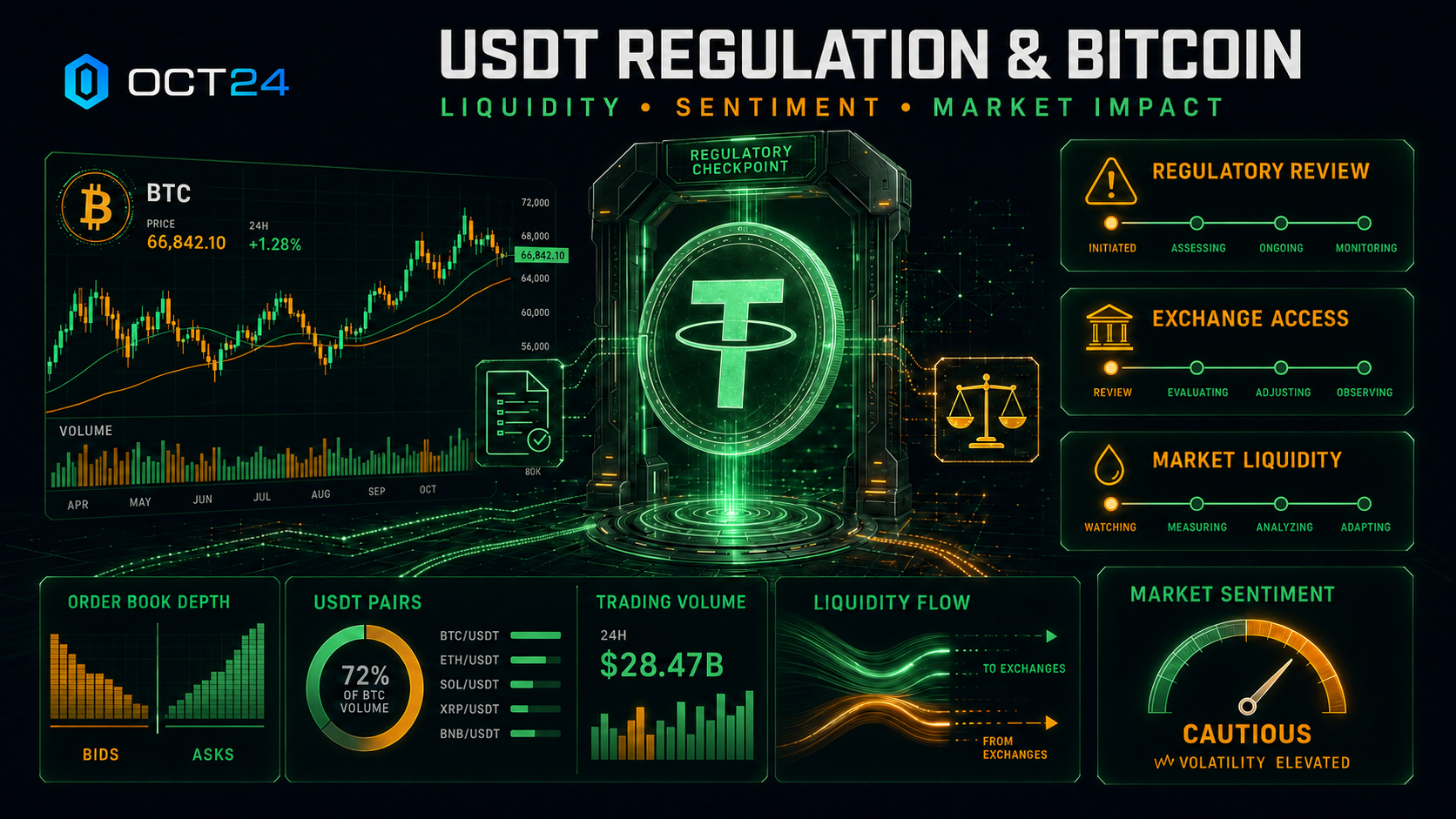
The latest crypto trading news this week is not only about Bitcoin’s price.
Active traders are watching several connected themes: Bitcoin volatility, USDT regulation, stablecoin liquidity, exchange access, regulatory pressure, and broader market sentiment.
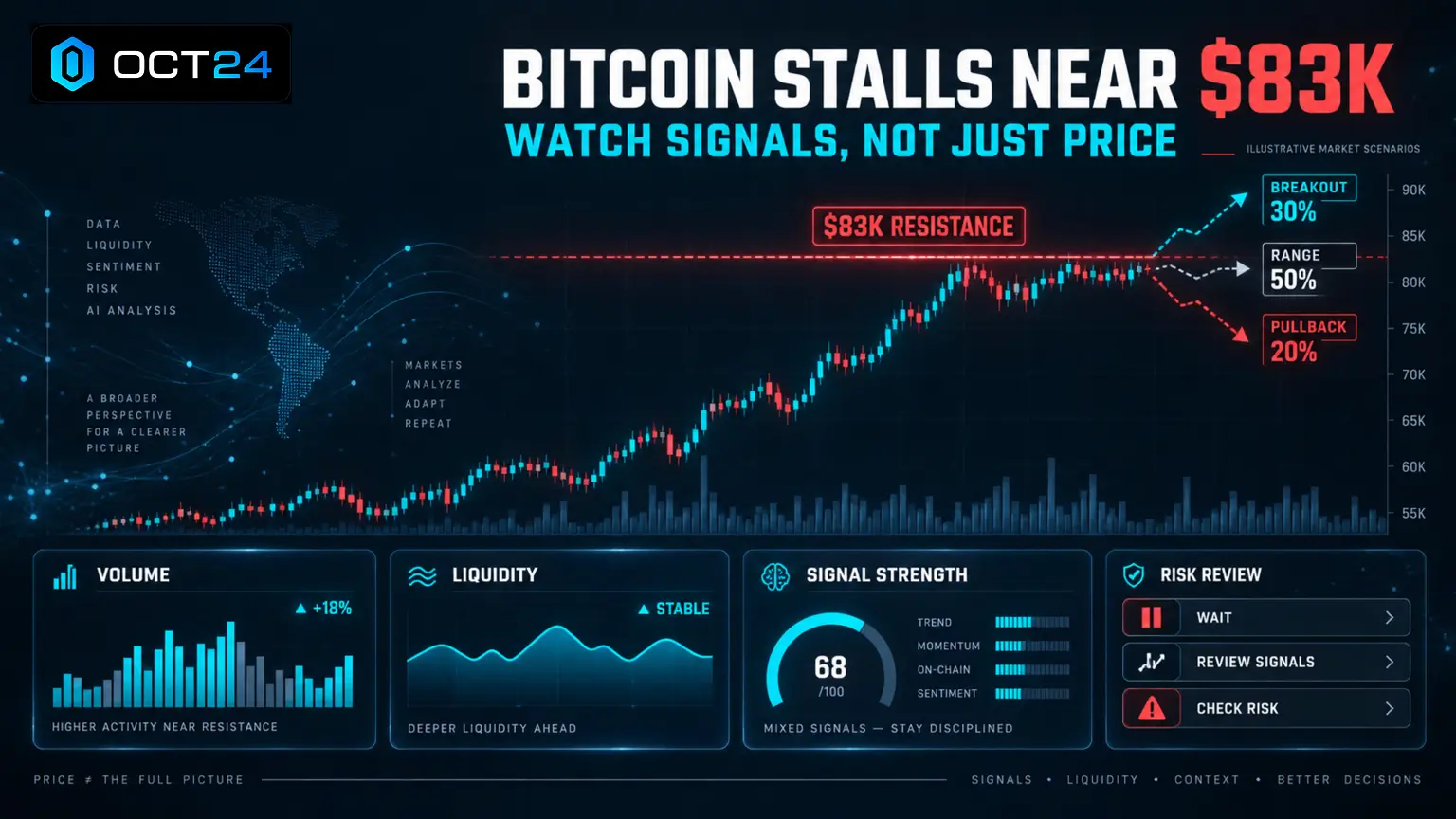
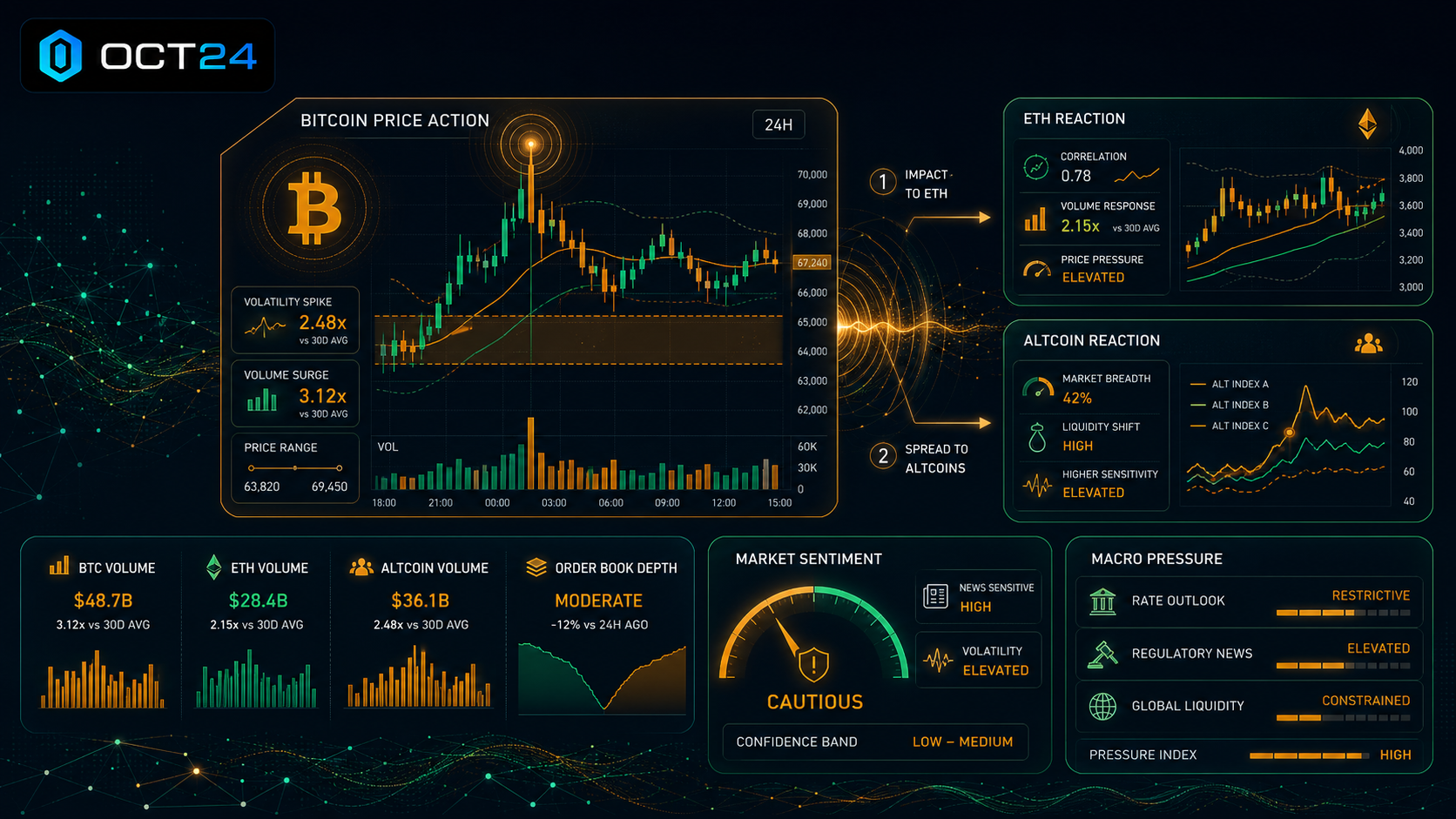
Bitcoin has been moving around the low-to-mid $60,000 range, with CoinDesk price data showing Bitcoin near $63,065 on July 17, 2026, with 24-hour trading volume of about $11.72 billion.
The bigger story is how traders respond to a mix of volatility, regulation, and liquidity concerns.
Meanwhile, stablecoins remain one of the most important stories in crypto.
USDT is widely used across trading pairs, transfers, liquidity management, and short-term positioning.
When stablecoin rules change, or when exchanges adjust support for certain tokens, traders may feel the impact through spreads, available pairs, regional access, or confidence in market infrastructure.
This article breaks down what happened, why it matters, how traders are reacting, and what active traders should watch next.
What Happened?
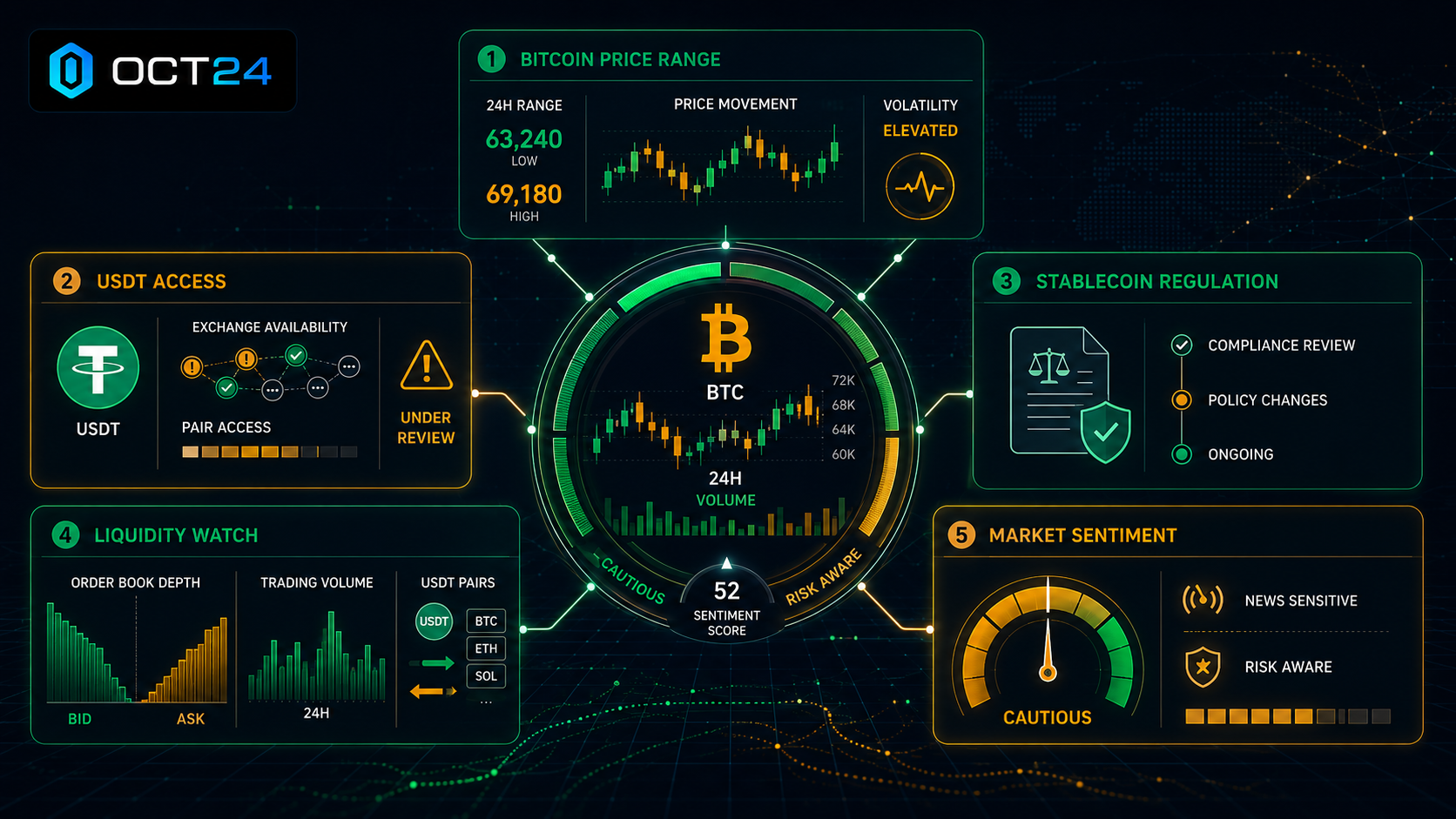
Crypto markets are dealing with several stories at once.
First, Bitcoin has remained volatile.
After climbing above the $65,000 level, Bitcoin later moved back below that area, with investors watching inflation data, interest-rate expectations, ETF flows, and overall risk appetite.
Investopedia reported that Bitcoin recently pushed above $65,000 after cooler-than-expected inflation data encouraged a more risk-on mood, although the move depended partly on whether ETF inflows and macro conditions stayed supportive.
Second, stablecoin regulation remains in focus.
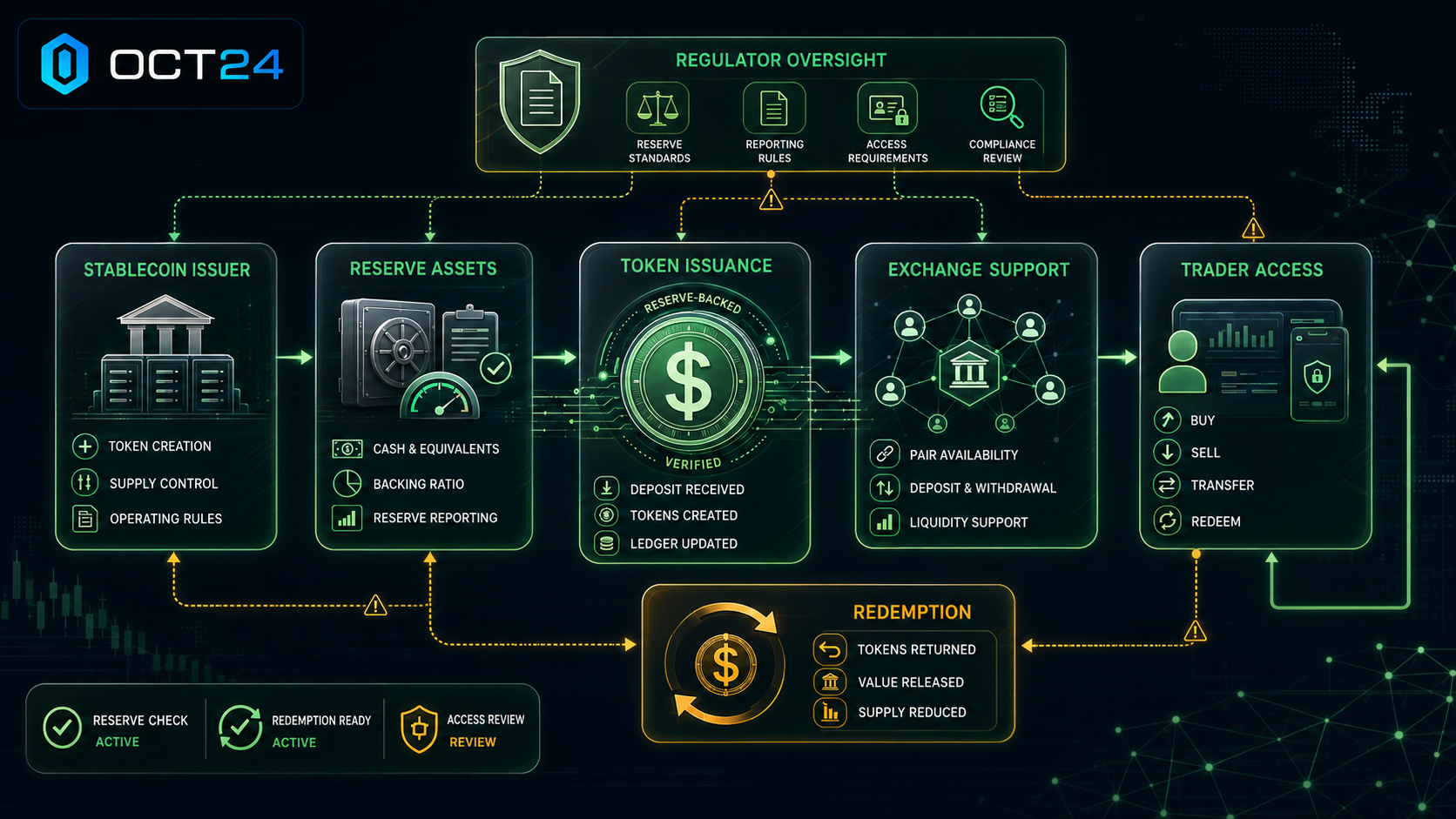
In Europe, MiCA has introduced clearer rules for crypto-assets, including asset-referenced tokens and e-money tokens.
The European Securities and Markets Authority says MiCA introduces uniform EU rules covering transparency, disclosure, authorization, and supervision for crypto-asset issuers and service providers.
Third, USDT-related access is still a practical issue for some traders.
Cointelegraph reported that Revolut notified some customers it would delist USDT after August 31, citing regulatory and risk considerations.
That does not mean USDT is globally banned, but it does show how regulation can affect access on specific platforms or in specific regions.
Fourth, the U.S. stablecoin rulebook is becoming more formal.
The U.S. Treasury has said the GENIUS Act creates federal rules for payment stablecoins and requires rules that treat permitted payment stablecoin issuers as financial institutions for Bank Secrecy Act purposes, with anti-money laundering obligations.
For traders, these developments matter because crypto markets rely heavily on stablecoin liquidity.
Bitcoin may be the headline asset, but stablecoins often act as the rails traders use to move between positions.
Why This Crypto Trading News Matters Now
This crypto trading news matters because the market is dealing with price changes and questions about how the market operates at the same time.
Bitcoin price action can change trader sentiment quickly.
But stablecoin access can affect how traders execute, transfer funds, and manage short-term exposure.
When those two things happen together, the market can become more sensitive to headlines.
There are three main reasons traders are paying attention.
First, stablecoins are important for market liquidity.
Many crypto traders do not move directly from fiat currency into every trade.
Instead, they use stablecoins as a base currency, a settlement tool, or a temporary holding asset between trades.
If access to a major stablecoin changes on a platform, traders may need to use another stablecoin, adjust trading pairs, or change how they move funds.
Second, regulation can affect confidence.
Clear rules can help institutions understand what is allowed, but transition periods can create uncertainty.
Traders may not always know whether a platform will change supported assets, update compliance rules, or restrict certain products in specific regions.
Third, volatility can increase emotional decision-making.
When Bitcoin moves quickly and stablecoin headlines appear at the same time, some traders may rush to enter, exit, or move funds without a clear plan.
That is exactly when a structured approach becomes more important.
This does not mean traders should panic.
It means they should monitor verified information, understand liquidity conditions, and avoid reacting to unconfirmed social media claims.
Why Bitcoin Volatility Is Back in Focus
Bitcoin volatility is important because Bitcoin often sets the tone for the broader crypto market.
When Bitcoin rises quickly, traders may become more willing to take risk.
When Bitcoin drops sharply, capital can move out of altcoins, leverage can unwind, and stablecoin demand can rise as traders seek a temporary parking place.
This week’s Bitcoin movement shows how sensitive crypto can be to macro data.
Softer inflation data can support risk assets because it may reduce concerns about tighter monetary policy.
But that support can fade if broader risk appetite weakens, geopolitical concerns increase, or traders decide to take profits.
Bitcoin’s price does not move in isolation.
Traders often watch several related signals:
- ETF flows
- U.S. dollar strength
- Treasury yields
- equity market sentiment
- crypto funding rates
- stablecoin supply and flows
- exchange order book liquidity
- open interest in derivatives markets
When these signals point in different directions, the market can become choppy.
A move above a key level may attract buyers, but a lack of follow-through can lead to quick reversals.
For active traders, the lesson is simple.
A headline price move is not enough.
Traders also need to study volume, liquidity, and confirmation.
Market Reaction
The market reaction has been mixed rather than moving in one clear direction.
Bitcoin has shown both strength and hesitation.
It moved above $65,000, then later traded below that area again.
That suggests traders are interested in upside momentum, but they are not ignoring macro risk or regulatory uncertainty.
Ethereum and major altcoins often follow Bitcoin during periods of a wider market move.
If Bitcoin rises on risk-on sentiment, altcoins may benefit.
If Bitcoin weakens because traders reduce exposure, altcoins can fall faster because they often carry higher volatility and thinner liquidity.
Stablecoin-related sentiment is less obvious.
USDT does not need to collapse or lose its peg for traders to pay attention.
Even platform-specific access changes can matter because traders may need to adjust how they manage liquidity.
For example, a trader who normally uses a USDT pair may need to check whether a platform still supports that pair in their region.
If not, they may need to use USDC, fiat pairs, or another trading route.
That can affect spreads, execution costs, and convenience.
This is why stablecoin headlines can influence behavior before they affect price charts directly.
Traders may change their plans simply because they want to avoid uncertainty.
Why Stablecoin Regulation Matters
Stablecoin regulation matters because stablecoins are no longer a small part of crypto.
They are part of the market’s basic infrastructure.
A stablecoin is designed to maintain a stable value, often against the U.S. dollar.
Traders use stablecoins because they can move quickly across exchanges, support trading pairs, and reduce the need to return to fiat currency after every trade.
Regulators are focused on stablecoins for several reasons:
- reserve quality
- redemption rights
- consumer protection
- anti-money laundering rules
- issuer transparency
- risk to the wider financial system
- payment use cases
- cross-border flows
In Europe, MiCA has already created rules for asset-referenced tokens and e-money tokens.
The European Banking Authority says issuers of these tokens are required to hold the relevant authorization to operate in the EU.
That matters because clearer regulation can change which stablecoins platforms support.
A token may remain available globally but face restrictions in specific markets.
This matters most for traders who use international platforms, travel frequently, or trade across multiple jurisdictions.
For traders, the practical question is not “Are stablecoins good or bad?” The better question is: “How could stablecoin rules affect my access, liquidity, and execution?”
Why USDT Regulation Is a Trader Issue
USDT regulation is important because USDT is one of the most widely used stablecoins in crypto trading.
It supports many trading pairs and is frequently used by active traders to move between assets.
When a platform changes USDT support, traders may notice several effects:
- fewer available pairs
- conversion requirements
- reduced convenience
- temporary liquidity shifts
- wider spreads on some pairs
- increased use of alternative stablecoins
- more attention on regional rules
It is important to be precise.
A platform delisting or restricting USDT for certain users does not mean USDT has been banned everywhere.
Crypto markets are global, and rules can differ by country, region, and platform.
That is why traders should avoid treating every headline as a market-wide emergency.
Instead, they should verify:
- which platform made the announcement
- which region is affected
- whether deposits, withdrawals, trading, or custody are impacted
- what date changes take effect
- whether automatic conversion applies
- which alternative trading pairs remain available
This kind of basic checklist can prevent emotional decisions.
Liquidity: The Hidden Issue Behind Stablecoin Headlines
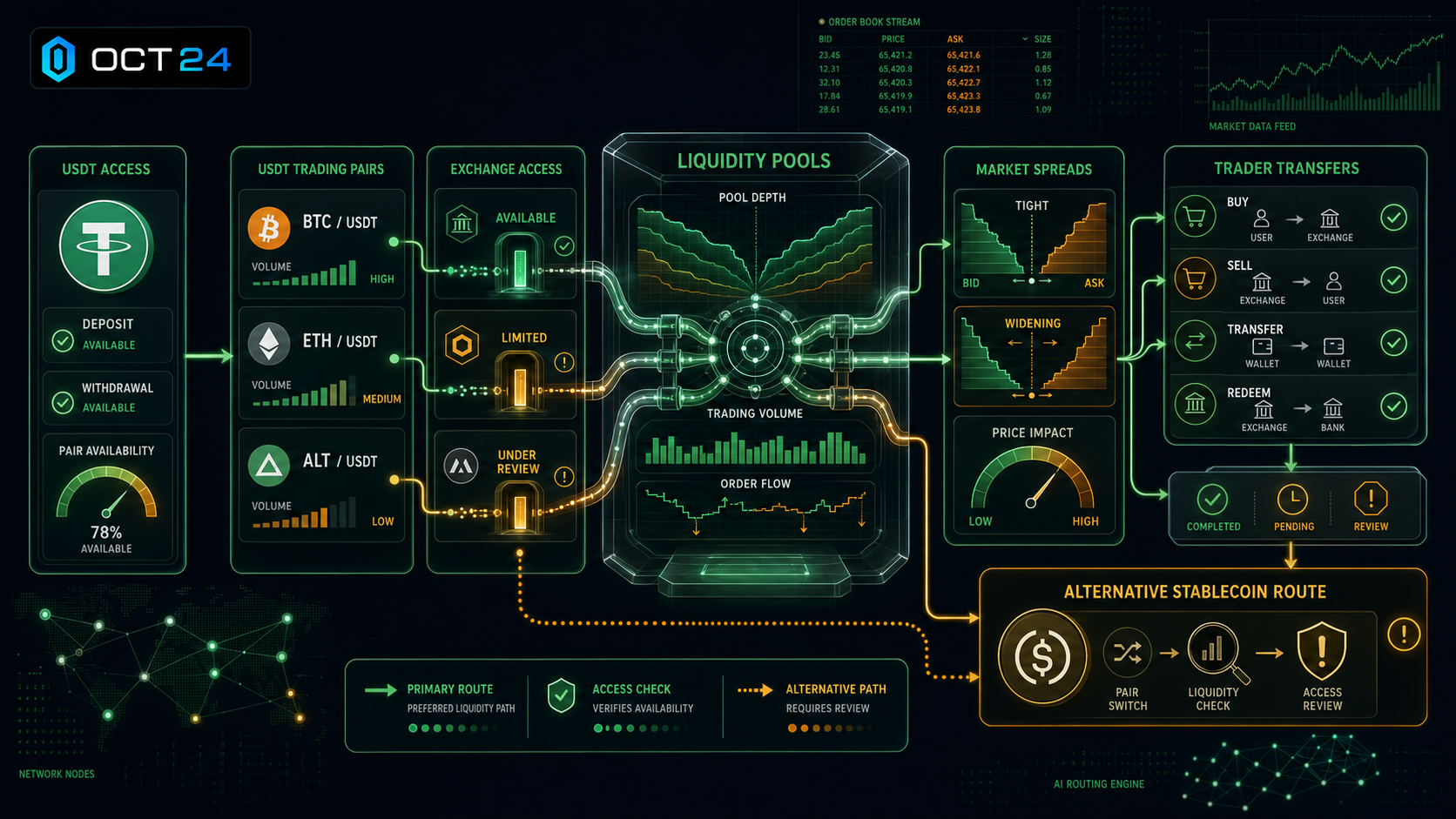
Liquidity is one of the biggest reasons traders care about stablecoins.
Liquidity means how easily an asset can be bought or sold without causing a major price change.
In active trading, liquidity affects spreads, execution quality, slippage, and the ability to enter or exit positions quickly.
Stablecoins support liquidity because they act as the currencies used to price other assets in many crypto pairs.
A BTC/USDT pair, for example, allows traders to move between Bitcoin and USDT without using fiat currency.
If a platform reduces access to a major quote asset, traders may shift to another pair.
That shift may seem simple, but it can still matter.
If liquidity is deep in BTC/USDT but thinner in BTC/USDC on a specific exchange, execution conditions may change.
If a trader uses automated strategies built around specific pairs, they may need to update settings.
If a user relies on one stablecoin for transfers, they may need to consider alternative routes.
These are not dramatic issues for every trader, but they are practical issues for active traders.
Liquidity is also connected to confidence.
If traders believe a platform may change access, they may reduce activity until they understand the new rules.
That can temporarily affect volume and market depth.
What This Could Mean for Active Traders
Active traders should treat this market as a planning environment, not a guessing contest.
The main issue is not whether Bitcoin moves up or down next.
The main issue is whether traders have a process for handling fast market changes.
Here are the areas worth watching.
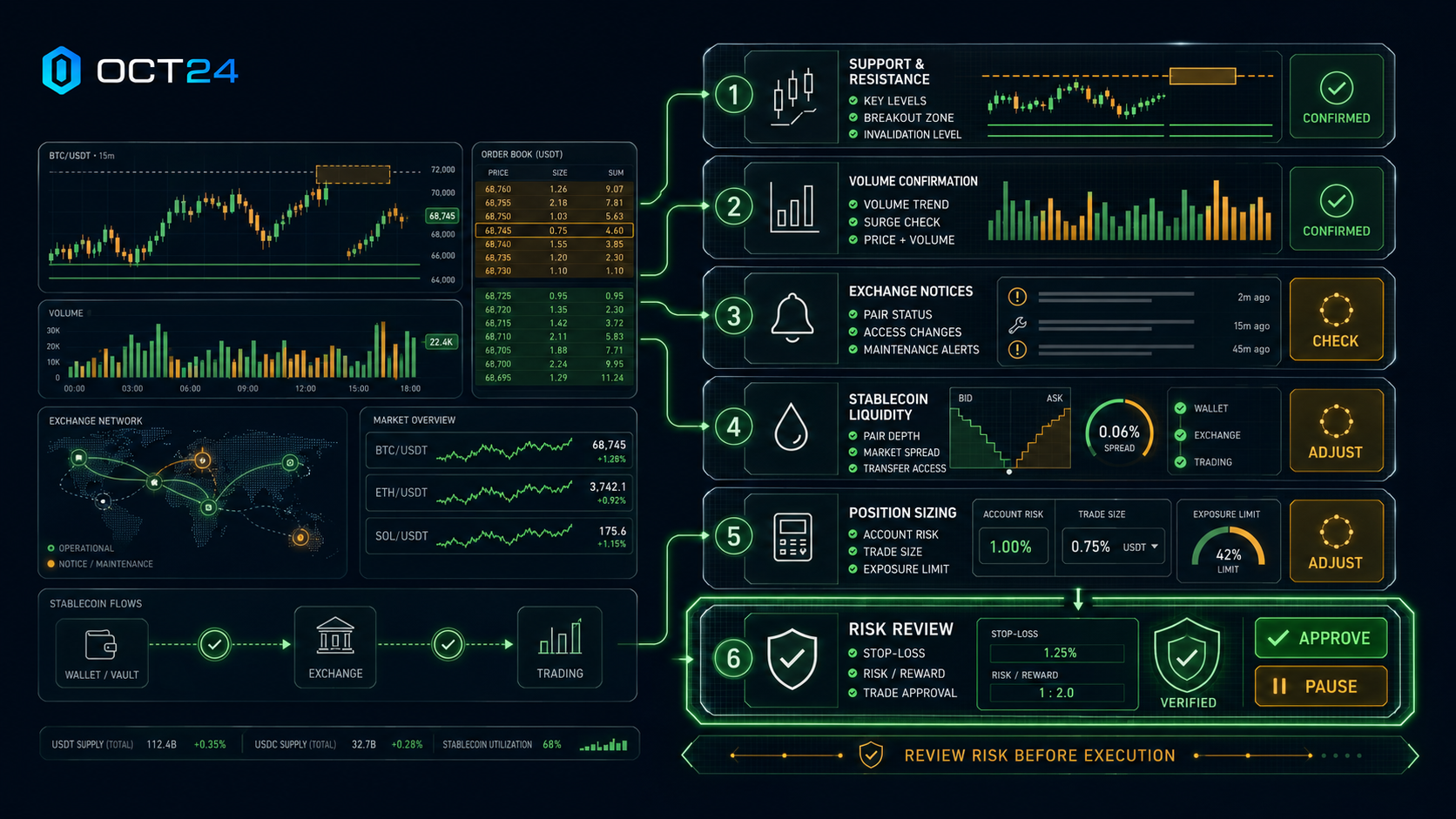
Traders should monitor Bitcoin support and resistance levels.
If Bitcoin holds key areas with strong volume, that may show buyer interest.
If it fails to hold important zones, traders may become more cautious.
Traders should watch stablecoin pairs.
If USDT pairs remain liquid on a platform, the impact may be limited for that user.
If a platform adjusts USDT support, traders may need to evaluate alternatives.
Traders should follow official exchange announcements.
Social media rumors can spread quickly, but exchange notices, regulatory statements, and company updates are more useful.
Traders should check volume and spreads.
Price alone does not show the full picture.
A move with thin volume may be less reliable than a move supported by stronger market participation.
Traders should avoid overleveraging.
Volatile conditions can create sharp reversals.
Leverage can magnify gains, but it can also magnify losses.
Traders should define risk before entering a trade.
That includes entry conditions, levels that show the setup is no longer valid, position size, and exit rules.
This is where risk management becomes central.
The goal is not to avoid every losing trade.
The goal is to make sure one bad trade does not damage the entire account.
Support, Resistance, and Confirmation
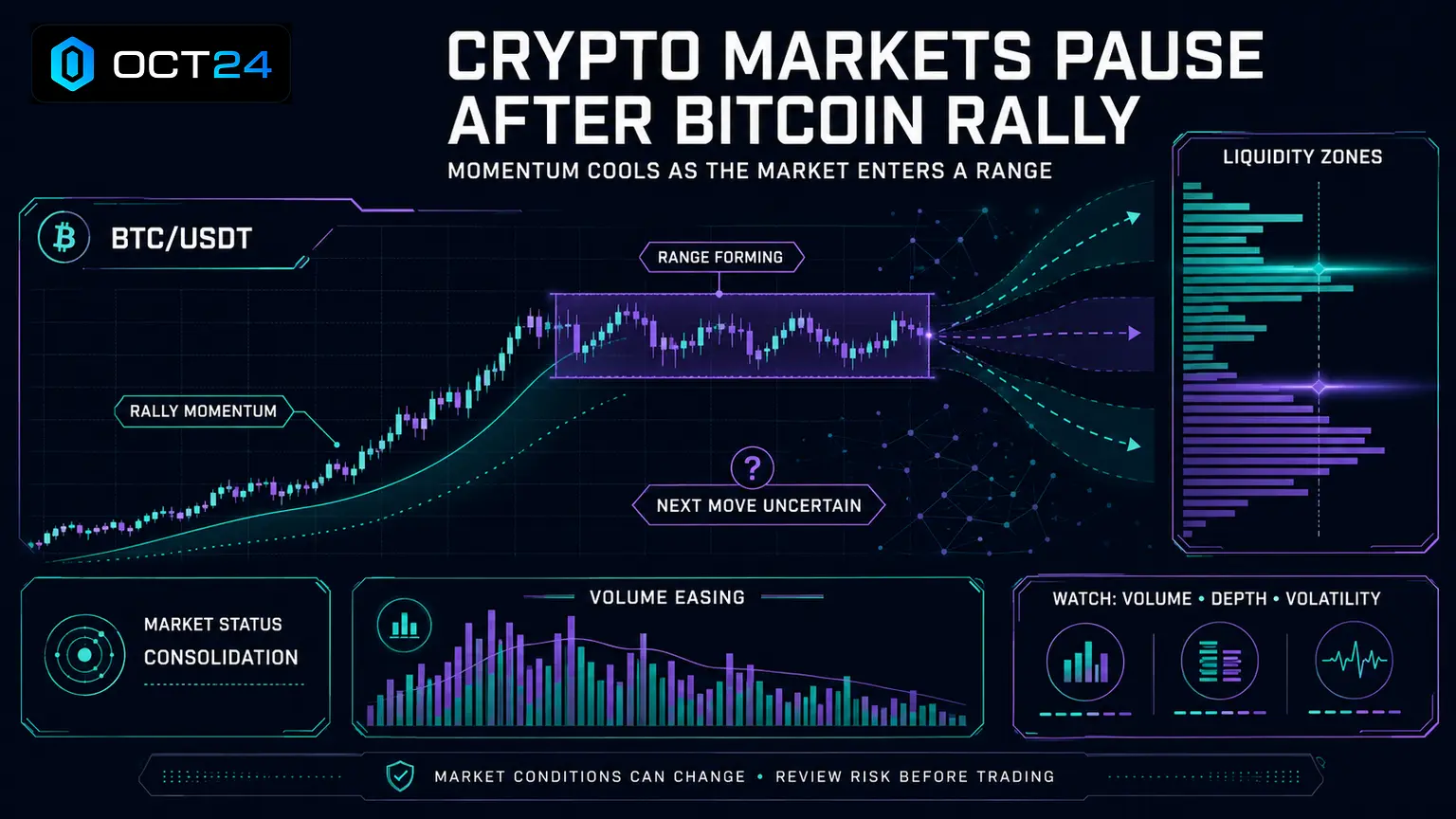
During volatile weeks, support and resistance levels often get more attention.
Support is an area where buyers have previously stepped in.
Resistance is an area where sellers have previously appeared.
These levels are not magic numbers.
They are zones where traders may expect more activity.
For Bitcoin, traders may look at recent swing lows, recent swing highs, moving averages, volume clusters, and psychological levels.
But the exact level matters less than the reaction around it.
A support level is more meaningful if buyers defend it with strong volume.
A resistance breakout is more meaningful if price holds above the level and does not immediately reverse.
A breakdown is more meaningful if selling pressure increases and the market fails to reclaim the lost area.
Beginners often make the mistake of treating support and resistance as guaranteed turning points.
They are not.
They are decision areas.
That is why confirmation matters.
Confirmation can include volume, candle structure, momentum, order book behavior, or follow-through over multiple timeframes.
Risk Controls Matter More During News-Driven Markets
News-driven markets can move quickly because traders are reacting to new information.
Stablecoin regulation, ETF flows, inflation data, and geopolitical events can all affect sentiment.
During these periods, emotional trading becomes more common.
Traders may chase a breakout, panic-sell a dip, or enter a position just because a headline feels urgent.
A stronger approach is to use clear rules.
Before entering a trade, a trader can ask:
- What is the setup?
- What would confirm the setup?
- Where is the point that shows the setup is no longer valid?
- How much am I willing to risk?
- What happens if the trade moves against me quickly?
- Am I reacting to price action or to emotion?
This is where position sizing controls can help.
Position sizing helps traders decide how much capital to allocate to a trade based on risk, volatility, and account size.
In uncertain markets, smaller positions may give traders more room to think clearly.
Traders may also use portfolio diversification tools to avoid relying too heavily on one asset, one stablecoin, or one market theme.
Diversification does not remove risk, but it can reduce dependence on a single outcome.
How Stablecoin Rules Can Affect Exchange Access
Exchange access is one of the most practical issues in this story.
A stablecoin may still exist and trade globally, but a specific platform may adjust access for users in a certain region.
This can happen because of licensing, compliance, risk review, or regulatory changes.
For traders, the details matter.
A platform might stop accepting deposits for a stablecoin but still allow withdrawals.
It might stop trading pairs but convert remaining balances later.
It might restrict new purchases but allow existing holdings.
It might only apply changes to users in one region.
That is why traders should read official notices carefully.
The difference between “deposits stopped,” “trading stopped,” “withdrawals remain open,” and “balances will be converted” can be very important.
Traders should also avoid waiting until the last minute if a platform announces a change.
If a deadline is public, it may be wise to review options early, check fees, and understand what alternatives are available.
This is not financial advice.
It is basic practical awareness.
The Difference Between Regulation and Rumor
Stablecoin headlines can be confusing because they often mix confirmed facts with speculation.
A confirmed fact might be an official regulatory rule, an exchange notice, or a company statement.
A rumor might be a social media claim, an unverified screenshot, or a broad statement that does not name a source.
Traders should separate the two.
Confirmed facts answer questions such as:
- Who made the announcement?
- What exactly changed?
- When does it take effect?
- Which users are affected?
- What assets are involved?
- What actions are required?
Rumors usually lack those details.
For example, saying “USDT is banned” is too broad unless a regulator or exchange has confirmed a specific restriction.
A more accurate statement might be: “A specific platform has notified some customers of a USDT delisting in a specific region after a specific date.”
That difference matters because broad claims can cause unnecessary fear.
Precise claims help traders make better decisions.
How AI Trading Can Help During Volatile Markets
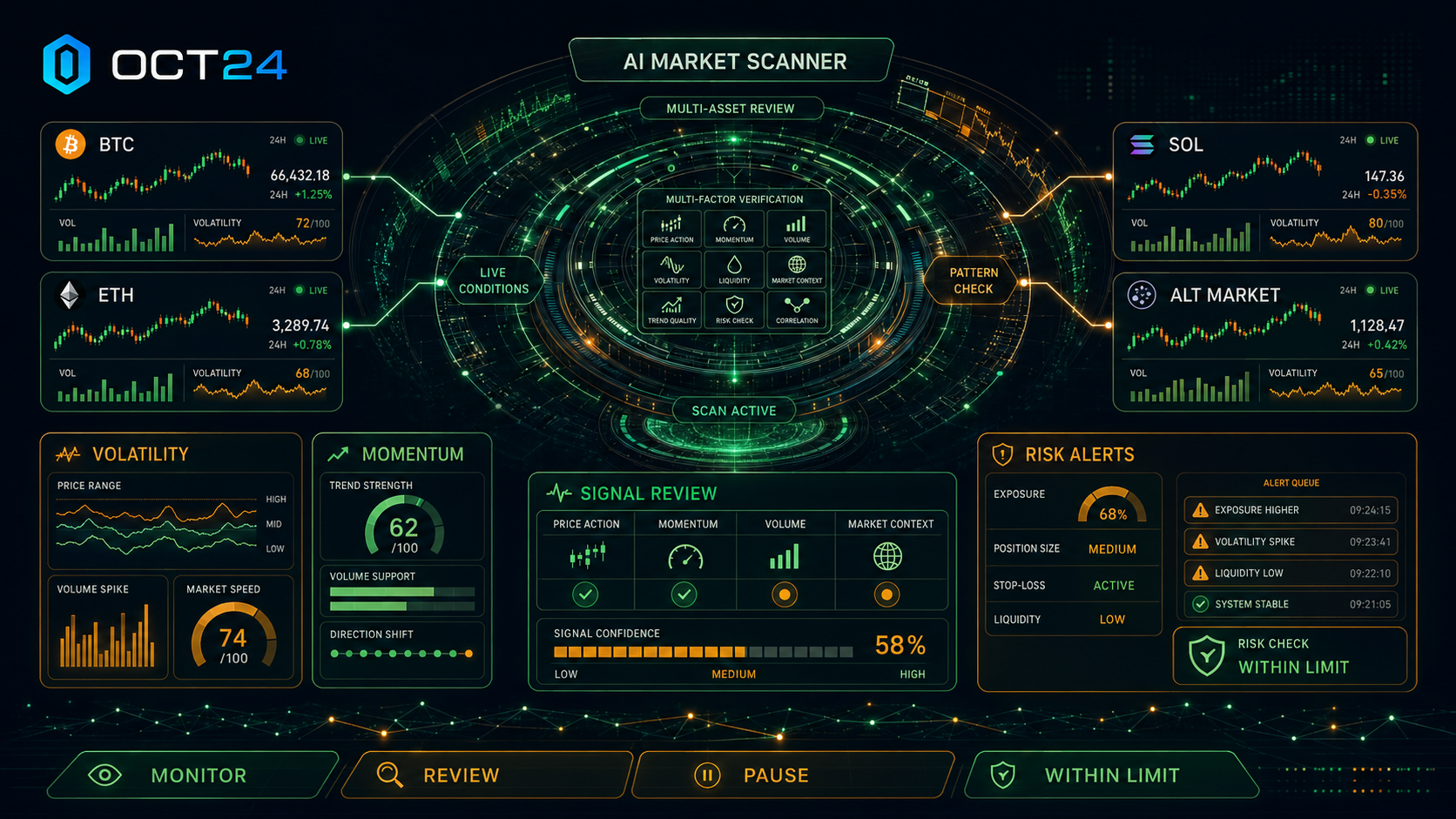
AI trading can help traders process information during fast-moving markets.
It can scan multiple assets, track volatility, review signals, and highlight changing conditions faster than manual monitoring alone.
AI does not know the future.
It cannot guarantee profitable trades.
It cannot remove market risk.
But it can support a more structured trading process.
An AI trading platform may help traders organize data from price action, volume, volatility, momentum, and market conditions.
Instead of switching between many charts and news sources, traders can use AI-assisted tools to review possible opportunities more efficiently.
AI can also support trading signals by identifying conditions that match a predefined setup.
For example, a system may detect rising volume, a breakout attempt, or a momentum shift.
But a signal should not be treated as an instruction to trade without review.
AI trading signals are most useful when traders combine them with risk controls.
A trader still needs to decide whether the setup fits the current market, whether the balance between possible risk and reward makes sense, and whether the trade aligns with their plan.
AI tools can also help reduce emotional trading.
If a trader uses a consistent framework, they may be less likely to chase every headline or enter trades based on fear of missing out.
Automated Systems, Algorithms, and Human Oversight
Automation and AI are often discussed together, but they are not the same.
Automated trading usually refers to systems that execute set actions based on rules.
For example, a trader might set a system to enter when certain technical conditions are met and exit when a stop-loss or take-profit level is reached.
Algorithmic trading is rule-based trading logic.
It may involve technical indicators, price patterns, statistical signals, or execution rules.
Algorithms can be simple or complex, but the core idea is that decisions follow a defined structure.
Trading bots can be useful because they do not get tired, distracted, or emotional.
They can monitor markets continuously and follow rules consistently.
However, bots are only as useful as the strategy and risk settings behind them.
Understanding trading bots vs human traders is important for beginners.
A bot can execute rules quickly, but a human still needs to choose the strategy, review risk, understand market conditions, and decide when the system should be adjusted.
This is why trading bot risk management matters.
A bot without sensible risk limits can still lose money quickly in volatile markets.
Automation should support discipline, not replace it.
How OCT24 Supports Active Traders
OCT24 helps active traders follow fast-changing markets with a more structured workflow.
During weeks like this, traders may need to monitor Bitcoin price action, stablecoin headlines, exchange updates, regulatory announcements, and overall market sentiment.
That can be difficult to do manually, especially for traders who are watching several assets at once.
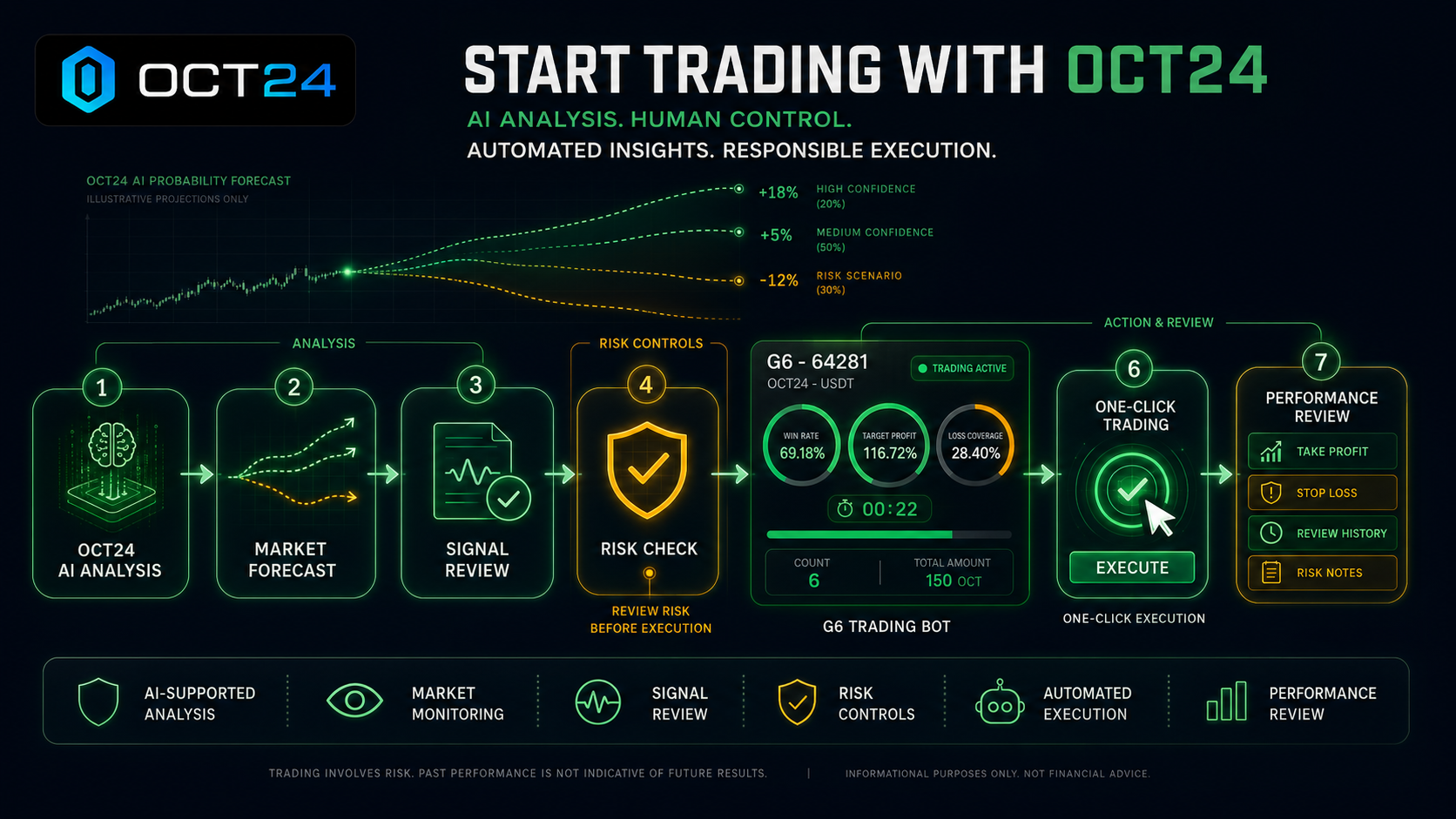
OCT24 is designed to support traders with AI-powered market analysis, real-time monitoring, signal review, volatility awareness, and one-click trade execution.
The goal is not to promise perfect results.
The goal is to help traders review market conditions more efficiently and make decisions with better structure.
For example, a trader watching Bitcoin during a volatile week may use OCT24 to review momentum, volatility, and potential opportunities.
A trader concerned about stablecoin access may use OCT24 as part of a broader routine for monitoring market changes and staying prepared.
OCT24 can also help beginners develop better habits.
Instead of reacting to every headline, traders can build a workflow that includes analysis, signal review, risk checks, and performance review.
To learn more about the platform, visit About OCT24.
Recommended Video
New to OCT24?
Watch this short welcome video to learn how OCT24 helps traders follow market changes, review opportunities, and trade with AI-powered support.
Practical Checklist for Traders This Week
A checklist can help traders stay focused when headlines move quickly.
Here is a simple framework:
- Check Bitcoin’s current trend before reacting to news.
- Review support and resistance zones.
- Watch volume around major moves.
- Monitor USDT and stablecoin exchange notices.
- Check whether any platform changes affect your region.
- Avoid assuming one platform’s decision applies globally.
- Watch spreads and liquidity on the pairs you trade.
- Reduce position size if conditions become unclear.
- Avoid entering trades based only on social media claims.
- Review risk before entering, not after the trade moves against you.
This kind of process may seem basic, but it can help reduce emotional decisions.
In volatile markets, traders do not need more noise.
They need a repeatable routine.
Related Reading for OCT24 Readers
If you want to build a stronger foundation before trading news-driven markets, these OCT24 guides can help.
Start with crypto market news to follow broader market updates, then read about market volatility to understand why price swings can accelerate during uncertain conditions.
For strategy and platform education, review AI trading software and how AI identifies trading opportunities.
These topics can help explain how AI-assisted tools scan markets, organize information, and support decision-making.
Start Trading with OCT24 when you are ready to learn how OCT24 supports a more structured trading workflow.
Key Takeaways
- Bitcoin has remained volatile around the low-to-mid $60,000 range, with traders watching macro data, ETF flows, and risk sentiment.
- Stablecoins matter because they support trading pairs, liquidity, transfers, and short-term positioning.
- USDT-related headlines should be checked against official exchange notices and regulatory statements.
- A platform-specific delisting or restriction does not automatically mean a global ban.
- Traders should watch liquidity, spreads, support and resistance, and confirmed market reaction.
- AI tools can help organize market data and review potential opportunities, but they do not predict the future.
- OCT24 helps traders follow market changes with AI-powered analysis, signal review, risk awareness, and faster execution tools.
Frequently Asked Questions
Why is USDT regulation important for crypto traders?
USDT regulation matters because USDT is widely used in crypto trading pairs and liquidity management.
If access changes on a platform or in a region, traders may need to use other stablecoins, adjust trading pairs, or review how they move funds.
Does USDT regulation mean USDT is banned?
No.
Regulation does not automatically mean a stablecoin is banned.
A specific platform may restrict or delist USDT for certain users, but traders should check official announcements before assuming a global ban or market-wide restriction.
How can stablecoin regulation affect trading?
Stablecoin regulation can affect trading by changing which stablecoins are supported on exchanges, how issuers operate, and what compliance standards platforms must follow.
For traders, the most practical effects may include liquidity changes, pair availability, and regional access differences.
Why is Bitcoin volatility important this week?
Bitcoin volatility matters because Bitcoin often leads overall crypto sentiment.
When Bitcoin moves quickly, Ethereum, altcoins, and derivatives markets can also react.
Fast moves can create trading opportunities, but they also increase risk.
Should traders be concerned about USDT rumors?
Traders should be aware of USDT-related headlines, but they should avoid reacting to rumors.
The best approach is to check official exchange notices, regulatory statements, and reliable market sources before making decisions.
How can AI help during volatile markets?
AI can help monitor markets continuously, scan multiple assets, identify possible setups, and track changing volatility.
It can support faster decision-making, but it should be used as a tool within a broader trading plan.
Can AI trading tools predict Bitcoin price movements?
No.
AI tools can analyze data and identify patterns, but they cannot predict Bitcoin price movements with certainty.
Markets are affected by news, liquidity, sentiment, regulation, and unexpected events.
What should beginner traders watch next?
Beginner traders should watch Bitcoin support and resistance levels, trading volume, stablecoin liquidity, exchange announcements, and official regulatory updates.
They should also avoid excessive leverage and use clear risk controls.
How does stablecoin liquidity affect active trading?
Stablecoin liquidity affects spreads, execution quality, and how easily traders can move between positions.
If liquidity shifts from one stablecoin pair to another, traders may need to adjust their execution strategy.
Is this a good time to trade Bitcoin?
That depends on each trader’s plan, risk tolerance, and experience.
This article does not provide financial advice.
In volatile markets, traders should focus on preparation, confirmation, and risk control rather than trying to predict every move.
How does OCT24 help active traders follow market changes?
OCT24 helps traders monitor market conditions, review potential opportunities, assess signals, and act more efficiently with AI-powered support.
It is designed to help traders create a more structured workflow during fast-moving markets.
Final Summary
This week’s crypto market is being shaped by more than Bitcoin’s price.
Traders are also watching stablecoin regulation, USDT access, exchange liquidity, macro data, and broader market sentiment.
Bitcoin’s movement around the low-to-mid $60,000 range shows that traders are still willing to respond to supportive macro signals, but confidence can shift quickly.
Stablecoin headlines add another layer because they affect the tools traders use to move, settle, and manage positions.
For active traders, the best response is not panic or prediction.
It is preparation.
Watch verified announcements.
Review liquidity.
Track support and resistance.
Use clear risk limits.
Understand how stablecoin access affects your trading pairs.
Avoid reacting to unconfirmed claims.
AI-powered tools can help traders monitor changing conditions, identify potential opportunities, and reduce emotional decision-making.
But the trader still needs a plan.
OCT24 helps traders bring that process together with AI-powered market analysis, signal review, risk awareness, and faster execution tools.
Ready to trade with a more structured workflow?