
Bitcoin Stalls Near $83K: Why Traders Should Watch Signals, Not Just Price
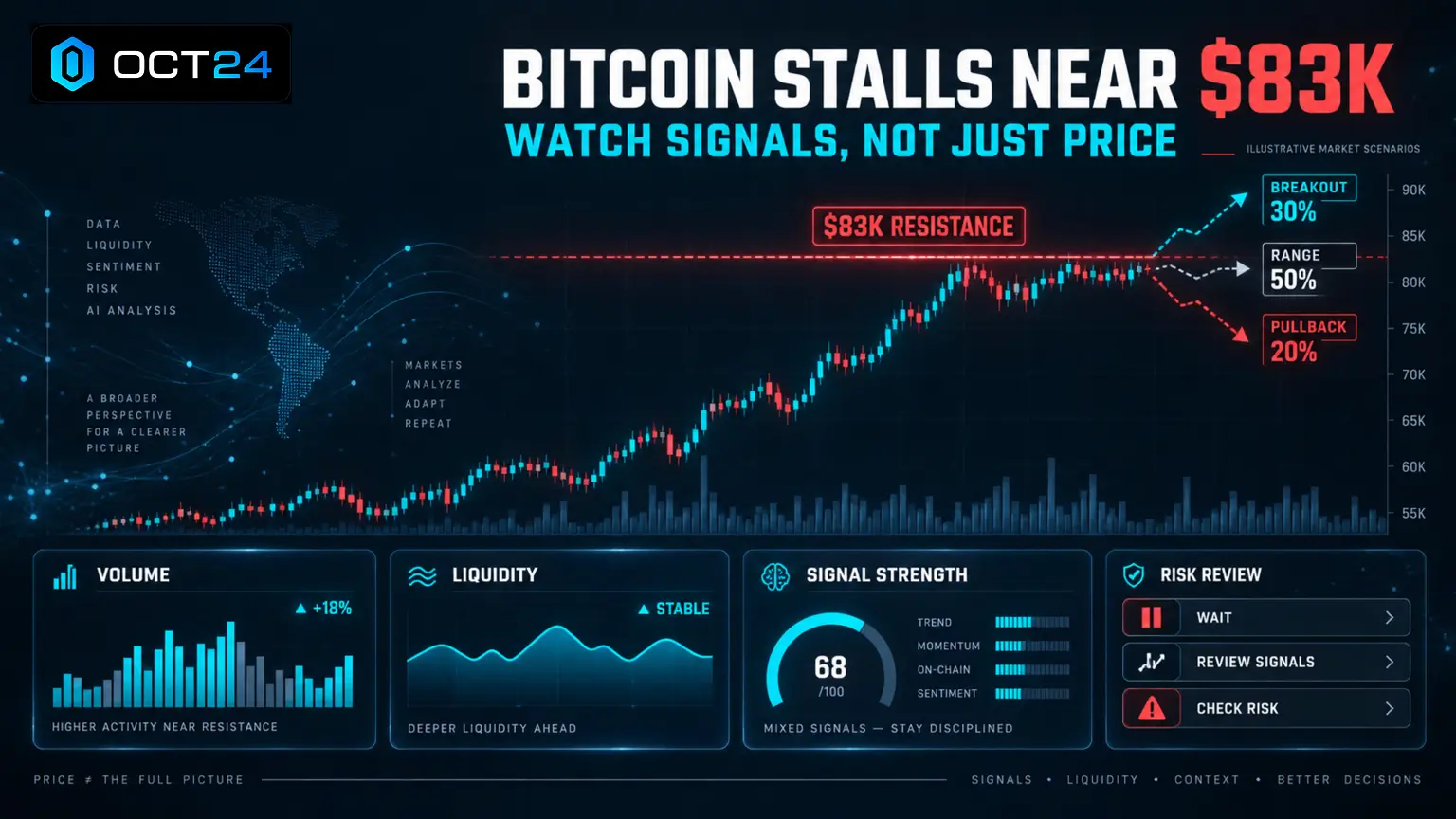
Bitcoin stalls near $83K after a sharp rebound, giving crypto traders a useful reminder: price alone is not enough. When Bitcoin reaches a major resistance area, traders should look at signals, market context, ETF flows, volume, liquidity, and risk before deciding whether a move is worth acting on.
Recent market reports show Bitcoin struggling around the $83,000 area as larger holders move into selling, while spot Bitcoin ETFs have also seen renewed weekly inflows. CoinDesk reported that Bitcoin investors were selling as $83,000 resistance held, while The Block reported about $986.9 million in weekly spot Bitcoin ETF inflows.
OCT24 helps traders approach this kind of market with more structure. The platform scans crypto market conditions, identifies potential opportunities, and presents AI-supported trading signals. OCT24 does not remove trading risk or guarantee results. Traders remain responsible for risk settings, exposure, capital allocation, and execution decisions.
Why Bitcoin Stalling Near $83K Matters
A pause near a round number or visible resistance zone can change the tone of the market. Bitcoin moving toward $83K may look exciting, but a stall near that level can mean buyers and sellers are fighting for control.
For beginners, this is where price can become misleading. A chart may look strong because Bitcoin recently rallied, but the next move can still be uncertain. A market can rise quickly, pause, reject, consolidate, or break higher later.
That is why traders should avoid treating the price level itself as the full story. The better question is whether enough signals support the trade idea.
A strong trade review looks at price, trend, momentum, volume, liquidity, ETF demand, whale behavior, and risk. It also asks whether the setup still makes sense after the first emotional reaction fades.
OCT24 is useful in this environment because it is designed to reduce the amount of scattered market checking a trader has to do. Instead of jumping between headlines and charts, traders can review AI-supported opportunities in a more focused way.
Bitcoin Resistance Is a Signal, Not a Prediction
Resistance is an area where price has trouble moving higher. It does not mean Bitcoin must fall. It means traders should pay closer attention to how the market behaves around that zone.
When Bitcoin stalls near $83K, the resistance area becomes a test. If buyers remain strong, the market may try to push higher. If sellers keep absorbing demand, the rally may slow or pull back.
Beginners often make the mistake of thinking a resistance level gives a simple answer. It does not. A resistance level is only one part of the analysis.
This is where How to Read Crypto Charts becomes useful. Traders should learn to read the chart as context, not as a guarantee. Price structure can help you understand what is happening, but it cannot promise what happens next.
A better approach is to combine chart context with confirmation signals. That can include whether volume supports the move, whether liquidity is stable, whether volatility is expanding, and whether risk still makes sense.

ETF Inflows Add Support, But They Are Not the Whole Story
Spot Bitcoin ETF inflows have become one of the most watched market signals. When ETF demand rises, traders often see it as evidence that institutional interest is improving.
The Block reported that U.S. spot Bitcoin ETFs pulled in about $986.9 million last week, extending positive flows for three straight weeks. Cointelegraph also reported that Bitcoin ETF inflows reached their strongest three-week stretch of 2026.
That is meaningful context. It can suggest that demand is returning after a weaker period. It can also support the idea that the Bitcoin rally is not only being driven by short-term speculation.
Still, ETF inflows do not guarantee that price will keep rising. A market can have strong inflows and still reject at resistance. It can also move sideways while traders wait for macro data, liquidity changes, or confirmation from volume.
For OCT24 traders, the lesson is simple. ETF flows can support market context, but they should not replace signal review. A trader still needs to compare the opportunity, risk, win rate, target profit, and loss coverage before acting.
Whale Selling Can Change the Mood Quickly
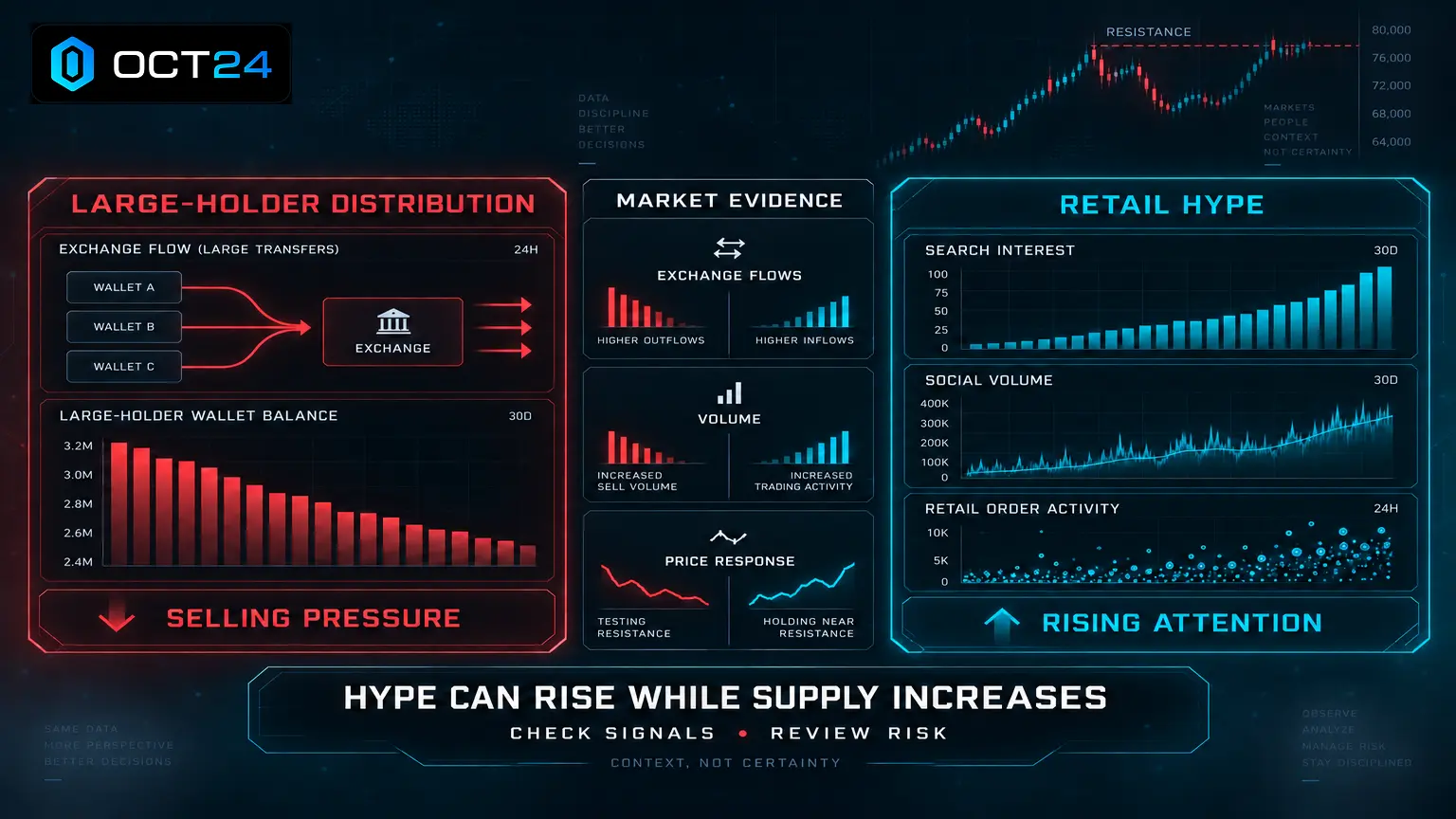
Another reason traders should watch signals is that large holders can influence the market mood. When whales sell near resistance, it can slow momentum even if retail interest is still strong.
CoinDesk reported that investors holding at least 1,000 BTC were leading selling activity as the $83K area held. This does not mean Bitcoin must fall, but it does show why traders need more than a bullish headline.
A market can look strong on the surface while large holders quietly reduce exposure. That is why traders should avoid relying only on price movement or social media excitement.
Whale behavior is not always easy for beginners to interpret. It can be noisy, and not every large transfer means the same thing. But when selling appears near a resistance zone, it is a reason to slow down and review the setup carefully.
OCT24 helps by focusing the trader on structured signal review instead of hype. The platform can scan market conditions and present opportunities, but the trader still decides whether the risk is acceptable.

Why Price Alone Can Mislead Traders
Price is easy to see, so it often gets too much attention. Bitcoin near $83K sounds important. Bitcoin above $80K sounds strong. A sudden move higher can make traders feel they are missing out.
But price alone does not show the quality of the setup. It does not tell you whether the move is supported by volume. It does not show whether liquidity is improving. It does not tell you whether risk and reward are balanced.
This matters because traders can enter late when they focus only on price. They see the market moving and assume the move will continue. Sometimes it does. Sometimes the move has already done most of its work.
AI-supported tools can help traders avoid this narrow view. AI Trading is useful when it helps organize several data points into a clearer decision process.
OCT24’s role is to help with that structure. It scans crypto market conditions, identifies potential opportunities, and presents signals that traders can review before activation.
The Signals Traders Should Watch This Week
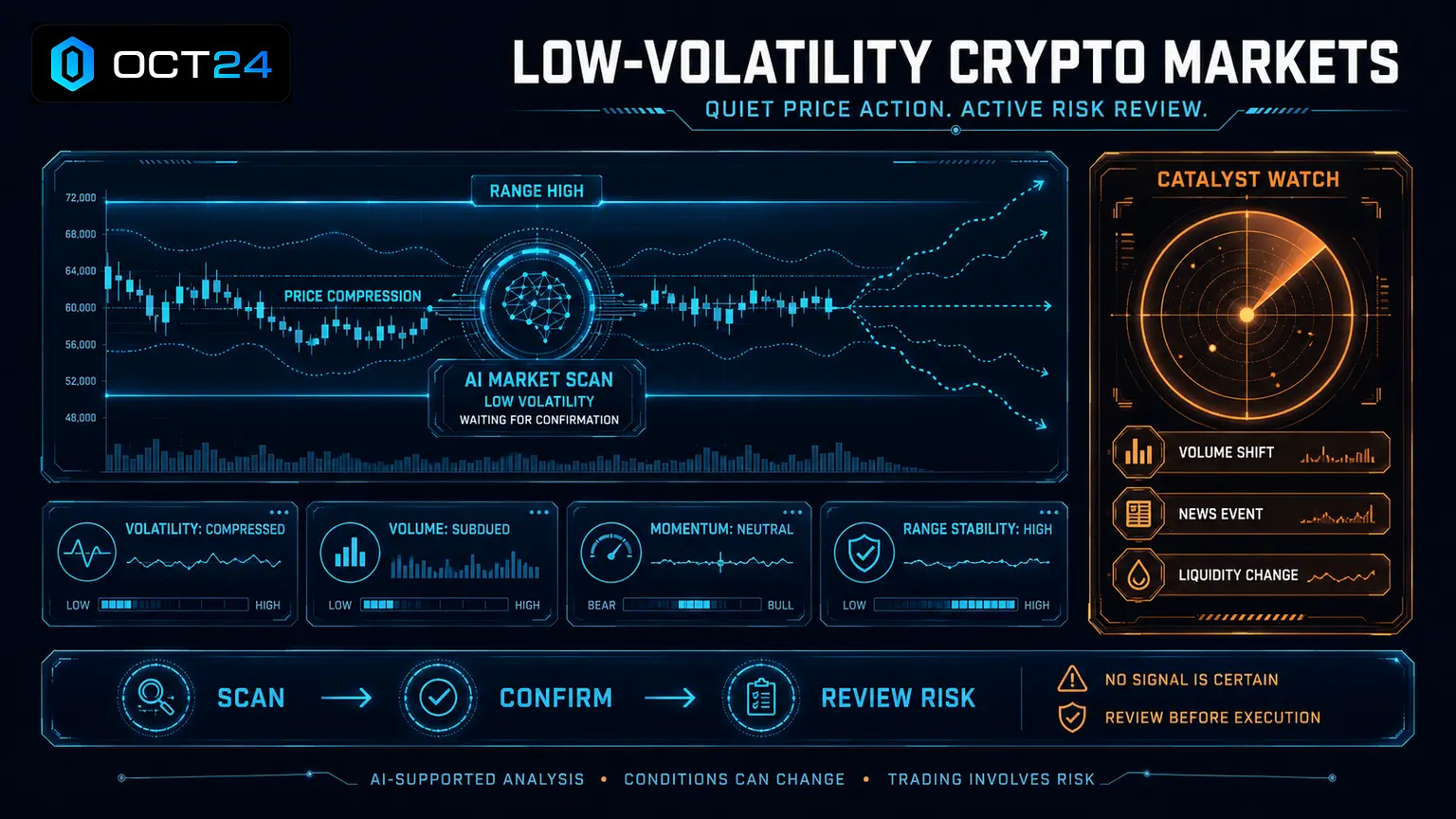
When Bitcoin stalls near $83K, traders should watch confirmation signals instead of only asking whether the price is above or below a headline level.
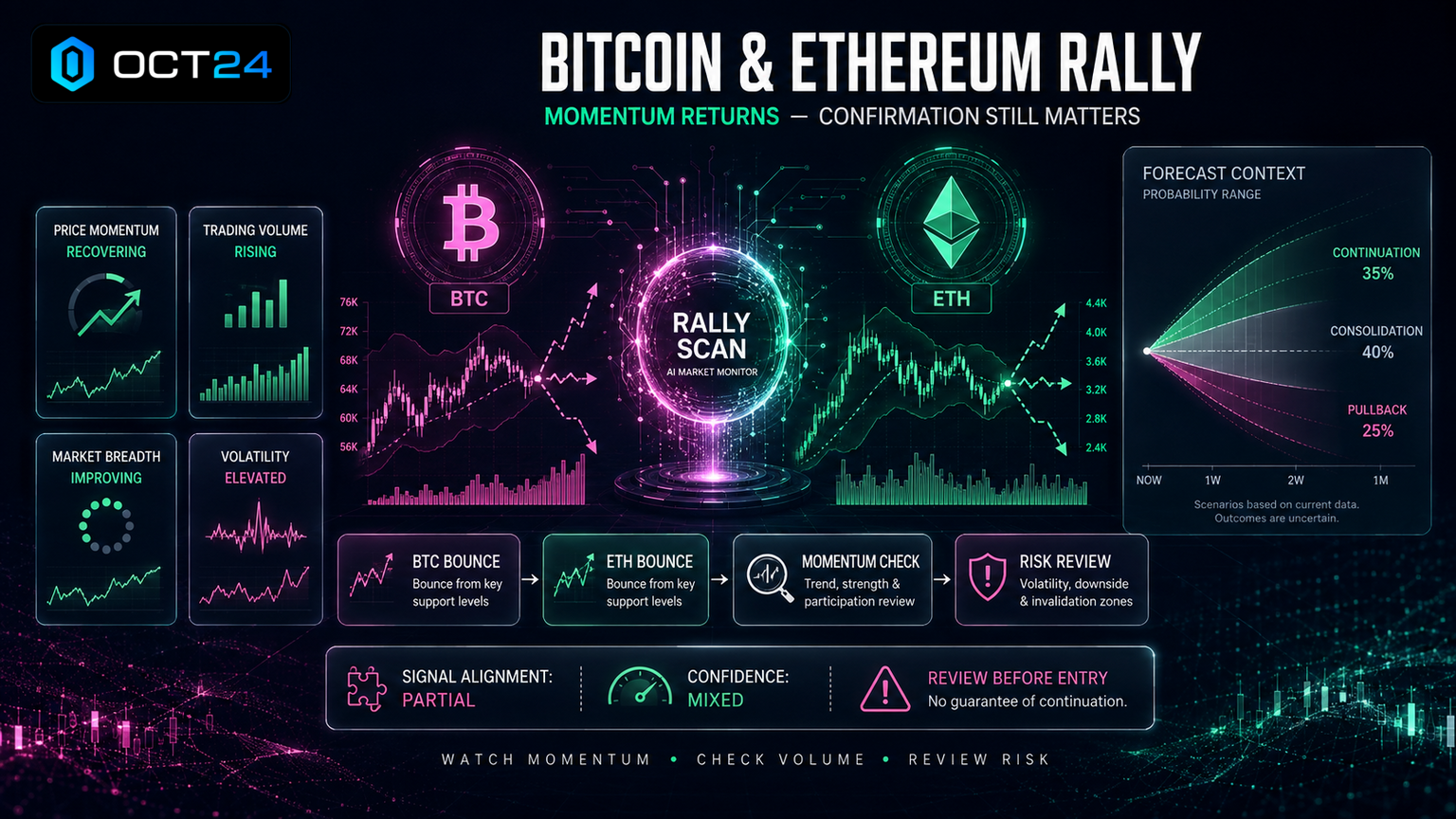
The first signal is momentum. Is Bitcoin still pushing higher with strength, or is each move upward becoming weaker?
The second signal is volume. If price rises but volume weakens, the move may have less support. If price breaks resistance with stronger volume, traders may see more convincing confirmation.
The third signal is liquidity. Thin liquidity can make price movements sharper and less reliable. Better liquidity can make signals easier to trust, although it still does not remove risk.
The fourth signal is market breadth. Are Ethereum and major altcoins supporting the move, or is Bitcoin moving alone?
The fifth signal is risk. Even if a setup looks attractive, the trader still needs to ask whether the position size and exposure are reasonable.
How OCT24 Helps Traders Review Market Signals
OCT24 is designed for traders who want a simpler way to review potential crypto trading opportunities. The platform performs much of the market analysis by scanning conditions and presenting AI-supported trading signals.
This can help beginners because the market can be overwhelming. Instead of trying to choose every market manually or watch dozens of charts, traders can focus on the opportunities OCT24 presents.
This does not mean every opportunity should be activated. A signal is not a promise. It is a structured piece of information that should be reviewed against risk, exposure, and market context.
OCT24’s value is strongest when traders use it with discipline. Review the signal. Compare the metrics. Check the broader market. Decide whether the trade fits your plan.
For traders ready to explore the platform, Start Trading with OCT24 is the direct signup path. The best mindset is simple: use AI-supported signals to review opportunities more clearly, while keeping realistic expectations about risk.
Win Rate, Target Profit, and Loss Coverage Matter More Than Hype
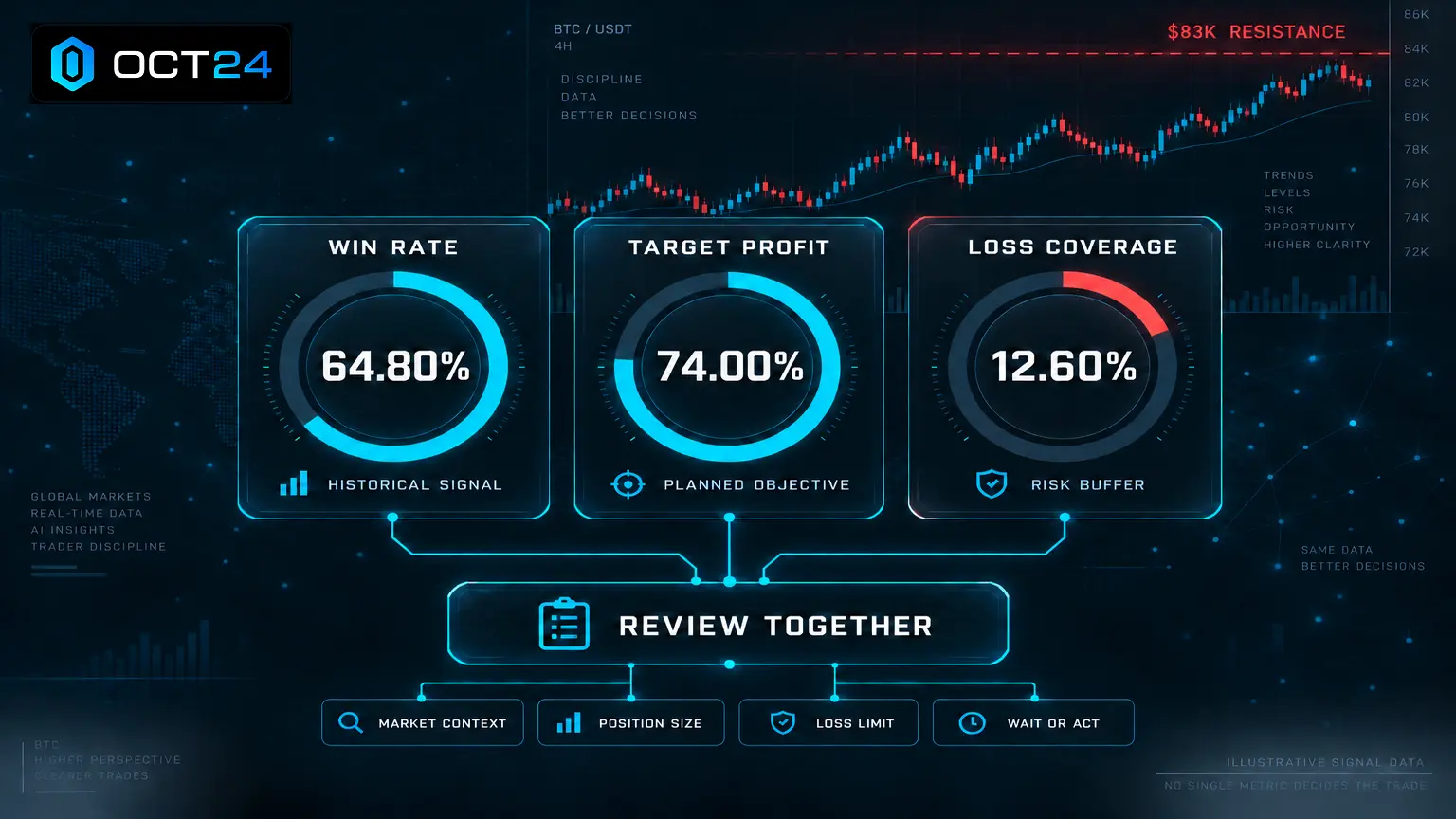
For OCT24 traders, three signal details are especially important when Bitcoin is pausing near a major level: win rate, target profit, and loss coverage.
Win rate can help traders understand how often similar setups may have worked within the model or signal logic. It should be reviewed carefully, but it should never be treated as certainty.
Target profit helps traders understand the potential upside being shown. It gives the trade a clearer objective. But target profit should always be compared with the risk needed to pursue it.
Loss coverage brings attention back to downside risk. This is especially important when the market has already rallied. A trader who only looks at potential upside may ignore the risk of a pullback.
When Bitcoin stalls near $83K, these three metrics can help traders avoid chasing. The goal is not to guess the next candle. The goal is to decide whether the signal is strong enough, balanced enough, and suitable for the trader’s risk limits.
What a Strong Bitcoin Signal Review Looks Like
A strong signal review is simple and repeatable. It should not require advanced market knowledge, but it should cover the main areas that affect the trade.
Start with the setup. What is the opportunity? Is Bitcoin testing resistance, breaking out, pulling back, or consolidating?
Then check the signal metrics. Does the win rate look reasonable? Is the target profit realistic for the current market? Does loss coverage fit your risk comfort?
Next, check exposure. If you already have crypto positions open, adding another trade can increase risk. Position Sizing Controls and Portfolio Diversification Tools are useful concepts here because they remind traders that one trade is part of a larger account picture.
Finally, check your emotional state. If you are only interested because Bitcoin is in the headlines, pause. A strong review should help you act from structure, not excitement.
Why Beginners Should Be Careful Around Resistance
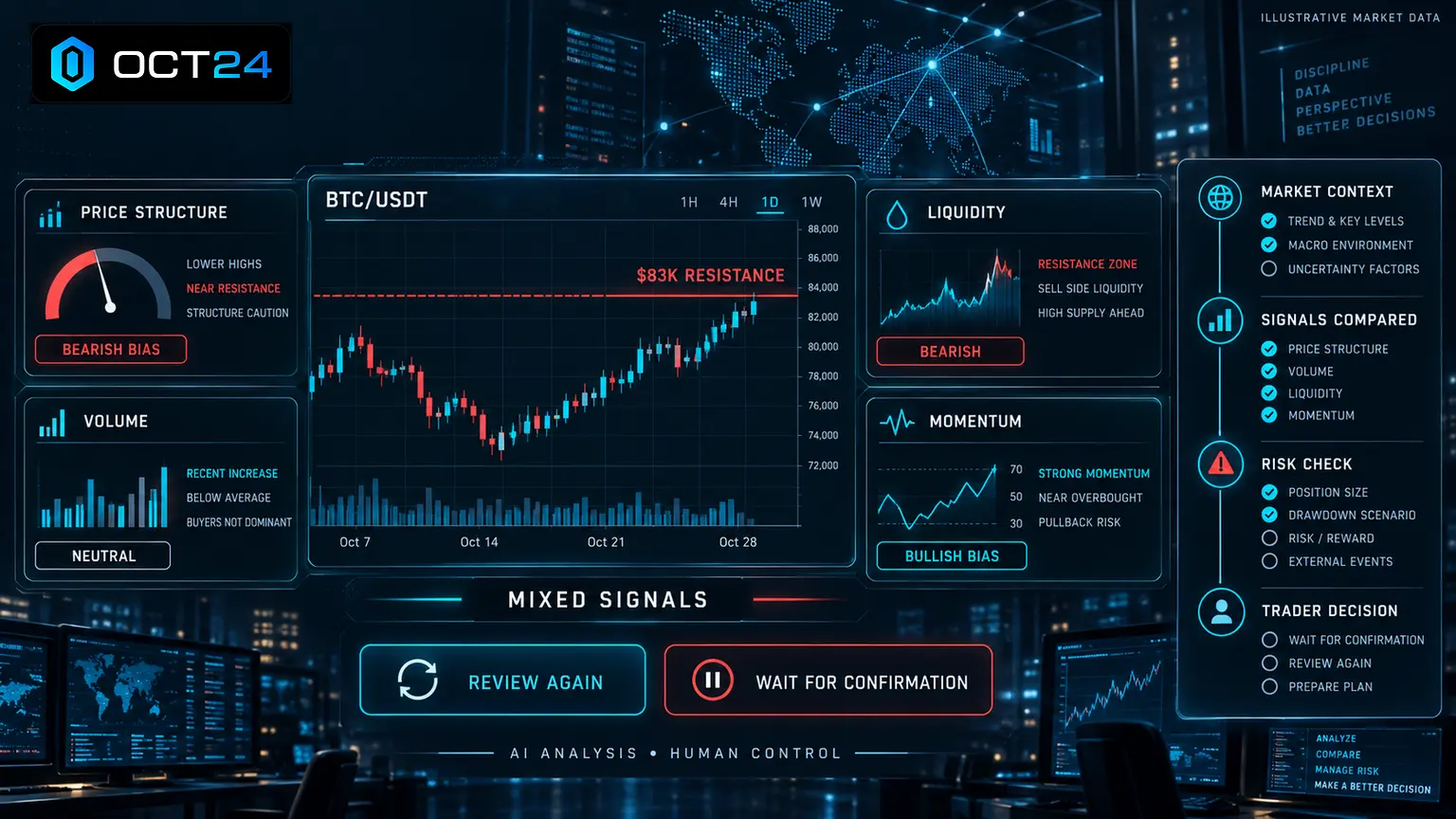
Resistance zones can create emotional pressure. If Bitcoin breaks higher, traders fear missing the next rally. If Bitcoin rejects, traders fear being trapped in a late entry.
Beginners should understand that both feelings are normal. The goal is not to remove emotion completely. The goal is to avoid letting emotion make the decision.
This is why a simple checklist helps. Before activating any trade, ask whether the signal still makes sense if the headline disappears. If the answer is no, the trade may be driven by hype.
OCT24 can help by putting the focus back on structured signal review. But the trader still needs to manage risk settings, exposure, and capital allocation.
A resistance zone is not a warning to never trade. It is a reminder to require better confirmation.
Why Professionals Also Need Signal Discipline
Signal discipline is not only for beginners. Experienced traders can also get pulled into momentum when a major crypto level is in focus.
The difference is that professionals usually have a process. They know which signals they care about. They know when to reduce size. They know when to skip a trade.
OCT24 can support both beginners and more experienced traders by giving them a cleaner opportunity-review workflow. The same signal can be useful to different traders, but the final decision still depends on account size, exposure, and risk tolerance.
AI Trading Strategies can help traders think in terms of repeatable process instead of one-off guesses. The stronger the process, the less a trader depends on emotion.
When Bitcoin stalls near $83K, discipline matters because the market may be balanced between continuation and rejection. That is exactly when signals matter more than hype.
Where the G6 Trading Bot Fits Into the News
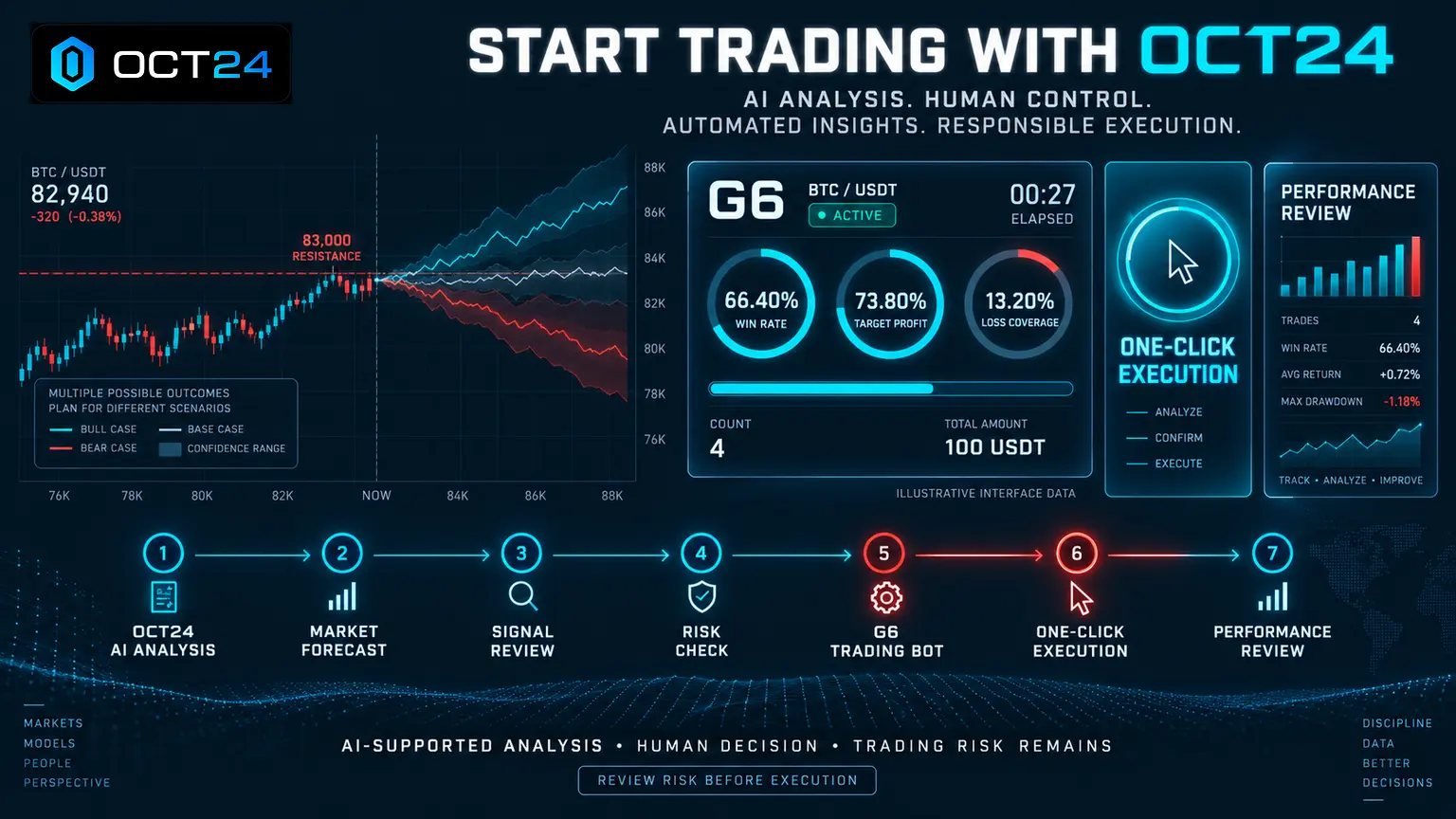
The G6 Trading Bot can fit into this kind of market by helping OCT24 users review AI-supported crypto opportunities through a simplified workflow.
The key is to understand what the trader is deciding. OCT24 can scan conditions and present a signal. The user can review the opportunity and decide whether to activate the bot. The AI bot handles much of the analysis and trade-planning logic, while the trader remains responsible for risk settings, exposure, capital allocation, and execution decisions.
This matters when the market is moving quickly. A one-click workflow can help reduce friction, but it should not reduce caution. The decision still needs to be based on the signal and risk context.
A trader may get some take profits and some stop losses. That is part of crypto trading. The goal is not to expect every trade to win. The goal is to use a clear review process before acting.
Risk Checks Before Trading a Bitcoin Rally
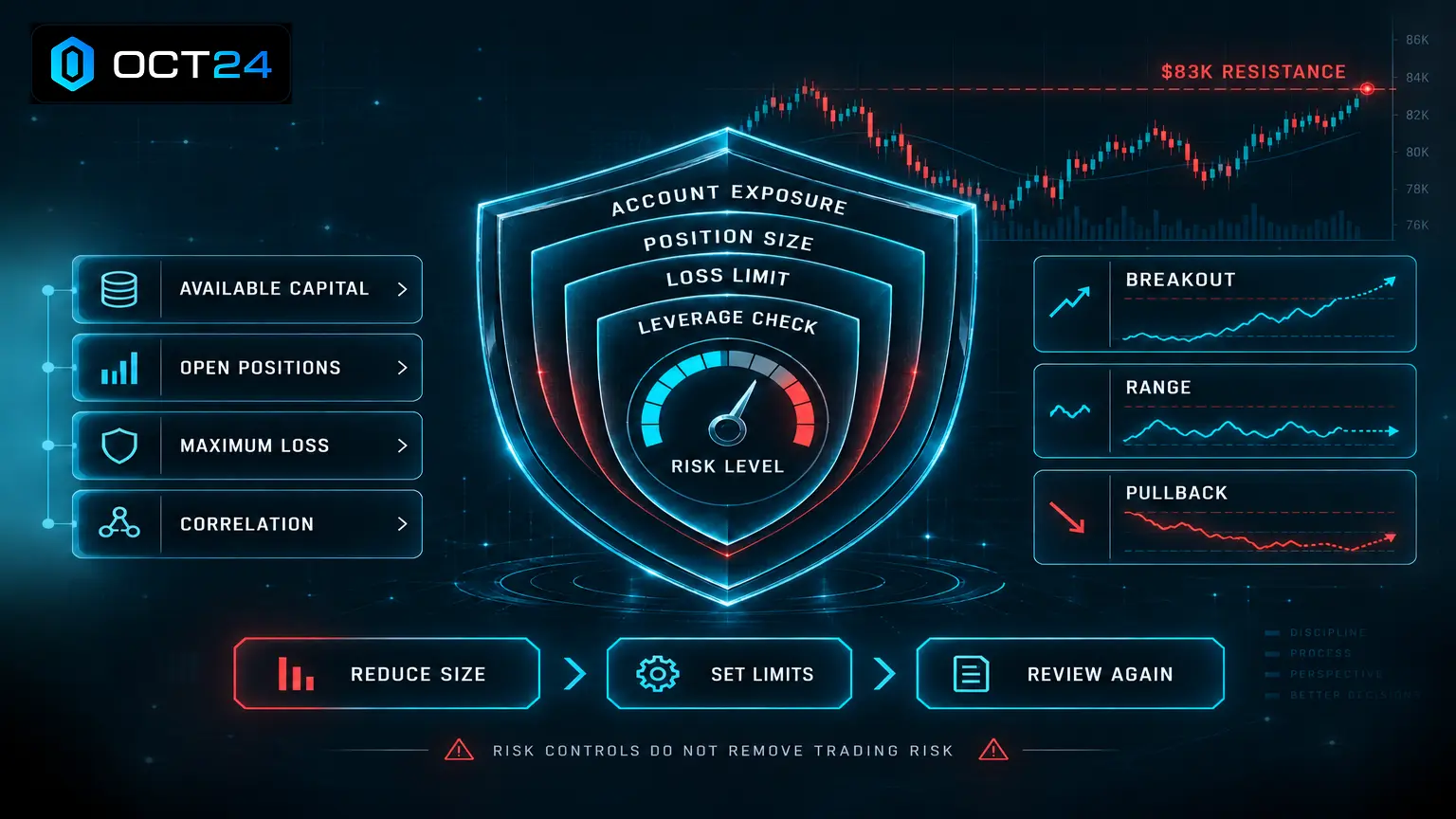
Risk checks become more important after a rally because confidence can rise quickly. A trader may assume that the recent move will continue and increase size too fast.
Trading Bot Risk Management is useful because it brings the conversation back to downside. Even when AI helps with market scanning, risk still belongs to the trader.
Before acting on a Bitcoin signal this week, traders should ask a few simple questions.
- Is Bitcoin confirming strength, or only holding near resistance?
- Does the signal still look balanced after checking win rate, target profit, and loss coverage?
- Would the position size still feel acceptable if the trade closes negatively?
- Is my total crypto exposure already high?
- Am I trading because of signal quality or because Bitcoin is in the news?
How to Read the Next Bitcoin Move Without Overreacting
The next Bitcoin move may be sharp, slow, or unclear. Traders do not need to predict it perfectly to trade more responsibly. They need a process that helps them respond carefully.
If Bitcoin breaks above resistance, traders should still look for confirmation. A breakout with weak volume or poor follow-through can fail. A breakout with stronger signal support may be easier to review.
If Bitcoin pulls back, traders should avoid assuming the rally is over immediately. Pullbacks can be normal after a strong move. The question is whether the broader structure remains healthy.
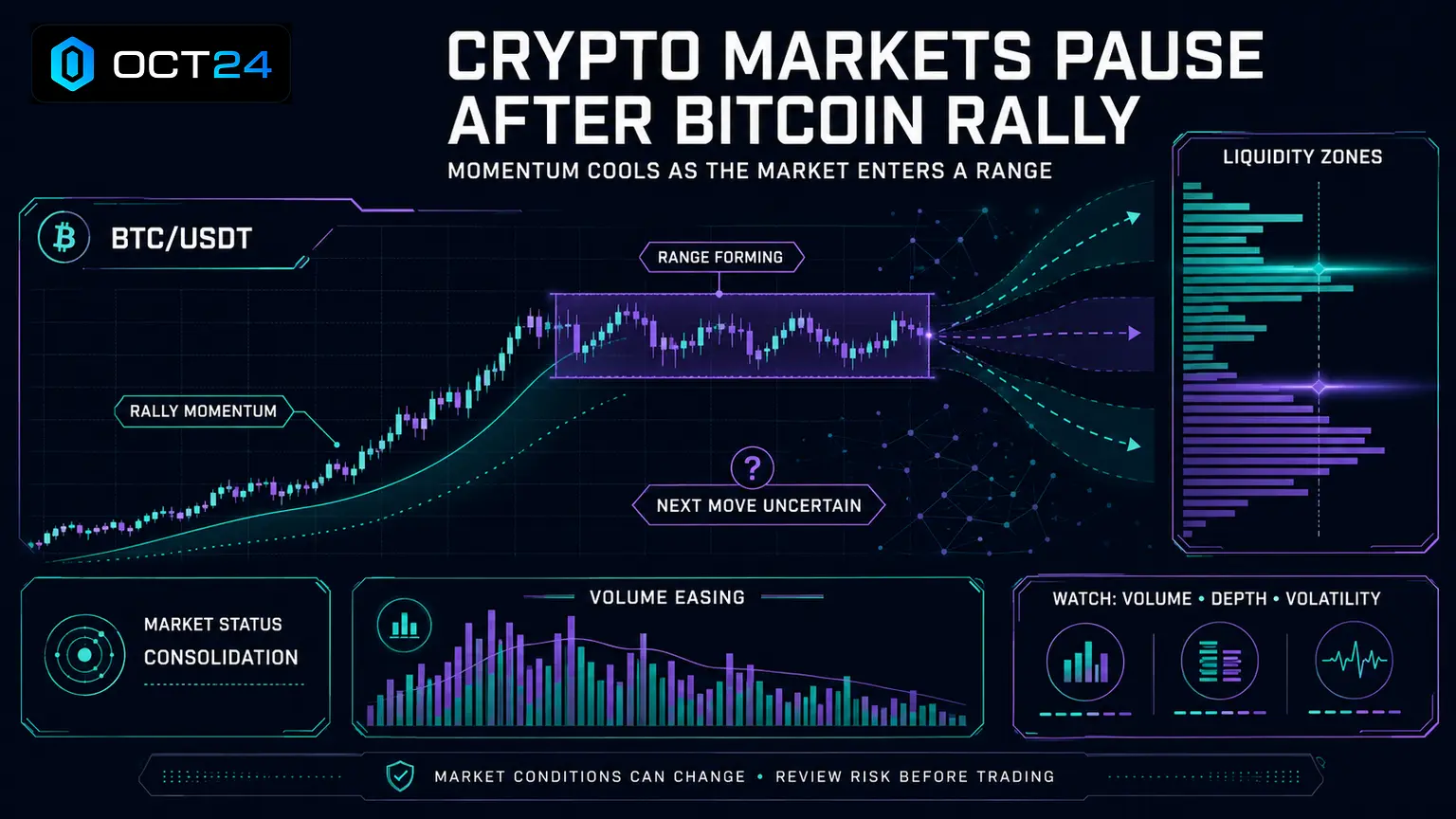
If Bitcoin moves sideways, patience matters. Sideways markets can frustrate traders and encourage unnecessary activity.
OCT24 helps by continuing to scan market conditions and surface potential opportunities. Traders can then choose whether the signal fits their own plan, instead of forcing a trade because the market is loud.
What OCT24 Traders Should Watch This Week
This week’s Bitcoin setup is not just about whether price can break $83K. It is about whether the market can confirm strength after the rally.
Traders should watch ETF demand, resistance behavior, whale activity, liquidity, and volatility. They should also watch their own behavior. A strong market can still lead to poor decisions if the trader is rushing.
For OCT24 users, the cleanest approach is to review each opportunity through the same questions. What does the signal show? What are the key metrics? What is the risk? Does the trade fit the account?
This keeps the focus on process. It also makes it easier to learn from both winning and losing trades.
To understand the platform background, traders can read About OCT24 in the body of their research process. For the trade itself, the focus should remain on signal quality, risk, and execution discipline.
Final Thoughts
Bitcoin stalling near $83K is a useful reminder that traders should watch more than price. Resistance, ETF inflows, whale selling, volume, liquidity, and signal quality all matter.
OCT24 can help traders review this kind of market with more structure by scanning crypto market conditions, identifying potential opportunities, and presenting AI-supported trading signals.
That support does not remove trading risk or guarantee results. Traders still remain responsible for risk settings, exposure, capital allocation, and execution decisions.
The simple takeaway is this: do not chase the headline. Review the signal. Compare win rate, target profit, and loss coverage. Check your risk. Then decide whether the opportunity fits your plan.
To explore a simpler way to review AI-supported crypto trading opportunities, visit OCT24 or Start Trading with OCT24 when you are ready.
FAQs
Why is Bitcoin stalling near $83K important?
Bitcoin stalling near $83K matters because it shows that buyers and sellers are testing a major resistance area. Traders should watch confirmation signals instead of assuming the rally will continue.
Does ETF inflow mean Bitcoin will keep rising?
No. ETF inflows can show improving demand, but they do not guarantee that Bitcoin will move higher. Traders still need to review resistance, volume, liquidity, and risk.
What signals should traders watch near Bitcoin resistance?
Traders should watch momentum, volume, liquidity, ETF demand, whale activity, win rate, target profit, loss coverage, and total exposure.
How can OCT24 help during a Bitcoin rally?
OCT24 can scan crypto market conditions, identify potential opportunities, and present AI-supported trading signals so traders can review opportunities with more structure.
Can OCT24 guarantee trade results?
No. OCT24 does not guarantee results or remove trading risk. Traders remain responsible for risk settings, exposure, capital allocation, and execution decisions.
Should beginners trade when Bitcoin is near resistance?
Beginners should be careful near resistance. They can review signals, check risk, and skip trades that do not fit their comfort level or account plan.
Why are win rate, target profit, and loss coverage important?
These three signals help traders compare opportunity quality. Win rate gives context, target profit shows the upside objective, and loss coverage helps traders think about downside risk.
Is price enough to make a crypto trading decision?
No. Price is only one part of the decision. Traders should also consider market context, signal strength, risk, exposure, and whether the trade fits their plan.