
Crypto Rally Returns: What Traders Should Watch After Bitcoin and Ethereum Bounce

The crypto rally has returned. Bitcoin briefly pushed close to $80,000, while Ethereum also made a strong move and outperformed Bitcoin during parts of the rebound.
The bounce has brought confidence back into the market. It has also brought back a familiar question: is this the start of a bigger recovery, or is the market moving too quickly?
The answer is not clear yet. Falling bond yields, a weaker US dollar, improved ETF demand, positive regulation headlines, and forced short liquidations all helped the rally. Some of those drivers can support a longer move. Others can fade quickly.
For traders, the goal is not to guess the top or chase every green candle. The goal is to check whether the rally has real support and whether a new trade fits a clear risk plan.
OCT24 can help with that work. The platform performs much of the market analysis by scanning crypto conditions, identifying possible opportunities, and presenting AI-supported trading signals. OCT24 does not remove risk or guarantee results. Traders remain responsible for risk settings, exposure, capital allocation, and execution decisions.
What happened this week
Bitcoin climbed from the low-$60,000 area and briefly traded near $80,000. It was one of the strongest weekly moves the market has seen in years.
Ethereum also bounced hard. At one point, ETH had gained more than 20% from earlier levels and moved back toward the mid-$2,000 area.
The rally spread beyond the two largest crypto assets. XRP, Solana, Chainlink, and several other altcoins also posted strong gains.
This wider participation matters. A rally led by one asset can be fragile. A rally that spreads across the market may show that risk appetite is improving.
However, broad gains do not mean every asset is safe to buy. Fast rallies can create stretched prices, crowded trades, and sudden pullbacks.
Why Bitcoin bounced
Bitcoin’s bounce had several drivers. The first came from the US bond market.
The US Treasury announced plans to increase buybacks of longer-term government debt. The move helped reduce pressure on long-term yields and improved market liquidity.
Lower yields can make risk assets more attractive. They can also weaken the US dollar. Both changes can support demand for Bitcoin.
Bitcoin also benefited from renewed optimism around US crypto regulation. Traders reacted positively to calls for progress on the Clarity Act and other proposals aimed at creating clearer rules for digital assets.
ETF demand improved as well. Strong daily inflows gave the market evidence that larger buyers were returning.
Finally, short liquidations added speed. Traders who had bet on lower prices were forced to close positions as Bitcoin moved higher. Those forced purchases pushed the price up even faster.
Why Ethereum moved even faster
Ethereum often moves more than Bitcoin during strong risk-on periods. It is a smaller market, and its price can react more sharply when demand returns.
The recent bounce followed that pattern. Ethereum gained faster than Bitcoin during parts of the rally and attracted stronger attention from traders.
ETF flows were one reason. Ethereum funds recorded a strong day of inflows as confidence returned to crypto markets.
Market rotation also helped. When Bitcoin breaks higher and then starts to settle, traders often look toward Ethereum and other major assets for the next move.
This does not mean Ethereum will keep outperforming. ETH can also fall faster when the market weakens. Stronger upside often comes with higher volatility.
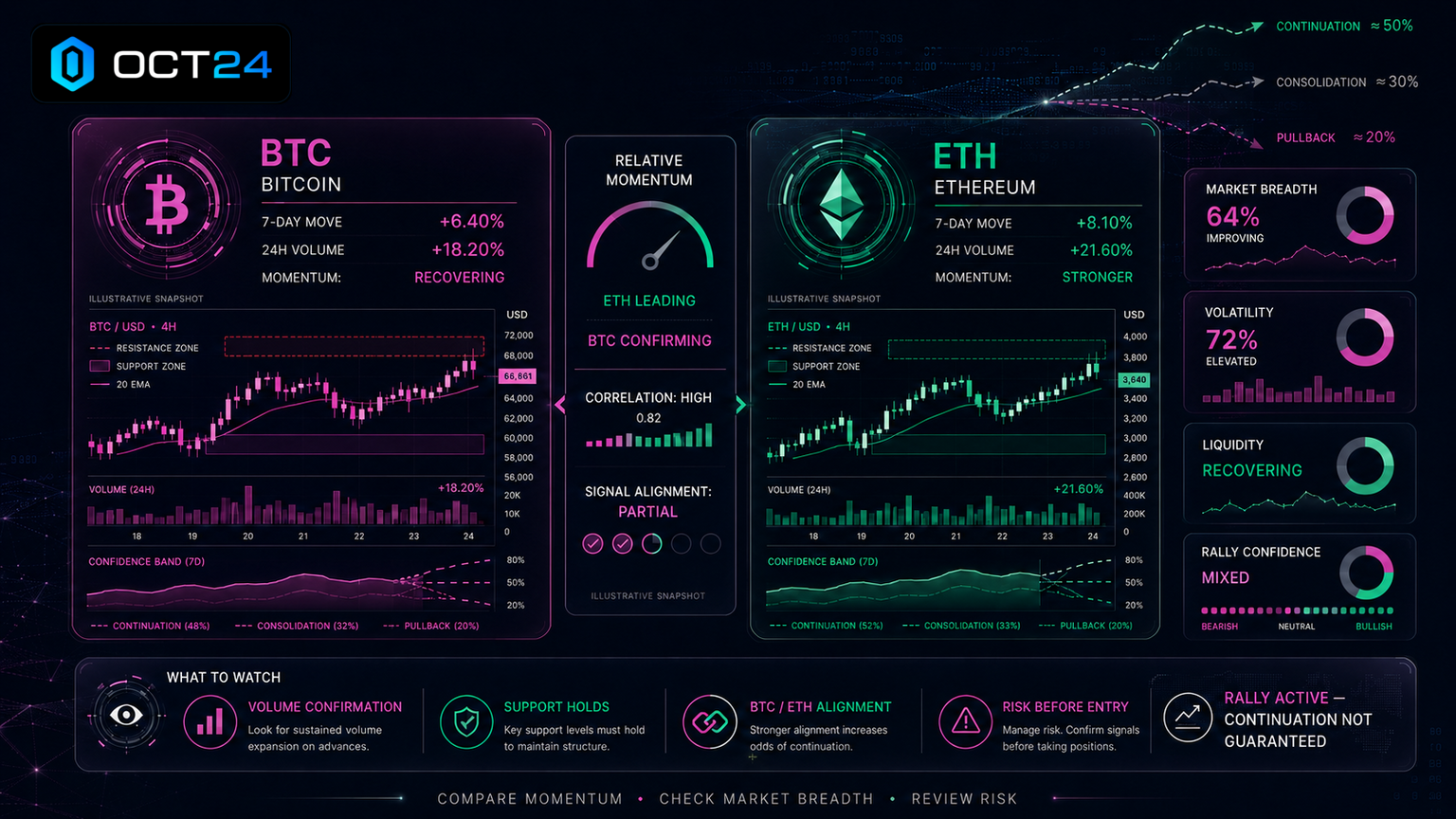
Traders should watch ETH and BTC together. A healthy market may show both assets holding gains. A weaker market may show Ethereum losing momentum first.
Why the rally may be different this time
Not every crypto bounce is the same. Some rallies are driven mostly by leverage. Others have stronger support from spot buyers and longer-term demand.
This rebound included a large short squeeze, but reports also pointed to spot buying and ETF inflows. That mix is more useful than a rally based only on borrowed money.
Spot buyers usually have less risk of forced liquidation. They may also be more willing to hold through smaller pullbacks.
The wider market backdrop improved at the same time. Bond yields eased, the dollar weakened, and crypto regulation headlines became more positive.
These points may give the rally more support. But they do not guarantee that prices will keep rising. The market has moved very quickly, and profit-taking risk is growing.
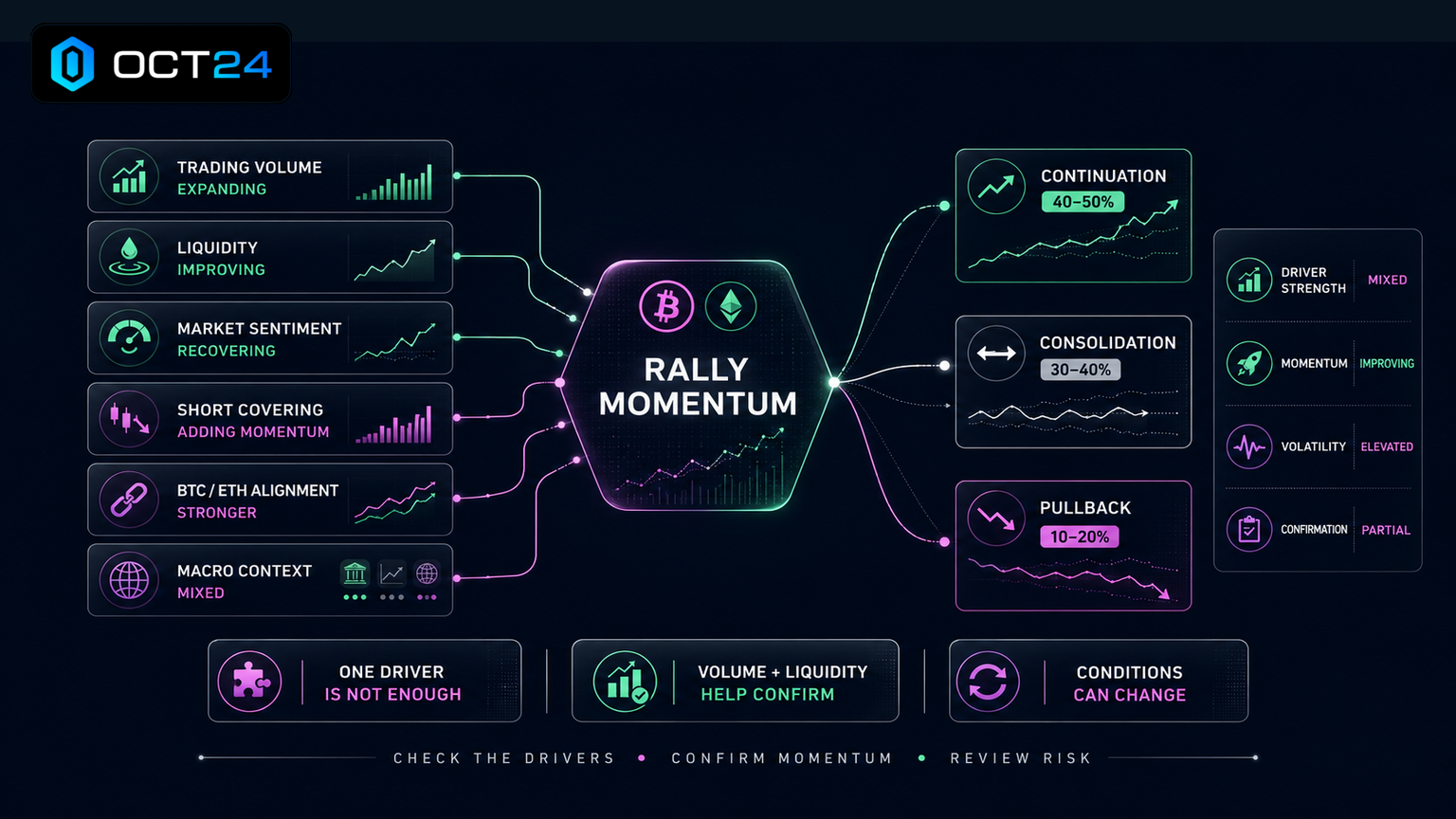
The short squeeze matters—but it is not the whole story
A short squeeze happens when traders betting on lower prices are forced to buy back their positions. That buying can create a fast upward move.
Billions of dollars in bearish crypto positions were reportedly liquidated during the rebound. This helped Bitcoin break through several resistance levels in a short time.
A squeeze can be powerful, but it cannot support a rally forever. Once most weak short positions are gone, the market needs fresh buying to keep moving.
This is why traders should look beyond the headline liquidation number. The next question is whether spot demand, ETF flows, and trading volume remain strong.
If real demand continues after the squeeze slows, the recovery may have more room. If demand fades, prices can pull back quickly.
What traders should watch now
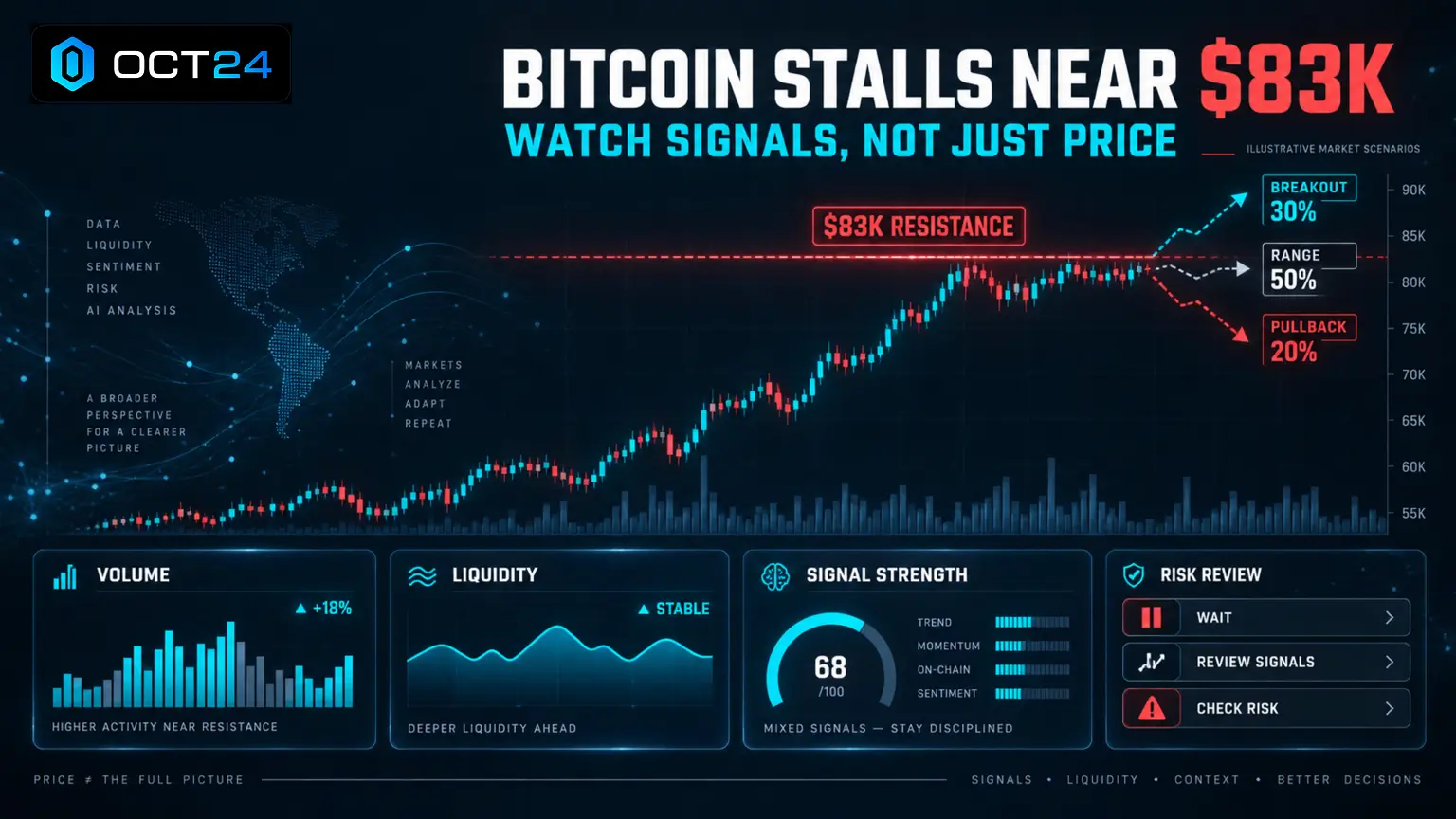
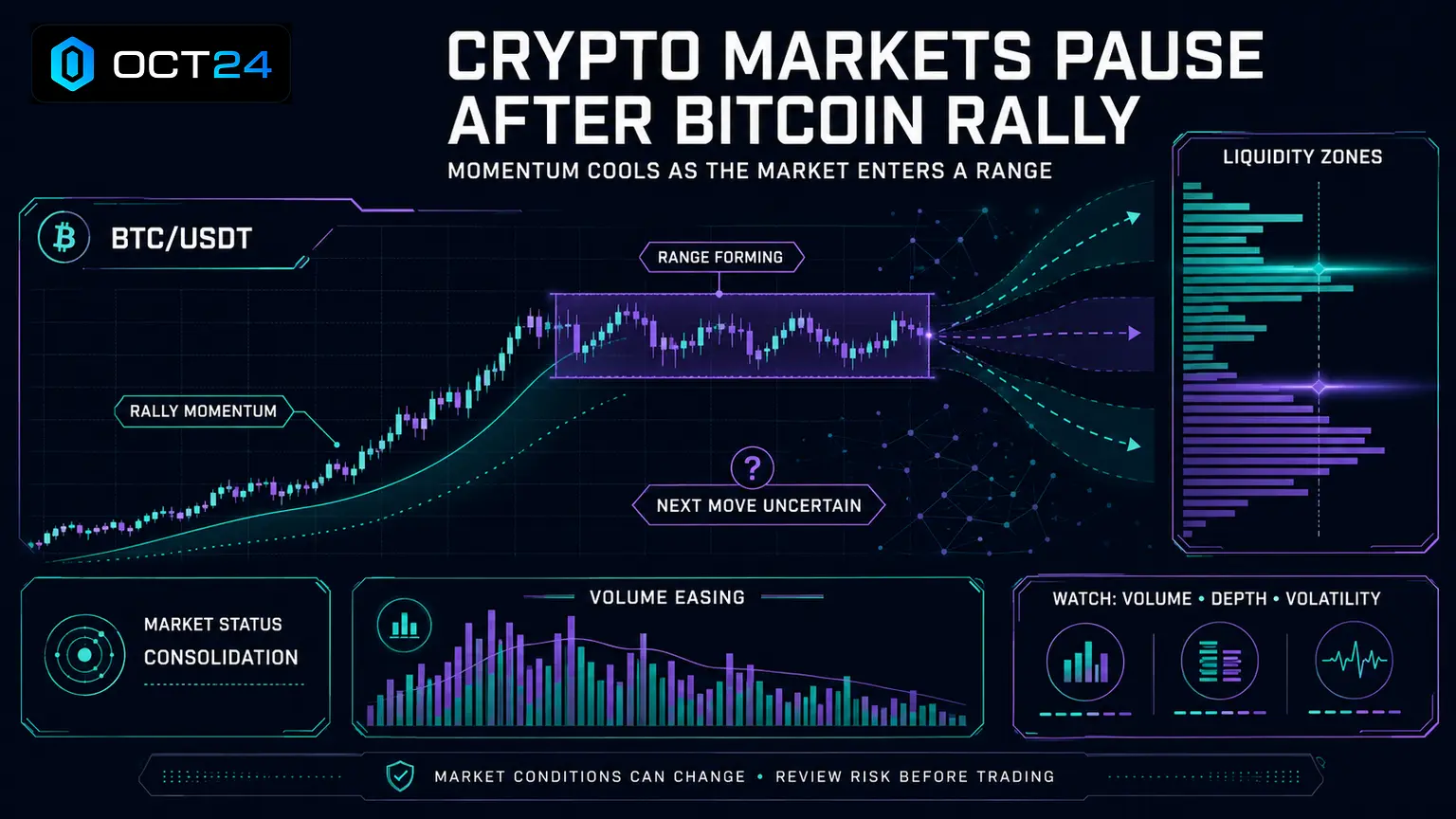
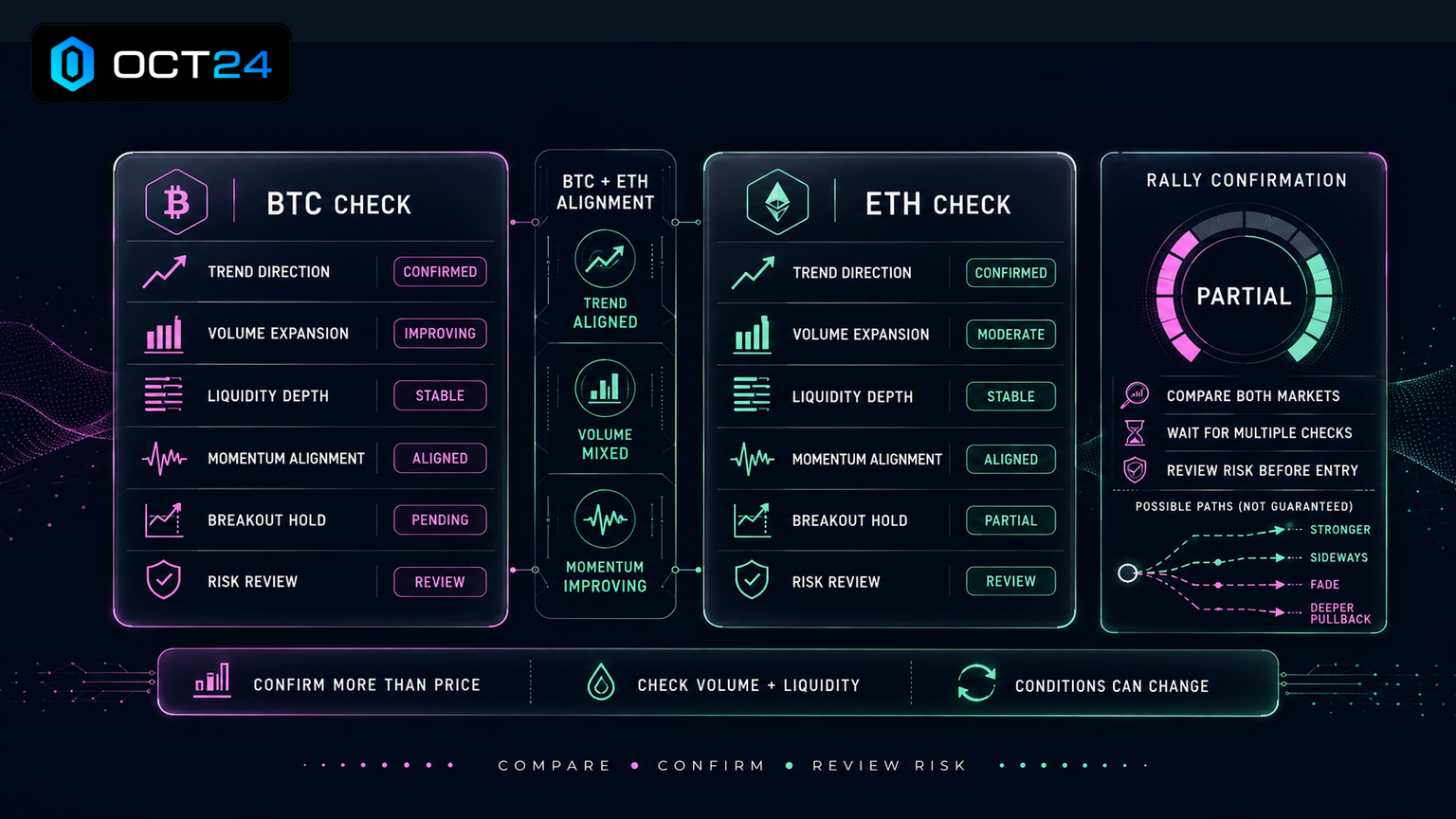
After such a fast bounce, traders need confirmation. One strong week can change sentiment, but it does not prove that the correction is over.
The best approach is to watch several signals together instead of relying on one price target.
Bitcoin holding its breakout
Bitcoin needs to hold above recently recovered levels. A clean hold may show that buyers are comfortable at higher prices. A quick move back below the breakout area would be a warning.
Ethereum relative strength
Ethereum can give traders an early view of risk appetite. Continued ETH strength may support the wider rally. A sharp ETH reversal may show that traders are reducing risk.
Spot trading volume
Strong volume can confirm that more buyers are taking part. Falling volume during higher prices can make the move less convincing.
ETF flows
Continued Bitcoin and Ethereum ETF inflows may support demand. A return to heavy outflows could weaken confidence.
Funding and open interest
Leverage should remain controlled. Rapidly rising open interest and expensive funding can make the market vulnerable to another liquidation wave.
The US dollar and bond yields
The rally was helped by a weaker dollar and lower yields. A strong reversal in either market could put pressure on crypto.
How OCT24 can help traders read the rally
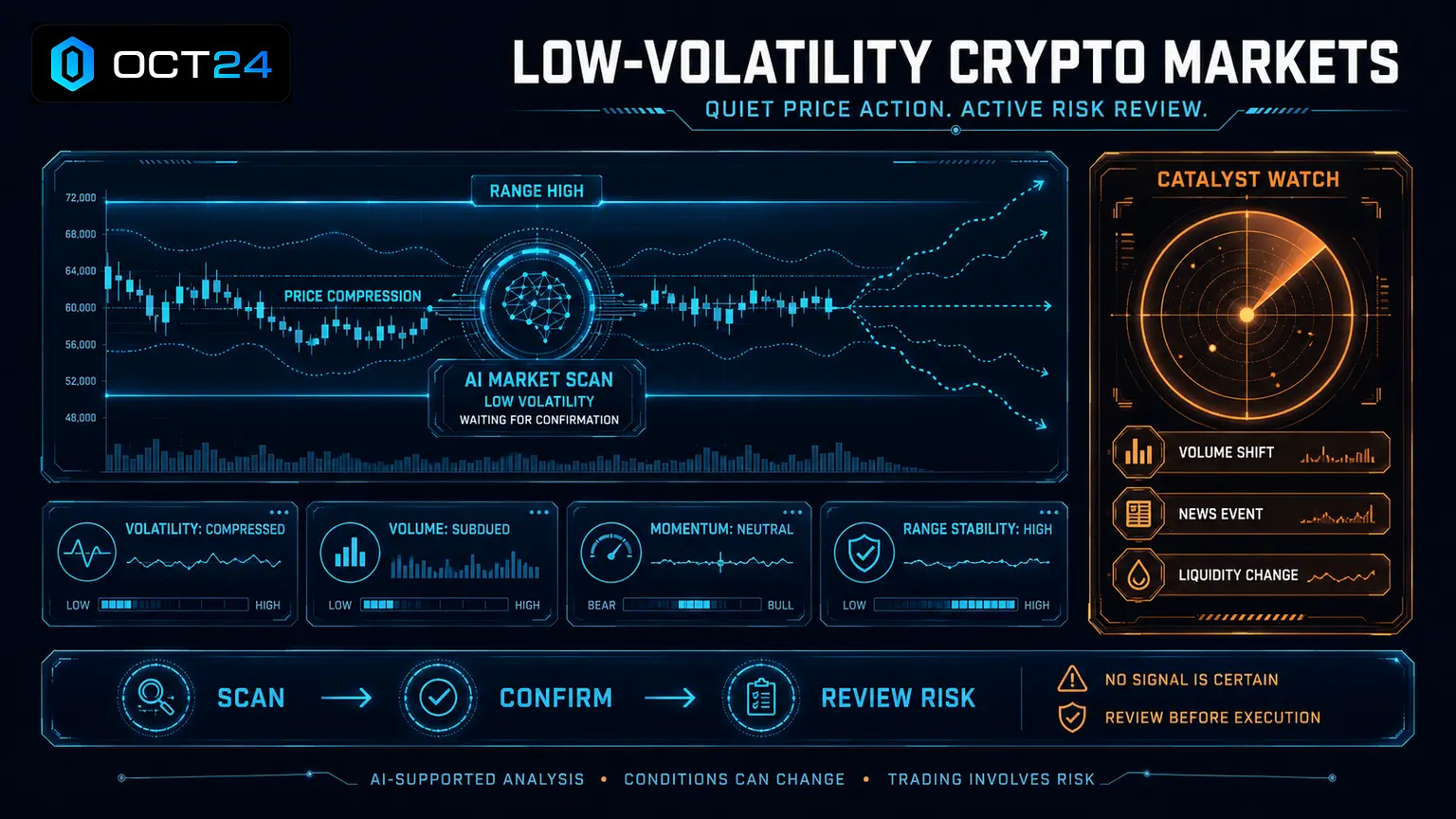
A fast crypto rally creates a lot of information. Traders may be watching Bitcoin, Ethereum, altcoins, volume, volatility, ETF flows, leverage, and market news at the same time.
Doing all of that manually can be difficult. It can also lead to rushed decisions when prices are moving quickly.
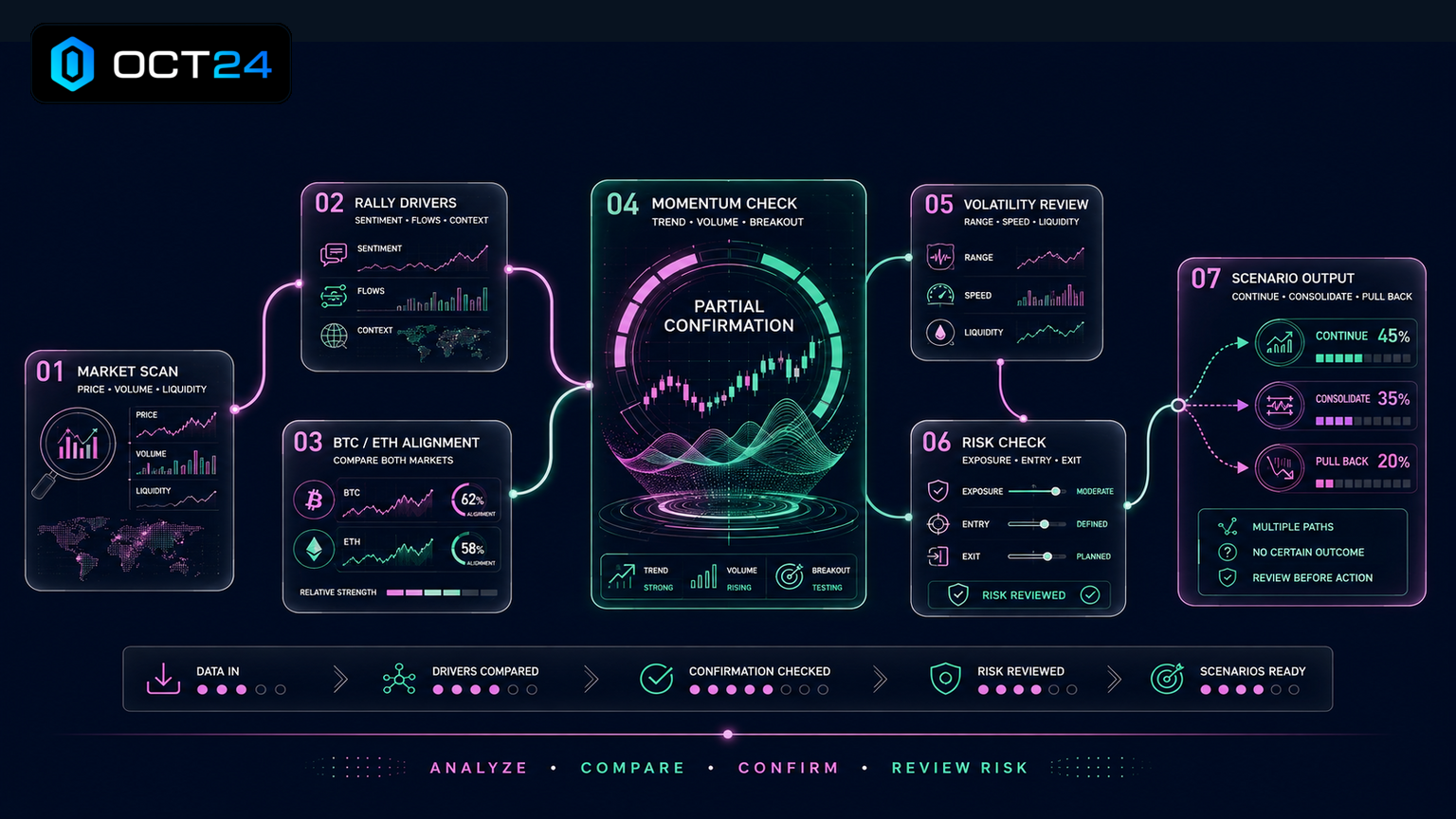
OCT24 performs much of the market analysis by scanning current conditions, identifying possible opportunities, and presenting AI-supported trading signals.
For traders watching the rebound, OCT24 can support the process in several practical ways.
- It can scan changing crypto market conditions.
- It can help surface possible Bitcoin and Ethereum opportunities.
- It can organize signals for quicker review.
- It can help traders notice changes in momentum and volatility.
- It can support a more consistent process during fast markets.
The trader still makes the final decision. OCT24 does not decide the right risk level for every person. It cannot promise that a signal will succeed.
This is the right balance. OCT24 supports the analysis. The trader controls risk, exposure, capital, and execution.
A simple rally-trading scenario
Imagine a trader opens OCT24 after Bitcoin and Ethereum have both posted large gains. A new AI-supported signal appears, but the market has already moved quickly.
A rushed trader may enter because the rally feels exciting. A more careful trader would check the setup first.
- Is the signal fresh, or has most of the move already happened?
- Is price holding above the breakout level?
- Is volume still strong?
- Are ETF flows supporting the move?
- Is leverage becoming crowded?
- How much crypto exposure is already open?
- Where will the trade be closed if the setup fails?
These questions do not remove uncertainty. They help the trader decide whether the opportunity still fits a responsible plan.
OCT24 can support the market review. The trader remains responsible for position size, risk settings, and the final execution choice.
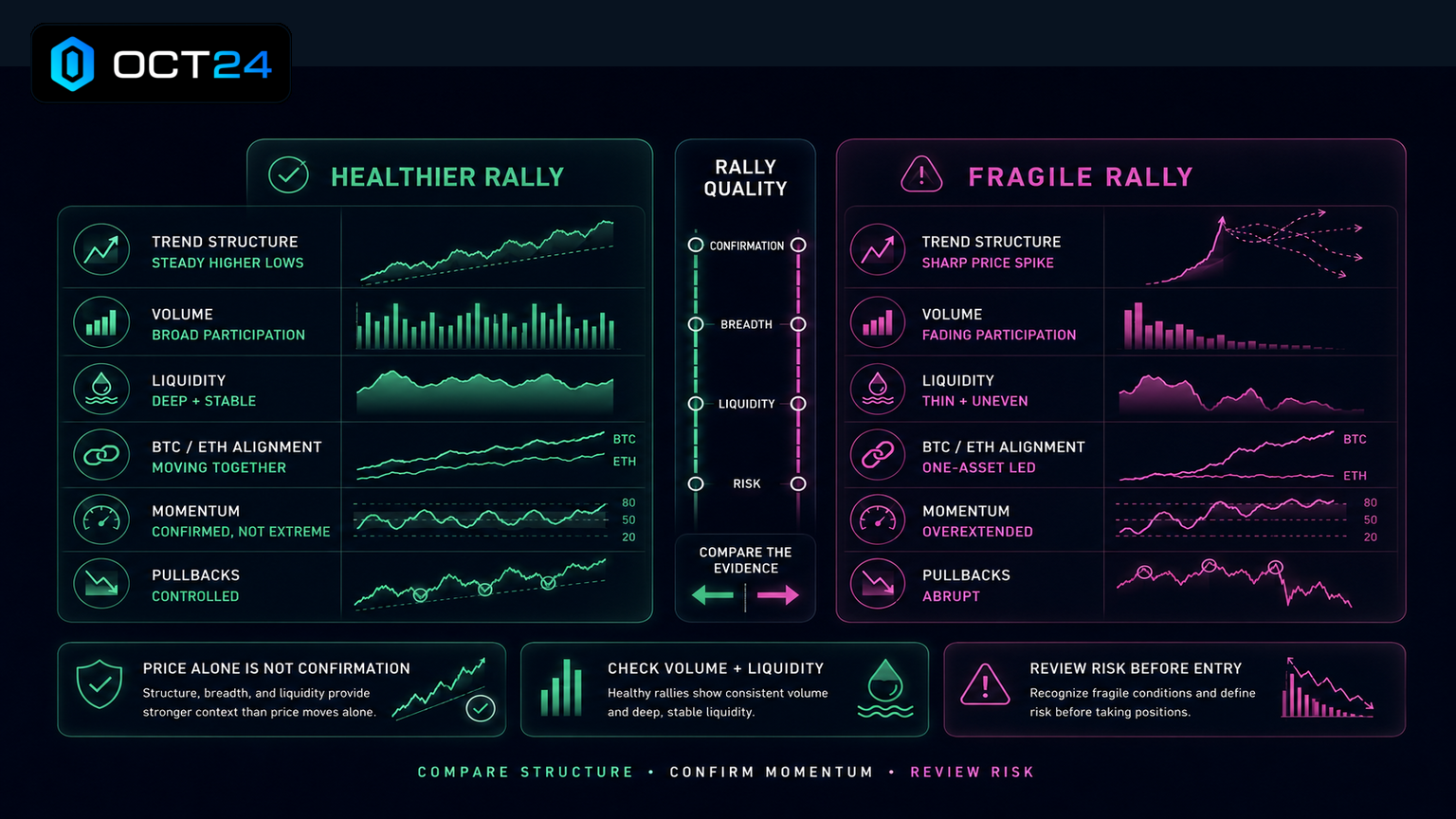
How to tell a healthy rally from a fragile one
A healthy rally usually builds in steps. Price breaks higher, holds, pulls back without collapsing, and then attracts fresh demand.
A fragile rally often moves too far too quickly. Leverage rises, funding becomes expensive, and traders begin buying only because they fear missing out.
No single signal can label a rally perfectly. Traders should compare several conditions.
- Healthy rallies often have steady spot demand.
- Healthy rallies may hold key levels after a pullback.
- Fragile rallies often depend too heavily on leverage.
- Fragile rallies may show falling volume as price rises.
- Fragile rallies can reverse quickly after negative news.
This is where AI Trading can make the review easier. AI-supported tools can compare market behavior faster than most traders can do manually.
Traders can also learn more about How to Read Crypto Charts before judging whether a breakout is holding.
How traders can manage risk after a fast bounce
The return of the crypto rally can make risk feel less important. In reality, risk often increases after a fast move.
Prices may be higher, volatility may be wider, and many traders may already be sitting on profits. That can create sharp selling if sentiment changes.
Risk should be planned before the trade, not after the market turns.
- Define the trade idea before entering.
- Choose a position size that fits the account.
- Avoid increasing leverage because the market feels strong.
- Check total Bitcoin, Ethereum, and altcoin exposure.
- Set a clear level where the idea is no longer valid.
- Decide how profits may be managed.
- Review the trade after it closes.
This connects with Trading Bot Risk Management. Whether traders use manual execution, signals, or an AI Trading Bot, risk still needs to be controlled.
Position Sizing Controls can also help traders avoid putting too much capital into one fast-moving idea.
Where one-click trading fits
Fast markets can create short decision windows. One-click trading may help traders act efficiently after they have reviewed the signal and risk settings.
But speed should come after analysis. It should not replace the risk check.
The responsible order is simple: review the market, check the signal, set the risk, and then decide whether to execute.
A fast trade with poor risk control is still a poor trade. OCT24 can support a smoother workflow, but traders remain responsible for the final choice.
Readers can learn more about AI Trading vs Manual Trading and how each approach handles speed, analysis, and control.
What this means for beginner traders
Beginners do not need to predict whether Bitcoin will reach a certain price. They need a simple process for deciding whether a trade makes sense.
The rally shows that crypto conditions can change very quickly. It also shows why chasing price can be dangerous.
A beginner-friendly process may look like this.
- Check whether Bitcoin and Ethereum are holding their gains.
- Review whether the signal is fresh.
- Look at volume and volatility.
- Set risk before entering.
- Keep position size manageable.
- Avoid using leverage that is difficult to control.
- Use OCT24 signals as support, not as a guarantee.
The goal is not to catch every rally. The goal is to build a repeatable process that can be used in both strong and weak markets.
AI Trading Strategies can help beginners learn how to connect signals with a clearer plan.
What this means for intermediate traders
Intermediate traders may compare more inputs. They may watch ETF flows, spot demand, open interest, funding, Bitcoin dominance, and Ethereum relative strength.
They should also review portfolio concentration. A trader who already holds Bitcoin, Ethereum, and several altcoins may have more exposure than it first appears.
This is where Portfolio Diversification Tools can become useful. Several different crypto positions can still move together during a market reversal.
Intermediate traders should also compare risk and reward. A strong signal may still be too late, too large, or too close to resistance.
OCT24 can organize much of the analysis. The trader still decides whether the setup fits the account and risk plan.
Common mistakes after a crypto bounce
Strong rebounds can create pressure to act. The move looks obvious after it has already happened. That is when traders often make avoidable mistakes.
- Buying only because Bitcoin is back in the headlines.
- Assuming every altcoin will follow Bitcoin and Ethereum.
- Entering after a vertical move without waiting for a setup.
- Using too much leverage.
- Ignoring profit-taking risk.
- Treating ETF inflows as a permanent trend.
- Taking several correlated trades at the same time.
- Following a signal without checking risk.
- Moving an exit because the market feels bullish.
These mistakes are not unique to this rally. They appear whenever confidence returns quickly.
A better approach is to slow down, review the evidence, and decide whether the setup still offers reasonable risk after the excitement is removed.
This also helps traders avoid Common AI Trading Mistakes. AI-supported analysis works best when it is paired with clear human risk decisions.
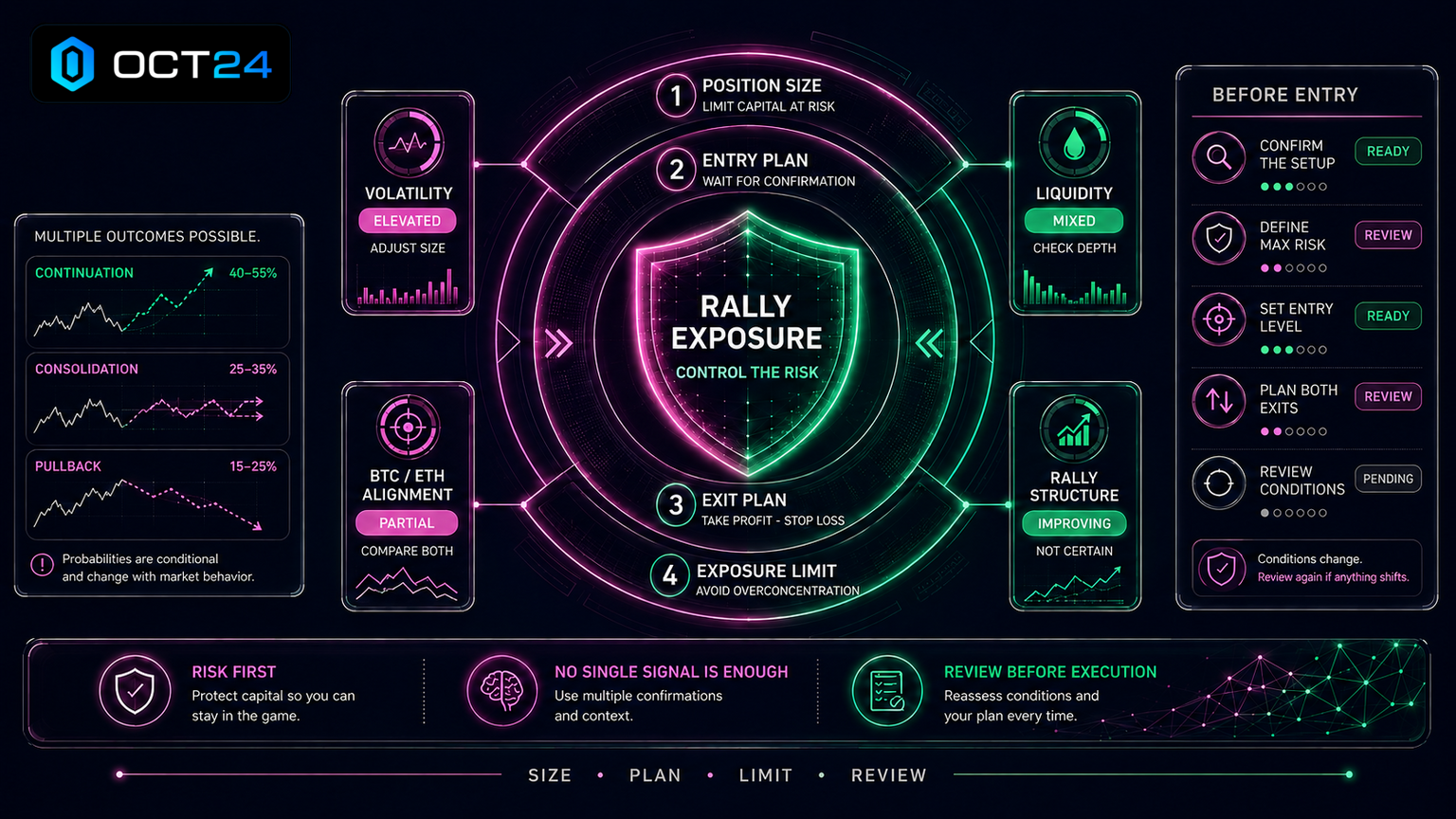
Why waiting can be part of the plan
A strong rally can make waiting feel like a mistake. Traders may worry that the market will keep rising without them.
But waiting does not always mean missing the opportunity. It can give the market time to show whether the breakout is real.
A pullback may reveal where buyers are willing to step in. It can also create a clearer level for risk. If price falls straight through that area, the setup may not be as strong as it first looked.
Waiting can also reduce emotional decisions. The first part of a rally often moves very quickly. The next part may offer a calmer setup with clearer information.
This does not mean traders should always wait for the same pattern. It means patience should remain one of the available choices.
OCT24 can keep scanning conditions while a trader waits. If a new opportunity forms, the platform can present an updated AI-supported signal for review.
A trader does not need to activate every signal. Skipping a trade that does not fit the risk plan can be a disciplined decision.
What could stop the rally
The rebound is strong, but several risks could slow it down.
Bond yields could rise again. The US dollar could recover. ETF inflows could weaken. Traders who are now in profit could decide to sell.
Regulation headlines can also change quickly. Positive expectations around new rules may already be included in current prices.
A large increase in leverage would add another risk. If too many traders take the same bullish position, a small decline can trigger liquidations.
Bitcoin also remains below its previous record high. The market may face selling from traders who bought at higher levels and want to exit near break-even.
None of these risks proves the rally will fail. They are reasons to stay flexible and avoid treating one strong week as certainty.
What traders should watch next
The next stage is about holding gains. Bitcoin and Ethereum need to show that buyers are willing to remain active after the first burst of excitement.
Traders should watch whether Bitcoin can stay above its breakout area and whether Ethereum continues to show healthy relative strength.
ETF flows, spot volume, leverage, the US dollar, and bond yields also remain important. These signals can help show whether the rally is gaining support or losing energy.
OCT24 can help by scanning changing conditions, identifying possible opportunities, and presenting AI-supported signals. This can reduce the need to react to every headline manually.
Traders still need to review risk settings, position size, total exposure, and execution. No platform can remove the chance of a loss.
FAQs
Why did Bitcoin and Ethereum bounce?
The rally was supported by lower bond yields, a weaker US dollar, improved ETF demand, positive regulation headlines, and a large short squeeze.
Is the crypto rally confirmed?
Not fully. The move is strong, but traders should watch whether Bitcoin and Ethereum hold their gains and continue attracting spot demand.
Why did Ethereum rise faster than Bitcoin?
Ethereum often has higher volatility during risk-on moves. ETF demand and market rotation also helped ETH outperform during parts of the bounce.
What is a short squeeze?
A short squeeze happens when traders betting on lower prices are forced to buy back positions as price rises. That buying can speed up a rally.
Do ETF inflows matter?
Yes. ETF inflows can show demand from larger investors. They are useful context, but they should not be treated as a complete trading signal.
What should beginners watch now?
Beginners should watch price structure, volume, volatility, and whether the signal is fresh. Risk should be set before entering.
How can OCT24 help during the rally?
OCT24 scans crypto conditions, identifies possible opportunities, and presents AI-supported trading signals for trader review.
Does OCT24 guarantee successful trades?
No. OCT24 does not remove risk or guarantee results. Traders remain responsible for risk, exposure, capital allocation, and execution.
Should traders use leverage after a bounce?
Leverage should be handled carefully. It increases losses as well as gains and can cause liquidation during a fast reversal.
Can the rally reverse quickly?
Yes. Profit-taking, weaker ETF flows, higher yields, a stronger dollar, or crowded leverage could trigger a pullback.

Final Thoughts
The crypto rally is back, but the next move still needs confirmation. Bitcoin’s breakout, Ethereum’s strength, ETF inflows, and wider market participation are positive signs.
The short squeeze added speed, which means traders should also watch for profit-taking and crowded leverage.
For traders, the lesson is simple: do not chase the rally only because prices are rising. Check the signal, review the market, set risk, and decide whether the setup fits the account.
OCT24 can support that process by performing much of the market analysis, scanning conditions, identifying possible opportunities, and presenting AI-supported trading signals. Traders remain in control of risk and execution.
To review crypto opportunities with a more structured workflow, Start Trading with OCT24. Review every signal carefully and use risk settings that fit your capital and experience.
You can also learn more About OCT24 before getting started.