
Ethereum Outperforms Bitcoin: What Relative Strength Means for Crypto Traders
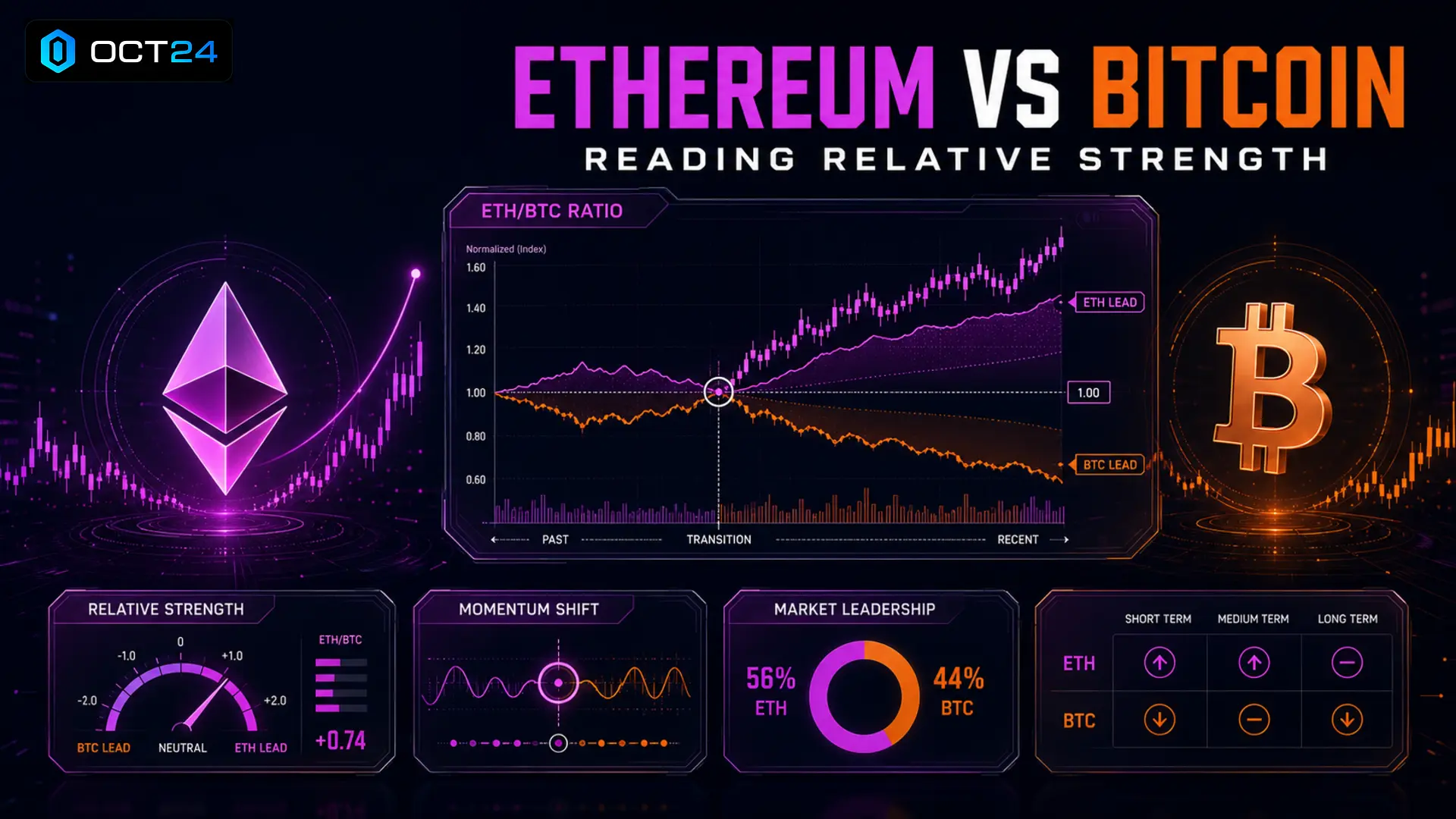
Ethereum outperforms Bitcoin has become one of the most important crypto market stories for traders this week. After months of Bitcoin leading most market conversations, Ethereum has started to show stronger relative performance, stronger ETF-flow interest, and renewed attention around the ETH/BTC ratio.
For traders, the key question is not simply whether Ethereum is “better” than Bitcoin. The better question is what relative strength says about market rotation, risk appetite, and where capital may be moving next.
Recent market coverage has pointed to Ethereum gaining more than Bitcoin over the past month, with BeInCrypto reporting that ETH led the largest crypto assets with a 19.6% monthly gain while Bitcoin gained 5.2% over the same period. Cryptonews also reported that Ethereum ETFs attracted inflows while Bitcoin ETFs saw weekly outflows, adding another reason for traders to watch the shift closely.
OCT24 can support this type of market reading by scanning conditions, identifying potential opportunities, and presenting AI-supported trading signals. But OCT24 does not remove trading risk. Traders still need to control risk settings, exposure, capital allocation, and execution decisions.
What happened this week
The crypto market has not moved in a straight line. Bitcoin has remained important, but Ethereum has started to stand out because it has been gaining ground against Bitcoin on a relative basis.
Relative strength means one asset is performing better than another over a selected period. If Ethereum rises faster than Bitcoin, falls less than Bitcoin, or breaks higher against Bitcoin on the ETH/BTC chart, traders may say Ethereum is showing relative strength.
This matters because relative strength can reveal where attention and capital are shifting. Traders often watch Bitcoin first because it is the largest crypto asset and a major driver of market sentiment. But when Ethereum starts outperforming Bitcoin, it may suggest that the market is becoming more willing to look beyond BTC.
That does not automatically mean a broad altcoin rally has started. It simply means traders should pay attention to the relationship between ETH, BTC, and the wider market.
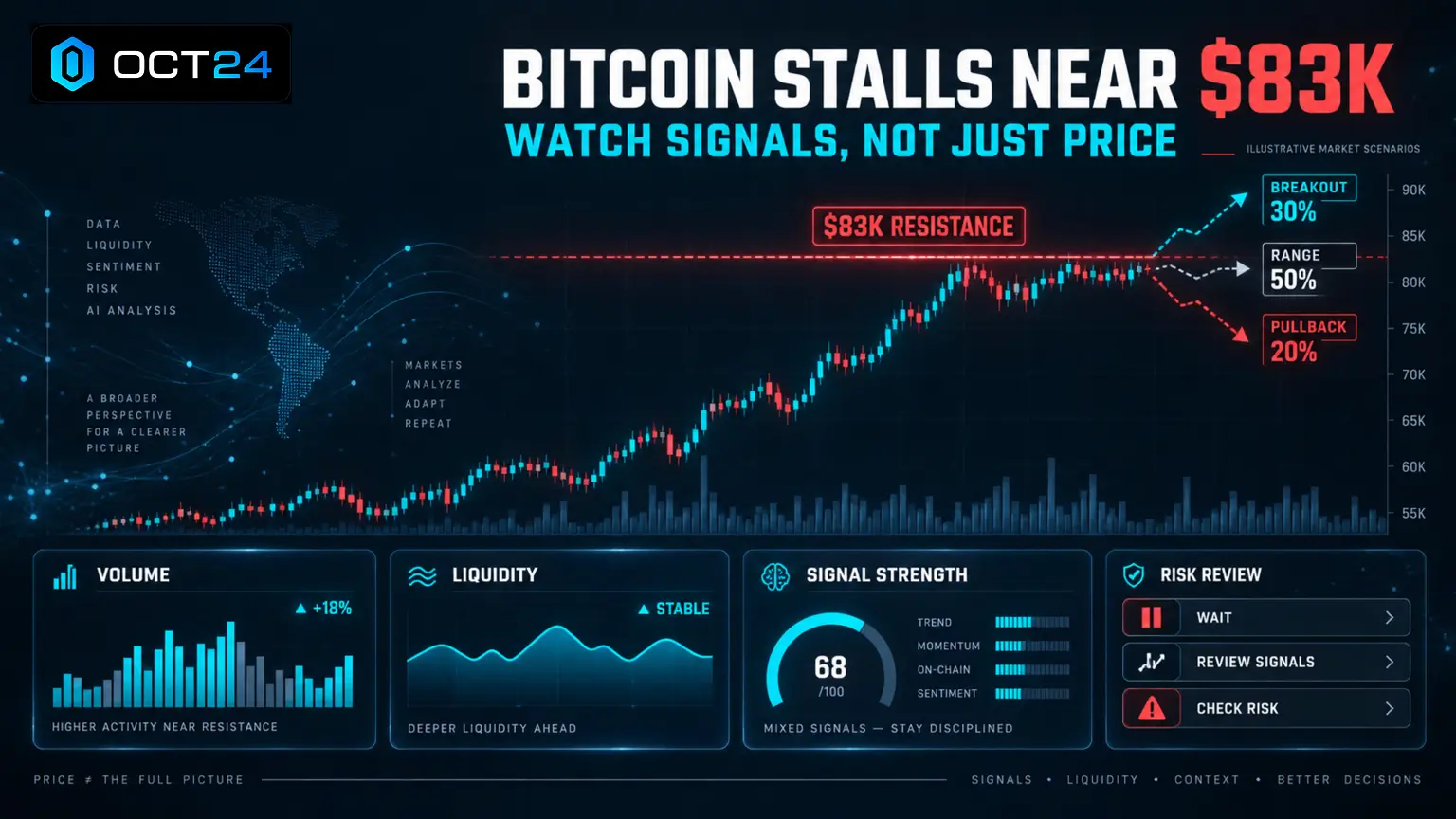
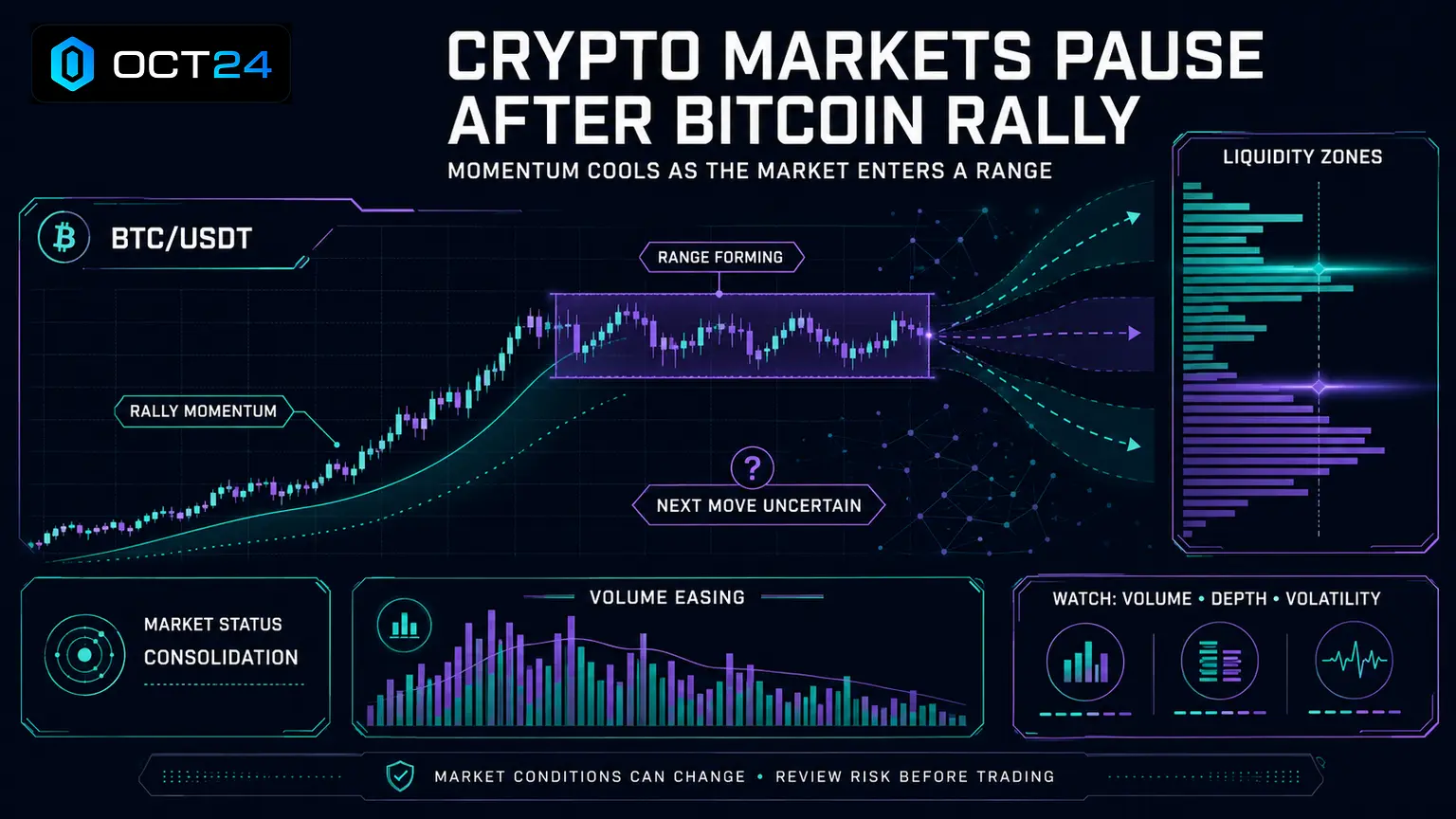
CoinDesk recently described Bitcoin as rangebound between roughly $64,000 and $66,800 after a recovery from July lows. At the same time, other reports have highlighted improving Ethereum momentum and ETF demand. Together, those details create a market where traders may need to compare opportunities rather than only watching one headline asset.
Why the ETH/BTC ratio matters
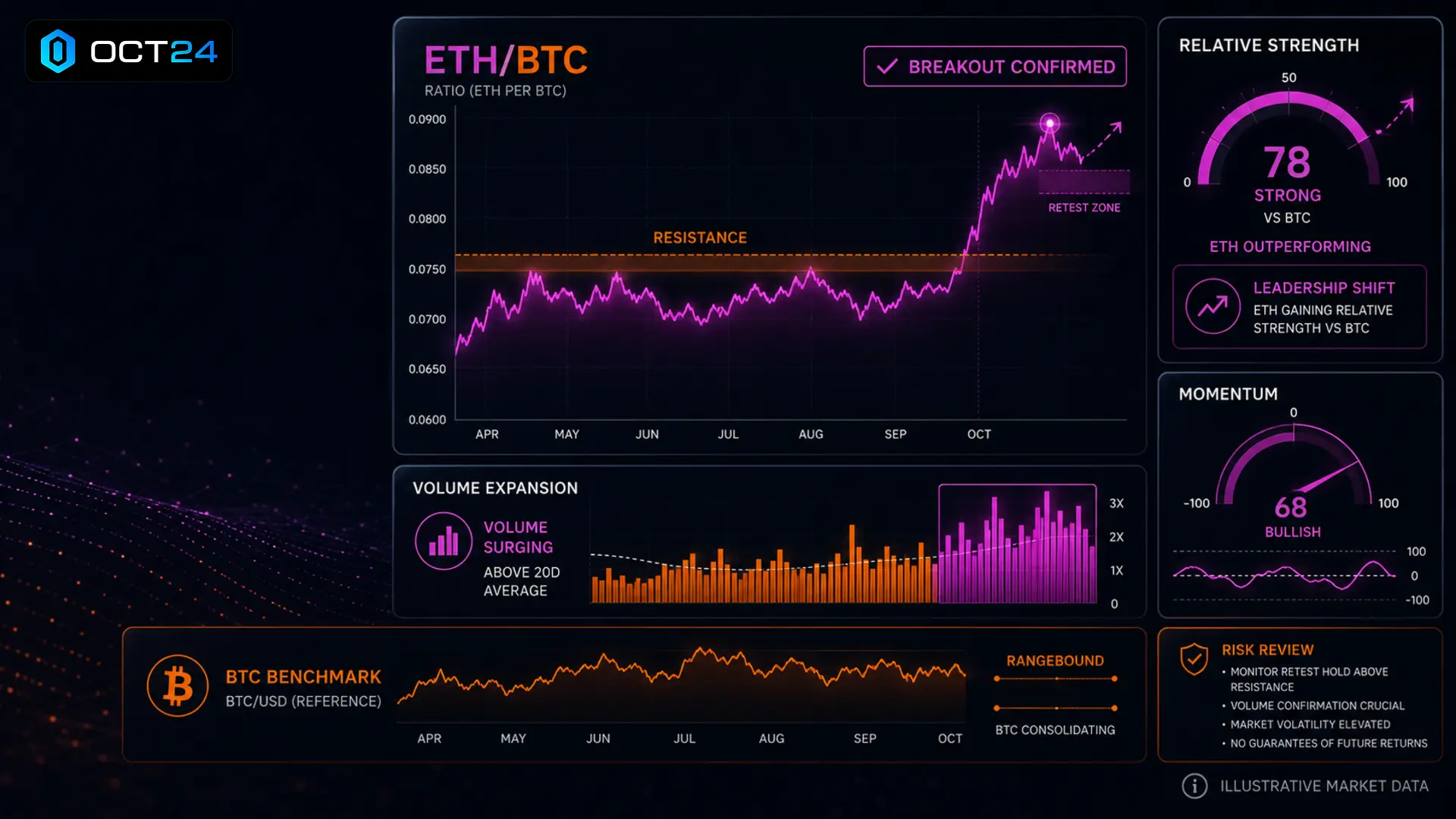
The ETH/BTC ratio compares the value of Ethereum against Bitcoin. If the ratio rises, Ethereum is gaining strength against Bitcoin. If it falls, Bitcoin is outperforming Ethereum.
For crypto traders, the ETH/BTC ratio can be more useful than looking at ETH/USD alone. Ethereum can rise in dollar terms while still underperforming Bitcoin. It can also fall in dollar terms while holding up better than Bitcoin.
That is why the ratio is often used as a rotation signal. It helps traders understand whether capital is favoring Bitcoin or moving toward Ethereum and, possibly, other crypto assets.
BeInCrypto reported that ETH/BTC reached a three-month high around 0.030. Another recent BeInCrypto analysis said the ratio had broken out of a year-long descending channel, while Bitcoin dominance remained near 60%.
That combination is important. It suggests Ethereum is improving against Bitcoin, but it does not yet prove that every altcoin will follow. Traders should treat it as a signal to monitor, not a complete trading plan.
Why Ethereum is gaining attention
Ethereum’s recent strength appears to be supported by several themes. The first is simple price performance. ETH has been gaining more quickly than BTC over the past month, which naturally attracts trader attention.
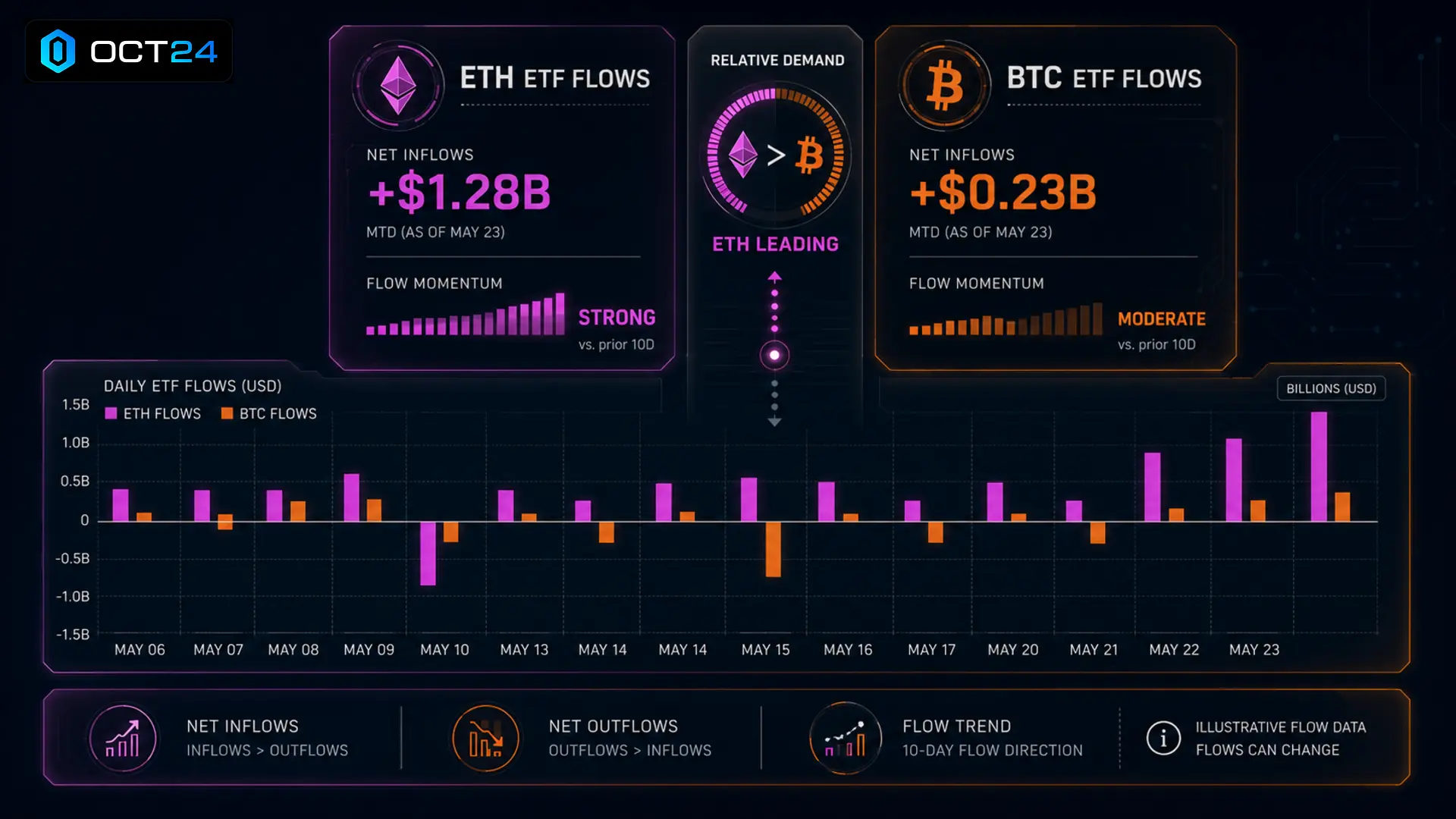
The second theme is ETF flows. Cryptonews reported that Ethereum ETFs added 37,959 ETH over the seven days ending July 28, while Bitcoin ETFs lost 3,170 BTC over the same period. BeInCrypto also reported that Ethereum funds posted a third straight week of net inflows.
ETF flows do not explain every market move. They can change quickly, and they do not guarantee future price direction. But they can give traders a useful view of institutional demand.
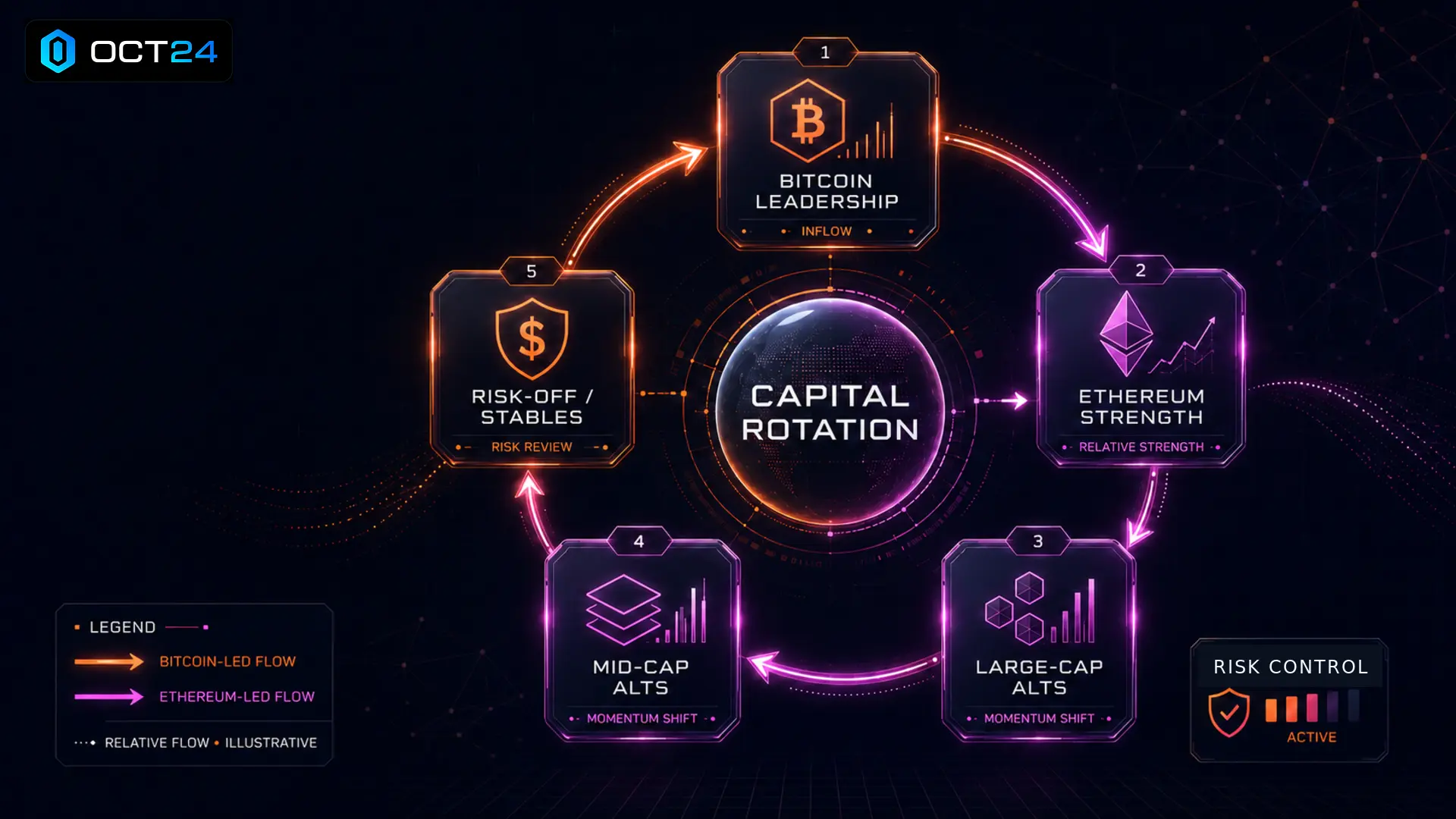
The third theme is rotation. When Bitcoin stabilizes after a strong move, traders sometimes start watching Ethereum and other large crypto assets for follow-through. This is not always smooth. Rotation can start, fail, restart, or remain limited to only a few assets.
That is why traders need structure. OCT24 helps by scanning market conditions and organizing AI-supported signals, so traders can review whether Ethereum strength is a real opportunity or simply a short-term market reaction.
Why Bitcoin still matters
Ethereum’s relative strength does not make Bitcoin irrelevant. Bitcoin remains the largest crypto asset and often sets the tone for the wider market.
If Bitcoin weakens sharply, Ethereum can still come under pressure. If Bitcoin breaks higher, Ethereum may benefit from improved market sentiment. If Bitcoin trades sideways, Ethereum may have more room to outperform if buyers continue rotating.
The key is context. Ethereum outperforming Bitcoin does not mean traders should ignore BTC. It means traders should watch both assets together.
A useful trader question is: “Is Ethereum leading because the whole market is improving, or is Ethereum simply catching up while Bitcoin pauses?”
That difference matters. If the entire crypto market is improving, traders may see broader confirmation. If Ethereum is only catching up, the move may be more fragile.
What relative strength means for crypto traders
Relative strength helps traders compare opportunities. It shows which asset is gaining leadership, which asset is losing momentum, and where attention may be shifting.
For beginner and intermediate traders, this can make decision-making easier. Instead of asking whether every asset looks exciting, traders can ask which asset is showing stronger behavior against a major benchmark.
In crypto, Bitcoin is often that benchmark. If Ethereum is outperforming Bitcoin, it may suggest traders are becoming more interested in Ethereum-specific themes, ETF demand, smart-contract activity, or broader altcoin risk appetite.
Relative strength is useful because it moves the trader away from isolated price watching. A trader who only looks at ETH/USD may see Ethereum rising. A trader who also checks ETH/BTC can see whether Ethereum is truly gaining leadership.
This connects naturally with how AI uses technical analysis. AI-supported tools can review price behavior, momentum, volume, volatility, and signal quality across multiple assets faster than most traders can do manually.
OCT24 uses AI-supported analysis to scan market conditions and identify potential opportunities. For traders watching ETH and BTC, this can help reduce the time spent manually comparing charts.
Relative strength is not a prediction
A rising ETH/BTC ratio can be useful, but it is not a promise that Ethereum will keep outperforming. Markets can change quickly, especially when news, ETF flows, macro data, or risk sentiment shifts.
This is one of the most important lessons for traders. Relative strength is a clue, not a certainty.
For example, Ethereum may outperform for several weeks and then lose momentum if Bitcoin breaks higher, ETF demand cools, or the wider crypto market becomes more defensive.
That is why traders should avoid treating one signal as a complete decision. A relative-strength signal should be combined with risk settings, position sizing, market conditions, and a clear exit plan.
This also helps avoid common AI trading mistakes. AI-supported signals can help organize information, but traders still need to decide whether the setup fits their risk plan.
How OCT24 can help traders read the move
OCT24 is useful in this type of market because traders are not only watching one chart. They are watching Ethereum, Bitcoin, ETH/BTC, ETF-flow headlines, Bitcoin dominance, volatility, and broader risk appetite.
That can become a lot to manage manually. OCT24 performs much of the market analysis by scanning conditions, identifying potential opportunities, and presenting AI-supported trading signals.
For a trader watching Ethereum relative strength, OCT24 can support the process in several practical ways.
- It can help surface potential trading opportunities when market conditions change.
- It can support signal review when Ethereum momentum strengthens or weakens.
- It can help traders stay aware of volatility instead of reacting emotionally.
- It can make it easier to compare opportunities across assets.
- It can support faster review before a trader makes an execution decision.
The trader still needs to choose position size, risk settings, and capital allocation. OCT24 does not decide how much exposure is right for a user, and it does not remove the risk of losses.
That balance is important. OCT24 performs most of the analysis work, while the trader remains responsible for the final risk and execution choices.
A simple ETH versus BTC trading scenario
Imagine a trader opens OCT24 and sees AI-supported signals forming around Ethereum while Bitcoin is trading sideways. The trader also notices that ETH/BTC has been improving.
A less disciplined trader might rush into Ethereum because it is outperforming. A more structured trader would ask a few questions first.
- Is the Ethereum signal supported by current market conditions?
- Is Bitcoin stable enough to support broader crypto risk appetite?
- Is ETH/BTC still improving, or is it already stretched?
- How much exposure do I already have to crypto?
- What position size fits my account?
- Where would I exit if the trade fails?
This is the type of process that separates signal review from emotional trading. The goal is not to chase every move. The goal is to understand whether the move fits a responsible plan.
OCT24 can help with the analysis side of that process. The trader still handles risk settings and execution decisions.
Signals traders should watch next
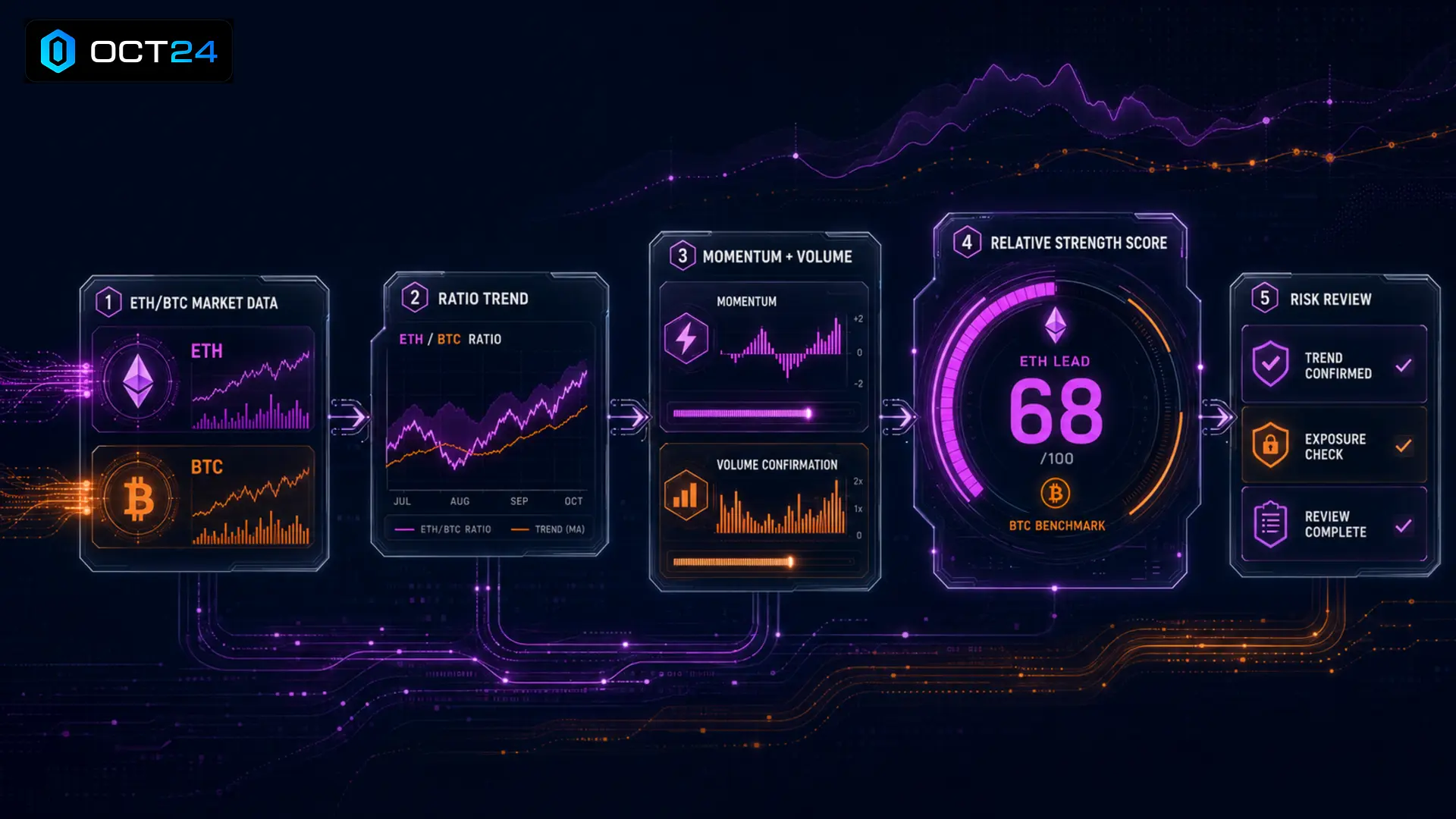
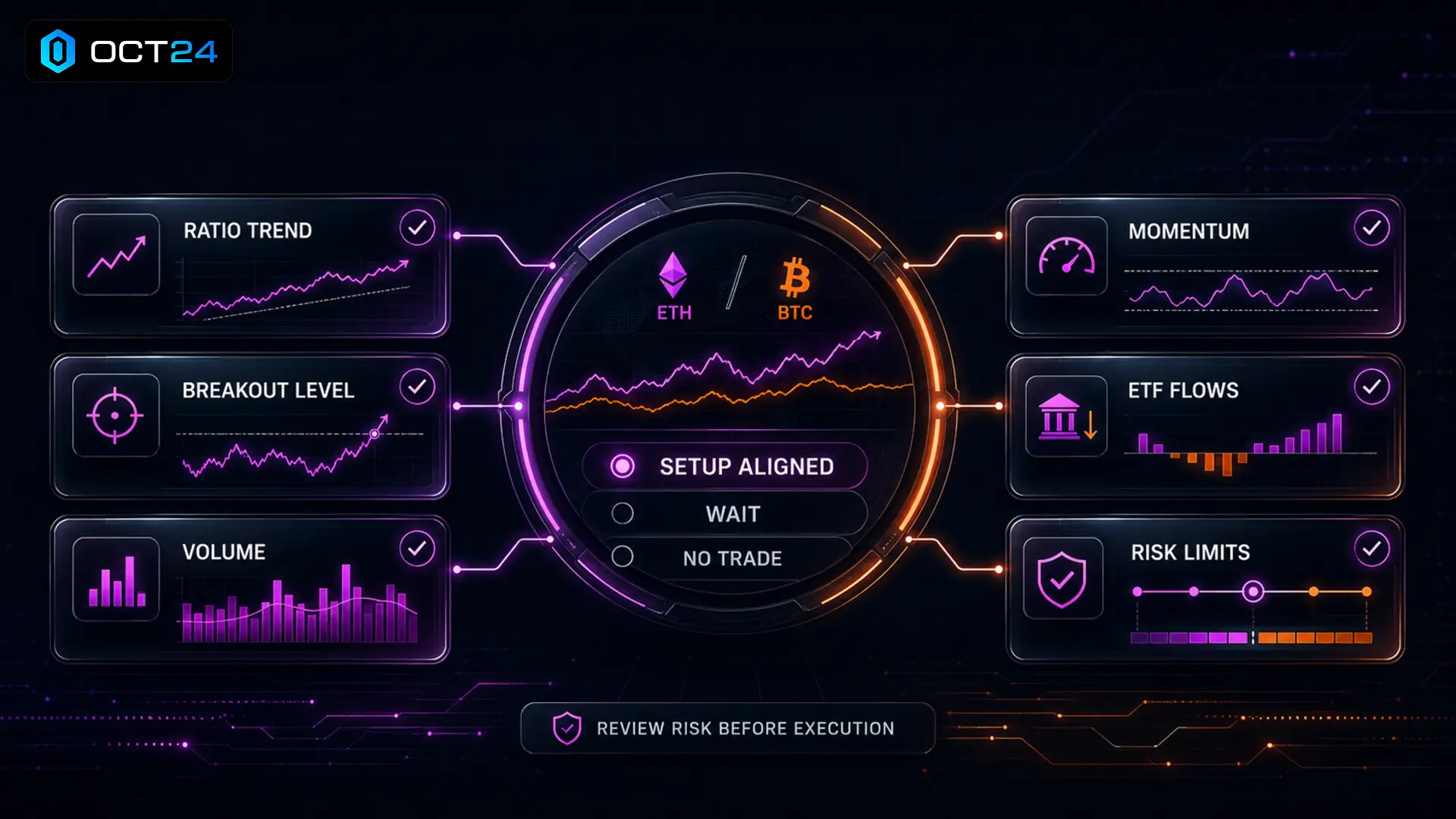
If Ethereum continues to outperform Bitcoin, traders may want to watch several signals together rather than relying on one headline.
The ETH/BTC ratio
The ETH/BTC ratio remains the cleanest way to track Ethereum’s performance against Bitcoin. A continued rise may suggest Ethereum leadership is strengthening. A reversal may suggest the move is fading.
Bitcoin dominance
Bitcoin dominance shows Bitcoin’s share of total crypto market value. If ETH/BTC rises while Bitcoin dominance falls, traders may pay more attention to rotation. If dominance stays strong, the move may remain more limited.
ETF flows
ETF flows can show whether demand is expanding or cooling. Recent Ethereum ETF inflows have helped support the relative-strength story, but flows can change quickly.
Volume and volatility
Strong moves are more convincing when volume supports them. Volatility also matters because fast price moves can create both opportunity and risk.
Signal quality
A trading signal should not be judged only by the asset name. Traders should consider setup quality, timing, risk level, and whether the signal fits their broader portfolio.
This is where AI trading signals can help. They give traders a more structured way to review potential opportunities, especially when markets are moving quickly.
How traders can manage risk
Ethereum outperformance can be exciting, but traders should avoid assuming that stronger performance means lower risk. Often, the opposite is true. When a market becomes more active, volatility can increase.
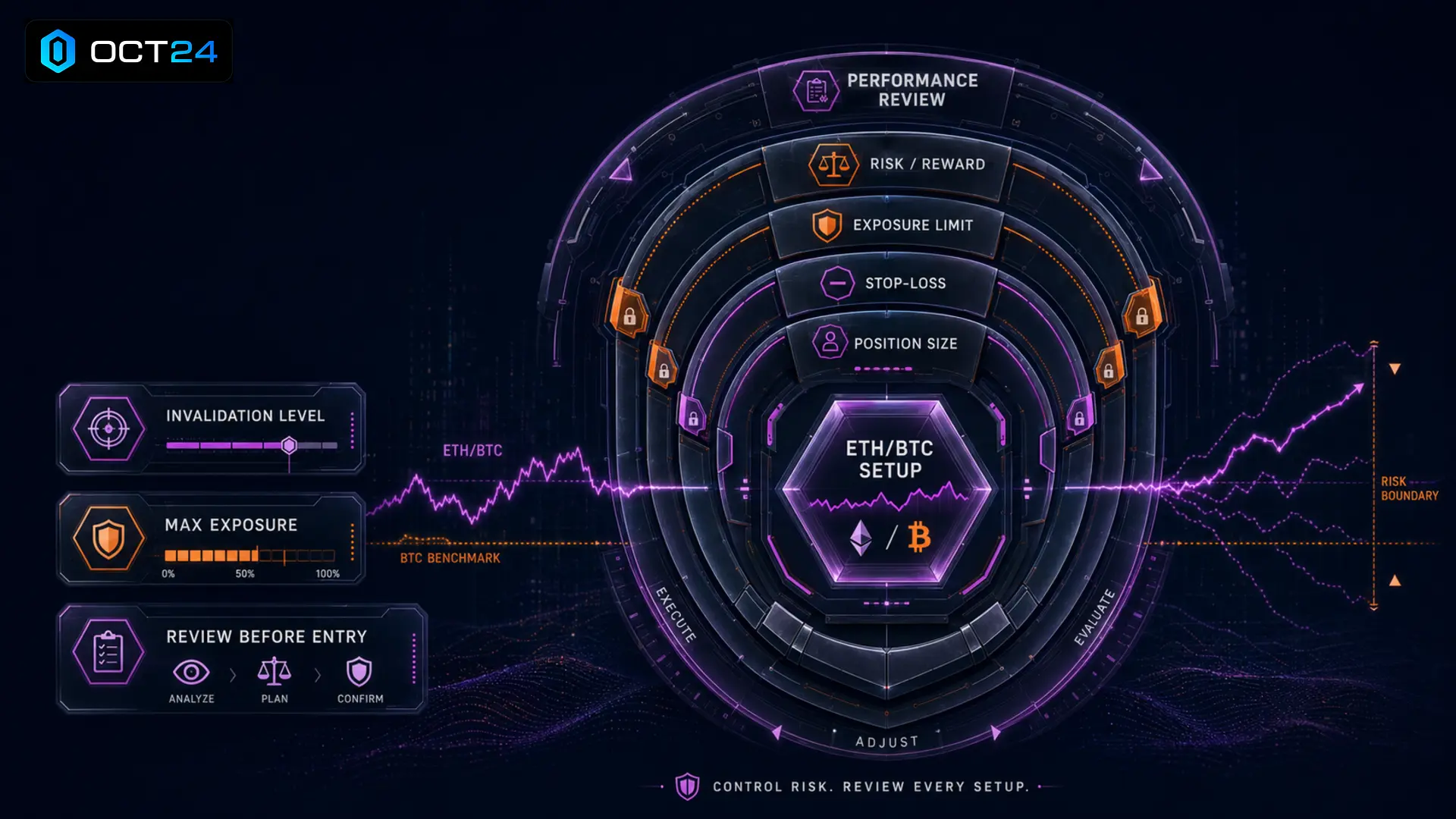
Risk management should come before execution. Traders should decide how much they are willing to risk before entering the trade, not after the market starts moving.
A simple risk checklist can help.
- Define the trade idea before entering.
- Use a position size that fits the account.
- Avoid increasing exposure just because ETH is outperforming.
- Check whether existing positions are already crypto-heavy.
- Set clear invalidation levels.
- Review the trade after it closes.
This connects directly with trading bot risk management and position sizing controls. Whether a trader uses manual execution, AI-supported signals, or the G6 Trading Bot, risk still needs to be controlled.
The G6 Trading Bot can be part of an OCT24 workflow, but it should not be treated as a reason to ignore exposure or capital allocation. Trading bots can support execution and process, but traders remain responsible for how much risk they take.
Where one-click trading fits
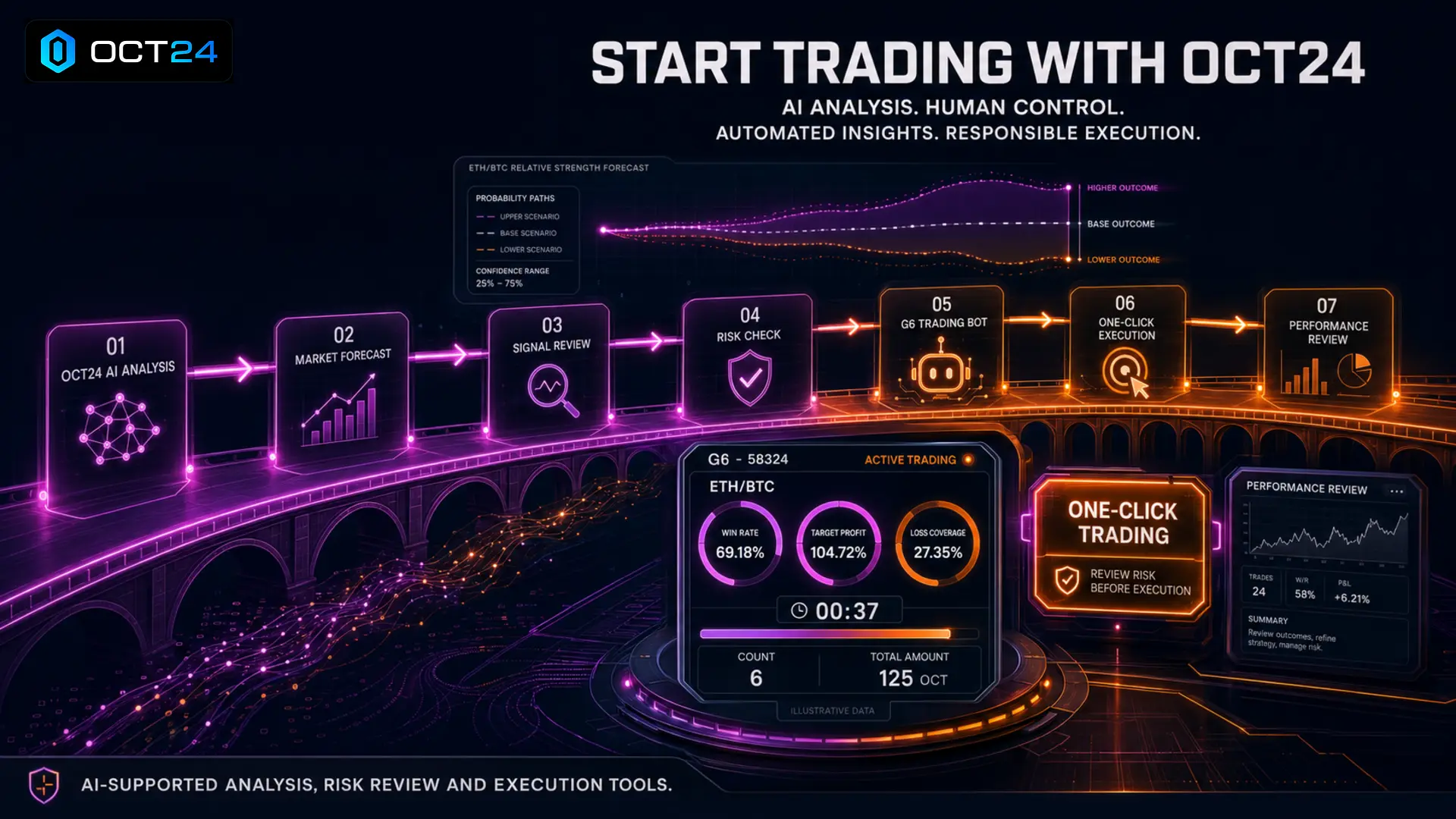
When markets move quickly, execution speed can matter. One-click trading may help traders act more efficiently after they have reviewed the signal and risk settings.
But speed should come after preparation. It should not replace analysis. A fast trade with poor risk control is still a poor trade.
In an ETH/BTC rotation environment, traders may see opportunities appear and disappear quickly. OCT24 can help by scanning the market and presenting AI-supported signals, while one-click execution can support a smoother action step when the trader is ready.
The responsible order is simple: analysis first, risk check second, execution third.
What this means for beginner traders
Beginner traders do not need to become macro analysts to understand Ethereum’s relative strength. They simply need a clear framework.
Start with the basic idea: Ethereum is currently showing stronger performance than Bitcoin over the recent period. That makes ETH worth watching, but it does not mean every Ethereum trade is automatically good.
A beginner-friendly process might look like this.
- Check whether Ethereum is outperforming Bitcoin.
- Look at whether Bitcoin is stable or weakening.
- Review whether the ETH signal is fresh or already extended.
- Set risk before entering.
- Avoid putting too much capital into one idea.
- Use OCT24 signals as support, not as a reason to skip judgment.
This also connects with AI trading strategies for beginners. The goal is not to predict everything. The goal is to build a repeatable process that helps traders make calmer decisions.
What this means for intermediate traders
Intermediate traders may go a step further. They may compare Ethereum strength against Bitcoin dominance, ETF flows, volatility, and broader altcoin performance.
They may also review whether Ethereum strength is creating a better trade setup or simply confirming a move that has already happened.
This is where Portfolio Diversification Tools can become useful. If a trader already has significant exposure to Ethereum or other crypto assets, adding another ETH-based trade may increase concentration.
Intermediate traders should also compare risk and reward. A trade can be attractive but still too large, too late, or too correlated with existing positions.
OCT24 can help by organizing the analysis and presenting AI-supported signals. The trader still decides whether the signal fits their portfolio and risk plan.
Common mistakes during relative-strength moves
When one asset starts outperforming another, traders can easily become emotional. The move feels obvious after it has already started, which can lead to rushed decisions.
Here are common mistakes to avoid.
- Buying only because Ethereum is in the headlines.
- Ignoring Bitcoin because Ethereum is stronger this week.
- Using too much size after a fast move.
- Assuming ETF inflows will continue forever.
- Treating ETH/BTC as a perfect prediction tool.
- Skipping stop-loss or exit planning.
- Taking several correlated trades at once.
These mistakes are not unique to Ethereum. They can happen in any fast-moving market. But relative-strength moves can make them more tempting because traders feel pressure to catch up.
A better approach is to slow down, review the signal, and decide whether the trade still offers a reasonable setup after risk is considered.
How this affects the wider crypto market
Ethereum outperformance can influence the wider crypto market because ETH often sits between Bitcoin and smaller altcoins in the risk spectrum.
If Bitcoin is the market’s main benchmark, Ethereum is often the next major asset traders watch for broader risk appetite. When Ethereum strengthens against Bitcoin, some traders start asking whether capital may rotate into other major altcoins.
That does not mean a full altcoin season has started. Recent coverage has pointed out that Bitcoin dominance remains important. If Bitcoin dominance stays high, rotation may remain selective.
For OCT24 users, the practical point is to monitor market conditions, not chase labels. A market can show Ethereum leadership without supporting every crypto asset equally.
This is why 24/7 market monitoring matters. Conditions can change quickly, and traders need to know whether the market is confirming or rejecting the rotation idea.
What traders should watch next
The next step is confirmation. Traders should watch whether Ethereum continues to outperform Bitcoin, whether ETF inflows remain supportive, and whether Bitcoin stays stable enough to support broader crypto risk appetite.
They should also watch whether Ethereum momentum becomes too stretched. A strong market can still pull back. A good setup can still fail.
OCT24 can support traders by scanning conditions, identifying potential opportunities, and presenting AI-supported trading signals. This helps traders avoid relying only on headlines or emotion.
But traders should still review risk settings, position size, and total exposure before acting. The platform supports the decision-making process, but it does not remove the responsibility of managing capital.
Frequently asked questions
What does it mean when Ethereum outperforms Bitcoin?
It means Ethereum is gaining more than Bitcoin, falling less than Bitcoin, or strengthening against Bitcoin on the ETH/BTC ratio. Traders often view this as a sign of relative strength.
Is Ethereum outperforming Bitcoin bullish for crypto?
It can be constructive, but it is not automatically bullish for the entire crypto market. Traders should also watch Bitcoin stability, ETF flows, volatility, and Bitcoin dominance.
What is the ETH/BTC ratio?
The ETH/BTC ratio compares Ethereum’s value against Bitcoin. A rising ratio means Ethereum is outperforming Bitcoin. A falling ratio means Bitcoin is outperforming Ethereum.
Do ETF inflows matter for traders?
ETF inflows can help traders understand demand, especially from institutional-style buyers. They are useful context, but they should not be treated as a complete trading signal.
Can OCT24 help traders monitor Ethereum and Bitcoin?
Yes. OCT24 scans market conditions, identifies potential opportunities, and presents AI-supported trading signals. Traders can use that analysis while still managing their own risk settings and exposure.
Should traders buy Ethereum just because it is outperforming Bitcoin?
No. Relative strength is useful, but traders should still review timing, position size, risk, volatility, and whether the trade fits their plan.
Does Ethereum strength mean altcoin season has started?
Not necessarily. Ethereum strength can be an early rotation signal, but traders should also watch Bitcoin dominance and whether other major crypto assets confirm the move.
How should beginners trade relative strength?
Beginners should keep the process simple. Compare ETH and BTC, check whether the signal is fresh, set risk before entering, and avoid overcommitting capital to one idea.
Final summary
Ethereum’s recent outperformance against Bitcoin is a useful market signal because it shows where trader attention may be shifting. The ETH/BTC ratio, ETF flows, Bitcoin dominance, and market volatility all matter in understanding whether this move has room to continue.
For crypto traders, the lesson is simple: do not only watch price. Watch relative strength, market context, and risk.
OCT24 can help by doing much of the market analysis, scanning conditions, identifying potential opportunities, and presenting AI-supported trading signals. Traders remain responsible for position sizing, exposure, capital allocation, and execution choices.
To review AI-supported crypto trading opportunities with a more structured workflow, Start Trading with OCT24.