
AI Stock Selloff: What It Means for Traders Watching Tech, Crypto, and Risk Assets
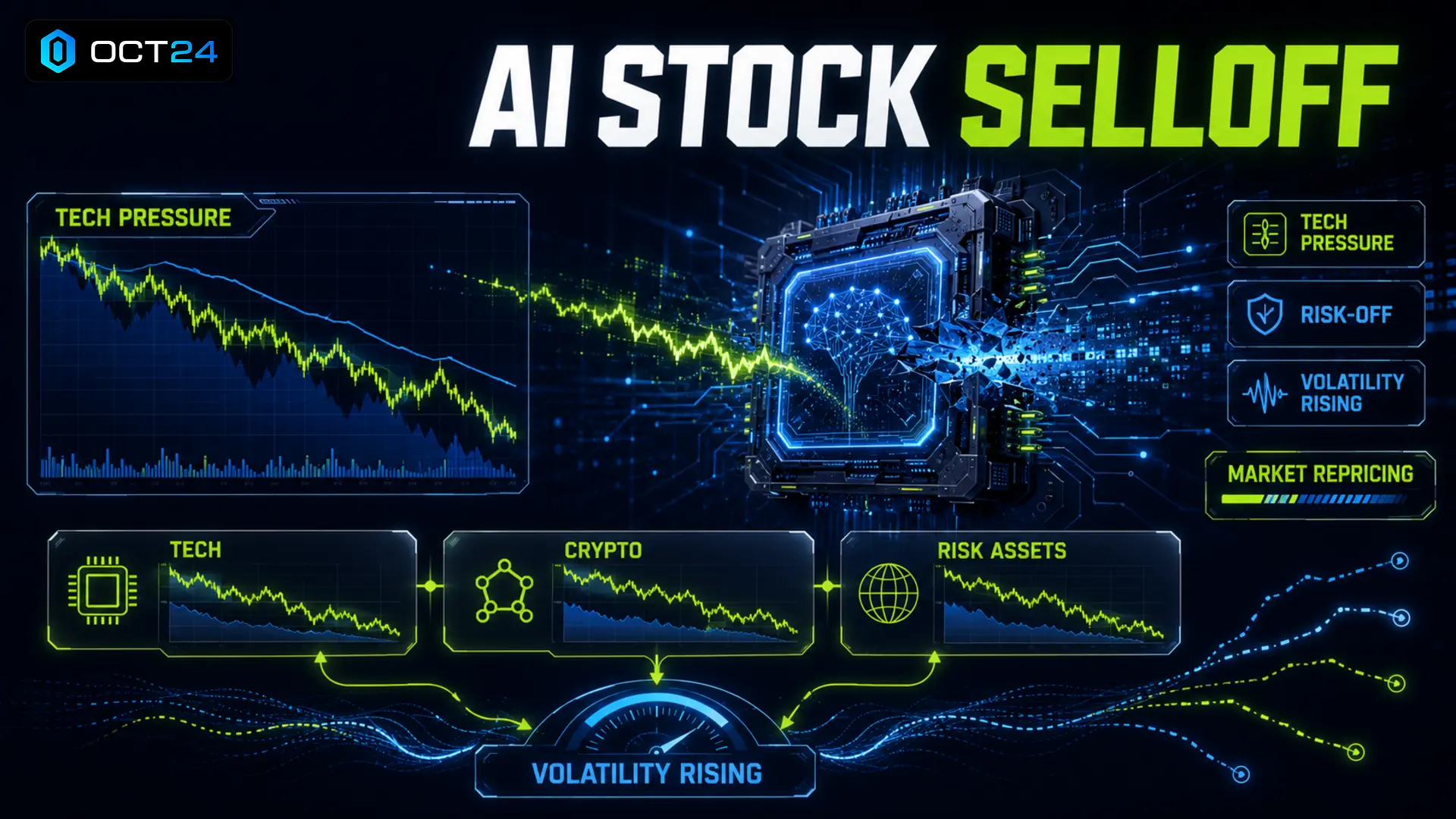
An AI stock selloff can move much more than a few technology shares. When investors start questioning AI valuations, chip demand, data center spending, or Big Tech earnings, the reaction can spread across tech stocks, crypto, and other risk assets very quickly.
For traders, the key question is not whether AI is still important. It is whether market expectations have become too stretched, whether risk appetite is changing, and whether price action is starting to confirm a broader shift.
The simple answer is this: an AI stock selloff usually means traders should pay closer attention to volatility, liquidity, correlations, and risk exposure. It does not automatically mean the AI trend is over, and it does not automatically create a buying opportunity. It means conditions are changing.
OCT24 is designed to help traders follow these changes by scanning market conditions, identifying potential opportunities, and presenting AI-supported trading signals. The platform can do much of the analysis work, but it does not remove risk or guarantee results. Traders still need to manage position size, exposure, capital allocation, and execution decisions.
Why AI Stocks Can Sell Off So Quickly
AI stocks often trade on high expectations. Investors may be pricing in years of future growth, higher productivity, stronger cloud demand, better margins, and large returns from artificial intelligence investment.
That can create powerful rallies when confidence is high. It can also create sharp reversals when investors start asking harder questions.
A selloff can happen when the market becomes less willing to pay premium valuations for future growth. Even strong companies can fall if investors think the stock price already reflects too much optimism.
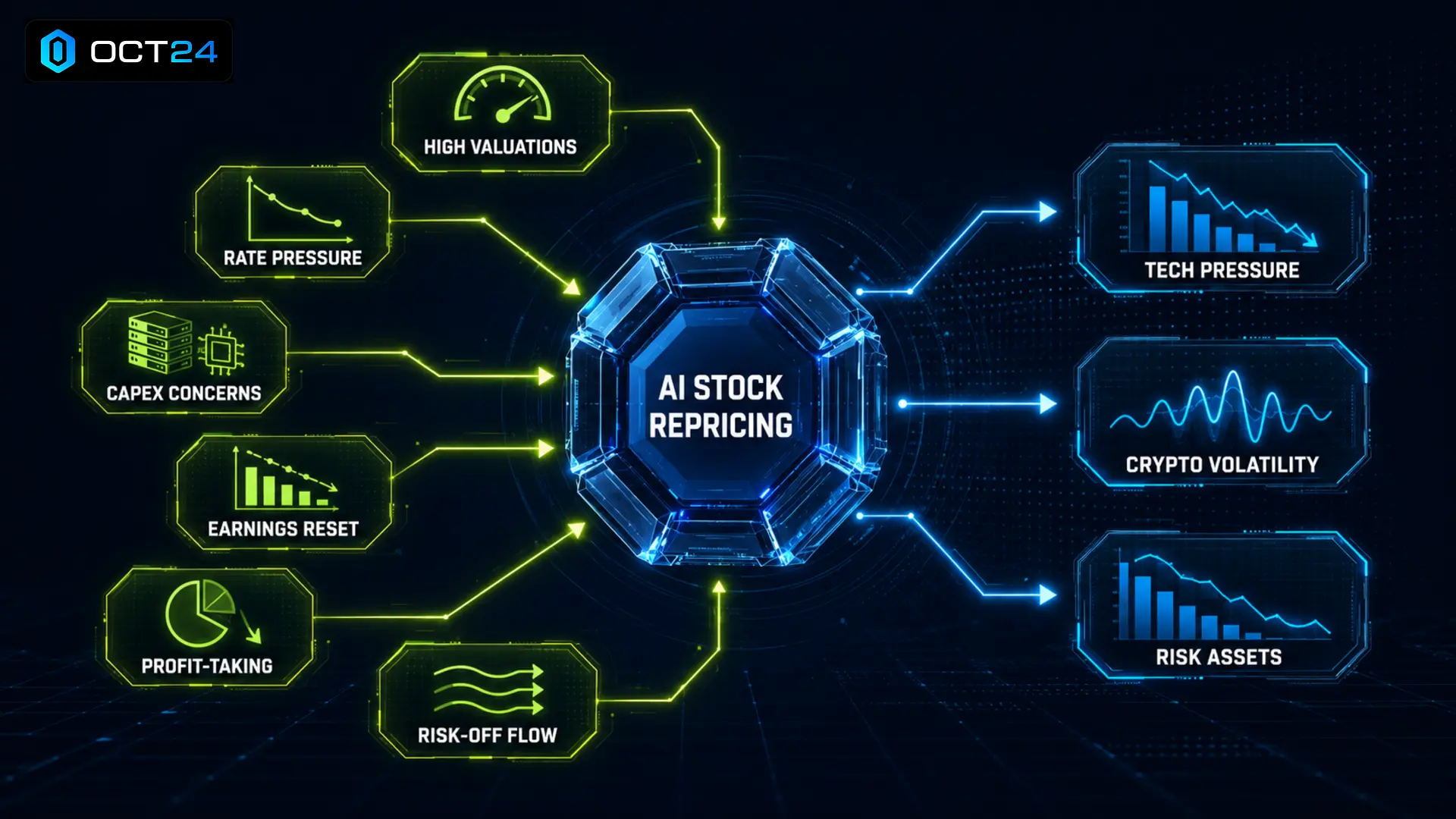
Common reasons include:
- Earnings results that fail to justify high expectations
- Rising AI infrastructure costs, including chips and data centers
- Lower free cash flow because companies are spending heavily
- Concern that AI revenue may take longer to appear
- Higher bond yields, which can pressure growth stocks
- Profit-taking after a strong rally
- A broader move away from riskier assets
This is why traders should separate the company story from the market reaction. A business can still be important, innovative, and growing while its stock price falls because expectations were too high.
OCT24 helps traders approach this more clearly by focusing on market behavior rather than headlines alone. Instead of guessing whether a selloff is temporary or serious, traders can review signals, volatility, momentum, and risk conditions before making a decision.
What an AI Stock Selloff Means for Traders
For traders, an AI stock selloff is not just a technology-sector story. It is a market-condition story.
When popular AI names fall, it can affect sentiment across several areas of the market. Traders may reduce exposure, move away from speculative assets, or take profits in positions that have already risen sharply.
This matters because markets are connected. If large-cap technology stocks weaken, the impact can show up in index futures, semiconductor shares, crypto, high-growth stocks, and leveraged trading products.
A trader watching this kind of move should ask practical questions:
- Is the selloff limited to a few stocks, or is it spreading?
- Are trading volumes rising during the decline?
- Are crypto markets reacting at the same time?
- Are support levels breaking or holding?
- Is volatility increasing across several markets?
- Are risk assets moving together?
These questions help traders avoid reacting emotionally. They also help traders understand whether the move is a small correction, a sector rotation, or a wider risk-off signal.
This is where AI-supported analysis can be useful. OCT24 can scan market behavior continuously and present trading signals based on changing conditions. The trader still decides whether the setup fits their risk plan.
How Tech Weakness Can Affect Crypto and Risk Assets
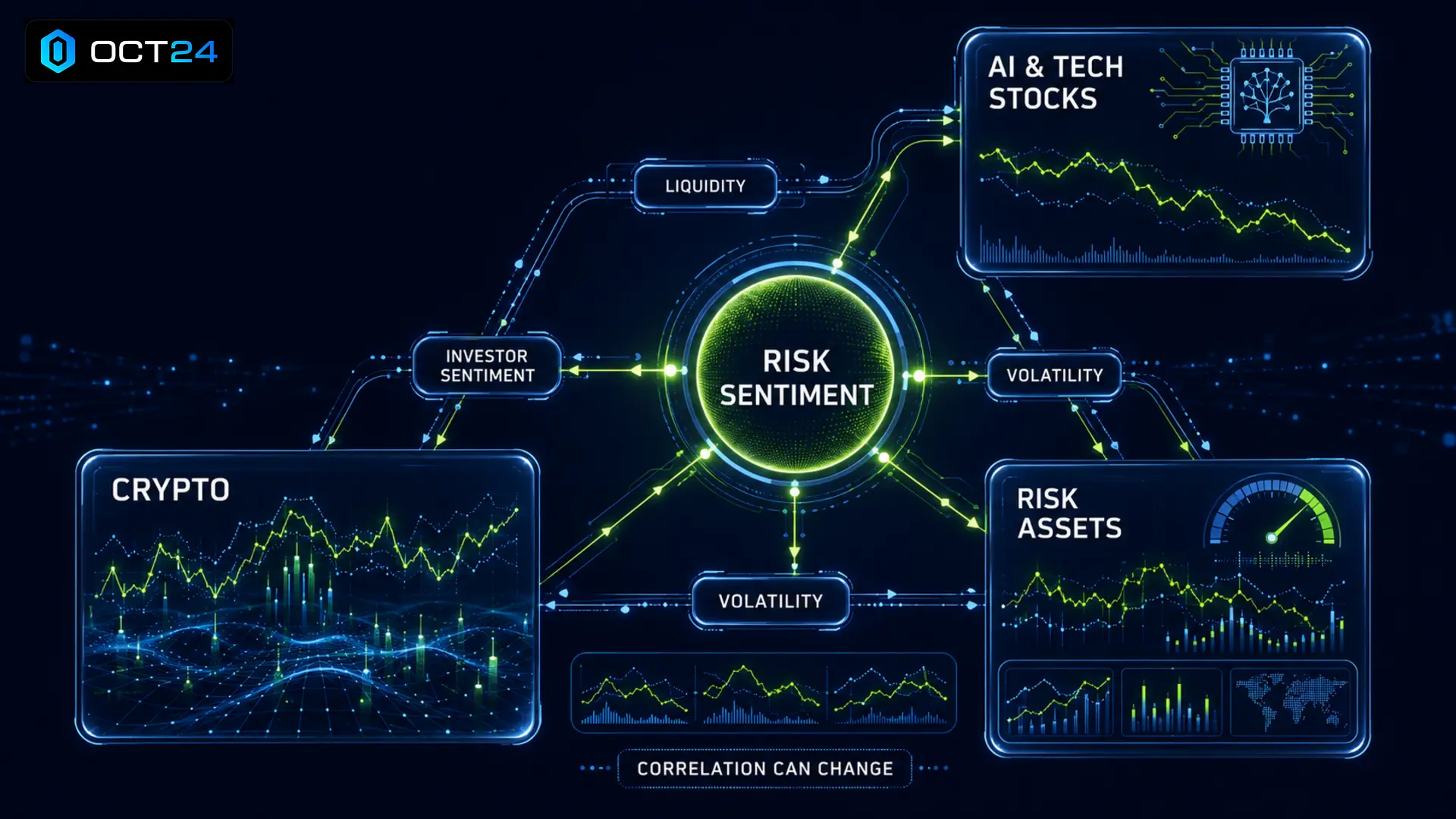
Crypto often trades differently from stocks, but it is still influenced by global risk appetite. When traders feel confident, they may be more willing to hold volatile assets. When confidence weakens, they may reduce exposure across the board.
That is why an AI stock selloff can matter for crypto traders. If investors are selling high-growth technology names, they may also become more cautious toward Bitcoin, Ethereum, altcoins, and other speculative assets.
The connection is not perfect. Crypto can sometimes rise while stocks fall, especially when crypto-specific catalysts are strong. But during broad risk-off periods, correlations can increase.
In simple terms, traders should watch whether the selloff is becoming contagious.
- Tech stocks falling while crypto stays stable may suggest limited spillover.
- Tech stocks and crypto falling together may suggest wider risk reduction.
- Crypto falling harder than tech may suggest weaker liquidity or higher leverage pressure.
- Tech recovering while crypto remains weak may suggest crypto-specific stress.
OCT24 can help by scanning market conditions across changing price action and highlighting potential opportunities. The goal is not to predict every move perfectly. The goal is to help traders see when conditions are shifting before they make rushed decisions.
What Risk-Off Behavior Looks Like
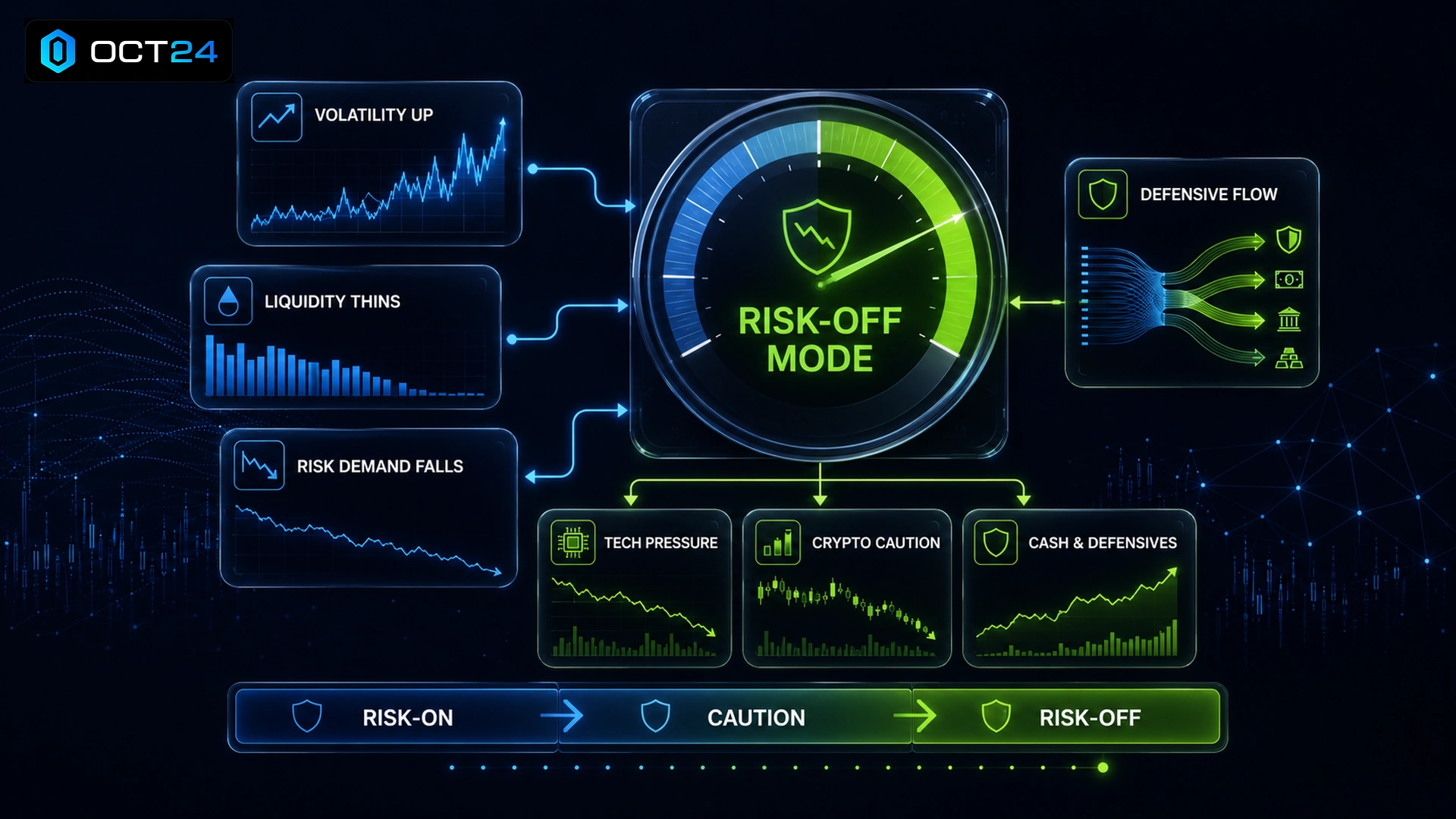
Risk-off behavior happens when traders and investors become more defensive. They may sell volatile assets, reduce leverage, move toward cash, or rotate into areas that feel more stable.
In an AI stock selloff, risk-off behavior may appear in several ways.
- Growth stocks fall faster than defensive stocks.
- Semiconductor and cloud-related names lose momentum.
- Crypto becomes more volatile around major support levels.
- Breakouts fail more often.
- Rebounds are sold quickly.
- Volume rises on down days.
- Traders become more sensitive to earnings, rates, and macro news.
For beginners, the most important point is this: risk-off markets can punish overconfidence. A setup that worked well during a strong trend may stop working when volatility rises and market leadership changes.
That does not mean traders must stop trading. It means they should become more selective. Fewer trades, smaller positions, and clearer rules can be more useful than trying to catch every bounce.
OCT24 supports this kind of disciplined approach by helping traders review AI-supported signals in the context of current market conditions. The signal is only one part of the decision. Risk settings and execution choices still matter.
Why This Is Not Just About AI Hype
It is easy to describe every AI selloff as a bubble bursting. That is usually too simple.
Markets often reprice strong themes without abandoning them. A long-term trend can remain important while short-term prices fall. AI can still be a major business force even if investors become more demanding about valuations and spending.
A better way to think about it is expectation risk. If the market expects rapid growth, high margins, and quick returns from AI investment, even a small disappointment can create a large price reaction.
This is especially true when many traders are crowded into the same theme. When positions are crowded, selling can feed on itself. One decline can trigger more selling, which can trigger stops, margin reduction, and further weakness.
For traders, the lesson is practical. Do not trade the story alone. Trade the price action, the volatility, the risk level, and the quality of the setup.
If you are new to this, it can help to review how AI trading bots work and how AI uses technical analysis. These concepts explain why signals need context rather than blind execution.
How OCT24 Helps Traders Monitor Fast-Changing Conditions
During an AI stock selloff, traders often face too much information at once. Headlines move quickly. Charts change quickly. Crypto markets can react outside normal stock-market hours. Emotional decisions become easier to make.
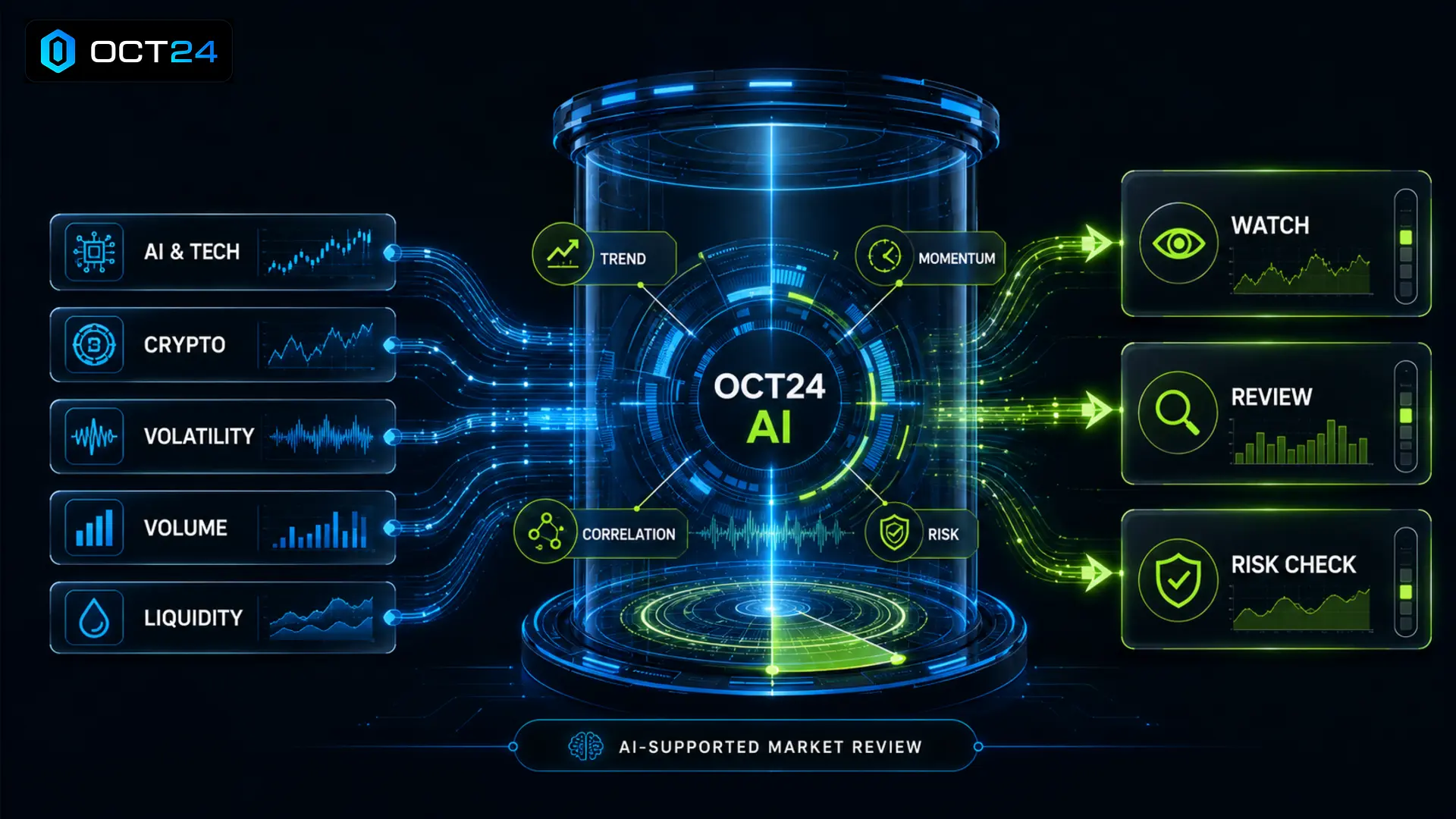
OCT24 is built to reduce that manual workload. It performs much of the market analysis by scanning conditions, identifying potential opportunities, and presenting AI-supported trading signals that traders can review.
This can be especially useful when markets are moving fast because traders do not have to manually watch every chart, sector, and signal from scratch.
OCT24 can support the workflow by helping traders focus on:
- Which markets are showing stronger or weaker momentum
- Where potential trading opportunities may be forming
- Whether volatility is changing
- How signals line up with current market behavior
- Whether a setup deserves review before execution
This does not mean OCT24 makes trading risk-free. It does not guarantee accuracy or profit. It helps organize analysis so the trader can make more informed decisions with risk settings, capital limits, and execution discipline in place.
What Traders Should Watch During an AI Stock Selloff
A strong trader does not need to predict everything. They need to know what matters most.
During an AI stock selloff, the following areas deserve attention.
1. Market Breadth
Market breadth shows whether weakness is narrow or broad. If only a few AI stocks are falling, the move may be contained. If many sectors are falling together, the market may be shifting into a wider defensive mode.
2. Volume
Volume shows participation. A low-volume pullback may be less important than a high-volume breakdown. Rising volume during declines can suggest stronger selling pressure.
3. Support and Resistance
Support and resistance levels help traders see where buyers or sellers may react. If key support breaks, the selloff may attract more short-term selling. If support holds, a bounce may develop.
4. Crypto Reaction
Crypto can offer clues about risk appetite. If Bitcoin and major altcoins remain stable while AI stocks fall, spillover may be limited. If crypto also weakens sharply, traders should take the risk environment seriously.
5. Volatility
Higher volatility can create opportunity, but it also increases the cost of mistakes. Wider price swings can trigger stops faster and make poor position sizing more damaging.
OCT24 can help traders track these changes without relying only on manual chart watching. The trader still needs to decide whether a signal fits their plan.
How to Trade More Carefully When AI Stocks Are Falling
The goal during a selloff is not to be fearless. The goal is to be clear.
Traders often make mistakes when they rush to buy the dip, chase a rebound, increase leverage, or ignore changing volatility. These mistakes can be expensive when markets are repricing a crowded theme.
A calmer approach is better.
- Reduce position size when volatility rises.
- Avoid adding to losing trades without a clear plan.
- Wait for confirmation instead of guessing the bottom.
- Use stop losses or defined exit rules.
- Avoid trading too many correlated assets at once.
- Review whether the setup still matches your strategy.
- Accept that sitting out is sometimes a valid decision.
This is also where trading psychology matters. A fast selloff can create fear, regret, and urgency. Traders may feel pressure to recover losses quickly or prove that their original idea was right.
OCT24 can help reduce some of that emotional pressure by presenting structured analysis and signals. But the trader remains responsible for whether to act, how much capital to use, and how much risk to accept.
Risk Management Comes First
An AI stock selloff is a reminder that strong themes can still move against traders. Risk management should come before excitement, prediction, or conviction.
This is especially important when tech, crypto, and other risk assets start moving together. Correlation can make a portfolio riskier than it looks. A trader may think they have several different positions, but if all of them depend on the same risk appetite, they may fall at the same time.
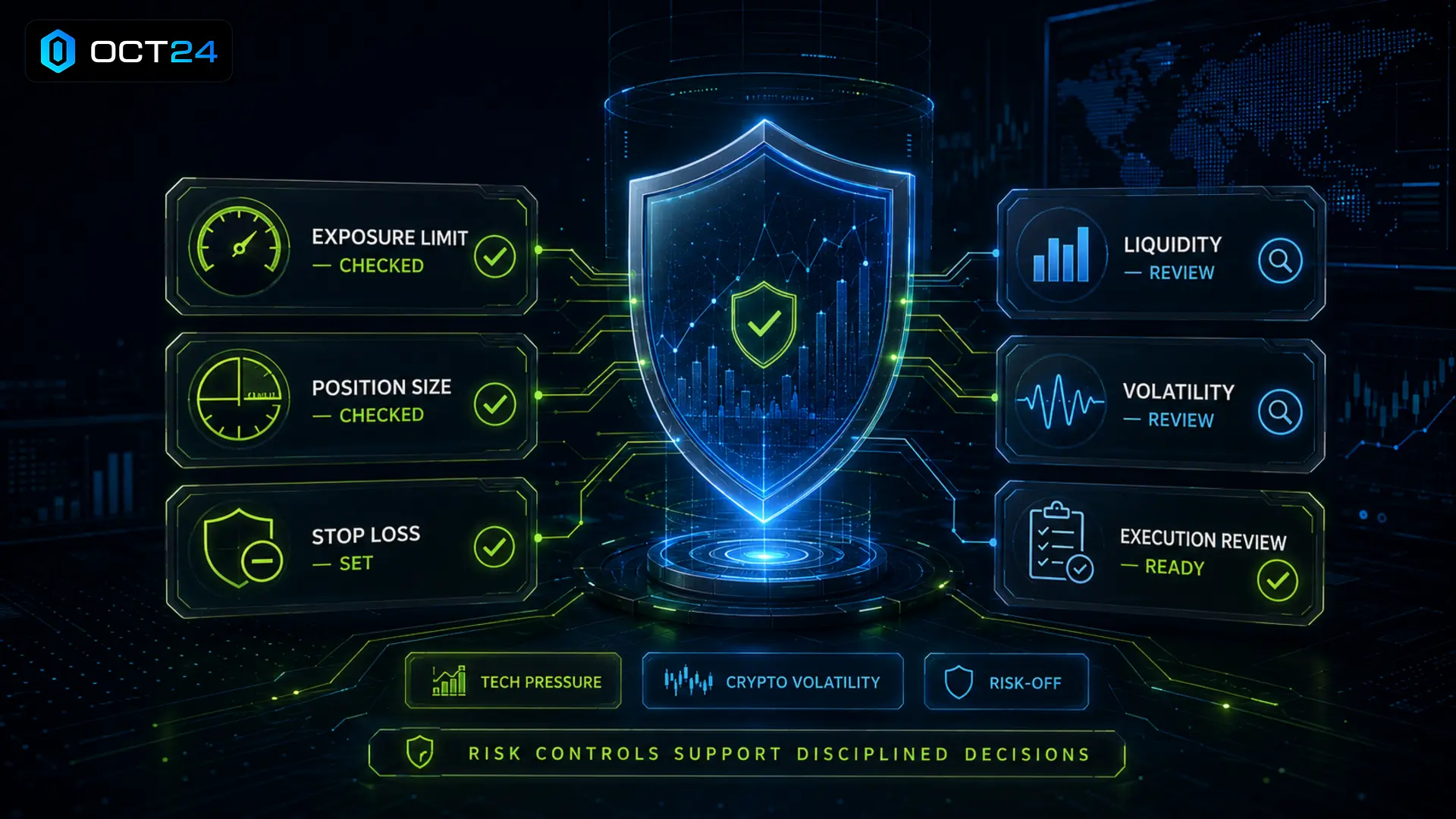
Useful risk controls include:
- Setting a maximum loss per trade
- Limiting total exposure to one theme
- Avoiding excessive leverage
- Using smaller position sizes in volatile markets
- Reviewing open trades before major earnings or macro events
- Keeping enough capital available for future opportunities
- Tracking performance after each trade
If you are using AI-supported tools, this risk step still matters. AI trading signals can help identify potential opportunities, but they should not replace trader judgment.
OCT24 gives traders a more structured way to review market conditions and signals, while keeping responsibility where it belongs: with the trader’s risk settings, exposure, capital allocation, and execution choices.
When a Selloff May Create Opportunity
A selloff can create opportunity, but only when the setup is clear enough and the risk is manageable.
Traders should be careful with simple “buy the dip” thinking. Some dips recover quickly. Others continue lower. The difference usually depends on market structure, volume, news flow, liquidity, and whether buyers are actually stepping back in.
A potential opportunity may be stronger when:
- Selling pressure slows near a major support area.
- Volume confirms a recovery attempt.
- A market forms a higher low after the initial drop.
- Crypto and tech stop falling together.
- Volatility begins to cool.
- The trade offers a clear risk-to-reward setup.
A potential opportunity may be weaker when:
- Rebounds keep failing quickly.
- Support levels break with strong volume.
- The broader market remains risk-off.
- News continues to pressure the sector.
- The trade requires a large stop loss to make sense.
- The trader is acting from fear of missing out.
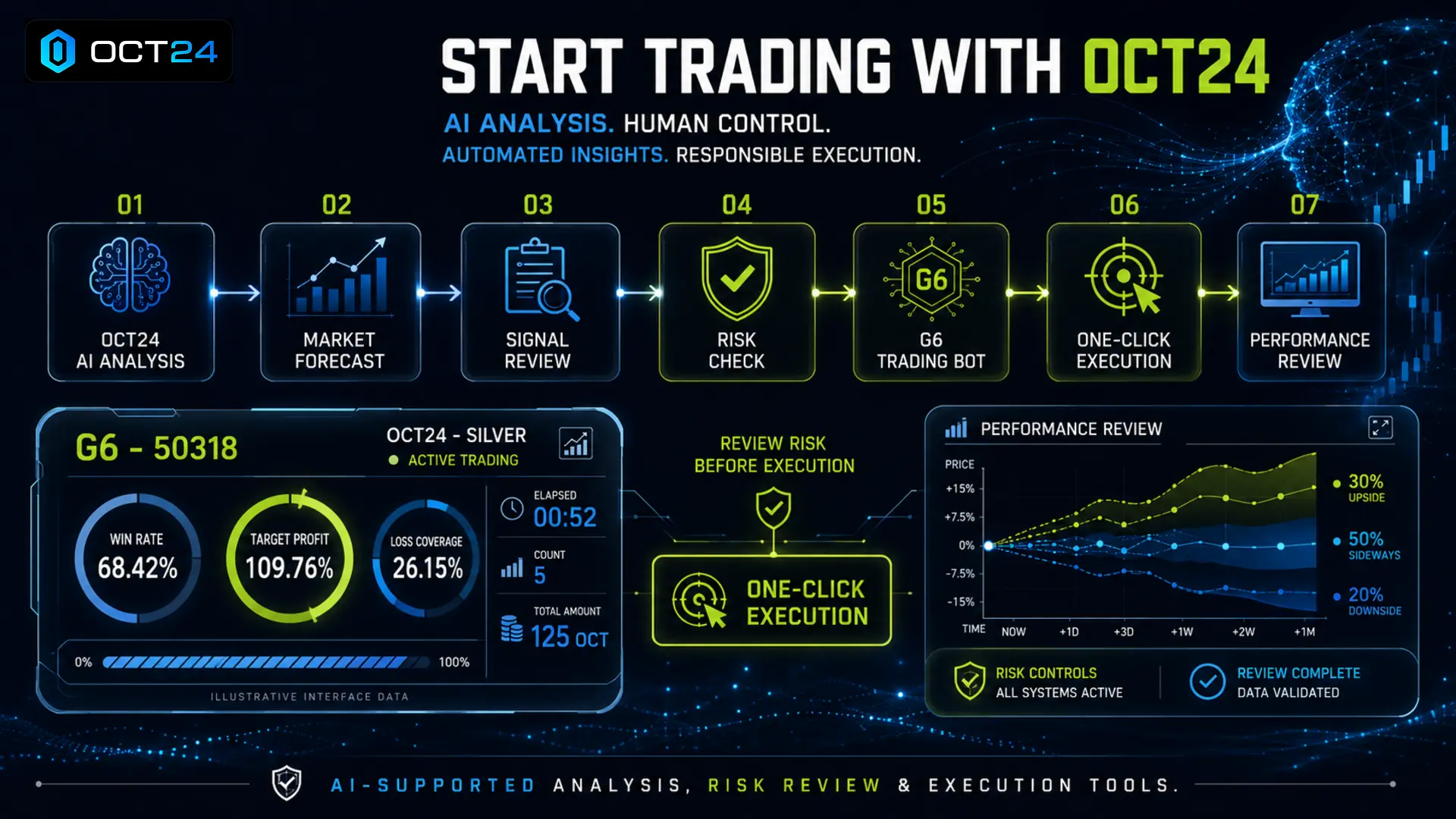
OCT24 can support this review by scanning conditions and showing AI-supported signals. Traders can then compare those signals with their own risk plan before using tools such as one-click trading or the G6 Trading Bot where appropriate.
A Simple Trader Workflow for AI Stock Selloffs
A structured workflow can help traders avoid emotional decisions.
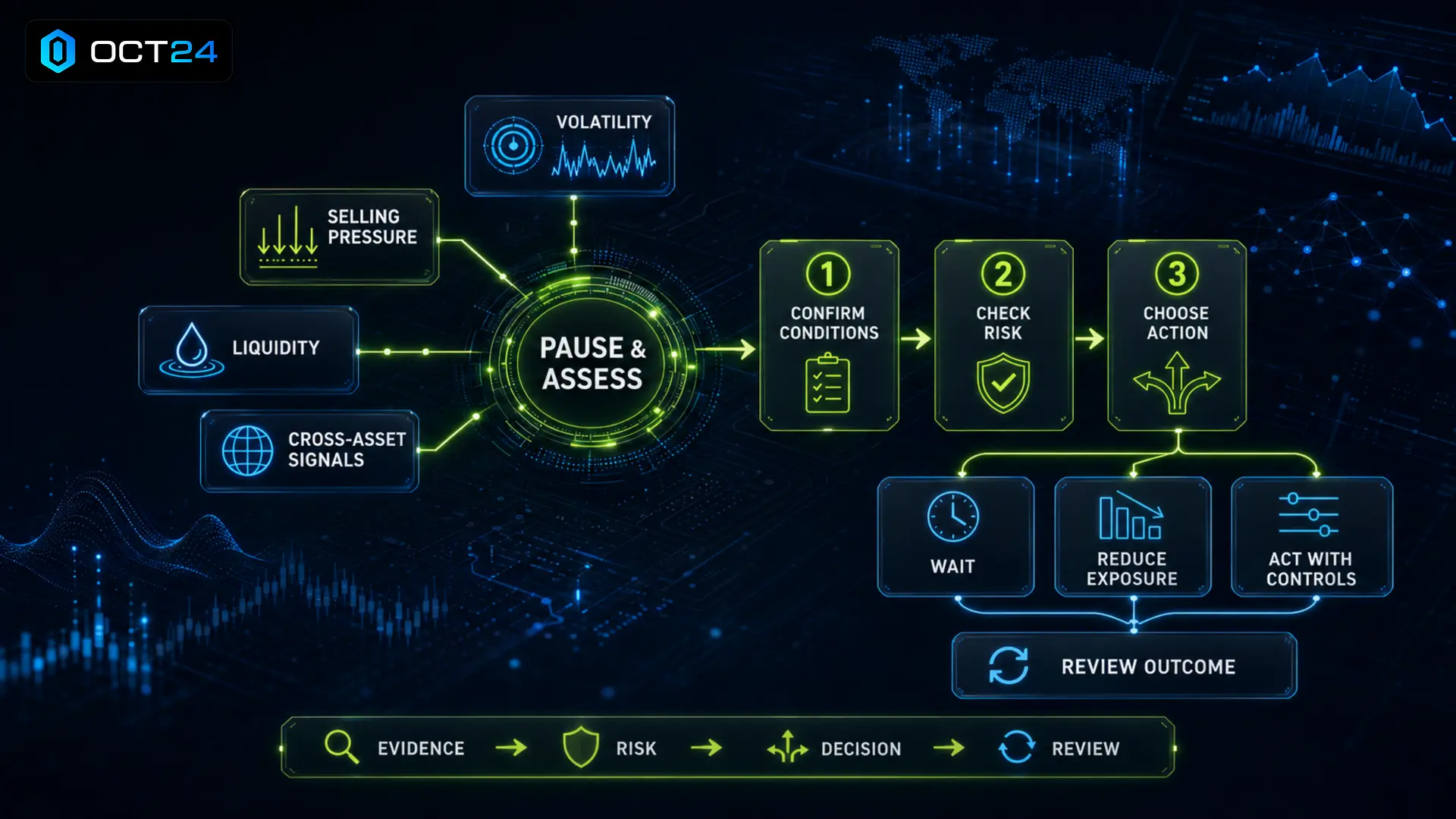
Here is a practical process:
- Check whether the selloff is narrow or broad.
- Review whether crypto and other risk assets are also moving lower.
- Identify key support and resistance levels.
- Look for confirmation from volume and volatility.
- Review AI-supported signals instead of trading headlines alone.
- Set position size before entering the trade.
- Define the exit plan before execution.
- Review the trade afterward, whether it wins or loses.
This is the kind of process that can make AI-supported trading more useful. The platform helps with analysis, but the trader brings discipline.
OCT24 is designed for that balance. It performs much of the market scanning and signal work, while traders remain in control of risk, capital, and execution.
How OCT24 Fits Into This Market Environment
AI stock selloffs can be noisy. They can also be useful because they reveal how much risk the market is willing to take.
For traders watching tech, crypto, and risk assets, the best response is not panic. It is preparation.
OCT24 helps by scanning market conditions, identifying potential opportunities, and presenting AI-supported trading signals. This gives traders a clearer view of what is happening while reducing the need to manually analyze every market from scratch.
At the same time, OCT24 does not remove risk or guarantee results. Traders still need to use appropriate risk settings, understand their exposure, manage capital responsibly, and make informed execution decisions.
If you want to learn more about the platform and its approach, visit About OCT24. If you are ready to explore AI-supported trading tools, you can Start Trading with OCT24.
FAQs
What is an AI stock selloff?
An AI stock selloff is a decline in stocks linked to artificial intelligence, such as semiconductor companies, cloud providers, software firms, or large technology companies investing heavily in AI.
Does an AI stock selloff mean AI is failing?
No. A selloff usually means investors are repricing expectations. AI can remain important while AI-related stocks fall because valuations, spending, or earnings expectations have changed.
Why can AI stock weakness affect crypto?
Crypto can be influenced by risk appetite. When traders reduce exposure to volatile growth assets, they may also reduce exposure to crypto, especially during broad risk-off moves.
Should traders buy the dip during an AI stock selloff?
Not automatically. Traders should review support levels, volume, volatility, market breadth, and risk-to-reward before entering. A dip is not always an opportunity.
How can OCT24 help during volatile markets?
OCT24 scans market conditions, identifies potential opportunities, and presents AI-supported trading signals. This can help traders review changing conditions more efficiently, but it does not guarantee results.
Are AI trading signals reliable during selloffs?
AI trading signals can be useful, but they still need context. Volatile markets can change quickly, so traders should combine signals with risk controls and execution discipline.
What is the biggest mistake traders make during selloffs?
One common mistake is reacting emotionally. Traders may chase rebounds, increase position size, ignore stops, or trade too many correlated assets at once.
Can OCT24 trade for me automatically?
OCT24 supports AI-assisted trading workflows, but traders remain responsible for their risk settings, capital allocation, exposure, and execution choices.
Final Thoughts
An AI stock selloff does not need to be confusing. It is a signal that expectations, risk appetite, and market behavior may be changing.
For traders, the goal is to stay practical. Watch whether weakness is spreading, review how crypto and other risk assets respond, manage position size carefully, and avoid making decisions based on headlines alone.
OCT24 can help traders approach these moments with more structure by scanning markets, identifying potential opportunities, and presenting AI-supported trading signals. The trader still controls the risk plan.
That balance is the point: smarter analysis, clearer signals, and responsible trading decisions.