
Bitcoin Falls Below $60,000: What Active Traders Should Watch Next

Bitcoin Falls Below $60,000 once again this week, extending a period of weakness across the cryptocurrency market and drawing renewed attention from traders worldwide. The move comes as institutional investors continue withdrawing funds from U.S. spot Bitcoin ETFs, while macroeconomic uncertainty and reduced risk appetite weigh on digital assets.
For active traders, sharp price moves like these often create both uncertainty and opportunity. Understanding what caused the decline—and how markets are responding—can help traders make more informed decisions without reacting emotionally to short-term volatility.
What Happened?
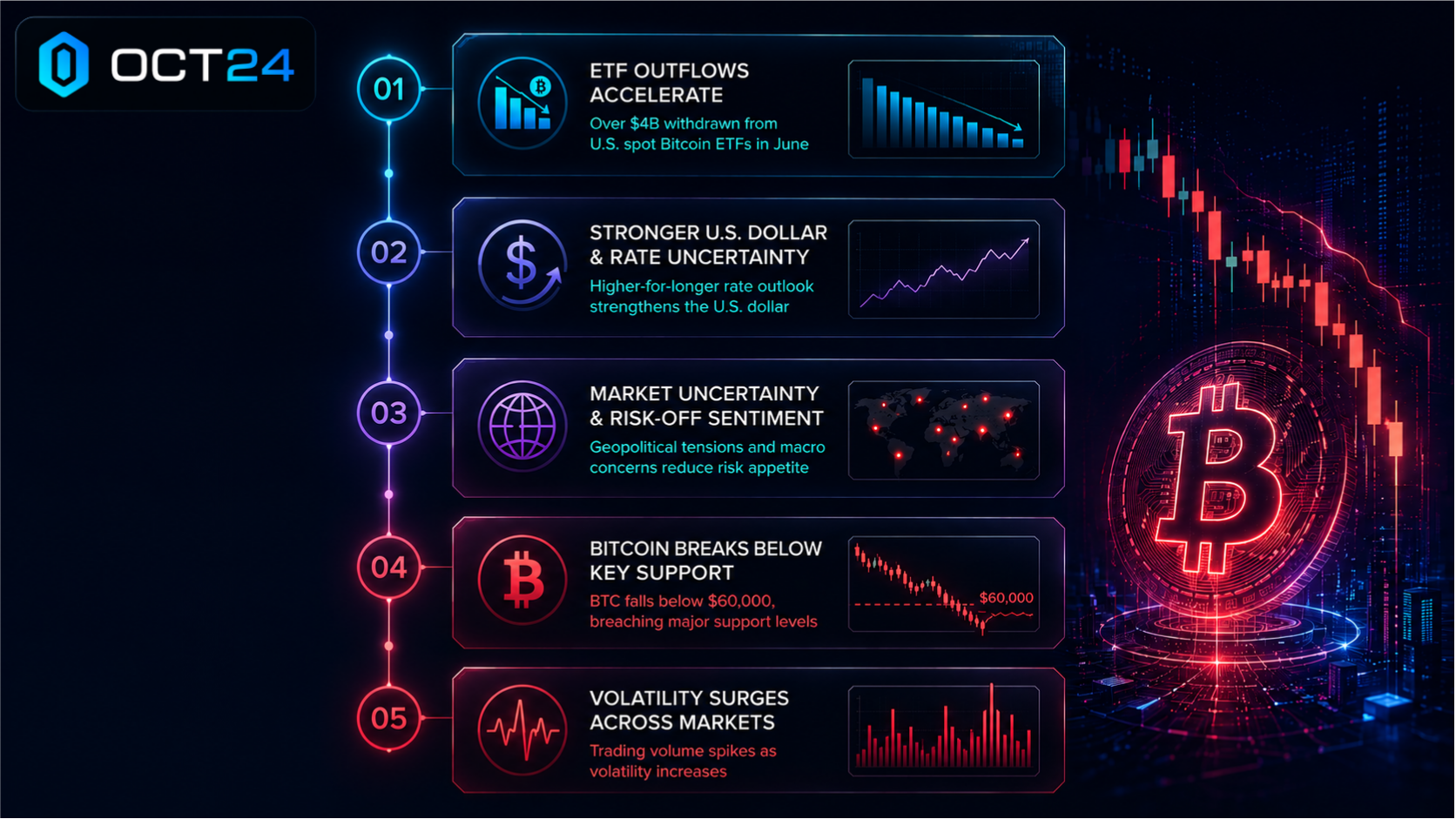
Bitcoin slipped below the psychologically important $60,000 level during the final week of June, trading around $59,900 after briefly falling even lower during intraday trading. The decline marks one of Bitcoin's weakest performances of 2026 and places the world's largest cryptocurrency near its lowest levels since late 2024.
Several factors appear to have contributed to the selloff.
The most significant has been continued Bitcoin ETF outflows. U.S. spot Bitcoin ETFs experienced their largest monthly net withdrawals since launching in early 2024, with investors pulling more than $4 billion from these products during June. BlackRock's IBIT alone accounted for a substantial share of those redemptions.
At the same time, broader financial markets have become increasingly cautious. A stronger U.S. dollar, expectations that interest rates may remain higher for longer, and geopolitical uncertainty have reduced investors' willingness to hold higher-risk assets such as cryptocurrencies.
While no single event caused Bitcoin's decline, the combination of institutional selling, weaker market sentiment, and macroeconomic pressure created a challenging environment for the broader crypto market.
Why This Matters

Price movements are only one part of the story.
For traders, understanding why Bitcoin is falling is often more valuable than simply knowing that it has fallen.
Institutional Sentiment Is Changing
Spot Bitcoin ETFs have become one of the largest sources of institutional demand since their launch.
When ETF inflows are strong, they can provide consistent buying pressure. Conversely, sustained outflows may indicate that institutional investors are reducing exposure or becoming more cautious about near-term market conditions.
Although ETF flows are not the sole driver of Bitcoin's price, they have become an increasingly important indicator of overall Bitcoin market sentiment.
Volatility Often Increases
Breaking below major psychological price levels frequently leads to increased crypto market volatility.
Some traders view these levels as buying opportunities, while others may accelerate selling after key support breaks.
This disagreement often produces larger price swings and higher trading volume, particularly in leveraged markets.
Liquidity Can Shift Quickly
Periods of heightened volatility often lead to rapid changes in liquidity.
Bid and ask spreads may widen, order books can become thinner, and prices may move more quickly than during stable market conditions.
For active traders, this means that risk management becomes even more important.
Market Confidence Influences Every Asset
Bitcoin remains the largest cryptocurrency by market capitalization, making it a key driver of sentiment across the entire digital asset ecosystem.
When Bitcoin experiences sharp declines, other cryptocurrencies frequently follow, even if their individual fundamentals have not changed.
This is one reason why many traders monitor Bitcoin closely, even when trading other crypto assets.
Market Reaction
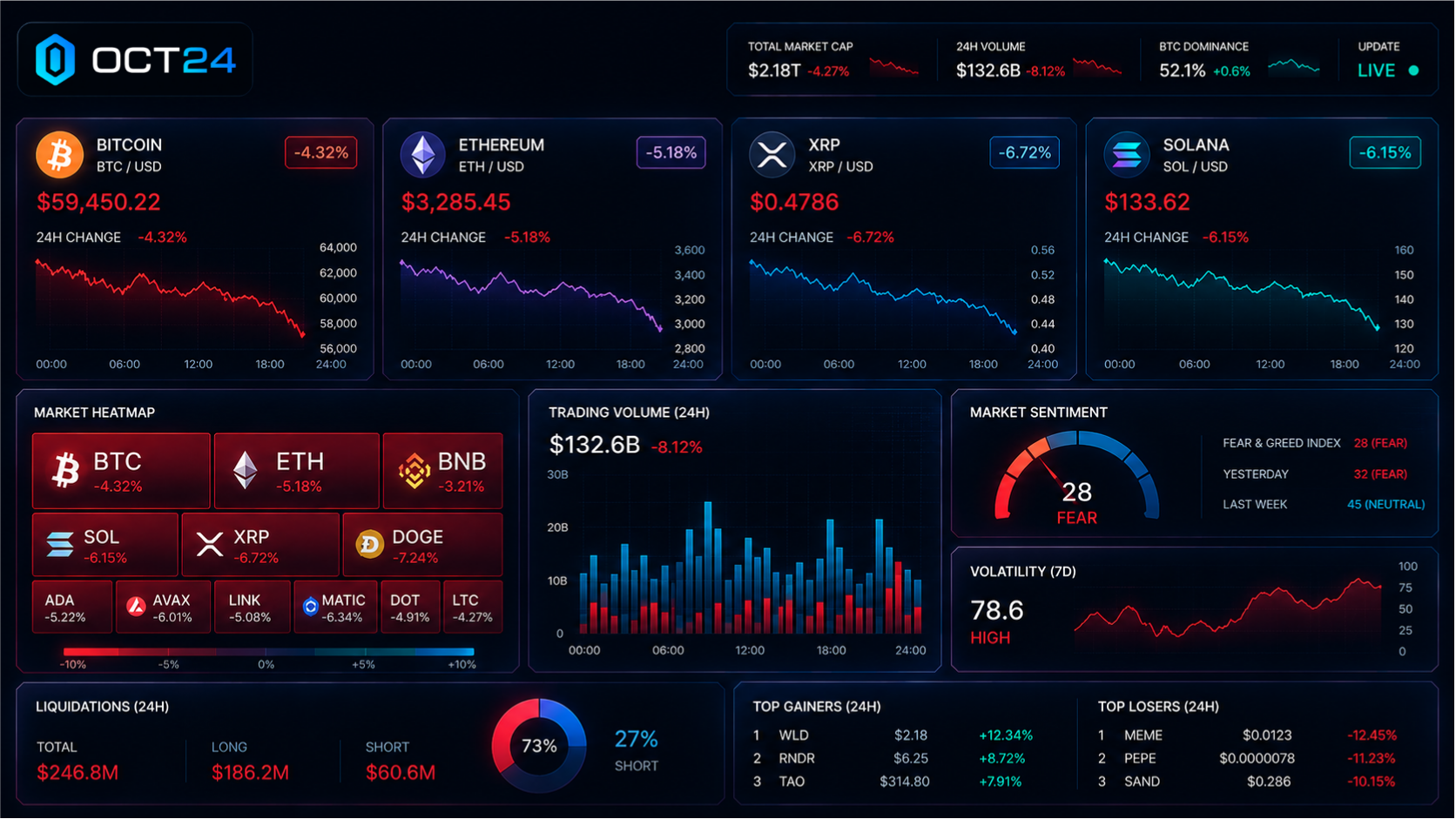
Bitcoin's decline below $60,000 triggered a broad-based selloff across the cryptocurrency market.
Ethereum also moved lower during the week, while many large-cap altcoins—including XRP, Dogecoin, and several AI-related tokens—posted larger percentage declines than Bitcoin itself.
Although individual price movements varied, the overall market reflected a clear reduction in investor risk appetite.
Trading activity also increased as traders responded to rapidly changing market conditions.
Higher trading volume during selloffs is common because several groups of market participants become active simultaneously:
- Long-term investors reassess positions.
- Short-term traders seek opportunities from increased volatility.
- Leveraged traders experience liquidations.
- Institutional investors continue adjusting portfolio allocations.
Analysts have also pointed to shifting capital flows as an important theme.
Recent research from Deutsche Bank suggests Bitcoin is increasingly behaving like an institutional risk asset, with prices influenced by ETF flows, monetary policy expectations, and broader macroeconomic conditions rather than retail speculation alone.
This represents an important evolution in how the cryptocurrency market functions.
Rather than reacting only to crypto-specific developments, Bitcoin is becoming increasingly sensitive to interest rate expectations, inflation data, institutional investment flows, and global economic events.
For traders, this means that following crypto market news alone may no longer be enough. Monitoring broader financial markets has become an essential part of effective Bitcoin trading and crypto market analysis.
As volatility increases, many traders are also paying closer attention to key technical levels. While no support or resistance level guarantees future price movement, psychological thresholds such as $60,000 often become important areas where buyers and sellers compete for control. Understanding these Bitcoin support levels—alongside broader market sentiment—can help traders interpret price action more effectively without relying solely on headlines.
What This Could Mean for Active Traders
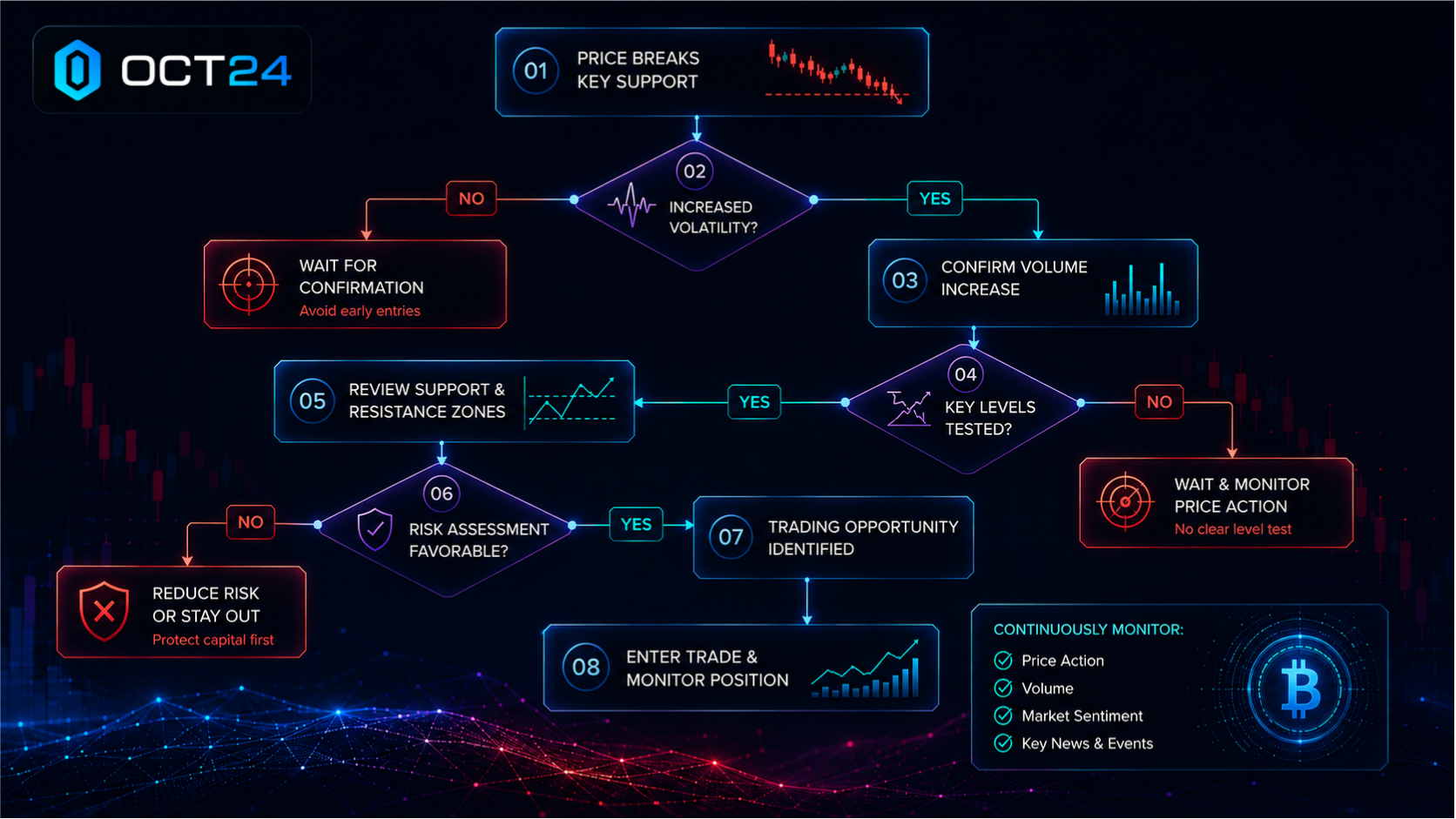
Periods of increased market volatility can be challenging, but they also tend to create more trading opportunities for active traders.
When prices move rapidly, market participants often react differently. Some investors reduce risk by selling positions, while others look for potential buying opportunities after sharp declines. This difference in behavior can lead to larger price swings and increased trading activity.
However, higher volatility also means higher risk.
Rather than reacting emotionally to headlines or sudden price movements, traders should focus on following a structured trading plan.
Some practical considerations include:
- Watching key Bitcoin support levels and resistance zones
- Monitoring trading volume for signs of stronger buying or selling pressure
- Paying attention to macroeconomic news and ETF flow data
- Avoiding impulsive decisions driven by fear or excitement
- Applying disciplined Trading Bot Risk Management principles throughout every trade
It's also important to remember that no single indicator tells the complete story.
Many experienced traders combine technical analysis, market sentiment, and fundamental news before making trading decisions. Learning How to Read Crypto Charts can help traders better understand how price action reflects changing market conditions rather than relying solely on news headlines.
While short-term volatility can present opportunities, preserving capital remains the first priority. Successful active trading is often about managing risk consistently rather than trying to predict every market move.
How AI Trading Can Help During Volatile Markets
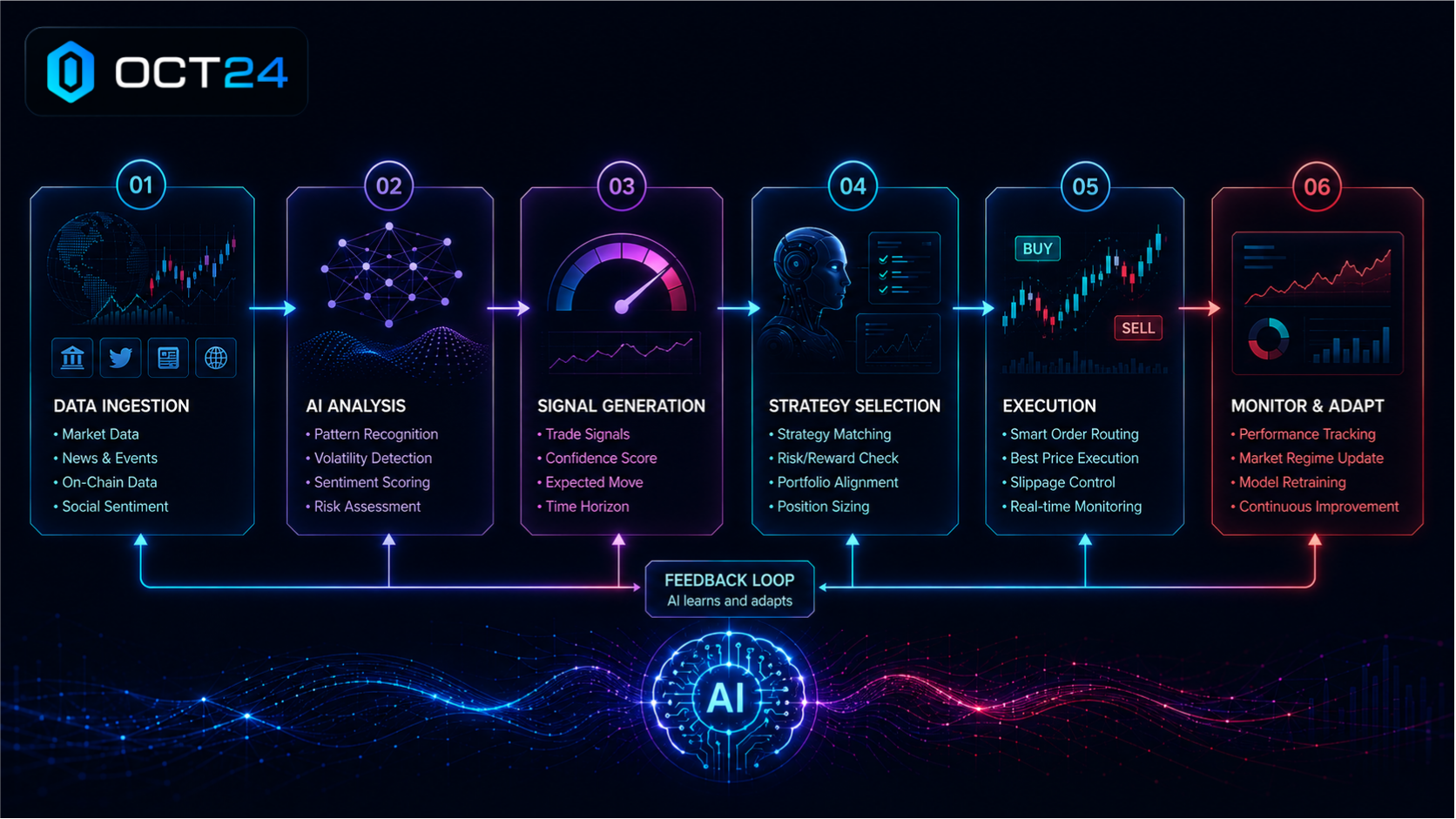
Volatile markets generate an enormous amount of information.
Prices change every second, technical indicators update continuously, and new economic developments can quickly shift market sentiment.
Keeping up with all of this manually can be difficult.
This is one reason why many traders are exploring AI Trading and modern AI Trading Bots to support their trading process.
Rather than predicting the future, AI-assisted trading platforms help traders by:
- Continuously monitoring multiple markets
- Identifying potential trading opportunities
- Detecting changing market conditions
- Highlighting significant technical signals
- Supporting faster, more informed decision-making
- Helping reduce emotional trading during periods of high volatility
These capabilities become particularly valuable during fast-moving markets, where opportunities may appear and disappear within minutes.
It's important to understand that AI is not a guarantee of successful trading.
Instead, it serves as a decision-support tool that helps traders process information more efficiently while continuing to apply sound judgment and disciplined risk management.
When combined with structured AI Trading Strategies, automation can help traders remain more consistent during both calm and volatile market conditions.
How OCT24 Supports Active Traders
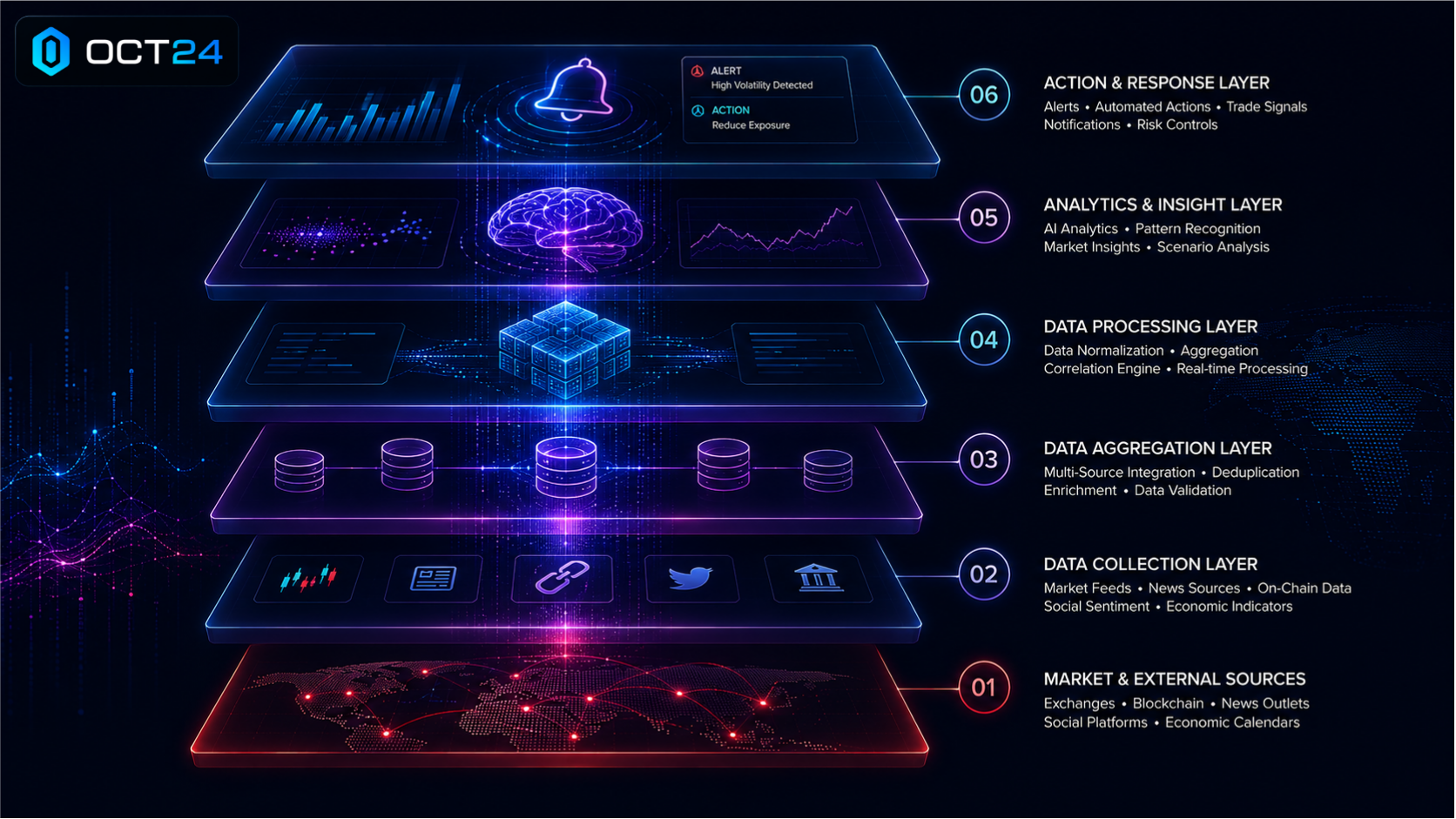
OCT24 was built to help traders simplify active trading through intelligent automation.
The G6 Trading Bot continuously monitors market conditions using AI-powered market analysis and algorithmic decision logic to identify potential trading opportunities as they develop.
Rather than requiring users to watch charts throughout the day, manually scan dozens of markets, or configure complex trading systems, the platform automates the analytical process behind the scenes.
Key capabilities include:
- Continuous market monitoring
- AI-powered market analysis
- Automated opportunity identification
- Built-in risk management tools
- Portfolio monitoring
- One-click trade execution
When predefined trading conditions are met, the G6 Trading Bot presents the opportunity to the user for review. Traders remain in control by deciding whether to execute the trade with a single click.
This approach combines the speed of Automated Trading, the consistency of Algorithmic Trading, and the analytical capabilities highlighted in the Benefits of AI Trading, allowing traders to focus more on decision-making and less on repetitive manual analysis.
To learn more about the company's technology and approach to AI-assisted trading, visit About OCT24.
Key Takeaways
- Bitcoin fell below $60,000 following significant ETF outflows and weaker investor sentiment.
- Institutional investment flows are becoming increasingly important drivers of cryptocurrency prices.
- Higher market volatility often creates both increased opportunity and increased risk.
- Active traders should focus on disciplined risk management rather than reacting emotionally to market headlines.
- AI-assisted trading platforms can help monitor markets continuously and identify potential trading opportunities more efficiently.
- Modern trading platforms combine AI, automation, and algorithmic decision-making to simplify active trading while keeping traders in control.
Frequently Asked Questions
Why did Bitcoin fall below $60,000?
Several factors contributed to the decline, including large Bitcoin ETF outflows, a stronger U.S. dollar, ongoing macroeconomic uncertainty, and reduced investor appetite for higher-risk assets.
How does this affect Bitcoin trading?
Periods of increased volatility often create more trading opportunities, but they also increase risk. Traders should focus on following structured trading plans and effective risk management.
Should traders be concerned?
Short-term price declines are a normal part of financial markets. Rather than focusing on individual price movements, traders should evaluate broader market conditions, technical signals, and overall risk exposure.
Will Bitcoin's decline affect altcoins?
Historically, major Bitcoin price movements often influence the broader cryptocurrency market. During periods of weaker Bitcoin performance, many altcoins also experience increased volatility.
How can AI help during volatile markets?
AI-assisted trading platforms continuously monitor market conditions, analyze large amounts of data, and identify potential trading opportunities more efficiently than manual monitoring alone. They support traders but do not predict future prices.
What should beginners watch next?
Beginners should monitor ETF flow data, broader macroeconomic developments, trading volume, and important technical price levels while continuing to develop strong risk management habits before increasing trading activity.
Final Summary
Bitcoin's move below $60,000 highlights how quickly market conditions can change in today's cryptocurrency landscape. While ETF outflows, macroeconomic uncertainty, and shifting investor sentiment have contributed to recent weakness, these events also reinforce the importance of understanding the factors driving price movements rather than reacting to headlines alone.
For active traders, periods of heightened volatility can create opportunities, but they also demand greater discipline, stronger risk management, and a structured trading process. Technology can play an important role by helping traders monitor markets more efficiently and respond to changing conditions with greater consistency.
Whether you're following current market developments or expanding your trading knowledge, continuing to build your understanding of market analysis, automation, and AI-assisted trading can help you make more informed decisions over time.

Related Reading: Learn more about AI Trading, AI Trading Bots, and Start Trading with OCT24 to explore how intelligent trading technology can support your trading journey.