
Gold Surges 7%—What Could the Rally Mean for Bitcoin?
What gold’s big week may tell crypto traders—and what it does not
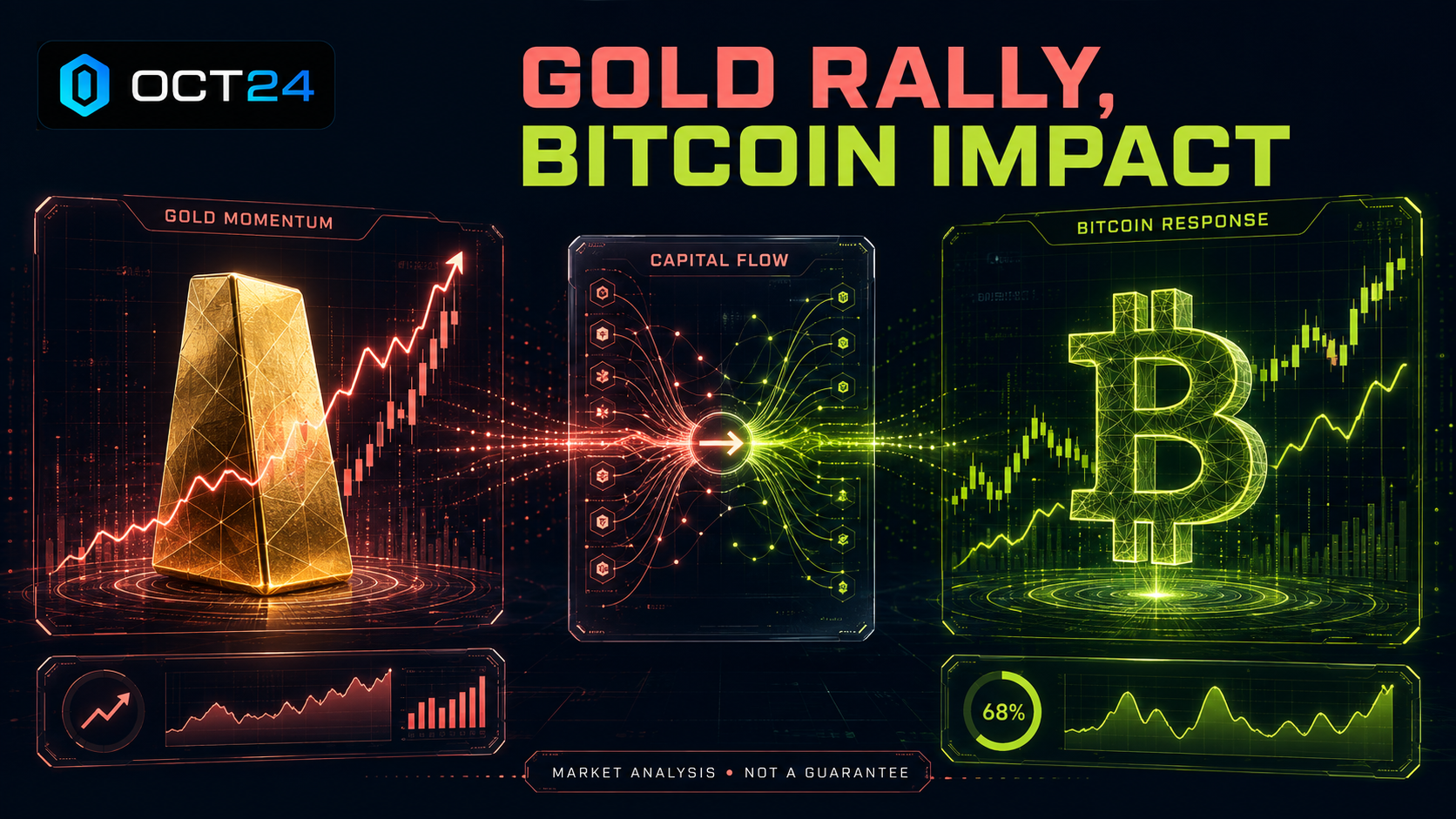
Gold surged about 7% during the week ending August 7, 2026. Bitcoin did not make the same move. That gap has left many crypto traders asking a simple question: could Bitcoin be next?
The answer is maybe, but not automatically. Gold and Bitcoin can react to some of the same market forces. Lower rate expectations, a weaker US dollar, and demand for scarce assets can support both. But they do not always move together.
For crypto traders, the gold rally is useful market context. It is not a Bitcoin trading signal by itself. Traders still need to check Bitcoin price action, volume, volatility, demand, and overall market mood.
OCT24 can help with that work. The platform scans crypto market conditions, identifies possible opportunities, and presents AI-supported trading signals. OCT24 does not remove risk. Traders still control risk settings, exposure, capital allocation, and execution decisions.
OCT24 currently supports crypto trading only. It does not offer gold trading. The point of this article is to explain what gold’s move may mean for Bitcoin traders.
What happened this week
Gold had its strongest week in months. The move followed softer economic data, lower energy prices, and changing expectations for US interest rates.
When traders expect rates to stay lower, gold can become more attractive. Gold does not pay interest. That can be a disadvantage when yields are high. When expected yields fall, that disadvantage becomes smaller.
A softer US dollar also helped. Gold is priced in dollars around the world. When the dollar weakens, gold can become cheaper for buyers using other currencies.
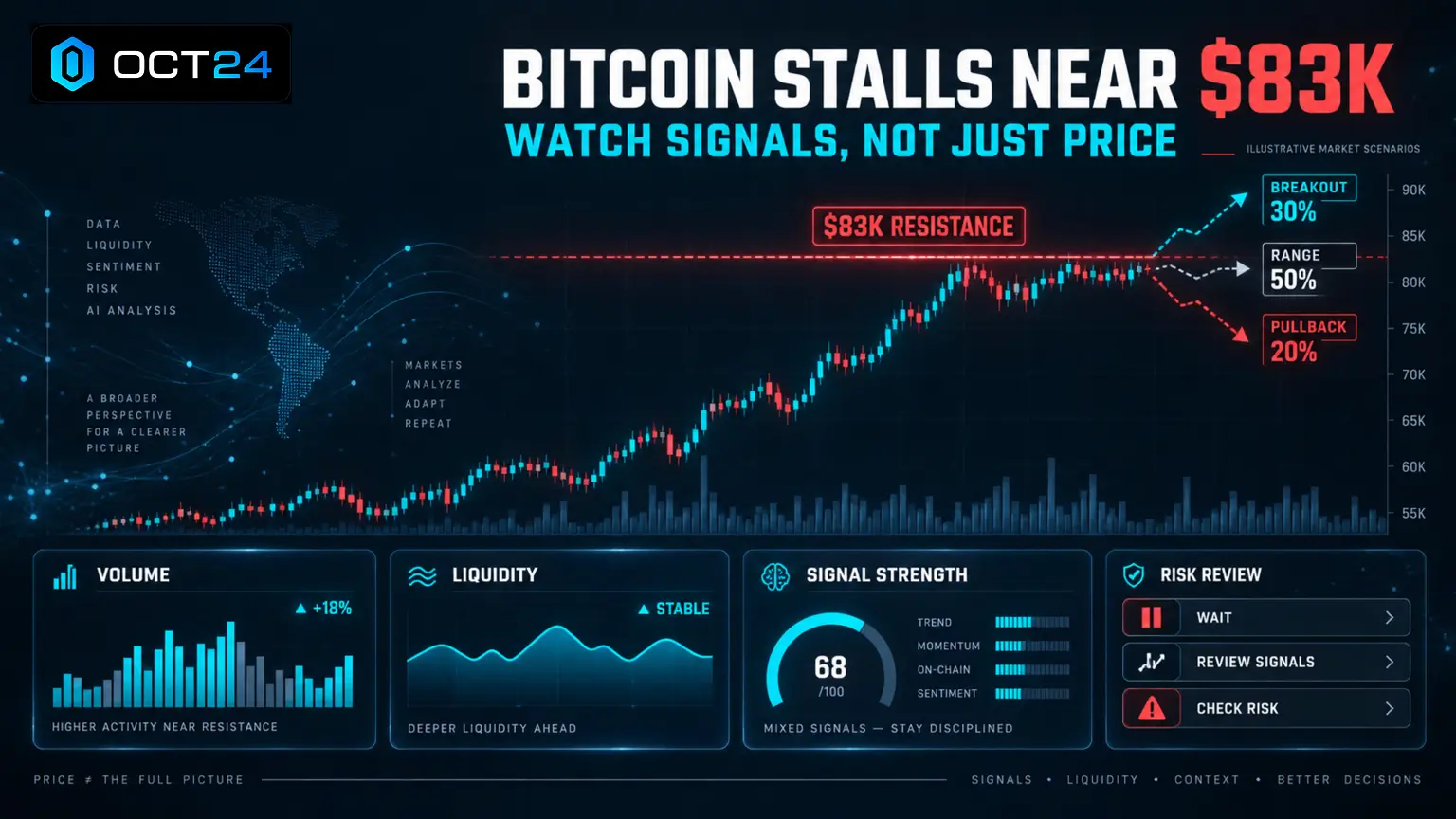
Bitcoin also reacted to the wider market news, but its move was much smaller. That tells traders that gold buyers and Bitcoin buyers were not making the same decision at the same time.
This does not mean Bitcoin is weak forever. It also does not mean Bitcoin must catch up. It means traders need to watch what happens next.
Why gold moved so quickly
Gold’s rally was not driven by one headline. Several market themes came together at once.
First, weaker jobs data changed the interest-rate conversation. Traders became less certain that the Federal Reserve would raise rates again soon.
Second, lower oil prices reduced some inflation worries. If energy costs fall, the pressure for higher rates may also ease.
Third, gold continued to attract safe-haven demand. Some investors wanted an asset with a long history during uncertain periods.
Central-bank demand also remains part of the gold story. Central banks often buy gold for reserve diversification. That demand can support gold even when retail interest changes.
None of these points guarantees that gold will keep rising. A strong week can still be followed by a pullback.
Why Bitcoin did not follow right away
Bitcoin is often called digital gold. The name makes sense in some ways. Bitcoin has a limited supply, it is not controlled by one central bank, and many holders view it as an alternative store of value.
But Bitcoin is still a much younger and more volatile market. During uncertain periods, many large investors choose gold first. They may treat Bitcoin as a higher-risk asset, even when they like its long-term story.
Bitcoin also has its own market forces. ETF flows, exchange activity, derivatives, liquidations, regulation, and crypto sentiment can all affect price.
A gold rally cannot remove those crypto-specific pressures. Bitcoin may need stronger spot demand or a clear technical break before traders become more confident.
The useful question is not “Will Bitcoin copy gold?” The useful question is “Is Bitcoin starting to show its own strength?”
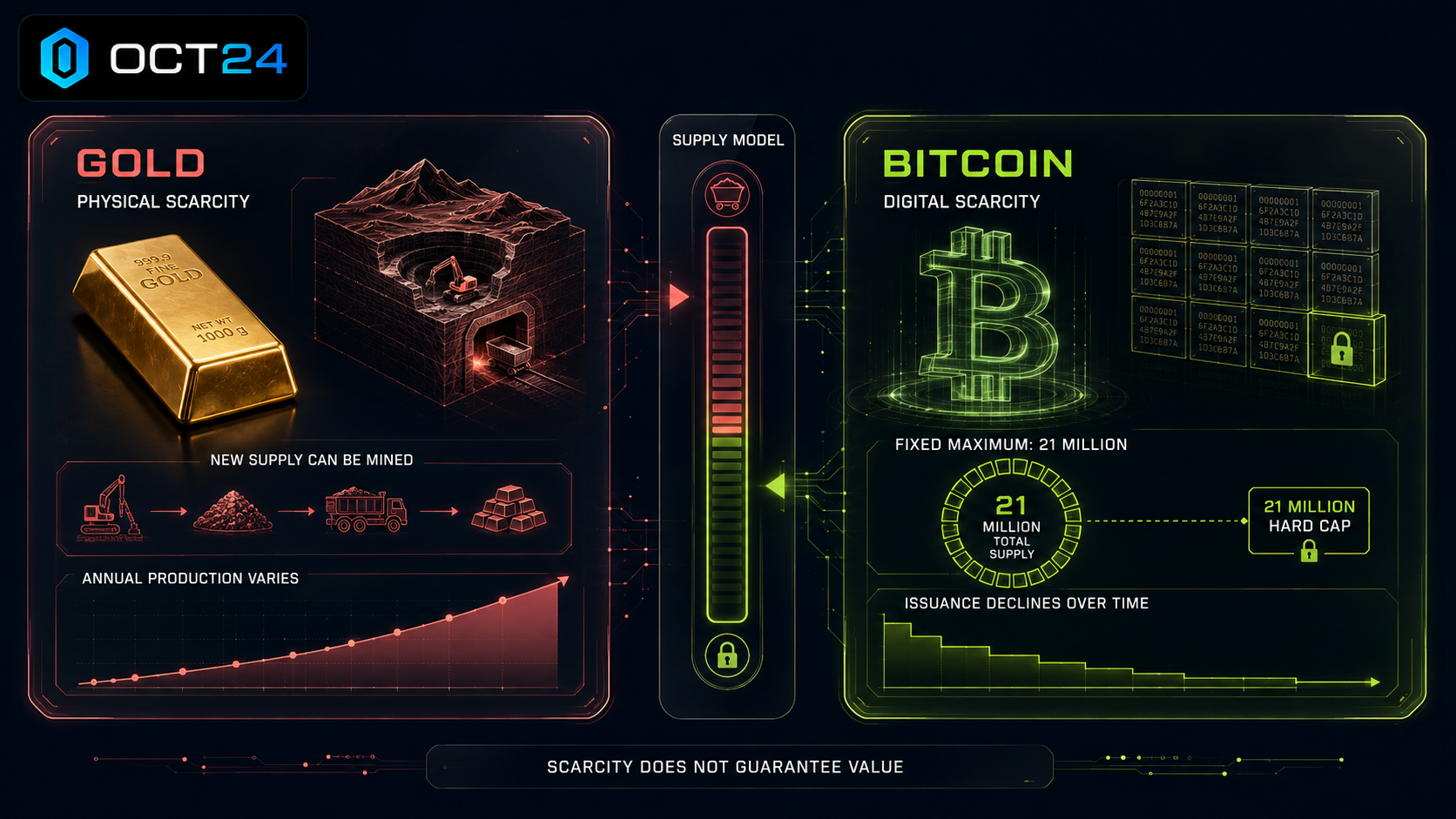
Gold and Bitcoin are not the same trade
Gold and Bitcoin share a scarcity story, but their markets are very different.
Gold has been used as money, jewelry, and a reserve asset for centuries. Central banks, funds, companies, and individuals all buy it for different reasons.
Bitcoin trades 24 hours a day across global crypto exchanges. It can move sharply during weekends, news events, and large liquidation waves.
Gold usually has lower volatility. Bitcoin can rise or fall by several percent in a short period. That can create opportunity, but it also creates more risk.
This is why traders should not expect a perfect relationship. Gold can rise while Bitcoin falls. Bitcoin can rise while gold stays flat. Sometimes both rise together.
The relationship changes with market conditions. Traders need current data, not a fixed rule.
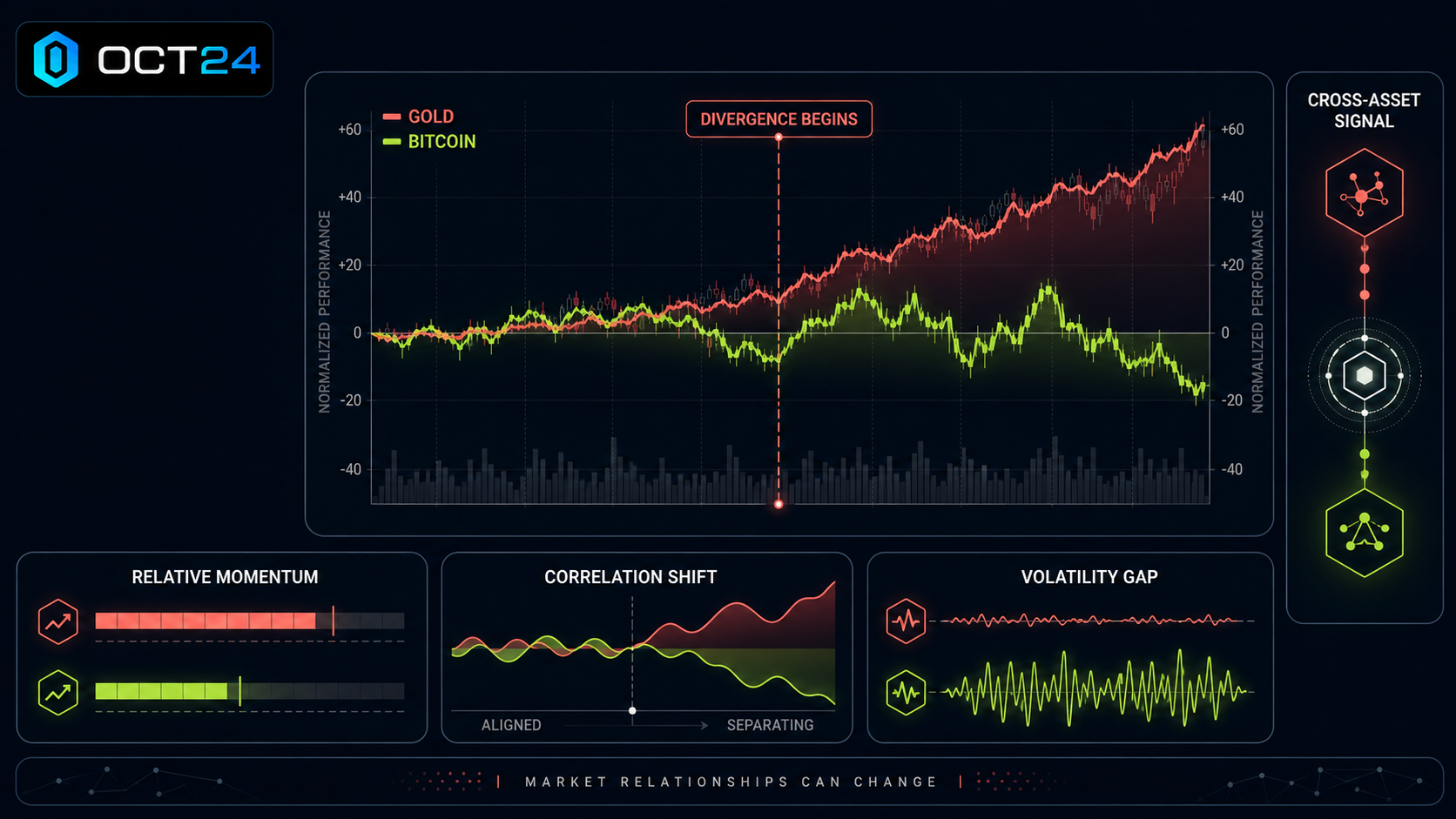
What the gap may be telling traders
The gap between gold and Bitcoin may be showing that investors are still cautious. Gold attracted strong demand, while Bitcoin buyers were less aggressive.
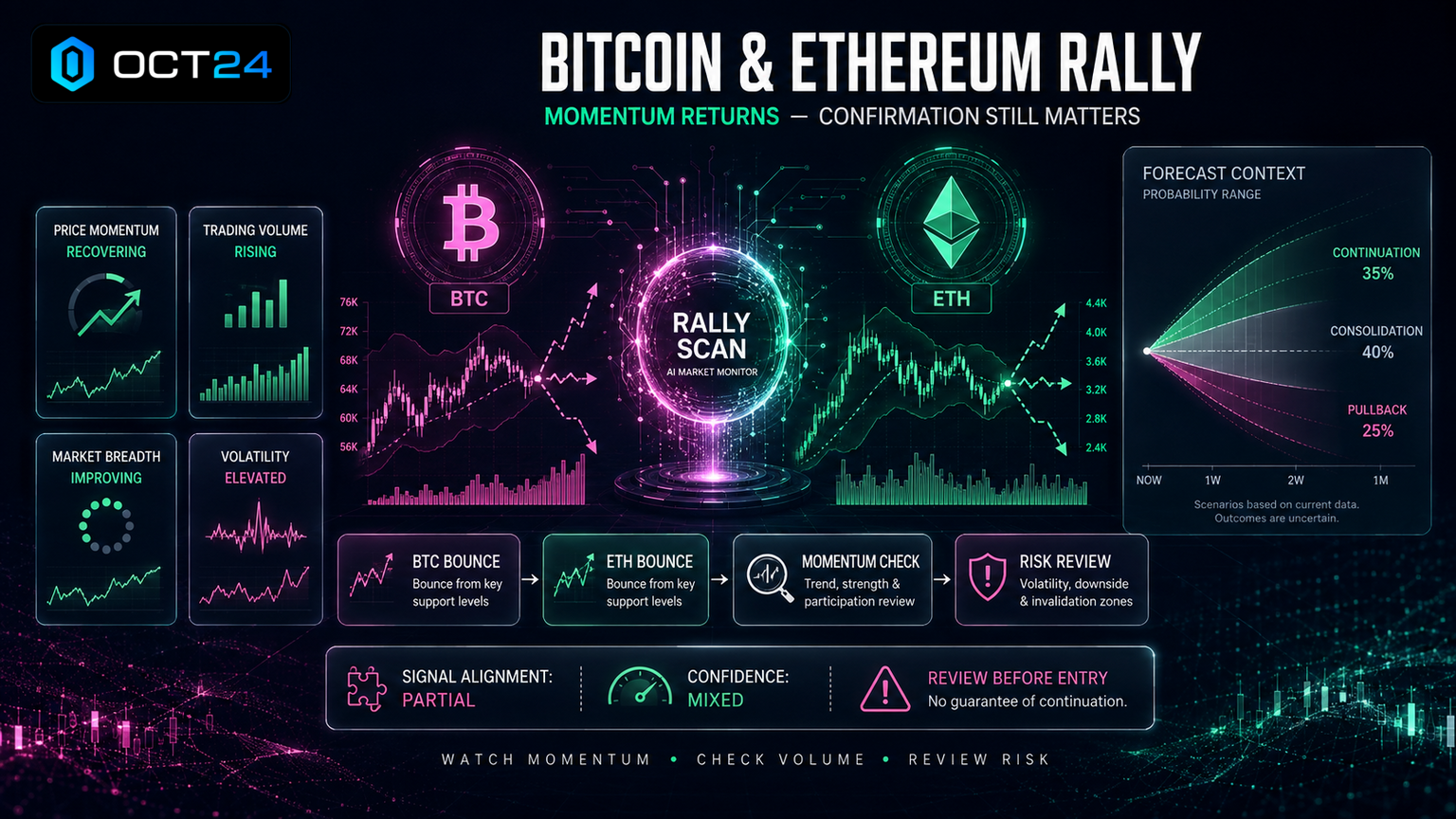
That can change. If the dollar weakens, yields fall, and crypto demand improves, Bitcoin may start to respond more strongly.
But the gap can also continue. If investors remain defensive, they may keep choosing gold over volatile assets.
For traders, the gap is a reason to build a watchlist. It is not a reason to enter a trade early.
Watch whether Bitcoin begins making higher lows. Check whether volume improves. Look for stronger spot demand. Review whether leverage stays under control.
If those pieces begin to line up, the gold rally may become more relevant to the Bitcoin story. If they do not, Bitcoin may keep moving independently.
Why rates and the US dollar matter
Interest rates affect both gold and Bitcoin, but the effect is not always simple.
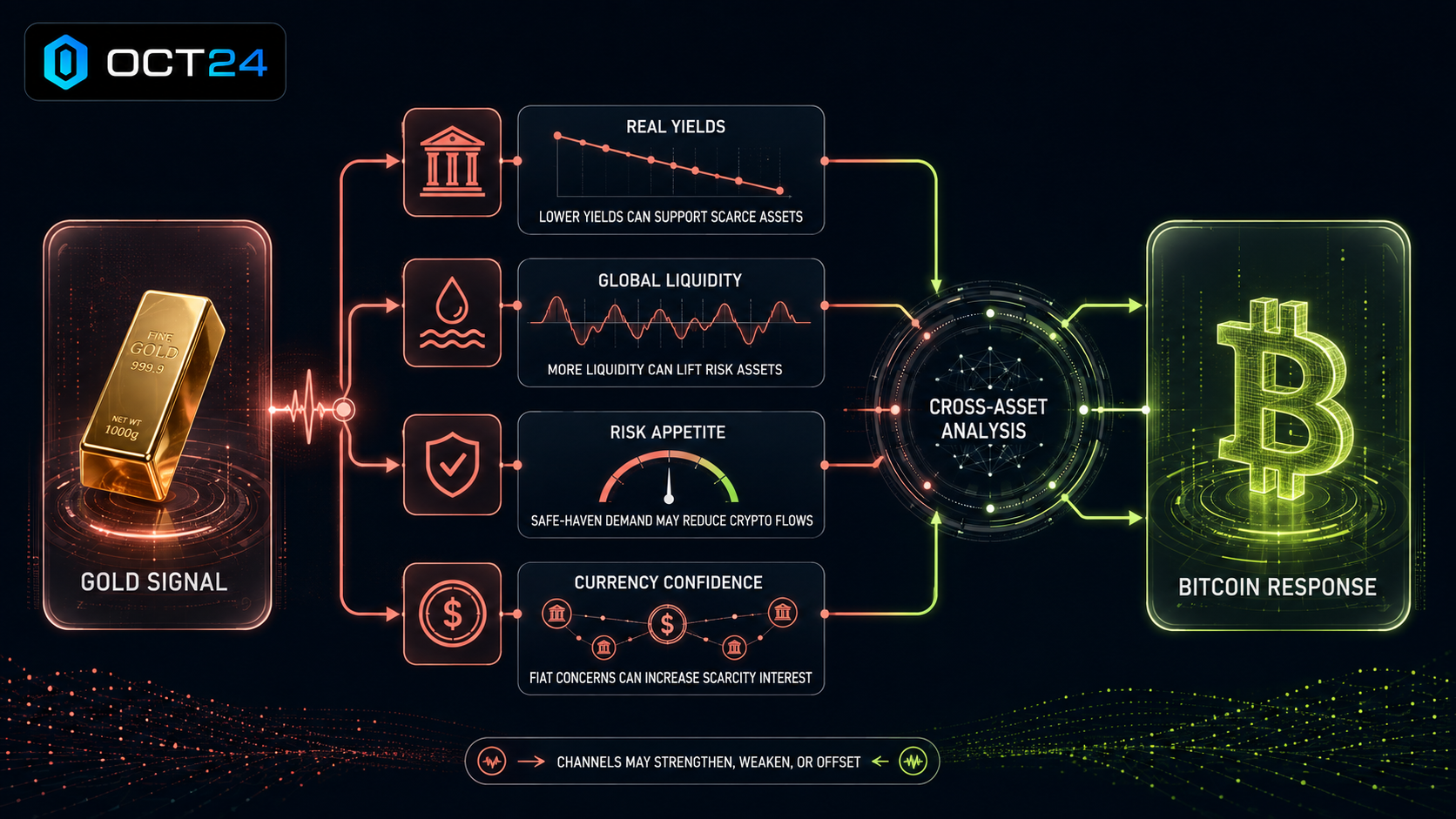
Lower expected rates can make cash and bonds less attractive. That may increase interest in scarce assets. It can also improve liquidity across financial markets.
A weaker dollar can support Bitcoin because BTC is widely priced in dollars. It may also push investors to look for alternatives to traditional currencies.
However, traders should ask why rates are expected to fall. If the reason is a healthy drop in inflation, markets may react positively. If the reason is a serious economic slowdown, investors may become more defensive.
The same rate change can therefore create different Bitcoin reactions. Context matters more than the headline alone.
How OCT24 can help traders read the move
A story like this can become confusing quickly. Traders are watching gold, Bitcoin, the dollar, bond yields, economic data, ETF flows, volume, and volatility at the same time.
OCT24 helps organize the crypto side of that picture. It scans market conditions, identifies possible opportunities, and presents AI-supported trading signals.
For a trader watching Bitcoin after the gold rally, OCT24 can support the process in several practical ways.
- It can scan crypto market conditions as they change.
- It can help surface possible Bitcoin opportunities.
- It can organize signals for faster review.
- It can help traders notice changes in momentum and volatility.
- It can support a more consistent process during fast news.
The trader still makes the final choice. OCT24 does not decide the right position size for every user. It does not guarantee that a signal will succeed.
That balance matters. OCT24 handles much of the market analysis. The trader remains responsible for risk and execution.
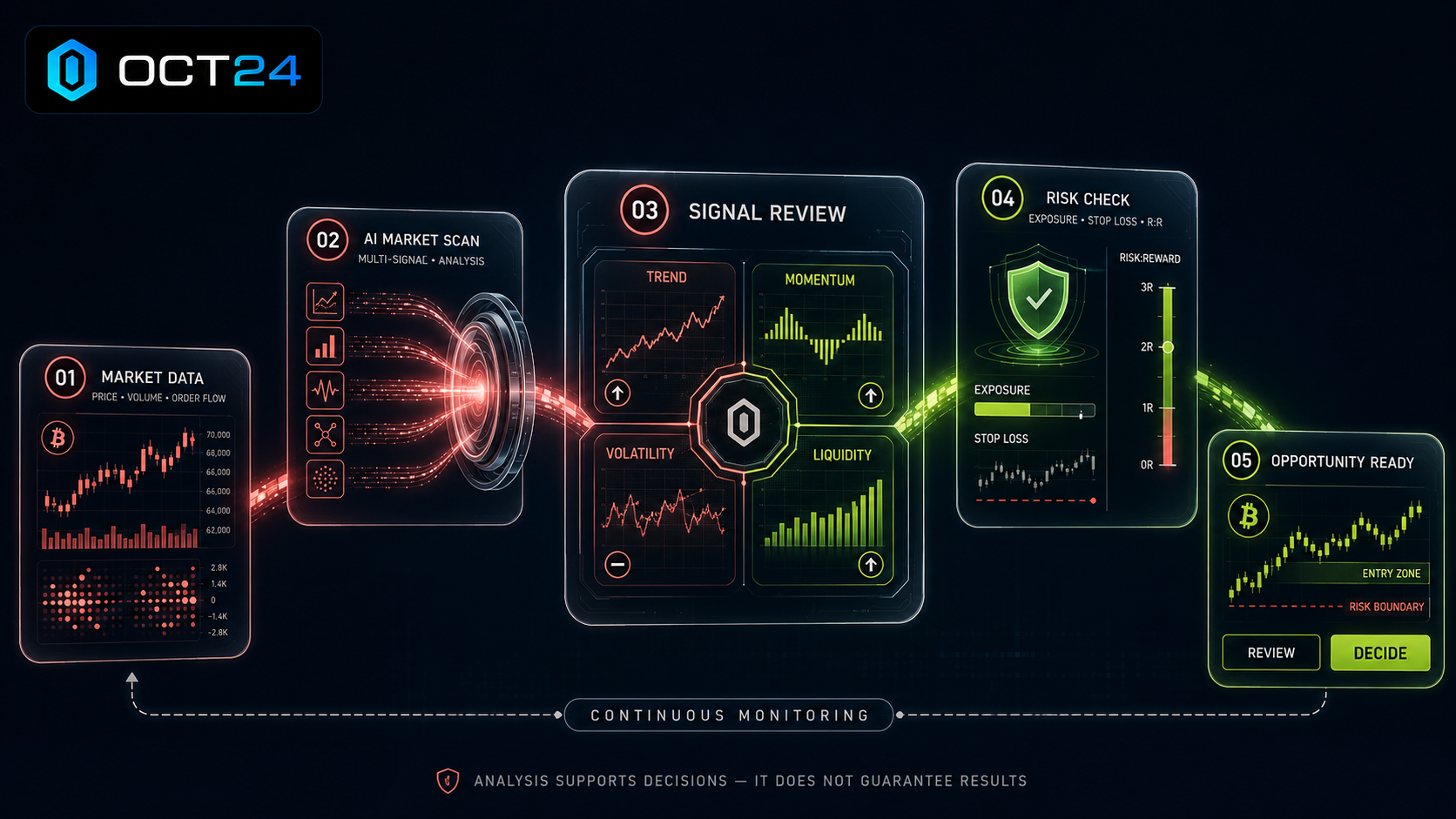
A simple Bitcoin trading scenario
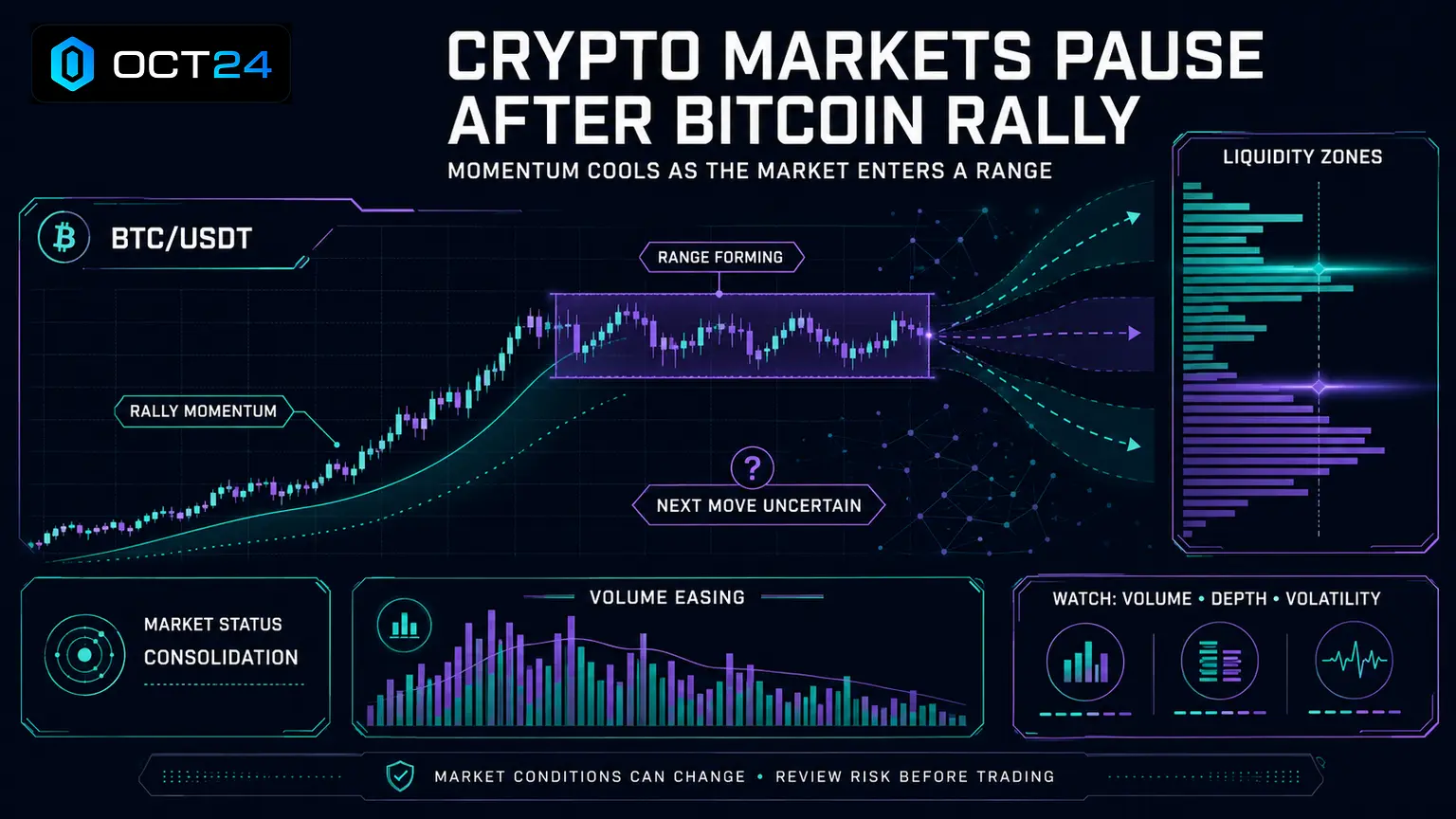
Imagine a trader opens OCT24 after seeing the gold headline. Bitcoin is still trading inside a range, but an AI-supported signal begins to form.
A rushed trader may buy because Bitcoin “has to catch up.” A more careful trader would ask a few questions first.
- Is Bitcoin showing real strength, or only a short price spike?
- Is volume supporting the move?
- Is spot demand improving?
- Is leverage already too high?
- How much crypto exposure do I already have?
- Where will I exit if the setup fails?
This short review can stop a headline from becoming an emotional trade. The goal is not to catch every move. The goal is to take only the setups that fit a clear plan.
OCT24 can support the analysis. The trader still chooses risk settings, capital, and execution.
Signals traders should watch next
Bitcoin price structure
Higher lows, a clean breakout, and price holding above an important level may show that buyers are becoming stronger. One fast candle is not enough.
Trading volume
A move supported by rising volume is often more convincing. Weak volume can make a breakout easier to reverse.
Spot demand
Spot buying can be more useful than a move driven only by leveraged futures. Strong spot demand may show that buyers are willing to hold Bitcoin.
ETF and fund flows
Fund flows can give traders another view of larger investor demand. Flows can change quickly, so they should be used with other signals.
Funding and leverage
Crowded leverage can make a rally fragile. A sharp reversal may trigger liquidations and increase volatility.
The US dollar and yields
Bitcoin may get more support if the dollar and yields continue to ease. A sudden reversal can change the setup.
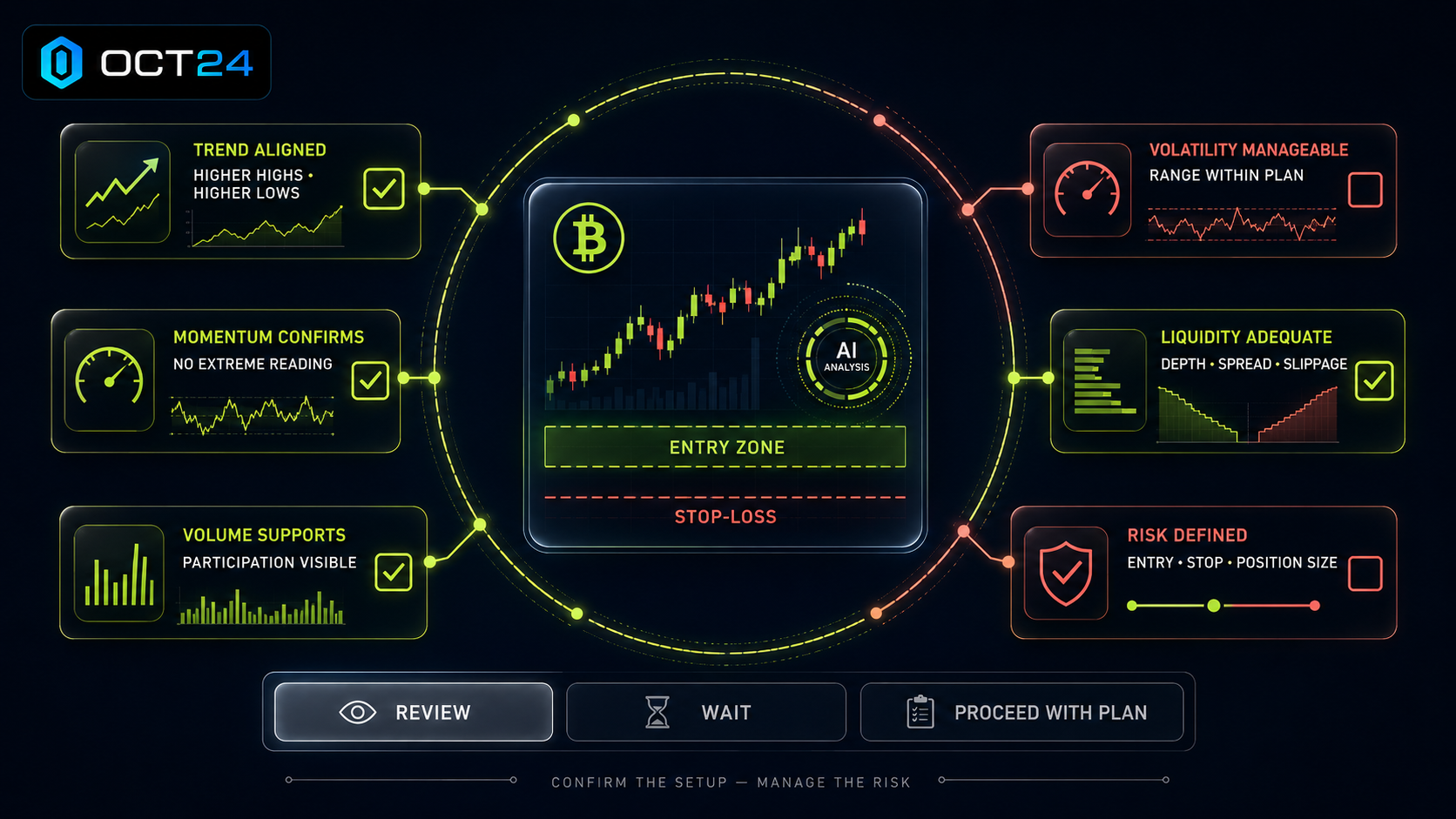
How traders can manage risk
The idea of a Bitcoin catch-up move can sound exciting. That does not make it low risk.
Risk should be set before the trade. Traders should know how much they can lose, where the idea becomes invalid, and how the position affects total exposure.
A simple checklist can help.
- Define the trade idea before entering.
- Choose a position size that fits the account.
- Avoid adding leverage just because gold moved first.
- Check existing crypto exposure.
- Set a clear exit if the setup fails.
- Do not move the exit level because of emotion.
- Review the trade after it closes.
This connects with trading bot risk management. AI-supported tools can improve the process, but risk still belongs to the trader.

Where one-click trading fits
When Bitcoin moves quickly, execution speed can matter. One-click trading may help a trader act after reviewing the signal and risk settings.
But speed should come last. It should not replace analysis.
The responsible order is simple: review the signal, check the risk, then decide whether to execute.
A fast trade with poor risk control is still a poor trade. OCT24 can make the workflow smoother, but it cannot make every decision correct.
Why Bitcoin can still behave like a risk asset
Bitcoin has a scarcity story, but traders do not always treat it as a safe haven. In many short-term market moves, Bitcoin behaves more like a high-growth or technology asset.
This often becomes clear when fear rises. Investors may sell Bitcoin to reduce risk, raise cash, or cover losses in other positions. Gold may rise at the same time because investors see it as more defensive.
That difference can confuse traders. They may expect both assets to rise because both are scarce. But scarcity is only one part of price. Liquidity, investor behavior, leverage, and market history also matter.
Bitcoin can also change roles over time. During one period, it may move with technology stocks. During another, it may respond more strongly to the dollar or global liquidity. During a crypto-specific rally, ETF flows and exchange demand may matter most.
Traders should avoid giving Bitcoin one permanent label. It can be a long-term store-of-value idea and a short-term risk asset at the same time.
This is another reason to check current conditions. The market decides how Bitcoin is trading today. A familiar story should not replace fresh evidence.
How to review signal quality
Not every Bitcoin signal has the same quality. A signal that appears after a gold rally still needs support from the crypto market.
Start with timing. Is the signal forming near the beginning of a move, or after Bitcoin has already jumped? Late signals can still work, but the risk may be higher.
Next, check market support. Is volume improving? Is Bitcoin holding above an important level? Are buyers active in spot markets? Is the wider crypto market stable?
Then check risk. A clear signal may still be unsuitable if the required stop is too wide or the position would make the account too concentrated.
Finally, check the trader’s own plan. A good signal for one person may not fit another person’s capital, time frame, or risk limit.
OCT24 can make this review faster by organizing market information and presenting AI-supported signals. The platform supports the decision. It does not replace the decision.
A simple signal review can include these questions.
- Is the signal fresh?
- Does price structure support it?
- Is volume confirming the move?
- Is leverage under control?
- Does the risk fit the account?
- Is there a clear exit plan?
If several answers are unclear, waiting can be a valid choice. Traders do not need to act on every signal. Sometimes the best decision is to keep watching.
What this means for beginner traders
Beginners do not need to become gold experts. They only need to understand why the story matters for crypto.
Gold’s rally shows that investors are reacting to rates, the dollar, and uncertainty. Those same themes can affect Bitcoin.
A beginner-friendly process can stay simple.
- Read the headline, but do not trade it alone.
- Check whether Bitcoin is showing its own strength.
- Review an OCT24 signal carefully.
- Set risk before entering.
- Keep the position size small enough to manage.
- Avoid leverage until the risks are fully understood.
The goal is not to predict the next candle. The goal is to make calmer decisions with a repeatable process.
What this means for intermediate traders
Intermediate traders may compare more signals. They may watch Bitcoin structure, ETF flows, the dollar, yields, open interest, funding, and wider crypto performance.
They should also ask whether the trade is early, late, or already crowded.
A good market story can still create a poor entry. Bitcoin may eventually rise but pull back first. A trader can be right about the direction and still lose because the timing or position size was poor.
OCT24 can reduce the time spent comparing conditions. The trader still decides whether the signal fits the portfolio and risk plan.
Common mistakes after a big market headline
Large headlines can make traders feel that they need to act immediately. That feeling often leads to poor decisions.
- Buying Bitcoin only because gold rallied.
- Assuming Bitcoin must catch up.
- Ignoring Bitcoin’s own price structure.
- Using too much leverage.
- Entering after a fast move without a plan.
- Treating one AI-supported signal as a guarantee.
- Taking several highly correlated crypto trades at once.
- Skipping the exit plan.
These mistakes are common because the story sounds simple. Markets are rarely that simple. Slow down, review the evidence, and decide whether the trade still makes sense after risk is included.
How this affects the wider crypto market
Bitcoin often sets the tone for the rest of crypto. If Bitcoin begins to respond to the same macro forces that helped gold, other major crypto assets may also gain attention.
That does not mean every altcoin will rise. Some assets may remain weak. Others may move only because speculation increases.
For OCT24 users, the useful approach is to scan conditions instead of chasing labels. A stronger Bitcoin market can improve crypto sentiment, but each setup still needs its own review.
This is why market scanning matters. Conditions can change at any time, and crypto trades around the clock.
What traders should watch next
The next step is confirmation. Traders should watch whether Bitcoin builds stronger price structure, attracts steady demand, and holds gains instead of quickly reversing.
They should also watch the next inflation report, Federal Reserve comments, the US dollar, and bond yields. These factors helped shape the gold move and may continue to affect crypto.
OCT24 can support this process by scanning conditions, identifying possible opportunities, and presenting AI-supported signals. That helps traders rely less on emotion.
Traders still need to check position size, total exposure, and risk before acting. No platform can remove the chance of loss.
FAQs
Does OCT24 offer gold trading?
No. OCT24 currently supports crypto trading only. Gold is used here as wider market context for Bitcoin traders.
Will Bitcoin rise because gold gained 7%?
Not necessarily. Gold and Bitcoin can react to similar forces, but they do not always move together. Bitcoin needs its own confirmation.
Is Bitcoin digital gold?
Bitcoin is often called digital gold because it has limited supply and can be used as an alternative store of value. It is still more volatile than gold.
Why do interest rates matter for Bitcoin?
Lower expected rates can improve liquidity and reduce the appeal of cash. The Bitcoin reaction still depends on why rate expectations changed.
What should traders watch after the gold rally?
Watch Bitcoin price structure, volume, spot demand, ETF flows, leverage, the US dollar, and bond yields.
How can OCT24 help?
OCT24 scans crypto market conditions, identifies possible opportunities, and presents AI-supported trading signals for trader review.
Does an OCT24 signal guarantee a winning trade?
No. A signal is an analysis tool, not a guarantee. Traders remain responsible for risk, exposure, capital, and execution.
Should beginners use leverage on a catch-up trade?
Beginners should be very careful with leverage. It increases losses as well as gains and can lead to liquidation.
Can gold rise while Bitcoin falls?
Yes. Investors may choose gold as a defensive asset while selling more volatile assets such as Bitcoin.
What is the simplest way to use this story?
Use gold as context, wait for Bitcoin-specific evidence, review the signal, and set risk before deciding whether to trade.
The simple takeaway
Gold’s 7% rally matters because it shows how quickly market expectations can change. Lower rate expectations, a softer dollar, and safe-haven demand all played a role.
For Bitcoin traders, the lesson is simple. Do not assume Bitcoin will copy gold. Watch whether Bitcoin starts showing its own strength.
OCT24 can help by scanning crypto conditions, identifying possible opportunities, and presenting AI-supported trading signals. Traders still control position size, exposure, capital allocation, and execution.
Use the gold headline to ask better questions. Use Bitcoin data to look for the answer.
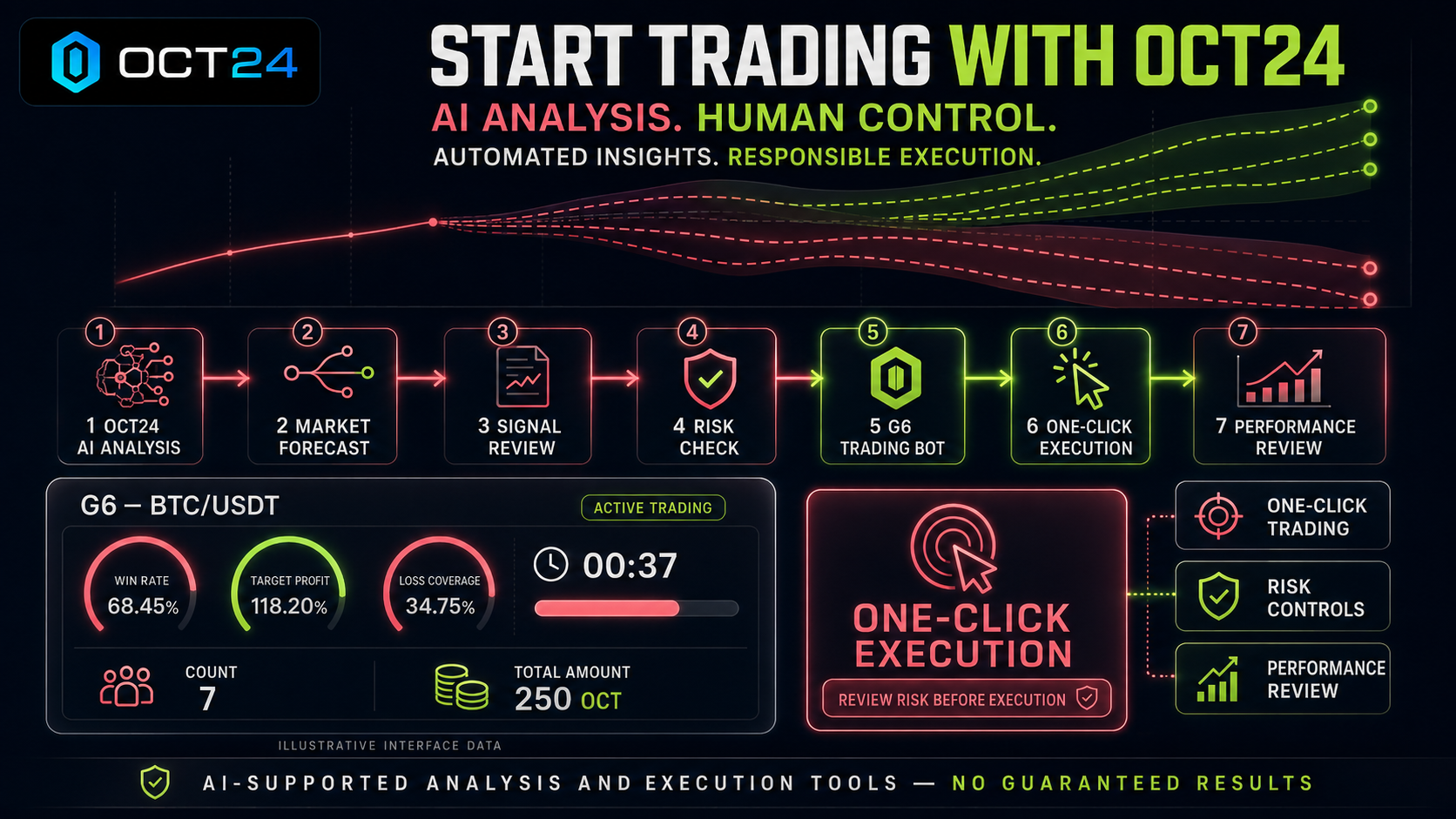
Ready to review crypto opportunities with a simpler, more structured process? Start Trading with OCT24. Review every signal and choose risk settings that fit your own capital and experience.
You can also learn more About OCT24 before getting started.